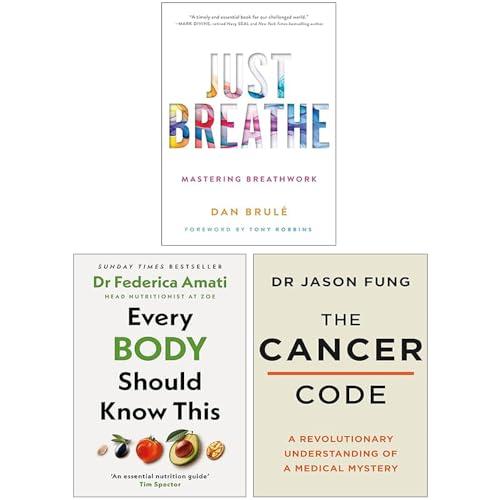
Every Body Should Know This, Just Breathe Mastering Breathwork, The Cancer Code 3 Books Collection Set
Dr Federica Amati
Mentioned 5 months ago
Recap: How to lower your risk of arthritis | Dr Tamiko Katsumoto
The world’s top scientists explain the latest health, nutrition, and gut health research and translate it into practical advice to improve your health & weight. Join ZOE Science & Nutrition, on a journey of scientific discovery. Hosted by Jonathan Wolf.
Recently mentioned
Dr Federica Amati
Mentioned 5 months ago
Recap: How to lower your risk of arthritis | Dr Tamiko Katsumoto
![The Food for Life Cookbook: 100+ Recipes Created with ZOE [A Gut Health Cookbook] cover](https://media.podcastbookpicks.com/books/34806.jpg)
Tim Spector
Mentioned 5 months ago
Recap: How to lower your risk of arthritis | Dr Tamiko Katsumoto
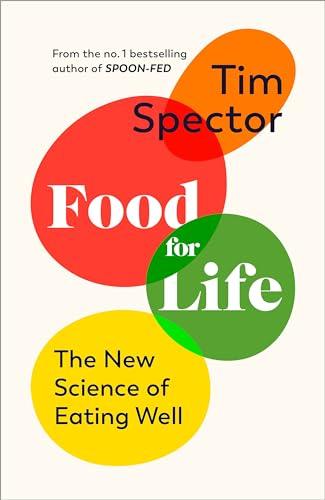
Tim Spector
Mentioned 5 months ago
Recap: How to lower your risk of arthritis | Dr Tamiko Katsumoto
Kenji Morimoto
Mentioned 5 months ago
Recap: How to lower your risk of arthritis | Dr Tamiko Katsumoto
Federica Amati
Mentioned 1 year ago
The truth about protein shakes, according to science | Dr Federica Amati
Dr. Karan Rajan
Mentioned 1 year ago
Simple ways to improve gut health | Dr. Karan Rajan
Will Bulsiewicz MD
Mentioned 1 year ago
Seed oils are not ‘evil’ - they could lower your risk of disease | Prof. Sarah Berry
Jessie Inchauspe
Mentioned 1 year ago
Blood sugar hacks to give you more energy | Glucose Goddess Jessie Inchauspé and Prof. Tim Spector
Gin Stephens
Mentioned 1 year ago
Recap: How to do intermittent fasting properly | Gin Stephens and Professor Tim Spector
Tim Spector
Mentioned 1 year ago
Recap: How to do intermittent fasting properly | Gin Stephens and Professor Tim Spector
Simon Hill
Mentioned 2 years ago
Plant protein and strength: all you need to know | Simon Hill & Dr. Will Bulsiewicz
Satchin Panda PhD
Mentioned 2 years ago
Fix your body clock to improve long term health with Prof. Satchin Panda
The title was repeatedly cited by ZOE scientists as a key resource for practical nutrition guidance, including the ‘build your plate’ principle. Dr. Federica Amati highlighted it during episodes, and the hosts referred to it as a bestseller and a recommended read for listeners. Across the 27 episodes, it was presented as a useful guide, conveying a clear endorsement.
Dr. Federica Amati, a lecturer at Imperial College London, researcher at King's College London, and head nutritionist at ZOE, authored this book, which was mentioned as a bestseller.
You're a lecturer at Imperial College London, a researcher at King's College London and the author of the best-selling book Everybody Should Know This.
Buy Federica's book: Every Body Should Know This
This book was mentioned as one that Dr. Federica Amati authored, sharing principles like the 'build your plate' strategy for healthier eating.
I'm about to submit that request. For many of us, the period from late November to Christmas is a time when we cut loose. We eat more sweet treats than we need. I overindulge on the mulled wine and tend to graze on snacks all day long. And I think it can feel like we're undoing the good work we put in throughout the rest of the year. Federica, I know you've come along to share some recipes, some smart food swaps, but also some strategies for a healthier Christmas this year without having any less fun, which I think is important because I definitely really enjoy this time of year and I want to keep enjoying it. But first, I want to get an idea of how bad Christmas really is for our health and for those microbes in our gut.
And has your boss said yes? I'm about to submit that request. For many of us, the period from late November to Christmas is a time when we cut loose. We eat more sweet treats than we need. I overindulge on the mulled wine and tend to graze on snacks all day long. And I think it can feel like we're undoing the good work we put in throughout the rest of the year.
I talk about this in my book, everybody should know this, it's the build your plate principle. If you build it with the vegetables, the legumes, the nuts and seeds first, then about half to three quarters of your plate is full and so then what you have is some space left for the beef, the turkey, the sausage but it's a much smaller proportion of your overall intake because you've looked after the foods that directly contribute to your health and your gut before you have the fun stuff essentially.
The New Science of Eating Well
The title was repeatedly cited by Tim Spector and other ZOE hosts as a reference written by their own scientists. Episodes highlighted that the book explored topics such as ultra‑processed foods, gut health, and nutrition science, and it was noted as a best‑selling, recent publication by the professor. Listeners were directed to it for deeper insight into the dietary issues discussed on the show.
This book focuses on nutrition and health. It was mentioned as the latest book from Tim Spector, who is a professor of Genetic Epidemiology.
He's also the author of *Food for Life*, his latest book focusing on nutrition and health.
Tim Spector dug deep into the new science around UPFs while researching for his best-selling book, "Food for Life". He discusses how UPFs affect our gut microbes and their impact on our health and weight.
While researching his best-selling book Food for Life, Tim dug deep into the new science around UPFs.
And I think when I first started writing this book six years ago, the emphasis was all about, oh they have high in sugar, they're high in fats, they're high in salt.
The book was mentioned in relation to questions that readers had about certain food products and whether they were ultra-processed or not. The author was also mentioned in the context of the food industry's opposition to his work on ultra-processed foods.
And I think this is the discussion that a lot of people who've read my book come to me with is going, what about this product? Is this OK?
The Plant-Based Gut Health Program for Losing Weight, Restoring Your Health, and Optimizing Your Microbiome
The book was repeatedly highlighted as a work authored by a ZOE scientist and board‑certified gastroenterologist, with the host noting his credentials as a New York Times bestseller and U.S. medical director. In episodes where the author appeared, he discussed the benefits of a high‑fiber, plant‑based diet and addressed common myths about lectins, emphasizing evidence‑based approaches. Across the series, the title was presented as a valuable resource for understanding gut health and weight management.
Will Bulsiewicz, a board-certified gastroenterologist and author of the book, explained the importance of antinutrients and their potential benefits, dispelling the myth that they are harmful.
Will is a board-certified gastroenterologist with 14 years of experience. He's also the New York Times best-selling author of Fiber Fueled and ZOE's U.S. medical director.
Recently Jonathan, lectins came under attack. A popular book made many people fearful and as a result some people believe that lectins are toxic and inflammatory causing weight gain and leaky gut syndrome.
I fully acknowledge that I am a nerd. This is not a mystery or a secret.
So we hear from the lectin phobes that we should avoid legumes because lectins cause things like inflammation and weight gain.
So here's what I would propose for a study. This is a randomized controlled trial of a legume packed diet, like a high legume diet versus a diet with no legumes. And importantly, the researchers held the number of calories completely constant.
Will is a board-certified gastroenterologist and the author of Fiber Fueled, which offers insights into the benefits of a high-fiber diet.
Will is a board certified gastroenterologist ZOE's US medical director and the author of Fiber Fueled.
100+ Recipes Created with ZOE [A Gut Health Cookbook]
The book was repeatedly highlighted by ZOE scientists across several episodes, first appearing in curated reading lists and later being praised for a specific lasagna recipe that was adapted with healthier ingredients. Hosts emphasized how the cookbook’s recipes, such as the lentil‑enhanced lasagna, aligned with their gut‑health recommendations and offered practical ways to improve traditional dishes. Overall, the discussion presented the title as a valuable resource for listeners seeking science‑backed nutrition guidance.
A recipe from this cookbook, Juno's Lasagna, was highlighted as a healthy, traditional Italian Christmas dish that was tweaked to include vegetables, mushrooms, and lentils.
So there's a recipe from The Food for Life Cookbook which I love it's Juno's lasagna so actually Tim's mum used to make this recipe and we've tweaked it with some Zoe tweaks it's got plenty of lentils in there it's delicious the bechamel sauce is made with healthier ingredients I'm Italian as you know I've said it already we have lasagna at Christmas it's a traditional dish for us so how can we make a delicious traditional dish even healthier and introducing mushrooms and lentils and vegetables is a really simple way to do that
The Comprehensive Guide to Delay, Don't Deny® Intermittent Fasting--Including the 28-Day FAST Start
The book was highlighted by its author Gin Stephens, with Tim Spector present, as a practical guide to intermittent fasting that emphasizes the “clean fast” of water, black coffee, or plain tea. Stephens shared anecdotal evidence that avoiding sweeteners or added fats produced markedly better results and invited listeners to try a 30‑day clean‑fast challenge. She also stressed gradually building fasting “muscle,” maintaining consistent eating windows, and nourishing the body well, positioning the title as a useful resource for both beginners and experienced fasters.
This book by Gin Stephens was written in 2020 and explains that while intermittent fasting is important, it is crucial to nourish your body well.
My book that I wrote in 2020 is called Fast Feast Repeat. It's not fast, eat a little diet meal, repeat.
We want to nourish our body well.
Gin Stephens' book discusses the clean fast, which involves only consuming water, black coffee, or plain tea during fasting periods. The author states that she has found anecdotal evidence suggesting that this type of fasting is more effective than fasting with added sweeteners or milk products.
I have a whole section in Fast Feast Repeat where I talk about the clean fast.
And there is at the end of that, there are two chapters about the clean fast.
And there's a section where I have, you know, anecdotal stories from intermittent fasters.
And, you know, I've been in the intermittent fasting community since well before I ever wrote any books at all or had podcasts.
Really in 2014, 2015, started with the support groups on Facebook.
And anecdotally, the difference between fasting clean and, you know, putting a little bit of this, a little bit of that, the bulletproof coffee, a little bit of butter, you know, all the things that people might be, you know, putting in there, the difference is night and day.
And you have to really experience it for yourself.
So anybody who's putting in a little sweetener or a little drop of cream or whatever and you're like, it's fine.
It works for me. I'm still losing weight. I feel okay.
I would challenge you to try it with the clean fast. Give yourself 30 days. I call it the clean fast challenge. Go to plain black coffee, plain tea, plain water, nothing flavored, nothing sweetened, nothing to lighten up your coffee.
I've never had anybody try it for 30 days and then go back to the other way.
So, you know, really just take that challenge and try it for yourself and see. Most people report that they can't believe the difference that it makes.
You've really got to build up to it. I like to compare it to couch to 5K.
You know, if someone wants to go run a 5K, you don't get off the couch on day one and run a 5K.
You have to build up to it.
And so fasting is the same way.
We're very much building up our fasting quote muscle, right? It's not technically a muscle, but you know what I mean with that analogy.
So you're building up to it. And that's what the 28 days is really for.
You know, you're learning how to fast clean.
There are going to be days where you feel hangry and you have to open your window earlier than you expected. And that's not a fail. That's just part of the process. We're learning to listen to our bodies.
You know, we never want to feel shaky like you're having a blood sugar crash. If you're ever shaky or nauseous, go ahead and eat. You know, forget about what the plan said to do that day.
Go ahead and eat. And, you know, gradually as your body gets adapted, you'll find, you know, what feels good to you.
Some people always feel better with a midday eating window. For example, they like to skip breakfast, eat lunch, have a little maybe early kind of dinner, close their window. No couch snacking on chocolate for them because their window is closed.
But they sleep better when they have that middle of the day eating window.
I'm not one of those people. I actually sleep better when my window is closer to bedtime. I've tried it all different ways.
I wait till afternoon, open my window, eat till I'm satisfied, close my window.
But only through experimentation have I learned that.
You're not going to learn that in the first 28 days. You know, I interviewed a longevity expert, Dr. Gil Blander.
He said he believes that one of the most powerful things we can do to increase longevity is intermittent fasting.
You know, just have that piece in there. Understand, you know, why we're doing it.
I don't want anybody to start intermittent fasting only because you might lose some weight.
That's not what intermittent fasting really is all about.
You know, of course, I came to it for the weight loss. I like to say, you know, we come for the weight loss, but we stick around for the health benefits.
The consistency means that you're doing something every day, right? It's consistency of the fact that you maintain a fasting protocol. That doesn't mean it has to be exact same timing every day. It's just a matter of like we don't like quote take days off. We don't have cheat days.
I mean, that doesn't mean though that you can't decide today I'm going out to brunch and I'm going to eat at 10 o'clock.
And what worked for me really well was the idea of keeping my eating window to like five hours and shifting that around. So if I wanted to shift it to earlier in the day, I could do that, just slide it to a different part of the day. And then one day my fast was a little shorter because I opened my window earlier, but then I closed it earlier. So the next day my fast was a little longer because I opened at the time I normally did.
So we don't want it to feel regimented and lots and lots of rules that you must follow.
The Science Behind Food That Isn't Food
The book explores how ultra-processed foods can impact our health.
Tim joined me for a conversation with Chris Van Tilakum, a medical doctor, broadcaster, and the author of the new book Ultra Processed People.
— Episode: 10 tips to help you live healthier: Part...
The book explores how ultra-processed foods can impact our health.
Tim joined me for a conversation with Chris Van Tilakum, a medical doctor, broadcaster, and the author of the new book Ultra Processed People.
So there's this long formal scientific definition because it's a category of food that was developed to do research with, to study diet and its effects on health.
But it boils down to if it's wrapped in plastic and it contains at least one ingredient that you don't typically find in a domestic kitchen, then it's ultra-processed food.
So that's the shorthand way of figuring it out.

Navigating Your Path Through Hormonal Change with Purpose, Power, and Facts
It was mentioned as a book written by Dr. Mary Claire Haver, with information on the menopause transition and how to manage its symptoms.
I've seen it in the literature when I was researching for The New Menopause.
— Episode: Your new menopause toolkit with Dr. Mary...
It was mentioned as a book written by Dr. Mary Claire Haver, with information on the menopause transition and how to manage its symptoms.
I've seen it in the literature when I was researching for The New Menopause.
The Science and Art of Longevity
It was written to challenge the idea that aging is predetermined and to emphasize that individuals have more control over their healthspan than they might think, particularly regarding longevity.
In other words, there's something about a lack of agency that permeates this myth. And I think in many ways, that's actually probably what the book I've written tries to cast doubt on.
— Episode: Unlock longevity: Dr. Peter Attia's esse...
It was written to challenge the idea that aging is predetermined and to emphasize that individuals have more control over their healthspan than they might think, particularly regarding longevity.
In other words, there's something about a lack of agency that permeates this myth. And I think in many ways, that's actually probably what the book I've written tries to cast doubt on.
So in other words, we do have control over what's going to happen to us. We have a lot more control and especially when it comes to our health span.
I wanted to write a book that could be an operating manual for the person who acknowledges that maybe the system isn't perfect. But what can I do to say, OK, like now I know a lot of this stuff and I don't need a physician for it.
The 4-Week Guide to Cutting Cravings, Getting Your Energy Back, and Feeling Amazing
The book was mentioned multiple times, with an emphasis on the simple, easy-to-follow recipes within it. The author, Jessie, discussed her experience of using a CGM and how it motivated her to help others via her book and platform.
I love that message.
— Episode: Blood sugar hacks to give you more energ...
The book was mentioned multiple times, with an emphasis on the simple, easy-to-follow recipes within it. The author, Jessie, discussed her experience of using a CGM and how it motivated her to help others via her book and platform.
I love that message.
And Jesse, you have so many great breakfast ideas in your book.
I mean my top one would be the three egg omelettes with feta and tomatoes but leftovers from dinner works super well.
And what I love about your advice is that this makes a really nourishing meal.
So yeah, lots of recipes in my book and I'm a very lazy cook so it's all super simple six ingredients or less and the intention with my recipes is that once you read them you never have to look at them again because they're more assembling different ingredients than doing something too complicated.
An Easy & Proven Way to Build Good Habits & Break Bad Ones
James Clear is the world's number one habit expert, and the book Atomic Habits has sold more than 15 million copies worldwide. It was recommended as a helpful resource for changing habits.
James Clear is the world's number one habit expert, the author of the New York Times bestseller Atomic Habits, which has sold more than 15 million copies worldwide.
— Episode: How to master healthy eating habits with...
James Clear is the world's number one habit expert, and the book Atomic Habits has sold more than 15 million copies worldwide. It was recommended as a helpful resource for changing habits.
James Clear is the world's number one habit expert, the author of the New York Times bestseller Atomic Habits, which has sold more than 15 million copies worldwide.
You have literally written the book on how to change one's habits. Could you tell us about how to think about making changes that then might support new resolutions?
The easier, more convenient, frictionless, simple a habit is, the more likely it is to be performed. And then the fourth and final law is to make it satisfying. More satisfying or enjoyable a habit is, just like we were talking about a minute ago, whatever you feel like is rewarding or pleasurable, the more likely you are to repeat in the future. So make it obvious, make it attractive, make it easy, make it satisfying.
And Atomic Habits covers that in greater detail.
Lessons From the Healthiest Places on Earth
Lose Weight, Supercharge Your Energy, and Transform Your Health from Morning to Midnight
Discover the Right Time to Eat, Sleep, and Exercise to Prevent and Reverse Prediabetes and Diabetes
The Vulva and the Vagina
It was one of two New York Times best-selling books written by Jen Gunter, the other being 'The Menopause Manifesto'.
Jen is a gynecologist, a physician, and the author of two New York Times best-selling books.
— Episode: Menstruation: Science, medicine and myth...
It was one of two New York Times best-selling books written by Jen Gunter, the other being 'The Menopause Manifesto'.
Jen is a gynecologist, a physician, and the author of two New York Times best-selling books.
On today's episode, she shares her insights from her new book, 'Blood',
Own Your Health with Facts and Feminism
It was one of two New York Times best-selling books written by Jen Gunter, the other being 'The Vagina Bible'.
Jen is a gynecologist, a physician, and the author of two New York Times best-selling books.
— Episode: Menstruation: Science, medicine and myth...
It was one of two New York Times best-selling books written by Jen Gunter, the other being 'The Vagina Bible'.
Jen is a gynecologist, a physician, and the author of two New York Times best-selling books.
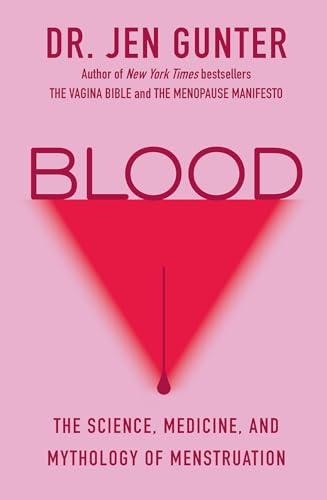
The Science, Medicine, and Mythology of Menstruation
It was a new book by Jen Gunter, focusing on the science, medicine and mythology of menstruation.
On today's episode, she shares her insights from her new book, 'Blood',
— Episode: Menstruation: Science, medicine and myth...
It was a new book by Jen Gunter, focusing on the science, medicine and mythology of menstruation.
On today's episode, she shares her insights from her new book, 'Blood',
and helps us understand what the latest science says about menstruation.
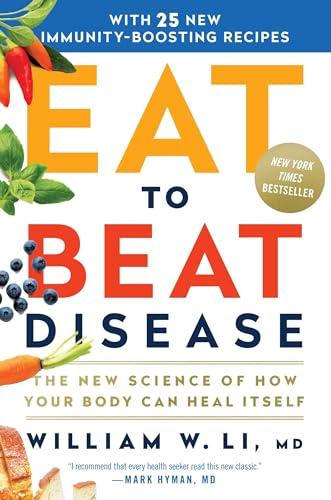
The New Science of How Your Body Can Heal Itself
Dr. William Li, the author of "Eat to Beat Disease", discusses the role of endothelial progenitor cells (EPCs) in repairing damaged blood vessels. He compares them to cellular seamstresses that help regenerate and repair the lining of blood vessels.
In your book Eat to Beat Disease you discuss something called epcs and you say they're really important I have never come across these before but you have this thing you call them lik...
— Episode: Why dementia could start in your blood v...
Dr. William Li, the author of "Eat to Beat Disease", discusses the role of endothelial progenitor cells (EPCs) in repairing damaged blood vessels. He compares them to cellular seamstresses that help regenerate and repair the lining of blood vessels.
In your book Eat to Beat Disease you discuss something called epcs and you say they're really important I have never come across these before but you have this thing you call them like cellular seamstresses so I just want to say that because it sounded great what are they and are they important in this story from your perspective
I'm so glad that you brought that up okay an epc these are initials e is for endothelial and I just told you this was that's what you call the lining of the blood vessels p is for progenitor meaning it's a stem cell so epc is a stem cell of the lining of the blood vessel which means what's this which means that it's a cell that is held in reserve to help repair and regenerate damage scuffed up lining of the blood vessels
So super important for maintaining good blood flow between heart and brain and every other organ in the body but here's something that is stunningly important these progenitor cells or stem cells endothelial progenitor cells apcs also have the ability to turn into other cells as well
Epcs can turn into other cells that's one of the hallmarks of stem cells by the way I wanted to make a clarification here I'm not talking about a stem cell that you can go to the corner strip mall to get injected into your knee or your shoulder that to me is a commercial venture that's not quite ready for prime time and I've been involved by the way with the biotech industry to try to develop real bona fides cellular therapy with stem cells it works we're not we're not ready to actually get it mainstream yet it's it's still working its way through the development process but our body does it already and the thing about we know about stem cells is that if a stem cell wants to turn into a blood vessel done deal if a stem cell wants to turn a liver it can do that too and guess what epcs as stem cells can also turn into brain cells so the amazing thing is that we didn't realize until maybe a decade ago just starting to have the inkling we can actually regenerate our brain
It's long been thought that you know once your brain tissue dies that's it you had a stroke you can't recover wrong we can actually regenerate parts of our brain does not happen very quickly and gosh if we could actually figure out how to do it better and faster more efficiently that would actually completely turn the tide on dementia so this is an area of research that I work on it's really really exciting it not only repaves the blood vessels the zamboni of the good circulation which we need for brain health and other organ health but it is also the well spring for regenerating actual brain tissue
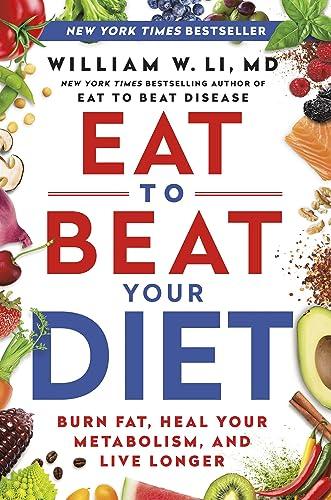
Burn Fat, Heal Your Metabolism, and Live Longer
Dr. William Li's book, "Eat to Beat Your Diet", is briefly mentioned as he uses it to explain the importance of EPCs and their role in repairing blood vessels.
Well before we move on to like what can you do about this which I know all the listeners are like no let's talk about what we can do but just before we do that in your book eat to beat disease you dis...
— Episode: Why dementia could start in your blood v...
Dr. William Li's book, "Eat to Beat Your Diet", is briefly mentioned as he uses it to explain the importance of EPCs and their role in repairing blood vessels.
Well before we move on to like what can you do about this which I know all the listeners are like no let's talk about what we can do but just before we do that in your book eat to beat disease you discuss something called epcs and you say they're really important I have never come across these before but you have this thing you call them like cellular seamstresses so I just want to say that because it sounded great what are they and are they important in this story from your perspective
This book, by ZOE's head nutritionist, is the essential nutrition and lifestyle guide across the lifespan. It was discussed extensively on the podcast and Federica explained how we can tailor our diet to each life stage in order to optimize long-term health.
Federica's new book, Everybody Should Know This, is the essential nutrition and lifestyle guide across the lifespan.
— Episode: Foods for every decade of life with Dr....
This book, by ZOE's head nutritionist, is the essential nutrition and lifestyle guide across the lifespan. It was discussed extensively on the podcast and Federica explained how we can tailor our diet to each life stage in order to optimize long-term health.
Federica's new book, Everybody Should Know This, is the essential nutrition and lifestyle guide across the lifespan.
In this episode she explains how we can tailor our diet to each life stage in order to optimise long-term health.
Well so am I. And congratulations on your new book, which I love and I know is going to form the basis for our conversation today.
Yes, thank you so much.
Alright, well Federica this shouldn't be a shock to you but we have a tradition here at ZOE where we always start with a quick fire round of questions. Are you ready to go?
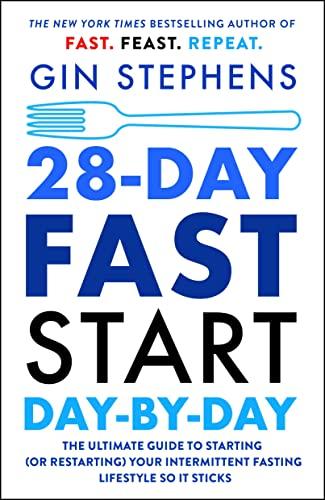
The Ultimate Guide to Starting (or Restarting) Your Intermittent Fasting Lifestyle So It Sticks
Gin Stephens wrote this book to help people who need guidance on how to start intermittent fasting. It helps them figure out how to start and it gives them a day-by-day guide for their eating window.
The book is called 28 Day Fast Start Day by Day and it's for people who really need like, what do I do? It's day one. How do I start?
— Episode: The world's biggest intermittent fasting...
Gin Stephens wrote this book to help people who need guidance on how to start intermittent fasting. It helps them figure out how to start and it gives them a day-by-day guide for their eating window.
The book is called 28 Day Fast Start Day by Day and it's for people who really need like, what do I do? It's day one. How do I start?
You start at the beginning, you take a quiz and you figure out, am I a rip-off-the-bandaid person or do I need to ease in or am I somewhere in the middle?
And then every day I tell you exactly what your eating window is going to be for that day. With the, you know, you're starting off with a longer eating window at the beginning, week one, and then you gradually shorten that depending on which plan you follow, everyone is shortening it by the end.
Note: The book recommendations on this page are discovered automatically from podcast transcripts, and may be incorrect or incomplete.
Podcast Name