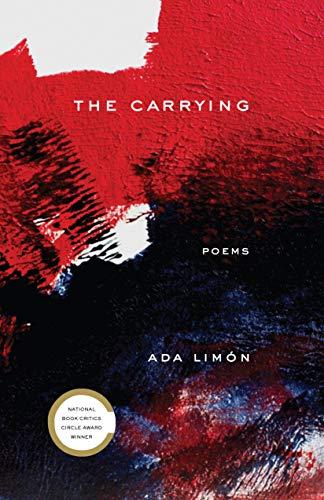
The Carrying
Ada Limón
Mentioned 2 years ago
“The End of Poetry” by Ada Limón
Wisdom to replenish and orient in a tender, tumultuous time to be alive. Spiritual inquiry, science, social healing, and poetry. Conversations to live by. With a 20-year archive featuring luminaries like Mary Oliver, Thich Nhat Hanh, and Desmond Tutu, each episode brings a new discovery about t...
Recently mentioned
Ada Limón
Mentioned 2 years ago
“The End of Poetry” by Ada Limón
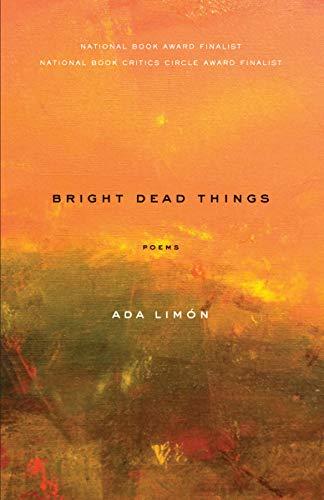
Ada Limón
Mentioned 2 years ago
“The End of Poetry” by Ada Limón
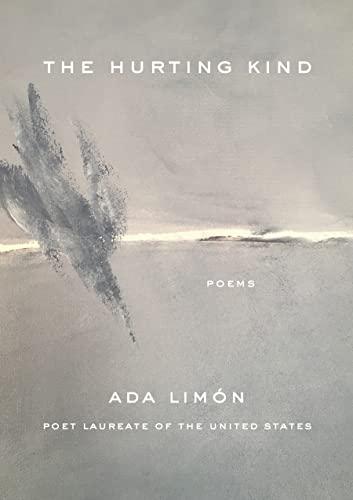
Ada Limón
Mentioned 2 years ago
“The End of Poetry” by Ada Limón
David Nicholls
Mentioned 2 years ago
“The End of Poetry” by Ada Limón
Atul Gawande
Mentioned 2 years ago
Atul Gawande — On Mortality and Meaning
Cixin Liu
Mentioned 2 years ago
Atul Gawande — On Mortality and Meaning
Royce Josiah
Mentioned 2 years ago
Atul Gawande — On Mortality and Meaning
Atul Gawande
Mentioned 2 years ago
Atul Gawande — On Mortality and Meaning
Elizabeth Alexander
Mentioned 2 years ago
“Ars Poetica #100: I Believe” by Elizabeth Alexander
Padmasambhava
Mentioned 2 years ago
Luis Alberto Urrea — On Our Belonging to Each Other
Luis Alberto Urrea
Mentioned 2 years ago
Luis Alberto Urrea — On Our Belonging to Each Other
Luis Alberto Urrea
Mentioned 2 years ago
Luis Alberto Urrea — On Our Belonging to Each Other
Why It's So Hard for White People to Talk About Racism
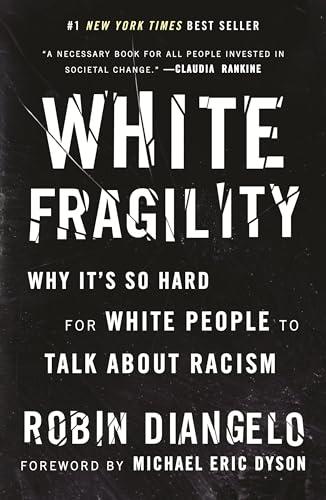
DiAngelo's book, "White Fragility," was mentioned as influential in the conversation about whiteness and racism. It was discussed in relation to the challenges white people face in confronting racism.
Robin DiAngelo gave us the phrase White Fragility. She teaches, writes and consults from Seattle.
— Episode: Robin DiAngelo and Resmaa Menakem — Towa...
DiAngelo's book, "White Fragility," was mentioned as influential in the conversation about whiteness and racism. It was discussed in relation to the challenges white people face in confronting racism.
Robin DiAngelo gave us the phrase White Fragility. She teaches, writes and consults from Seattle.
Robin, because we haven't met before and you haven't been on the show, I am curious. The only thing that I saw as I was looking around about the background of your life was somewhere you said or you wrote that you grew up poor and white in San Francisco.
Robin DiAngelo's book, White Fragility, was mentioned as influential in the conversation around race and white people's difficulty discussing racism. It was noted that Resmaa Menakem loved Robin's work.
Robin DiAngelo, who's known for her work on White Fragility
Well, um, Rezma's literary agent reached out and told me about Rezma's book and that Rezma loved my work.
Photographing the Last Days of our Architectural Treasures
The book delves into the author's experience with depression and obsessional thoughts, leading him to re-evaluate his religious beliefs and find a new understanding of the human spirit. It includes a quote from Philo as an epigraph.
be kind for everyone you meet is carrying a great burden
— Episode: [Unedited] Sherwin Nuland with Krista Ti...
The book delves into the author's experience with depression and obsessional thoughts, leading him to re-evaluate his religious beliefs and find a new understanding of the human spirit. It includes a quote from Philo as an epigraph.
be kind for everyone you meet is carrying a great burden
This book discusses the author's experience with depression. It contains an epigraph attributed to Philo.
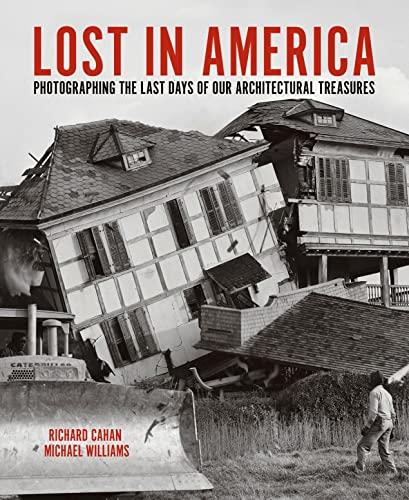
You also had a serious experience of depression which you wrote about in a more recent book, Lost in America that was that book.
Be kind for everyone you meet is carrying a great burden.
This book delves into the author's experience with depression and obsessional thoughts, exploring how his religious beliefs initially contributed to his mental state and the subsequent decision to abandon those beliefs to overcome depression. It further discussed the impact of his experience on his interest in the physical self and the human body.
be kind for everyone you meet is carrying a great burden
This book explored the author's experience with depression and how it influenced his perspective on the human body and spirit. It included an epigraph attributed to Philo, emphasizing the importance of kindness.
You also had a serious experience of depression which you wrote about in a more recent book, Lost in America that was that book.
Be kind for everyone you meet is carrying great burden.
Superstrings, Hidden Dimensions, and the Quest for the Ultimate Theory
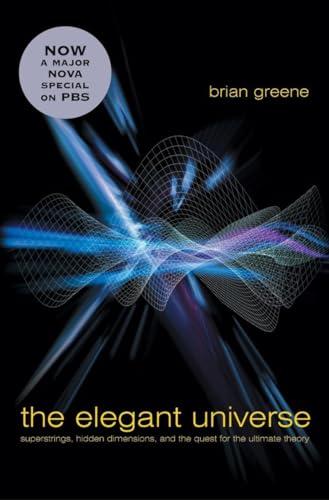
It was Greene's first book for a general audience and it covered modern physics, from what we can see to quantum realms and the multiverse, and how our senses are limited.
From his first wildly popular book for a general audience, The Elegant Universe, he has manifest the fascinating trajectory of modern physics. From a focus on what we can see to quant...
— Episode: Brian Greene — This Tiny Slice of Eterni...
It was Greene's first book for a general audience and it covered modern physics, from what we can see to quantum realms and the multiverse, and how our senses are limited.
From his first wildly popular book for a general audience, The Elegant Universe, he has manifest the fascinating trajectory of modern physics. From a focus on what we can see to quantum realms of string theory and the multiverse, to probing how our five senses are ill-equipped to sense the full nature of reality.
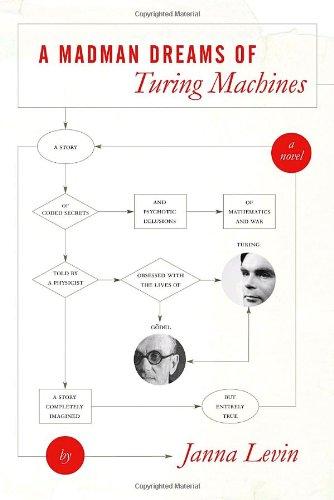
This novel centers on the lives and ideas of Kurt Gdel and Alan Turing, exploring the intersection of philosophical questions and scientific inquiry. The podcast extensively discussed the book's themes and explored the author's intentions in writing it.
Her novel, a mad band dreams of cheering machines, centers on the lives and ideas of two pivotal 20th century mathematicians, Kurt Gerdel, and Alan Turing.
— Episode: Janna Levin — Mathematics, Purpose, and...
This novel centers on the lives and ideas of Kurt Gdel and Alan Turing, exploring the intersection of philosophical questions and scientific inquiry. The podcast extensively discussed the book's themes and explored the author's intentions in writing it.
Her novel, a mad band dreams of cheering machines, centers on the lives and ideas of two pivotal 20th century mathematicians, Kurt Gerdel, and Alan Turing.
In our novel Jan 11 writes, one plus one will always be too. Churring and Gerdel's broken lives are mere anecdotes in the margins of their discoveries. But then their discoveries are evidence of our purpose. And their lives are parables on free will. And they are not the most advanced in difference. I want to tell their stories.
I think that the answers that we're going to get at the discoveries that we're going to make are going to be in mathematics. But they're going to be meaningless to us unless they're integrated into a sort of human perspective where we understand why we ask the questions. What the significance of the answer is for us and how the world is going to change as a result of having made those discoveries.
I definitely think it's the reason the book was structured as a novel. I try to stick as close to fact as possible. It's not the facts that I'm changing it's the approach to the facts and it's a sort of confession that no matter how I list these facts I am somehow not able to get at the truth that truth doesn't just drop out like a theorem if I follow certain logical steps and I think maybe it's saying something also about maybe my own approach to science no matter how much I follow these logical steps no matter how much I make real discoveries that will be on ambiguous I hope.
The book, which won the PEN/Bingham prize, explores the lives of Kurt Gdel and Alan Turing, weaving together their stories and scientific contributions with philosophical questions about truth and reality. The author aimed to create a reading experience that was almost overwhelming and unnerving, using vivid and surreal language.
I love the book. I think it's fantastic and, uh, and there's a lot in there to talk about.
I really hoped that the reader would have that experience because ultimately I think that's where the book nudges you know that any of this is real that the book isn't a figment of your imagination in the book itself.
I really wanted the book to be as much about language as anything else as much about of visceral experiences anything else
It's not so much about the specifics of the science the fact that science it's my subject is just the way it is for me
I did want the reader to have this sense that there are no true things really out except for things as crisp as one plus one equals to that are unambiguously true and and yet we we know we're getting closer to the truth even though we can't always prove it
This novel centers on the lives and ideas of Kurt Gdel and Alan Turing, exploring their contributions to mathematics and their impact on our understanding of meaning and purpose. The podcast extensively discusses themes and ideas from the book.
Her novel, a mad band dreams of cheering machines, centers on the lives and ideas of two pivotal 20th century mathematicians, Kurt Gerdel, and Alan Turing.
In our novel Jan 11 writes, one plus one will always be too. Churring and Gerdel's broken lives are mere anecdotes in the margins of their discoveries. But then their discoveries are evidence of our purpose. And their lives are parables on free will. And they are not the most advanced in difference. I want to tell their stories.
I really hoped that the reader would have that experience because ultimately I think that's where the book nudges. Do you know that any of this is real that the book isn't a figment of your imagination even though it's self-rebook itself, but somehow you aren't the author of the book itself.
The book, which won the PEN/Bingham prize, explores the intersection of philosophical questions and scientific inquiry, particularly focusing on the lives and work of Kurt Gdel and Alan Turing. The narrative weaves together their stories, highlighting their struggles with truth, reality, and the limits of human knowledge.
I love the book. I think it's fantastic and, uh, and there's a lot in there to talk about
I really hoped that the reader would have that experience because ultimately I think that's where the book nudges do you know that any of this is real that the book isn't a figment of your imagination in the book itself.
It was definitely pushing on that limit of what do we know and what don't we know, what do we take to be faith, what's rational to believe, what's not rational to believe.
I really wanted the book to be as much about language as anything else as much about of visceral experiences anything else
I did want the reader to have this sense that there are no true things really out except for things as crisp as one plus one equals to that are unambiguously true and and yet we we know we're getting closer to the truth even though we can't always prove it
It was described as Bobby McFerrin's favorite book in the Bible; he reads it every month, finding that it conveys every human emotion and shows that God understands human experience.
One, my favorite book in the Bible is the Psalms. I go through the Psalms every month. I read scripture constantly. The Psalms is like the book that I go to most of the time because in it is conveyed...
— Episode: Bobby McFerrin — Catching Song
It was described as Bobby McFerrin's favorite book in the Bible; he reads it every month, finding that it conveys every human emotion and shows that God understands human experience.
One, my favorite book in the Bible is the Psalms. I go through the Psalms every month. I read scripture constantly. The Psalms is like the book that I go to most of the time because in it is conveyed every human emotion.
It was described as one of the speaker's favorite books in the Bible, frequently consulted due to its wide range of human emotions, offering a sense that God understands human experience. The speaker stated that they read it every month.
One of my favorite book in the Bible is the Psalms.
I go through the Psalms every month. I read a re-scripture constantly, but the Psalms is like the book that I go to most of the time. Because in it is conveyed every human emotion. And what that tells me is that God gets it. He gets us.
It was described as Bobby McFerrin's favorite book in the Bible; he reads it every month and considers it a book that conveys every human emotion, suggesting that God understands human experiences completely.
One, my favorite book in the Bible is the Psalms. I go through the Psalms every month. I read scripture constantly. The Psalms is like the book that I go to most of the time because in it is conveyed every human emotion.
It was described as one of the speaker's favorite books in the Bible, containing every human emotion and conveying the idea that God understands human experience completely.
One of my favorite book in the Bible is the Psalms.
I go through the Psalms every month. I read a re-scripture constantly, but the Psalms is like the book that I go to most of the time. Because in it is conveyed every human emotion. And what that tells me is that God gets it. He gets us.
A 28-Day Program to Realize the Power of Meditation, Enhanced Version
The Science, Art, and Practice of Mindfulness
It was mentioned that the author's mindfulness book was published in 1981, and it discussed a retreat study where elderly men pretended to be 20 years younger. The results were phenomenal, showing improvements in hearing, vision, memory, and strength.
That was first reported in the mindfulness book.
— Episode: [Unedited] Ellen Langer with Krista Tipp...
It was mentioned that the author's mindfulness book was published in 1981, and it discussed a retreat study where elderly men pretended to be 20 years younger. The results were phenomenal, showing improvements in hearing, vision, memory, and strength.
That was first reported in the mindfulness book.
The Chambermaid study, which showed how changing the way chambermaids viewed their work from 'work' to 'exercise' had positive physiological effects, was first reported in this book. The book also details a retreat study where elderly men were asked to act as if they were 20 years younger, resulting in phenomenal improvements in physical and cognitive function.
The Chambermaid study was part of a series that I had begun back, I guess, started the research in 79 I remember because we published it in 81. And that was first reported in the mindfulness book.
That was the retreat study that you, a very retreat study where I took old men to a timeless retreat that had been retrofitted to 20 years earlier and had them live there as if it was a present speaking in the present tense and so on. And but as though they were 20 years younger.
It was mentioned that the author's mindfulness book was published in 1981 and that it included the chambermaids study. The book was also referenced as containing several studies on language.
That was first reported in the mindfulness book.
The author's mindfulness book, published in 1981, was mentioned in relation to the Chambermaid study, which showed how changing the language used to describe work (from 'work' to 'exercise') affected the chambermaids' physiological responses and overall perception of their jobs.
And that was first reported in the mindfulness book.
Healing Ourselves and the World Through Mindfulness
This book was Krista Tippett's favorite of Jon Kabat-Zinn's works. It was described as containing a lot of his personal story and aiming to demystify meditation.
I put a lot of my own personal story into Coming to Our Senses
— Episode: Jon Kabat-Zinn — Opening to Our Lives
This book was Krista Tippett's favorite of Jon Kabat-Zinn's works. It was described as containing a lot of his personal story and aiming to demystify meditation.
I put a lot of my own personal story into Coming to Our Senses
I want people to understand that when they come to meditation that it doesn't mean that you give up being a person and you become some kind of, I don't know, transparent, weirdo
The author mentioned writing this book a few years prior to the interview, and it was described as including his personal story about how he came to meditation, explaining it in a way to help people understand that meditation does not mean giving up being a person. He used it to illustrate how meditation changes one's relationship with their self-identity and to demystify the practice.
Yeah. Both literally and metaphorically.
I put a lot of my own personal story into Coming to Our Senses and some of it's actually in various books because I want people to understand that when they come to meditation that it doesn't mean that you give up being a person and you become some kind of, I don't know, transparent weirdo stories.
In fact, I stay away from even the words spiritual.
So it's not so much that I'm into demystifying meditation as it is as I'm into trying to make it so common sense to people that they will slap the side of the head and say, well, of course, why the hell didn't I know that like 30 years ago?
You're your beautiful long book that you were just a couple of years you know Coming to Our Senses and you've pointed out that that for the Buddha that you know the mind is also a sense and it is all about being body so talk to me about that and how that Can make a difference in a moment like this where the world around us is so frightening.
The speaker described it as their favorite book by Jon Kabat-Zinn, focusing on healing through mindfulness; the speaker mentioned including a lot of personal stories in it, and using it to demystify meditation.
I'd like to start with you, you know, I interview theologians and scientists and artists and physicians, all kinds of people. I always start the interview by asking whether there was a religious background to your life, into your child or well I suppose there was some background that could be called religious, you know,
And the story which I wrote up in Coming to Our Senses in part because I put a lot of my own personal story into Coming to Our Senses and some of it's actually in various books because I want people to understand that when they come to meditation that it doesn't mean that you give up being a person and you become some kind of, I don't know, transparent, weirdo, so it's but that you change your relationship to who you think you are as a person and in particular to the story of who you are or think you are.
Only that day dawns to which we are awake
The author discussed his book, explaining that he included a lot of his personal story in it to help people understand that meditation does not require them to give up being a person. He also mentions that the book explores how meditation can change one's relationship with their identity.
I wrote this book a few years ago called Coming to Our Senses and I meant it. Yeah. Both literally and metaphorically.
I put a lot of my own personal story into Coming to Our Senses and some of it's actually in various books because I want people to understand that when they come to meditation that it doesn't mean that you give up being a person and you become some kind of, I don't know, transparent weirdo stories.
In the sense where seeing the fallout from years of not really being in touch with the full dimension. And with the full dimensionality of what we were doing.
You're very beautiful long book that you were just a couple of years you know Coming to Our Senses and you've pointed out that that for the Buddha that you know the mind is also a sense and it is all about being body so talk to me about that and how that Can make a difference in a moment like this where the world around us is so frightening.
It was mentioned in relation to a chapter called "reflections on a grain of salt", which discussed the limitations of human knowledge and the order of the universe. The book's ideas resonated with Batalha's perspective on the universe's order and our capacity for discovery.
The diversity of the phenomena of nature is so vast. And the treasures hidden in the heavens so rich, precisely in order that the human mind shall never be lacking in fresh nourishment.
— Episode: Natalie Batalha — Exoplanets and Love: S...
It was mentioned in relation to a chapter called "reflections on a grain of salt", which discussed the limitations of human knowledge and the order of the universe. The book's ideas resonated with Batalha's perspective on the universe's order and our capacity for discovery.
The diversity of the phenomena of nature is so vast. And the treasures hidden in the heavens so rich, precisely in order that the human mind shall never be lacking in fresh nourishment.
understanding is a form of ecstasy
for small creatures such as we the vastness is bearable only through love
It focused on the wonder of the universe and the glory of it, inspiring deep feelings of reverence for the mysteries of the universe and a sense of intense beauty. It was seen as a book that presented things in a new way, particularly at the beginning of college.
That was a book written by Carl Sagan and called Cosmos. I think the subtitle is like the romance of science, something like that.
The book was referenced in relation to the idea that the universe is ordered, allowing humans to understand it, and a quote about understanding being a form of ecstasy was mentioned.
understanding is a form of ecstasy
the diversity of the phenomena of nature is so vast. And the treasures hidden in the heavens so rich, precisely in order that the human mind shall never be lacking in fresh nourishment
This book, read around the age of 18, focused on the wonder and glory of the universe and inspired deep feelings of reverence and a sense of intense beauty. It's described as being the right book at the right time, presenting things in a new way.
The second book came along when I was about 18 and that was a book written by Carl Sagan and called Cosmos. I think the subtitle is like the romance of science, something like that.
So, no but it was very much along those themes as well. You know, the wonder of the universe and the glory of it and I had experienced very deep feelings of reverence for the mysteries of the universe and feeling that sense of beauty. You know, just very intense beauty.
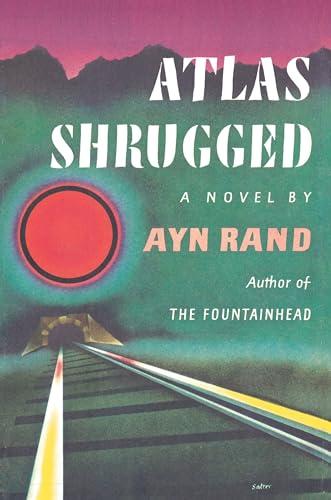
It was mentioned as a book that the speaker read in their youth, influencing their interest in libertarian ideas.
I was a very difficult child and I drove my parents crazy. But it, for me, finding people that wanted to have a conversation about ideas when I was a kid was virtually impossible to do.
— Episode: [Unedited] Heather McGhee and Matt Kibbe...
It was mentioned as a book that the speaker read in their youth, influencing their interest in libertarian ideas.
I was a very difficult child and I drove my parents crazy. But it, for me, finding people that wanted to have a conversation about ideas when I was a kid was virtually impossible to do.
A guest on Phil Donahue's show in 1979 mentioned having been impressed with Rand's books 15 years prior but feeling differently after gaining more education. Donahue did not answer her directly, prompting a discussion on how to handle disagreement civilly.
Fifteen years ago, I was impressed with your books and I sort of felt that your philosophy was proper. Today, however, I'm more educated and I find that if a company...
Well, you haven't heard the question yet.
Donahue mentioned having a past encounter with Ayn Rand, the author of Atlas Shrugged, and a discussion about her philosophy, which Donahue's perspective on had changed over time.
Fifteen years ago, I was impressed with your books and I sort of felt that your philosophy was proper. Today, however, I'm more educated and I find that if a company...
My work in Seventy-Litt displaying the quality of her brain.
Saint Augustine's Confessions was mentioned as a text used by Gisa LaWeb in her essay exploring her mother's experience with Alzheimer's, reflecting on the 'great unlearning' and what persists beyond memory loss.
And she called this the great unlearning, but it felt very important for her to observe what was left. And it's easy to put our finger on. We are on memories go and lots of features of identity go, bu...
— Episode: Alan Dienstag — Alzheimer's and the Spir...
Saint Augustine's Confessions was mentioned as a text used by Gisa LaWeb in her essay exploring her mother's experience with Alzheimer's, reflecting on the 'great unlearning' and what persists beyond memory loss.
And she called this the great unlearning, but it felt very important for her to observe what was left. And it's easy to put our finger on. We are on memories go and lots of features of identity go, but she felt, I just want to know what you think about this.
Krista Tippett mentioned Giza Leweb's essay, which drew parallels between her mother's Alzheimer's journey and Augustine's Confessions, highlighting the themes of memory loss and spiritual reflection.
She should call this the great unlearning, but she was very, it felt very important for her to observe what was left. And it's easy to put our finger on, we are on memory go, memories go. And lots of features have identity go, but she felt, I just wanna know what you think about this that intuition at feelings are still there, emotion is still there even when there are no words to put around it, that intuition is there. She felt that humor is something that stayed with her mother.
And she should call this the great unlearning, but she was very, it felt very important for her to observe what was left.
Gisa LaWeb used Saint Augustine's Confessions, along with other religious texts, to make sense of her mother's experience with Alzheimer's, focusing on what aspects of her mother's being endured.
And she called this the great unlearning, but it felt very important for her to observe what was left. And it's easy to put our finger on. We are on memories go and lots of features of identity go, but she felt, I just want to know what you think about this. Intuition, at feelings are still there. Emotion is still there even when there are no words to put around it that intuition is there. She felt that humor is something that stayed with her mother.
Augustine's Confessions was mentioned as one of several texts referenced in an essay about a mother's struggle with Alzheimer's disease. The essay considered themes of unlearning and what persists in the face of the illness.
Um, August- Ah, August- Ah, these, um, a Tim Wislum texts, and- and our Santa Guston's Confessions.
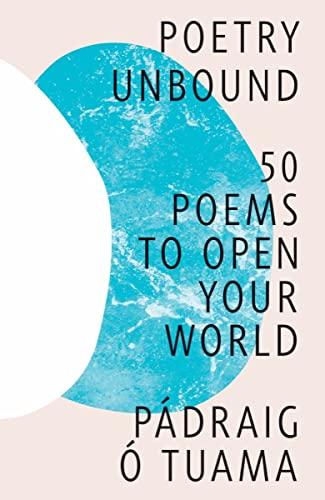
50 Poems to Open Your World
It was suggested that listeners could enjoy Padraig O'Tooma's book, "Poetry Unbound", a collection of 50 poems.
You may also enjoy Podrick's book, Poetry Unbound, 50 Poems to Open Your World.
— Episode: New From Poetry Unbound: A Series on Con...
It was suggested that listeners could enjoy Padraig O'Tooma's book, "Poetry Unbound", a collection of 50 poems.
You may also enjoy Podrick's book, Poetry Unbound, 50 Poems to Open Your World.
The speaker was very complimentary of the book, stating that it was a great way to open your world to poetry.
You may also enjoy Podrick's new book, Poetry Unbound, 50 Poems to Open Your World.
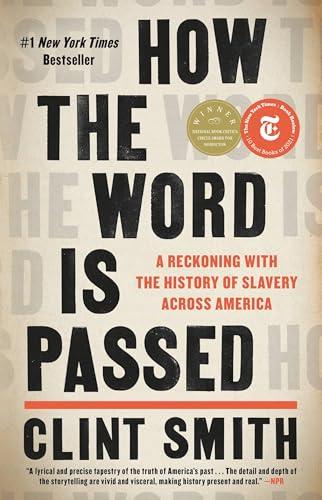
A Reckoning with the History of Slavery Across America
It was discussed how Clint Smith's book explored the physicality of the American history of slavery and the entanglement between language and the intelligence of the body.
And I've been following Clint Smith for a few years, first through his wonderful book How the Word Is Past.
— Episode: Clint Smith — What We Know in the "Marro...
It was discussed how Clint Smith's book explored the physicality of the American history of slavery and the entanglement between language and the intelligence of the body.
And I've been following Clint Smith for a few years, first through his wonderful book How the Word Is Past.
But as I delved into the fullness of his work, I found that he also, and I would say first and foremost, is a poet.
His narrative nonfiction book, How the Word Is Past, a reckoning with the history of slavery across America won the National Book Critics Circle Award for Nonfiction and many other honors.
So I think you know I never quite know what the shape of an interview will be until I actually do the prep even though I might think I know and this time something really emerged that may be a little different from what I thought or from what you've done before.
I want to talk about how the word was passed where again you know we even talk about word and body and language and who you are and story and how all of that is intertwined and you know one of the kind of distinctive contributions of this book I mean I don't know that I saw this word used but to me it's kind of a pilgrimage that you took uh two places and you know you mentioned monuments little while ago and and it was kind of sparked it kind of gestated in your mind as statues started coming down um which were you know symbolic and of course not just symbolic but these physical things and so this was really a pilgrimage you know it was about history but it was about standing on certain ground right it was about being physically present to it um well first of all would you talk about this just this phrase how the word was passed where that came from why that is the title of the book.
This book is Clint Smith's 2021 narrative nonfiction work that won the National Book Critics Circle Award for Nonfiction. The book is a poignant and insightful exploration of the legacy of slavery in America, through a pilgrimage to sites and monuments across the country.
I'm sitting here with my three books.
And I think the producer you've been dealing with is Kayla Edwards.
And you probably haven't made this connection, but she was the opinion section editor of the Davidson newspaper, like you.
So I want you to know that as we start.
I think that was like five or six years ago now.
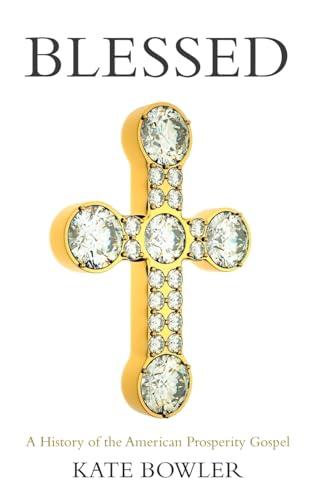
A History of the American Prosperity Gospel
This book was Kate's first work in the field of American religious history, published in 2013.
Kate Bowler is an associate professor at Duke University Divinity School. She made an early name in her field of American religious history with her 2013 book, Blessed, a History of t...
— Episode: Kate Bowler — On Being in a Body
This book was Kate's first work in the field of American religious history, published in 2013.
Kate Bowler is an associate professor at Duke University Divinity School. She made an early name in her field of American religious history with her 2013 book, Blessed, a History of the American Prosperity Gospel.
So and this actually also just before we leave the Mennonites behind, I started with you getting really fascinated by hearing about a new Mennonite mega church. I couldn't believe it. I it broke a part of my brain that puts information together, because I was on the one Winnipeg Manitoba, the glories of the prairies please visit has only one fast road.
And they put a traffic light up on it. And I was sitting there at the light full of Christian rage. And, and I thought that I was watching a factory empty. And it turns out that this pop up building was in fact, a mega church in middle of the large Canada's largest mega church, and that it was mostly attended by Mennonites.
And that people I knew had recently contributed to pastors appreciation day, in which their pastor had been given a motorcycle, and then he rode it around on stage. And I was like, absolutely not. This is for Americans.
And so you went down this rabbit hole of what is known as the prosperity gospel, which is a Pentecostal movement.
And and that's such a big wide story also that we don't have time to go into here. But I want to say in this room, it's so easy to make fun of something like the prosperity gospel and some of the ways that it gets reported and caricatured.
You know, when we are secular and erudite, what I really appreciate about the book you wrote, and I mean, you have your critique, which one would have of anything one was studying closely enough. But I appreciate how you so looked for what was what is human and understandable. And what this particular religious movement also says about the rest of us.
And I thought, well, if it can happen in Mennonite world, it can happen in anywhere.
But I also saw the desire to escape. Believers wanted an escape from poverty, failing health, and the feeling that their lives were leaky blankets.
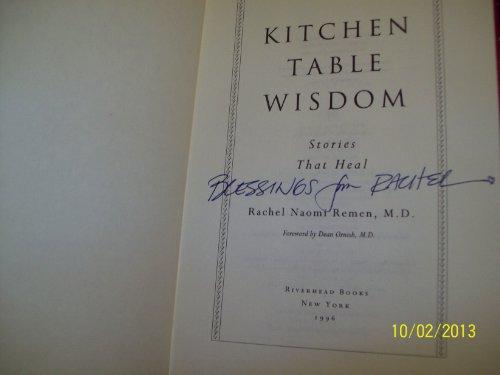
Kitchen Table Wisdom is a book by Rachel Naomi Remen, it was translated into 23 languages, and was a beloved book.
Dr. Rachel Naomi Remen's beloved books, Kitchen Table Wisdom and My Grandfather's Blessings have been translated into 23 languages.
— Episode: Rachel Naomi Remen – How We Live With Lo...
Kitchen Table Wisdom is a book by Rachel Naomi Remen, it was translated into 23 languages, and was a beloved book.
Dr. Rachel Naomi Remen's beloved books, Kitchen Table Wisdom and My Grandfather's Blessings have been translated into 23 languages.
Her beloved books include Kitchen Table Wisdom and My Grandfather's Blessings.
The funniest story, I think this one is in Kitchen Table Wisdom, is this happened at Sloan Kettering many, many years ago when I was an intern, first year doctor.
Rachel Naomi Remen wrote the book "Kitchen Table Wisdom" after her editor told her to stop writing because it was finished. Remen, a physician and author, had spent months writing down stories from her life and work. Her editor realized that the stories themselves were the book.
And so I'm sitting in front of the computer. I've got my lessons under my belt. I don't know how to write a book but I know how to tell a story. So I tell the computer a story and then I can remember another one.
I sent in these 400 pages of stories to my editor and I said I'm sorry. I now know it's a book about healing. And I've got all the illustrations. Here they are.
She says, stop writing. I say why? She says it's done. And I am horrified.
I say it's a book of stories? And she says yes. And I said I can't write a book of stories.
I said it has no footnotes. She says well why does it need footnotes Rachel? And I tell her that if it has no footnotes, it has no credibility. And there's this silence.
Note: The book recommendations on this page are discovered automatically from podcast transcripts, and may be incorrect or incomplete.
Podcast Name