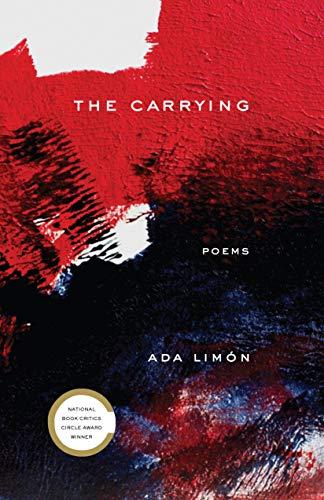
The Carrying
Ada Limón
Mentioned 2 years ago
“The End of Poetry” by Ada Limón
Wisdom to replenish and orient in a tender, tumultuous time to be alive. Spiritual inquiry, science, social healing, and poetry. Conversations to live by. With a 20-year archive featuring luminaries like Mary Oliver, Thich Nhat Hanh, and Desmond Tutu, each episode brings a new discovery about t...
Recently mentioned
Ada Limón
Mentioned 2 years ago
“The End of Poetry” by Ada Limón
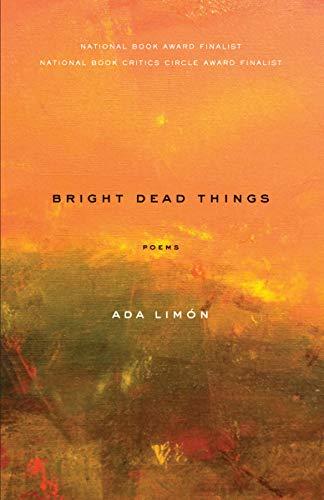
Ada Limón
Mentioned 2 years ago
“The End of Poetry” by Ada Limón
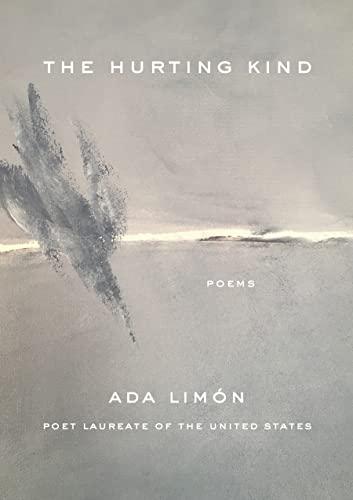
Ada Limón
Mentioned 2 years ago
“The End of Poetry” by Ada Limón
David Nicholls
Mentioned 2 years ago
“The End of Poetry” by Ada Limón
Atul Gawande
Mentioned 2 years ago
Atul Gawande — On Mortality and Meaning
Cixin Liu
Mentioned 2 years ago
Atul Gawande — On Mortality and Meaning
Royce Josiah
Mentioned 2 years ago
Atul Gawande — On Mortality and Meaning
Atul Gawande
Mentioned 2 years ago
Atul Gawande — On Mortality and Meaning
Elizabeth Alexander
Mentioned 2 years ago
“Ars Poetica #100: I Believe” by Elizabeth Alexander
Padmasambhava
Mentioned 2 years ago
Luis Alberto Urrea — On Our Belonging to Each Other
Luis Alberto Urrea
Mentioned 2 years ago
Luis Alberto Urrea — On Our Belonging to Each Other
Luis Alberto Urrea
Mentioned 2 years ago
Luis Alberto Urrea — On Our Belonging to Each Other
Poetry and the Preservation of the Soul in Corporate America
The author said he loved the book "The Heart Aroused", and that he was bullied into writing it in a good way. He then explained that the language in the corporate world is not large enough for the territory they have already entered.
I love the new The Consolations book.
— Episode: [Unedited] David Whyte with Krista Tippe...
The author said he loved the book "The Heart Aroused", and that he was bullied into writing it in a good way. He then explained that the language in the corporate world is not large enough for the territory they have already entered.
I love the new The Consolations book.
I love the Consolations book.
I'm still in the heart of it. I work with big companies and their leadership teams all around the world. But to begin with all I knew was my bitterly earned experience within non-profit organizations.
I went full time as a poet never imagining that I would work in the belly of the beast in the corporate world.
The language we have in that world is not large enough for the territory that we've already entered. The language we have in and in your work I've just heard the language that's large enough for us.
The hope is I can arrange to have the meeting with my spouse with my children with my life without being vulnerable. If I just arrange it all properly if I just say exactly that no I'm sorry.
I noticed that vulnerability is not a weakness a passing in disposition or something we can arrange to do without.
To lift the siege, we do our best for our children but then at the right time send them off with a blessing no matter their perilous direction.
Rest is the conversation between what we love to do and how we love to be.
This is the bright home in which I live, this is where I ask my friends to come, this is where I want to love all the things it has taken me so long to learn to love.
I'm also intrigued by you know aloneness, we talked about how alone is the first word in that book and there's a dance that you name and kind of tease out between aloneness and belonging.
This is the temple of my adult aloneness and I belong to that aloneness as I belong to my life. There is no house like the house of belonging.
And the clearing of a space so that you can find your foundational mode by which you hold the world in your affections.
I have this poem actually which I wrote out of when I was in the very intense period out of which that poem The House of Belonging came, when I wrote the book called The House of Belonging.
Human genius lies in the geography of the body and its conversation with the world.
The face in the stone is a mirror looking into you.
You have never looked into the immovability of stone like this. The way it holds you gives you not a way forward but a doorway in.
Staunches your need to leave, becomes faithful by going nowhere. Something that wants you to stay here and look back.
The face in the stone is a mirror looking into you. You have gazed into the moving waters.
You have seen the slow light in the sky above Loch Aina. Beneath you streams have flowed and rivers of earth have moved beneath your feet.
But you have never looked into the immovability of stone like this. The way it holds you gives you not a way forward but a doorway in.
Staunches your need to leave, becomes faithful by going nowhere. Something that wants you to stay here and look back.
Be weathered by what comes to you. Like the way you too have travelled from so far away to be here.
Once reluctant and now as solid and as here and as willing to be touched as everything you have found.
We shape ourselves to fit this world working together. We shape ourselves to fit this world and by the world are shaped again.
The visible and the invisible. Working together in common cause to produce the miraculous.
I'm thinking of the way the invisible air traveled at speed around a shaped wing easily holds our weight. So may we in this life trust to those elements we have yet to see or imagine and find the true shape of our own self by forming it well to the great intangibles about us.
I'm thinking of the way the invisible air traveled at speed around a shaped wing easily holds our weight.
And find the true shape, the true shape of our own self by forming it well to the great intangibles about us.
So if I don't have anything decent I won't be sending you anything.
We shape ourselves to fit this world working together.
We shape ourselves to fit this world and by the world are shaped again.
The Solace, Nourishment and Underlying Meaning of Everyday Words
The author discussed his book "Consolations" and its themes of solace, nourishment and the underlying meaning of everyday words, particularly the concept of aloneness. He also spoke about the importance of stopping the conversation and cultivating a relationship with the unknown.
I have an essay in my latest book, Consolations, in which I look at the way human beings are constantly naming love too early, what kind of love they're in.
— Episode: [Unedited] David Whyte with Krista Tippe...
The author discussed his book "Consolations" and its themes of solace, nourishment and the underlying meaning of everyday words, particularly the concept of aloneness. He also spoke about the importance of stopping the conversation and cultivating a relationship with the unknown.
I have an essay in my latest book, Consolations, in which I look at the way human beings are constantly naming love too early, what kind of love they're in.
I have another essay on self-knowledge where I say self-knowledge is not fully possible for human beings.
I love the Consolations book.
I noticed that Vulnerability is not a weakness a passing in disposition or something we can arrange to do without.
The only choice we have as we mature is how we inhabit our vulnerability.
And you say this, and I'd also just like to understand this better. Human genius lies in the geography of the body and its conversation with the world.
This book's title poem was read and discussed. The poem uses the metaphor of a monk hearing both a bell and a blackbird to represent the tension between inner reflection and engagement with the external world.
And The Bell and The Blackbird is an old meme in the Irish tradition. It's the image of a monk standing on the edge of the monastic precinct in the old Celtic Christian days, and hear...
— Episode: Poetry From the On Being Gathering — Dav...
This book's title poem was read and discussed. The poem uses the metaphor of a monk hearing both a bell and a blackbird to represent the tension between inner reflection and engagement with the external world.
And The Bell and The Blackbird is an old meme in the Irish tradition. It's the image of a monk standing on the edge of the monastic precinct in the old Celtic Christian days, and hearing the sound of a bell calling him to prayer.
And at the same time, he hears the blackbird calling from outside of the monastic precinct, and he says to himself, that's also the most beautiful sound in the world.
Fiftieth-Anniversary Edition
It was described as a compelling book about a lost young man who finds faith and happiness in a monastery; it was mentioned as a pivotal book that changed the speaker's life and is still relevant to people today. The speaker also noted that Merton himself later seemed embarrassed by the book's zeal and judgmental tone.
And the documentary is so compelling That it prompted me to go out And read his book The Seven Story Mountain And which, you know, to coin a phrase Change my life
— Episode: [Unedited] James Martin with Krista Tipp...
It was described as a compelling book about a lost young man who finds faith and happiness in a monastery; it was mentioned as a pivotal book that changed the speaker's life and is still relevant to people today. The speaker also noted that Merton himself later seemed embarrassed by the book's zeal and judgmental tone.
And the documentary is so compelling That it prompted me to go out And read his book The Seven Story Mountain And which, you know, to coin a phrase Change my life
Thomas Martin's book The Seven Story Mountain Isn't it? I mean you must have come across that Oh, dozens So many
He's a sort of a lost young man Who lives a fairly disillude life Born in France studies in England finally comes to Columbia University And Stumbles on the trapest monks And finds a location in the water A child is well and there he was
And you know over in the UK and then in the United States And he has a kind of aimless sad life Early on and he finds the monastery And he's happy
I mean isn't it true that later on he was kind of embarrassed by that book Because it is that it has that zeal of a convert He was he was he was He said I don't know the man that wrote that book
It was described as compelling and life-changing for the speaker, who was at a crossroads in their life when they read it. It follows a lost young man's journey to find his vocation.
It's pretty amazing the number of really interesting monastics in particular who were led down that path by Thomas Martin's book The Seven Story Mountain.
So many. Yeah, here's a book written in the 40s that still speaks to people and I think you know, for those who don't know what it's about, you know, he's a sort of a lost young man who lives a fairly disillude life born in France studies in England finally comes to Columbia University and stumbles on the trappest monks and finds his vocation in enters.
It was described as a compelling book about a lost young man who finds happiness in a monastery; it was said to have changed the speaker's life and still speaks to people today, although the author later expressed some embarrassment about it.
And the documentary is so compelling That it prompted me to go out And read his book The Seven Story Mountain And which, you know, to coin a phrase Change my life
Thomas Martin's book The Seven Story Mountain Isn't it? I mean you must have come across that Oh, dozens So many
He's a sort of a lost young man Who lives a fairly disillude life Born in France studies in England finally comes to Columbia University And Stumbles on the trapest monks And finds a location in the water A child is well and there he was
And I think you know I've you know conducted Book clubs and retreats and given talks And stuff like that and I think one of the things That people like about Merton is his passion He's very black and white You know early on, you know, a world-bad Monastery did but they can write this out
He was he was he was He said I don't know the man that wrote that book
It was described as compelling and life-changing for the speaker, prompting him to explore a different path in life after working in corporate finance. The book follows a lost young man's journey to find his vocation.
It's pretty amazing the number of really interesting monastics in particular who were led down that path by Thomas Martin's book The Seven Story Mountain.
So many. Yeah, here's a book written in the 40s that still speaks to people and I think you know, for those who don't know what it's about, you know, he's a sort of a lost young man who lives a fairly disillude life born in France studies in England finally comes to Columbia University and stumbles on the trappest monks and finds his vocation in enters.
This autobiography, published in 1948, was a bestseller, making Merton a famous monk. The speaker discussed its impact, noting both its initial self-righteous tone and Merton's later, more mature self-acceptance.
Thomas Merton, seven story mountain, his autobiography was published when he was a young man in his middle 30s, 1948.
He began as a perfectionist and ended somewhere else much more understanding of his own frailty and just willing to even put it on the page knowing that we'd be sitting here talking about it years after his death but he didn't he didn't worry that too much.
I read the seventh story mountain after I had read some of his other work and I didn't really enjoy it. I mean if I'm that it's obviously there's a great deal in it but I the tone of it is somewhat self-righteous and you all you describe this later epiphany video that he had I think maybe a decade after he wrote the seventh story mountain where he sort of accepted himself as a full human being.
The speaker was initially captivated by the narrative and the genuineness of Merton's search for faith. However, it also prompted reflection on the speaker's own religious beliefs, highlighting the strangeness and recognition of Merton's journey from no belief to becoming a Trappist monk. It deeply impacted the speaker's understanding of Catholicism.
I bought *Seven Story Mountain*, one summer day, a couple of years later, in the middle of an internship.
What year are we talking here? This is the mid-80s, that was in 1985. It took the book home, which has knocked out by it.
As so many people have been the power of the narrative, the genuineness of his searching, but especially for the Catholic reader. This sense of strangeness and recognition.
Here's this guy who comes from no belief at all, who becomes a Catholic, and then the next thing you know he's becoming a trapeze monk. And reading the book as a Catholic you think, is this really my religion? It sounds just so wonderfully strange and powerful.
I was just knocked out by it, and I tried to follow his path really for a year, so I made a little space in the library that was a kind of monastic meditation space with books all around.
The Evolution of the Forgiveness Instinct
The book was introduced by Krista Tippett, who said she was hooked by its opening line and highlighted its blend of scientific research and real‑world stories. It was presented as a groundbreaking look at the evolutionary roots of revenge and forgiveness, arguing that forgiveness is an instinct shaped by natural selection rather than merely a learned virtue. The discussion emphasized the author’s dissatisfaction with traditional categories of these emotions and praised the work for reshaping common assumptions.
This book explores the evolutionary and biological basis of both revenge and forgiveness, challenging common assumptions about human nature and offering a new perspective on these powerful emotions. The author's research suggests that forgiveness is not merely a learned behavior but an instinct shaped by natural selection.
I was hooked by the first line of Beyond Revenge, a book by the research psychologist Michael McCullough.
One of the things that got me writing Beyond Revenge actually was a dissatisfaction with the kind of boxes that we all tend to put revenge and forgiveness in as human dispositions.
I interviewed Michael McCullough in 2008 just after he published Beyond Revenge.
His book is Beyond Revenge, the Evolution of the forgiveness instinct.
The book blends science, social science, and real-world stories to explore revenge and forgiveness, highlighting their evolutionary purposes and the natural human capacity for both. The author's personal passion and interest in the subject was also noted.
I really like in your book the mix of science and social science and stories, real world stories.
One of the things that got me writing Beyond Revenge actually was was a dissatisfaction with the kind of boxes that we all tend to put.And that's a revenge and forgiveness in as as human dispositions.
You know you said that every day acts of forgiveness are incredibly common among people between people who know each other. Right you know we think of forgiveness as these heroic acts and there are always these heroic examples of forgiveness but you said.You know it's you think we think of it as this bomb for great wounds, but you said yet in daily life forgiveness is more often like a band date on a scrape.
The book blends science, social science, and real-world stories to explore the evolutionary purpose of revenge and the surprisingly strong human capacity for forgiveness. It challenges common assumptions about revenge as a disease and forgiveness as a learned behavior.
I really like in your book the mix of science and social science and stories, real world stories.
One of the things that got me writing Beyond Revenge actually was was a dissatisfaction with the kind of boxes that we all tend to put. And that's a revenge and forgiveness in as as human dispositions.
You know you said that every day acts of forgiveness are incredibly common among people between people who know each other. Right you know we think of forgiveness as these heroic acts and there are always these heroic examples of forgiveness but you said. You know it's you think we think of it as this bomb for great wounds, but you said yet in daily life forgiveness is more often like a band date on a scrape.
The Convergence of Science and Spirituality
The book was discussed by Thupten Jinpa and Richard Davidson (with Krista Tippett), who highlighted its recounting of the Dalai Lama’s long‑term dialogue with scientists and its central message that compassion should guide human motivation and scientific practice. They also noted the Dalai Lama’s willingness to discard any Buddhist teaching that conflicted with empirical evidence, underscoring the work’s ethical emphasis. The overall tone was enthusiastic and endorsing.
This book told the history of many years of engagement with scientists and had the overarching theme of compassion being central in human motivation.
And for me, the most compelling part of that book in addition to personal stories is the overarching theme, which is the need for taking compassion to be central in human motivation.
The book tells the Dalai Lama's story of many years of engagement with science, with a powerful theme of the need for compassion to be central in human motivation and not forgetting the ethical considerations of science.
another book that I assisted him was the book that told his story of many years of engagement with science scientists universe in the single atom where you know for me the most compelling part of that book in addition to personal stories is overarching kind of theme which is the need for taking compassion to be central in human motivation and not forgetting that science is one among many human activities that are ultimately aimed at better mental humanity somehow that ethical consideration that underlight you know the whole scientific revolution in the early days must not be forgotten and how the scientist particularly as you know in the field of biogenetics they are now creating new realities which human beings never confronted in the past which has huge implications for the survival of the species in the world like and of you know as a whole he's appealed to the scientist to not to take these lightly that take the ethical responsibility of what they are doing seriously
In "Universe in a Single Atom", the Dalai Lama recounted his many years of engagement with science, emphasizing the importance of compassion as a central human motivation and reminding people that science should ethically consider the potential impacts of its advancements.
another book that I assisted him was the book that told his story of many years of engagement with science scientists universe in the single atom where you know for me the most compelling part of that book in addition to personal stories is overarching kind of theme which is the need for taking compassion to be central in human motivation and not forgetting that science is one among many human activities that are ultimately aimed at better mental humanity somehow that ethical consideration that underlight you know the whole scientific revolution in the early days must not be forgotten and how the scientist particularly as you know in the field of biogenetics they are now creating new realities which human beings never confronted in the past which has huge implications for the survival of the species in the world like and of you know as a whole he's appealed to the scientist to not to take these lightly that take the ethical responsibility of what they are doing seriously
The Dalai Lama's book on science and spirituality was mentioned; the speaker noted that the Dalai Lama is prepared to abandon any Buddhist tenets contradicted by scientific fact, but distinguishes between scientific fact and assumption.
if there's any tenant of Buddhism which is directly contradicted by scientific fact, that he's prepared to give that up.
The Dalai Lama stated in his book that if any tenant of Buddhism is contradicted by scientific fact, he is willing to abandon it. He distinguishes between scientific fact and scientific assumption.
if there's any tenant of Buddhism which is directly contradicted by scientific fact that he's prepared to give that up.
It was mentioned that in the beginning of his book on science and spirituality, the Dalai Lama says that if any tenant of Buddhism is directly contradicted by scientific fact, he is prepared to give it up. He makes a distinction between scientific fact and scientific assumption.
In the beginning of his book on science and spirituality, the book entitled The Universe in a Single Atom says that if there's any tenant of Buddhism which is directly contradicted by scientific fact that he's prepared to give that up.
Parallel Universes and the Deep Laws of the Cosmos
The podcast discussed Greene's book, "The Hidden Reality," which explores the possibility of parallel universes and multiple realities, concepts that are considered potential implications of string theory. The conversation highlighted how these ideas are derived from mathematical findings, not mere speculation.
So The Hidden Reality is your latest book, right? Is your newest book? Yes, that's right. And that takes on this very kind of fiction science subject of parallel universe, a multiple,...
— Episode: [Unedited] Brian Greene with Krista Tipp...
The podcast discussed Greene's book, "The Hidden Reality," which explores the possibility of parallel universes and multiple realities, concepts that are considered potential implications of string theory. The conversation highlighted how these ideas are derived from mathematical findings, not mere speculation.
So The Hidden Reality is your latest book, right? Is your newest book? Yes, that's right. And that takes on this very kind of fiction science subject of parallel universe, a multiple, universe, a multiple realities.
And you go through several different iterations of that, different possibilities. I think as a fellow Star Trek fan long time.
Is it one of the implications of this is there is no such thing as a road untraveled? Right. And that comes from one particular flavor of multiverse that comes from quantum mechanics.
And again one of the things I emphasized in the book and it's worth restating now, these ideas are brought to us by the mathematics. We don't dream up these ideas and try to shoehorn them into equations. That's not how we work.
We sit there, the math jumps out of the page kind of grabs us by the pels, slaps us in the face and says, look at me what this is telling you is there might be parallel universes.
Greene's newest book at the time of the podcast, it explores the possibilities of parallel universes and multiple realities, particularly focusing on implications derived from string theory.
So The Hidden Reality is your latest book, right? Is your newest book? Yes, that's right. And that takes on this very kind of fiction science subject of parallel universe, a multiple, universe, a multiple realities.

A Novel in Four Parts With Epilogue
Martin Sheen found this book to be a galvanizing experience, particularly its themes of commitment, honesty, family, and community; he stated that it was a book that he found himself returning to again and again.
And the final step I guess in my journey was the brothers Karamontsoff.
— Episode: [Unedited] Martin Sheen with Krista Tipp...
Martin Sheen found this book to be a galvanizing experience, particularly its themes of commitment, honesty, family, and community; he stated that it was a book that he found himself returning to again and again.
And the final step I guess in my journey was the brothers Karamontsoff.
It's about the reality of commitment. It's about knowing that you're living an honest life and knowing when you're not basically and it's about family. It's done within family and community.
It's not something that you can easily shake. It's not a work that you can put down and pick up something else and not reflect. You'll find yourself going back to it again and again and again.
It was a Dorothy Day's favorite book as well.
And that did it, you know, it got me in ways that I could not have imagined. I stayed up nights I took me a week to read it.
It was described as a great novel exploring debates about God, free will, and morality. The speaker found it to be about the reality of commitment and living an honest life, within family and community, and said it was a book they returned to again and again.
it's a great novel and I would recommend it unless you want your life changed
it's about the reality of commitment it's about knowing that you're living an honest life and knowing when you're not basically and it's about family it's done within family and community and it's not something that you can easily shake it's not a work that you can put down and pick up something else and not reflect you find yourself going back to it again and again and again
it was a Dorothy Day's favorite book as well I have read it she would reread it and talk about it and write about it
Dr. Shafty had a grip on the reality of life as it is and you know he was a habitual gambler he was not a celebrated man in many respects but he long to live an honest and free life because that's really where we find the presence of God or the one the other whatever we express as a higher power that we are part of a community and that work does Shafty's work specifically in that book is about being a part of a community and not being able to let it go without a severe penalty
Martin Sheen mentioned that this book was given to him by Terrence Malick and that it galvanized him, leading to his return to Catholicism. He described it as a work about commitment, honesty, family, and community, one that profoundly impacted him and that he reread many times.
And the final step I guess in my journey was the brothers Karamontsoff.
It's about the reality of commitment. It's about knowing that you're living an honest life and knowing when you're not basically and it's about family. It's done within family and community.
It's not something that you can easily shake. It's not a work that you can put down and pick up something else and not reflect. You'll find yourself going back to it again and again and again.
And that did it, you know, it got me in ways that I could not have imagined. I stayed up nights I took me a week to read it.
It was described as a great novel that explores debates about God, free will, and morality. The speaker found it impactful and a source of reflection, rereading it frequently.
it's a great novel and I would recommend it unless you want your life changed
it's about the reality of commitment it's about knowing that you're living an honest life and knowing when you're not basically and it's about family it's done within family and community and it's not something that you can easily shake it's not a work that you can put down and pick up something else and not reflect you find yourself going back to it again and again and again
it was over a thousand pages
it got me in ways that I could not have imagined I stayed up nights I took me a week read it
A passage from this book was quoted to illustrate how the main character, despite being an atheist, expresses a deep appreciation for the natural world, aligning with the Orthodox Christian experience of connecting with God through the senses. The irony of an atheist articulating a Christian sentiment was discussed.
he said a lot of my boy so I want to live and go on living even if it's contrary to the rules of logic even if I do not believe in the divine order of things the sticky young leaves are merging from their buds in this spring are dear to my heart so is the blue sky and so are some human beings even though I often don't know why I like them I'll get drunk on my own emotion I love these sticky little leaves and the blue sky that's what you don't love those things with reason with logic you love them with your innerts with your belly yes
A passage from Dostoevsky's book was quoted, where the character Ivan Karamazov expresses a love for nature and earthly things despite his atheism, ironically mirroring an aspect of the Orthodox Christian experience of faith.
he said a lot of my boy so I want to live and go on living even if it's contrary to the rules of logic even if I do not believe in the divine order of things the sticky young leaves are merging from their buds in this spring are dear to my heart so is the blue sky and so are some human beings even though I often don't know why I like them I'll get drunk on my own emotion I love these sticky little leaves and the blue sky that's what you don't love those things with reason with logic you love them with your innerts with your belly
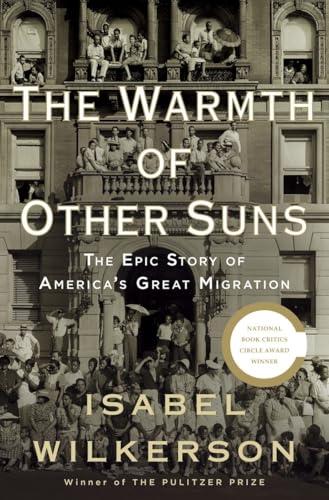
The Epic Story of America's Great Migration
It is a comprehensive popular history of the Great Migration, told through the lives of three people across generations who moved from the South to different parts of the United States during the 20th century. Listeners described it as heartbreaking yet joyful, and overwhelmingly impactful.
It's a carrier of histories, stories, truths that help make sense of human and social challenges newly visible at the heart of our life together.
— Episode: Isabel Wilkerson — This History is Long;...
It is a comprehensive popular history of the Great Migration, told through the lives of three people across generations who moved from the South to different parts of the United States during the 20th century. Listeners described it as heartbreaking yet joyful, and overwhelmingly impactful.
It's a carrier of histories, stories, truths that help make sense of human and social challenges newly visible at the heart of our life together.
I was hoping I would be able to live as a man and express myself in a manly way...without the fear of getting lynched at night.
I had no idea. I hear it over and over again from people who actually were alive at the time that some of these things were going on.
From the open door in the vestibule, I see her. She is sitting in a cotton house dress on a baby blue plastic covered easy chair by the window.
They did not ask to be accepted, but declared themselves the Americans that perhaps few others recognized, but that they had always been deep within their hearts.
This book, published in 2010, recounts the Great Migration of six million African Americans from the South to northern US cities in the 20th century, focusing on three individuals' experiences. It was praised for its narrative style, combining historical rigor with empathetic storytelling and was considered a major contribution to understanding this historical event and the modern US.
By their actions, they did not dream the American dream. They willed it into being by a definition of their own choosing.
Perhaps it is not a question of whether the migrants brought good or ill to the cities they fled to or were pushed or pulled to their destinations, but a question of how they summoned the courage to leave in the first place.
I was leaving the South to fling myself into the unknown. I was taking a part of the South to transplant in alien soil to see if it could grow differently, if it could drink of new and cool rains, bend in strange winds, respond to The Warmth of Other Suns, and perhaps, just perhaps, to bloom.
This is an epic act of reporting and writing...over 15 years, yielding a majestic work of narrative nonfiction. It's the story of the migration of nearly 6 million people from the south of the United States to the north, one of the biggest under-reported stories of the 20th century, told through the lens of three lives.
If you don't finish this book soon, I'm going to be proofreading from heaven.
Wilkerson's book was mentioned in relation to the 20th-century exodus of African Americans from the South to the North, and how they faced restricted housing options and exorbitant rates due to lack of choice, highlighting the systemic inequalities built into American cities.
It was just speaking with Isabel Wilkerson, who wrote The Warmth of Other Suns.
It was described as an epic work of narrative nonfiction that chronicles the Great Migration of six million African Americans from the South to the North in the 20th century. The book weaves together the stories of three individuals to illustrate the challenges and triumphs of this migration, shedding light on enduring social issues.
It's a carrier of histories, stories, truths that help make sense of human and social challenges newly visible at the heart of our life together.
I was leaving the South to fling myself into the unknown. I was taking a part of the South to transplant in alien soil, to see if it could grow differently, if it could drink of new and cool rains, bend in strange winds, respond to The Warmth of Other Suns, and perhaps, just perhaps, to bloom.
I was hoping I would be able to live as a man and express myself in a manly way...without the fear of getting lynched at night.
From the open door in the vestibule, I see her. She is sitting in a cotton house dress on a baby blue plastic covered easy chair by the window. She is looking through a parting of the curtains at the street circus below.
Perhaps it is not a question of whether the migrants brought good or will...But a question of how they summoned the courage to leave in the first place or how they found the will to press beyond the forces against them and the faith in a country that had rejected them for so long.
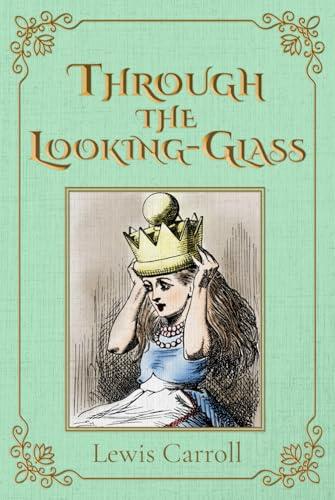
The 1871 Classic Edition with Original Illustrations
Krista Tippett mentioned Lewis Carroll's book, *Through the Looking-Glass*, and referenced a quote from the White Queen about memory working backward to frame the conversation's focus on remembering forward.
it's a poor memory that only works backwards
— Episode: [Unedited] Hendrik Hertzberg, Serene Jon...
Krista Tippett mentioned Lewis Carroll's book, *Through the Looking-Glass*, and referenced a quote from the White Queen about memory working backward to frame the conversation's focus on remembering forward.
it's a poor memory that only works backwards
Krista Tippett mentioned Lewis Carroll's book, *Through the Looking-Glass*, and quoted the White Queen's line about memory working backward, which she used to frame the conversation's focus on remembering forward.
it's a poor memory that only works backwards
A line from Lewis Carroll's "Through the Looking-Glass" inspired Krista Tippett's concept of "Remembering Forward," capturing the profound learning in her life of conversation. The quote, "It's a poor memory that only works backward," is mentioned as inspirational.
It's a poor memory that only works backward.
The author mentions a quote from this book, "It's a poor memory that only works backward." This quote inspired the author's concept of "Remembering Forward."
it's a poor memory that only works backward
A line from Lewis Carroll's "Through the Looking-Glass" inspired Krista Tippett's concept of "Remembering Forward," highlighting the profound learning in her life of conversation.
it's a poor memory that only works backward.
The book was mentioned in reference to a quote from the White Queen, which inspired Krista Tippett's concept of "Remembering Forward." The quote about memory working backward was used to illustrate a profound learning experience.
it's a poor memory that only works backward.
The Counterclockwise book, and its subtitle, "The Power of Possibility," were mentioned. The book explores how changing one's perception of time and creating desired realities can lead to positive changes in life.
The Counterclockwise study and that was the men to do HPH.
— Episode: [Unedited] Ellen Langer with Krista Tipp...
The Counterclockwise book, and its subtitle, "The Power of Possibility," were mentioned. The book explores how changing one's perception of time and creating desired realities can lead to positive changes in life.
The Counterclockwise study and that was the men to do HPH.
And in the Counterclockwise book I talk about what I call Langer's reverse Zeno's paradox
This book, subtitled "The Power of Possibility," explores the idea of creating what we want to be rather than simply describing what is. It also discusses Langer's reverse Zeno's paradox, suggesting that there is always a step, however small, that can be taken toward a goal.
I think that my last book, the Counterclockwise book, the subtitle, the psychology or the power of possibility is still a little different and something that may hopefully shape some part of the future where instead of describing what is, even if we're describing it in a more positive way, that we create what we wanted to be.
And then you know so that in the Counterclockwise book I talk about what I call Langer's reverse Zeno's paradox Zeno is a philosopher who had this paradox with respect to distance that if you always go half the distance from where you are to where you want to be you're never going to get there.
This book details an experiment where the author demonstrably reversed the effects of aging in a group of elderly men. It explores the mind-body connection and the power of changing one's mindset.
And her book, Counter Clockwise, tells the story of her experiment to demonstrably turn the clock back on age with a group of men in their 70s and 80s.
Yeah, this was a long time ago but so what drove that study was the same thing that drove the Chambermaid study and I can talk more about either one but it's this call at the Mindbody Unity Theory.
I think that my last book the Counterclockwise book that subtitle the psychology or the power of possibility is still a little different.
This book, subtitled "The Power of Possibility," was mentioned as the author's last book at the time of the interview. It discusses the author's "Langer's reverse Zeno's paradox."
And so in the Counterclockwise book I talk about what I call Langer's reverse Zeno's paradox
I think that my last book the Counterclockwise book the subtitle, the psychology or the power of possibility is still a little different
The Counterclockwise book, whose subtitle is 'the power of possibility', was mentioned as the author's last book at the time of the interview. It explores creating what one wants to be rather than merely describing what is. The book's ideas are described as potentially shaping the future of the field.
And I think that my last book, the Counterclockwise book, the subtitle, the psychology or the power of possibility is still a little different and something that may hopefully shape some part of the future where instead of describing what is, even if we're describing it in a more positive way, that we create what we wanted to be.
The book recounts an experiment where older men lived as if they were 20 years younger, resulting in demonstrable improvements in their physical and cognitive abilities. It's subtitled 'The Power of Possibility'.
And her book, Counter Clockwise, tells the story of her experiment to demonstrably turn the clock back on age with a group of men in their 70s and 80s.
Yeah, this was a long time ago but so what drove that study was the same thing that drove the Chambermaid study and I can talk more about either one but it's this call at the Mindbody Unity Theory.
I think that my last book the Counterclockwise book that subtitle the psychology or the power of possibility is still a little different.
A Guide to Developing Life's Most Important Skill
The book Happiness, by Matthieu Ricard, was mentioned in relation to a study where participants' stem cell levels increased after meditation; this increase was measured and documented.
He's written a book called Happiness.
— Episode: [Unedited] Doris Taylor with Krista Tipp...
The book Happiness, by Matthieu Ricard, was mentioned in relation to a study where participants' stem cell levels increased after meditation; this increase was measured and documented.
He's written a book called Happiness.
The book by Matthieu Ricard, a French philosopher and Buddhist, was mentioned in relation to studies conducted at the University of Wisconsin on the effects of meditation on brain waves and stem cells. His work was referenced to support the idea that positive brain wave changes resulting from meditation could also impact stem cells.
He's written a book called Happiness
The book, written by Matthieu Ricard, a French philosopher and Buddhist, was mentioned in relation to a study on the effects of meditation on stem cells. The study, involving Ricard's colleagues meditating while brainwaves were measured, showed a significant increase in positive stem cells after just 15 minutes of meditation.
He's written a book called Happiness.
The book Happiness, by Matthieu Ricard, was mentioned in relation to a study on meditation and its effects on brain waves and stem cells. The podcast host noted that Ricard is a Buddhist philosopher who has worked with the Dalai Lama.
He's written a book called Happiness.
How Randomness Rules Our Lives
It explores the significant role of randomness in various aspects of life, including the author's personal experiences. The book uses the author's father's experiences in a concentration camp to illustrate the pervasive nature of randomness.
I'm a random effect of something very bad and I hope that for me I'm glad I'm here but I'm only here because Hitler, Nanatis killed my father's previous family and that led to my being here.
— Episode: [Unedited] Leonard Mlodinow with Krista...
It explores the significant role of randomness in various aspects of life, including the author's personal experiences. The book uses the author's father's experiences in a concentration camp to illustrate the pervasive nature of randomness.
I'm a random effect of something very bad and I hope that for me I'm glad I'm here but I'm only here because Hitler, Nanatis killed my father's previous family and that led to my being here.
the baker acted like God and somewhat arbitrarily took him under his wing and gave him a job as his assistant in the bakery.
the outline of our lives like the candles flame is continuously coaxed in new directions by a variety of random events that along with our responses to them determine our fate.
This book explores the role of randomness in life. A story from the book about Mlodinow's father's experience in a concentration camp and how a random act of kindness impacted his life was shared.
That was in the drunkardswalk and book is about randomness in life.
To me, when I was thinking about writing that book, I was almost shaken by the realization that I'm a random effect of something very bad.
It explores the role of randomness in life, examining how seemingly random events shape our destinies. The author was personally shaken by the realization of his own existence as a random effect of a horrific event.
I'm, you know, a random effect of something very bad and I hope that for me I'm glad I'm here but I'm only here because Hitler, Nanatis killed my father's previous family and that led to my being here.
the outline of our lives like the candles flame is continuously coaxed in new directions by a variety of random events that along with our responses to them determine our fate.
So the drug courts walk which is the title of that book it comes sometimes called the random walk and it comes from a jacket path that. Paracos in Brownie and motion seem to take for no apparent reason.
But the little thing that happens to you other than if it's something random like getting hit by a car but the, in other ways, the little things they really do is they raise opportunities for you or they raise challenges. And the course of your life depends on how you react to those opportunities and challenges that the random this presents to you.
that story he was in the book involved concentration camp and he had stole a stole a loaf of bread. From the bakery and the baker I guess there were certain number of people who had access they lined them all up and brought the guys with the guns and they said who stole the bread.
This book explores the role of randomness in shaping our lives. A specific anecdote from the book, detailing Mlodinow's father's experience in a concentration camp, was discussed to illustrate the impact of random events.
That was in the drunkardswalk and book is about randomness in life.
To me, when I was thinking about writing that book, I was almost shaken by the realization that I'm a random effect of something very bad.
And that story he was in the book involved concentration camp and he had stole a loaf of bread from the bakery.
And now is a physicist and the author of several books including the Drunker to Walk, how randomness rules our lives.
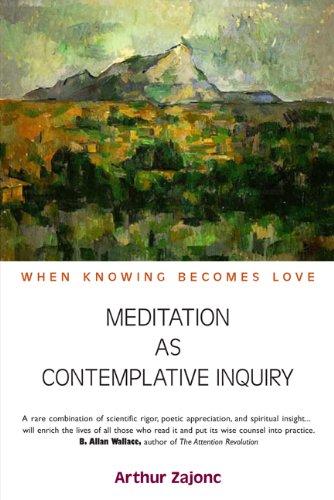
When Knowing Becomes Love
The book was mentioned at the end of the podcast as one of Arthur Zajonc's published works. The host briefly discussed a quote from Rudolf Steiner included within it.
I feel my fate, my fate finds me, I feel my star, my star finds me, I feel my aims, my aims find me, my soul and the world are one. And then life will be clearer around me, life will be more burdensom...
— Episode: Arthur Zajonc — Holding Life Consciously
The book was mentioned at the end of the podcast as one of Arthur Zajonc's published works. The host briefly discussed a quote from Rudolf Steiner included within it.
I feel my fate, my fate finds me, I feel my star, my star finds me, I feel my aims, my aims find me, my soul and the world are one. And then life will be clearer around me, life will be more burdensome for me, life will be richer for me.
The book was mentioned towards the end of the podcast. The host briefly mentioned reading a passage from the book by Rudolf Steiner, contained within Arthur Zajonc's book.
I feel my fate, my fate finds me, I feel my star, my star finds me, I feel my aims, my aims find me, my soul and the world are one. And then life will be clearer around me, life will be more burdensome for me, life will be richer for me.
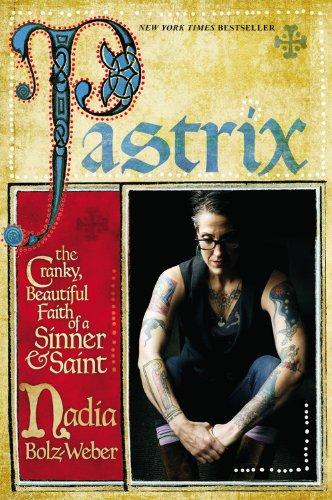
The Cranky, Beautiful Faith of a Sinner & Saint
It is a spiritual memoir that includes a reality check about churches, even her own, as a place that will disappoint people and where people will get hurt because it is full of human beings. The book also explores themes of death, resurrection, and the Christian life as a continual process of both.
So you know, I could not say the first, the very first word of your book on public radio. I'm not going to say it here either.
— Episode: Nadia Bolz-Weber — Seeing the Underside...
It is a spiritual memoir that includes a reality check about churches, even her own, as a place that will disappoint people and where people will get hurt because it is full of human beings. The book also explores themes of death, resurrection, and the Christian life as a continual process of both.
So you know, I could not say the first, the very first word of your book on public radio. I'm not going to say it here either.
The mystery of the universe, parentheses, the same universe that sometimes still makes me wonder what the hell I'm doing and that maybe this really is a fairy tale. Close was created by God.
So one thing I really like that you name and elaborate on in your book is a real reality check about churches, even your church, as a place that is going to disappoint people where people will get hurt because it's full of human beings.
And you said in the book that you got less funny as you got more healthy, but you're still pretty fun.
Nadia Boltzweber's path to being a Lutheran minister will through addiction and recovery and a few years as a stand-up comic. She's six feet tall, spiky, hered, and covered in tattoos. And her captivating spiritual memoir is called Pastrix, the cranky, beautiful faith of a sinner and saint.
It was described as an outstanding spiritual memoir. The speaker noted that they couldn't say the first word of the book on public radio.
Nadia Bolz-Weber is an important and completely original character in the emerging church universe.
She tweets as sarcastic Luther and she's just written a spiritual memoir which is outstanding called pastrics.
I'm not gonna say it here either. Here's a sentence I can just get away with. The mystery of the universe, parenthesis. The same universe that sometimes still makes me wonder what the hell I'm doing and that maybe this really is a fairy tale. Close was created by God.
So you know, I could not say the first the very first word of your book on public radio.
It is a spiritual memoir detailing the author's journey to becoming a Lutheran minister, including her past struggles with addiction and her time as a stand-up comedian. The book also reflects on the realities of church life and the complexities of faith.
So, for example, we celebrate the Easter vigil where you start with a new fire and you light it and you have this Pasco candle and you parade in chanting and we have these baptisms and we have a eucristen. It's amazing!
And then we end it when it's done, we have a huge dance party. And we feel like nothing says he is risen, like a chocolate fountain in the baptismal font.
The mystery of the universe, parentheses, the same universe that sometimes still makes me wonder what the hell I'm doing and that maybe this really is a fairy tale. Close was created by God.
I actually have no idea how people manage to be preachers without being stand-up comics first.
Pastrix, the cranky, beautiful faith of a sinner and saint.
It was described as an outstanding spiritual memoir. The speaker mentioned being unable to say the first word of the book on public radio due to its explicit nature.
Nadia Bolz-Weber is founder and pastor of the downtown Denver house for all seniors in states. Is it house for all centers in states? House for all centers in states or the, you know, we call it half-ass.
She tweets as sarcastic Luther and she's just written a spiritual memoir which is outstanding called pastrics.
Here's a sentence I can just get away with. The mystery of the universe, parenthesis. The same universe that sometimes still makes me wonder what the hell I'm doing and that maybe this really is a fairy tale. Close was created by God.
So you know, when I was getting ready for paying to interview you, there are a lot of interviews out there where people ask you. I mean, I believe you have the entire liturgical year tattooed on one of your arms.
So you know, when I was getting ready for paying to interview you, there are a lot of interviews out there where people ask you. I mean, I believe you have the entire liturgical year tattooed on one of your arms. And there are a lot of interviews where people ask you about those tattoos. Yes. And that as a store, as a way into your theology. Yeah. I wonder if how the other tattoos tell the story.
Note: The book recommendations on this page are discovered automatically from podcast transcripts, and may be incorrect or incomplete.
Podcast Name