Shoe Dog
Phil Knight
Mentioned 4 months ago
Alison Roman's Plan to Conquer the Tomato Sauce Market

Bloomberg's Joe Weisenthal and Tracy Alloway explore the most interesting topics in finance, markets and economics. Join the conversation every Monday and Thursday.
Recently mentioned
Phil Knight
Mentioned 4 months ago
Alison Roman's Plan to Conquer the Tomato Sauce Market
M. F. K. Fisher
Mentioned 4 months ago
Alison Roman's Plan to Conquer the Tomato Sauce Market
Jamee K. Moudud
Mentioned 5 months ago
Jamee Moudud on the Intellectual Roots of Zohranomics

Herman Melville
Mentioned 11 months ago
Joseph Torigian on Xi Zhongxun and Elite Chinese Communist Party Politics
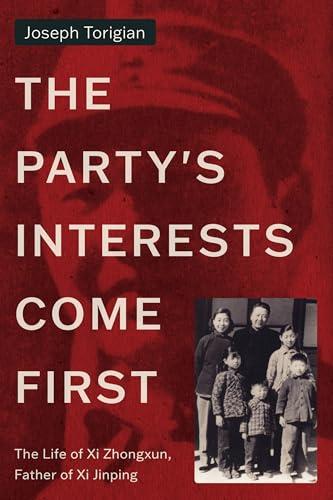
Joseph Torigian
Mentioned 11 months ago
Joseph Torigian on Xi Zhongxun and Elite Chinese Communist Party Politics
Dale C. Copeland
Mentioned 11 months ago
How a Trade War With China Could Become a Hot War
Adam Tooze
Mentioned 11 months ago
How a Trade War With China Could Become a Hot War
Dale C. Copeland
Mentioned 11 months ago
How a Trade War With China Could Become a Hot War
Andrew J. Nathan
Mentioned 11 months ago
How a Trade War With China Could Become a Hot War

Dr Federica Amati
Mentioned 11 months ago
What 300 Years of Firewood Prices Say About the Economy
Anne Korin
Mentioned 11 months ago
What 300 Years of Firewood Prices Say About the Economy

Gareth A. S. Edwards
Mentioned 11 months ago
How to Prepare for a Post-Dollar World with Inigo Fraser Jenkins
The Art of Risking Everything
The book was introduced as Nate Silver's forthcoming title that explores the art of taking risks, with the host noting its focus on risk-taking and related concepts. No specific endorsement or critique was offered, and it was mentioned only in passing.
It was mentioned as a forthcoming book by Nate Silver, and focuses on the art of taking risks and everything associated with it.
Nate is the author of the forthcoming book On the Edge, The Art Of Risking Everything.
The Art and Science of Prediction
The hosts referenced the book while discussing how to model the odds of a potential conflict, noting that its ideas about outside‑in analysis and learning from past analogous events informed their approach to the complex geopolitical scenario. They highlighted the relevance of the title's forecasting concepts for assessing such risks.
How Greed and Easy Money Corrupted Wall Street and Shook the World Economy
The book was highlighted as the leading bestseller on the financial crisis, with its author having foreseen the downturn on his blog. The host presented it as a definitive account of how greed and easy money corrupted Wall Street, conveying an enthusiastic endorsement to listeners.
It was described as the number one best-selling book in the country about the financial crisis; the author predicted the crisis and the market bottom on his blog.
I have the number one best selling book in the country about the financial crisis. It's called Bailout Nation.
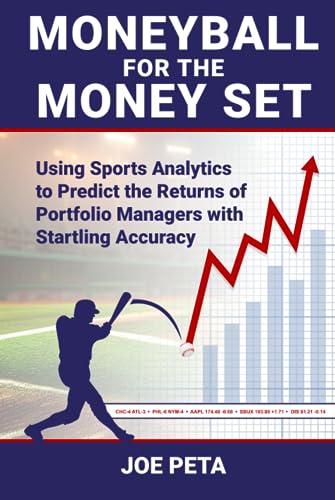
Using Sports Analytics to Predict the Returns of Portfolio Managers with Startling Accuracy
In the episode, host Joe Peta highlighted the book's use of sports analytics to improve talent identification in finance, contrasting traditional reliance on past returns with a skill‑based assessment. He explained that, like baseball teams evaluate players by underlying abilities rather than noisy outcomes, the book proposes a similar method for portfolio managers to better predict future performance. The discussion portrayed the title as a valuable framework for investors seeking more reliable talent evaluation.
This book applies talent analytical principles from Major League Baseball to evaluating portfolio managers in an attempt to find better ways to identify talent within the financial industry. The author discussed how traditional approaches focus on past results while the Moneyball approach emphasizes the identification and quantification of skills to better predict future performance.
So when I was on in 2017, I had written a book called Trading Bases which really looked at the critical reasoning overlap between asset management, sports betting and the money bolization of baseball.
And I said, well, if you go onto a trading floor or you go to a mutual fund and you ask them, hey, who's your best trader or who's your best PM? Inevitably, they will point to the individual who had the highest return in the prior year, either the biggest P&L or the highest return on capital.
But I contrasted that and that if you went into the front office of a baseball team and asked them who their best player was, they wouldn't look at, you know, which picture necessarily had the lowest ERA or the most wins. They would answer that question based on skill sets.
And so it's a subtle difference. Instead of looking at results, they would look at skills because they know that the skills, there's so much noise and results that the skills, if you can identify the skills, you have a better chance of predicting who will do better going forward.
The whole idea of the money ball approach is to tease out skill from, or the signal from these very noisy results because both athletes and asset managers, their results are filled with influences over which they have no control.
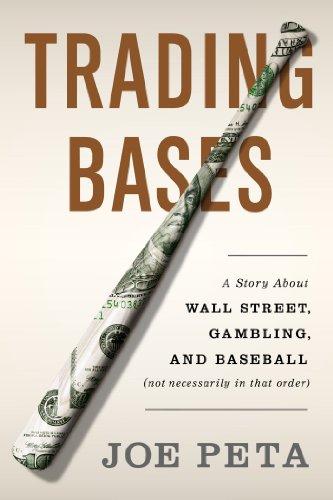
A Story About Wall Street, Gambling, and Baseball (Not Necessarily in That Order )
Joe Peta discussed the book as an exploration of the reasoning overlap between asset management, sports betting, and baseball, noting that it was published in 2017 and helped him secure a position at Point72. The episode presented it as a noteworthy example of how interdisciplinary insights can advance a career in finance.
This book explores the critical reasoning overlap between asset management, sports betting, and the monetization of baseball. It was mentioned as a book the author had written in 2017 that led to him getting a job at Point72.
So when I was on in 2017, I had written a book called Trading Bases which really looked at the critical reasoning overlap between asset management, sports betting and the money bolization of baseball.
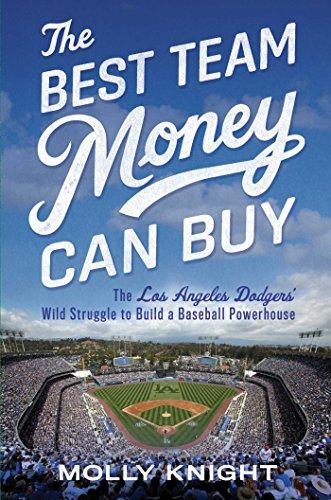
The Los Angeles Dodgers' Wild Struggle to Build a Baseball Powerhouse
The book was brought up by Joe Peta to illustrate how analytical approaches to building a sports franchise could be relevant, referencing the turbulent ownership history of the Dodgers during the McCourt era. It was mentioned in the context of Steve Cohen's interest in acquiring the team, serving as a historical example rather than a direct recommendation. The discussion highlighted the book's chronicle of ownership challenges without endorsing it strongly.
This book chronicles the Los Angeles Dodgers' ownership through the turbulent McCourt years. It was mentioned in relation to Steve Cohen's interest in analytical approaches to team building, as he had bid to buy the Dodgers.
And in fact, there's a book by Molly Knight called The Best Team Money Can Buy that chronicles the Dodgers ownership through the turbulent McCourt years, Frank McCourt's ownership.

State-Building and Late Industrialization in India
In the episode, the hosts referenced the book while comparing South Korea's and India's development paths, using its analysis of state‑building and late industrialization to illustrate why India's industrial policy struggled. They highlighted the work’s focus on the successes and failures of each country's approach. The overall tone was informative, treating the title as a useful backdrop rather than a strong endorsement.
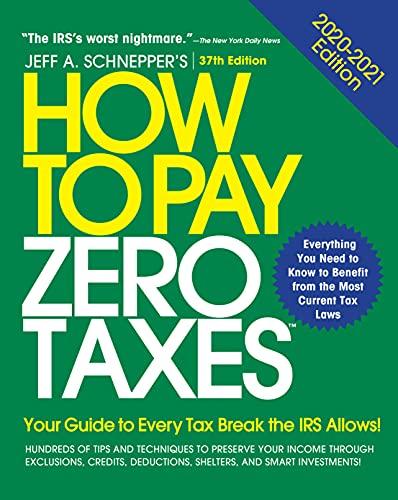
Your Guide to Every Tax Break the IRS Allows
In the episode, Tracy Allaway described receiving a 400‑page IRS tax instruction manual and lamented its confusing page references and lack of relevant information, which left her frustrated and even in tears. The discussion highlighted the book’s overwhelming complexity and its failure to provide clear guidance, conveying a critical view of its usefulness.
The speaker describes receiving a 400-page IRS tax instruction book while living in London, highlighting its complexity and causing emotional distress due to its confusing instructions and lack of relevant information on referenced pages.
And I remember receiving this 400 page book from the IRS on how to do your taxes.
And it would say for box 78A, turn to page 328. And I would turn to the page and there would be nothing there of relevance.
And I remember sitting on the floor of my living room in London and crying over this paperwork and this admin that I had to do.
The Impact of the Highly Improbable
The episode referenced the title while discussing how it’s unwise to predict the exact cause of a failure but wise to recognize underlying fragility. The host, Nassim Taleb, used the book’s premise to illustrate that fragile systems will eventually break. The overall tone was supportive, presenting the work as a valuable framework for understanding risk.
The speaker referenced this book while explaining that while it is foolish to predict the color of a truck that will break a fragile bridge, it is not foolish to state that the bridge is fragile and will break one day.
As I wrote in The Black Swan, it's foolish to say what color truck is going to break a fragile bridge. Okay? But it is not foolish to say this bridge is fragile. It's going to break one day. Don't cross it.
The Life of Xi Zhongxun, Father of Xi Jinping (Stanford–Hoover Series on Authoritarianism)
The host highlighted the title as the first English-language biography of Xi Zhongxun, noting that it offers a unique lens on Chinese Communist Party history by focusing on the father of Xi Jinping. They introduced the author, Joseph Torigian, and emphasized that the book aims to illuminate party dynamics through his subject's life.
This was described as the first English-language biography about Xi Zhongxun, the father of Xi Jinping. The author tried to tell the history of the Chinese Communist Party through the prism of Xi Zhongxun's life.
A new book from Joseph Torigian, a research fellow at Stanford's Hoover History Lab and an associate professor at American University, sheds light on the entity by examining the life of Xi Zhongxun, the father of Xi Jinping.
We're going to be speaking about his life today to the author of one of his biographies, the first English speaking biography.
And he is the author of a new book, The Party's Interests Come First, The Life of Xi Jinping.
I tried to tell it through the prism of his own father with my book.
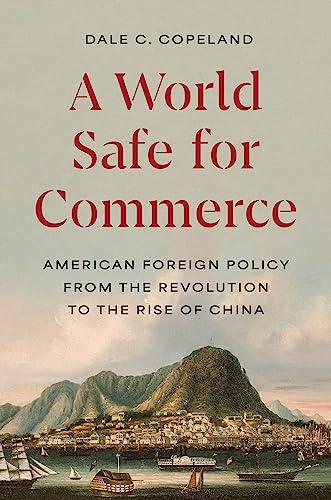
American Foreign Policy from the Revolution to the Rise of China (Princeton Studies in International History and Politics)
The guest highlighted that the book traced American foreign policy from the Revolution through to the rise of China, using case studies to show how states have historically accepted trade-offs, such as allowing China’s growth, to preserve overall system stability and avoid conflict. He explained that chapter two explored the willingness to let a rising power expand through trade as a means of preventing a hot war, especially over Taiwan.
This was the guest's most recent book, which specifically discussed the prospect for an outright US-China confrontation.
He's also the author of a recent book, A World Safe for Commerce, American Foreign Policy from the Revolution to the Rise of China.
And my case studies almost always show this. But the most recent book, in fact, starts with the one you mentioned, which is the American Revolution.
And in my chapter two of my new book, A World Safe for Commerce, I do talk about that, about the willingness of states making trade-offs to accept a relative loss, that is, letting China grow through trade, for the benefit of making the overall system more stable and to convince the other that it does have positive trade expectations and therefore doesn't have to go on the war path, doesn't have to even go after Taiwan.
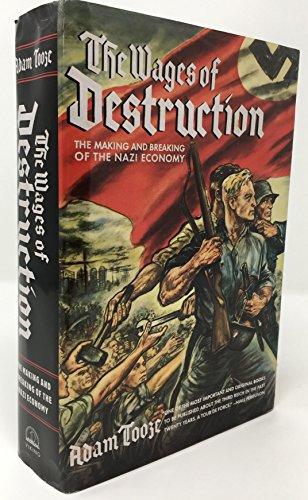
The Making and Breaking of the Nazi Economy
This book was mentioned as a source that provided a detailed discussion about Germany turning coal into synthetic oil during WWII.
I know you're going to bring it up in this conversation, but I really think it deserves more attention.
— Episode: How a Trade War With China Could Become...
This book was mentioned as a source that provided a detailed discussion about Germany turning coal into synthetic oil during WWII.
I know you're going to bring it up in this conversation, but I really think it deserves more attention.
Now you're going to do it. Well, there is a lot in there about Germany's turning coal into synthetic oil, a very detailed discussion of that, which Dale brought up.
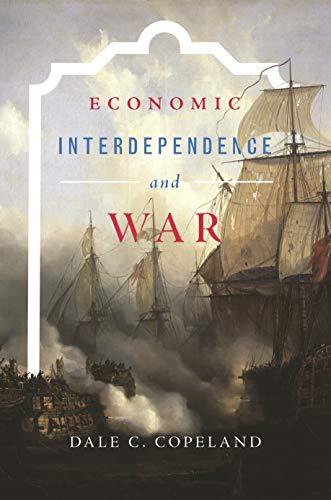
The speaker mentioned studying Japan's growth and conflicts over several chapters in this book, analyzing periods of peace and conflict based on commerce and future expectations.
In my second book called Economic Interdependence and War, I study through two chapters, three chapters really, Japan's growth from 1880 onwards and the number of conflicts it did get into with Russia...
— Episode: How a Trade War With China Could Become...
The speaker mentioned studying Japan's growth and conflicts over several chapters in this book, analyzing periods of peace and conflict based on commerce and future expectations.
In my second book called Economic Interdependence and War, I study through two chapters, three chapters really, Japan's growth from 1880 onwards and the number of conflicts it did get into with Russia, for example, in 1904, and of course, with the US in 1941, but also the long periods of peace that Japan had.
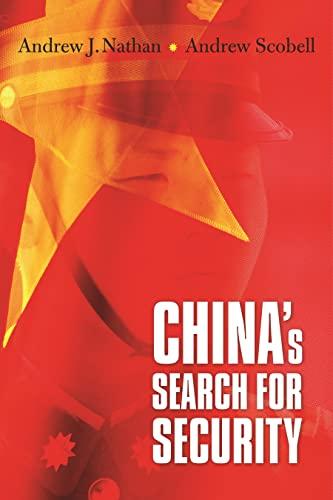
This book was mentioned as arguing the opposite of aggressive China narratives, supporting the idea that China has a history of worrying about domestic borders.
It's called The Great Wall and the Empty Fortress. And it too had a red cover.
— Episode: How a Trade War With China Could Become...
This book was mentioned as arguing the opposite of aggressive China narratives, supporting the idea that China has a history of worrying about domestic borders.
It's called The Great Wall and the Empty Fortress. And it too had a red cover.
The book was mentioned in the context of suggesting that major transitions often take longer than expected and happen in stages.
I'm going to pull a page out of Bob Brackett's Commodities Energy Transition book and say that these types of transitions often take longer than people expect. You shouldn't expect everything to happe...
— Episode: How to Prepare for a Post-Dollar World w...
The book was mentioned in the context of suggesting that major transitions often take longer than expected and happen in stages.
I'm going to pull a page out of Bob Brackett's Commodities Energy Transition book and say that these types of transitions often take longer than people expect. You shouldn't expect everything to happen all at once. It's going to happen in stages.
Insights into Monetary policy, Labor Market Dynamics, Inflationary Pressures, Political influences, and Central Bank Autonomy in a Shifting Policy Landscape
The guest discussed her research on the distinction between legal and de facto central bank independence, which involved analyzing reports for instances of political pressure on central banks globally.
Sure. Yeah. I mean, the taper that was mentioned in the newsletter is one called Political Pressure on Central Banks.
— Episode: Why the Damage to Fed Independence May H...
The guest discussed her research on the distinction between legal and de facto central bank independence, which involved analyzing reports for instances of political pressure on central banks globally.
Sure. Yeah. I mean, the taper that was mentioned in the newsletter is one called Political Pressure on Central Banks.
How an Army of Bureaucrats Protected Barack Obama and Is Working to Destroy the Trump Agenda
Mayor Adams recommended this book, noting that although people might laugh at the terminology 'deep state,' he felt it accurately described individuals within government who act arrogantly, believe they answer to no one, and obstruct projects they dislike.
You recommended before that New Yorkers should read Kash Patel's book all about The Deep State.
— Episode: Mayor Eric Adams on the Future of New Yo...
Mayor Adams recommended this book, noting that although people might laugh at the terminology 'deep state,' he felt it accurately described individuals within government who act arrogantly, believe they answer to no one, and obstruct projects they dislike.
You recommended before that New Yorkers should read Kash Patel's book all about The Deep State.
And I want to talk about Kash's book, which I thought was a good book. People laugh at the terminology of a deep state, but it is.
The Mindset, Methodology and Mathematics of Professional Trading
During the episode, host Brian Yelvington highlighted the book as a unique resource that compiled trade post‑mortem analyses and methodological insights in a single volume, something he had not encountered before. He noted that the author’s approach to dissecting trades, likening it to running a poker hand through a solver, made the material especially valuable for professionals seeking systematic evaluation. The overall tone was enthusiastic, indicating a strong recommendation.
This book was mentioned as a source where information regarding trade post-mortems and analysis (like running a poker hand through a solver) was written down in one place, which the interviewee found insightful.
As a matter of fact, if you guys had never had Brent Donnelly on, he wrote a book called Alpha Trader.
I've probably never seen that information written down in one place before.
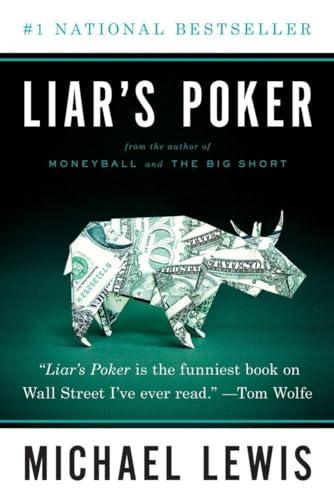
Rising Through the Wreckage of Wall Street
The book was brought up as a famous example of literature related to gambling games and risk-taking that is popular in financial circles.
And then wasn't there something at Jane Street that Sam Bankman Freed was doing? A bunch of different like gambling games.
— Episode: How You Get and Actually Keep a Job at a...
The book was brought up as a famous example of literature related to gambling games and risk-taking that is popular in financial circles.
And then wasn't there something at Jane Street that Sam Bankman Freed was doing? A bunch of different like gambling games.
I'm thinking back to Liars Poker. That's a famous example.
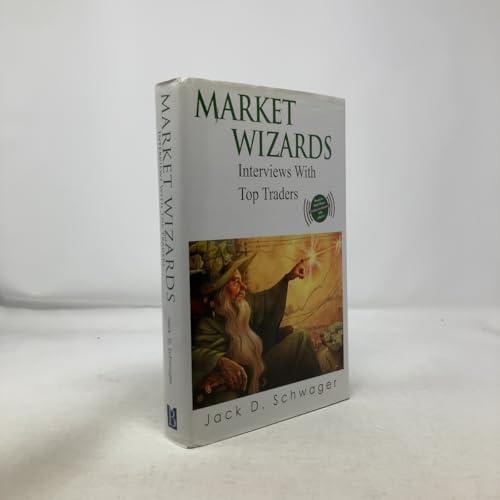
Interviews With Top Traders
The book was referenced as a typical example of the kind of reading that introduced many traders to the industry, with Brian Yelvington noting that newcomers often received "market wizards" titles as their first exposure to trading concepts. He described these works as part of the informal education that helped shape career paths in finance.
The interviewee mentioned that many people in the industry got their start by reading books generically called 'market wizards' or similar types of books, which showed them there are many ways to make money in trading.
I think everybody who's in this business got into it in one way or another. And somebody handed them what I just generically call, you know, street porn, which is the Market Wizards books or any of those types of things.
Note: The book recommendations on this page are discovered automatically from podcast transcripts, and may be incorrect or incomplete.
Podcast Name