
Podcast
Odd Lots
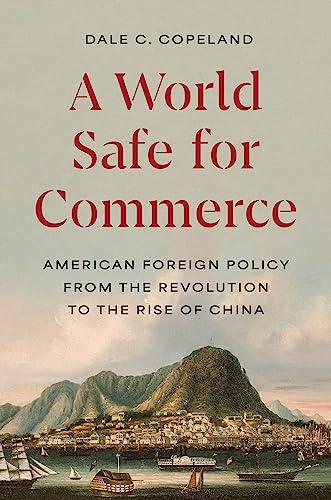
The guest highlighted that the book traced American foreign policy from the Revolution through to the rise of China, using case studies to show how states have historically accepted trade-offs, such as allowing China’s growth, to preserve overall system stability and avoid conflict. He explained that chapter two explored the willingness to let a rising power expand through trade as a means of preventing a hot war, especially over Taiwan.
Episode: How a Trade War With China Could Become a Hot War
This was the guest's most recent book, which specifically discussed the prospect for an outright US-China confrontation.
He's also the author of a recent book, A World Safe for Commerce, American Foreign Policy from the Revolution to the Rise of China.
And my case studies almost always show this. But the most recent book, in fact, starts with the one you mentioned, which is the American Revolution.
And in my chapter two of my new book, A World Safe for Commerce, I do talk about that, about the willingness of states making trade-offs to accept a relative loss, that is, letting China grow through trade, for the benefit of making the overall system more stable and to convince the other that it does have positive trade expectations and therefore doesn't have to go on the war path, doesn't have to even go after Taiwan.