The Iliad
Homer
Mentioned 6 days ago
688. The Odyssey: Return of the King (Part 2)
Take a deep dive into History’s biggest moments with Tom Holland & Dominic Sandbrook. Explore the stories of History’s most brutal rulers, deadly battles, and world-changing events. From the rise and fall of the Roman Empire, the Nazi conquest of Europe, and Hitler’s evil master plan for world do...
Recently mentioned
Homer
Mentioned 6 days ago
688. The Odyssey: Return of the King (Part 2)
Homer
Mentioned 6 days ago
688. The Odyssey: Return of the King (Part 2)
Virgil
Mentioned 6 days ago
688. The Odyssey: Return of the King (Part 2)
James Joyce
Mentioned 6 days ago
688. The Odyssey: Return of the King (Part 2)
Madeline Miller
Mentioned 1 week ago
687. The Odyssey: Hero of the Trojan Horse (Part 1)
Guiseppe Tomasi di Lampedusa
Mentioned 1 week ago
687. The Odyssey: Hero of the Trojan Horse (Part 1)
Carol Dougherty
Mentioned 1 week ago
687. The Odyssey: Hero of the Trojan Horse (Part 1)
John Buchan
Mentioned 1 week ago
687. The Odyssey: Hero of the Trojan Horse (Part 1)
Ron Chernow
Mentioned 2 weeks ago
685. Hamilton: Duel to the Death (Part 3)
Laurence Sterne
Mentioned 2 weeks ago
685. Hamilton: Duel to the Death (Part 3)
Gore Vidal
Mentioned 2 weeks ago
685. Hamilton: Duel to the Death (Part 3)
unknown author
Mentioned 1 month ago
678. England: God Save the King (Part 2)
The hosts referenced the title across several episodes to illustrate points about the revolutionary police state, the role of violence in the French Revolution, and Marie Antoinette’s attitudes, citing its vivid illustrations. They highlighted its engaging narrative and praised it as an enjoyable, picture‑rich read, recommending it to listeners. Overall, the podcast presented it as a valuable and highly recommended source.
The book described the revolutionary police as the first organ of a revolutionary police state.
Chalmers in Citizens describes it as the first organ of a revolutionary police state, and essentially it takes for itself all the powers of the Ancien Rgime that everyone had condemned.
The hosts noted that a quoted passage about revolutionary violence came from Schama's book Citizens, and later highlighted Schama's argument that violence was the driving force of the French Revolution.
that passage actually is quoted by Simon Schama in his book Citizens.
And as Simon Schama says in his book, Citizens, this isn't the end of something.
The book was cited as saying the more outrageous the denunciations, the more the queen liked the play.
She does. So Simon Schama in Citizen says, the more outrageous the denunciations of the established order, the better the queen liked it.
The podcast praised the book as an insanely enjoyable read with great pictures, recommending it to listeners.
Simon Schama's book Citizens. Is insanely enjoyable. I know it's always tempting to be revisionist and to say of a great historian and a great book, ah, it's actually rubbish. It is tip top. It is brilliant. And has great pictures as well.
A New History of Spanish Discovery and Conquest
The hosts repeatedly highlighted the title as a valuable source for understanding the Spanish conquest, emphasizing that it argued the conquistadors were driven by sincere religious conviction rather than mere greed. Tom Clougherty and Dominic both praised the book for its thorough examination of Spanish religiosity and its challenge to the traditional cynical view. Their discussion conveyed strong endorsement of the work as essential reading for anyone studying the era.
Fernando Cervantes's book was cited to argue that understanding the Spanish conquistadors requires seeing them as genuinely believing they were doing righteous work, not merely greedy aggressors.
One historian we've mentioned, I think once or twice, Fernando Cervantes who wrote a book called Conquistadores. He says, you will not understand anything that happens if you think the Spanish are just greedy and violent.
The podcast mentioned a wonderful book titled Conquistadores by Mexican historian Fernando Cervantes as a source on Spanish conquest narratives.
There's a wonderful book called Conquistadores by Fernando Cervantes, who's a Mexican historian.
The hosts praised the book for its thorough examination of Spanish religiosity and the mindset of friars during the colonisation of the New World.
the book Conquistadores by Fernando Cervantes, who's a Mexican historian based in Britain, takes the Spanish religiosity really seriously and discusses how it shaped their actions in the New World.
The hosts discussed Cervantes' book, noting it examined the Spanish conquest of the New World and challenged the view that the expeditions were driven solely by greed, emphasizing the genuine religious motivations of the conquistadors.
I read a book a year ago by a guy called Fernando Cervantes ... it's a book called Conquistadores and it's a book about what happens in the same year so basically the arrival of the Spanish in the new world.
One of the things that Cervantes really brings out in this book is he says we traditionally see the Spanish arrival in the new world as motivated purely by plunder and greed and cynicism, and that Christianity is merely a fig leaf.
He argues that the Christian motive was not a fig leaf at all; the conquistadors genuinely believed they were saving souls, and that their conversion efforts were rooted in sincere religious conviction.
The Strange History of Our National Imagination
The host highlighted the title as a personal work that explored British cultural imagination, using it to contextualize topics like Hogwarts, Harry Potter, Agatha Christie, and James Bond. He noted that the book had examined the series with early skepticism and included a praised chapter on Bond, positioning it as a useful tie‑in to their discussions. Overall, the book was presented as a valuable resource and was positively endorsed.
One host mentioned his own book, The Great British Dream Factory, noting his earlier skepticism about Harry Potter and how his book had examined the series.
I was always very sceptical as you know. I've dished them a little bit in my book, The Great British Dream Factory.
The author of this book was mentioned while discussing the cultural impact of Harry Potter and the broader imagination of Britain.
As the author of The Great British Dream Factory, The Strange History of Our National Imagination, a book that looks at the impact of British culture on the imagination of the world, how would you rate the impact of J.K. Rowling?
They said it was a tiein book they had written for their BBC series and held it up on the air.
And I wrote a tiein book for that called The Great British Dream Factory. Which I'm holding up now as I talk to you, Dominic.
Dominic praised his own book, noting it contains a fantastic chapter on James Bond.
Your fine book The Great British Dream Factory, The Strange History of Our National Imagination, a fabulous chapter on it.
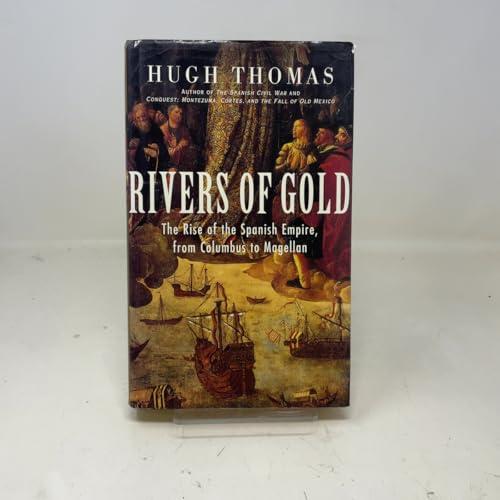
The Rise of the Spanish Empire, from Columbus to Magellan
The hosts repeatedly cited the book as a key source when describing Columbus' actions and the early Spanish empire, highlighting its vivid description of the first account of lovemaking in the New World and its ability to picture Columbus presenting his documents. They noted historian Hugh Thomas as the author and used the work to illustrate the atmosphere of the era. The overall tone was appreciative of its detail, though it was primarily referenced for context rather than strongly promoted.
The hosts described the book as part of a mighty trilogy on the foundation of the Spanish empire and cited its striking phrase about the first account of lovemaking in the New World.
and in his book, Rivers of Gold, which is part of his mighty trilogy about the foundation of the Spanish empire, the historian Hugh Thomas, Lord Thomas has the extraordinary phrase, this was the first account of lovemaking in the new world.
They noted that Hugh Thomas discussed the episode in his book Rivers of Gold.
The fascinating thing, I think it's Hugh Thomas who mentions this in Rivers of Gold.
The hosts referenced the book while describing the chaotic scene of Columbus presenting his documents to the monarchs.
I think it's Hugh Thomas in one of his books, Rivers of Gold, I think says, you can basically imagine the scene of Columbus getting out these tattered documents that he's been exhibiting around Europe.
The hosts said Hugh Thomas mentioned his book Rivers of Gold as a way to picture Columbus' documents and the atmosphere of the time.
I think it's Hugh Thomas in one of his books, Rivers of Gold, I think says, you can basically imagine the scene of Columbus getting out these tattered documents that he's been exhibiting around Europe.
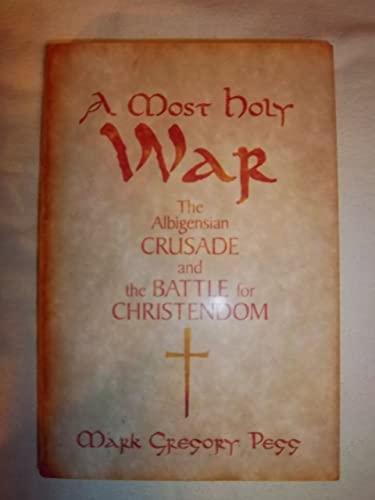
The Albigensian Crusade and the Battle for Christendom (Pivotal Moments in World History)
The hosts highlighted the book as a vivid, scholarly account of the Albigensian Crusade, emphasizing its powerful imagery of blood‑soaked streets and its analysis of the merging of Latin Christian thought on heresy and holy war. They introduced it while discussing the Cathars and praised it as a thrilling, fantastic work of history. Overall, the episode hosts strongly endorsed it.
The hosts cited it as a brilliant account of the Albigensian Crusade, noting its vivid description of the merging of Latin Christian thought on heresy and holy war and its haunting imagery of bloodsoaked streets.
It's quoted by Mark Gregory Peck in his book, A Most Holy War, which is a brilliant account of the subject of today's episode, Dominic.
And Pegg in his book describes this as an absolutely fateful moment that it's the merging, he says, of a century or more of Latin Christian thought on heresy and holy war.
So Pagan in A Most Holy War has, I mean, the orb slowly darkened as rivulets of gore spilled down the streets and washed off the bridge.
Peg... begins his book, A Most Holy War, with this incredible description of one of the first ghosts to appear from purgatory.
The hosts introduced the book as a scholarly account of the Cathars and the Albigensian Crusade, noting it presented the story of the Cathars.
Mark Gregory Pegg in A Most Holy War, The Albigensian Crusade and the Battle for Christendom, the story of the Cathars.
The hosts cited Pegg's book while introducing the episode's theme, noting it covered the Albigensian Crusade and the battle for Christendom.
Mark Gregory Pegg in A Most Holy War, The Albigensian Crusade and the Battle for Christendom
They praised it as a fantastic, thrilling work of history on the Albigensian Crusade.
It's a book called A Most Holy War, The Albigensian Crusade and the Battle for Christendom by a scholar called Mark Gregory Pegg. It's a fantastic book, absolutely thrilling work of history.
It was listed among the books Kennedy reportedly took with him on his SouthPacific patrols.
He also took War and Peace and read that.
— Episode: 392. JFK: The Road to the White House (P...
It was listed among the books Kennedy reportedly took with him on his SouthPacific patrols.
He also took War and Peace and read that.
Tolstoy's epic was cited alongside Stendhal's novel to illustrate how Napoleon's legacy is woven into the fabric of great literature.
Stendhal's Le Rouge et le Noir, Tolstoy War and Peace.
The hosts referred to the opening of War and Peace as "book one" that describes the meeting of Tsar Alexander and Napoleon planning an invasion of India.
when Alexander the Tsar of Russia and Napoleon meet on a barge and plan to invade India together in 1810. 1812 is the retreat. So 1889, 1812, War and Peace opens with before Tilsit. That's book one of War and Peace.
The hosts noted that Neville Coghill's translation of the Canterbury Tales was published as a Penguin Classics paperback, which they had originally given to each other to read in Middle English.
Neville Coghill did, who was the great scholar who translated it for the Penguin classics, which I originally gave you to read, but you said, no, full in, let's go for the middle English.
— Episode: 416. The Canterbury Tales (Part 4)
The hosts noted that Neville Coghill's translation of the Canterbury Tales was published as a Penguin Classics paperback, which they had originally given to each other to read in Middle English.
Neville Coghill did, who was the great scholar who translated it for the Penguin classics, which I originally gave you to read, but you said, no, full in, let's go for the middle English.
Domino announced that the next episode would focus on Chaucer and the Canterbury Tales, noting that the work was written during RichardII's reign.
There will be more poetry in our next episode, which will be on Chaucer and the Canterbury Tales, which was written in Richard II's reign, and will be the final part of our four-part swing through the rule of Richard II.
During the pandemic they started readingCanterbury Tales, finding it freshly exciting because Chaucer wrote about a time when plague was endemic in London.
I began reading Canterbury Tales and it struck me completely afresh the excitement of it because Chaucer is writing at a time where the plague is endemic in London.
The hosts mentioned the title several times as part of a lineup of classic works they planned to explore in future episodes, noting its relevance to contemporary discussions. It was listed alongside other well‑known novels, indicating an intention to discuss it later rather than providing a detailed review.
The hosts announced an upcoming episode that would explore Atwood's dystopian novel, highlighting its relevance to contemporary discussions.
We'll be doing Margaret Atwood's book, The Handmaid's Tale.
The hosts mentioned the dystopian novel as part of the lineup of classic works they will discuss in future episodes.
J.R. Tolkien's fantasy classic The Hobbit to Bram Stoker's horror novel Dracula to Margaret Atwood's dystopian fable The Handmaid's Tale.
This novel was discussed as one of the bonus series episodes previously recorded for club members.
So we did The Hobbit and In Cold Blood and The Handmaid's Ted and so on and so forth.
The Original 1818 Unabridged and Complete Edition (A Mary Shelley Classics
They noted that the most famous product of the dark 1816 summer was Mary Shelley's novel Frankenstein, linking its stormy creation to the harsh weather.
The most famous product of this is Frankenstein, which is a novel that in which the weather gets progressively worse and worse and worse.
— Episode: 89. Climate & Weather
They noted that the most famous product of the dark 1816 summer was Mary Shelley's novel Frankenstein, linking its stormy creation to the harsh weather.
The most famous product of this is Frankenstein, which is a novel that in which the weather gets progressively worse and worse and worse.
I'd urge anyone who hasn't read it to read it because it's fantastic.
This book was listed alongside Wuthering Heights as an example of a thrilling Gothic bodice ripper that would be featured on The Book Club podcast.
We will be looking at thrilling Gothic bodice rippers like Wuthering Heights and Frankenstein, as well as iconic stories like The Great Gatsby or Little Women, and then also some more modern stuff.
Frankenstein was mentioned alongside Wuthering Heights as a gothic classic to be discussed on the Book Club.
We will be looking at thrilling Gothic bodice rippers like Wuthering Heights and Frankenstein, as well as iconic stories like The Great Gatsby or Little Women.
Classic Novels)
They explained that Dickens used the house they were standing in as the inspiration for Satis House, the setting of his novel Great Expectations.
Charles Dickens used this house where we're sitting right now as the inspiration for Satis House which is of course Miss Havisham's house in his novel Great Expectations.
— Episode: 600. CHATHAM HIGH STREET
They explained that Dickens used the house they were standing in as the inspiration for Satis House, the setting of his novel Great Expectations.
Charles Dickens used this house where we're sitting right now as the inspiration for Satis House which is of course Miss Havisham's house in his novel Great Expectations.
They explained that Charles Dickens used the house they were standing in as the model for Satis House in Great Expectations and that the novel was personally important to Tom Holland.
Charles Dickens used this house where we're sitting right now as the inspiration for Satis House which is of course Miss Havisham's house in his novel Great Expectations.
Great Expectations is very close to my heart Tom because I won the school public speaking and reading competition four years in a row with the opening of Great Expectations.
The hosts described Pip from Great Expectations as a character who arrives in London and visits Mr Jaggers' offices, using the novel to illustrate the literary ghosts of the city.
and one of them is Pip in Great Expectations by Charles Dickens, who when he comes to London goes to the offices of Mr Jaggers...
The hosts referenced Milton's *Paradise Lost* as an early example of the concept of freedoms that dates back to creation.
from our anglo-saxon but even going further back than that so you know Milton rights Paradise Lost the idea of freedoms
— Episode: 144. The Trial of Charles I Part 2
The hosts referenced Milton's *Paradise Lost* as an early example of the concept of freedoms that dates back to creation.
from our anglo-saxon but even going further back than that so you know Milton rights Paradise Lost the idea of freedoms
They noted that Milton's epic poem was a great work that illustrated the Protestant myth about Galileo and the Roman Church.
Milton really ... Paradise Lost his great poem ...
The hosts noted that Moloch appeared in Milton's epic, describing his violent role and the graphic nature of his depiction.
he also has a starring role in Paradise Lost. Horrid king besmeared with the blood of human sacrifice and parents tears. Milton's not messing around is he?
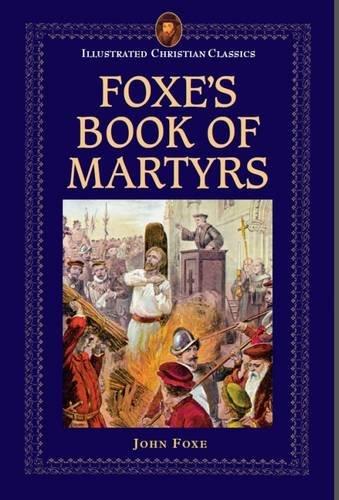
The hosts described it as the Tudor bestseller, noting its full historic title and its role as a foundational text on English martyrs.
So that was the Tudor number one bestseller, the thrillingly titled Acts and Monuments of These Latter and Perilous Days, Touching Matters of the Church. And it was by an unusually forensic and judici...
— Episode: 618. Elizabeth I: The Shadow of the Towe...
The hosts described it as the Tudor bestseller, noting its full historic title and its role as a foundational text on English martyrs.
So that was the Tudor number one bestseller, the thrillingly titled Acts and Monuments of These Latter and Perilous Days, Touching Matters of the Church. And it was by an unusually forensic and judicious historian, John Fox, a man of Lincolnshire, hence the accent.
Fox's Book of Martyrs, as its name suggests, there are lots of people who will be prepared to go to the stake.
Fox's Book of Martyrs ... the great tyranny of Bloody Mary's reign.
They referred to Foxe's Book of Martyrs as a source for the theme of religious persecution, noting its influence on the memory of Bloody Mary's victims.
the great theme of fox's book of martyrs this sense that the revival of catholicism would mean protestants being burnt in smithfield...
The hosts referenced Foxe's Book of Martyrs as a massive saga portraying Protestant martyrs slain by Catholic persecutors.
There's this sense of Fox's Book of Martyrs, which is this huge saga of sort of Protestant martyrs being killed by evil Catholics.
Or the Evening Redness in the West (Modern Library (Hardcover))
Aguirre was compared to the judge in Blood Meridian, emphasizing his ruthless and demonic nature.
He's like the judge in Blood Meridian.
— Episode: 543. Death in the Amazon: Aguirre, the W...
Aguirre was compared to the judge in Blood Meridian, emphasizing his ruthless and demonic nature.
He's like the judge in Blood Meridian.
They compared the tragic ending of the historical narrative to the bleak conclusion of Blood Meridian.
the theme of kind of a terrible ending of Blood Meridian, Cormac McCarthy's great novel.
Tom mentioned Cormac McCarthy's great novel Blood Meridian while discussing the Civil War and western expansion.
the war against Mexico which is incredibly brutal that's the backdrop for Cormac McCarthy's great novel Blood Meridian which is you know a terrifying portrayal of yeah we talked about that
George Orwell (Macmillan Collector's Library)
The hosts highlighted the book as one of Orwell's most famous novels, noting that his experiences inspired its creation and that it has left a lasting cultural impact with phrases like "Big Brother is watching you." They emphasized its enduring relevance rather than explicitly recommending it. Overall, the discussion was appreciative but brief.
It was highlighted as one of Orwell's most famous novels that provided enduring phrases like "Big Brother is watching you."
These experiences led him to write his most famous novels Animal Farm and 1984 giving us enduring phrases like Big Brother is watching you.
The hosts said George Orwell's experiences led him to write his most famous novel Animal Farm, noting its lasting impact and famous phrases.
These experiences led him to write his most famous novels Animal Farm and 1984 giving us enduring phrases like Big Brother is watching you.
Mentioned as one of Orwell's two defining books, its antitotalitarian message and the difficulty of getting it published were discussed.
Well with Animal Farm, they are two of the defining books of the 20th century.
He thought of Animal Farm when he was in Wellington and he saw a little boy whacking a shire horse... the book was a warning about revolutions in general rather than just the Soviet Union.
The Original 1719 Unabridged and Complete Edition (A Daniel Defoe Classics)
The presenters and Tom Holland highlighted that the book was Defoe's best‑selling work, noting its lasting fame and that it had inspired a historical figure to pursue a naval career. They referenced its massive success and cultural impact.
The presenters said the book was Defoe's bestselling work, noting its fame even though the travelogue was a massive success.
It was a massive success with the exception of Robinson Crusoe. It was by far his bestselling book.
The hosts noted that Defoe's tour was a massive success except for Robinson Crusoe, which was his bestselling book.
It was a massive success with the exception of Robinson Crusoe. It was by far his best-selling book.
The book was cited as the reading that inspired Alexander Ball to pursue a career at sea.
he was inspired to go to sea by reading Robinson Crusoe.
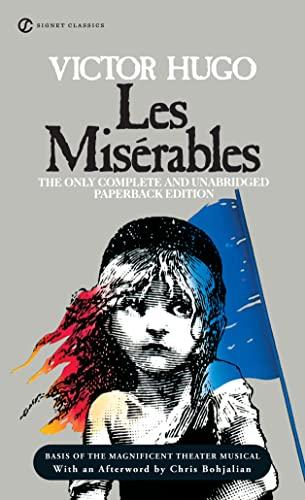
The hosts compared Allende's moving speech to a scene from Les Misrables, noting how the dramatic tone reminded them of the novel.
It's Latin America ... it's this dream of, it's kind of something from Les Misrables or something.
— Episode: 371. The 1973 Chilean Coup: General Pino...
The hosts compared Allende's moving speech to a scene from Les Misrables, noting how the dramatic tone reminded them of the novel.
It's Latin America ... it's this dream of, it's kind of something from Les Misrables or something.
Dominic likened a scene they were describing to a moment from Les Misrables.
It's like a scene from Les Miserables, Tom.
It was referenced as a film adaptation that the host's daughter liked, and its portrayal of the French Revolution was discussed.
my daughter's favourite film was Marie Antoinette but they then moved on to another film which was of course Les Miserables ... the portrayal of the revolution then Les Miserables but the thing about it is it's a very minor revolution ...
Tom referred to Francis Fukuyama's book The End of History as a slogan summarizing the postCold War era.
the famous uh slogan that sums it up uh is the end of history written by francis fukey armor
— Episode: 153. God and the American Empire
Tom referred to Francis Fukuyama's book The End of History as a slogan summarizing the postCold War era.
the famous uh slogan that sums it up uh is the end of history written by francis fukey armor
The hosts mentioned interviewing Francis Fukuyama, noting he wrote The End of History and that his thesis claimed the end of history meant England had won.
I had to go and interview Francis Fukuyama, author of The End of History.
his whole thesis is that the end of history means that England has won.
This book was suggested as potentially defining the complacency of the 1990s because it seemed to proclaim the end of ideological conflict after the Cold War.
So you could tell quite a bleak story about the 90s and you could also tell us I mean that going back to the hubris point you could argue that a defining book of the 90s in some ways is Francis Fukuyama's The End of History
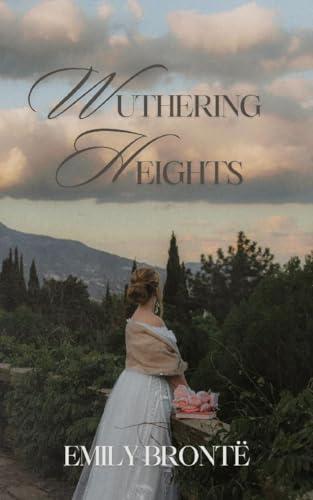
The hosts first cited the title as an example of a thrilling Gothic bodice‑rip‑per when launching their new Book Club, and later examined it as an absolute canonical classic and one of the great romantic novels. Dominic Sandbrook and Tabitha Syrett discussed its tangled family dynamics and Heathcliff’s vengeful quest, noting that while one initially found it disappointing and overly dramatic for teenage readers, they ultimately recognized its iconic status and depth. The overall tone was enthusiastic and endorsing.
The novel was discussed as an absolute canonical classic and one of the great romantic novels, though one speaker initially thought it was disappointing and too much for teenage girls before changing their mind. It tells the story of the tangled relationships between the Earnshaw and Linton families on the Yorkshire moors, driven by Heathcliff's crusade of vengeance after being taken in as a foundling.
So for instance Wuthering Heights, and then something maybe newer and a bit more contemporary. So The Secret History by Donna Tartt or Never Let Me Go by Kazuo Ishiguro.
So we start with, of course, Wuthering Heights, the truth behind this iconic, famously kind of overwrought story and obviously reflecting a little bit on the new movie.
Wuthering Heights by Emily Bronte, published in 1847. It's set in 1801, but it's looking back even before that. And Tabby, it's one of the absolute canonical classics. And it's actually regarded, isn't it, as one of the great romantic novels.
I thought, oh, disappointing. It's not as good as Jane Eyre. Because I didn't really get into the kind of fever dream side of things. I frankly did get a little bit lost. And I thought to myself, this is going to be very self-incriminating. I thought to myself, this is a bit of a book for teenage girls.
And you might say, well, where does this come from in this sort of quite withdrawn, lonely, you know, very bookish girl? And an answer is she herself is quite violent.
The hosts mentioned this title while introducing their new podcast, The Book Club, noting it as an example of a thrilling Gothic bodice ripper they planned to cover.
We will be looking at thrilling Gothic bodice rippers like Wuthering Heights and Frankenstein, as well as iconic stories like The Great Gatsby or Little Women, and then also some more modern stuff.
Wuthering Heights was listed as one of the classic Gothic titles the new Book Club will explore.
We will be looking at thrilling Gothic bodice rippers like Wuthering Heights and Frankenstein, as well as iconic stories like The Great Gatsby or Little Women.
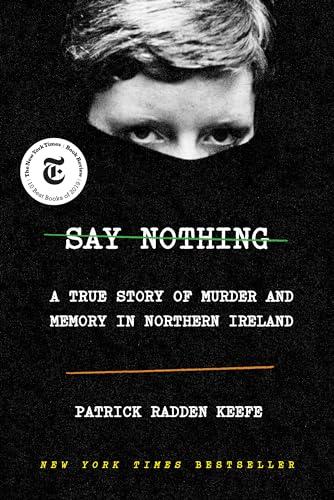
A True Story of Murder and Memory in Northern Ireland
The hosts highlighted the book as a nonfiction work by Patrick Radden Keefe that served as the basis for the hit TV drama of the same name, noting its relevance to their discussion of the Troubles. They mentioned the author’s involvement with the miniseries and used the title to illustrate how real‑world events were being adapted for television.
The hosts identified Say Nothing as a nonfiction book by Patrick Radden Keefe that inspired the TV drama of the same name.
He's the author of the nonfiction book that inspired the hit TV drama Say Nothing.
The hosts noted that the nonfiction book inspired the hit TV drama and highlighted its relevance to their discussion of the Troubles.
And our guest on the miniseries is Patrick Radden Keefe. Now, he's the author of the nonfiction book that inspired the hit TV drama Say Nothing.
The guest introduced his nonfiction book that inspired the TV drama, calling it one of his favourite works and describing it as a striking piece of modern truecrime narrative.
Now, he's the author of the nonfiction book that inspired the hit TV drama, Say Nothing. It's one of my favourite books. It's, I think, the kind of in cold blood for our generation. Extraordinary work of nonfiction.
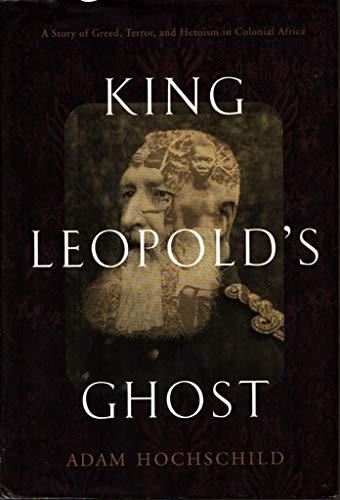
A Story of Greed, Terror, and Heroism in Colonial Africa
The podcast highlighted the book as a detailed historical account of King Leopold’s brutal rule in the Congo, noting its use as a primary source for the episode’s narrative. The hosts praised it as a vivid, thorough, and brilliant work, even though they acknowledged it generated some controversy. They cited it as inspiration for a real‑life parallel to Kurtz and said they would draw heavily from its arguments in future discussions.
It was a historical book that examined King Leopold's brutal rule in the Congo and was cited as a source for a candidate for Kurtz's reallife inspiration.
And then the final candidate, which Adam Hochschild mentions in his book, King Leopold's Ghost, is a guy called Leon Rom.
The presenters described Hochschild's King Leopold's Ghost as a thorough, vivid account that exposed the atrocities and exploitation of Leopold's Congo regime.
And Adam Hochschild in his brilliant book, King Leopold's Ghost, that we've mentioned quite a lot, he says, Someone feted for life as a small town bank clerk or a plumber in Europe could instead become a warlord, an ivory merchant, a big game hunter and a possessor of a harem.
So in the book King Leopold's Ghost, there are long narratives of kind of these hideous, bloody mutiners where forced public units have turned against their officers.
The presenters called it a brilliant, though controversial, book about the Congo atrocities and mass killings, noting they would draw heavily from it for the episode and discuss its arguments in a future bonus episode.
There's a brilliant book on this called King Leopold's Ghost by the American writer Adam Hochschild. We'll be borrowing from that book very liberally.
Not an uncontroversial book itself. And in next week's bonus episode, we'll talk about some of the arguments about that book.
There's a brilliant example in the book, King Leopold's Ghost, a terrifying example.
Note: The book recommendations on this page are discovered automatically from podcast transcripts, and may be incorrect or incomplete.
Podcast Name