Podcast
The Rest Is History
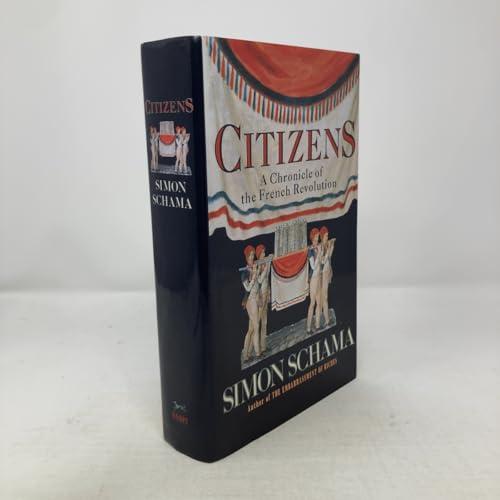
The hosts referenced the title across several episodes to illustrate points about the revolutionary police state, the role of violence in the French Revolution, and Marie Antoinette’s attitudes, citing its vivid illustrations. They highlighted its engaging narrative and praised it as an enjoyable, picture‑rich read, recommending it to listeners. Overall, the podcast presented it as a valuable and highly recommended source.
Episode: 481. The French Revolution: The Women's March on V...
The book described the revolutionary police as the first organ of a revolutionary police state.
Chalmers in Citizens describes it as the first organ of a revolutionary police state, and essentially it takes for itself all the powers of the Ancien Rgime that everyone had condemned.
Episode: 479. The French Revolution: The Storming of the Ba...
The hosts noted that a quoted passage about revolutionary violence came from Schama's book Citizens, and later highlighted Schama's argument that violence was the driving force of the French Revolution.
that passage actually is quoted by Simon Schama in his book Citizens.
And as Simon Schama says in his book, Citizens, this isn't the end of something.
Episode: 476. The French Revolution: The Diamond Necklace S...
The book was cited as saying the more outrageous the denunciations, the more the queen liked the play.
She does. So Simon Schama in Citizen says, the more outrageous the denunciations of the established order, the better the queen liked it.
Episode: 475. The French Revolution: Marie Antoinette (Part...
The podcast praised the book as an insanely enjoyable read with great pictures, recommending it to listeners.
Simon Schama's book Citizens. Is insanely enjoyable. I know it's always tempting to be revisionist and to say of a great historian and a great book, ah, it's actually rubbish. It is tip top. It is brilliant. And has great pictures as well.