The Iliad
Homer
Mentioned 6 days ago
688. The Odyssey: Return of the King (Part 2)
Take a deep dive into History’s biggest moments with Tom Holland & Dominic Sandbrook. Explore the stories of History’s most brutal rulers, deadly battles, and world-changing events. From the rise and fall of the Roman Empire, the Nazi conquest of Europe, and Hitler’s evil master plan for world do...
Recently mentioned
Homer
Mentioned 6 days ago
688. The Odyssey: Return of the King (Part 2)
Homer
Mentioned 6 days ago
688. The Odyssey: Return of the King (Part 2)
Virgil
Mentioned 6 days ago
688. The Odyssey: Return of the King (Part 2)
James Joyce
Mentioned 6 days ago
688. The Odyssey: Return of the King (Part 2)
Madeline Miller
Mentioned 1 week ago
687. The Odyssey: Hero of the Trojan Horse (Part 1)
Guiseppe Tomasi di Lampedusa
Mentioned 1 week ago
687. The Odyssey: Hero of the Trojan Horse (Part 1)
Carol Dougherty
Mentioned 1 week ago
687. The Odyssey: Hero of the Trojan Horse (Part 1)
John Buchan
Mentioned 1 week ago
687. The Odyssey: Hero of the Trojan Horse (Part 1)
Ron Chernow
Mentioned 2 weeks ago
685. Hamilton: Duel to the Death (Part 3)
Laurence Sterne
Mentioned 2 weeks ago
685. Hamilton: Duel to the Death (Part 3)
Gore Vidal
Mentioned 2 weeks ago
685. Hamilton: Duel to the Death (Part 3)
unknown author
Mentioned 1 month ago
678. England: God Save the King (Part 2)
The First World Empire and the Battle for the West
The hosts referenced the book several times, noting that its author had written about the challenges of understanding the ancient world and the alienness of that era. They highlighted the blurb emphasizing the Persian invasion’s pivotal role for the West, presenting it as a little‑known but significant history work. The overall tone was positive, treating the title as an important resource for listeners interested in early world empires.
Matt said he had written about the topic in his book Persian Fire, indicating it covered the challenges of understanding the ancient world.
Right. So I wrote about this in Persian Fire.
Matt said he had written about the alienness of the ancient world in his book Persian Fire.
I wrote about this in Persian Fire.
They mentioned advertising a book titled Persian Fire as a chance to showcase the author's work on Cyrus.
This is a brilliant opportunity for you to advertise your book of Persian Fire. Thank you.
The hosts highlighted the blurb of Tom Holland's littleknown history book Persian Fire, noting its focus on the Persian invasion and its significance for the West.
Had the Greeks been defeated at Salamis, not only would the West lost its first struggle for independence and survival, but it is unlikely that there would have ever been such an entity as the West at all. So says the blurb for a little-known history book called Persian Fire by Tom Holland.
Tom your book Persian Fire is called the subtitle is what is it the first world war and the first world empire and the battle for the west and the battle for the west.
Tom Holland promoted his own popularhistory book, Persian Fire, describing it as a backdrop for the Iranian invasion of Afghanistan and the Iraq war.
and I when I when I rate potion fire which I'm shamelessly going to plug no you should my book on this it is the popular history on this but it's kind of you know you have to write a blurb and I rate Persian Fire in the backdrop to the invasion of Afghanistan and the Iraq war
the blurb that I wrote for Persian Fire in the fifth century BC a global superpower was determined to bring truth and order to what it regarded as two terrorist states the superpower was Persia
The hosts repeatedly highlighted the title as the novel that ignited Tom Holland's lifelong passion for history and praised it as a beautifully written, memorable work that captures the chivalric spirit of the Hundred Years' War. They regarded its prose as a landmark in Western literature and noted its vivid opening about the Black Death, expressing overall fondness and admiration for the book.
The hosts noted that Sir Nigel was the book that sparked Tom Holland's lifelong love of history and was praised as a work that would outlive Sherlock Holmes.
And that, Tom Holland, is the climactic scene of Sir Arthur Conan Doyle's masterwork, one of the books that he believed would be remembered long after Sherlock Holmes and Dr. Watson were forgotten. Sir Nigel, the book that fired your love of history all those decades ago.
The hosts praised the novel as beautifully written and remarked that it vividly captured the chivalric spirit of the Hundred Years' War, even opening with a striking account of the Black Death.
So Tom Holland, Sir Arthur Conan Doyle's novel. Beautifully written as usual. Sir Nigel, both beautifully written and I think it's fair to say remarkably read.
Arthur Conan Doyle always thought they were better than the Sherlock Holmes books, and he was gutted, wasn't he, that people paid so much attention to Holmes and not enough to Nigel.
Well, actually Sir Nigel, Conan Doyle's novel, opens with a brilliant account of the Black Death coming.
Tom Holland recalled a reading from Sir Nigel, noting the book from his childhood and expressing fondness for it.
So that's Tom Holland. It was a reading from Sir Nigel by Sir Arthur Conan Doyle.
Tom, you talked last time about how much you loved that book, Sir Nigel, when you were growing up.
The hosts highlighted the novel as a memorable passage of prose and called it a great landmark in Western literature.
So Tom Holland, that beautiful passage of prose, the introduction of the Red Ferret in the book Sir Nigel, which you recommended to me, you regard that as one of the great landmarks in Western literature, don't you? I'd completely forgotten the Red Ferret, and I don't know how I could have done... it's by Arthur Conan Doyle.
They also cited ConanDoyle's Sir Nigel (referred to as Sun Nigel) as another classic adventure novel set in the same period.
The White Company. White Company, Sun Nigel.
The Complete and Definitive Text
The hosts explained that the book, released two years after Freud's early writings, prominently featured Oedipus's story to illustrate his theory of the unconscious mind, and they also highlighted a quirky reference to Freud's memories of Blackpool that appeared in it. Their discussion focused on the work's historical significance rather than offering a direct recommendation.
The hosts said Freud published the book two years after his early work, and it featured Oedipus's story prominently.
He believed that people had in the attic, in the cupboard, all kinds of unacknowledged fears and anxieties and desires, including sexual desires... Two years later, when he published The Interpretation of Dreams, Oedipus's story featured very prominently in it, didn't it, Tom?
Freud's groundbreaking work was highlighted as the book in which he linked Oedipus' story to the unconscious mind, noting its publication date and influence.
He believed that people had in the attic, in the cupboard, all kinds of unacknowledged fears... Two years later, when he published The Interpretation of Dreams, Oedipus's story featured very prominently in it.
He did it in 1897, and he published The Interpretation of Dreams, and Oedipus's story was a key part of that work.
The hosts mentioned that Freud's book was referenced because he had written about his memories of Blackpool.
Freud adored Blackpool so much that memories of paddling in the waters there were included in his book on The Interpretation of Dreams.
Noted as being published in 1899, the same year as Heart of Darkness, highlighting the era's interest in the unconscious.
And then there's a book by Freud that was published in 1899, The Interpretation of Dreams, the idea that buried deep down in this kind of very primal and unfathomable way are anxieties and ghosts and terrible urges that we try to repress.
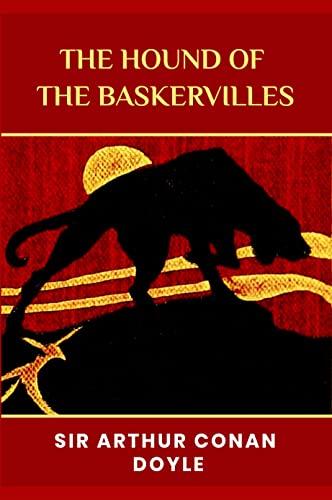
The Original 1902 Unabridged and Complete Edition (Arthur Conan Doyle Classics)
The title was highlighted as a seminal gothic novel during a brief promotional spot for a Sherlock Holmes audio drama, and its original publication year of 1901 was noted in a later episode. Both mentions were factual and did not include a recommendation or critique.
The Hound of the Baskervilles was referenced as the seminal gothic novel during a short promotional spot for a Sherlock Holmes audio drama.
The seminal gothic novel by Arthur Conan Doyle ... the hound of the baskervilles.
The hosts referred to the seminal gothic novel The Hound of the Baskervilles by Arthur Conan Doyle.
The seminal gothic novel by Arthur Conan Doyle.
It was mentioned alongside other Conan Doyle titles as being insignificant next to his masterwork.
the sign of four, the hour of the Baskervilles, the study in Scarlet are as nothing.
The publication date of this novel was established as 1901.
how did the Baskervilles is 1901?
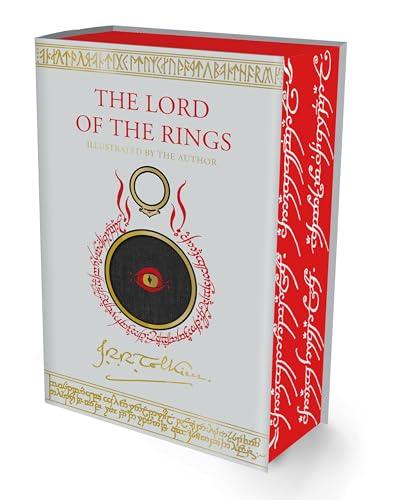
They discussed it as the epic sequel to The Hobbit, noting its depth, its dark themes and the central conflict involving the One Ring and Sauron.
the Lord of the Rings, the sequel to it.
— Episode: 226. The Lord of the Rings
They discussed it as the epic sequel to The Hobbit, noting its depth, its dark themes and the central conflict involving the One Ring and Sauron.
the Lord of the Rings, the sequel to it.
the great villain... Sauron... in the Lord of the Rings is the kind of Satan figure that drives the plot.
The podcast repeatedly referenced the epic as Tolkien's sequel to The Hobbit, noting its themes, length of composition, and its lasting cultural impact.
Of the journeying far from home with the band of friends... there is more in the Lord of the Rings, the sequel to it.
the Lord of the Rings ... it is no longer a children's book. It's clearly not pitched as a children's book.
the Lord of the Rings turned into, it's no longer a children's book... the best part of 17 years for the Lord of the Rings to be written.
the Lord of the Rings is the great novel on the horrors of the mid20th century.
They noted that Tolkien originally intended the work to be a single short book, but it expanded into the three-volume epic known today.
Tolkien originally began the Lord of the Rings thinking it would be one short book and it turned into three monsters.
The hosts compared the ring in Tolkien's work to dragons in Game of Thrones, describing it as a superweapon that hangs over the story.
Or the ring in The Lord of the Rings is a super weapon, isn't it? And that the prospect of using the ring hangs over the Lord of the Rings.
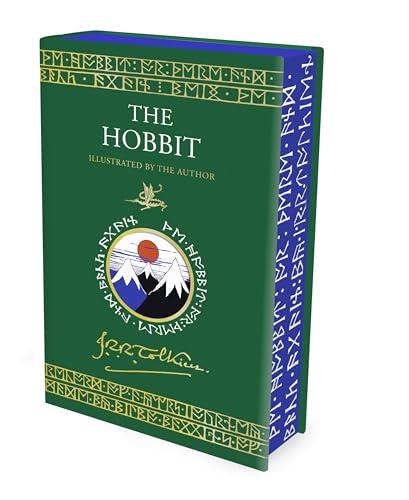
Illustrated by JRR Tolkien
The book was highlighted as a classic fantasy that the hosts planned to feature in future discussions and had previously been covered in a bonus club episode. The hosts praised it as a perfectly conceived children’s story that also appeals to adults, noting its charm and lasting impact on Tolkien’s later works. Overall, the discussion was enthusiastic and recommended the title highly.
The hosts introduced the classic fantasy novel as an example of the great books they plan to discuss in future episodes.
J.R. Tolkien's fantasy classic The Hobbit to Bram Stoker's horror novel Dracula to Margaret Atwood's dystopian fable The Handmaid's Tale.
The hosts described it as a perfectly conceived children's book that introduced Bilbo Baggins and set the stage for Tolkien's later works.
So this is Bill Weier Baggins in The Hobbit published in 1937 by J. R. R. Tolkien.
One of the great beauty, the great charm of the Hobbit, which I think is a perfectly conceived children's book.
The hosts described the novel as a perfectly conceived children's book that launched Tolkien's career and noted its 1937 publication date.
So this is Bill Weier Baggins in The Hobbit published in 1937 by J. R. R. Tolkien.
the great beauty, the great charm of the Hobbit, which I think is a perfectly conceived children's book.
The Hobbit is a perfectly calibrated story that you can read at nine and still enjoy it; it's a children's book that works for adults too.
This book was one of the bonus series episodes previously done for members of The Rest Is History Club.
So we did The Hobbit and In Cold Blood and The Handmaid's Ted and so on and so forth.
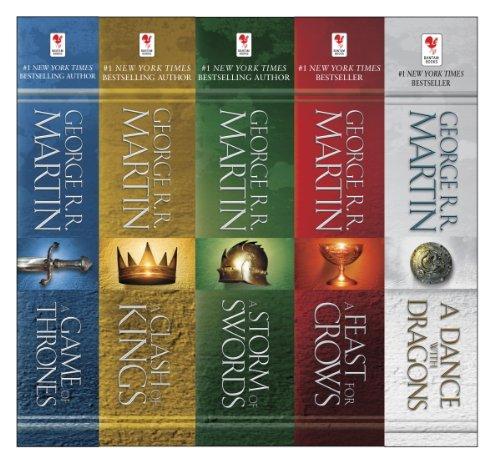
A Game of Thrones, A Clash of Kings, A Storm of Swords, A Feast for Crows, and A Dance with Dragons
A Game of Thrones was mentioned as a fantasy novel whose author was inspired by his earlier visit to Hadrian's Wall, shaping the series' depiction of a massive, icebound wall.
A decade later, when he embarked on a fantasy novel called A Game of Thrones, his visit to Hadrian's wall was to prove a particularly vivid influence - a war, as he would later describe it, defending...
— Episode: PAX: War and Peace in Rome’s Golden Age...
A Game of Thrones was mentioned as a fantasy novel whose author was inspired by his earlier visit to Hadrian's Wall, shaping the series' depiction of a massive, icebound wall.
A decade later, when he embarked on a fantasy novel called A Game of Thrones, his visit to Hadrian's wall was to prove a particularly vivid influence - a war, as he would later describe it, defending civilisation against unknown threats beyond.
Tom Holland recalled reading the first book in a single day, calling it a great reading experience and praising its brilliance.
I am, and I'm proud to say that I was an early adopter because I read the early books before the TV show started.
Yeah, I got the first book, devoured it pretty much in a day, and I thought they were really great and the book was brilliant.
I've got to say that it was one of the great reading experiences of my life.
This title was mentioned as an example of modern material that would be discussed on The Book Club podcast.
So Game of Thrones, Normal People, The Hunger Games, Hamnet, all manner of exciting stories.
Game of Thrones was mentioned as a modern title that will be examined in the Book Club series.
And then also some more modern stuff. So Game of Thrones, Normal People, The Hunger Games, Hamnet, all manner of exciting stories.
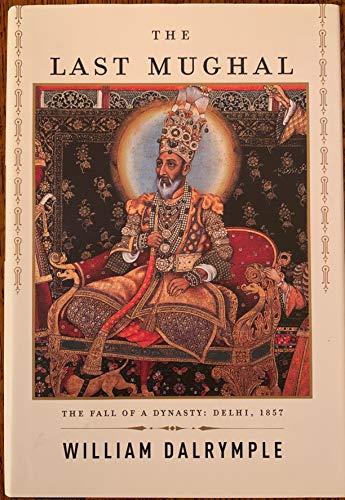
The Fall of a Dynasty
Dynasty was noted as the second book in the series, focusing on Augustus and his imperial lineage.
The second, Dynasty, that of Augustus, Rome's first emperor and the line of rulers who claimed descent from him.
— Episode: PAX: War and Peace in Rome’s Golden Age...
Dynasty was noted as the second book in the series, focusing on Augustus and his imperial lineage.
The second, Dynasty, that of Augustus, Rome's first emperor and the line of rulers who claimed descent from him.
Tom also cited Dynasty as the second of his two books on Caesar, indicating it covered the broader family saga.
I've done it twice in two books I've written, Rubicon and Dynasty.
Tom also referenced his other book titled Dynasty, another work on Roman history he had authored.
I've done it twice in two books I've written, Rubicon and Dynasty.
Cited as one of Dalrymple's major works, highlighted for listeners seeking comprehensive coverage of the decline of the Mughal empire.
this podcast, a wonderful historian whose books The Anarchy, White Moguls, Return of a King, The Last Mogul, anyone interested in Indian or British history I'm sure will have come across and if they haven't then they're very lucky because they've just been issued in a wonderful bumper pack
you tell it brilliantly your four books yankee white moguls return of a king the last mogul the company called tete
The hosts previewed a future episode that would explore the chilling vampire novel, listed it among other key titles they planned to discuss, and noted its 1897 publication as part of the era's fascination with darkness and horror. Their comments suggested interest but no detailed analysis was provided.
The show previewed a future episode focusing on Stoker's chilling vampire novel, promising a deep dive into its horror elements.
We'll be doing Bram Stoker's chilling Dracula.
The hosts listed the horror novel as another key title they intend to explore in upcoming bookfocused episodes.
J.R. Tolkien's fantasy classic The Hobbit to Bram Stoker's horror novel Dracula to Margaret Atwood's dystopian fable The Handmaid's Tale.
Cited as an 1897 novel that contributed to the era's fascination with darkness and horror.
Also Dracula, which is published in 1897. The idea of darkness coming to England.
They mentioned that the vampire novel Dracula had its origins in Byron's poem that was later reworked, linking it to the same gloomy climate period.
You also have a completely terrifying poem that Byron writes about the experience of the darkness ... they put this poem by Byron and are reworking the it by Pushkin ... and you get Dracula basically kind of being born here.
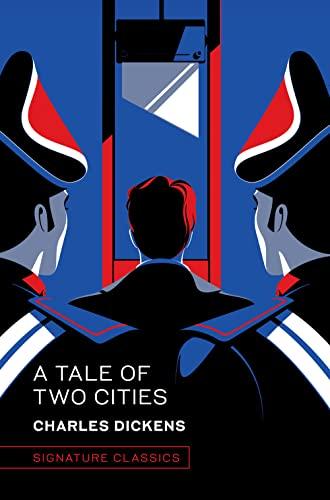
The hosts referenced the book as a vivid depiction of the guillotine and one of the most influential works shaping public perception of the French Revolution, but they also cautioned that its caricatured portrayal can give a misleading picture of the Revolution's causes. This mixed view was discussed across three episodes.
The hosts referred to Dickens' novel as depicting the guillotine during the French Revolution.
So that was Charles Dickens in A Tale of Two Cities, and he is writing, of course, about the guillotine.
They noted that reading Dickens's novel would give a misleading picture of the Revolution's causes.
You would think if you had read A Tale of Two Cities and all of the sort of, you used the caricatures of the French Revolution and the French elite, that nobody did anything to help.
The hosts said it was one of the most influential books shaping people's perception of history.
Dickens' A Tale of Two Cities, one of the most influential books on our perception of history that has ever been written.
They mentioned it as a leatherbound copy presented by Mitterrand, using it as an emblem of the French Revolution's lasting cultural impact.
She gave him a leather band copy of A Tale of Two Cities.
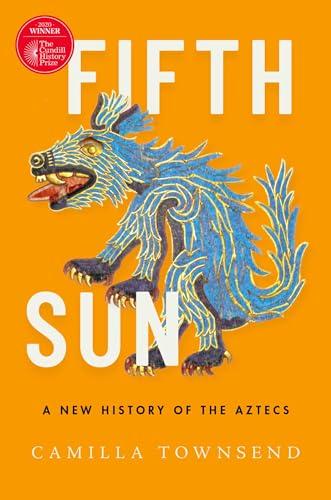
A New History of the Aztecs
The hosts praised Camilla Townsend's book Fifth Sun for its clear explanation of Aztec cosmology and the role of blood in keeping the sun alive.
In her book Fifth Sun, Camilla Townsend is brilliant on this, on the way in which they think the cosmology works. The sun rises and falls and it's actually the constant flow of blood...
— Episode: 387. The Fall of the Aztecs: Prisoners o...
The hosts praised Camilla Townsend's book Fifth Sun for its clear explanation of Aztec cosmology and the role of blood in keeping the sun alive.
In her book Fifth Sun, Camilla Townsend is brilliant on this, on the way in which they think the cosmology works. The sun rises and falls and it's actually the constant flow of blood that keeps it going.
The hosts noted that Townsend's book argued the Spanish arrived with a millennialong agricultural advantage, likening the encounter to Renaissance Europe meeting the ancient Sumerians.
Camilla Townsend in her wonderful book, Fifth Sun, which we've had plenty of reason to mention, she says about this that it was almost as if Renaissance Europe had come face to face with the ancient Sumerians.
The discussion highlighted Townsend's work on the Aztecs, noting that it offered a nuanced view of indigenous perspectives and served as a complementary companion to their conversation about the conquistadors.
We did that wonderful episode with Camilla Townsend talking about the Aztecs and Mexica, how they saw the world, and how that transforms your understanding of the process of the conquest.
I thought it's a kind of wonderful companion piece to Camilla Townsend's Fifth Sun; it shows a slightly bad scholarly habit of assuming motivations without looking at the indigenous viewpoint.
The hosts described it as the best history book they read last year, praising its revelatory and moving portrayal of Aztec history told from the Aztecs' own perspective.
our very first transatlantic guest, our first American guest on the show, we have Camilla Townsend, whose book came out last year, Fifth Sun, A New History of the Aztecs was absolutely the best book that I read last year.
the thing that's brilliant about it is that it gives you a history of the Aztecs through Aztec eyes in so far as that is possible.
Camilla's book is the fifth son, a new history of the Aztecs, honestly one of the most fascinating, eyeopening, moving history books I've read; can't recommend it highly enough.
I noted it down when I read it those Aztecs who lived through the war with the Spaniards and then survived the first great epidemic of European diseases found to their surprise that the sun continued to rise and set and that they still had to face the rest of their lives.
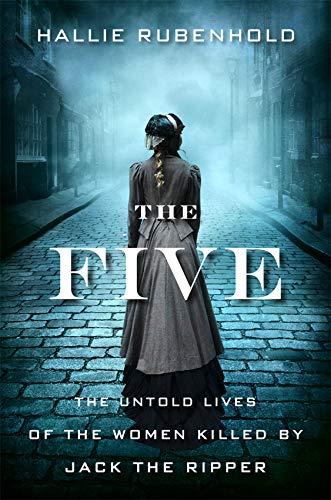
The Untold Lives of the Women Killed by Jack the Ripper
Rubenhold's book was cited as arguing that all the victims were killed while they slept, contrasting with another author's view that they were out soliciting.
Hallie Rubenhold in her book, The Five, she believes all the women were killed as they slept.
— Episode: 625. Jack The Ripper: Horror in Whitecha...
Rubenhold's book was cited as arguing that all the victims were killed while they slept, contrasting with another author's view that they were out soliciting.
Hallie Rubenhold in her book, The Five, she believes all the women were killed as they slept.
Hallie Rubenhold in her book, The Five, she believes all the women were killed as they slept. Philip Sutton, on the other hand, she went out to solicit to get customers.
The hosts highlighted that Hallie Rubenhold authored the 2019 prizewinning book The Five, a collective biography of the women murdered by Jack the Ripper.
Hallie Rubenhold, who's been on the show in the early days, she wrote a book called The Five, didn't she? In 2019, a prize winning book, which was a sort of group biography of the murdered women.
The hosts cited Rubenhold's book as providing expertly sourced, detailed accounts of the other Jack the Ripper victims, and noted that it found no verifiable statements from Mary Jane Kelly about her life before arriving in London.
to quote Hallie Rubenhold in whose book The Five, you know, she gives very detailed accounts of the lives of the other victims, all of them expertly sourced, kind of drawing on all kinds of written material. But she says of Mary Jane Kelly, not a single statement made by her about her life prior to her arrival in London has ever been verified.
The hosts described it as a brilliant work on the victims' lives and noted its thesis that the victims were killed while asleep and were homeless.
Hallie Rubenhold in her book, The Five, which is brilliant on the lives of the victims, has a thesis that the victims were all killed as they slept, that they were homeless.
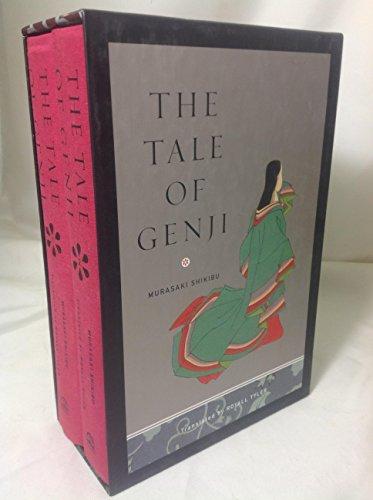
The hosts highlighted the title as a seminal Japanese classic, noting its novel structure, extensive length, and depiction of Heian court life. They compared it to The Pillow Book and emphasized its influence on court culture and its historical setting in the 10th‑11th centuries. Their discussion conveyed strong admiration, effectively recommending it to listeners.
The book was referenced as a great Japanese classic and compared to The Pillow Book, noted for its novel structure and influence on Heian court culture.
We talked last time about the great Japanese classic, The Tale of Genji.
We talked last time when we were explaining about The Tale of Genji... we sort of talked about what a remarkable book it is to read.
The Tale of Genji, you can recognize it as a novel, but the pillow book is unlike really anything that's been written since.
Genji has been courting this woman for a very long time, a very arduous process. ... we can see why this would add an extra dimension to the rivalry between the two women.
The hosts described it as a monumental Japanese novel exceeding 1,000 pages, noting its historical setting in the 10th11th centuries and its status as a classic work of literature.
It's a novel called The Tale of Genji. And to give you a sense of the sheer weight of it, in the translation by Royal Tyler, which we'll be quoting from a fair bit today, that book is more than 1,000 pages long.
The Tale of Genji is actually a historical novel. So it's set in the 10th century.
The classic novel was referenced as the world's first psychological novel, written by Murasaki Shikibu in the 10th11th centuries.
she's famous isn't she for The Tale of Genji which is often described as the first kind of great novel from Asia? That's right, the first novel or the world's first psychological novel you could say.
The episode referenced the classic 1100page novel written by Murasaki Shikibu around the year 1000. It was cited as an example of Heianperiod literature featuring no warfare.
the first of these episodes was on The Tale of Genji, which is an enormous 1100 page novel written around the year 1000 by Murasaki Shikibu, Lady Murasaki
The hosts referenced the title as the original source for the Sphinx's description and highlighted it as the earliest poem documenting the birth of the gods, noting its ancient authority in Greek mythology.
They said the Sphinx's description was originally written about in Hesiod's Theogony.
She had been written about in the Theogony.
They noted the poem called Theogony as the earliest source for the gods, written centuries before Athens.
the poem in which it features, which is called the Theogony or the birth of the gods, is itself at the kind of the wellspring...
The Sphinx's lineage was described as being written about in Hesiod's Theogony, linking the monster to other mythic creatures.
She had been written about in the Theogony. Hesiod says that she was a sibling of Cerberus...
The discussion highlighted it as the foundational poem that records the birth of the gods and underpins much of Greek myth.
It is the poem called the Theogony or the birth of the gods, is itself at the kind of the wellspring, not just of Greek poetry, but actually of European poetry.
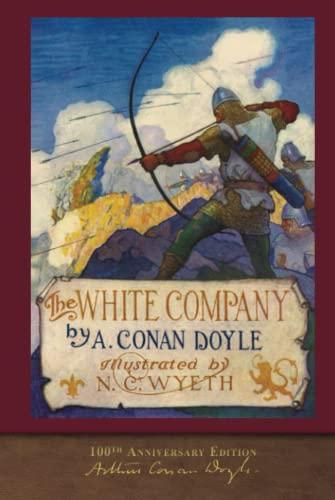
Illustrated by N. C. Wyeth
The final segment referenced The White Company as Conan Doyle's masterwork, saying it dwarfs even his famous Sherlock Holmes stories.
final reading from Sir Arthur Conan Doyle's masterwork, a work compared with which the sign of four, the hour of the Baskervilles, the study in Scarlet are as nothing. So these are the final lines of...
— Episode: 321: Hundred Years' War: A Storm of Swor...
The final segment referenced The White Company as Conan Doyle's masterwork, saying it dwarfs even his famous Sherlock Holmes stories.
final reading from Sir Arthur Conan Doyle's masterwork, a work compared with which the sign of four, the hour of the Baskervilles, the study in Scarlet are as nothing. So these are the final lines of Tom Holland's favorite book.
The novel was mentioned alongside Sir Nigel as part of the same series and praised by the hosts.
So Tom Holland, that beautiful passage of prose, the introduction of the Red Ferret in the book Sir Nigel, which you recommended to me, you regard that as one of the great landmarks in Western literature, don't you? I'd completely forgotten the Red Ferret... Arthur Conan Doyle thought that Sir Nigel and the other in the same series, The White Company, were better than Sherlock Holmes.
They recalled reading ConanDoyle's historical novel The White Company as a favourite depiction of the 14thcentury era.
I think we talked about this before, the Conan Doyle's novels. The White Company. White Company, Sun Nigel.
One speaker read this book as a child and loved it, noting it was set during the Hundred Years' War.
Have you read The White Company? I have. I love everyone says, oh, it's dreary, maybe I loved it. I read it as a child. And there's a sequel, Sonight on, which is brilliant.
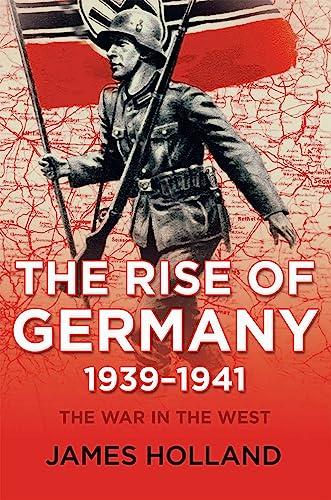
The hosts referenced the book as a key source for statistical data on iron‑ore imports and for its vivid depiction of the Siegfried Line and the French experience on the Western Front. Both Tom and Dominic highlighted how the author's points helped frame their discussion of the 1939‑1941 campaign. Their remarks indicated they regarded it as an excellent and reliable reference.
The hosts cited ironore statistics that were taken from James Holland's bookThe War in the West.
by the War in the West by my brother, James Holland. By December 1939, British intelligence deduced that of the 22 million tons of iron ore imported in 1938, the equivalent of nine and a half million tons had come from sources now close to it.
The hosts praised the book for its vivid description of the Siegfried Line and the French experience there, citing it as an excellent source for that episode of the war. They also noted that a point made in the book helped frame their discussion of the Western front in 19391940.
And the French kind of go up to it and an excellent description in a book by James Holland, my brother, The War in the West, Germany Ascendant 1939 to 1941.
Just to ask, and this is a point my brother makes in his book.
The hosts cited Holland's book for statistics on ironore imports, using it to illustrate how vital Swedish iron ore was to the German war effort in early 1940.
So that is obviously a massive crisis for the Nazi war effort, because without iron ore, they can't build their planes and guns and all that kind of stuff. The War in the West by my brother, James Holland. By December 1939, British intelligence deduced that of the 22 million tons of iron ore imported in 1938, the equivalent of nine and a half million tons had come from sources now close to it.
The host recalled that his brother's book, The War in the West, described German girls' misery and the scarcity of clothing in occupied towns.
I remember in my brother's book, The War in the West, which I've been quoting a lot in this series, he has an account of German girls and their misery at the fact that the only clothes available in the shops are all brown.
The Rise and Fall of the British Navy
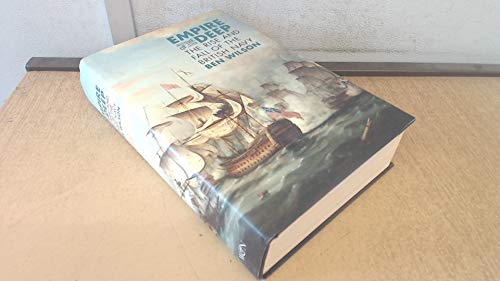
In the episode, the host cited the book to highlight the stark differences between the Battle of Copenhagen and earlier naval engagements, noting the unique challenges of fighting on a city's doorstep. The historian's observation was used to deepen the discussion of the battle’s distinct dynamics.
Ben Wilson's book was cited as pointing out the stark differences between the Copenhagen battle and earlier engagements, emphasizing the unique challenges of fighting on a city's doorstep.
In his book, Empire of the Deep, the historian Ben Wilson makes what should be the obvious point, but it hadn't really occurred to me that there is a massive difference between this and previous battles.
Ben Wilson's book was cited for highlighting the distinctive nature of the Copenhagen battle compared with Nelson's earlier engagements.
In his book, Empire of the Deep, the historian Ben Wilson makes what should be the obvious point, but it hadn't really occurred to me that there is a massive difference between this and previous battles.
Ben Wilson's book was cited as describing the battle as a glimpse into hell for thousands of sailors on both sides.
This is one from Ben Wilson's book, Empire of the Deep. And he says, for thousands of sailors on both sides, the battle was a glimpse into hell.
They mentioned reading a book called Empire of the Deep by Ben Wilson, which provides a wonderful section on the Royal Navy.
I read a book called Empire of the Deep by Ben Wilson all about the Royal Navy.
Ancient Greece and Ontological History
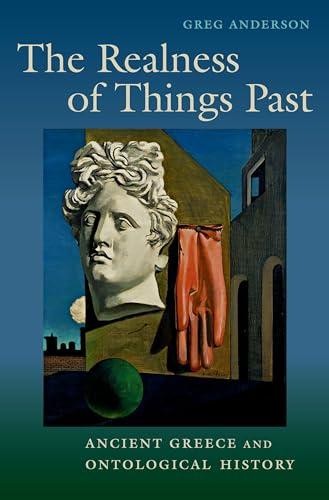
The hosts cited the title as a scholarly source for understanding how Athenians viewed their deities as benevolent, parental figures rather than distant contractors. Tom referenced Greg Anderson's work to support the discussion of ancient Greek religious practices, highlighting its explanatory value. The book was presented as a credible study that deepened the episode's analysis of myth and worship.
Greg Anderson was cited as the author of The Realness of Things Past, a book used to explain how Athenians perceived their gods as caring parents rather than distant contractors.
in his book, The Realness of Things Past, he argues that the gods of Attica were seen as benevolent governors or caring parents.
The book was mentioned as Anderson's study of how Athenians perceived their gods and religious practices.
Greg Anderson, who I've already cited in this series, in his book, The Realness of Things Past.
Paul referred to a book by Greg Anderson titled The Realness of Things Past, which explores how academic historiography obscures the strangeness of the past.
Greg Anderson wrote a wonderful book about the emergence of Greek democracy, but he also wrote a kind of altogether weirder book called The Realness of Things Past.
Greg Anderson was mentioned as the author of a "weirder" book called The Realness of Things Past, which deals with the emergence of Greek democracy and academic historiography.
Greg Anderson ... wrote a wonderful book about the emergence of Greek democracy. But he then wrote a kind of altogether weirder book called The Realness of Things Past.
The hosts highlighted the book as an extraordinary medieval work, noting its wit, charm, and the vivid, playful personality of its author, especially in the Penguin Classics translation that situates it amid court politics. They praised its originality and likened its humor to that of P.G. Wodehouse, and announced they would explore it further in a later episode. The overall tone was an enthusiastic endorsement.
The hosts praised it as a remarkable medieval masterpiece full of wit, charm and the author's vivid personality on every page.
I would argue one of the most extraordinary passages of prose you will ever read. It is the beginning of a really, really remarkable and original masterpiece called The Pillow Book...
And what shines through on every page is the wit, the brilliance, the sophistication, the charm, and the individual personality of the author in a way that I don't think I've ever encountered with any other work of medieval literature.
The fun of reading The Pillow Book is that Sei Shonagon is very, she's very playful. You can never entirely trust what she's saying, I think.
In the Penguin Classic translated by Meredith McKinney, she places The Pillow Book in the context of a political crisis at court that was directly threatening Seishonagon's position there.
It sounds a weird parallel, but I thought of P.G. Woodhouse writing Bertie Worcester in the 30s. It's that this world of kind of genial humour has no place really for depressions or wars.
The pillow book was announced as the next title the hosts plan to discuss in a future episode.
Wonderful. Thank you very much, Tom. So that book is the pillow book, and we'll be talking about that next time.
The hosts compared the lack of war scenes in The Tale of Genji to a similarly peaceful work, The Pillow Book. They used it to illustrate courtly culture with little martial content.
It's the same with the Pillow book, isn't it?
The newsletter was also likened to The Pillow Book for its elegance and balance.
a lot of people have been saying that the new newsletter is comparable probably only to The Tale of Genji and The Pillow Book in terms of elegance of composition, in terms of the wealth of information, the information about medieval Japan, and just the sort of general sense of beauty and poise and sort of beautiful balance to it.
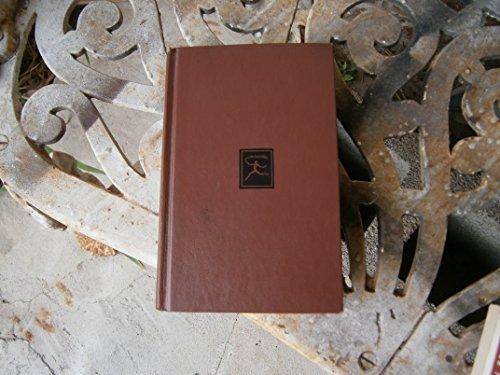
The hosts cited the book as a key cultural reference that shaped modern portrayals of Claudius, noting its roots in Suetonius and its influence on later TV dramas. Dominic highlighted how Graves turned ancient material into a compelling novel that later became a popular BBC series. The discussion conveyed strong approval of its relevance for listeners interested in Roman history.
The podcast referenced the novel as a cultural touchstone for understanding Claudius's character and his historical portrayal.
anyone who's read I, Claudius will remember Narcissus and Pallas and people like that, who presumably they're very bright and they're very good.
I, Claudius, you know, as a novel, but even more as a TV drama kind of lies at the head of all these great dynastic epics that we've had on TV over the past decades.
The discussion noted that Robert Graves transformed Suetonius's material into the novel I,Claudius, which later inspired a popular TV series.
The identity of the man who translated the previous edition of Suetonius' Lives for Penguin Classics, who's none other than Robert Graves. So the author of I,Claudius obviously turned the raw material from the Twelve Caesars into his novels I,Claudius and Claudius the God.
I,Claudius then became a BBC TV series in the 1970s, hugely successful.
The hosts noted that many listeners were familiar with the TV series or had read Graves' novel.
People remember the TV show, I, Claudius or read Robert Graves' novels.
The hosts referenced the novel while noting it was used as a source for a television dramatization about Nero.
the Heineken advert ... I Claudius ... Christopher begins as Nero is he's sent in so many gladiators to death that he can't move his thumb so they bring on a glass and he drinks it and then he's able to start sentencing gladiators to death again
Note: The book recommendations on this page are discovered automatically from podcast transcripts, and may be incorrect or incomplete.
Podcast Name