Pastel Snow Scrapbook Paper Craft Pad
Creative Corner
Mentioned 7 months ago
Are We The Universe’s Way of Knowing Itself? With Brian Cox
Science, pop culture, and comedy collide on StarTalk Radio! Neil deGrasse Tyson, astrophysicist and Director of New York's Hayden Planetarium, and his comic co-hosts, guest celebrities, and scientific experts explore astronomy, physics, and everything else there is to know about life in the universe...
Recently mentioned
Creative Corner
Mentioned 7 months ago
Are We The Universe’s Way of Knowing Itself? With Brian Cox
Carl Sagan
Mentioned 7 months ago
Are We The Universe’s Way of Knowing Itself? With Brian Cox
Richard P. Feynman
Mentioned 7 months ago
Are We The Universe’s Way of Knowing Itself? With Brian Cox
Kimberly Arcand
Mentioned 1 year ago
Listening to the Universe with Kimberly Arcand
Daniel J. Levitin
Mentioned 1 year ago
Is Music the Language of the Universe? with Daniel Levitin
Steven Mithen
Mentioned 1 year ago
Is Music the Language of the Universe? with Daniel Levitin
Daniel J. Levitin
Mentioned 1 year ago
Is Music the Language of the Universe? with Daniel Levitin
Daniel J. Levitin
Mentioned 1 year ago
Is Music the Language of the Universe? with Daniel Levitin
Jr. Lyman Spitzer
Mentioned 1 year ago
Dark Comets with Darryl Seligman
Frank H. Shu
Mentioned 1 year ago
Dark Comets with Darryl Seligman
G H Hardy
Mentioned 1 year ago
Our Mathematical Universe with Grant Sanderson (3Blue1Brown)
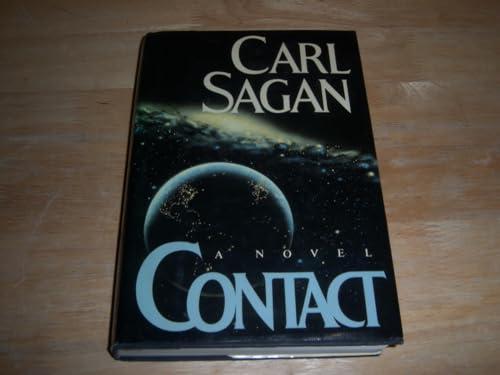
Carl Sagan
Mentioned 1 year ago
Revisiting the Drake Equation with David Grinspoon
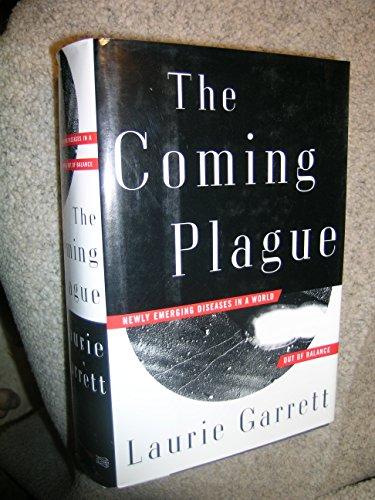
Newly Emerging Diseases in a World Out of Balance
It was discussed in the context of Lori Garrett's Pulitzer Prize-winning journalism about the Ebola virus and her expertise in infectious diseases. The book was mentioned as a source of knowledge about viral outbreaks and the cultural, political, and social impact of epidemics.
Lori, Pulitzer Prize-winning journalist and author of the book The Coming Plague.
— Episode: Zombie Apocalypse (Part 2)
It was discussed in the context of Lori Garrett's Pulitzer Prize-winning journalism about the Ebola virus and her expertise in infectious diseases. The book was mentioned as a source of knowledge about viral outbreaks and the cultural, political, and social impact of epidemics.
Lori, Pulitzer Prize-winning journalist and author of the book The Coming Plague.
It was mentioned as a book written by Lori Garrett and discussed in relation to infectious contagious diseases, particularly in the context of outbreaks and pandemics.
She's an expert on infectious contagious diseases....My boss does call me Debbie Downer.
As I see your book sounds very hopeful.The Coming Plague.
It was mentioned in the context of Laurie Garrett's expertise on viral outbreaks, particularly her Pulitzer Prize-winning work on the Ebola virus.
Lori, Pulitzer Prize-winning journalist and author of the book The Coming Plague.

Bacteria, Biotechnology, and Bioterrorism (California Studies in Food and Culture, 5)
Professor Nestle mentioned her book 'Safe Food', which discussed the political aspects and practices of food safety, including topics like E.coli, botulism, and food poisoning.
I actually have a book, it's called Safe Food, The Politics of Food Safe Food, Practicing Safe Food.
— Episode: A Seat at the Table with Anthony Bourdai...
Professor Nestle mentioned her book 'Safe Food', which discussed the political aspects and practices of food safety, including topics like E.coli, botulism, and food poisoning.
I actually have a book, it's called Safe Food, The Politics of Food Safe Food, Practicing Safe Food.
It was said that Marion Nestle also wrote a book titled 'Safe Food: The Politics of Food Safety', which discussed food safety and hazards from contaminated food.
Oh, I actually have a book. It's called Safe Food, The Politics of Food Safety.
Professor Nestle's book 'Safe Food: The Politics of Food Safety' was mentioned in the context of food safety, including the risks of food-borne illnesses and how to minimize them.
oh, I actually have a book it's called Safe Food The Politics of Food Safe Food Practicing Safe Food

It was discussed how Lewis Carroll, a mathematician, incorporated mathematical and scientific concepts into the story, particularly in relation to time and logic, which was further explored in Martin Gardner's book 'The Annotated Alice'.
Lewis Carroll was... He's a mathematician and Alice's Adventures in Wonderland have been studied by mathematicians and just the phrasings, the bending of time that's within it, it's all in there.
— Episode: The Science of Creativity, with David By...
It was discussed how Lewis Carroll, a mathematician, incorporated mathematical and scientific concepts into the story, particularly in relation to time and logic, which was further explored in Martin Gardner's book 'The Annotated Alice'.
Lewis Carroll was... He's a mathematician and Alice's Adventures in Wonderland have been studied by mathematicians and just the phrasings, the bending of time that's within it, it's all in there.
And in fact there is a... The late Martin Gardner wrote a book called The Annotated Alice where every passage within Alice's Adventures in Wonderland has an explanatory note about how it relates to math and science.
It was discussed in the context of symbolic logic and mathematics, and how Martin Gardner wrote a book with explanatory notes about the story's relation to math and science.
Lewis Carroll was... He's a mathematician and Alice's Adventures in Wonderland have been studied by mathematicians and just the phrasings, the bending of time that's within it, it's all in there.
And in fact there is a... The late Martin Gardner wrote a book called The Annotated Alice where every passage within Alice's Adventures in Wonderland has an explanatory note about how it relates to math and science.
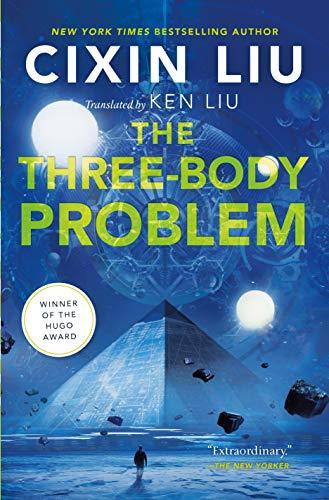
It was a science fiction trilogy, and a discussion about the novel's proposal of using nuclear missiles to propel a small package at near-light speed was discussed.
One of the trilogies that I read this year was, or last year, was The Three-Body Problem.
— Episode: StarTalk Live! Citizen Science from San...
It was a science fiction trilogy, and a discussion about the novel's proposal of using nuclear missiles to propel a small package at near-light speed was discussed.
One of the trilogies that I read this year was, or last year, was The Three-Body Problem.
So everybody, The Three-Body Problem is complicated where you have the sun and the earth and then you're a spacecraft. How do you keep track of the gravity of all three objects or the moon?
which was using all of the earth's nuclear missiles to explode behind a solar sail, or not a solar sail, but a sail to propel a very small package at near light speed.
It was discussed because of a proposed propulsion system in the book that used all the Earth's nuclear missiles to propel a small package at near light speed, which the panel found questionable and improbable due to political and technical challenges.
I read a lot of speculative science fiction and one of the trilogies that I read this year was, or last year, was The Three-Body Problem.
So everybody, The Three-Body Problem is complicated where you have the sun and the earth and then you're a spacecraft.
which was using all of the earth's nuclear missiles to explode behind a solar sail, or not a solar sail, but a sail to propel a very small package at near light speed.
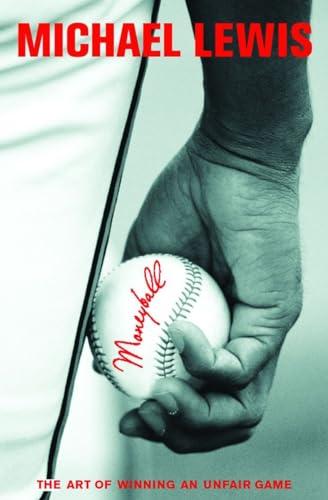
The Art of Winning an Unfair Game
The concept of using statistics and probability to gain an advantage in horse breeding was compared to the book and movie 'Moneyball', which focused on baseball.
So what we're doing is using the probability of looking at a whole load of genes that we think are important or not important and seeing what animals have which genes and looking at the balance they'v...
— Episode: #ICYMI - The Science of Thoroughbred Rac...
The concept of using statistics and probability to gain an advantage in horse breeding was compared to the book and movie 'Moneyball', which focused on baseball.
So what we're doing is using the probability of looking at a whole load of genes that we think are important or not important and seeing what animals have which genes and looking at the balance they've got and seeing how that works in probability wise just like it would in money ball.
So we're looking at 35 to 40% heritability of racing ability and we look at all these different factors and we put them in a statistical model and when we're looking at horses to breed or horses to buy, we'll use that system to assess a kind of money ball type system.
The book and movie were discussed in the context of the Oakland A's team and their use of on-base percentage as a key factor for success, particularly when they had limited resources to spend on players.
So tell me how you feel about when you talk about that kind of data, Moneyball per se. The book and the movie.
It was a team that did not have a lot of money to spend on players, so had to find a new way or a new player that could give them a chance of success that no one else was really factoring in.
The on-base percentage, something that's been around forever, had never been looked at as a real plus on a ball club until Billy Bean kind of take the GM of the Oakland A's and took a look at that.
Progress and Backlash from 1600 to the Present
It was discussed as a near-term techno-thriller that explores brain-computer interfaces and other brain technologies, and was nominated for a Philip K. Dick Award in 2016.
And your book 'Revolution', which we will wave here, has just been nominated for the Philip K. Dick Awards for 2016.
— Episode: StarTalk All-Stars at NY Comic Con – The...
It was discussed as a near-term techno-thriller that explores brain-computer interfaces and other brain technologies, and was nominated for a Philip K. Dick Award in 2016.
And your book 'Revolution', which we will wave here, has just been nominated for the Philip K. Dick Awards for 2016.
Well, this is a near-term techno-thriller, so it's science fiction in the sense that I use real science to see what's happening with the future of brain-computer interfaces and other kinds of brain technologies.
It was nominated for the Philip K. Dick Award in 2016 and explores the future of brain-computer interfaces and the ethical implications of altering human perception.
Well, this is a near term techno thriller so it's science fiction in the sense that I use real science to see what's happening with the future of brain computer interfaces And other kinds of brain technologies.
As you know Philip K. Dick was all about reality And I play a lot in my book with if we start messing around with different ways of perception If we start connecting ourselves directly to the internet if we start altering our minds so that we Can think smarter faster quote-unquote better.
What if we don't forget? What will that do to us so because I deal a lot in the trippiness of The protagonist experiencing these things I think that's kind of why the Phil K. Dick people were interested in the book because no one was trippier than mr. Dick.
![Freakonomics [Revised and Expanded]: A Rogue Economist Explores the Hidden Side of Everything Cover](https://media.podcastbookpicks.com/books/677.jpg)
A Rogue Economist Explores the Hidden Side of Everything
The book was discussed throughout the podcast, specifically as a basis for the podcast 'Freakonomics Radio'. It was mentioned to have been a catalyst to begin the podcast with Stephen Dubner.
So Stephen, so Freakonomics, you have a podcast yourself I do. It's called Freakonomics Radio
— Episode: Freakonomics, with Stephen J. Dubner
The book was discussed throughout the podcast, specifically as a basis for the podcast 'Freakonomics Radio'. It was mentioned to have been a catalyst to begin the podcast with Stephen Dubner.
So Stephen, so Freakonomics, you have a podcast yourself I do. It's called Freakonomics Radio
It did, yeah I liked writing books a great deal But, you know, interviewing people, which is, I mean, I'm a writer
So Freakonomics Radio is kind of a blend To put in all the stuff that is not choice Yeah, exactly That's what he just said Exactly
Bestselling book Internationally bestselling book Congratulations on that
Steven and I are having lunch You were worried, I'm not gonna say what you said But you were worried You didn't know how the book would do it And you were scared And I said, I was lying, I was just being nice
It was mentioned as a bestselling book, and was the source material for the podcast 'Freakonomics Radio'. It was discussed as a book that took over the author's life and the source of a podcast.
Freakonomics is a bestselling book Internationally bestselling book
So Freakonomics, you have a podcast yourself I do. It's called Freakonomics Radio
It did, yeah I liked writing books a great deal But, you know, interviewing people, which is, I mean, I'm a writer
But you were wrong Wait, wait, that's a story That's a story
The Harry Potter series was discussed, particularly Severus Snape, who was described as a creepy character and potentially based on the author's chemistry teacher. The use of computer graphics in the films was also mentioned, as it became increasingly prevalent over the years.
Snape character was reportedly based on J.K. Rowling, the authors of the series, on her chemistry teacher.
— Episode: A Conversation with Alan Rickman (Part 2...
The Harry Potter series was discussed, particularly Severus Snape, who was described as a creepy character and potentially based on the author's chemistry teacher. The use of computer graphics in the films was also mentioned, as it became increasingly prevalent over the years.
Snape character was reportedly based on J.K. Rowling, the authors of the series, on her chemistry teacher.
And the potions teacher? Of all the magicians and the wizards there he's the most scientific of them all.
So when you did Harry Potter did you do research on magic at all? Not really. So much of that magic is computer graphics and that is magic.
We started out going on locations. By the end we were just on a pile of grass at the back of the sound studio.
And they have another relative named Bellatrix. Bellatrix, let me guess. Dog Anus. No? No, no, no. Generally stars in constellations don't identify the anus.
It was discussed that the Snape character was based on J.K. Rowling's chemistry teacher, and that the potions teacher was the most scientific of all the wizards.
Snape character was reportedly based on J.K. Rowling, the authors of the series, on her chemistry teacher.
Of all the magicians and the wizards there he's the most scientific of them all.
Adam Savage mentioned that Peter Jackson, the director of "The Lord of the Rings", was inspired by "Excalibur" when making the film.
And for those who didn't know, the Lord of the Rings series was mostly filmed in New Zealand. By Peter Jackson. And Peter Jackson was inspired to, one of the key inspirations for him in making Lord of...
— Episode: Making Stuff, with Adam Savage
Adam Savage mentioned that Peter Jackson, the director of "The Lord of the Rings", was inspired by "Excalibur" when making the film.
And for those who didn't know, the Lord of the Rings series was mostly filmed in New Zealand. By Peter Jackson. And Peter Jackson was inspired to, one of the key inspirations for him in making Lord of the Rings was Excalibur.
Stephen Colbert was mentioned as a big fan of this book series, which was used as a reference point to discuss Dune in the same vein of fantasy.
Big he's a big fan of Lord of the Rings.
The Power of Thinking Without Thinking
It was discussed in relation to snap judgments and how people jump to conclusions based on appearances, like Malcolm's hair, leading to discriminatory experiences.
One of your most talked about books was titled Blink.
— Episode: StarTalk Live! Sociology and the Human C...
It was discussed in relation to snap judgments and how people jump to conclusions based on appearances, like Malcolm's hair, leading to discriminatory experiences.
One of your most talked about books was titled Blink.
I read about this in Blink.
You talk about in your book and Blink, someone who claimed they could tell you within a few minutes tell a married couple whether they would be divorced within 15 years.
It was discussed in relation to snap judgments and how people make decisions based on limited information or biases, using the example of Gladwell's own hair.
So Malcolm, one of your most talked about books was titled Blink.
I read about this in Blink.
You talk about in your book and Blink, someone who claimed they could tell you within a few minutes tell a married couple whether they would be divorced within 15 years.
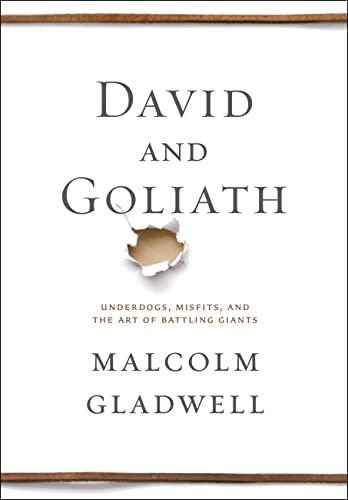
Underdogs, Misfits, and the Art of Battling Giants
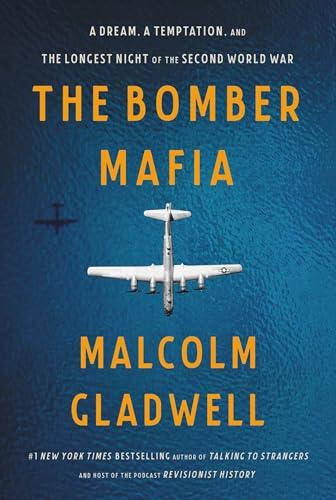
A Dream, a Temptation, and the Longest Night of the Second World War
It was discussed in detail, focusing on the dream of precision bombing in WWII and its eventual failure leading to firebombing tactics.
The Bomber Mafia, a dream, a temptation, and the longest night in the Second World War.
— Episode: AI, Autonomous Vehicles, and Race – Oh m...
It was discussed in detail, focusing on the dream of precision bombing in WWII and its eventual failure leading to firebombing tactics.
The Bomber Mafia, a dream, a temptation, and the longest night in the Second World War.
It's a story about this weird little bit of history in the Second World War, which was a group of pilots down in Alabama who thought they had solved one of the most difficult physics problem problems in modern war, which is how to drop a plane, a bomb from a plane with a high degree of accuracy.
And most people don't know. I'd say correct me if I'm wrong about Malcolm, because surely you researched this. Was it something like 80 percent of bombs dropped in the Second World War missed their target?
It's a different book than any I've ever written. It's not a it's not a it doesn't go in a million directions. It's a it's a it's a it's a not a pure history book, but very close to it.
And my book is about that journey from the hatching of the dream in Montgomery in the mid-'30s to its kind of cataclysmic failure over Japan in the summer of 1945.
It was discussed in detail, with the host and guest exploring the book's subject of a group of pilots in WWII who believed they had found a way to achieve pinpoint accuracy with bombs.
The Bomber Mafia, a dream, a temptation, and the longest night in the Second World War.
It's a story about this weird little bit of history in the Second World War, which was a group of pilots down in Alabama who thought they had solved one of the most difficult physics problems in modern war, which is how to drop a plane, a bomb from a plane with a high degree of accuracy.
It's never in a hurry, right?
Good luck on that book.
I think the world needs it and anyone thinking of the future of war needs it.
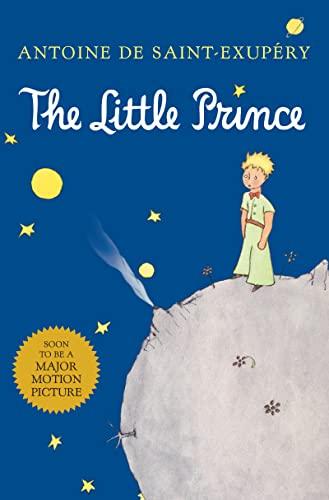
It was mentioned as the source of the name of the B612 Foundation, and its asteroid B612, as the Little Prince's asteroid.
We named it B612 because in Ed Lou's kitchen afterward he and Pete and I were sitting around drinking beer and we're saying what the heck do we call this thing? And Pete said, I think that The...
— Episode: Protecting Earth from Asteroids
It was mentioned as the source of the name of the B612 Foundation, and its asteroid B612, as the Little Prince's asteroid.
We named it B612 because in Ed Lou's kitchen afterward he and Pete and I were sitting around drinking beer and we're saying what the heck do we call this thing? And Pete said, I think that The Little Prince, number one, The Little Prince came from an asteroid but I think it had a name.
The book was mentioned in relation to the B612 Foundation's name, as the asteroid in the story is named B612, it was also described as being about exploration and being child book literate.
B612, that's the cutest thing you ever heard.
The Little Prince came from an asteroid but I think it had a name.
So we went on... Dig it up. Before Google we went on the internet and Pete sure enough found that it was B612 was The Little Prince's asteroid and so we decided to name it...
And so we decided to name it...
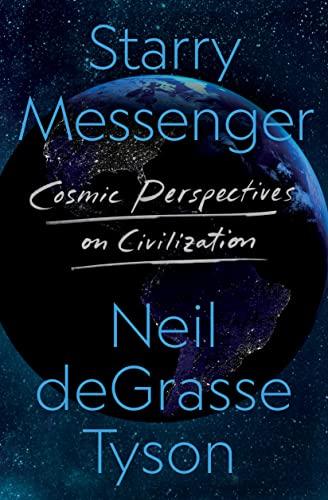
Cosmic Perspectives on Civilization
The book discusses the importance of rational analysis in society and how many arguments can be resolved through it. Neil deGrasse Tyson stated that he and others came up with the idea for the fictional planet, Rationalia, at a science conference.
I tweeted-- Wait, you gotta tell them the name of the book. Oh, Starry Messenger, Cosmic Perspectives on Civilization.
— Episode: Cosmic Queries – Space Traveler’s Deligh...
The book discusses the importance of rational analysis in society and how many arguments can be resolved through it. Neil deGrasse Tyson stated that he and others came up with the idea for the fictional planet, Rationalia, at a science conference.
I tweeted-- Wait, you gotta tell them the name of the book. Oh, Starry Messenger, Cosmic Perspectives on Civilization.
So, I and others came up with this idea of Rationalia at a conference.
A science conference. All right. And I tweeted it. Earth needs a virtual country. I wasn't thinking other planets.
So that's from the chapter in here called Law and Order.
Law and Order. Law and Order. From Starry Messenger.
Dawkins explained that his book 'The Ancestor's Tale' is a history of life, but told in reverse chronological order. He said that this approach avoids the human-centric perspective of evolution and emphasizes that humans are not the 'climax' of evolution.
I'm up to 2004, The Ancestor's Tale.
— Episode: Darwin’s Daring Idea with Richard Dawkin...
Dawkins explained that his book 'The Ancestor's Tale' is a history of life, but told in reverse chronological order. He said that this approach avoids the human-centric perspective of evolution and emphasizes that humans are not the 'climax' of evolution.
I'm up to 2004, The Ancestor's Tale.
That is a title that reminds me of the Sagan book, Shadows of Forgotten Ancestors.
It kind of feels the same to me.
Well, it's a reference to Chaucer, the Canterbury Tales.
But one of his tales was not The Ancestor.
The book was referenced as a source of information regarding the evolutionary lineage of humans and other organisms, illustrated through the metaphor of a human chain.
in the case I'm fascinated by the mosquitoes in the London Underground...this is where a new species is becoming right before our eyes...like from the ancestors tale kind of thing
It was mentioned as a book that provides a very accessible explanation of basic ideas about physics. It was written by Charles Liu, who is a frequent guest on StarTalk, and enjoys exploring physics in a fun way.
The second one was the Handy Physics Answer Book...
— Episode: Cosmic Queries – Single Electron Univers...
It was mentioned as a book that provides a very accessible explanation of basic ideas about physics. It was written by Charles Liu, who is a frequent guest on StarTalk, and enjoys exploring physics in a fun way.
The second one was the Handy Physics Answer Book...
It was mentioned as a recently published book in the Handy Answer Book series, written by Charles Liu, covering basic physics and astrophysics, as relevant to the physics of sports.
And they just came out with the Handy Physics Answer Book.
Yes. Coming out like... It came out this year.
And it's part of the Handy Answer Book series.
Life Is What You Make It
Neil deGrasse Tyson enjoyed the book, specifically the photo of the contents of Adam Savage's backpack and John Hodgman's comment that the book is a map of Adam's brain.
So, Every Tool's a Hammer. Great title. And this, you know, my favorite picture in here is, there's a lot of interesting pictures like you and your workshop and your, my favorite is t...
— Episode: Making Stuff, with Adam Savage
Neil deGrasse Tyson enjoyed the book, specifically the photo of the contents of Adam Savage's backpack and John Hodgman's comment that the book is a map of Adam's brain.
So, Every Tool's a Hammer. Great title. And this, you know, my favorite picture in here is, there's a lot of interesting pictures like you and your workshop and your, my favorite is the stuff that you dumped out of your backpack. Oh. But then neatly organized it. That was just cool. Like seeing what's it, and I like John Hodgman's comment. He said, this is a map of his brain.
If you feel like venturing into that unknown territory. Yeah. For some people, you don't want to go there. Right. But for Adam Savage, yeah. You want to see what's been driving him his whole life.
Adam Savage's book was discussed, specifically the images and John Hodgman's comment that it's like a map of his brain, as well as the overall theme of making things.
Every Tool's a Hammer, great title and this, you know My favorite picture in here is, there's a lot of interesting pictures like you and your workshop
And my favorite is the stuff that you dumped out of your backpack But then neatly organized it That was just cool Like seeing what's it, and I like John Hodgman's comment He said, this is a map of his brain Nice I thought that was a very good comment
Every Tool's a Hammer Life is what you make it I see what he did there Yeah, it's very cool
It's a window into your brain Oh yeah, there's some organized shelves I like the fact that you have photos in it Thank your publisher They don't always agree to put pictures in their books
Otherwise buy the book and we don't have to ever watch you again That's true
A Memoir
Adam Savage mentioned Mary Carr's book, "Liar's Club", and how she addressed writer's block by copying the work of writers she loves in longhand to stay engaged in the act of writing.
There's a line from Mary Carr who wrote Liar's Club, wrote about what she does with writer's block and she says, if I can't think about what to write, I sit at my desk and I copy writers I love in lon...
— Episode: Making Stuff, with Adam Savage
Adam Savage mentioned Mary Carr's book, "Liar's Club", and how she addressed writer's block by copying the work of writers she loves in longhand to stay engaged in the act of writing.
There's a line from Mary Carr who wrote Liar's Club, wrote about what she does with writer's block and she says, if I can't think about what to write, I sit at my desk and I copy writers I love in longhand because my fidelity at the desk is to be writing, whether it's my own writing or not.
Mary Carr's book was used as a source of inspiration for Adam Savage, where he learned that when he is feeling creatively stuck, he can just start writing down other people's writing as an exercise.
There's a line from Mary Carr who wrote Liar's Club Wrote about what she does with writer's block And she says, if I can't think about what to write I sit at my desk and I copy writers I love in longhand
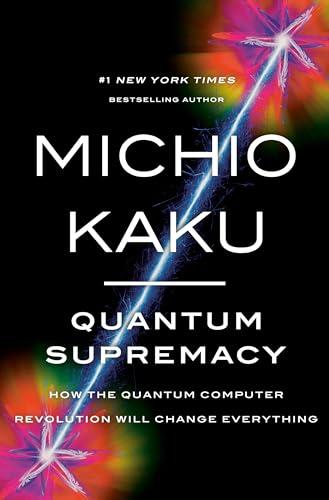
How the Quantum Computer Revolution Will Change Everything
The book discusses the impact of quantum computing on various aspects of life, including medicine, energy, and space travel. It was a New York Times bestseller.
And his most recent book is called Quantum Supremacy, how the quantum revolution will change everything.
— Episode: Quantum Computing Corral: StarTalk Live!...
The book discusses the impact of quantum computing on various aspects of life, including medicine, energy, and space travel. It was a New York Times bestseller.
And his most recent book is called Quantum Supremacy, how the quantum revolution will change everything.
Came out just a few months ago, and it was a New York Times bestseller.
That's the name of your book, Quantum Supremacy.
Michio Kaku's latest book explores the potential of quantum computers to revolutionize various fields, from astrophysics to medicine.
Michio, you've got a new book out this year, 2023. Let me get the right title. Quantum Supremacy. Ooh. Oh, dear. Blood spilled. Okay. How the Quantum Computer Revolution Will Change Everything.
And we're talking about quantum computing as described in his current book. What did you call it, Michio? Quantum Supremacy.
Michio, you call it Quantum Supremacy.
And we'll be looking for your book, just came out Quantum Supremacy, how quantum computers will change everything and no doubt about it from how you described it, it definitely will alright
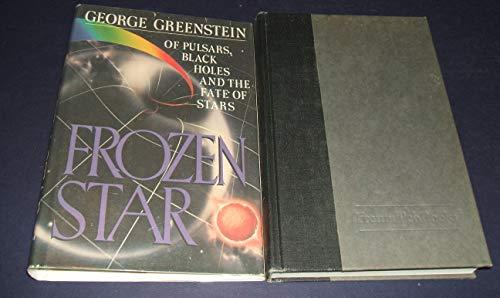
It was mentioned in the context of time dilation near black holes, specifically that someone falling into a black hole would appear frozen relative to an observer outside the event horizon.
The New York Times science journalist from the 60s and 70s, Walter Sullivan, wrote a book called Frozen Star back in the early days of black holes, where if you see someone about to f...
— Episode: Cosmic Queries – Black Hole Time Cloak w...
It was mentioned in the context of time dilation near black holes, specifically that someone falling into a black hole would appear frozen relative to an observer outside the event horizon.
The New York Times science journalist from the 60s and 70s, Walter Sullivan, wrote a book called Frozen Star back in the early days of black holes, where if you see someone about to fall in, they're basically frozen relative to you. You'll just see them just sort of paused.
And that was used in... That's been used in a number of places.
It was mentioned as a book inspired by the concept of time dilation near a black hole, where an observer at a distance would perceive a falling object slowing down and freezing.
And it was inspired by the fact that time, the relative time between someone falling into a black hole and someone safely at a distance, the person at a safe distance would report that that person gets slower and slower and slower and then just freezes there.
Note: The book recommendations on this page are discovered automatically from podcast transcripts, and may be incorrect or incomplete.
Podcast Name