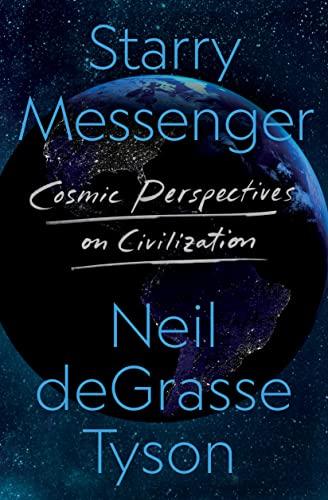
Neil described his new book, "Starry Messenger," as a continuation of his fascination with the cosmos, linking it to modern polarization and offering a scientific antidote.
"
Thank you for the inspiration over the last decade. Thank you for being the starry messenger in my life, which is the name of your new book. It's funny, I was thinking about it as we started this conversation, that that was actually the moment that I became obsessed with the universe when I first watched you present Cosmos all those years ago. And this book is just a continuation of that, but it's a very current book in the sense that it speaks to some of the profound issues that are happening in the world.
Well, thank you for your support of that. I will say that Starry Messenger comes from Galileo, where he first perfects the telescope. After only just having heard that a telescope was invented in the Netherlands, he said, oh my gosh, let me make my own version of it. He makes the best version that exists in the world, observes the night sky, notices that Venus goes through phases, which can only happen if Venus is going around the sun and not around Earth. He notices that the sun has spots, the moon has craters, the Jupiter has moons that orbit it. He didn't call them moons. They're called Jupiter's stars, because why would you think they were moons? Who knows? And he reports this with the first evidence that Earth is not the center of all motion. And he called it Siderius Nuncius, starry messenger.