Pastel Snow Scrapbook Paper Craft Pad
Creative Corner
Mentioned 7 months ago
Are We The Universe’s Way of Knowing Itself? With Brian Cox
Science, pop culture, and comedy collide on StarTalk Radio! Neil deGrasse Tyson, astrophysicist and Director of New York's Hayden Planetarium, and his comic co-hosts, guest celebrities, and scientific experts explore astronomy, physics, and everything else there is to know about life in the universe...
Recently mentioned
Creative Corner
Mentioned 7 months ago
Are We The Universe’s Way of Knowing Itself? With Brian Cox
Carl Sagan
Mentioned 7 months ago
Are We The Universe’s Way of Knowing Itself? With Brian Cox
Richard P. Feynman
Mentioned 7 months ago
Are We The Universe’s Way of Knowing Itself? With Brian Cox
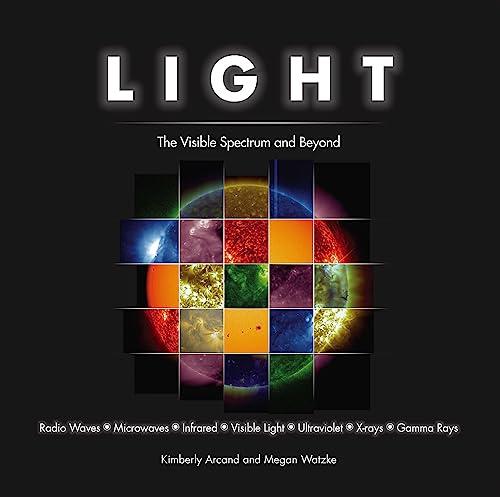
Kimberly Arcand
Mentioned 1 year ago
Listening to the Universe with Kimberly Arcand
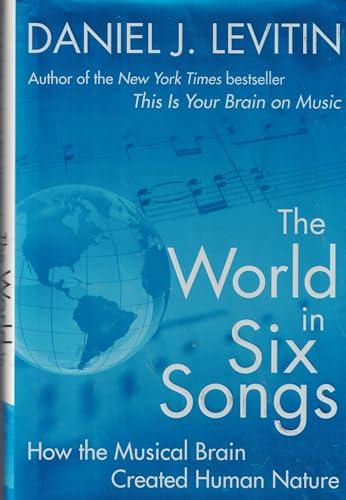
Daniel J. Levitin
Mentioned 1 year ago
Is Music the Language of the Universe? with Daniel Levitin
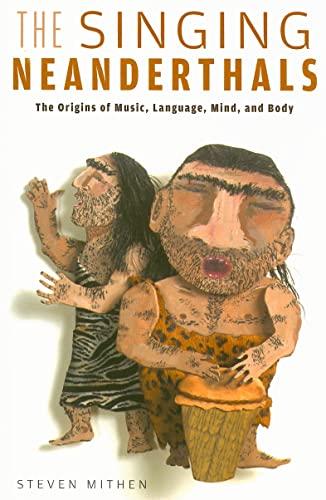
Steven Mithen
Mentioned 1 year ago
Is Music the Language of the Universe? with Daniel Levitin
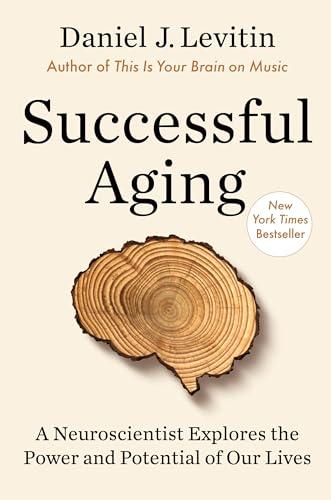
Daniel J. Levitin
Mentioned 1 year ago
Is Music the Language of the Universe? with Daniel Levitin
Daniel J. Levitin
Mentioned 1 year ago
Is Music the Language of the Universe? with Daniel Levitin
Jr. Lyman Spitzer
Mentioned 1 year ago
Dark Comets with Darryl Seligman
Frank H. Shu
Mentioned 1 year ago
Dark Comets with Darryl Seligman
G H Hardy
Mentioned 1 year ago
Our Mathematical Universe with Grant Sanderson (3Blue1Brown)
Carl Sagan
Mentioned 1 year ago
Revisiting the Drake Equation with David Grinspoon
Neil deGrasse Tyson was reminded of this book by Michael Crichton as he was talking about the OSIRIS-REx mission. It is about a sample return from space which gets contaminated with a dangerous bug.
I remember in real time, I read the book. Rare for me to read a book before I see the movie, but I did that for The Andromeda Strain of Michael Crichton before he was famous with Jura...
— Episode: OSIRIS-REx & Asteroid Mining with Natali...
Neil deGrasse Tyson was reminded of this book by Michael Crichton as he was talking about the OSIRIS-REx mission. It is about a sample return from space which gets contaminated with a dangerous bug.
I remember in real time, I read the book. Rare for me to read a book before I see the movie, but I did that for The Andromeda Strain of Michael Crichton before he was famous with Jurassic Park and whatever his doctor show was on TV.
The Andromeda Strain was a sample return from space and it was a bug that got out of the capsule and it didn't bode well for the town where the capsule landed.
Well, watch out for Texas then because that's where the sample's going.
That's what they said about Andromeda stream.
It was mentioned as a novel about a bug from space that caused havoc, written by Michael Crichton before he wrote Jurassic Park.
You may remember the novel, The Andromeda Strain, which came out right around that time, which was a bug from space that totally wreaked havoc.
And of course, I think that was Michael Crichton's first novel before he wrote Jurassic Park and a whole lot of other things.
It was a past book and film that was mentioned as a good example of a science fiction story with science woven in, and it was Crichton's first big breakthrough.
It still really holds up as a pretty good film.
The Andromeda Strain was, you know... For one.
Wait, wait, Chuck is too young. He won't remember.
Oh, heck no.
Okay, but you should.
The same guy who wrote Jurassic Park.
Oh, get out of Christian.
Michael Crichton.
And it was... Crichton.
Andromeda Strain was his first big breakthrough book and film.
And you know when he wrote that? While he was in medical school.
It was referenced as a film that still holds up well, and was Michael Crichton's first big breakthrough book and film, written while he was in medical school.
It still really holds up as a pretty good film.
Oh, heck no. Okay, but you should. Okay. No. The same guy who wrote Jurassic Park.
And it was... Crichton. Andromeda Strain was his first big breakthrough book and film.
And you know when he wrote that? While he was in medical school.
It was mentioned as a famous book inspired by the concept of microbes being carried to the moon and potentially spreading disease, either way.
which by the way was picked up by Michael Crichton and became his famous book Andromeda string.
One of my favorite books of the era actually.
It was discussed in relation to a space probe being contaminated with a virus, leading to a public health crisis, similar to what could happen on other planets.
Michael Crichton the same author of Jurassic Park.
And you know that has been a constant question. Just a little didn't know in The Andromeda Strain there is a space probe that returns to earth, but it had been contaminated by a space virus, right and It basically killed everyone in the town where this thing landed and it became a major public health issue How to deal with it what they're doing why was it militarized was it a project what was going on?
It was mentioned as a book by Michael Crichton related to a NASA effort to understand potential disease transmission to and from the moon; discussed in the context of alien life and disease.
...if we go to the moon and we take our human microbes as hitchhikers with us to the moon. Unavoidable....and there is any life form at all that we don't know about on the moon our microbes might kill that life form and conversely if there's any life form on the moon we might bring it back with us.
...His question spawned a very large effort by NASA to deal with the possibility of one direction or another spreading disease which by the way was picked up by Michael Crichton and became his famous book Andromeda string.
One of my favorite books of the era actually.
When We Merge with AI
It was a book by Ray Kurzweil about the singularity, which is the point in time when artificial intelligence surpasses human intelligence. Peter Diamandis mentioned the book while discussing his work with AI.
I was trekking through Chile, long story. I was carrying Ray's book, The Singularity Is Nearer, which is an interesting title.
— Episode: Incentivizing the Future with Peter Diam...
It was a book by Ray Kurzweil about the singularity, which is the point in time when artificial intelligence surpasses human intelligence. Peter Diamandis mentioned the book while discussing his work with AI.
I was trekking through Chile, long story. I was carrying Ray's book, The Singularity Is Nearer, which is an interesting title.
He just came out with a new book, The Singularity Is Nearer.
This book, published in 2005, is about the Singularity, a point in time when artificial intelligence surpasses human intelligence. Ray Kurzweil discussed his theory of Longevity Escape Velocity, claiming that by 2029, technology would progress at a rate exceeding the rate of human aging, leading to practical immortality.
And you haven't stopped thinking about it since. And so tell me, why do you think we'll one day live forever?
Well, I can't go on your show and say, I've done it. I've lived forever because of...
So, I mean, right now when you go forward a year, you lose part of that year. We pick up technologies that will extend us, but not a full year.
And if you're actually in touch with the technology, I believe we'll get there by 2029. On October 12th, at 9am.
No, December 31st. That's awfully specific, dude. December 31st.
The book was written in 2005 and predicted the Singularity would happen by 2029, when the computing power would equal or exceed anything humans can do. Ray Kurzweil has written a new book, "The Singularity is Nearer", where he doubles down on his original predictions and claims that the Singularity is actually happening sooner than he originally thought.
You haven't stopped thinking about it since. And so tell me, why do you think we'll one day live forever?
You're also the co-founder of The Singularity Group. That's a topic we'll get into a little later. But some of that derives from you had a book back in 2005, The Singularity is Near.
I was honored for you to have shared with me the manuscript of your next book for a book not coming out until 2023. And you had an audacious title for it. The Singularity Is Nearer.
And you had a fascinating set of charts in there. Tell me about this first one, which to me was the most mind-blowing of them all.
You're saying, yep, maybe it's happening even sooner than I'd predicted. No, it's happening on schedule, but it's actually less alarming when I wrote this in 2005. Things we just assumed today are reality.
It was mentioned as the origin of the Singularity concept discussed in the podcast. The book, published in 2005, explored the idea that humans would eventually achieve immortality through technology.
And you haven't stopped thinking about it since. And so tell me, why do you think we'll one day live forever?
You had a book back in 2005, The Singularity is Near.
When I wrote this in 2005, things we just assumed today are reality.
The whole thing was very surprising in 2005.
But there was no smartphone in 2005.
It was discussed in relation to the concept of the singularity, where AI surpasses human intelligence, and was described as sounding apocalyptic in nature.
And he was the author of The Singularity is Near.
It was described as having an apocalyptic tone, and was said to be the book where Ray Kurzweil popularized the singularity concept.
And he was the author of The Singularity is Near.
The Unspoken Alliance Between Astrophysics and the Military
Neil deGrasse Tyson recounted a story about the history of X-ray machines at airports, which he also mentioned in his book, 'Accessory to War', which details the relationship between astrophysics and the military and security.
I retell that story in my book, Accessory to War. The unspoken alliance between astrophysics and the military. And more broadly, it's between astrophysics and security.
— Episode: Things You Thought You Knew – Up, Up, an...
Neil deGrasse Tyson recounted a story about the history of X-ray machines at airports, which he also mentioned in his book, 'Accessory to War', which details the relationship between astrophysics and the military and security.
I retell that story in my book, Accessory to War. The unspoken alliance between astrophysics and the military. And more broadly, it's between astrophysics and security.
It was mentioned as a 600,000 page book that discussed the relationship between astrophysics and the military throughout history, particularly the role astronomers played in navigation and military operations.
I don't know how many people read my 600,000 page book.
It's what role being an expert on the universe has - what that has to do with any kind of military operation, military hegemony, domination.
And so if anyone is interested in sort of the deep history of that relationship, it's all in the book.
Neil deGrasse Tyson mentioned his book about the relationship between astrophysics and the military, highlighting the importance of space in navigation.
Ooh. I wrote a whole book, okay? I had a co-author because it was a huge 600 page book called Accessory to War, the Unspoken Alliance Between Astrophysics and the Military and you're damn straight.
But I did write a whole book on this.
It's an unspoken alliance that's the subtitle.
It was recently published and discussed as a book that explores the relationship between astrophysics and military conflict, touching on the military's reliance on space.
I spent some time putting that in this book
Yes Accessory to War
Accessory to War, the unspoken alliance between astrophysics and the military
Yeah Probing all the ways that we've been sort of handmaidens to military conflict
It explored the hidden relationship between astrophysics and the military, revealing how the two fields have intersected throughout history, and delved into the shared interests of both disciplines.
It came out last year It came in 2000... No, it came in 2018 Accessory to War
Because it's 500 pages A little bit more Yeah, a little bit more You need a little more I have a co-author, Avis Lang Long time editor of mine from Natural History Magazine I couldn't have finished this in any sense
It was mentioned by Neil deGrasse Tyson as a book he co-authored with Avis Lang that includes a story about Riccardo Giacconi and his work in X-ray astronomy, highlighting the unexpected ways technology can impact security.
And I tell that story in Accessory to War with my co-author, Avis Lang.
It was mentioned as a book co-authored with Alvis Lang, which explores the relationship between astrophysics and the military throughout history.
Well, you're in my office, so the book is there Well, that's how I came across it I was snooping around his office and in between all the bobbleheads of him and all the Campbell soup, the Star Wars Campbell soups that he has up there on the shelves But this one is primordial soup Get your soup straight here Well, what's the...
Primordial soup, that's what it is, okay On that shelf over there you have... Oh, those are Star Wars Campbell soups Yeah, yeah, yeah, okay But this is Accessory to War, the unspoken alliance between astrophysics and the military You... this is a book you got a few months ago?
It came out, yeah, last September Co-authored with Alvis Lang A major, it's like 500 pages So my book before that was Astrophysics for People in a Hurry Yes This is Astrophysics for People not in a Hurry Not in a Hurry, yes Just to make that clear
The other book I read on a subway ride This one's going to take me a subway ride with four stops It's going to take me a little more extra time But again, you are so... Well, thanks for that plug, thanks for that plug That's another labor of love The history, because science is not untouched by war And the funding for it, that enable it, that empower it, that feed it And so this is just a candid review An assessment of what that relationship has been Between the history of astrophysics and war itself
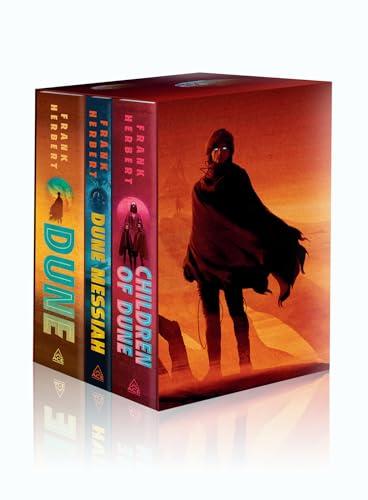
Dune, Dune Messiah, and Children of Dune
It was mentioned that both Neil deGrasse Tyson and Stephen Colbert had seen the movie adaptation of this book, and Neil critiqued the worm's movement in the film, pointing out its unrealistic depiction.
I got into a little dustup on the late show with Stephen Colbert because I just we have both seen Dune.
— Episode: Robots Searching for Life on Saturn’s Mo...
It was mentioned that both Neil deGrasse Tyson and Stephen Colbert had seen the movie adaptation of this book, and Neil critiqued the worm's movement in the film, pointing out its unrealistic depiction.
I got into a little dustup on the late show with Stephen Colbert because I just we have both seen Dune.
So what'd you think of Dune because he loves these big fantasy stories, right?
Okay, but there's a scene where the worm moves really fast and it is straight as it does that the worm has no legs or arms or wings.
So you can't take a straight thing and just zoom down the highway.
If you ever see a stretched out snake, it is harmless to you.
It was recommended as a great example of world-building and for those seeking to learn about leadership, demonstrating the educational value of science fiction.
Dune, certainly. If you want to learn about leadership, I think Dune is a fantastic book.
It was mentioned that the character Yusel in the book Dune was a nickname given to Paul Atreides by the Fremen. The speaker also mentioned that the book was too thick for them to read, so they watched the movie instead.
Yusel was the name of the character in Dune by Frank Herbert. It was the nickname given by the Fremen to Paul Atreides.
I saw the movie, the book was too thick for me to read.
While discussing space travel, Neil deGrasse Tyson briefly mentioned Frank Herbert's 'Dune' and the concept of 'fold space' as a form of faster-than-light travel.
And don't forget fold space from Dune.
Dune, the movie was 1980s but the book is 1950s I think.
It was mentioned in passing as an example of a book that uses the star Canopus as a plot element, relating it to the star's significance in human history and potential futures.
It is the star about which the Spice Planet orbits in the novel Dune.
While discussing interstellar travel, Neil deGrasse Tyson briefly mentioned Frank Herbert's 'Dune' and the concept of 'fold space' as a faster-than-light travel method that predates Star Trek.
And don't forget fold space from Dune.
Dune, the movie was 1980s but the book is 1950s I think.
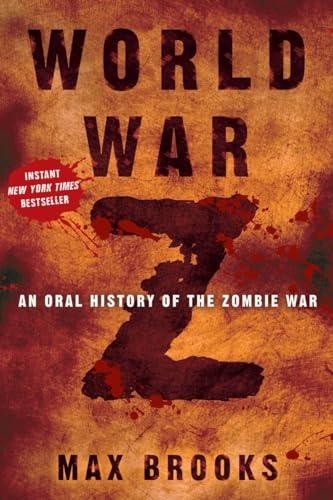
An Oral History of the Zombie War
It was described as an oral history of the zombie war and was adapted into a movie starring Brad Pitt. The book was discussed with reference to the zombie virus and how its spread could be analogized to that of a disease like AIDS.
Just to put Max Brooks on your radar, he's the author of the book, The Zombie Survival Guide and World War Z, which is an oral history of the zombie war. And in fact, that book is bec...
— Episode: Extended Classic: Zombie Apocalypse (Par...
It was described as an oral history of the zombie war and was adapted into a movie starring Brad Pitt. The book was discussed with reference to the zombie virus and how its spread could be analogized to that of a disease like AIDS.
Just to put Max Brooks on your radar, he's the author of the book, The Zombie Survival Guide and World War Z, which is an oral history of the zombie war. And in fact, that book is becoming a movie titled World War Z, starring, guess who? Brad Pitt.
In my stories, you have to get bitten or the virus has to get in your bloodstream. You get sick, you die, then you wake up again.
The book was discussed as a fictional scenario that illustrated how society could unravel under a zombie outbreak. The podcast hosts discussed the book's focus on political and cultural reactions to crisis.
And we get to my first clip from him, which puts outbreak in the context of politics and culture.
And the point that I tried to make in World War Z is that it's a global crisis because I think there are no real American crises anymore, except maybe snooki.
Your contribution to the genre is the extent and depth to which you're thinking about the reaction function, if I will, yes, of culture of society and of people.
Because I don't want to do little adventure stories of sort of there's a group of people and they got some guns and they're going to go from point A to point B. I want to think how would the government react? How would you reorganize the economy? How do you feed 100 million refugees when the global supply chain has shut down?
I was invited to speak at the US Naval War College because the president of college, I've been waiting. Did they know something we don't know? Well, the part that kept me up at night was the breeding zombies for the next military encounter.
It was mentioned as a book written by Max Brooks, and was described as an oral history of the zombie war, and was also being made into a movie.
Just to put Max Brooks on your radar, he's the author of the book, The Zombie Survival Guide and World War Z, which is an oral history of the zombie war.
And in fact, that book is becoming a movie titled World War Z, starring, guess who?
It was mentioned as a book by Max Brooks, discussed as an oral history of a zombie war, and was being adapted into a movie starring Brad Pitt.
Just to put Max Brooks on your radar, he's the author of the book, The Zombie Survival Guide and World War Z, which is an oral history of the zombie war. And in fact, that book is becoming a movie titled World War Z, starring, guess who? Brad Pitt, one of the leading men of the day.
It was discussed as a credible scenario of how society could unravel if the zombie aspect was removed, demonstrating a deep consideration for the societal response to an outbreak.
The part that kept me up at night was the breeding zombies for the next military encounter.
If you take the zombies out of World War Z, apparently I have presented a very credible step by step scenario of how society could unravel.
The point that I tried to make in World War Z is that it's a global crisis because I think there are no real American crises anymore, except maybe snooki.
I don't want to do little adventure stories of sort of there's a group of people and they got some guns and they're going to go from point A to point B. I want to think how would the government react? How would you reorganize the economy? How do you feed 100 million refugees when the global supply chain has shut down?
For me it's about coming together not splitting apart. And I think the problem is with a lot of zombie fans is they want a zombie outbreak to happen cause they want to be the individual, the alpha male, society by themselves, no government.
It was mentioned as a book by Max Brooks, presented as an oral history of a zombie war, which was also adapted into a movie starring Brad Pitt.
Just to put Max Brooks on your radar, he's the author of the book, The Zombie Survival Guide and World War Z, which is an oral history of the zombie war.
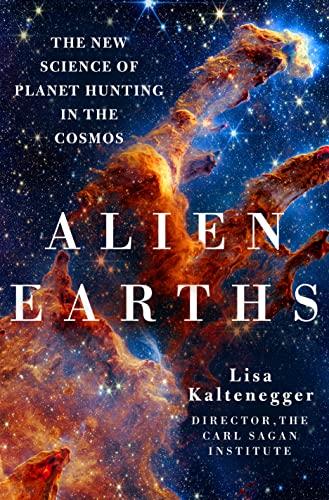
The New Science of Planet Hunting in the Cosmos
Lisa Kaltenegger discussed her new book, "Alien Earths." She explained that the book explores the new science of planet hunting in the cosmos and discusses how some alien worlds could be similar to Earth, and could potentially be habitable.
Did you put all that in your book?
— Episode: Distant Aliens & Space Dinosaurs with Li...
Lisa Kaltenegger discussed her new book, "Alien Earths." She explained that the book explores the new science of planet hunting in the cosmos and discusses how some alien worlds could be similar to Earth, and could potentially be habitable.
Did you put all that in your book?
I did. Alien Earths, the new science of planet hunting in the cosmos.
And so the cool thing that when I think about these alien worlds, like some of them could be like ours. So they could be habitats as we just talked about. Hence Alien Earths, not just alien aliens.
So I think we're biased but in a good way. Because we have to be ultra conservative to tell you that we found life. We don't want to just make it up. And so what we do is we look for something that we cannot explain other than with life.
And then I did put a blank page for your work here.
Adam Savage mentioned being inspired by "Alien" for five years, specifically H.R. Giger's design work, and recapitulating the aesthetic to understand it.
When I was, you know... When I was 17, I saw Alien. It took me five years to get the aesthetic of H.R. Giger out of my system. I had to recapitulate the aesthetics that he was doing because I found it so powerful until I kind of understood it.
Neil deGrasse Tyson said they went to the same street corner in London where Leo Szilard had the epiphany that led to the development of the atomic bomb, as described in the book 'Cosmos'.
In fact, in Cosmos, we went to that very same street corner.
And I walked up to the street corner and I had no such epiphany.
It was mentioned as a book related to Carl Sagan's work, and was briefly referenced during a discussion of voices.
Millions and billions of what was it stars? A journey through that's how I remember it anyway. Very deliberate measured kind of wrapped himself around the words.
It was mentioned that Neil deGrasse Tyson included the latest calculations for the Drake Equation in one of his recent books, possibly 'Cosmos'.
And right now in one of my recent books, we actually give the very latest calculation for this, and there's like billions, so we're good.
It was mentioned in reference to Carl Sagan, who was known for his work on the TV series and related books.
Millions and billions of what was it stars? A journey through that's how I remember it anyway.
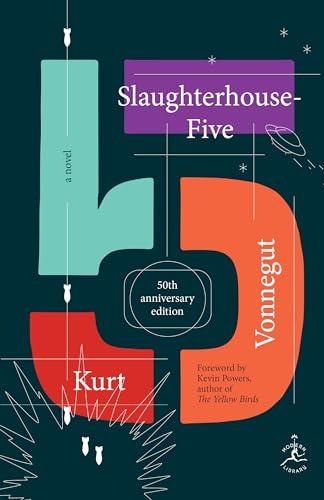
A Novel; 50th anniversary edition
The book is mentioned as an example of a story that explores the concept of time as a dimension that can be entered at any point. The protagonist in the book can see his entire timeline and access any point within it.
Yeah, that's the theme in Kurt Vonnegut's novel Slaughterhouse-Five
— Episode: Cosmic Queries – Single Electron Univers...
The book is mentioned as an example of a story that explores the concept of time as a dimension that can be entered at any point. The protagonist in the book can see his entire timeline and access any point within it.
Yeah, that's the theme in Kurt Vonnegut's novel Slaughterhouse-Five
Where the protagonist is in his backyard and he's lifted up by aliens which I always want to have happen to me when I go into anybody's backyard and I look up I want to be abducted by aliens
And he can see his entire timeline from birth to death and he can access any point in that timeline
It was mentioned as a book that explores a time travel scenario in which all of time is already preordained and one can jump to different points on one's timeline.
In Kurt Vonnegut's Slaughterhouse-Five that time travel scenario is what you're describing, right? Because in it his entire time he's picked up by aliens and he lives in a cage an alien zoo but it doesn't matter to him because he still has access to his entire life's timeline and when he's describing this or they describe it to him, he said, when will I die? You're always dying. When was I born? You're always being born. When did I go to college? You're always going to college.
It was described as a time travel story within a World War II setting, and it was compared to the concept of a universe where time travel is a consistent feature, with no free will.
And by the way, that's also what happened in the story Slaughterhouse-Five by Kurt Vonnegut, which is a time travel story on top of being a World War II story.
But his, and I think Kurt Vonnegut got it right. Correct me if I'm wrong, Brian. He just described your life is always there. You're always being born. You're always dying. You're always in school. You're always in love.
And you just rejoin where you were on that timeline and relive that.
It was discussed as an example of a novel that accurately portrays time travel, where the main character is abducted by aliens and experiences time non-linearly.
Kurt Vonnegut's novel, Slaughterhouse-Five, which ostensibly takes place at the end of the Second World War, and there are other sort of historical details I won't get into.
What I was most intrigued by is the time travel that goes on in that.
So what happens is the lead protagonist gets abducted by aliens, gets put in a cage, and that sounds bad, but they said, no, you're still there, you're still being born, you're still dying.
And they went outside of his timeline.
So he would sit there and daydream, but by daydreaming he was living his life, and he could relive his life multiple ways and in multiple times.
It was mentioned as a novel that includes space aliens and the fourth dimension, and how it can be used to tie space into English class.
So, for example, in Kurt Vonnegut's novel, Slaughterhouse-Five, that involves cleanup efforts in Dresden after the bombing of Dresden in the Second World War. Okay, fine. But the rest of the book folded into that is the encounter that the protagonist has with space aliens.
And he has access to the fourth dimension in doing so, where he sees his entire life all at once. He's always being born, he's always dying, he's always living it out in between.
It was mentioned, and a paraphrased quote was shared from one of the books, where the last words ever spoken by humanity are by a scientist, who says 'Let's try it the other way'.
Who's the guy who wrote Slaughterhouse-Five?
I think it was Kurt Vonnegut
In one of his novels He said, I'm paraphrasing This is the last sentence ever spoken by humans It'll be one scientist speaking to the other saying Let's try it the other way
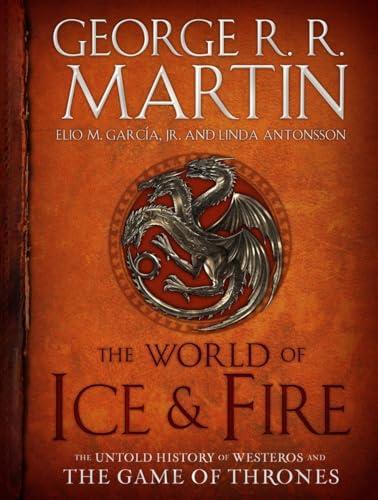
The Untold History of Westeros and the Game of Thrones (A Song of Ice and Fire)
It was a book about the volcanoes of the solar system and Natalie Starkey was excited to discuss it. The episode included a segment about ice volcanoes.
And you've written two of my favorite books that are out there, Fire and Ice, The Volcanoes of the Solar System. We did a whole show on that.
— Episode: OSIRIS-REx & Asteroid Mining with Natali...
It was a book about the volcanoes of the solar system and Natalie Starkey was excited to discuss it. The episode included a segment about ice volcanoes.
And you've written two of my favorite books that are out there, Fire and Ice, The Volcanoes of the Solar System. We did a whole show on that.
Yes, we did. Where we talked about ice volcanoes.
Oh my God, that was fun.
It was discussed throughout the episode and was described as being about half dedicated to volcanoes on Earth and the other half about volcanoes in space.
You have a book called Fire and Ice.
I do.
Fire and Ice, it's a great title.
And is it like as Matt saying, you were not content with just volcanoes on Earth?
I've dedicated almost half the book to the volcanoes on Earth because we know them so well.
It was mentioned as her second book about space volcanoes, including icy volcanoes. It was said to be coming out in September 2021.
And I've written now my second book on space science. And it's just what I love doing. And I hope that book will come out yet.
No, it'll be out in September 2021.
So yeah. And you have ice volcanoes in there as well? Yeah, so it's fire and ice it's called.
It was mentioned by Natalie Starkey, who had recently finished writing it. The book's subject matter is volcanoes across the solar system, both icy and rocky.
And so we've got volcanoes in the solar system that are places other than Earth. So it's cool to have you helping us think about those problems. That's the thing, because actually my book coming out next year is all about space volcanoes.
So I've written, yeah, my second book's just finished. So it's going to be a while until it comes out, but it's about all the volcanoes in the solar system made of ice or made of rock.
And the title of your next book you're working on?
It's called Fire and Ice, Space Volcanoes.
It was described as Natalie Starkey's upcoming book about space volcanoes, both icy and rocky, which was said to have recently been finished.
But it's really just as objects where there's a lot of pressure.
Yeah, it's basically the effort a body makes to cool itself down.
So we think of volcanoes as hot objects, but it's really just as objects where there's a lot of pressure. Is that a fair way to say?
My book coming out next year is all about space volcanoes.
So I've written, yeah, my second book's just finished. So it's going to be a while until it comes out, but it's about all the volcanoes in the solar system made of ice or made of rock.
Fire and Ice, very nice, very nice.
It was mentioned as a bestselling fantasy series, which was adapted into the popular TV show, Game of Thrones, and discussed as a low-magic fantasy with inspiration from Tolkien's Lord of the Rings.
And he wrote the bestselling fantasy series A Song of Ice and Fire And that was adapted into the world's most popular TV drama Game of Thrones
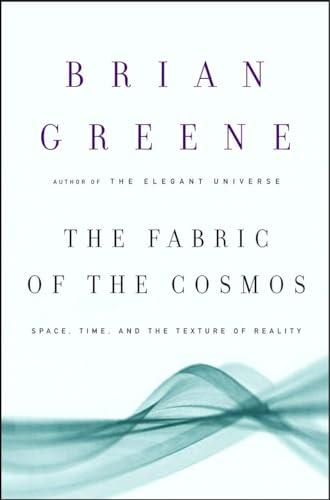
Space, Time, and the Texture of Reality
Brian Greene is a theoretical physicist and professor of physics and math at Columbia University. He is the author of multiple books, including "The Elegant Universe", "The Fabric of the Cosmos", which is a bestselling book.
author of the very bestselling The Elegant Universe, followed by The Fabric of the Cosmos, followed by The Hidden Reality.
— Episode: The Edge of Our Understanding with Brian...
Brian Greene is a theoretical physicist and professor of physics and math at Columbia University. He is the author of multiple books, including "The Elegant Universe", "The Fabric of the Cosmos", which is a bestselling book.
author of the very bestselling The Elegant Universe, followed by The Fabric of the Cosmos, followed by The Hidden Reality.
The book was mentioned as a best-selling book and described as being about the fabric of the cosmos. The speaker described learning about emergent thinking from the book's author.
Our buddy Brian, author of the best-selling book, The Elegant Universe, and he followed it up with The Fabric of the Cosmos.
He's right up the street from us in Columbia University.
It was mentioned as a great book in relation to space-time being described as the fabric of the universe, which light travels through at the speed of light.
And indeed, light travels at the speed of light over that thing, that surface, that fabric.
It was suggested as one of the many excellent popular-level books on cosmology, for those looking for a good introduction to the subject before progressing to more advanced texts.
But if not then there's so many excellent popular level books. Brian Green's The Fabric of the Cosmos
It was mentioned as a second book written by Brian Greene, following 'The Elegant Universe'.
So that was followed with Fabric of the Cosmos.
It was mentioned as one of many excellent popular level books on cosmology, suitable for those beginning their studies of the universe.
But if not then there's so many excellent popular level books. Brian Green's The Fabric of the Cosmos
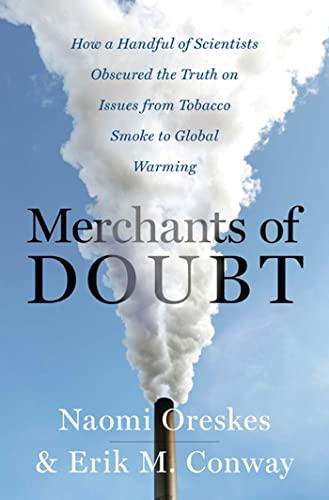
How a Handful of Scientists Obscured the Truth on Issues from Tobacco Smoke to Global Warming
It was mentioned that the book's core concepts, like greenhouse gases trapping heat and warming the atmosphere and oceans, were established in prior decades and that the book was no longer in print.
When you brought this crusty old weather-beaten book with you, Global Warming, Understanding the Forecast, written in 1992.
— Episode: Climate Change and the Future, with Al G...
It was mentioned that the book's core concepts, like greenhouse gases trapping heat and warming the atmosphere and oceans, were established in prior decades and that the book was no longer in print.
When you brought this crusty old weather-beaten book with you, Global Warming, Understanding the Forecast, written in 1992.
But one can find all of the content and you were boasting off camera that nothing changed because your foresight was impeccable.
because it's no longer in print.
The only thing in this book that I predicted that seems to be unusual is there's a line in the book where I say again, I was writing this in 1991 and I said perhaps Earth scientists of the future will determine that we're in a geological age of our own making, a post-Holocene geological age of our own making. And maybe they'll call it the anthracene.
But he endorsed this old book back when he was still Senator Al Gore in 1990.
It was mentioned as a book that investigated why some scientists, despite the data, were against environmental regulations, primarily due to political motivations.
And the short answer is that these folks weren't interested in the scientific evidence. What they were interested in was a kind of political argument about preventing government interference in the marketplace, preventing the EPA and other organizations like the EPA from taking action to control the hazards and the damage of fossil fuels.
So the idea is that it's us against them it's democracy against totalitarianism it's capitalism against communism and any threat to democracy any threat to freedom any threat to the free market system is so profound that it has to be resisted and even if that means misrepresenting the science, ignoring the science these people were prepared to do that.
It was mentioned as the subject of an exhibit at the American Museum of Natural History in 1992, and a book was written about it as part of the exhibit.
I wrote a book in 1992 About global warming That was part of an exhibit At this museum 1992
It was mentioned that the book was no longer in print and that the content is available online. It was written in 1992 and discussed basic climate science.
When you brought this crusty old weather-beaten book with you, Global Warming, Understanding the Forecast, written in 1992.
But one can find all of the content and you were boasting off camera that nothing changed because your foresight was impeccable.
In this book, I mean you're a journalist, right? So you are compiling basically the fruits of the research that's going on among scientists around you.
The only thing in this book that I predicted that seems to be unusual is there's a line in the book where I say again, I was writing this in 1991 and I said perhaps Earth scientists of the future will determine that we're in a geological age of our own making, a post-Holocene geological age of our own making.
But he endorsed this old book back when he was still Senator Al Gore in 1990.
It was discussed as a book that explored the mystery of why prominent scientists who understood the science of climate change were denying it, concluding that it was a politically motivated stance against government intervention.
And the short answer is that these folks weren't interested in the scientific evidence. What they were interested in was a kind of political argument about preventing government interference in the marketplace, preventing the EPA and other organizations like the EPA from taking action to control the hazards and the damage of fossil fuels.
So part of the mystery was trying to make sense of that.
Neil deGrasse Tyson compared the USS Enterprise to the Ship of Imagination featured in Cosmos, a ship that allows for exploration through the cosmos and time, with an emphasis on peace and love.
I am so biased here. Of course you are. What are the odds? Well I mean if anyone who is listening doesn't know the ship of the imagination it's what I got around in.
— Episode: Season 6 Time Capsule (Part 2)
Neil deGrasse Tyson compared the USS Enterprise to the Ship of Imagination featured in Cosmos, a ship that allows for exploration through the cosmos and time, with an emphasis on peace and love.
I am so biased here. Of course you are. What are the odds? Well I mean if anyone who is listening doesn't know the ship of the imagination it's what I got around in.
And that's the spaceship of the imagination version two. The original one Carl Sagan wrote around the universe back in 1980.
No, spaceship of the imagination does not have photon torpedoes or phasers or anything like that because it doesn't need it.
It was mentioned as a significant influence on Brian Cox's early interest in astronomy, inspiring him at the age of 12.
Confirmed really actually by watching Cosmos, the first Cosmos, which was 1980 I think.
You get 13 hours of Carl Sagan on television and that was it for me.
Edward Norton mentioned the book series as being on his grandparents' shelf, and that he was fascinated by them in his youth. They sparked his interest in astronomy.
His books with Android were in my grandparents shelf I remember going through those books like fascinated and I went to Yale and thought that I was gonna be an astronomy major
Godfrey mentioned watching Cosmos with his father when he was a kid, and that Carl Sagan was a genuinely caring person.
Oh yeah. He took over the reins.
He was very polite and very, it was almost, he cared. I mean that's really, he cared about the trajectory of others who would come behind him.
Man, he could have at least given you his turtleneck and his jacket too. That would have been sweet.
Neil deGrasse Tyson mentioned it was the original spaceship of the imagination, and its concept was introduced by Carl Sagan.
And that's the spaceship of the imagination version two. The original one Carl Sagan wrote around the universe back in 1980.
it seems a little bit more democratic and universal not everybody gets to be on the Enterprise but anybody can be on the ship of the imagination.
Brian Cox recalled watching the original Cosmos series in 1980 at age 12, which sparked his interest in astronomy and significantly influenced his career path.
Confirmed really actually by watching Cosmos, the first Cosmos, which was 1980 I think.
You get 13 hours of Carl Sagan on television and that was it for me.
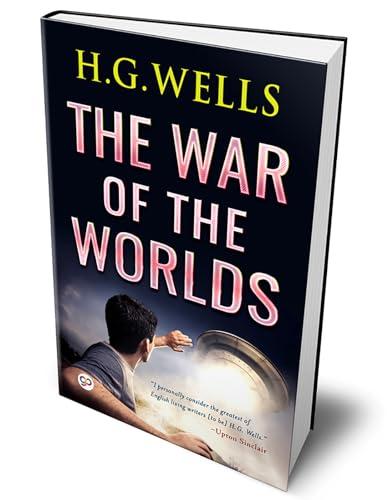
It was mentioned as having a narrator in the original book and was discussed with reference to the movie version and Morgan Freeman as the narrator of the film version. The ending passage was also read and discussed in the latter part of the episode, focusing on the Earth being defended against the Martian invaders by human microbes.
For so it had come about, as indeed I and many men might have foreseen, had not terror and disaster blinded our minds.
— Episode: Alternative Aliens with Andy Weir and Da...
It was mentioned as having a narrator in the original book and was discussed with reference to the movie version and Morgan Freeman as the narrator of the film version. The ending passage was also read and discussed in the latter part of the episode, focusing on the Earth being defended against the Martian invaders by human microbes.
For so it had come about, as indeed I and many men might have foreseen, had not terror and disaster blinded our minds.
These germs of disease have taken toll of humanity since the beginning of things, taken toll of our pre-human ancestors since life began here.
By virtue of this natural selection of our kind, we have developed resisting power.
To no germs do we succumb without a struggle.
And directly these invaders arrived. Directly they drank and fed. Our microscopic allies began to work their overthrow.
Already when I had watched them, they were irrevocably doomed, dying and rotting even as they went to and fro.
It was inevitable. By the toll of a billion deaths, man has bought his birthright of the earth.
And it is his against all comers.
It will still be his were the Martians ten times as mighty as they are.
For neither do men live nor die in vain.
Woo! Stillin'!
There's HG Wells for you.
Out of way with words.
Man.
Aliens from Mars attacked humans. They fell sick and died because they caught some microbe that we all had immunity to and it did not.
You know who narrated it?
Was it?
Wait, give me a second.
Oh God.
Morgan Freeman.
Okay. So.
I remember Andy Dufresne and his alien friend.
So generally, if you have to guess a narrator, it's 50% chance it's going to be Morgan Freeman.
In fact, it was him.
I'm not going to read his ending narration because it made some changes from the original.
Here's the original and this will take us out.
It was used to conclude the podcast, with a passage read by Neil deGrasse Tyson, where the Martian invaders are defeated by Earth's microbes.
Just to remind you, aliens from Mars attacked humans. They fell sick and died because they caught some microbe that we all had immunity to and it did not.
For so it had come about, as indeed I and many men might have foreseen, had not terror and disaster blinded our minds. These germs of disease have taken toll of humanity since the beginning of things, taken toll of our pre-human ancestors since life began here.
By virtue of this natural selection of our kind, we have developed resisting power. To no germs do we succumb without a struggle. And directly these invaders arrived. Directly they drank and fed. Our microscopic allies began to work their overthrow.
Already when I had watched them, they were irrevocably doomed, dying and rotting even as they went to and fro. It was inevitable. By the toll of a billion deaths, man has bought his birthright of the earth. And it is his against all comers.
It was mentioned as a classic piece of literature that includes invading space, and how it can be integrated with an English curriculum.
You can read War of the Worlds, which involves invading space. This is classic literature, written of course by H.G. Wells.
The 2004 Tom Cruise movie adaptation was criticised for changing the ending from the original book. It was mentioned that the 2004 movie's premise was undermined by the idea of aliens laying dormant for millions of years.
By the way that's why it's good for you to have a talent that other people value That they can't just take from you Like your knowledge of how to do things
I thought you were gonna say comedy
I guess so The king's jester Right?
But if you're not funny Well yeah well the first time you're not funny that's the end of your career
No no it's the end of your hand Well true The end of your life right By the way this has been studied in The Walking Dead
What's that?
The- it's- so the danger is not the zombie, the zombies really Okay The danger is how people respond to each other Right so the interpersonal relationships become most important Most important and who do you value and why is someone overtaking the resources relative to other people or are some people power hungry that exploration became most of what made The Walking Dead interesting not all the innovative ways they would kill The Walking Dead because that's that gets redundant right after like the fifth episode Only so many ways you can kill a zombie You always kill a zombie right so so that exploration I think was the most intriguing part of it
That's yeah I'm gonna give it to you I have I didn't watch it that much but what I did watch that is that's what was most interesting it's like a soap opera believe it or not
It is exactly It's like a soap opera with zombies
Yeah zombie soap opera
Really?
Yes Okay They did not follow the script from the original HG Wells story Right This is the one 2004 Tom Cruise Tom Cruise Right Okay in that version The aliens lay dormant and buried underground
That's right Damn it I forgot about that part And then they found the right moment And then they all rose up Right Okay now that idea Which perhaps they thought was clever It undermines the entire plot of the movie
Which is?
Which is?
Alien invasion From another planet Right Who are overcome not by our weapons But by germs that they do not have immunity to Because they did not evolve on this planet Right So that premise means They had to be here a long time ago to put that stuff in the ground
Yes and now they're in the ground Now they're in the ground They can develop an immunity to our germs
Interesting That entire premise unraveled in the presence of this new idea They're gonna pre-bury the aliens
Gotcha Yeah So that pissed me off I'm just saying
Well I'm with you on that It was a crap movie So I mean you know don't get me wrong Love Tom Cruise Okay love him You know that movie had a narrator
Wait no Yes it did No Yes it did How?
Yes it did I've seen it twice I don't remember a narrator Okay just take a guess and there's a 50% chance you'll get the right narrator Tim Robbins Morgan Freeman
What?
Yes That's right it did He's oh my god and he comes on at the end At the end and I got the end quote right here
That's right I carry it with me All right here we go I carry this narration with me All right All right The end of the 2005 War of the Worlds From the moment the invaders arrived Breathed our air Ate and drank They were doomed They were undone Destroyed After all of man's weapons and devices had failed By the tiniest creatures that God in his wisdom put upon this earth By the toll of a billion deaths Man had earned his immunity His right to survive among this planet's infinite organisms And that right is ours against all challenges For neither do men live nor die in vain
Nice Translation Whose house? My house Anyway That wouldn't happen if they were here for millions of years Right And by the way I just find it so ironic that One of the most recognizable voices on the planet Is doing a reading of the most recognizable voice on the planet So weird How meta is that?
Neil deGrasse Tyson does Morgan Freeman You know that's cool But did you like mine?
I did I liked it And by the way that's a great little quote Okay I got a fast one and a quick aside Okay Okay a quick aside All right When I read when I heard it I said it's beautiful Right Now the novel was a 19th century Victorian era novel And I said that's beautiful language I bet it was verbatim from the story Okay because nobody today writes like that Nope For neither do men live nor die No that's not coming out of anybody in Hollywood today No So I said let me find the original But I had another little issue I said this makes very strong mention of God And I said well H.G. Wells was highly scientifically literate Did he make mention of God? I went back and found the passage No he does not make mention of God Here is H.G. Wells' original passage
Oh snap Covering that part of what was used for the movie Okay You ready?
Go ahead For so it had come about as indeed I and many men might have foreseen Had not terror and disaster blinded our minds These germs of disease have taken their toll of humanity Since the beginning of things Taken toll of our pre-human ancestors Since life began here But by virtue of this natural selection of our kind We have developed resisting power To no germs do we succumb without a struggle Indirectly these invaders arrived Directly they drank and fed Our microscopic allies began to work their overthrow Already when I watched them They were irrevocably doomed Dying and rotting Even as they went to and fro It was inevitable By the toll of a billion deaths Man has bought his birthright of this earth And it is his against all comers It would still be his Were the Martians ten times as mighty as they are For neither do men live nor die in vain
Woo! Hashtag Darwin rocks He's got pre-human ancestor He's got natural selection of things No mention of God These are two different things I think Hollywood was afraid to get real on it
Oh yeah There you go
A quote from the book was read aloud as it perfectly summarized the whole story of human survival against alien invasion, and it highlighted natural selection as a powerful defence against harmful germs.
For so it had come about as indeed I and many men might have foreseen Had not terror and disaster blinded our minds These germs of disease have taken toll of humanity since the beginning of things Taken toll of our pre-human ancestors since life began here But by virtue of this natural selection of our kind we have developed resisting power To no germs do we succumb without a struggle and to many those that cause Putrefaction in dead matter for instance, our living forms are altogether immune but there are no bacteria on Mars and Directly these invaders arrived directly. They drank and fed our microscopic allies began to work their overthrow Already when I watched them they were irrevocably doomed Dying and rotting even as they went to and fro it was inevitable by the toll of a billion deaths Man has bought his birthright of this earth and it is his against all comers It would still be his with a Martians ten times as mighty as they are for neither do men live nor die in vain Oh
Funny you mentioned War of the Worlds. I keep with me a quote from the original book That summarizes the entire story and if you with your permission, I will read it
Wait, wait funny you mentioned War of the Worlds. I keep with me a quote from the original book That summarizes the entire story and if you with your permission, I will read it Please do as we take out this first segment of StarTalk cosmic queries. Let's make America smart again
The premise was what saved the world Was that the invader got infected by an earthly virus exactly Exactly Creepy turn in fact,
H.G. Wells wrote this science fiction novel a few years after Lowell published his books about Martian canals, inspired by Lowell's observations.
Within a few years of this, H.G. Wells wrote War of the Worlds inspired by those observations.
How Prosperity Evolves
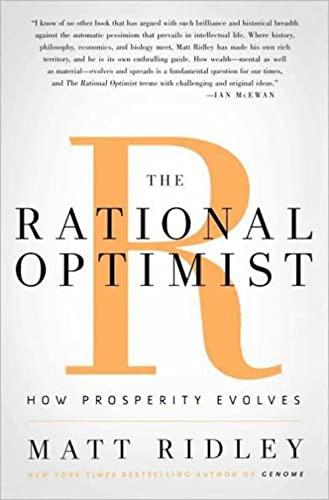
It was discussed in the context of human flourishing and the benefits of diversity, particularly in science. It was mentioned as demonstrating that when humans encounter diversity, they tend to flourish.
There's this wonderful book by Matt Ridley about the, you know, why did human beings manage this extraordinary rise for, you know, from being just just animals?
— Episode: Let’s Make America Smart Again, with Far...
It was discussed in the context of human flourishing and the benefits of diversity, particularly in science. It was mentioned as demonstrating that when humans encounter diversity, they tend to flourish.
There's this wonderful book by Matt Ridley about the, you know, why did human beings manage this extraordinary rise for, you know, from being just just animals?
It was discussed in the context of how human interaction with diversity and collaboration, including scientifically, results in a flourishing of outcomes, highlighting the importance of global collaboration.
There's this wonderful book by Matt Ridley about the, you know, why did human beings manage this extraordinary rise for, you know, from being just just animals?
And the most important thing he points out is whenever we encounter diversity, we flourished, you know, just even scientifically.
It was mentioned as a book that talked about the last 100 years of progress and how the world is getting better through incremental increases.
Matt Ridley wrote a great book about The Rational Optimist and he did a TED talk all when ideas have sex and he basically talks about the last 100 years of progress in all the ways in which the world is getting better through all these incremental increases.
It was mentioned as a book about why humans have risen and flourished, and the importance of encountering diversity. It was specifically mentioned in the context of scientific collaborations.
There's this wonderful book by Matt Ridley about the, you know, why did human beings manage this extraordinary rise for, you know, from being just just animals?
And the most important thing he points out is whenever we encounter diversity, we flourished, you know, just even scientifically.
Fareed Zakaria mentioned this book by Matt Ridley during the discussion about the importance of diversity and collaboration in human progress and flourishing.
There's this wonderful book by Matt Ridley about the, you know, why did human beings manage this extraordinary rise for, you know, from being just just animals?
It was mentioned in the context of the podcast host discussing how the world has been improving incrementally over time, a point often overlooked in the media.
Matt Ridley wrote a great book about The Rational Optimist and he did a TED talk all when ideas have sex and he basically talks about the last 100 years of progress in all the ways in which the world is getting better through all these incremental increases.
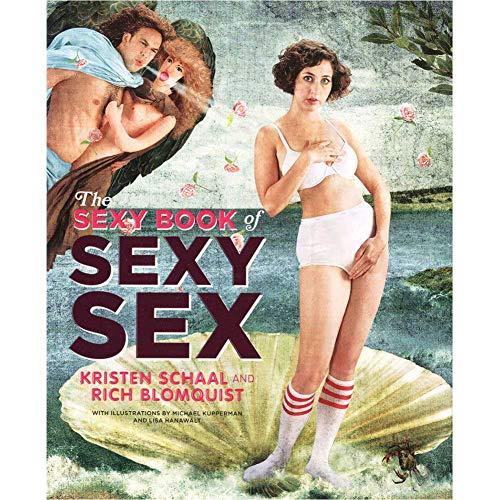
It was mentioned briefly in the context of the show discussing the science of sex and humor, and was brought up as an example of a book written on the subject.
Called The Sexy Book of Sexy Sex.
— Episode: What’s Science Got to Do With Love?
It was mentioned briefly in the context of the show discussing the science of sex and humor, and was brought up as an example of a book written on the subject.
Called The Sexy Book of Sexy Sex.
Yeah, I know a lot about sex.
And that makes you an expert.
It does.
So we also have clips from my interview with Mary Roach, who wrote the book Bonk.
Kristen Schaal's book was mentioned in the context of her expertise on sex, and she was jokingly called an expert in sex because of the book.
And I got you here because not just because you're funny and I like having you around, but on this show of the science of sex, who knew that you had written a book called The Sexy Book of Sexy Sex?
Yeah we have a section about art. What we did is we went into the jungle and we lived with the bonobos.
Kristen Schaal mentioned having written this book, which was described as containing blue humor and ambitious chapters, including a chapter on the future and history of sex.
You can get that on Amazon.
in your sexy book of sexy sex...this is a couple years old now, but what prompted you to write this?
There's so much blue humor in my acts that I was like, I might as well just put it all out there.
So you have the future of sex. That's right.
And then you have the history of sex. It happened in the past too.
It was mentioned that Kristen Schaal had written a book about sex, which was a surprising fact to Neil deGrasse Tyson.
Yes. Called The Sexy Book of Sexy Sex.
Yeah, I know a lot about sex.
Kristen Schaal mentioned writing a book about sex, and it was briefly discussed as a source of potentially useful information about the topic.
Yeah, I know a lot about sex.
Yeah, we have a section about art. What we did is we went into the jungle and we lived with the bonobos.
So are you in denial of this result?
100% I agree.
One of them was to go to the slow zone and that might have been what Mary was talking about a little bit too about being in the moment and just not like a Wham-Bam thing.
Kristen Schaal discussed her book, which was written with her then-boyfriend/fianc, covering topics like the future and history of sex, as well as more explicit themes like STDs.
You can get that on Amazon.
So you have the future of sex...And then you have the history of sex.
Regular sex...And you follow that with the gay chapter.
And there's another chapter here that got my attention. It was the dark side of sex.
There's so much blue humor in my acts that I was like, I might as well just put it all out there.
A Novel
Andy Weir, the author of 'The Martian' and 'Artemis', made a prediction about the cost of commercial space launches, specifically, a decrease in the price per kilogram to low earth orbit.
Hello, StarTalk. This is Andy Weir, author of The Martian and Artemis.
— Episode: Predictions: This Year in Science
Andy Weir, the author of 'The Martian' and 'Artemis', made a prediction about the cost of commercial space launches, specifically, a decrease in the price per kilogram to low earth orbit.
Hello, StarTalk. This is Andy Weir, author of The Martian and Artemis.
Currently the cheapest way to get mass into low earth orbit is to buy space on a SpaceX Falcon 9 booster. The price works out to be about $2,700 per kilogram. I predict that in 2018, there will be at least one commercial space launch where the price per kilogram to low earth orbit is $2,200 per kilogram or less.
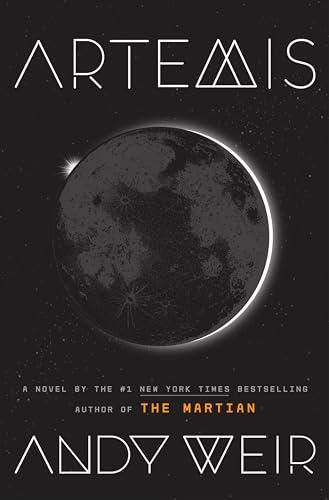
It is a heist/crime novel set on the Moon, exploring the economic and social aspects of a lunar city, and was discussed in detail, including details like the cost of living, the local economy and the resource management.
And Audible has the newest book from today's guest, Andy Weir, Listen to Artemis, read by Rosario Dawson today.
So Andy, you couldn't leave it alone. I just couldn't.
Putting a dude on Mars was not enough. Insufficient. Insufficient. I'm putting a city on the moon.
Having a movie about the book was not enough.
It's a heist story. A heist crime novel that happens to be on the moon.
It is a heist/crime novel set on the moon, which explores the concept of humanity's first non-Earth city and the economic reasons for its existence.
And Audible has the newest book from today's guest, Andy Weir, Listen to Artemis, read by Rosario Dawson today.
You just had to keep doing this.
Just can't.
It's a sickness.
Putting a dude on Mars was not enough.
Andy Weir, the author of 'The Martian' and 'Artemis', made a prediction about the cost of commercial space launches in 2018, specifically the cost per kilogram to low earth orbit.
Hello, StarTalk. This is Andy Weir, author of The Martian and Artemis.
It is a heist/crime novel set on the moon, where the author explored humanity's first non-Earth city and the economic, social, and environmental aspects of such a settlement.
Having a movie about the book was not enough.
Yeah, no, I mean, it was a good start.
You just had to keep going.
Gotta.
That's my whole job.
It is a heist/crime novel set on the Moon. It was discussed at length and explored the scientific aspects of creating a lunar city.
And Audible has the newest book from today's guest, Andy Weir, Listen to Artemis, read by Rosario Dawson today.
So Andy, you couldn't leave it alone. I just couldn't.
You just had to keep doing this. Just can't.
I'm putting a city on the moon.
It's a heist story. A heist crime novel that happens to be on the moon.
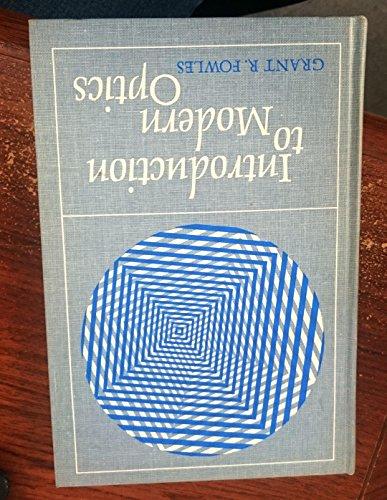
It was discussed in the context of Isaac Newton's discovery that white light is composed of different colors, which was a groundbreaking finding at the time, and discussed the role of prisms in demonstrating this concept.
It was just called Optics.
— Episode: Things You Thought You Knew – Somewhere...
It was discussed in the context of Isaac Newton's discovery that white light is composed of different colors, which was a groundbreaking finding at the time, and discussed the role of prisms in demonstrating this concept.
It was just called Optics.
One of the rare books that he actually wrote in English. All his other books were in Latin, which was the... Wow, he really was a nerd.
It was mentioned that a section of this book, written in 1704, was discussed, with a more classical English language style compared to modern English.
There's a whole section of one of his books, one of his books, Optics, written in 1704.
It was mentioned that a section of this book, written in 1704, shows Newton's deep understanding of nature and his ability to identify the frontiers of knowledge. It was noted that the language in the book would have been more classical compared to modern English.
There's a whole section of one of his books, one of his books, Optics, written in 1704.
It was discussed as a significant scientific treatise in history, with a quote from it being highlighted as containing the fundamental seeds of the scientific method.
If learning the truth is the scientist's goal, then he must make himself an enemy of all that he reads. He should also suspect himself so that he may avoid falling into either prejudice or leniency.
For a man to imagine an arrangement in the heavens does not make it exist.
It was mentioned that a section of Newton's book 'Optics', published in 1704, discussed some of his insights into the operations of nature, with a slightly more classical English style of writing.
There's a whole section of one of his books, one of his books, Optics, written in 1704.
It was mentioned that a section of Isaac Newton's book 'Optics', published in 1704, was discussed, possibly in terms of language and writing styles of the era.
There's a whole section of one of his books, one of his books, Optics, written in 1704.
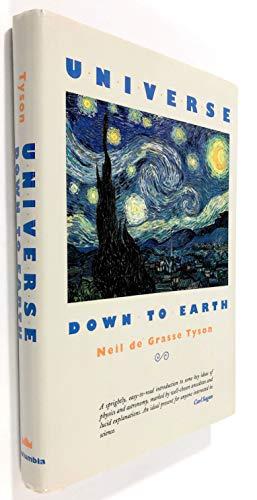
Neil deGrasse Tyson's second book, 'Universe Down to Earth', featured the iconic Starry Night painting on its cover, demonstrating his appreciation for art and the cosmos.
It was the cover, I chose it as the cover of my second book. That title of that book was Universe Down to Earth.
— Episode: Extended Classic – Cosmic Queries Art an...
Neil deGrasse Tyson's second book, 'Universe Down to Earth', featured the iconic Starry Night painting on its cover, demonstrating his appreciation for art and the cosmos.
It was the cover, I chose it as the cover of my second book. That title of that book was Universe Down to Earth.
Neil deGrasse Tyson's second book, "Universe Down to Earth", featured Vincent Van Gogh's "The Starry Night" on its cover, reflecting the author's appreciation for the painting's emotional resonance.
I chose it as the cover of my second book. That title of that book was Universe Down to Earth.
Neil deGrasse Tyson's second book, 'Universe Down to Earth', featured a reproduction of Vincent van Gogh's 'The Starry Night' on its cover, showcasing his appreciation for art and science.
I chose it as the cover of my second book. That title, that book was Universe Down to Earth.
Neil deGrasse Tyson mentioned using 'Starry Night' as the cover for his second book, 'Universe Down to Earth', which he said was in his office.
I chose it as the cover of my second book. That title of that book was Universe Down to Earth.
Neil deGrasse Tyson chose The Starry Night as the cover for his second book, Universe Down to Earth, because it is one of his favorite pieces of artwork.
I chose it as the cover of my second book. That title of that book was Universe Down to Earth.
Neil deGrasse Tyson's second book, 'Universe Down to Earth', featured a reproduction of Van Gogh's 'The Starry Night' on its cover, demonstrating his appreciation for art and the cosmos.
I chose it as the cover of my second book. That title, that book was Universe Down to Earth.
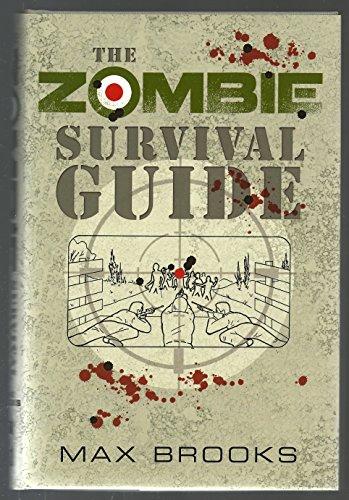
It was mentioned as a book written by Max Brooks, son of Mel Brooks, and is about surviving a zombie apocalypse. Max Brooks based the zombie virus on AIDS and its transmittability.
Just to put Max Brooks on your radar, he's the author of the book, The Zombie Survival Guide and World War Z, which is an oral history of the zombie war.
— Episode: Extended Classic: Zombie Apocalypse (Par...
It was mentioned as a book written by Max Brooks, son of Mel Brooks, and is about surviving a zombie apocalypse. Max Brooks based the zombie virus on AIDS and its transmittability.
Just to put Max Brooks on your radar, he's the author of the book, The Zombie Survival Guide and World War Z, which is an oral history of the zombie war.
The book, written by Max Brooks, was mentioned as part of his expertise on zombies and outbreak scenarios. It was mentioned that it is a book that serves as a guide.
I mean, he wrote The Zombie Survival Guide and that's a book.
It was mentioned as a book written by Max Brooks, and was described as a guide to surviving a zombie war.
Just to put Max Brooks on your radar, he's the author of the book, The Zombie Survival Guide and World War Z, which is an oral history of the zombie war.
It was mentioned as a book written by Max Brooks, and discussed as the source for many zombie apocalypse stories.
Just to put Max Brooks on your radar, he's the author of the book, The Zombie Survival Guide and World War Z, which is an oral history of the zombie war.
It was mentioned as one of Max Brooks's works related to the zombie genre, illustrating his status as an expert on the subject.
I mean, he wrote The Zombie Survival Guide and that's a book.
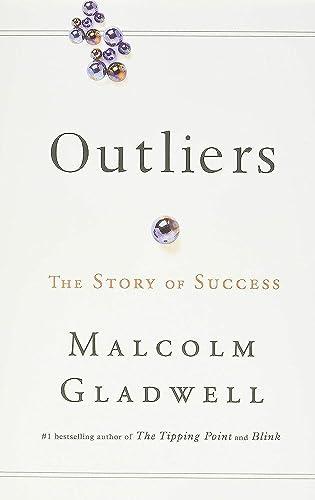
The Story of Success
Neil deGrasse Tyson mentioned Gladwell's book in the context of talent and success, suggesting that hard work and dedication, rather than innate ability, are key factors.
I hate to sound like my boy who wrote the book on this the 10,000 hour guy I forgot his name Malcolm Gladwell
— Episode: StarTalk Playing with Science – The Big...
Neil deGrasse Tyson mentioned Gladwell's book in the context of talent and success, suggesting that hard work and dedication, rather than innate ability, are key factors.
I hate to sound like my boy who wrote the book on this the 10,000 hour guy I forgot his name Malcolm Gladwell
It was discussed in relation to the 10,000-hour rule, which suggests that expertise and mastery in a field often require that amount of dedicated practice.
And that's, I think, where this idea that I talked about in one of my books, The Notion of 10,000 Hours, comes from.
Todd Furman mentioned using Malcolm Gladwell's concept of 'thin slicing' in the context of sports betting, implying it's a way to quickly identify opportunities and patterns.
I always come back to Malcolm Gladwell and thin slicing that you just look at a number and you realize hey something doesn't feel right about this or something is going to create an opportunity
Neil deGrasse Tyson mentioned Gladwell's book, referencing the 10,000-hour rule, implying that success often results from hard work rather than innate talent.
I hate to sound like my boy who wrote the book on this the 10,000 hour guy I forgot his name Malcolm Gladwell
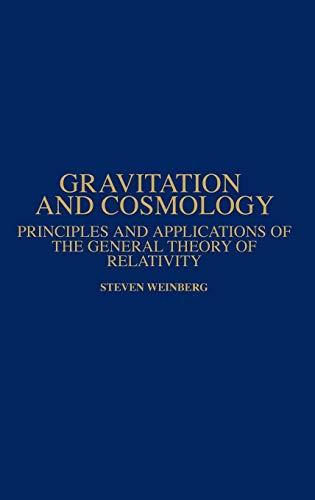
Principles and Applications of the General Theory of Relativity
This is the book that Katie Freeze learned cosmology from.
I notice you have his book right there, right behind Chuck.
— Episode: Uncovering Dark Matter Mysteries with Ka...
This is the book that Katie Freeze learned cosmology from.
I notice you have his book right there, right behind Chuck.
Yeah, it's right here. That is the book I learned cosmology from.
It was described as a very large and thick book, so substantial that simply carrying it around would teach you about gravitation.
But I have one of his books is sitting here on my shelf. Gravitation, the only book that you ever learn about just by carrying it around.
It was mentioned as a textbook co-authored by Kip Thorne, and it was described as extremely thick, so much that just carrying it around was enough to teach you about the subject.
I have a book in my office co-authored by him the title of the book is gravitation and it's like a zillion pages thick and we always joke it's the only subject you ever learned about just by carrying the textbook around
Neil deGrasse Tyson mentioned this book, focusing on a section about black holes as a potential garbage disposal system for Earth.
In one of the most famous books ever written on gravity, it's called Gravity.
Right, it's gravitation.
It was mentioned as being very large and heavy, and Neil described it as being the only book you would learn about by just carrying it around.
But I have one of his books is sitting here on my shelf. Gravitation, the only book that you ever learn about just by carrying it around. It's it's huge thick book with the proportions of a of a New York Yellow pages of back and young enough to remember the yellow page.
Note: The book recommendations on this page are discovered automatically from podcast transcripts, and may be incorrect or incomplete.
Podcast Name