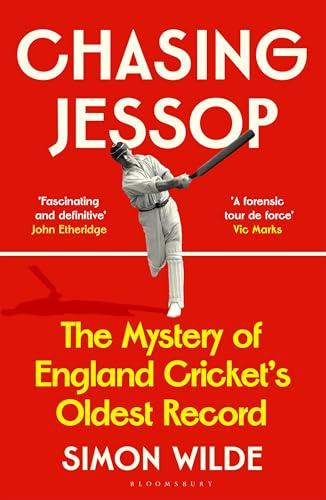
Chasing Jessop
Simon Wilde
Mentioned 7 months ago
The Ashes
History is full of the extraordinary. Each week, we'll transport you back in time to witness history's most incredible moments and remarkable people. New episodes Mondays, or a week early for Noiser+ subscribers. With Noiser+ you'll also get ad-free listening and exclusive content on shows...
Recently mentioned
Simon Wilde
Mentioned 7 months ago
The Ashes
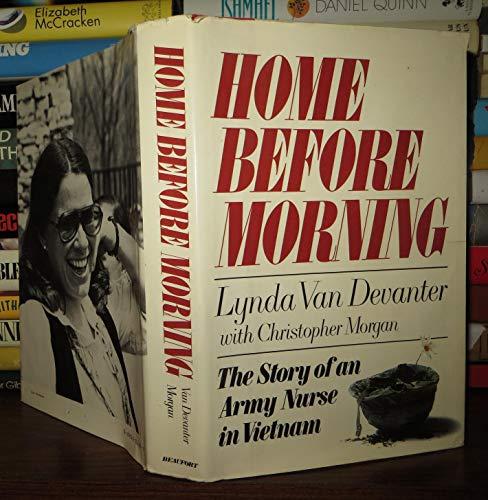
Christopher Van Devanter, Lynn; Morgan
Mentioned 1 year ago
The Vietnam War
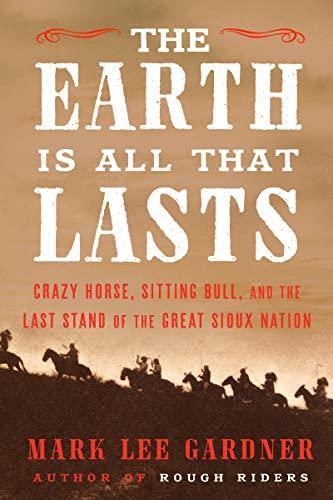
Mark Lee Gardner
Mentioned 1 year ago
Sitting Bull
Tracy Borman
Mentioned 1 year ago
Mary Queen of Scots
Catherine Merridale
Mentioned 1 year ago
The Kremlin
John Sweeney
Mentioned 1 year ago
The Kremlin
Levi Roach
Mentioned 1 year ago
The Normans

Russell Alan Potter
Mentioned 1 year ago
The Northwest Passage
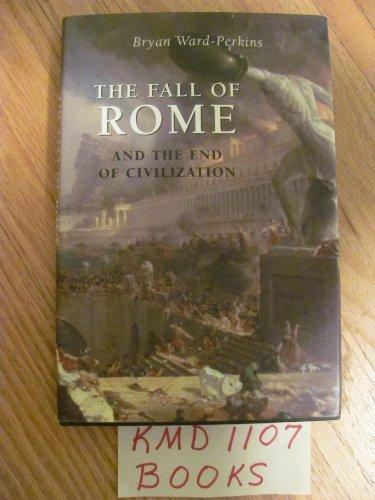
Bryan Ward-Perkins
Mentioned 1 year ago
Constantinople
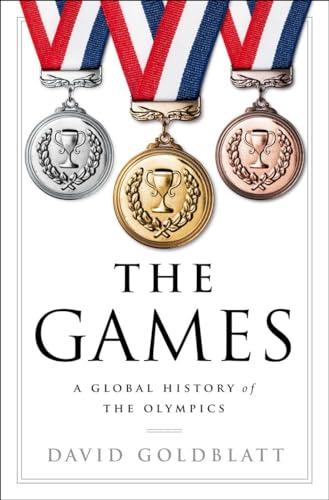
David Goldblatt
Mentioned 1 year ago
The Modern Olympics
Homer
Mentioned 1 year ago
The Ancient Olympics
Homer
Mentioned 1 year ago
The Ancient Olympics
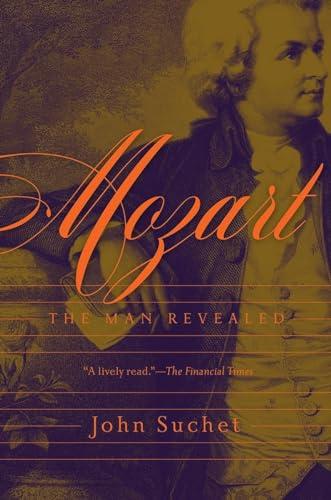
It was a biography of Mozart and John Suchet is a Klassik FM radio presenter and author of the book. Mozart's father Leopold was a highly accomplished violinist who played in the court orchestra.
John Suchet is a Klassik FM radio presenter and author of Mozart, The Man Revealed.
— Episode: Wolfgang Amadeus Mozart
It was a biography of Mozart and John Suchet is a Klassik FM radio presenter and author of the book. Mozart's father Leopold was a highly accomplished violinist who played in the court orchestra.
John Suchet is a Klassik FM radio presenter and author of Mozart, The Man Revealed.
Mozart was born in Salzburg which today is part of Austria but in his day it was almost an independent little city-state within the German Empire and Salzburg was a very cultured city. It had its own orchestra, it had its own chorus and so on and Mozart's father Leopold was a highly accomplished violinist who played in the court orchestra.
The Soldiers' Story
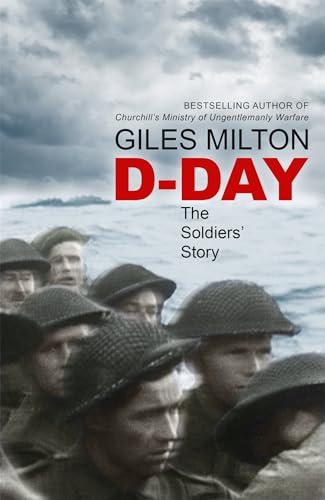
It was mentioned that D-Day, the soldier's story is written by Giles Milton. It was explained that the Pas-de-Calais was the more obvious choice for the invasion because it was closer to Germany, but it was also heavily defended. Normandy was the chosen option due to the long sandy beaches, which would be useful for the landing of the infantry, and because it was less well defended than the Pas-de-Calais area.
Giles Milton is the author of D-Day, the soldier's story.
— Episode: Introducing: D-Day: The Tide Turns - Epi...
It was mentioned that D-Day, the soldier's story is written by Giles Milton. It was explained that the Pas-de-Calais was the more obvious choice for the invasion because it was closer to Germany, but it was also heavily defended. Normandy was the chosen option due to the long sandy beaches, which would be useful for the landing of the infantry, and because it was less well defended than the Pas-de-Calais area.
Giles Milton is the author of D-Day, the soldier's story.
The Pas-de-Calais was in some ways the obvious choice because it was certainly a lot nearer to Germany than the beaches of Normandy, but it was extremely heavily defended and the Germans also thought the Allies were going to land there.
And so Normandy was an attractive option, partly because of the beaches, these long sandy beaches, which would allow huge numbers of infantry to come ashore.
And also it was slightly less well defended than the Pas-de-Calais area.
D-Day and the Battle for Normandy
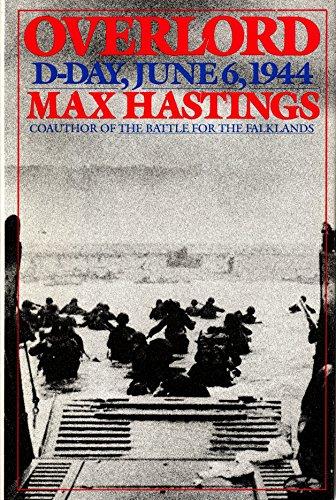
The author, Sir Max Hastings, talked about the planning of the invasion and how it was a remarkable achievement. He mentioned the planning and organisation of logistics as the greatest feats ever known. He highlighted the civilians in uniforms who were clever accountants and mathematicians, who worked day after day and month after month to solve huge problems.
Sir Max Hastings is author of Overlord, D-Day and the Battle for Normandy.
— Episode: Introducing: D-Day: The Tide Turns - Epi...
The author, Sir Max Hastings, talked about the planning of the invasion and how it was a remarkable achievement. He mentioned the planning and organisation of logistics as the greatest feats ever known. He highlighted the civilians in uniforms who were clever accountants and mathematicians, who worked day after day and month after month to solve huge problems.
Sir Max Hastings is author of Overlord, D-Day and the Battle for Normandy.
It was one of the greatest feats of planning and organization and logistics ever known, even before you started on the fighting.
And all those staff officers who, they weren't soldiers, they were civilians in uniforms. They were clever accountants and mathematicians and anybody who could add and subtract. And they were sitting there day after day and month after month, solving all sorts of huge problems every day. And it was an extraordinary achievement.
Heartbreak and Hope
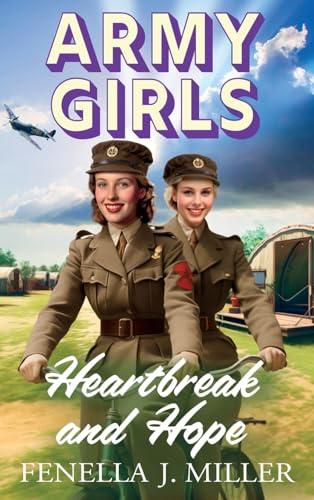
Dr Tessa Dunlop, historian and author of Army Girls, talked about the importance of the women during this time. She highlighted how the women were responsible for feeding, packing kit bags and sewing kit bags for the troops, as well as typing up troop orders and marches and logistically moving them around the country.
Dr Tessa Dunlop, historian and author of Army Girls.
— Episode: Introducing: D-Day: The Tide Turns - Epi...
Dr Tessa Dunlop, historian and author of Army Girls, talked about the importance of the women during this time. She highlighted how the women were responsible for feeding, packing kit bags and sewing kit bags for the troops, as well as typing up troop orders and marches and logistically moving them around the country.
Dr Tessa Dunlop, historian and author of Army Girls.
If you have up to two million men based in Britain, training all over the country, who's feeding them? Who's packing their kit bags? Who's sewing their kit bags? Who's typing up the troop orders and the marches? Who's logistically shunting them from one end of the country to the other end of the country? Women.
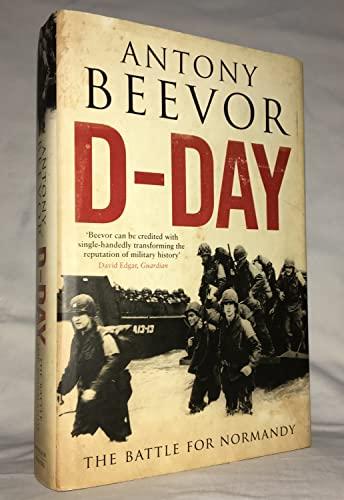
The Battle for Normandy
The author, Sir Anthony Beaver, who is a former army officer, spoke about the creation of a fake army group to deceive the Germans. He highlighted how they created rubber tanks that were parked up on the coasts of Britain, giving the Luftwaffe pilots the impression that there was a large force of tanks there.
Sir Anthony Beaver is the number one best-selling historian in Britain. A former army officer, his books include The Second World War and D-Day, the Battle for Normandy.
— Episode: Introducing: D-Day: The Tide Turns - Epi...
The author, Sir Anthony Beaver, who is a former army officer, spoke about the creation of a fake army group to deceive the Germans. He highlighted how they created rubber tanks that were parked up on the coasts of Britain, giving the Luftwaffe pilots the impression that there was a large force of tanks there.
Sir Anthony Beaver is the number one best-selling historian in Britain. A former army officer, his books include The Second World War and D-Day, the Battle for Normandy.
They had a totally fake army group which was supposedly going to come down the east coast of England from Kent and invade the Pas de Calais. And I mean, it was actually a brilliant success.
This was an era where fake news came into its own to deceive the Germans. They created fake armies, quite literally making tanks out of rubber that were parked up on the coasts of Britain.
So Luftwaffe pilots would fly over the coast and see these huge formations of tanks on the coastline, go back and report back to German headquarters. My God, you know, in Kent there are enormous numbers of tanks. What they didn't realise were that these were fake tanks.
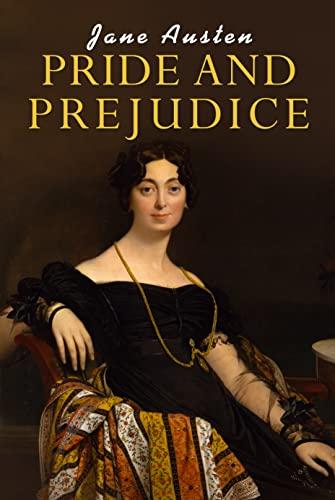
It was mentioned as a book provided by the army to soldiers in WWI, offering a comforting escape from the war's harsh reality. The soldier in the story found comfort in its characters and the genteel world it depicted.
The mud-splattered cover reads, Pride and Prejudice by Jane Austen.
— Episode: Jane Austen
It was mentioned as a book provided by the army to soldiers in WWI, offering a comforting escape from the war's harsh reality. The soldier in the story found comfort in its characters and the genteel world it depicted.
The mud-splattered cover reads, Pride and Prejudice by Jane Austen.
Reading Austen reminds him of his school days, but it's also a window to a time and society untouched by the horror he's surrounded by.
But for now he is immersed in the comforting world of the quick-witted heroine Elizabeth Bennett and the brooding hero Mr. Darcy.
In a 2003 BBC poll to find the UK's best love novel, it comes second behind Tolkien's The Lord of the Rings.
In 1943, he is consoled by his daughter reading him Pride and Prejudice.
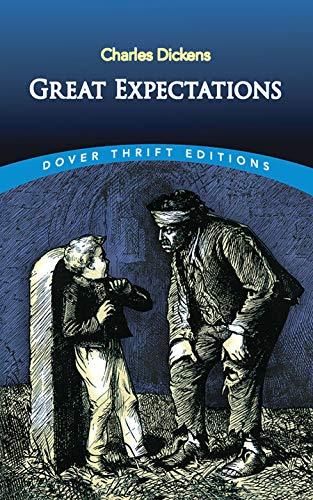
Classic Novels)
It was mentioned as a novel released a year after 'A Tale of Two Cities', considered a masterpiece of social commentary, discussing topics like class, poverty, law, abuse and the triumph of love over tragedy. It was also mentioned when discussing his first love, Maria Beadnell.
When she was 21 he told her that he loved her and she called him a boy which if you've read Great Expectations you'll know that's what Estella calls Pip when she wants to put him down...
— Episode: Charles Dickens
It was mentioned as a novel released a year after 'A Tale of Two Cities', considered a masterpiece of social commentary, discussing topics like class, poverty, law, abuse and the triumph of love over tragedy. It was also mentioned when discussing his first love, Maria Beadnell.
When she was 21 he told her that he loved her and she called him a boy which if you've read Great Expectations you'll know that's what Estella calls Pip when she wants to put him down and so he was quite heartbroken at a young age.
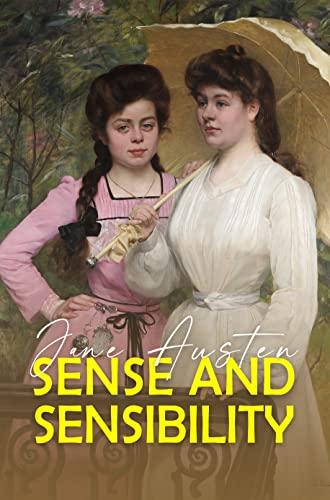
It followed the lives and romances of two sisters, the sensible Eleanor Dashwood and the more impulsive Marianne. It was mentioned as one of Austen's novels that was eventually published.
In 1795, around the time Austen turns 20, she finishes her first draft of a novel entitled Eleanor and Marianne. It later becomes the much loved Sense and Sensibility following the li...
— Episode: Jane Austen
It followed the lives and romances of two sisters, the sensible Eleanor Dashwood and the more impulsive Marianne. It was mentioned as one of Austen's novels that was eventually published.
In 1795, around the time Austen turns 20, she finishes her first draft of a novel entitled Eleanor and Marianne. It later becomes the much loved Sense and Sensibility following the lives and romances of the sensible Eleanor Dashwood and her more impulsive younger sister.
She revises Sense and Sensibility and on her behalf Henry finds her a new publisher.
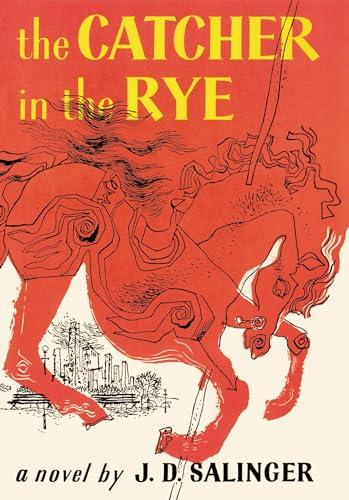
It was mentioned as a novel that inspired John Lennon's killer.
His delusional killer, inspired by the novel The Catcher in the Rye and enraged by John's atheism and earlier claim about the band being bigger than Jesus, remains in prison to this d...
— Episode: The Beatles
It was mentioned as a novel that inspired John Lennon's killer.
His delusional killer, inspired by the novel The Catcher in the Rye and enraged by John's atheism and earlier claim about the band being bigger than Jesus, remains in prison to this day.

The Original 1843 Edition (Charles Dickens Classics)
The Original 1719 Unabridged and Complete Edition (A Daniel Defoe Classics)

A Global History of the Olympics
It was mentioned as a global history of the Olympics, and the author was thanked for his insights into the history and evolution of the Olympic Games.
David Goldblatt is a sports writer and broadcaster and the author of The Games A Global History Of The Olympics.
— Episode: The Modern Olympics
It was mentioned as a global history of the Olympics, and the author was thanked for his insights into the history and evolution of the Olympic Games.
David Goldblatt is a sports writer and broadcaster and the author of The Games A Global History Of The Olympics.
The story of an army nurse in Vietnam
The speaker mentions interviewing many people in Vietnam and America who had strong opinions about the war and the death of Diem, believing the Americans were responsible for it and that it negatively impacted the war effort. The book was used as a source of information for the speaker's understanding of the Vietnam War.
I met many people when I was researching my book on Vietnam in Vietnam and in America in exile, who said whatever we thought of Diem and even though we knew he was corrupt, he was Vietnamese.
— Episode: The Vietnam War
The speaker mentions interviewing many people in Vietnam and America who had strong opinions about the war and the death of Diem, believing the Americans were responsible for it and that it negatively impacted the war effort. The book was used as a source of information for the speaker's understanding of the Vietnam War.
I met many people when I was researching my book on Vietnam in Vietnam and in America in exile, who said whatever we thought of Diem and even though we knew he was corrupt, he was Vietnamese.
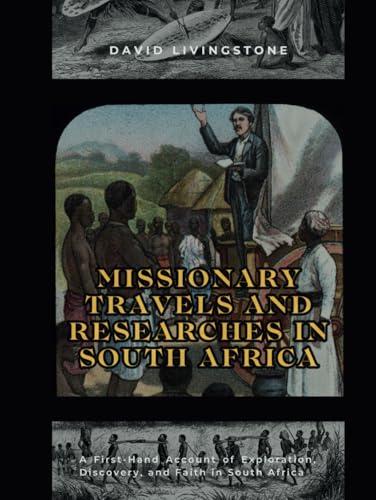
A First-Hand Account of Exploration, Discovery, and Faith in South Africa (Annotated)
The book was published in 1857 and went on to sell 70,000 copies, making Livingston rich. It combined elements of his own story with evangelism, science, medicine and linguistics, all illuminated with maps and illustrations.
He said that everyone had a copy of Missionary Travels in their house but people only ever looked at the pictures and that no one had actually read the book itself, which I think is a fabulous similar...
— Episode: Dr David Livingstone
The book was published in 1857 and went on to sell 70,000 copies, making Livingston rich. It combined elements of his own story with evangelism, science, medicine and linguistics, all illuminated with maps and illustrations.
He said that everyone had a copy of Missionary Travels in their house but people only ever looked at the pictures and that no one had actually read the book itself, which I think is a fabulous similarity to 20 or 30 years ago when everyone bought Stephen Hawking's On the History of Time but no one actually read it.
The first time Livingston sees the illustrations for The Lion Attack, he instantly writes back to the publisher and says, I will be a laughingstock. You have made this lion far, far too big. Can you reduce it in size?
Stephen Hawking's Final Theory
It was mentioned as a book that people bought but didn't read.
He said that everyone had a copy of Missionary Travels in their house but people only ever looked at the pictures and that no one had actually read the book itself, which I think is a fabulous similar...
— Episode: Dr David Livingstone
It was mentioned as a book that people bought but didn't read.
He said that everyone had a copy of Missionary Travels in their house but people only ever looked at the pictures and that no one had actually read the book itself, which I think is a fabulous similarity to 20 or 30 years ago when everyone bought Stephen Hawking's On the History of Time but no one actually read it.
Note: The book recommendations on this page are discovered automatically from podcast transcripts, and may be incorrect or incomplete.
Podcast Name