Chasing Jessop
Simon Wilde
Mentioned 7 months ago
The Ashes
History is full of the extraordinary. Each week, we'll transport you back in time to witness history's most incredible moments and remarkable people. New episodes Mondays, or a week early for Noiser+ subscribers. With Noiser+ you'll also get ad-free listening and exclusive content on shows...
Recently mentioned
Simon Wilde
Mentioned 7 months ago
The Ashes
Christopher Van Devanter, Lynn; Morgan
Mentioned 1 year ago
The Vietnam War
Mark Lee Gardner
Mentioned 1 year ago
Sitting Bull
Tracy Borman
Mentioned 1 year ago
Mary Queen of Scots
Catherine Merridale
Mentioned 1 year ago
The Kremlin
John Sweeney
Mentioned 1 year ago
The Kremlin
Levi Roach
Mentioned 1 year ago
The Normans
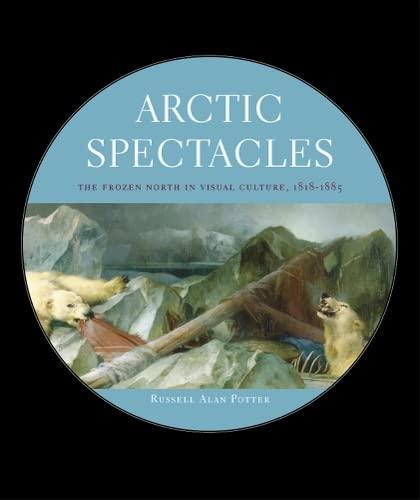
Russell Alan Potter
Mentioned 1 year ago
The Northwest Passage
Bryan Ward-Perkins
Mentioned 1 year ago
Constantinople
David Goldblatt
Mentioned 1 year ago
The Modern Olympics
Homer
Mentioned 1 year ago
The Ancient Olympics
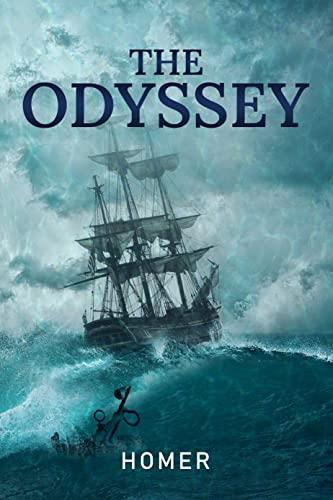
Homer
Mentioned 1 year ago
The Ancient Olympics
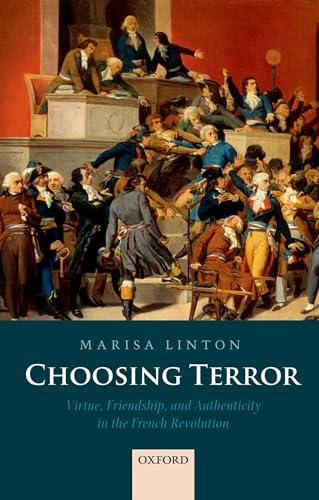
Virtue, Friendship, and Authenticity in the French Revolution
Marisa Linton's book "Choosing Terror" delves into the complexities of the French Revolution, exploring the motivations and choices of figures like Maximilian Robespierre and the difficult decisions they faced in the name of revolution.
Professor Marisa Linton is a historian and author of Choosing Terror, virtue, friendship and authenticity in the French Revolution.
— Episode: The French Revolution, Part 2 of 2
Marisa Linton's book "Choosing Terror" delves into the complexities of the French Revolution, exploring the motivations and choices of figures like Maximilian Robespierre and the difficult decisions they faced in the name of revolution.
Professor Marisa Linton is a historian and author of Choosing Terror, virtue, friendship and authenticity in the French Revolution.
Maximilian Robespierre was a lawyer in a house in northern France. If the revolution hadn't happened no one would have heard of him he was mild mannered, he was inoffensive but then the revolution happened and he got drawn into it like so many other people and he becomes very much a political activist.
If Robespierre had died in 1792 we would probably just think he was a good man and idealistic man. He was all those things but he was also a very dedicated revolutionary and he comes to believe like many others that in the cause of the revolution you may have to do things that are terrible so he starts to accept as many others do that terrible things must be done.
Robespierre asks the convention if they can leave in peace someone who is in his words no less guilty and no less accused by the nation than Louis.
When France and Austria were at war with one another whether the revolution should continue Mary Antoinette passed battle plans of the French armies to the Austrians. So in fact she was a traitor, she actually was. But the people who put her on trial didn't know that they guessed it but they didn't know it. And what they really convict her of is being a bad woman generally on the basis of some quite fabricated evidence.
A Biography of the World's Greatest River
Robert Twigger's comprehensive work, "Red Nile: A Biography of the World's Greatest River," was cited by the narrator as a key foundational source for the episode dedicated to the history of the Nile. The podcast utilized Twigger's research to inform the historical details and context presented to listeners. This book was acknowledged for its value as a detailed resource on the subject.
Robert Twigger's "Red Nile" was mentioned as a source of information about the river Nile.
With thanks to Robert Twigger, author of Red Nile: A Biography of the World's Greatest River.
1,000 Years of the Shadow Warrior
The podcast cited John Man’s authoritative work, "Ninja: 1,000 Years of the Shadow Warrior," as a primary historical source for the episode dedicated to the subject. The host explicitly thanked Man, recognizing the book as foundational research that shaped the discussion on the shadow warrior's 1,000-year history.
The book was mentioned at the beginning of the podcast as a source for information on ninjas. It was written by historian John Man and was referenced as a source for the episode.
Written by Jo Furniss. With thanks to John Man, historian and author of the book 'Ninja: 1,000 Years of the Shadow Warrior'.
John Mann is a historian and author of the book Ninja, a thousand years of the Shadow Warriors.
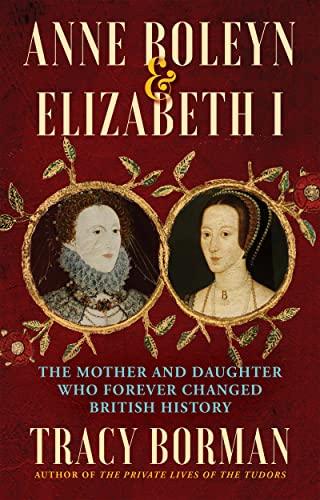
The Mother and Daughter Who Forever Changed British History
The book was mentioned when historian and author Tracy Borman appeared as a guest on the podcast. Although the discussion centered on the early life of Queen Victoria and the controversial influence of Sir John Conroy, the title was highlighted as part of Borman's professional credentials as a joint curator for Historic Royal Palaces.
Tracy Borman, a historian, author, and joint curator for Historic Royal Palaces, mentioned her book "Anne Boleyn and Elizabeth I: The Mother and Daughter Who Changed History" in the episode. She discussed the influence of Sir John Conroy on Queen Victoria's early life, highlighting his closeness to Victoria's mother and his dominant personality.
Tracy Borman is a historian, author and joint curator for Historic Royal Palaces.
Sir John Conroy was an interesting character and a huge influence over Victoria's early life.
So he'd been hanging around her family for some time. He was her late father's aquary and then he sort of transferred to the service of Victoria's mother. And the two became very close.
Obviously, as there always were in these situations, there were rumors about just how close Victoria's mother and Sir John Conroy actually were.
But he was a very dominant figure. He clearly liked to rule the roost. He really heavily influenced Victoria's mother and therefore Victoria herself. And she speaks of him as a devil incarnate and monster.
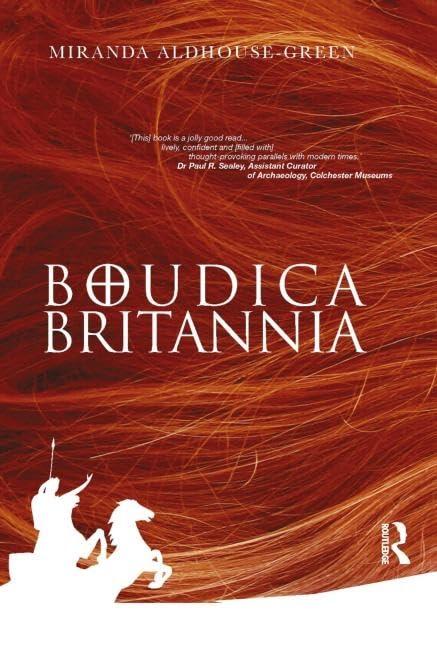
Miranda Aldhouse-Green's "Boudica Britannia" was cited as a key academic source during the episode detailing the famous rebellion. The podcast identified Aldhouse-Green as a professor of archaeology, lending scholarly weight to the discussion. Drawing on the book’s expertise, the hosts highlighted the economic motivations behind the Roman invasion, noting that Britain was coveted for its perceived richness in minerals and wheat in the first century AD.
The book was written by Miranda Aldhouse-Green, a professor of archaeology at Cardiff University. It was stated that Britain was thought to be very rich in minerals and wheat and that Rome had coveted the area.
Miranda Oldhouse Green is a professor of archaeology at Cardiff University and the author of the book Boudica, Britannia.
It was deemed legendary that Britain was very rich in minerals, very rich in wheat growing. And so in terms of economics, it made sense.
So there are a lot of things that came together fairly near the beginning of the first century AD for Rome to cast covetous and slightly frightened eyes at Britain.
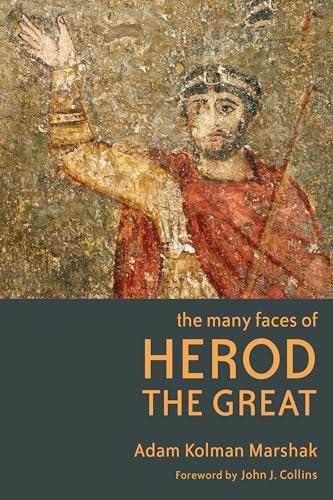
The author discusses the Idumean elites and their position of power in Idumea for a very long time. Antipater is one of the leading men and his family is one of the leading families in Idumea.
Dr. Adam Marshak is the author of The Many Faces of Herod the Great. Antipater's family are Idumean elites and they've been in a position of power in Idumea for a very long time.
— Episode: Introducing: Herod the Great Part 1: Rul...
The author discusses the Idumean elites and their position of power in Idumea for a very long time. Antipater is one of the leading men and his family is one of the leading families in Idumea.
Dr. Adam Marshak is the author of The Many Faces of Herod the Great. Antipater's family are Idumean elites and they've been in a position of power in Idumea for a very long time.
Antipater is one of the leading men and his family is one of the leading families in Idumea.
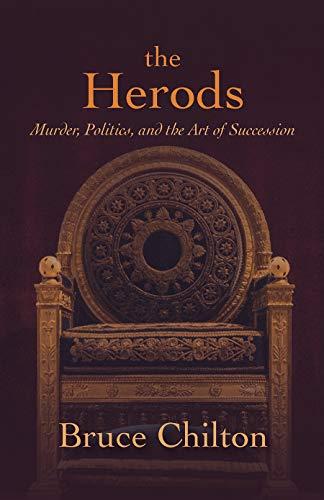
Murder, Politics, and the Art of Succession
Author Bruce Chilton, a professor of religion at Bard College, was featured as a historical expert during the episode focusing on Herod the Great. His work, The Herods: Murder, Politics, and the Art of Succession, was cited as his credential when he provided background on the Idumean people and the geopolitical struggles of the region. The book itself was not discussed, but Chilton's expertise provided crucial context for the beginning of Herod’s rule.
The professor discusses the people of Idumea and their history of being at the mercy of larger empires for centuries. Their territory had literally been shifted over from the east towards the west. They were not in the most fertile part of the region.
Bruce Chilton is professor of religion at Bard College and author of The Herods, Murder, Politics, and the Art of Succession.
The people of Idumea had been at the mercy of larger empires for centuries.
Their territory had literally been shifted over from the east towards the west.
They were not in the most fertile part of the region.
They didn't have established, well-developed institutions.
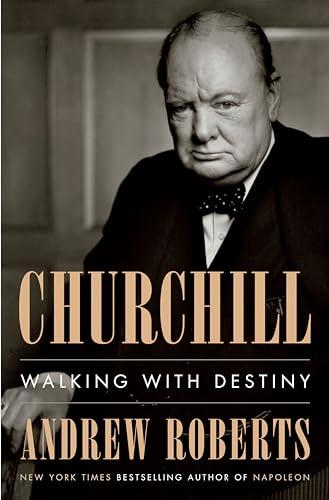
Walking with Destiny
The author, Andrew Roberts, appeared on the podcast to discuss his definitive biography, Churchill: Walking with Destiny. Roberts focused on Churchill’s difficult and formative childhood, emphasizing how his father’s constant put-downs and neglect, coupled with his mother’s distance, shaped his personality despite his intense admiration for both parents. The conversation also touched upon Churchill's unique understanding of America and his early success as the world's best-paid war correspondent.
The author, Andrew Roberts, is a historian who wrote the book 'Churchill: Walking With Destiny' and described Churchill's father as putting him down and neglecting him, causing Churchill to admire his parents while feeling ignored and isolated as a child.
Nonetheless, there were problems. Primarily, the fact that his father didn't really appreciate that there was anything special about Winston. He was constantly putting his son down. He was not visiting him, and neither did his mother.
And so in that sense, although he was ignored quite a lot as a child, he did worship his parents. He thought his father was the greatest man on earth and attempted to emulate him, and he loved his mother unreservedly, even though rather sadly, he said, she shone for me like the evening star, brilliant but at a distance.
He had lots of American friends. He was somebody who felt at home in America. He went to America 14 times.
And so he really did sort of understand the American continent in a way that surprisingly enough, very few other British politicians did at the time.
Barely soon after starting his journalistic career, he was the best paid war correspondent in the world which is a tremendous thing.
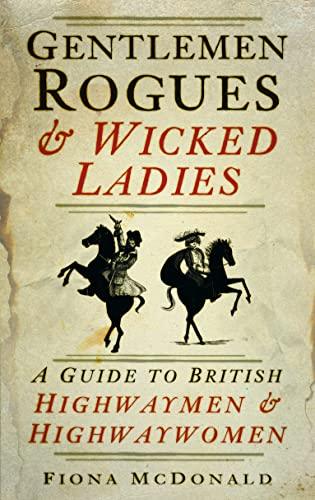
A Guide to British Highwaymen and Highwaywomen
Host John Hopkins referenced Fiona McDonald’s Gentlemen Rogues & Wicked Ladies as a definitive guide during an episode dedicated to British highwaymen. The book was utilized to structure the historical discussion, exploring the motivations, methods, and societal impact of these figures. The guide also delved into early examples of highway robbery, specifically noting legendary figures like Robin Hood.
Fiona McDonald's "Gentlemen Rogues and Wicked Ladies" is a guide to British highwaymen and highwaywomen, highlighting early examples such as Robin Hood. This book delves into the history of these figures, exploring their motivations, methods, and impact on society.
Fiona MacDonald is the author of Gentlemen Rogues and Wicked Ladies, a guide to British highwaymen and highway women.
Probably one of the earliest examples would be Robin Hood.
The Rediscovery and Revival of an American Icon--An Illustrated History
William Ainsworth's "Rookwood" was published in 1834 and was a major bestseller that contributed to the romanticized image of highwaymen like Dick Turpin. Ainsworth combined real-life figures like Duval and Swift Nix into a fictionalized Dick Turpin, popularizing the image of the dashing outlaw.
Our skewed ideas of highwaymen owe much to a writer named William Ainsworth who pulled Turpin's story from relative obscurity.
— Episode: Highwaymen
William Ainsworth's "Rookwood" was published in 1834 and was a major bestseller that contributed to the romanticized image of highwaymen like Dick Turpin. Ainsworth combined real-life figures like Duval and Swift Nix into a fictionalized Dick Turpin, popularizing the image of the dashing outlaw.
Our skewed ideas of highwaymen owe much to a writer named William Ainsworth who pulled Turpin's story from relative obscurity.
Published in 1834 nearly a century after Turpin's execution Ainsworth's novel Rookwood is an instant bestseller but it's a secondary character that grabs the public's imagination.
John Newton, a former slave trade captain who became an Anglican cleric and abolitionist, advised Wilberforce to remain in post and do God's work from there.
Newton, a slave trade captain, turned Anglican cleric and abolitionist advises Wilberforce to remain in post and do God's work from there.
— Episode: Abolition of The British Slave Trade
John Newton, a former slave trade captain who became an Anglican cleric and abolitionist, advised Wilberforce to remain in post and do God's work from there.
Newton, a slave trade captain, turned Anglican cleric and abolitionist advises Wilberforce to remain in post and do God's work from there.
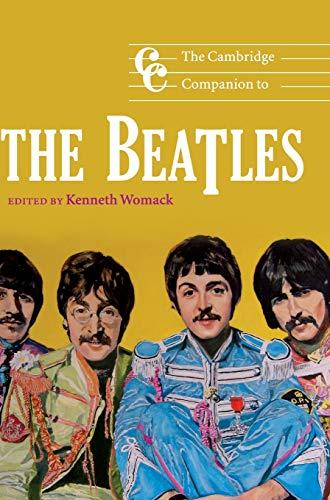
Author Kenneth Womack, a professor of English and popular music at Monmouth University, was featured on the episode discussing the history of The Beatles. His work, The Cambridge Companion to the Beatles, was cited as a primary credential establishing his expertise on the subject. While the book itself was not discussed in detail, Womack provided expert commentary on the band's early origins, specifically detailing John Lennon's approach to recruiting members for his first groups.
It was mentioned as a book written by Kenneth Womack, a professor of English and popular music at Monmouth University.
Kenneth Womack is professor of English and popular music at Monmouth University and author of The Cambridge Companion to The Beatles.
So John essentially recruits his friends. If you were a friend of John Lennon, you were in his band. It was just about that simple. He wasn't necessarily interested in talent. He was just excited by the sound. Being a great guitar player didn't seem to be important to him. He just liked the idea of doing it, right? Which is what a lot of the skiffle bands were like in England in the mid-1950s.
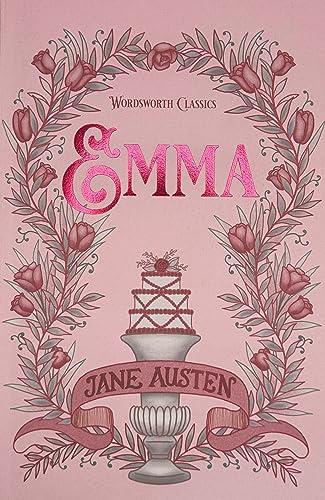
The podcast detailed the historical context of Emma while discussing the later works of Jane Austen, noting that the novel was completed around 1816. The story was summarized as following the matchmaking misadventures of young Emma Woodhouse and being "packed with satirical bite." A historical detail highlighted was the inclusion of a dedication to the Prince Regent, who had requested the honor as an admirer of Austen's writing.
It followed the matchmaking misadventures of the heroine Emma Woodhouse and included a dedication to the Prince Regent, who was a fan of Austen's work.
In 1816 around the age of 40 Jane completes two more novels. Emma which follows the matchmaking misadventures of young heroine Emma Woodhouse is packed with satirical bite and as requested the novel includes a dedication to the Prince Regent.
The Frozen North in Visual Culture, 1818-1875
In the episode, the professor highlighted how the book examined early Arctic maps that portrayed the region as a neat, symmetrical pizza‑like layout, which misled explorers about its true geography. He explained that the book showed the discrepancy between imagined and actual geography and how it took time for explorers to understand the irregular reality. The discussion conveyed a positive appreciation for the book's insights.
The author, a professor of English, discussed the early maps of the Arctic and how they depicted the area as more symmetrical than it actually was, impacting early explorers' understanding of the region.
If you look at the Mercator maps and some of the other maps of that era, the maps of the pole usually show like a pizza that's neatly divided into four pieces with open water of some kind between those.
And I think that the fact that actual geography is so much less symmetrical and predictable than the imaginary ones was, took a while to grasp.
And the End of Civilization
The hosts referenced the title as a work by an Oxford emeritus professor that examines the collapse of Rome and the end of the Roman Empire. They highlighted the author's expertise in Late Antique history and noted the book’s focus on the broader consequences for civilization. The mention was neutral, simply noting its relevance to the discussion of Constantinople.
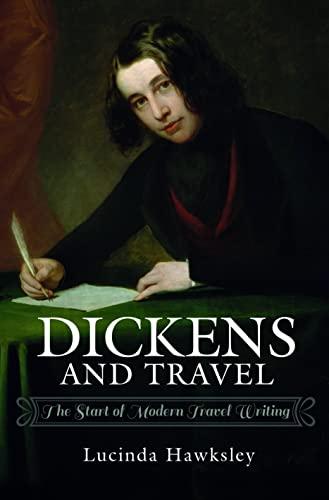
The Start of Modern Travel Writing
The hosts noted the title as the latest work by Lucinda Hawksley, emphasizing her direct lineage to Charles and Catherine Dickens, and used it as a springboard to discuss Dickens's early life and the financial hardships that shaped his upbringing. The book was presented as an informative addition to the conversation rather than a strong endorsement.
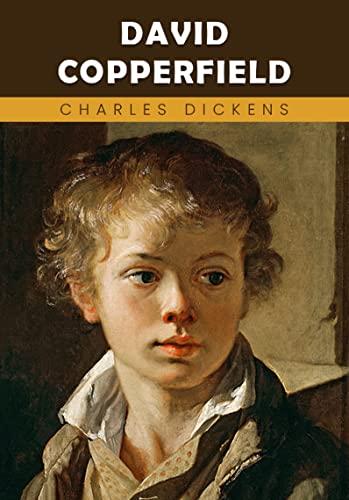
The episode noted that the book featured a character based on Dickens's father, pointing to the endearingly optimistic Mr. Micawber as an illustration of familial influence. The hosts highlighted this connection to illustrate how personal history shaped the novel's tone.
Note: The book recommendations on this page are discovered automatically from podcast transcripts, and may be incorrect or incomplete.
Podcast Name