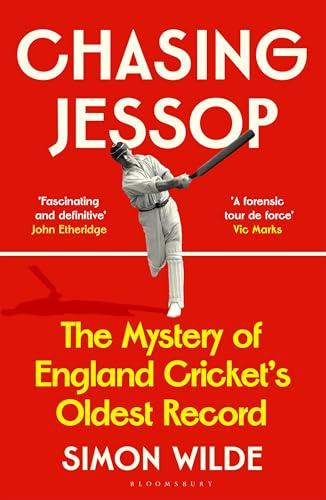
Chasing Jessop
Simon Wilde
Mentioned 7 months ago
The Ashes
History is full of the extraordinary. Each week, we'll transport you back in time to witness history's most incredible moments and remarkable people. New episodes Mondays, or a week early for Noiser+ subscribers. With Noiser+ you'll also get ad-free listening and exclusive content on shows...
Recently mentioned
Simon Wilde
Mentioned 7 months ago
The Ashes
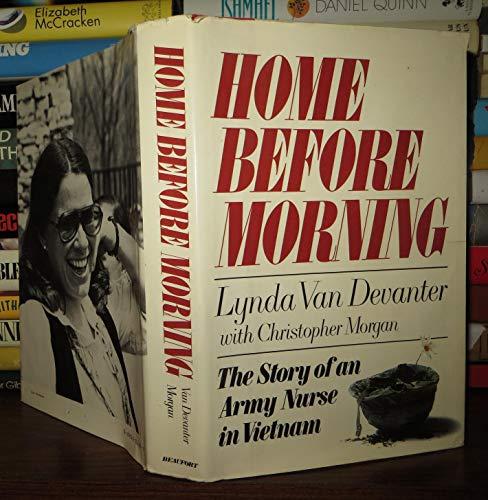
Christopher Van Devanter, Lynn; Morgan
Mentioned 1 year ago
The Vietnam War

Mark Lee Gardner
Mentioned 1 year ago
Sitting Bull
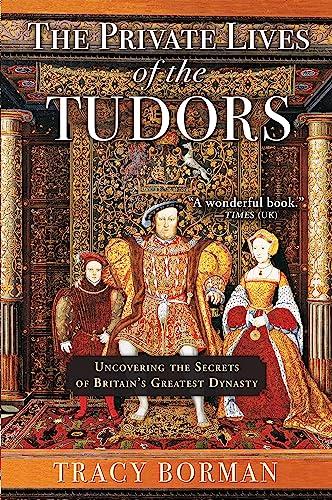
Tracy Borman
Mentioned 1 year ago
Mary Queen of Scots
Catherine Merridale
Mentioned 1 year ago
The Kremlin
John Sweeney
Mentioned 1 year ago
The Kremlin
Levi Roach
Mentioned 1 year ago
The Normans

Russell Alan Potter
Mentioned 1 year ago
The Northwest Passage
Bryan Ward-Perkins
Mentioned 1 year ago
Constantinople
David Goldblatt
Mentioned 1 year ago
The Modern Olympics
Homer
Mentioned 1 year ago
The Ancient Olympics
Homer
Mentioned 1 year ago
The Ancient Olympics
In the episode focusing on Charles Dickens, the host highlighted the title as a notable collection of his early pieces, noting its February 1836 publication and the enthusiastic response it received from both critics and readers. The discussion emphasized how the work was regarded as a refreshing addition to the literary scene of its time.
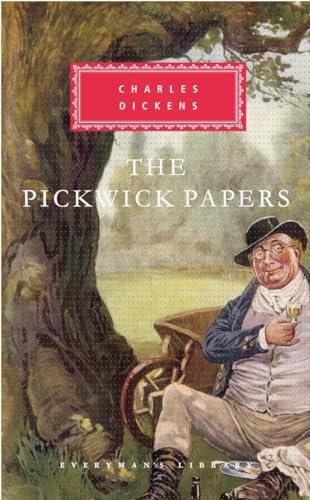
Introduction by Peter Washington (Everyman's Library Classics Series)
The episode highlighted the title as Dickens's new work at the time of his marriage, noting that it was released in twenty monthly installments which kept readers eagerly awaiting each chapter and established a serialization pattern he would follow in later novels. The discussion presented the book as an important early example of his narrative style rather than a direct recommendation.
It was discussed as Charles Dickens's new work at the time of his marriage to Catherine Hogarth, published in 20 monthly installments that kept readers waiting eagerly for each new chapter, setting a pattern for his future novels.
Published in 20 monthly installments it keeps readers waiting with baited breath for each new chapter creating a pattern that Dickens will repeat throughout his career.
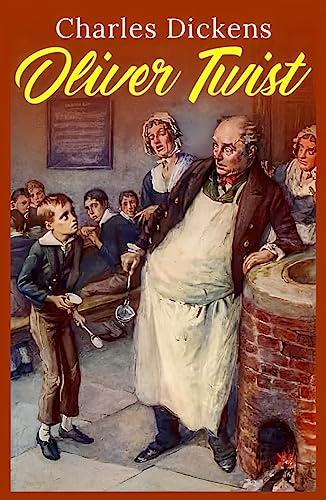
The Original 1838 Unabridged and Complete Edition (Charles Dickens Classics)
The episode highlighted the book as a notable post‑Pickwick novel that portrayed London’s underbelly with unprecedented realism, reflecting Dickens’s personal experience of poverty. The host praised its gritty subject matter and cited Queen Victoria’s own fascination with it, emphasizing its lasting impact and empathy for the poor.
It was discussed as one of the novels Charles Dickens wrote after 'The Pickwick Papers', which depicted London and its underbelly in a way never before seen, drawing on his own experiences of poverty.
It's very interesting to me how Dickens had such an empathy for the poor and he really understood what it was like to be poor he never ever had a chance to be a poor he never ever forgot what it was like to be a poor child and he wasn't one of those people that when he made it big he kind of forgot his roots he never really admitted to them very few people ever knew about his impoverished childhood but he always emphasized and he spent much of his adult life trying to improve the lot of those who were poor
Even Queen Victoria reads it against the advice of her Prime Minister Lord Milbourne who fears she isn't ready for its gritty subject matter In fact, she notes in her diary that she finds it riveting
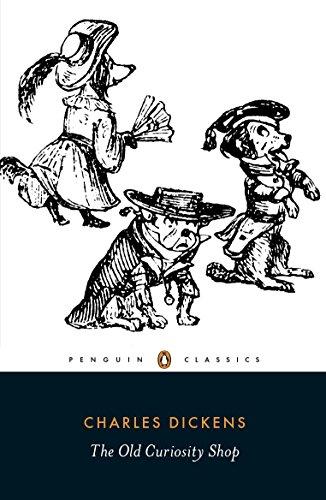
A Tale (Penguin Classics)
It was mentioned as another of Charles Dickens's novels, following 'Oliver Twist' and 'Nicholas Nickleby', with its beloved young heroine, Little Nell, which led to his international recognition as a superstar.
There have been worries that Nell is to be killed off in this new chapter and crowds have gathered at the dockside seeking news of her fate They stand, reading together and when they learn she is inde...
— Episode: Charles Dickens
It was mentioned as another of Charles Dickens's novels, following 'Oliver Twist' and 'Nicholas Nickleby', with its beloved young heroine, Little Nell, which led to his international recognition as a superstar.
There have been worries that Nell is to be killed off in this new chapter and crowds have gathered at the dockside seeking news of her fate They stand, reading together and when they learn she is indeed dead there is a bout of collective weeping Elsewhere, the Irish politician Daniel O'Connell is said to have flung the offending section of text from a train window shouting, he should not have killed her
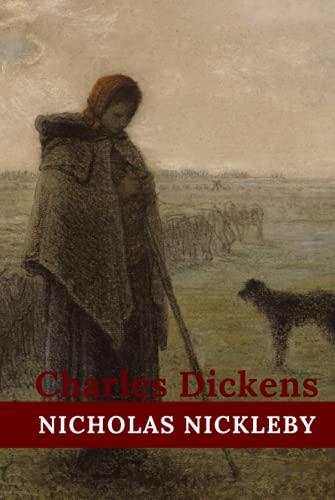
Wholesale, Retail, and for Exportation

It was discussed as a novel that, despite initial criticism, was a great success and helped to alleviate any concerns about Dickens's finances or his enduring popularity. It was also mentioned in relation to his first love, Maria Beadnell.
He said she would always be beautiful and then he met her and realised that it was true He wrote one of the cruelest lines I think when he said flora because he based flora finching in little Dorwich...
— Episode: Charles Dickens
It was discussed as a novel that, despite initial criticism, was a great success and helped to alleviate any concerns about Dickens's finances or his enduring popularity. It was also mentioned in relation to his first love, Maria Beadnell.
He said she would always be beautiful and then he met her and realised that it was true He wrote one of the cruelest lines I think when he said flora because he based flora finching in little Dorwich on her Flora who had once been a lily was now a peony which peonies are beautiful flowers but if you think of the shape of one that is what he was really saying
The Making and Legacy of the Great Charter by Dan Jones (4-Dec-2014) Hardcover
It was mentioned as a book written by the podcast host Dan Jones, who is a public historian, about the history and lasting impact of Magna Carta.
Dan Jones is host of the podcast This Is History, a dynasty to die for. A public historian is the author of Magna Carta, The Making and Legacy of the Great Charter and The Plantagenet...
— Episode: Magna Carta
It was mentioned as a book written by the podcast host Dan Jones, who is a public historian, about the history and lasting impact of Magna Carta.
Dan Jones is host of the podcast This Is History, a dynasty to die for. A public historian is the author of Magna Carta, The Making and Legacy of the Great Charter and The Plantagenets, The Kings Who Made England.
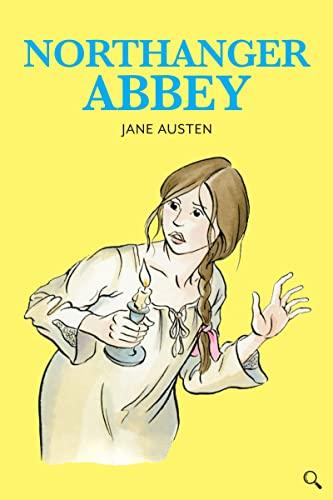
It was mentioned as being influenced by Anne Radcliffe's Gothic novels. The manuscript was sold to a local bookseller but not published promptly, and it was later republished after Austen's death.
And reading late 18th century Gothic author Anne Radcliffe may have influenced Austen's first finished manuscript Northanger Abbey.
— Episode: Jane Austen
It was mentioned as being influenced by Anne Radcliffe's Gothic novels. The manuscript was sold to a local bookseller but not published promptly, and it was later republished after Austen's death.
And reading late 18th century Gothic author Anne Radcliffe may have influenced Austen's first finished manuscript Northanger Abbey.
Back in Bath she finishes the book which will later become North Hanger Abbey.
Then acting as her agent her brother Henry sells the copyright to a local bookseller Benjamin Crosby in 1803 for 10 pounds.
Cassandra and Henry arrange the posthumous publication of both persuasion and Northanger Abbey with Austin now publicly named as their author.
It was mentioned as a novella written by Joseph Conrad after his experience in the Congo, depicting the darkness and horrors he witnessed, and deeply impacting him.
a place that so traumatized the author Joseph Conrad that he dubbed it the Heart Of Darkness.
— Episode: Congo River
It was mentioned as a novella written by Joseph Conrad after his experience in the Congo, depicting the darkness and horrors he witnessed, and deeply impacting him.
a place that so traumatized the author Joseph Conrad that he dubbed it the Heart Of Darkness.
1901 we have Joseph Conrad physically going out on the river as part of this industrial effort to gather rubber and it freaked him out what he saw it burned in his soul so deeply that he would write a novella nine years later part of darkness a very short novella so so powerful
The Boston Tea Party and the Making of America
Jane Austen's Last Novel Completed
It was a satirical novel about a health resort that she was unable to finish due to her declining health. It was one of her last works before her death.
The following January Austin sits down to write Sanditon a satire about a health resort but she will never finish it.
— Episode: Jane Austen
It was a satirical novel about a health resort that she was unable to finish due to her declining health. It was one of her last works before her death.
The following January Austin sits down to write Sanditon a satire about a health resort but she will never finish it.
It was mentioned as a book written by a professor who discussed Jane Austen's family, who were a creative bunch and delighted in wordplay. It was mentioned in the context of her family encouraging her writing.
Janine Barkas is a professor at the University of Texas and author of The Lost Books of Jane Austen.
— Episode: Jane Austen
It was mentioned as a book written by a professor who discussed Jane Austen's family, who were a creative bunch and delighted in wordplay. It was mentioned in the context of her family encouraging her writing.
Janine Barkas is a professor at the University of Texas and author of The Lost Books of Jane Austen.
Jane Austen came from a very creative family, a family that put on private theatricals, that wrote poems, that created word games for each other to solve.
History and Illusion in the Kremlin
It was described as having a lovely aesthetic beauty and was used for research by the author, who found it hard to believe she was in the middle of Moscow while inside due to the contrast in atmosphere.
Those limestone buildings, the Italian buildings are so lovely and the light is very beautiful.
— Episode: The Kremlin
It was described as having a lovely aesthetic beauty and was used for research by the author, who found it hard to believe she was in the middle of Moscow while inside due to the contrast in atmosphere.
Those limestone buildings, the Italian buildings are so lovely and the light is very beautiful.
And it's very hard to believe you are where you are because there is Moscow all around you with all the noise, all the horns, all the sort of diesel fumes, all the stress.
And inside you're in another world.
And it must be very difficult for somebody who works in the Kremlin to relate to what's going on outside and you are actually physically higher up because it's on a hill.
The author was inside the Kremlin walls for a meeting with Putin's PR man about the Alexander Litvinenko poisoning and noted how it felt like the centre of Russian power, and one might not be able to leave again.
You know I've been inside the Kremlin, I've been inside those great big red walls to actually have a one-to-one with Putin's PR man about the poisoning of Alexander Litvinenko.
— Episode: The Kremlin
The author was inside the Kremlin walls for a meeting with Putin's PR man about the Alexander Litvinenko poisoning and noted how it felt like the centre of Russian power, and one might not be able to leave again.
You know I've been inside the Kremlin, I've been inside those great big red walls to actually have a one-to-one with Putin's PR man about the poisoning of Alexander Litvinenko.
And when you walk through the doors, the great gates of the Kremlin, you get inside, you feel like you're in the centre of Russian power.
And the Kremlin is massive in terms of it's an enormous space. You know literally it takes you quite a while to drive round and you can't forget the fact that when you walk into those, through those gates, you can't be certain that you can leave them. You can't be certain that you'll be let out again alive.
Note: The book recommendations on this page are discovered automatically from podcast transcripts, and may be incorrect or incomplete.
Podcast Name