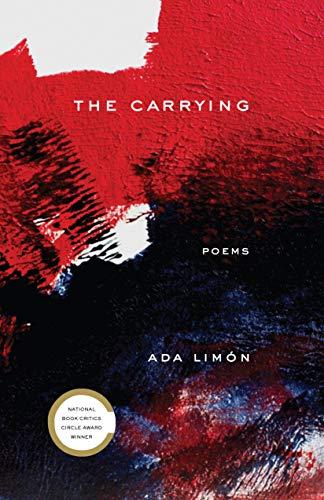
The Carrying
Ada Limón
Mentioned 2 years ago
“The End of Poetry” by Ada Limón
Wisdom to replenish and orient in a tender, tumultuous time to be alive. Spiritual inquiry, science, social healing, and poetry. Conversations to live by. With a 20-year archive featuring luminaries like Mary Oliver, Thich Nhat Hanh, and Desmond Tutu, each episode brings a new discovery about t...
Recently mentioned
Ada Limón
Mentioned 2 years ago
“The End of Poetry” by Ada Limón
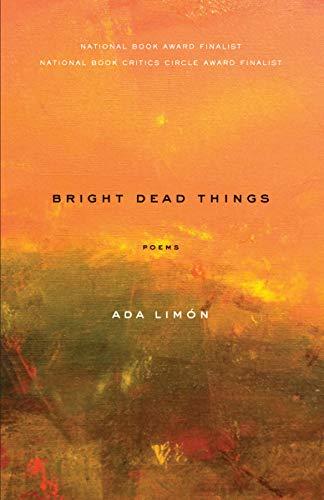
Ada Limón
Mentioned 2 years ago
“The End of Poetry” by Ada Limón
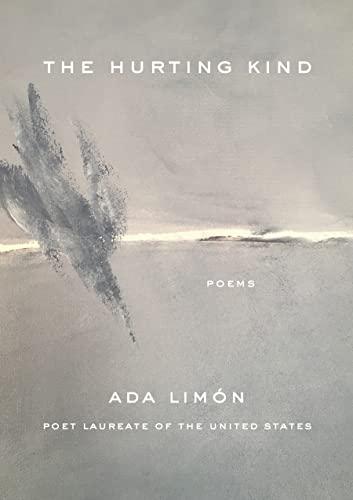
Ada Limón
Mentioned 2 years ago
“The End of Poetry” by Ada Limón
David Nicholls
Mentioned 2 years ago
“The End of Poetry” by Ada Limón
Atul Gawande
Mentioned 2 years ago
Atul Gawande — On Mortality and Meaning
Cixin Liu
Mentioned 2 years ago
Atul Gawande — On Mortality and Meaning
Royce Josiah
Mentioned 2 years ago
Atul Gawande — On Mortality and Meaning
Atul Gawande
Mentioned 2 years ago
Atul Gawande — On Mortality and Meaning
Elizabeth Alexander
Mentioned 2 years ago
“Ars Poetica #100: I Believe” by Elizabeth Alexander
Padmasambhava
Mentioned 2 years ago
Luis Alberto Urrea — On Our Belonging to Each Other
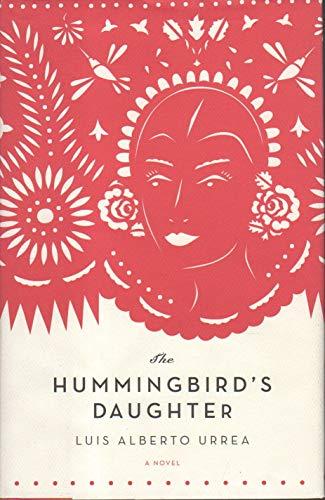
Luis Alberto Urrea
Mentioned 2 years ago
Luis Alberto Urrea — On Our Belonging to Each Other
Luis Alberto Urrea
Mentioned 2 years ago
Luis Alberto Urrea — On Our Belonging to Each Other
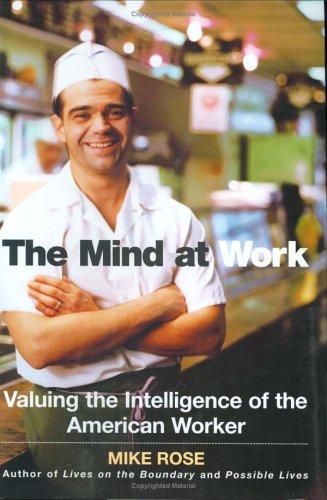
Valuing the Intelligence of the American Worker
This book explored the intelligence found in American workers' jobs, highlighting the cognitive skills involved in physical labor, challenging the notion that manual labor is less intelligent. Rose interviewed his mother, a waitress, to illustrate the complex cognitive processes required in seemingly simple jobs.
I grew up a witness to the intelligence of the waitress in motion, the reflective welder, the strategy of the guy on the assembly line. This then is something I know, the thought it takes to do physic...
— Episode: Mike Rose – The Deepest Meanings of Inte...
This book explored the intelligence found in American workers' jobs, highlighting the cognitive skills involved in physical labor, challenging the notion that manual labor is less intelligent. Rose interviewed his mother, a waitress, to illustrate the complex cognitive processes required in seemingly simple jobs.
I grew up a witness to the intelligence of the waitress in motion, the reflective welder, the strategy of the guy on the assembly line. This then is something I know, the thought it takes to do physical work.
I grew up a witness to the intelligence of the waitress in motion, the reflective welder, the strategy of the guy on the assembly line. This then is something I know, the thought it takes to do physical work.
Rose discussed the intelligence involved in physical work, using his mother's waitressing job as an example, highlighting the cognitive skills involved such as memory, attention, and problem-solving. He described how cognitive psychology principles could be applied to understand the complex mental processes of everyday work.
I grew up a witness to the intelligence of the waitress in motion, the reflective welder, the strategy of the guy on the assembly line. This then is something I know, the thought it takes to do physical work.
It was like this opportunity to bring together these different parts of my life. All of this training that I had gotten in the university and graduate school, all this training in cognitive psychology and thinking about how people think and all of that, it was this wonderful opportunity to take all that and bring it right back home, right?
So, for example, it helped me understand the complex memory work that waitresses, waiters in restaurants are able to do, especially in these big chains that have the rushes at breakfast and lunch where you see these folks just zooming through places.
And then all of the play of attention and vigilance, the constant kind of scanning of the workspace, right? Who needs what? What's going on? Somebody dropped a fork. Somebody else is waving. Oops, the manager's seating some new people over there. Oops, you know what? It's taken too long for that shrimp plate to come out. I better check on that.
And my mother would talk about the fact that when it was a lot slower, she found herself bored and probably less acute, you know, less on her game.
A Back to School Book for Kids
The book was discussed extensively throughout the podcast, focusing on solitude as a practice and its importance for well-being and relationships. Many quotes and passages from the book were shared.
Solitude is not to be found in a forest. It's not to be found in a deep state of formless meditation. It's to be found by learning to dwell in your body and your senses.
— Episode: Stephen Batchelor – Finding Ease in Alon...
The book was discussed extensively throughout the podcast, focusing on solitude as a practice and its importance for well-being and relationships. Many quotes and passages from the book were shared.
Solitude is not to be found in a forest. It's not to be found in a deep state of formless meditation. It's to be found by learning to dwell in your body and your senses.
Solitude, the practice of solitude is the practice of creating an inward autonomy within ourselves, an inward freedom from the power of these overwhelming thoughts and emotions.
The greatest thing in the world is to know how to be yourself.
We have a soul that can turn in on itself. It can keep itself company. It has the means to attack and defend, to give and receive.
It is never my custom to use words lightly. If 27 years in prison have done anything to us, it was to use the silence of solitude to make us understand how precious words are and how real speech is in its impact on the way people live and die.
The podcast host read it as her morning contemplative reading for a few months. The book discusses solitude as a practice and explores the distinction between loneliness and solitude.
I picked up, well I guess I got an advanced copy of The Art of Solitude from the publisher and I just, I really just, I was using it as my kind of morning contemplative reading for the last few months.
Solitude is not to be found in a forest. It's not to be found in a deep state of formless meditation. It's to be found by learning to dwell in your body and your senses.

And Other Helpful Recommendations on How to Become American
This was mentioned as his first book, to be published in early 2022.
His first book, Go Back to Where You Came From and Other Helpful Recommendations on How to Become American will be published in early 2022.
— Episode: Kate Bowler and Wajahat Ali — The Future...
This was mentioned as his first book, to be published in early 2022.
His first book, Go Back to Where You Came From and Other Helpful Recommendations on How to Become American will be published in early 2022.

This was mentioned as a celebrated play written by the interviewee.
He wrote the celebrated play, The Domestic Crusaders.
— Episode: Kate Bowler and Wajahat Ali — The Future...
This was mentioned as a celebrated play written by the interviewee.
He wrote the celebrated play, The Domestic Crusaders.
Discovering the Wisdom of the Forest
It was released recently and details the author's research on how trees communicate with each other, and the vital role of "mother trees" in forest ecosystems. The book uses the metaphor of mother trees to illustrate the interconnectedness of the forest and the importance of collaboration.
In forests, the same thing like the below ground world is like a perfect example of that. You know, these bacteria, the fungi, the archaea, they're the ones that are cycling the carbon, decomposing th...
— Episode: Suzanne Simard — Forests Are Wired For W...
It was released recently and details the author's research on how trees communicate with each other, and the vital role of "mother trees" in forest ecosystems. The book uses the metaphor of mother trees to illustrate the interconnectedness of the forest and the importance of collaboration.
In forests, the same thing like the below ground world is like a perfect example of that. You know, these bacteria, the fungi, the archaea, they're the ones that are cycling the carbon, decomposing things, cycling nitrogen, you know, filtering water, building soil, soil structure.
And the caregivers of the forest. They are. They're the fundamental foundation of the forest. They're the legacy of the forest that helps move it forward.
And so I felt like we've got to move this field forward or it's going to die. It's going to get mired in having to prove the same things over and over again.
So every tree is linked to every other tree, all the little trees, the seedlings, the saplings are all linked into the networks that these old trees had established through their lifetime.
And that these, the biggest oldest trees were the hubs of the network. They were the nuclei. They were what everything else was linked into and they were linked to each other, these other smaller nodes as well.
The book discusses Simard's research on the interconnectedness of trees in a forest ecosystem, challenging the traditional view of competition and highlighting the importance of collaboration and communication among trees through networks of fungi. The author details her experiments using radioactive isotopes to demonstrate carbon transfer between trees and the role of "mother trees" in nurturing younger trees.
In 1997, you published this NITRA article, which I, well, first of all, it was, it was rejected. And, and you went back and re-read it, rewrote it. And I get the feeling that you did not expect that they would put it on the cover. They put it on the cover, correct? Or they...
That was nature. Yeah, they put that on the front cover. Yeah. With a picture of these diverse forests with, you know, all these different tree species.
And so I labeled paper birch with radioactive carbon dioxide. That means I put a plastic bag over the shoot and I left that and I injected radioactive CO2 and I let the birch photosynthesize for a couple of hours, taking up that radioactive CO2.
And then I went over to the Douglas fir and I held the Geiger counter up to it. And there was a faint crackle. And that's when I knew, I knew that they were sharing carbon, which was mind blowing, right?
But man is part of nature. And his war against nature is inevitably a war against himself.
A Novel
It was mentioned as one of Abigail Washburn's solo albums. The podcast host described hearing one of her songs, and it was the sound that inspired her to pursue the banjo.
When I heard that sound, and Doc singing it, for me there was this moment where I just knew I was hearing, and I should preface this, that I was really immersed in China at this point. Yeah. And lovin...
— Episode: Béla Fleck and Abigail Washburn – Truth...
It was mentioned as one of Abigail Washburn's solo albums. The podcast host described hearing one of her songs, and it was the sound that inspired her to pursue the banjo.
When I heard that sound, and Doc singing it, for me there was this moment where I just knew I was hearing, and I should preface this, that I was really immersed in China at this point. Yeah. And loving Chinese culture and studying the language really intensely and been there a number of times. And when I heard Doc Watson, I felt like I heard the beauty of authentic American culture. And I wanted it so badly. I'd been looking for it so badly. And I finally heard it when I heard Doc, this high, lonesome, searching, struggling, suffering, hopeful voice singing this ancient melody and these old, old words.
The book was mentioned as part of Jason Reynolds' body of work exploring the experiences of young Black people in the U.S. It was noted for its contribution to a moment where young people's stories are dehumanized.
He also said, he talked about the, how you have brought forward the power of young black people's stories to be told in a moment in which their peers are dehumanized and dying in very public ways that...
— Episode: [Unedited] Jason Reynolds with Krista Ti...
The book was mentioned as part of Jason Reynolds' body of work exploring the experiences of young Black people in the U.S. It was noted for its contribution to a moment where young people's stories are dehumanized.
He also said, he talked about the, how you have brought forward the power of young black people's stories to be told in a moment in which their peers are dehumanized and dying in very public ways that you've been doing that for a while.
The Evolutionary Origins of a Good Society
This book delves into the evolutionary origins of a good society, focusing on inherent human capacities for goodness and cooperation. The podcast highlighted its exploration of forces for good often overlooked in discussions of human nature.
Nicholas Christakis is the author of several books, including Blueprint, The Evolutionary Origins of a Good Society.
— Episode: Nicholas Christakis — How We’re Wired fo...
This book delves into the evolutionary origins of a good society, focusing on inherent human capacities for goodness and cooperation. The podcast highlighted its exploration of forces for good often overlooked in discussions of human nature.
Nicholas Christakis is the author of several books, including Blueprint, The Evolutionary Origins of a Good Society.
I'm interested in forces that have been operating for much longer periods of time and that I would argue are more powerful and more fundamental.
And I think Steven argues correctly in my view that beginning around 300 years ago with the technological advances of the enlightenment and the philosophical moves in the enlightenment, committed to the equality of all human beings, sort of democratic governance and other ideas, which to be fair were unequally applied, right? Yes. But nevertheless, they started at a particular historical moment in Europe and spread around the world from there. So there was no doubt that these technological advances and these philosophical moves have contributed to an extraordinary improvement in human well-being. You know, we're safer, we live longer, we have greater freedom. It's unbelievable what's happened in the last 300 years. But my argument is that you don't need to just look at what I would regard as relatively recent historical and cultural forces to get an account of a good life. Deeper, more powerful, more ancient forces are at work, propelling a good society, endowing us with these wonderful capacities, which were always there, are still there, are unavoidable. And that if anything, these moves that we've made as a species in the last few hundred years are again, as I said, this sort of thin veneer over this more fundamental reality.
I remember actually when we met at a conference, just through the way you mentioned her, I could tell that this was a very loving relationship and that you also had a very adopted siblings growing up and you all have several older children and have adopted a foster son.
I was very affected, and I haven't been able to find the source for this, but when I was in medical school, so this was in the 1980s, I heard or read an interview, I think these Buddhist monks had come to MIT, and it was in the early days of MRI scanning, and they were scanning their brains or something, and looking at how the discipline of meditation changed the brains of these monks.
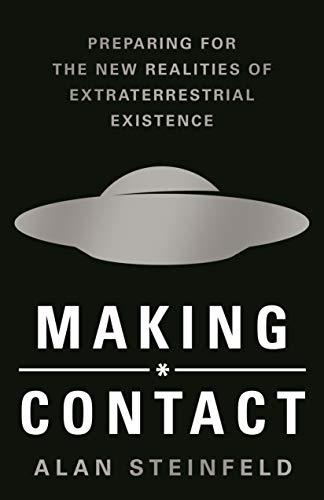
Preparing for the New Realities of Extraterrestrial Existence
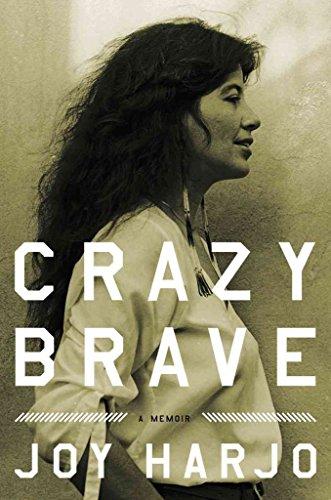
A Memoir
It was read slowly and deliberately, savored like poetry, due to the pandemic. It contains some dreams of the author, which were later cut from the book.
So I actually started reading Crazy Brave a few months ago during the pandemic. And I kind of read it like poetry.
— Episode: Joy Harjo — The Whole of Time
It was read slowly and deliberately, savored like poetry, due to the pandemic. It contains some dreams of the author, which were later cut from the book.
So I actually started reading Crazy Brave a few months ago during the pandemic. And I kind of read it like poetry.
Well, did I write that in Crazy? I actually put that in Crazy Brave.
You know, Crazy Brave went through several versions. I was 14 years late turning it into the publisher, which is not like me. I get my work in on time or I wouldn't have a career. And one of the versions was like twice as many pages as the final version. And that's because I cut all the dreams out.
This memoir was described as being read "like poetry", and it delves into the author's personal experiences, dreams, and visions, exploring her identity and spiritual connection to her heritage. The author mentioned cutting many dreams out of earlier versions of the manuscript.
I actually started reading Crazy Brave a few months ago during the pandemic.
You said, though I was reluctant to be born, I was attracted by the music. I had plans. I did not want to leave mystery, yet I was ever curious and ready to take my place in this story.
You know, Crazy Brave went through several versions. I was 14 years late turning it into the publisher, which is not like me.
And one of the versions was like twice as many, the page, twice as many pages as the final version. And that's because I cut all the dreams out.
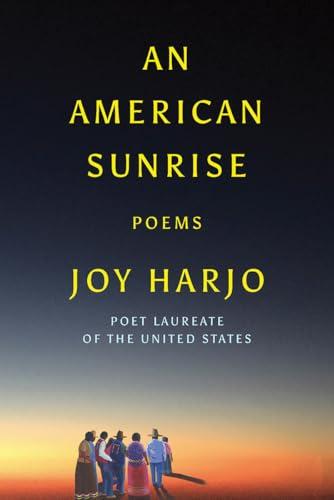
Poems
This poetry collection originated from a question the author asked herself while looking at trees. It explores the complexities of the author's heritage and the contradictions of homecoming after forced removal.
I had taken a job at University of Tennessee, Knoxville and wonderful people, one of the best, you know, I'm still in touch with them there. And I took it for a number of reasons, but one, it was down...
— Episode: Joy Harjo — The Whole of Time
This poetry collection originated from a question the author asked herself while looking at trees. It explores the complexities of the author's heritage and the contradictions of homecoming after forced removal.
I had taken a job at University of Tennessee, Knoxville and wonderful people, one of the best, you know, I'm still in touch with them there. And I took it for a number of reasons, but one, it was down in our homelands and my husband, who's the same tribal nation, same ceremonial ground, we wanted to go see all of these places our families came from. And we still knew names of places, stories. And I even found a house that belonged to an uncle of mine in Columbus, Georgia. And the book got started because we were preparing to leave, to go back to Tulsa. And I was thinking, what do I do with this? We came here looking for our people, looking for the stories for this place that our origin stories have their roots here. Our people's roots are here in these plants, like these kind of plants. And it's so beautiful. And I can see why sometimes people would say don't go back because it's devastating. It would break your heart. And there I'm thinking, we are so excited about going back to Tulsa, going what we call home. How can this be? What do I do with this? Because do with this with the heartbreak that happened when we were forcibly walked out of our homes at gunpoint, loaded up and marched across states, across the Mississippi to, you know, what do I do with this? What do I do with this contradiction? And I was looking out into the trees there one morning and my spirit says, well, you know, what did you learn here? And that's how the book came.
Yes, out of that question.
When Adolph Sax patented the first saxophone on June 23rd, 1846, the Creek Nation was in turmoil. The people had been moved west of the Mississippi River after the Creek Wars, which culminated in the Battle of Horseshoe Bend. We were putting our lives back together in new lands where we were promised we would be left alone. The saxophone made it across the big waters and was introduced in brass bands in the South. The music followed rivers into new towns, cities, all the way to our new lands. Not long after, in the early 1900s, my grandmother, Naomi Harcho, learned to play saxophone. I can feel her now when I play the instrument we both loved and love. The saxophone is so human. Its tendency is to be rowdy, edgy, talk too loud, bop into people, say the wrong words at the wrong time. But then you take a breath all the way from the center of the earth and blow. All that heartache is forgiven. All that love we humans carry makes a sweet, deep sound, and we fly a little.
This poetry collection explores the author's journey of self-discovery and reclamation of her Muscogee Creek heritage, particularly focusing on the experience of forced removal from ancestral lands and the lasting impact on her people. It was inspired by the author's time in Knoxville, Tennessee and her subsequent return to Tulsa.
I was looking out into the trees there one morning and my spirit says, well, you know, what did you learn here? And that's how the book came.
When Adolph Sax patented the first saxophone on June 23rd, 1846, the Creek Nation was in turmoil. The people had been moved west of the Mississippi River after the Creek Wars, which culminated in the Battle of Horseshoe Bend.
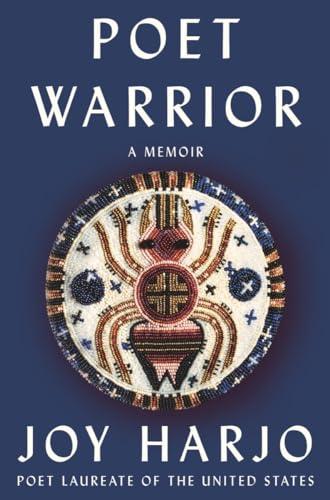
A Memoir
This is a new memoir by Joy Harjo, coming from a different perspective due to her age and looking back on her life. It's similar to Crazy Brave but different.
My new memoir, Poet Warrior, which will be out in September, it's similar but different. And it certainly is coming from a different point of view from being much older and looking ba...
— Episode: Joy Harjo — The Whole of Time
This is a new memoir by Joy Harjo, coming from a different perspective due to her age and looking back on her life. It's similar to Crazy Brave but different.
My new memoir, Poet Warrior, which will be out in September, it's similar but different. And it certainly is coming from a different point of view from being much older and looking back because when we come through that doorway, when we take on breath or inspire spirit, we take on the spirit here. And we're young. We are close to that door of knowing everything, you know, the door of eternity. And we're so creative and artists of any sort are always trying to replicate or be in that kind of space. And then when you get older, when you cross the 50 year mark, you know, you're starting to head out the other way. And then when you get to my age, you realize it opens up. It's not like maybe some people become children again, but what it does is you're once again closer to that kind of knowing and awareness.
This is a new memoir by Joy Harjo, mentioned as being similar but different to her previous memoir, "Crazy Brave". It offers a perspective from a more mature point of view, reflecting on the author's life and experiences with age.
I actually have the manuscript, the first pass proofs of Poet Warrior up.
So I was wondering, I might be able to read a little something from that.
And my new memoir, Poet Warrior, which will be out in September.
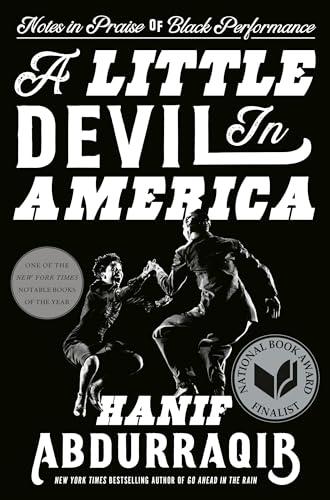
Notes in Praise of Black Performance
This book examines Black performance and performers, highlighting how white audiences often impose narrow expectations on them, reducing their complexity. The author discussed instances where Black performers' collapses on stage were misinterpreted by white audiences as part of the act, illustrating a larger pattern of misunderstanding and dehumanization.
So much of Little Devil's project is uplifting stories and narratives of Black performance and Black performers in ways that they were not afforded by white audiences because of the sometimes narrow l...
— Episode: Hanif Abdurraqib — Moments of Shared Wit...
This book examines Black performance and performers, highlighting how white audiences often impose narrow expectations on them, reducing their complexity. The author discussed instances where Black performers' collapses on stage were misinterpreted by white audiences as part of the act, illustrating a larger pattern of misunderstanding and dehumanization.
So much of Little Devil's project is uplifting stories and narratives of Black performance and Black performers in ways that they were not afforded by white audiences because of the sometimes narrow lens of a scope of a white audience that feels interested and invested in distilling a Black performer down to their needs, right?
The white audience's needs. And that's it. It's like here in the States, you know, when Stacey Abrams, among other organizers, did the work to flip Georgia to like a democratic state. All these white liberals were, to me, just dehumanizing Stacey Abrams because they didn't know how to engage.
So often these folks don't know how to engage with a Black person doing something that pleases them. And so they're just like, well, this person should be a superhero. This person should be give them a Marvel movie. This person should have a cape.
And it is perhaps too on the nose to say that that is a direct parallel in what I see when I witness white audiences reacting to Black performers, even Black labor now.
But I do think that it does hover around that. I mean, that's a, if anything, it's a bit of an extended metaphor that has extended through decades and lifetimes.
The book explores the relationship between performance and audience, particularly within Black performance, and examines how audiences often try to categorize performers based on their expectations rather than the performers' multifaceted identities. It highlights the complexities of Black performance and the ways in which white audiences sometimes fail to fully appreciate or understand it.
So much of Little Devil's project is uplifting stories and narratives of Black performance and Black performers in ways that they were not afforded by white audiences because of the sometimes narrow lens of the scope of a white audience that feels interested and invested in distilling a Black performer down to their needs, right? The white audience's needs and that's it.
But I do think that it does hover around that. I mean, that's a, if anything, it's a bit of an extended metaphor that has extended through decades and lifetimes. And, you know, this is a country that does not know how to, I think, adequately and effectively celebrate and uplift the fullness of a Black person's living, unless they have died or been killed or done something extraordinary that serves empire.
And you put that action of audience, that action of white audience under the spotlight so powerfully in this latest book.
the footage is raw, which means that there are cameramen scurrying around and all kinds of helpers moving in the background. But what that also means is that in its purest form, there is an audience of black people in direct conversation with what they're witnessing uninhibited and unafraid of anyone who might demand that they quiet themselves.
I'm such an audience watcher because I really love, be it for films or for concerts, I really love seeing how people are impacted and affected through a moment of shared witnessing.
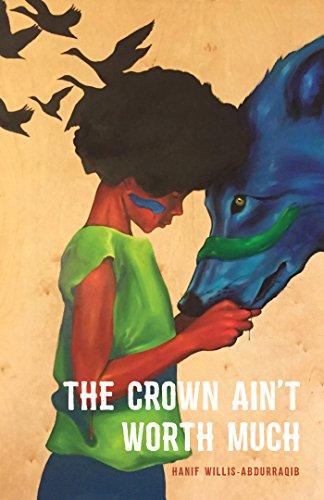
This book uses a funhouse mirror version of the author's life to explore themes of inherited grief, rhythm in the body, and the impact of a white predatory gaze. The author created distance from their own life to allow for artistic exploration and to protect themselves.
In The Crown Ain't Worth Much, there's a way within which you speak about rhythm in the body and the inherited grief, not just the particular grief.
— Episode: Hanif Abdurraqib — Moments of Shared Wit...
This book uses a funhouse mirror version of the author's life to explore themes of inherited grief, rhythm in the body, and the impact of a white predatory gaze. The author created distance from their own life to allow for artistic exploration and to protect themselves.
In The Crown Ain't Worth Much, there's a way within which you speak about rhythm in the body and the inherited grief, not just the particular grief.
Yeah. And, you know, The Crown is funny because, you know, that's like a concept book where the person in the book is like a funhouse mirror version of myself.
I mean, that's in some ways the way I always write, but even more so in that book where it's kind of like that character, so to speak, has very real trappings of my life.
Lost a parent and grew up in a neighborhood that is my neighborhood and had a barber that is very much my barber, all these things.
Some of both. I think safety is the primary reason, but also for artistic reasons or for reasons of, you know, I think that distance allowed me an ability to make and create and think about the speaker in a way that was detached from myself.
This book of poems was described as a 'concept book' where the speaker is a funhouse mirror version of the author. The author used distance from their own life to create the poems, enabling them to explore themes of loss, grief, and the author's personal experiences in a more detached manner.
When I was working on when I started working on my second book of poems, I really started wrestling with this idea that for me, writing one poem doesn't mean I'm done with the poem.
But really taking that to another level with Fortune for a Disaster in particular, because I would finish a poem and I'd still be curious or I'd still be thinking about the thing. And instead of saying, well, I'll just go back to it later, I got good at saying, why don't I just rewrite that poem and try a different angle, try to enter it from a different place?
this book is dedicated to the memory the memory of any moment you have loved or been in love and the people who lived in that moment with you for my mother for the changing city I once knew and the one I love still and then Tyler and Mike and the barber shop and in that place you say that you've given up on wanting to bring back the dead especially to a world that isn't any better than when they left it but I do long for the moments when they were alive
Note: The book recommendations on this page are discovered automatically from podcast transcripts, and may be incorrect or incomplete.
Podcast Name