Podcast
On Being with Krista Tippett
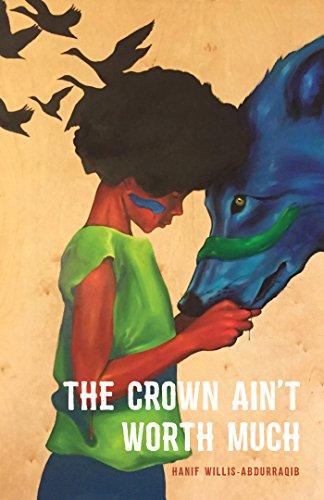
This book uses a funhouse mirror version of the author's life to explore themes of inherited grief, rhythm in the body, and the impact of a white predatory gaze. The author created distance from their own life to allow for artistic exploration and to protect themselves.
In The Crown Ain't Worth Much, there's a way within which you speak about rhythm in the body and the inherited grief, not just the particular grief.
— Episode: Hanif Abdurraqib — Moments of Shared Wit...
Episode: Hanif Abdurraqib — Moments of Shared Witnessing
This book uses a funhouse mirror version of the author's life to explore themes of inherited grief, rhythm in the body, and the impact of a white predatory gaze. The author created distance from their own life to allow for artistic exploration and to protect themselves.
In The Crown Ain't Worth Much, there's a way within which you speak about rhythm in the body and the inherited grief, not just the particular grief.
Yeah. And, you know, The Crown is funny because, you know, that's like a concept book where the person in the book is like a funhouse mirror version of myself.
I mean, that's in some ways the way I always write, but even more so in that book where it's kind of like that character, so to speak, has very real trappings of my life.
Lost a parent and grew up in a neighborhood that is my neighborhood and had a barber that is very much my barber, all these things.
Some of both. I think safety is the primary reason, but also for artistic reasons or for reasons of, you know, I think that distance allowed me an ability to make and create and think about the speaker in a way that was detached from myself.
Episode: [Unedited] Hanif Abdurraqib with Pádraig Ó Tuama
This book of poems was described as a 'concept book' where the speaker is a funhouse mirror version of the author. The author used distance from their own life to create the poems, enabling them to explore themes of loss, grief, and the author's personal experiences in a more detached manner.
When I was working on when I started working on my second book of poems, I really started wrestling with this idea that for me, writing one poem doesn't mean I'm done with the poem.
But really taking that to another level with Fortune for a Disaster in particular, because I would finish a poem and I'd still be curious or I'd still be thinking about the thing. And instead of saying, well, I'll just go back to it later, I got good at saying, why don't I just rewrite that poem and try a different angle, try to enter it from a different place?
this book is dedicated to the memory the memory of any moment you have loved or been in love and the people who lived in that moment with you for my mother for the changing city I once knew and the one I love still and then Tyler and Mike and the barber shop and in that place you say that you've given up on wanting to bring back the dead especially to a world that isn't any better than when they left it but I do long for the moments when they were alive