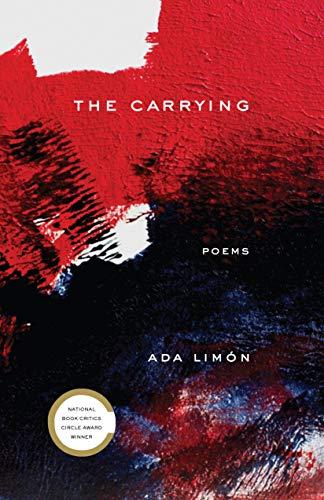
The Carrying
Ada Limón
Mentioned 2 years ago
“The End of Poetry” by Ada Limón
Wisdom to replenish and orient in a tender, tumultuous time to be alive. Spiritual inquiry, science, social healing, and poetry. Conversations to live by. With a 20-year archive featuring luminaries like Mary Oliver, Thich Nhat Hanh, and Desmond Tutu, each episode brings a new discovery about t...
Recently mentioned
Ada Limón
Mentioned 2 years ago
“The End of Poetry” by Ada Limón
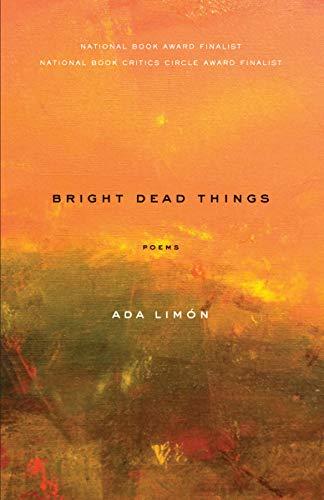
Ada Limón
Mentioned 2 years ago
“The End of Poetry” by Ada Limón
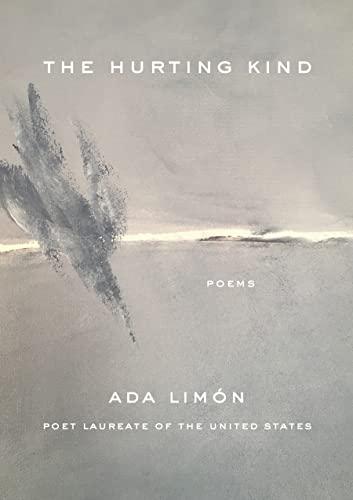
Ada Limón
Mentioned 2 years ago
“The End of Poetry” by Ada Limón
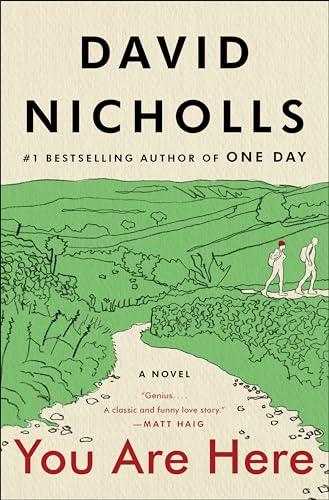
David Nicholls
Mentioned 2 years ago
“The End of Poetry” by Ada Limón
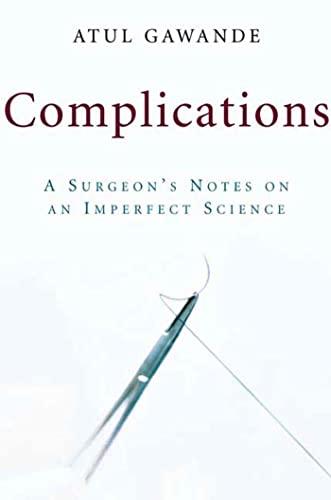
Atul Gawande
Mentioned 2 years ago
Atul Gawande — On Mortality and Meaning
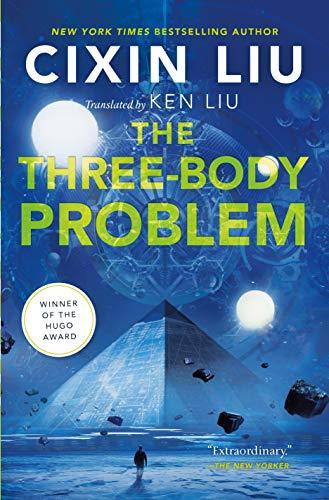
Cixin Liu
Mentioned 2 years ago
Atul Gawande — On Mortality and Meaning
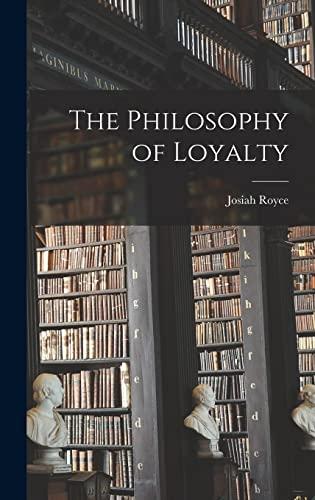
Royce Josiah
Mentioned 2 years ago
Atul Gawande — On Mortality and Meaning
Atul Gawande
Mentioned 2 years ago
Atul Gawande — On Mortality and Meaning
Elizabeth Alexander
Mentioned 2 years ago
“Ars Poetica #100: I Believe” by Elizabeth Alexander
Padmasambhava
Mentioned 2 years ago
Luis Alberto Urrea — On Our Belonging to Each Other
Luis Alberto Urrea
Mentioned 2 years ago
Luis Alberto Urrea — On Our Belonging to Each Other
Luis Alberto Urrea
Mentioned 2 years ago
Luis Alberto Urrea — On Our Belonging to Each Other
Nature and Joy
The book explores the bond between humans and nature, emphasizing the importance of joy and love for the natural world as a means of defense against its destruction. It was described as delighting and galvanizing the listener.
I have rarely discovered a book that so delighted and galvanized me at once.
— Episode: Michael McCarthy — Nature, Joy, and Huma...
The book explores the bond between humans and nature, emphasizing the importance of joy and love for the natural world as a means of defense against its destruction. It was described as delighting and galvanizing the listener.
I have rarely discovered a book that so delighted and galvanized me at once.
The sudden passionate happiness which the natural world can occasionally trigger in us, he writes, may well be the most serious business of all.
There is a legacy deep within us, a legacy of instinct, a legacy of inherited feelings, which may lie very deep in the tissues. It may lie underneath all the parts of civilization which we are so familiar with on a daily basis, but it has not gone. That we might have left the natural world, most of us, but the natural world has not left us.
the passionate happiness the natural world can trigger in us may be the most serious business of all
the subtitle of your book, The Moss Snowstorm is Nature and Joy
The author explores the reasons behind humanity's capacity to love the natural world and what this might mean in a time when nature is under threat. It weaves together personal anecdotes and broader reflections on our relationship with nature, particularly focusing on the joy derived from it.
I can't tell you how much I love your book and I'm telling everyone about it. It's as marked up as any book I have ever read. Including the Bible.
I feel like right at the beginning of your book, The Moss Snowstorm, Nature and Joy, you, I mean this is a book about our bond with the natural world.
when I was a skinny kid in short pants, butterflies entered my soul.
The sudden passionate happiness which the natural world can occasionally trigger in us may well be the most serious business of all
the natural world is where we first found our metaphors and similes and it is the resting place for our psyches.
A Vision for Change and the Future of America
This book contained the quote, 'The civil rights movement above all was a work of love,' which Krista Tippett discussed with John Lewis. The conversation explored the multifaceted and challenging nature of love as described in the book.
Here's a line from your book, Across That Bridge. The civil rights movement above all was a work of love. Yet even 50 years later it is rare to find anyone who would use the word love...
— Episode: Remembering John Lewis
This book contained the quote, 'The civil rights movement above all was a work of love,' which Krista Tippett discussed with John Lewis. The conversation explored the multifaceted and challenging nature of love as described in the book.
Here's a line from your book, Across That Bridge. The civil rights movement above all was a work of love. Yet even 50 years later it is rare to find anyone who would use the word love to describe what we did.
The interviewer read this book before the interview and referenced a quote from it regarding the civil rights movement being a work of love. It contains reflections on his life and vision for the future.
The civil rights movement above all was a work of love. Yet even 50 years later, it is rare to find anyone who would use the word love to describe what we did.
An Inoculation
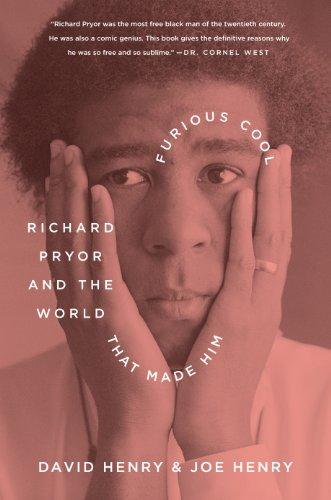
The book explored the topic of vaccination, and unexpectedly, Biss found herself discussing race and privilege within that context; she reflected on the risks of vaccination and the rewards of protecting others.
And I did, you know, but I, but I, it would be a lie to say it was easy.
— Episode: [Unedited] Eula Biss with Krista Tippett
The book explored the topic of vaccination, and unexpectedly, Biss found herself discussing race and privilege within that context; she reflected on the risks of vaccination and the rewards of protecting others.
And I did, you know, but I, but I, it would be a lie to say it was easy.
And I do think that to think about it, well, we do have to acknowledge that the risk is real, but also acknowledge that the rewards are real, and that the rewards are significant.
American Essays
Published in 2009, this book centers around themes of race, including Biss's experiences with her mixed-race cousin and her family's racially diverse background. The book prompted questions about her authority to speak on race, leading her to reflect on the racial complexities of American life.
That was actually 2009.
— Episode: [Unedited] Eula Biss with Krista Tippett
Published in 2009, this book centers around themes of race, including Biss's experiences with her mixed-race cousin and her family's racially diverse background. The book prompted questions about her authority to speak on race, leading her to reflect on the racial complexities of American life.
That was actually 2009.
I feel like an unknown quantity, my cousin remarked at some point during the year that we lived together. This is your mixed race cousin. She was referring to the algebraic term, the unknown quantity x, which must be solved for or defined by the numbers in the equation around it.
A Case for Reparations
Coates's work elegantly details a history of legalized housing discrimination, highlighting the intentional and legal mechanisms through which white people hoarded resources at the expense of others; Biss was inspired by Coates' work when researching the history of redlining and housing discrimination in her community.
And Ta-Nehisi Coates has written really beautifully about this.
— Episode: [Unedited] Eula Biss with Krista Tippett
Coates's work elegantly details a history of legalized housing discrimination, highlighting the intentional and legal mechanisms through which white people hoarded resources at the expense of others; Biss was inspired by Coates' work when researching the history of redlining and housing discrimination in her community.
And Ta-Nehisi Coates has written really beautifully about this.
I didn't tell him that slaves once accounted for more wealth than all the industry in this country combined or that slaves were as Ta-Nehisi Coates writes, the down payment on this country's independence, or that freed slaves became after the Civil War, this country's second mortgage.

This historical study examines the process by which the Irish gained acceptance as white in America, revealing a history of violence and complicity in racist actions as the price of this acceptance.
And another place that helped me understand what that price of the ticket really looked like was Noel Ignatiev's book, How the Irish Became White.
— Episode: [Unedited] Eula Biss with Krista Tippett
This historical study examines the process by which the Irish gained acceptance as white in America, revealing a history of violence and complicity in racist actions as the price of this acceptance.
And another place that helped me understand what that price of the ticket really looked like was Noel Ignatiev's book, How the Irish Became White.
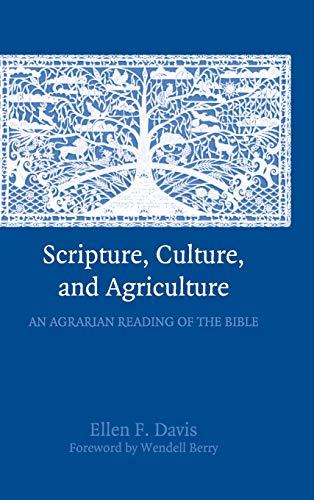
An Agrarian Reading of the Bible
It is a book that reframes how Western culture viewed the natural world, showing how the Bible's teachings about land can be interpreted through an agrarian lens, emphasizing care for the earth and a mindful approach to stewardship.
For centuries, the Western world read the Bible as a call to dominate the earth and subdue it.
— Episode: Wendell Berry and Ellen Davis — The Art...
It is a book that reframes how Western culture viewed the natural world, showing how the Bible's teachings about land can be interpreted through an agrarian lens, emphasizing care for the earth and a mindful approach to stewardship.
For centuries, the Western world read the Bible as a call to dominate the earth and subdue it.
The first chapter of Genesis is, as Ellen Davis puts it, a magisterially toned liturgical poem.
God blesses the man and woman created in God's image. And here's how the King James Version translated God's command to them. Be fruitful and multiply and replenish the earth and subdue it and have dominion over the fish of the sea and over the fowl of the air and over every living thing that moveth upon the earth.
The Hebrew word is a strong word and I render it exercise skilled mastery amongst the creatures because I think the notion of skilled mastery suggests something like a craft, an art of being human without taking away the fact that humans do from the perspective of almost all the biblical writers, not every single one but almost all, humans occupy a very special place of power and privilege and responsibility in the world.
I think that if one reads scripture carefully, one is continually challenged to rethink maybe everything that we take for granted.
It was described as beautiful and poetic as well as scholarly. The podcast included an agrarian reading of Genesis 1 and 2, drawing on the book's insights.
I just thought you and I might for a few minutes indulge in a little agrarian reading of Genesis 1, and look at Genesis 1, look at Genesis 2.
Believing God Is Good When Life Is Not
It was written about hope, and the author rescued the word "darkness" from pejoratives, associating it with possibility and communion.
I wrote a book called Hope in the Dark about hope where that darkness was the future you know that we the present then past our daylight then the future is night but in that darkness...
— Episode: Rebecca Solnit — Falling Together
It was written about hope, and the author rescued the word "darkness" from pejoratives, associating it with possibility and communion.
I wrote a book called Hope in the Dark about hope where that darkness was the future you know that we the present then past our daylight then the future is night but in that darkness is a kind of mysterious erotic enveloping sense of possibility and communion you know love is made in the dark and often is not and then to recognize that on unknowability as fertile as rich as the womb rather than the tomb in some sense
It was described as a book about hope where darkness was the future, and that in that darkness there was a sense of possibility and communion. The author discussed the book during an interview, noting its themes of hope and the importance of memory.
I had written a book about hope which is about exactly that kind of public life and larger loves.
And we're going to talk about hope a lot.
I wrote a book called Hope in the Dark about hope where that darkness was the future...But in that darkness is a kind of mysterious erotic enveloping sense of possibility and communion.
We're putting out a new edition of Hope in the Dark and I listened to his interview and he talked about how much hope is grounded in memory.
And there's a wonderful passage that's in the new version of Hope in the Dark coming up and about how the Russian revolution succeeded but not really in Russia.
It was described as a global bestseller and the science writing equivalent of moving from prose to poetry; it was astonishingly beautiful and the observations it made were immediately captivating and reflective for human beings, regardless of scientific knowledge.
He's the author of the global bestseller, Seven Brief Lessons on Physics. This tiny book, in my mind, is the science writing equivalent of moving from prose to poetry.
— Episode: Carlo Rovelli — All Reality Is Interacti...
It was described as a global bestseller and the science writing equivalent of moving from prose to poetry; it was astonishingly beautiful and the observations it made were immediately captivating and reflective for human beings, regardless of scientific knowledge.
He's the author of the global bestseller, Seven Brief Lessons on Physics. This tiny book, in my mind, is the science writing equivalent of moving from prose to poetry.
So I have to tell you, I read Seven Brief Lessons on Physics this past summer, and I just found it astonishingly beautiful.
here in the vanguard, beyond the borders of knowledge, science becomes even more beautiful, incandescent in the forge of nascent ideas of intuitions of attempts, of roads taken, then abandoned of enthusiasms, in the effort to imagine what has not yet been imagined.
Today I'm with the physicist Carlo Rovelli, who's written the slim, beautiful bestseller, Seven Brief Lessons on Physics.
Today we're exploring how all of reality is interaction with theoretical physicist Carlo Rovelli. His global bestseller, Seven Brief Lessons on Physics, was originally written as a series of articles for an Italian newspaper.
The speaker found this book astonishingly beautiful and described it as a scientific equivalent of turning prose into poetry, praising its use of sparse, powerful words to convey vast ideas.
I read Seven Brief Lessons on Physics this past summer and I just found it astonishingly beautiful.
I think it's remarkable.
You took these vast ideas and you condensed them into very sparse, powerful words.
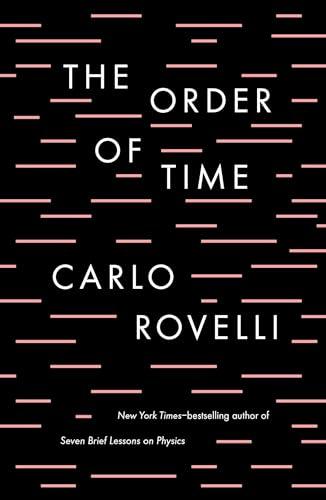
It is a new book that explores vast ideas beyond most people's imagining, such as quanta, grains of space, and time and the heat of black holes.
Now he has a new book called The Order of Time.
— Episode: Carlo Rovelli — All Reality Is Interacti...
It is a new book that explores vast ideas beyond most people's imagining, such as quanta, grains of space, and time and the heat of black holes.
Now he has a new book called The Order of Time.
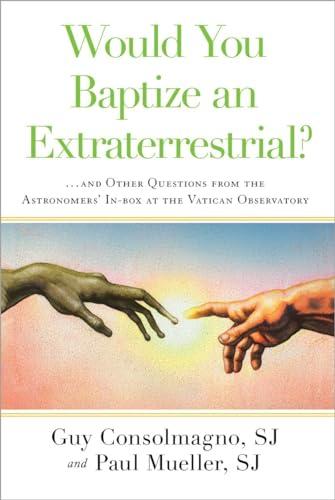
. . . and Other Questions from the Astronomers' In-box at the Vatican Observatory
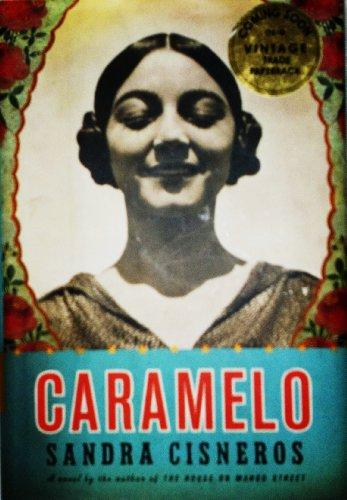
This novel was mentioned as one of Cisneros' beloved novels and was inspired by a mentor, Mrs. Camacho de Lpez, a walking Smithsonian of Mexican culture.
Her beloved novels include Caramello and the iconic The House on Mango Street.
— Episode: Sandra Cisneros — A House of Her Own
This novel was mentioned as one of Cisneros' beloved novels and was inspired by a mentor, Mrs. Camacho de Lpez, a walking Smithsonian of Mexican culture.
Her beloved novels include Caramello and the iconic The House on Mango Street.
She was the daughter of a reboso maker, a shawmaker. I borrowed that to create my character, the awful grandmother.
The author mentioned creating an "awful grandmother" character in this book, exaggerating aspects of her own grandmother's personality. The book's creation was partly inspired by stories shared by her mentor, Maria Luisa Camacho de Lopez.
In some ways, I'm finding that we're similar because now I'm friends with the nuns. I like them because they're radical women and I have a convent. They always were. I didn't know that when I was a kid but now I'm friends with a convent that's half a block from my house.
But more than anything, she had such a pride in being who she was. And her husband was a San Antonio of Mexican descent. And this couple, their house became a cultural center. Anybody who wanted to come in and learn something, it was a very tiny little house next to the HEB grocery store. And everybody would come in. And they were just people of great spirit.
Stories from My Life
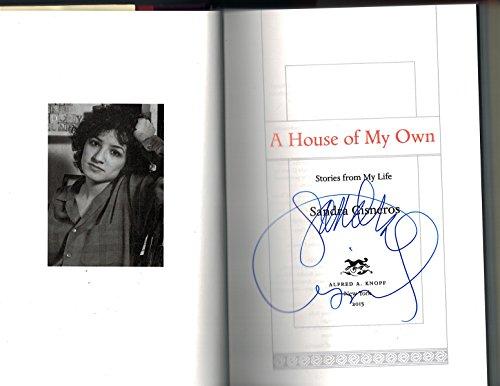
This memoir, discussed in relation to Virginia Woolf's work, explores the author's journey to establishing independence and a creative space. Cisneros reflected on her younger self and the sacrifices she made to support her writing.
Sandra Cisneros' books include The House on Mango Street, Caramello and a memoir, A House of My Own.
— Episode: Sandra Cisneros — A House of Her Own
This memoir, discussed in relation to Virginia Woolf's work, explores the author's journey to establishing independence and a creative space. Cisneros reflected on her younger self and the sacrifices she made to support her writing.
Sandra Cisneros' books include The House on Mango Street, Caramello and a memoir, A House of My Own.
So you wrote for the 25th anniversary edition, you wrote this house, A House of My Own essay, which appears in other places. But this is the kind of preface to the book.
I think a writer has to come into her voice. I think a woman has to come into her voice because everyone speaks for us.
And I just, well I had to make all those stupid mistakes otherwise I wouldn't be who I am now. But it breaks my heart when I look at her and I think how she was used and things that she allowed to happen to her.
This book of essays was discussed, particularly the essay reflecting on the author's younger self and the journey to finding her own voice. The author also discussed the significance of having one's own space and the importance of silence for creative work.
Well, if you've had to share a house with eight other people who make a lot of noise and make a big mess, you want your own house. You don't want to share it and you don't want to clean someone else's mess. So you know, it's different if it's your mess.
And also, if you're a writer, you need silence and most people can't understand that. Like my brother will come to visit and say, why don't you turn the radio on or why isn't this on? Why don't you turn the television on? You know, that has its time and its place.
I think a writer has to come into her voice. I think a woman has to come into her voice because everyone speaks for us. And we lose our public voice, and sometimes we don't even have a genuine private voice.
And for me, when I was asked to write the introduction, I was studying that photograph. And I knew- And you were studying your younger self. Yeah, I said that's not who I am now. But that's who I was when I was working on these pieces.
The Dispelling of Inwardness from the Modern Myth of the Self (The Terry Lectures Series)
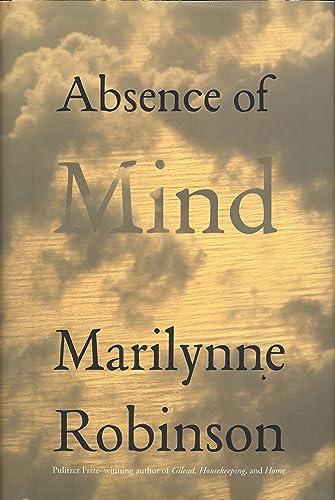
This book was the primary focus of the discussion. The conversation centered on Robinson's assertions regarding modern people's limited understanding of contemporary science and the antiquated cultural view of science's role.
The author of Housekeeping, Gilead, Home and Absence of Mind, which is the book that we're going to focus on especially tonight.
— Episode: [Unedited] Marilynne Robinson and Marcel...
This book was the primary focus of the discussion. The conversation centered on Robinson's assertions regarding modern people's limited understanding of contemporary science and the antiquated cultural view of science's role.
The author of Housekeeping, Gilead, Home and Absence of Mind, which is the book that we're going to focus on especially tonight.
In Absence of Mind, you're saying many things but I think to simplify one thing you're saying is that modern people don't understand how thrilling and rich science is now. And that culture has an antiquated view of science's place.
Note: The book recommendations on this page are discovered automatically from podcast transcripts, and may be incorrect or incomplete.
Podcast Name