
Podcast
On Being with Krista Tippett
This book delves into the evolutionary origins of a good society, focusing on inherent human capacities for goodness and cooperation. The podcast highlighted its exploration of forces for good often overlooked in discussions of human nature.
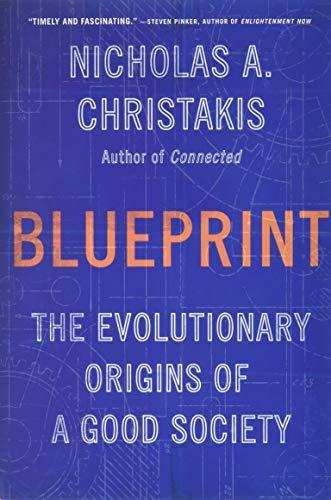
Nicholas Christakis is the author of several books, including Blueprint, The Evolutionary Origins of a Good Society.
— Episode: Nicholas Christakis — How We’re Wired fo...
Episode: Nicholas Christakis — How We’re Wired for Goodness
This book delves into the evolutionary origins of a good society, focusing on inherent human capacities for goodness and cooperation. The podcast highlighted its exploration of forces for good often overlooked in discussions of human nature.
Nicholas Christakis is the author of several books, including Blueprint, The Evolutionary Origins of a Good Society.
I'm interested in forces that have been operating for much longer periods of time and that I would argue are more powerful and more fundamental.
And I think Steven argues correctly in my view that beginning around 300 years ago with the technological advances of the enlightenment and the philosophical moves in the enlightenment, committed to the equality of all human beings, sort of democratic governance and other ideas, which to be fair were unequally applied, right? Yes. But nevertheless, they started at a particular historical moment in Europe and spread around the world from there. So there was no doubt that these technological advances and these philosophical moves have contributed to an extraordinary improvement in human well-being. You know, we're safer, we live longer, we have greater freedom. It's unbelievable what's happened in the last 300 years. But my argument is that you don't need to just look at what I would regard as relatively recent historical and cultural forces to get an account of a good life. Deeper, more powerful, more ancient forces are at work, propelling a good society, endowing us with these wonderful capacities, which were always there, are still there, are unavoidable. And that if anything, these moves that we've made as a species in the last few hundred years are again, as I said, this sort of thin veneer over this more fundamental reality.
I remember actually when we met at a conference, just through the way you mentioned her, I could tell that this was a very loving relationship and that you also had a very adopted siblings growing up and you all have several older children and have adopted a foster son.
I was very affected, and I haven't been able to find the source for this, but when I was in medical school, so this was in the 1980s, I heard or read an interview, I think these Buddhist monks had come to MIT, and it was in the early days of MRI scanning, and they were scanning their brains or something, and looking at how the discipline of meditation changed the brains of these monks.