The Backgammon Chronicles
Robert Wachtel
Mentioned 1 month ago
677. Can Backgammon Save Us from Ourselves?
Freakonomics co-author Stephen J. Dubner uncovers the hidden side of everything. Why is it safer to fly in an airplane than drive a car? How do we decide whom to marry? Why is the media so full of bad news? Also: things you never knew you wanted to know about wolves, bananas, pollution, search engin...
Recently mentioned
Robert Wachtel
Mentioned 1 month ago
677. Can Backgammon Save Us from Ourselves?
Robert H Wachtel
Mentioned 1 month ago
677. Can Backgammon Save Us from Ourselves?
Richard P. Feynman
Mentioned 1 month ago
The Vanishing Mr. Feynman (Update)
Gustave Flaubert
Mentioned 1 month ago
The Vanishing Mr. Feynman (Update)
Richard P. Feynman
Mentioned 1 month ago
The Vanishing Mr. Feynman (Update)
Bernard Suits
Mentioned 2 months ago
675. Has the New York Times Become a Games Company?
Katie Salen Tekinbas
Mentioned 2 months ago
675. Has the New York Times Become a Games Company?
Josef Albers
Mentioned 2 months ago
675. Has the New York Times Become a Games Company?
Adam Smith
Mentioned 2 months ago
674. How Does a Composer Feel After the World Premiere?
Glory M. Liu
Mentioned 2 months ago
674. How Does a Composer Feel After the World Premiere?
Charlotte Bronte
Mentioned 2 months ago
673. What Is Money?
Charles Dickens
Mentioned 2 months ago
673. What Is Money?
It was mentioned and discussed as a paper that examined the conditions under which suicide might be considered a rational choice, using an economic model and examining predictions regarding suicide rates.
He once wrote a paper called An Economic Theory of Suicide.
— Episode: The Suicide Paradox (Rebroadcast)
It was mentioned and discussed as a paper that examined the conditions under which suicide might be considered a rational choice, using an economic model and examining predictions regarding suicide rates.
He once wrote a paper called An Economic Theory of Suicide.

A Technical Guide for Non-Technical People (Maker Innovations Series)
It was a poem that inspired Dan Hammermesh to write his paper on the economics of suicide, as it presented a wealthy man committing suicide, challenging conventional notions of suicide as a problem of the poor.
Back in the spring of 1972, Dan Hammermesh was hunting around for a research topic. And he thought of a poem he'd read back in high school. The poem is Richard Corey by Edwin Arlington Robinson, writt...
— Episode: The Suicide Paradox (Rebroadcast)
It was a poem that inspired Dan Hammermesh to write his paper on the economics of suicide, as it presented a wealthy man committing suicide, challenging conventional notions of suicide as a problem of the poor.
Back in the spring of 1972, Dan Hammermesh was hunting around for a research topic. And he thought of a poem he'd read back in high school. The poem is Richard Corey by Edwin Arlington Robinson, written in the last decade of the 19th century.
Whenever Richard Corey went downtown, we people on the pavement looked at him. He was a gentleman from soul to -
And he was rich, yes, richer than the king and admirably schooled in every grace. In fine, we thought that he was everything to make us wish that we were in his place.
So on we worked and waited for the light and went without the meat and cursed the bread. And Richard Corey, one calm summer night, went home and put a bullet in his head. That's it. The last part.
![[The Black Swan: The Impact of the Highly Improbable] (By: Nassim Nicholas Taleb) [published: April, 2007] Cover](https://media.podcastbookpicks.com/books/15839.jpg)
The Impact of the Highly Improbable] (By
It was mentioned as one of the fascinating books written by Nassim Taleb, a philosopher and statistical engineer, focusing on unpredictable events with large consequences.
He's a philosopher of sorts and he writes fascinating books, most recently The Black Swan and Anti-Fragile.
— Episode: 137. Who Are the Most Successful Immigra...
It was mentioned as one of the fascinating books written by Nassim Taleb, a philosopher and statistical engineer, focusing on unpredictable events with large consequences.
He's a philosopher of sorts and he writes fascinating books, most recently The Black Swan and Anti-Fragile.
![[The Black Swan: The Impact of the Highly Improbable] (By: Nassim Nicholas Taleb) [published: April, 2007] Cover](https://media.podcastbookpicks.com/books/15843.jpg)
The Impact of the Highly Improbable] (By
It was mentioned in conjunction with the idea that it is more costly to miss a pattern than to imagine a pattern where none exists, specifically when it comes to randomness.
It's much more costly for someone to not detect a pattern That's Nassim Taleb, the author of Fooled by Randomness and the Black Swan
— Episode: The Folly of Prediction (Rebroadcast)
It was mentioned in conjunction with the idea that it is more costly to miss a pattern than to imagine a pattern where none exists, specifically when it comes to randomness.
It's much more costly for someone to not detect a pattern That's Nassim Taleb, the author of Fooled by Randomness and the Black Swan
50th Anniversary Critical Edition
It was discussed as a great novel about a heroin addict, Frankie Machine, which was later adapted into a film starring Frank Sinatra.
I think the greatest writer Chicago produces during these years is Nelson Ogren and his love story during this time with Simone de Beauvoir... Ogren wrote The Man with the Golden Arm....
— Episode: 136. The Middle of Everywhere
It was discussed as a great novel about a heroin addict, Frankie Machine, which was later adapted into a film starring Frank Sinatra.
I think the greatest writer Chicago produces during these years is Nelson Ogren and his love story during this time with Simone de Beauvoir... Ogren wrote The Man with the Golden Arm. It's a great novel about a heroin addict named Frankie Machine. Frank Sinatra played him in the film.
and Other Writings (Penguin Twentieth-Century Classics)
It was mentioned in the context of the Carnegie Conjecture which states that inheritance of wealth deadens talents, and that capitalism requires entrepreneurship without nepotism.
capitalism requires, and I quote, a more individualistic form of entrepreneurship and the absence of nepotism.
— Episode: The Church of "Scionology" (Rebroadcast)
It was mentioned in the context of the Carnegie Conjecture which states that inheritance of wealth deadens talents, and that capitalism requires entrepreneurship without nepotism.
capitalism requires, and I quote, a more individualistic form of entrepreneurship and the absence of nepotism.
It was mentioned as a book published by the U.S. Department of Defense, discussing examples of government officials behaving badly and was featured as a summer reading recommendation.
And he even was kind enough to give her some of his ammunition for her gun. That is from the Encyclopedia of Ethical Failure, published by the U.S. Department of Defense.
— Episode: 133. A Burger a Day
It was mentioned as a book published by the U.S. Department of Defense, discussing examples of government officials behaving badly and was featured as a summer reading recommendation.
And he even was kind enough to give her some of his ammunition for her gun. That is from the Encyclopedia of Ethical Failure, published by the U.S. Department of Defense.
Yep. Government officials behaving badly. That's next time on Freakonomics Radio.
It was mentioned as a biography of Jane Austen, which discussed her personal journal and letter writing, and her writing process for the novel Emma. It was written by her nephew.
OK, so this is from, well, it's called a memoir. I don't know this book, A Memoir of Jane Austen by... OK. Oh, it's by one of her nephews. Austen Lay? Is that a nephew?
— Episode: 132. Jane Austen, Game Theorist
It was mentioned as a biography of Jane Austen, which discussed her personal journal and letter writing, and her writing process for the novel Emma. It was written by her nephew.
OK, so this is from, well, it's called a memoir. I don't know this book, A Memoir of Jane Austen by... OK. Oh, it's by one of her nephews. Austen Lay? Is that a nephew?
Yeah, exactly right. He was like the first person who really kind of memorialized and kind of gave a biography of Austen.
So he kind of, he's like the beginning of Austenmania started with him.
OK, so he writes that before she began Emma that she wrote, I guess, in a journal or a letter, I am going to take a heroine, referring to Emma, whom no one but myself will much like.
The New Synthesis, Twenty-Fifth Anniversary Edition
The biologist E.O. Wilson's book was mentioned as a source of insight into the origins of human behavior, particularly with regards to spite and its possible absence in the animal kingdom.
In fact, most of the basic emotions that guide us from our animal and paleolithic early human past.
— Episode: 126. What Do Medieval Nuns and Bo Jackso...
The biologist E.O. Wilson's book was mentioned as a source of insight into the origins of human behavior, particularly with regards to spite and its possible absence in the animal kingdom.
In fact, most of the basic emotions that guide us from our animal and paleolithic early human past.
![Fist Stick Knife Gun: A Personal History of Violence in America [FIST STICK KNIFE GUN NONE/E] Cover](https://media.podcastbookpicks.com/books/15855.jpg)
A Personal History of Violence in America [FIST STICK KNIFE GUN NONE/E]
It was highly recommended, discussed in detail, and described as one of the best books on the topic of guns and violence.
I remember when you and I first started working together and we started talking about, we knew we were going to be writing about crime and therefore violence and therefore guns. And we started talking...
— Episode: 114. How to Think About Guns
It was highly recommended, discussed in detail, and described as one of the best books on the topic of guns and violence.
I remember when you and I first started working together and we started talking about, we knew we were going to be writing about crime and therefore violence and therefore guns. And we started talking about Jeff Canada's book, Fist Stick Knife Gun.
And what Canada talks about is that in the old days, in the 50s and 60s, when there weren't that many guns around, disputes would be resolved with fist fights or maybe with knives.
It's fantastically insightful.
The Art of Being Winston Churchill
It was about Winston Churchill's style and in the process of writing it, the author had to pay to quote Churchill's words, written or spoken, due to copyright law.
I contacted them to let them know that I was doing this book and was surprised to learn, they told me, that any word of Churchill's, either written or uttered in public, was copyrighted by the Churchi...
— Episode: 110. Who Owns the Words That Come Out of...
It was about Winston Churchill's style and in the process of writing it, the author had to pay to quote Churchill's words, written or spoken, due to copyright law.
I contacted them to let them know that I was doing this book and was surprised to learn, they told me, that any word of Churchill's, either written or uttered in public, was copyrighted by the Churchill estate and that I would have to pay a royalty to quote from Churchill.
I used 3872 words of Winston Churchill's in the book and that cost me 950 pounds, which is roughly 40 cents a word.
I cut every quote to the bone. I was shaving quotes. I was cutting part of the book.
So they did bring it down somewhat. I can tell you that my entire advance went to photo and word rights in the end.
I've never - unlike Churchill, I have a day job because I've never written entirely for money. I really wanted to write this book and I'm really glad to see it.
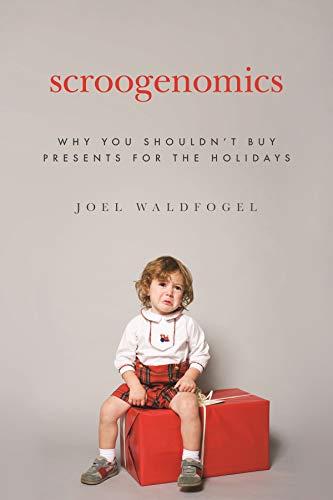
Why You Shouldn't Buy Presents for the Holidays
It was mentioned as a book written by Joel Waldfogel, an economist at the University of Minnesota, that details why people shouldn't buy presents for the holidays, particularly from an economic standpoint.
Joel Waldfogel, who is an economist at University of Minnesota, wrote this book you may know about called Scroogenomics, Why You Shouldn't Buy Presents for the Holidays.
— Episode: 105. Have a Very Homo Economicus Christm...
It was mentioned as a book written by Joel Waldfogel, an economist at the University of Minnesota, that details why people shouldn't buy presents for the holidays, particularly from an economic standpoint.
Joel Waldfogel, who is an economist at University of Minnesota, wrote this book you may know about called Scroogenomics, Why You Shouldn't Buy Presents for the Holidays.
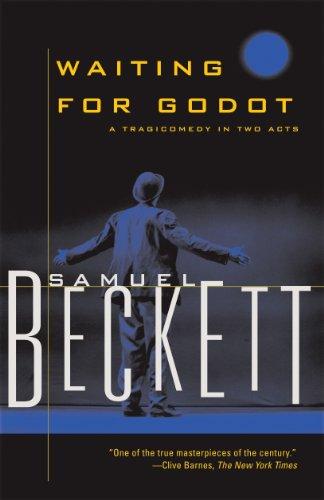
A Tragicomedy in Two Acts (Beckett, Samuel)
It was mentioned as a book that the professor had used in his class, and a student used a quote from the book to help him endure a difficult journey.
He recently hiked the Appalachian Trail, the entire Appalachian Trail. He wrote to me and said that on the last days when he was so sick of it and so, so weary, he kept repeating to himself, he had be...
— Episode: 104. The Things They Taught Me
It was mentioned as a book that the professor had used in his class, and a student used a quote from the book to help him endure a difficult journey.
He recently hiked the Appalachian Trail, the entire Appalachian Trail. He wrote to me and said that on the last days when he was so sick of it and so, so weary, he kept repeating to himself, he had been in a class where I used Samuel Beckett's writing, my favorite author. And he said, I kept repeating to myself from Beckett, 'I can't go on, I'll go on.'
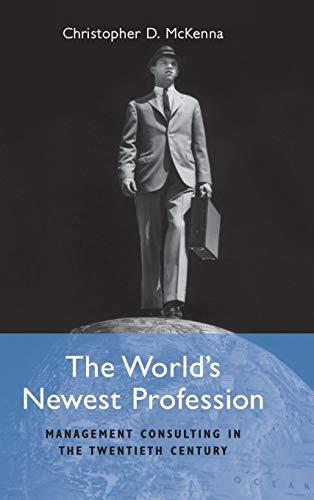
Management Consulting in the Twentieth Century (Cambridge Studies in the Emergence of Global Enterprise)
It was discussed as a book about management consulting in the 20th century and was referenced to explain the origins of the profession and the lack of regulation or standards within it.
The easiest way to think about this is really that they divide the roles into two parts.
— Episode: 102. I Consult, Therefore I Am
It was discussed as a book about management consulting in the 20th century and was referenced to explain the origins of the profession and the lack of regulation or standards within it.
The easiest way to think about this is really that they divide the roles into two parts.
And the first part is the one that we tend to understand the best and the one that we tend to think of in the most positive terms. And that is that they bring advice to a firm that doesn't otherwise have it.
Okay. So the second thing that they provide is legitimacy. And that's the one that seems a little bit strange. So you've made a decision or you think you might know what you'd like to do about entering those markets or making a new product. And instead of just going ahead and doing it, you hire the consultants to confirm what you already thought.
And those consultants come in and they say, yes, you're right. Or even imagine you're having a political fight within the firm and both sides hire consultants and in fact they both produce reports and somebody wins that fight with the help of that extra amount of knowledge from outside.
So there's a double entendre in The World's Newest Profession, right? Because your first thought should also be the world's oldest profession, which is prostitution, which I think we can all agree is not actually a profession.
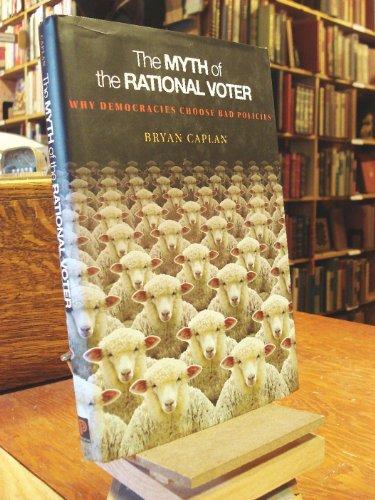
Why Democracies Choose Bad Policies
It was published before the 2008 presidential election and explores the reasons why democracies might choose bad policies, suggesting that voters are often uninformed or mistaken about how to advance their interests or the interests of society.
Before the last presidential election in 2008, when Barack Obama beat John McCain, Brian Kaplan published a book called The Myth of the Rational Voter. Why Democracies Choose Bad Poli...
— Episode: 98. We the Sheeple
It was published before the 2008 presidential election and explores the reasons why democracies might choose bad policies, suggesting that voters are often uninformed or mistaken about how to advance their interests or the interests of society.
Before the last presidential election in 2008, when Barack Obama beat John McCain, Brian Kaplan published a book called The Myth of the Rational Voter. Why Democracies Choose Bad Policies.
The background assumption is this. Everyone understands why dictatorships choose bad policies. There's some awful jerk at the head of a country running it like his own personal piggy bank. The puzzle, though, is why democracies would choose bad policies in a similar way.
So in other words, the question - everyone can agree that dictatorships choose bad policies. There's no big intellectual puzzle as to why that would happen.
But the idea that democracies, which are run by the people or by the people elected by the people, would also make mistakes is the puzzle.
The cover of Kaplan's book shows a flock of sheep standing up like humans in a sort of military formation, ready to follow someone. We the sheeple.
A Novel
It's a book about Sudhir Venkatesh's experience living in a poor neighborhood in Chicago and what he learned about the shadow economy there, it particularly focused on illegal activities within it.
He hung out more and more and more, and eventually he wrote a book about what he learned. It's called Off the Books, The Underground Economy of the Urban Poor.
— Episode: 90. How Deep Is the Shadow Economy?
It's a book about Sudhir Venkatesh's experience living in a poor neighborhood in Chicago and what he learned about the shadow economy there, it particularly focused on illegal activities within it.
He hung out more and more and more, and eventually he wrote a book about what he learned. It's called Off the Books, The Underground Economy of the Urban Poor.
It was Mary Roach's second book which focused on the afterlife and attempted to find evidence of the existence of a soul and what happens to it after death.
In her follow up book, Spook, she goes looking for evidence of the afterlife.
— Episode: 74. Soul Possession
It was Mary Roach's second book which focused on the afterlife and attempted to find evidence of the existence of a soul and what happens to it after death.
In her follow up book, Spook, she goes looking for evidence of the afterlife.
The Moral Limits of Markets
It was Michael Sandel's book that discusses the moral boundaries and limitations of markets. This was discussed in the context of whether a soul could be bought or sold.
Sandel's latest book is called What Money Can't Buy, The Moral Limits of Markets.
— Episode: 74. Soul Possession
It was Michael Sandel's book that discusses the moral boundaries and limitations of markets. This was discussed in the context of whether a soul could be bought or sold.
Sandel's latest book is called What Money Can't Buy, The Moral Limits of Markets.
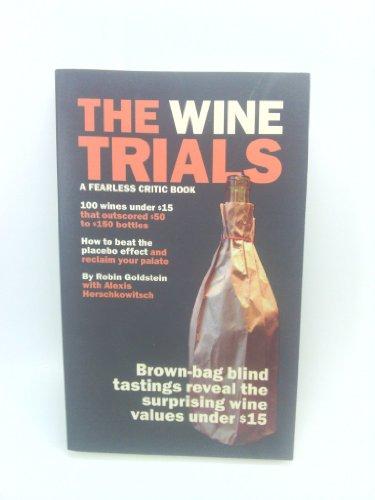
100 Everyday Wines Under $15 that Beat $50 to $150 Wines in Brown-Bag Blind Tastings
Robin Goldstein's book, 'The Wine Trials', explored the relationship between price, taste, and knowledge of wine, particularly through a cognitive and economic lens, and was mentioned as the main outlet for her writing on wine.
Basically, my book, The Wine Trials, has been my, I guess, principal outlet for writing about wine.
— Episode: 64. The Days of Wine and Mouses
Robin Goldstein's book, 'The Wine Trials', explored the relationship between price, taste, and knowledge of wine, particularly through a cognitive and economic lens, and was mentioned as the main outlet for her writing on wine.
Basically, my book, The Wine Trials, has been my, I guess, principal outlet for writing about wine.
Note: The book recommendations on this page are discovered automatically from podcast transcripts, and may be incorrect or incomplete.
Podcast Name