
The Backgammon Chronicles
Robert Wachtel
Mentioned 1 month ago
677. Can Backgammon Save Us from Ourselves?
Freakonomics co-author Stephen J. Dubner uncovers the hidden side of everything. Why is it safer to fly in an airplane than drive a car? How do we decide whom to marry? Why is the media so full of bad news? Also: things you never knew you wanted to know about wolves, bananas, pollution, search engin...
Recently mentioned
Robert Wachtel
Mentioned 1 month ago
677. Can Backgammon Save Us from Ourselves?
Robert H Wachtel
Mentioned 1 month ago
677. Can Backgammon Save Us from Ourselves?
Richard P. Feynman
Mentioned 1 month ago
The Vanishing Mr. Feynman (Update)
Gustave Flaubert
Mentioned 1 month ago
The Vanishing Mr. Feynman (Update)
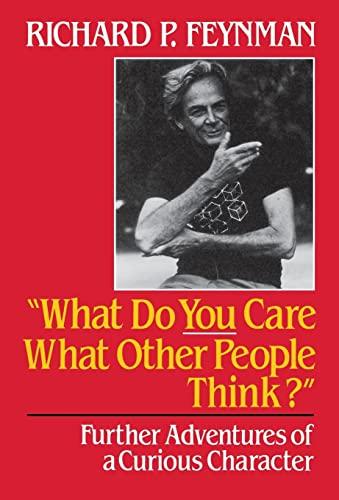
Richard P. Feynman
Mentioned 1 month ago
The Vanishing Mr. Feynman (Update)
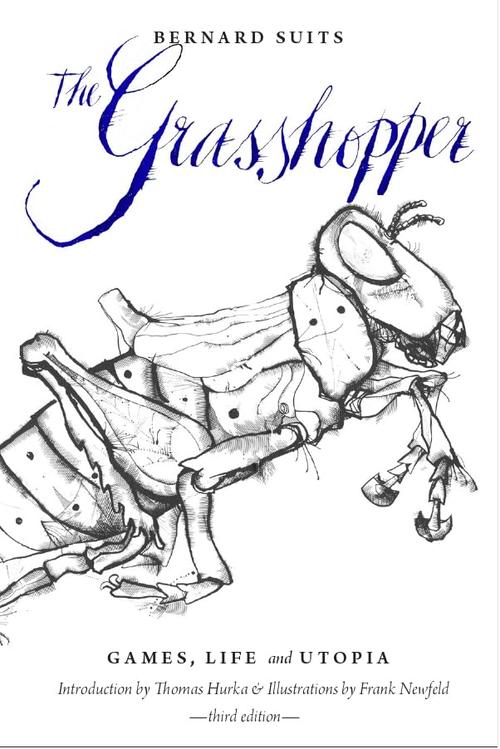
Bernard Suits
Mentioned 2 months ago
675. Has the New York Times Become a Games Company?
Katie Salen Tekinbas
Mentioned 2 months ago
675. Has the New York Times Become a Games Company?

Josef Albers
Mentioned 2 months ago
675. Has the New York Times Become a Games Company?
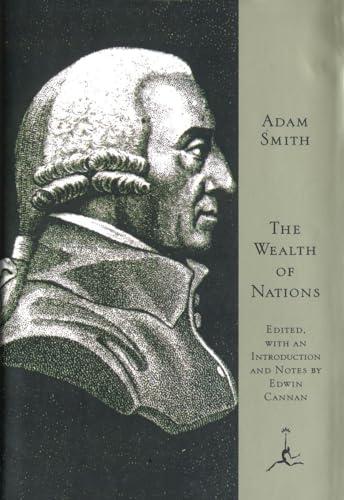
Adam Smith
Mentioned 2 months ago
674. How Does a Composer Feel After the World Premiere?
Glory M. Liu
Mentioned 2 months ago
674. How Does a Composer Feel After the World Premiere?
Charlotte Bronte
Mentioned 2 months ago
673. What Is Money?
Charles Dickens
Mentioned 2 months ago
673. What Is Money?
life unimagined
It was based on research that concluded most news organizations lean left, although not as dramatically as some critics might suspect, and that the American mind is being distorted by media bias.
He ultimately wrote up his findings in a book called Left Turn, how liberal media bias distorts the American mind.
— Episode: 62. How Biased Is Your Media?
It was based on research that concluded most news organizations lean left, although not as dramatically as some critics might suspect, and that the American mind is being distorted by media bias.
He ultimately wrote up his findings in a book called Left Turn, how liberal media bias distorts the American mind.
From Ghosts and Gods to Politics and Conspiracies---How We Construct Beliefs and Reinforce Them as Truths
Michael Shermer's book, 'The Believing Brain', was discussed in the context of how humans form beliefs, often relying on instinct and intuition rather than evidence, as related to conspiracy theories and skepticism.
His latest is called The Believing Brain.
— Episode: 50. The Truth Is Out There…Isn’t It?
Michael Shermer's book, 'The Believing Brain', was discussed in the context of how humans form beliefs, often relying on instinct and intuition rather than evidence, as related to conspiracy theories and skepticism.
His latest is called The Believing Brain.
Choosing Boys Over Girls, and the Consequences of a World Full of Men
It was discussed as a book about the consequences of the skewed male-to-female birth ratio in Asia, particularly in China, due to sex-selective abortions and other factors.
When Vistendahl first moved to China in 2004, she noticed something strange.
— Episode: 46. Misadventures in Baby-Making
It was discussed as a book about the consequences of the skewed male-to-female birth ratio in Asia, particularly in China, due to sex-selective abortions and other factors.
When Vistendahl first moved to China in 2004, she noticed something strange.
The fact that you could go to a school and look at a classroom in an elementary school usually, and you just see many more boys than girls.
I am a Beijing-based correspondent with Science Magazine and the author of Unnatural Selection, Choosing Boys Over Girls and the Consequences of a World Full of Men.
![[The Black Swan: The Impact of the Highly Improbable] (By: Nassim Nicholas Taleb) [published: April, 2007] Cover](https://media.podcastbookpicks.com/books/15888.jpg)
Interventions That Promote Healthy Development (Concise Guides on Trauma Care Series)
It was criticized for its harsh approach to parenting, advising against physical affection and suggesting a strict, emotionally distant approach.
He said, you know, you should never kiss your child, you should never hug your child, you should never put your child on your knee.
— Episode: 39. The Economist’s Guide to Parenting
It was criticized for its harsh approach to parenting, advising against physical affection and suggesting a strict, emotionally distant approach.
He said, you know, you should never kiss your child, you should never hug your child, you should never put your child on your knee.
You're honeycombing the child with weakness and he will not be able to face the harsh, cold, cruel world.
and Other Writings (Penguin Twentieth-Century Classics)

It was mentioned as the first book Steve Levitt ever read at the age of 12, and was about the hijinks of baseball players.
I can't remember the name of the book, but it was about the hijinks of baseball players.
— Episode: 35. Live From St. Paul!
It was mentioned as the first book Steve Levitt ever read at the age of 12, and was about the hijinks of baseball players.
I can't remember the name of the book, but it was about the hijinks of baseball players.
The Bronx Zoo. Oh, The Bronx Zoo. Yeah, that is the first book I ever read.
I gave him that book and said, maybe you'd like to read this book. And that was the first book he ever read.
The Corrected Text with Faulkner's Appendix (Modern Library 100 Best Novels)
It was mentioned as a classic in American Literature, and its mention triggered a question within the Quiz Bowl segment.
In a chapter entitled June 2nd, 1910, a Harvard student commits suicide. The narrator is Quentin Compson, who also appears as a character in Absalom, Absalom. Name this classic in American literature...
— Episode: 35. Live From St. Paul!
It was mentioned as a classic in American Literature, and its mention triggered a question within the Quiz Bowl segment.
In a chapter entitled June 2nd, 1910, a Harvard student commits suicide. The narrator is Quentin Compson, who also appears as a character in Absalom, Absalom. Name this classic in American literature penned by William Faulkner. And that is? That's me. The Crucible? No. Take it over here.
As I lay dying. That's The Sound and the Fury.
It was mentioned in a Quiz Bowl question as a novel in which a psychic is a character, alongside other mentions of psychics in various mediums.
Marvel Comics fans will know that Jean Grey is one. There's also one in Stephen King's novel The Dead Zone, possibly based on the real life Peter Herkos.
— Episode: 35. Live From St. Paul!
It was mentioned in a Quiz Bowl question as a novel in which a psychic is a character, alongside other mentions of psychics in various mediums.
Marvel Comics fans will know that Jean Grey is one. There's also one in Stephen King's novel The Dead Zone, possibly based on the real life Peter Herkos.
Bounty Hunter Code
It was the first book ever written on the subject of bounty hunting, and was later adapted into the movie Midnight Run.
I could not find any books, so it turned out I wrote the book Bounty Hunter, which turned out to be the first book ever written on the subject, unbeknowing as to me.
— Episode: 33. To Catch a Fugitive
It was the first book ever written on the subject of bounty hunting, and was later adapted into the movie Midnight Run.
I could not find any books, so it turned out I wrote the book Bounty Hunter, which turned out to be the first book ever written on the subject, unbeknowing as to me.
And then one step further, by 85, Robert De Niro's manager saw the book, bought it, and then made the movie Midnight Run based on the book.
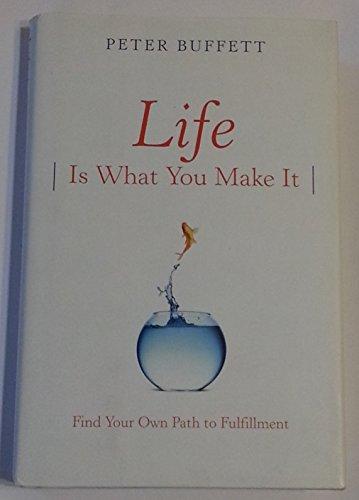
Find Your Own Path to Fulfillment
It was described as a type of investment guide but not related to the financial investments made by the author's father, Warren Buffett. It was instead about investing in oneself and developing human capital for personal fulfillment.
Peter Buffett has written a book called Life Is What You Make It. Find Your Own Path to Fulfillment.
— Episode: 32. Growing Up Buffett
It was described as a type of investment guide but not related to the financial investments made by the author's father, Warren Buffett. It was instead about investing in oneself and developing human capital for personal fulfillment.
Peter Buffett has written a book called Life Is What You Make It. Find Your Own Path to Fulfillment.
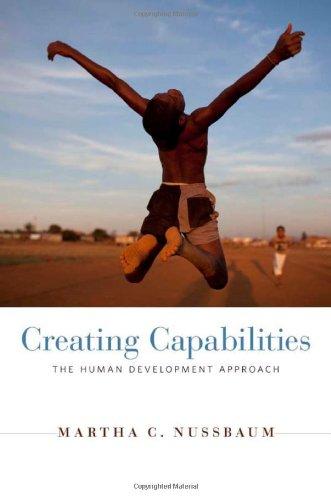
The Human Development Approach
It was discussed as a book about development economics with a philosophical critique of standard models. It was also described as proposing a 'capability approach' to measuring living standards.
And it's called Creating Capabilities, the Human Development Approach.
— Episode: 26. The Health of Nations
It was discussed as a book about development economics with a philosophical critique of standard models. It was also described as proposing a 'capability approach' to measuring living standards.
And it's called Creating Capabilities, the Human Development Approach.
Martha Nussbaum is the author of a new book called Creating Capabilities, The Human Development Approach.
It was mentioned in contrast to Nussbaum's work, particularly the 'Chicago School' of economics. It was discussed in terms of its emphasis on the market over government intervention in achieving goals.
Now, a lot of this doesn't sound too different really from what Milton Friedman has written, which would not be the first person that came to mind when I started to read your book.
— Episode: 26. The Health of Nations
It was mentioned in contrast to Nussbaum's work, particularly the 'Chicago School' of economics. It was discussed in terms of its emphasis on the market over government intervention in achieving goals.
Now, a lot of this doesn't sound too different really from what Milton Friedman has written, which would not be the first person that came to mind when I started to read your book.
Games, Life and Utopia
The host noted that Bernard Suits had published a sly and influential little book called The Grasshopper, which defined game playing as the voluntary attempt to overcome unnecessary obstacles.
In 1978, the Canadian philosopher Bernard Suits published a sly and influential little book called The Grasshopper, Games, Life, and Utopia, in which he defined game playing as the voluntary attempt t...
— Episode: 675. Has the New York Times Become a Gam...
The host noted that Bernard Suits had published a sly and influential little book called The Grasshopper, which defined game playing as the voluntary attempt to overcome unnecessary obstacles.
In 1978, the Canadian philosopher Bernard Suits published a sly and influential little book called The Grasshopper, Games, Life, and Utopia, in which he defined game playing as the voluntary attempt to overcome unnecessary obstacles.
Gary Parr recalled that an excellent 10thgrade English teacher introduced him to Shakespeare, specifically Julius Caesar, which shaped his understanding of the playwright.
I had an excellent teacher in 10th grade English that taught me Shakespeare, specifically Julius Caesar.
— Episode: Who Pays for “Messiah”?
Gary Parr recalled that an excellent 10thgrade English teacher introduced him to Shakespeare, specifically Julius Caesar, which shaped his understanding of the playwright.
I had an excellent teacher in 10th grade English that taught me Shakespeare, specifically Julius Caesar.
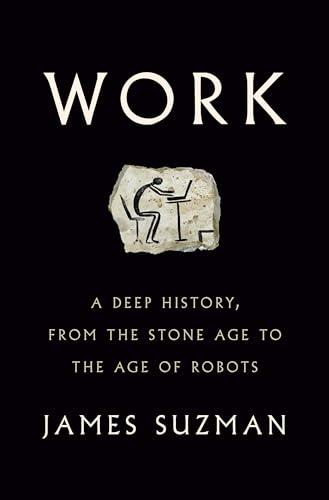
A Deep History, from the Stone Age to the Age of Robots
The book explores the history of work, starting from the Stone Age hunter-gatherer economies to the modern era of robots. It examines how work has changed and the different ways societies have organized their economies.
My sense of it based on recent and contemporary hunting and gathering societies was that life had a very high level of satisfaction.
— Episode: 605. What Do People Do All Day?
The book explores the history of work, starting from the Stone Age hunter-gatherer economies to the modern era of robots. It examines how work has changed and the different ways societies have organized their economies.
My sense of it based on recent and contemporary hunting and gathering societies was that life had a very high level of satisfaction.
When I read that, I was very struck by it. It's one of those big observations that for me, at least, is obvious in retrospect.
the principal purpose of my undertaking with this book is to, quote, loosen the claw-like grasp that scarcity economics has held over our lives and thereby diminish our corresponding and unsustainable preoccupation with economic growth.
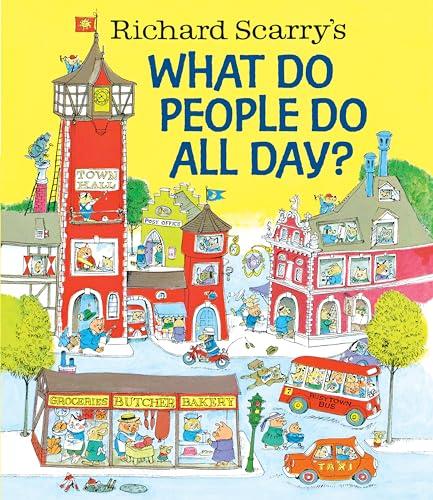
This children's book, published in 1968, portrays various workers in Busytown and their everyday jobs, such as a farmer, blacksmith, and tailor, introducing basic economic concepts to preschoolers. The book's illustrations and simple stories resonate with children and continue to be popular.
Everyone is a worker. Here we have Farmer Alfalfa, Blacksmith Fox, Stitches the Tailor, Grocer Cat, Mommy Cat and Huckle Cat.
— Episode: 605. What Do People Do All Day?
This children's book, published in 1968, portrays various workers in Busytown and their everyday jobs, such as a farmer, blacksmith, and tailor, introducing basic economic concepts to preschoolers. The book's illustrations and simple stories resonate with children and continue to be popular.
Everyone is a worker. Here we have Farmer Alfalfa, Blacksmith Fox, Stitches the Tailor, Grocer Cat, Mommy Cat and Huckle Cat.
The way people work today was unimaginable when my father did this book.
Win Customers and Talent By Harnessing Your Business For Good
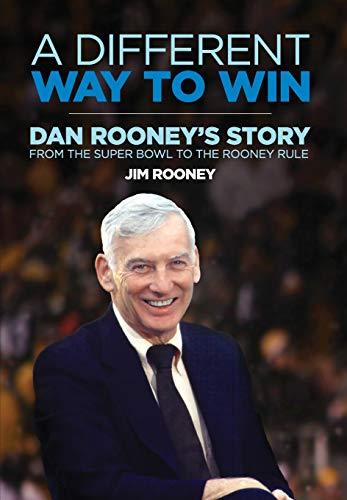
Dan Rooney's Story from the Super Bowl to the Rooney Rule
This book, written by Jim Rooney about his father Dan Rooney, was mentioned at the end of the episode. A forthcoming audio version was noted to include interviews with several key Pittsburgh Steelers figures and NFL Commissioners.
Jim Rooney wrote a book about his father, Dan, called A Different Way to Win.
— Episode: 604. Did the N.F.L. Solve Diversity Hiri...
This book, written by Jim Rooney about his father Dan Rooney, was mentioned at the end of the episode. A forthcoming audio version was noted to include interviews with several key Pittsburgh Steelers figures and NFL Commissioners.
Jim Rooney wrote a book about his father, Dan, called A Different Way to Win.
There is a forthcoming audio version of the book that includes interviews with several key Pittsburgh Steelers, as well as current NFL Commissioner Roger Goodell and former Commissioner Paul Tagliabue.
Note: The book recommendations on this page are discovered automatically from podcast transcripts, and may be incorrect or incomplete.
Podcast Name