
The Backgammon Chronicles
Robert Wachtel
Mentioned 1 month ago
677. Can Backgammon Save Us from Ourselves?
Freakonomics co-author Stephen J. Dubner uncovers the hidden side of everything. Why is it safer to fly in an airplane than drive a car? How do we decide whom to marry? Why is the media so full of bad news? Also: things you never knew you wanted to know about wolves, bananas, pollution, search engin...
Recently mentioned
Robert Wachtel
Mentioned 1 month ago
677. Can Backgammon Save Us from Ourselves?
Robert H Wachtel
Mentioned 1 month ago
677. Can Backgammon Save Us from Ourselves?
Richard P. Feynman
Mentioned 1 month ago
The Vanishing Mr. Feynman (Update)
Gustave Flaubert
Mentioned 1 month ago
The Vanishing Mr. Feynman (Update)
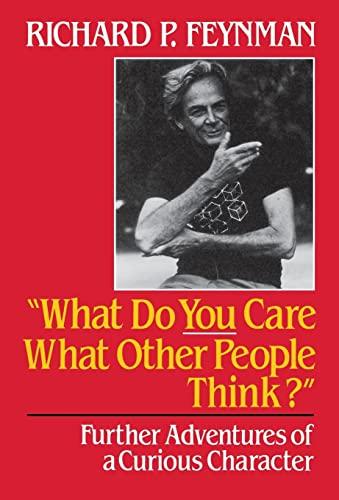
Richard P. Feynman
Mentioned 1 month ago
The Vanishing Mr. Feynman (Update)
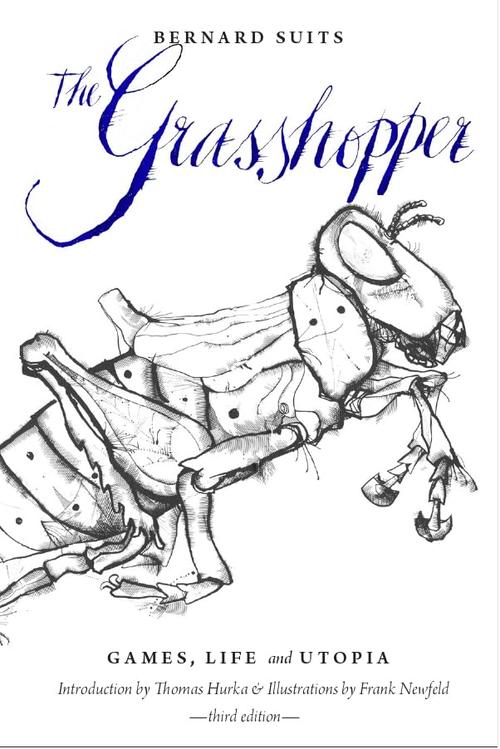
Bernard Suits
Mentioned 2 months ago
675. Has the New York Times Become a Games Company?
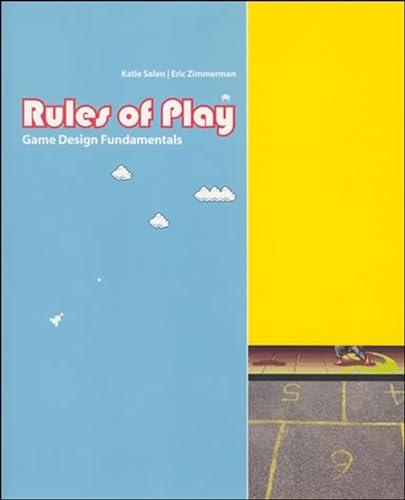
Katie Salen Tekinbas
Mentioned 2 months ago
675. Has the New York Times Become a Games Company?

Josef Albers
Mentioned 2 months ago
675. Has the New York Times Become a Games Company?
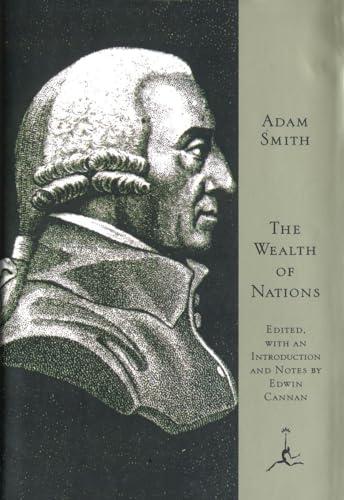
Adam Smith
Mentioned 2 months ago
674. How Does a Composer Feel After the World Premiere?
Glory M. Liu
Mentioned 2 months ago
674. How Does a Composer Feel After the World Premiere?
Charlotte Bronte
Mentioned 2 months ago
673. What Is Money?
Charles Dickens
Mentioned 2 months ago
673. What Is Money?
It was mentioned as one of Kevin Kelly's books, which focus on the consequences and impact of technology on our lives, in relation to his role as a technology writer.
His books include What Technology Wants and New Rules for the New Economy.
— Episode: 193. Someone Else’s Acid Trip
It was mentioned as one of Kevin Kelly's books, which focus on the consequences and impact of technology on our lives, in relation to his role as a technology writer.
His books include What Technology Wants and New Rules for the New Economy.
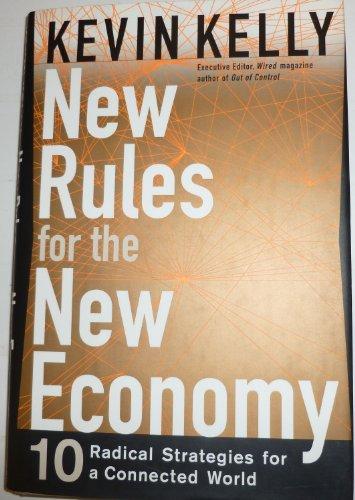
10 Radical Strategies for a Connected World
It was mentioned along with 'What Technology Wants' as one of Kevin Kelly's books, providing insight into his focus on technology's implications.
His books include What Technology Wants and New Rules for the New Economy.
— Episode: 193. Someone Else’s Acid Trip
It was mentioned along with 'What Technology Wants' as one of Kevin Kelly's books, providing insight into his focus on technology's implications.
His books include What Technology Wants and New Rules for the New Economy.
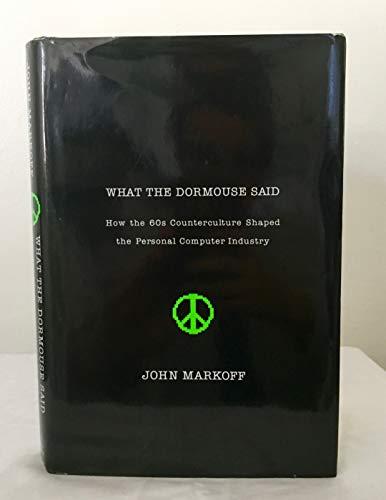
How the 60s Counterculture Shaped the Personal Computer
It was mentioned as a book that described the hippie origins of the personal computer and how people like Doug Engelbart, Steve Jobs, and Stuart Brand were involved in the early stages of the digital revolution.
Actually, it was told by the New York Times technology writer John Markoff, who wrote a kind of overlooked book called What the Door Mouse Said, which was telling the hippie origins of the personal co...
— Episode: 193. Someone Else’s Acid Trip
It was mentioned as a book that described the hippie origins of the personal computer and how people like Doug Engelbart, Steve Jobs, and Stuart Brand were involved in the early stages of the digital revolution.
Actually, it was told by the New York Times technology writer John Markoff, who wrote a kind of overlooked book called What the Door Mouse Said, which was telling the hippie origins of the personal computer and how basically from Doug Engelbert and Steve Jobs and Stuart Brand, they were all dropping acid.
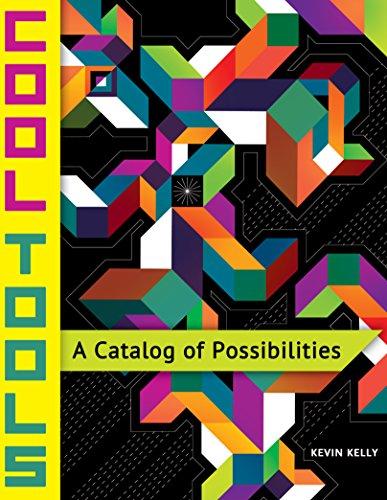
A Catalog of Possibilities
It was described as a book containing 1500 recommendations for tools, both physical and digital, and was highlighted for its ability to spark connections between diverse tools and provide a broader perspective.
And his coolest book yet. It's called Cool Tools.
— Episode: 193. Someone Else’s Acid Trip
It was described as a book containing 1500 recommendations for tools, both physical and digital, and was highlighted for its ability to spark connections between diverse tools and provide a broader perspective.
And his coolest book yet. It's called Cool Tools.
So Cool Tools is a book on paper and it's only available on paper that's a little bit oversized. It's a lot oversized. Come on. If you open it up, it's kind of like a small towel the size of a dish towel. And it is about 1,500 recommendations for Cool Tools and tool is in the broadest sense of something that's useful to you.
It's more important that you know that these exist rather than that you purchase them because a tool is really just an opportunity with a handle.
It's just a way of thinking about something differently that we make real and so you can use this as a resource of getting ideas about what is possible to do.
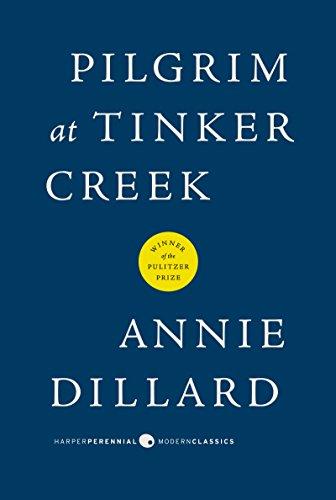
It was mentioned as a book that inspired Kevin Kelly to write and filled him with excitement, highlighting Annie Dillard's genius and his personal connection to her work.
Favorite author is Andy Dillard and her book Pilgrim at Tinker Creek was something that just made me want to write and I can read that any time of day or night and just be filled with...
— Episode: 193. Someone Else’s Acid Trip
It was mentioned as a book that inspired Kevin Kelly to write and filled him with excitement, highlighting Annie Dillard's genius and his personal connection to her work.
Favorite author is Andy Dillard and her book Pilgrim at Tinker Creek was something that just made me want to write and I can read that any time of day or night and just be filled with excitement and I read anything by her and to me she's just genius.
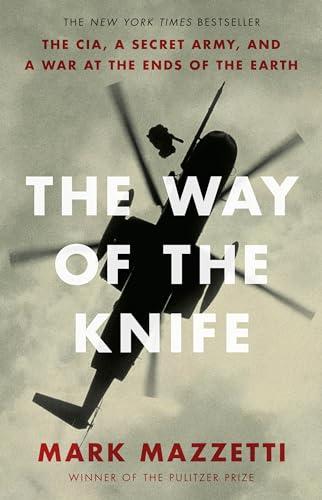
The CIA, a Secret Army, and a War at the Ends of the Earth
It was discussed as a book about the CIA's covert operations in places like Pakistan, Yemen, and Somalia, specifically focusing on the 'shadow war' following the September 11th attacks.
The book is called The Way of the Knife. The subtitle is The CIA, A Secret Army and a War at the Ends of the Earth.
— Episode: 191. Why Doesn’t Everyone Get the Flu Va...
It was discussed as a book about the CIA's covert operations in places like Pakistan, Yemen, and Somalia, specifically focusing on the 'shadow war' following the September 11th attacks.
The book is called The Way of the Knife. The subtitle is The CIA, A Secret Army and a War at the Ends of the Earth.
It's about the what I call the shadow war, the war outside of the declared war zone since the September 11th attacks in places like Pakistan and Yemen and Somalia and how the CIA has taken on a central role in this secret war the United States has been waging.
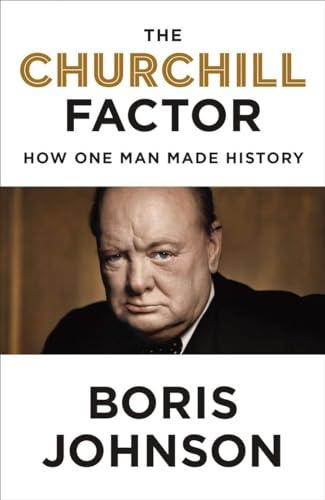
How One Man Made History
It was described as a very good book that details the life of Winston Churchill. It was mentioned that it was recently published in the US and discussed his many accomplishments.
It's called The Churchill Factor, How One Man Made History.
— Episode: 187. The Man Who Would Be Everything
It was described as a very good book that details the life of Winston Churchill. It was mentioned that it was recently published in the US and discussed his many accomplishments.
It's called The Churchill Factor, How One Man Made History.
It's doing very well in the UK. And I'm sure it will do well here. It's a very good book.
He's a fascinating character. Your interpretation of him is interesting on every page.
The Churchill Factor is the book. It's really extraordinary and I encourage anyone within the sound of my voice to read it.
I think the mission of the book is wonderful to remind generations now who Churchill was, what he did for those who are starting to forget or those who didn't know.
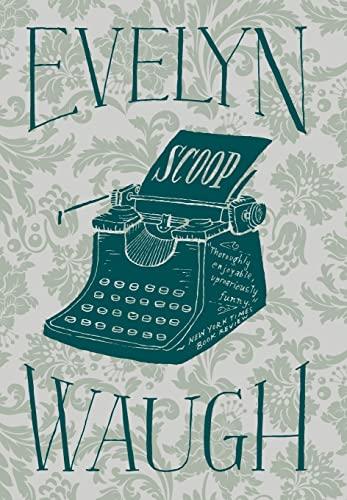
It was mentioned as a book that was always enjoyable to read and laugh at, and was said to be the book that inspired Boris Johnson to become a journalist.
But the book I can always read with pleasure and find a laugh on every page is Scoop by Evelyn Waugh.
— Episode: 187. The Man Who Would Be Everything
It was mentioned as a book that was always enjoyable to read and laugh at, and was said to be the book that inspired Boris Johnson to become a journalist.
But the book I can always read with pleasure and find a laugh on every page is Scoop by Evelyn Waugh.
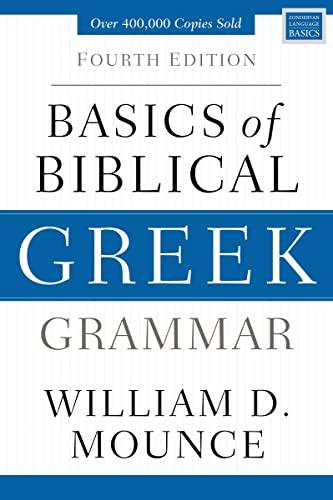
Fourth Edition (Zondervan Language Basics Series)
It was credited as being the best investment Boris Johnson ever made, particularly in terms of his education and how it helped shape his career.
It was it was getting hold of a secondhand copy of Abbot and Mansfield's Greek grammar, accidents and syntax, without which I would not be where I am today.
— Episode: 187. The Man Who Would Be Everything
It was credited as being the best investment Boris Johnson ever made, particularly in terms of his education and how it helped shape his career.
It was it was getting hold of a secondhand copy of Abbot and Mansfield's Greek grammar, accidents and syntax, without which I would not be where I am today.
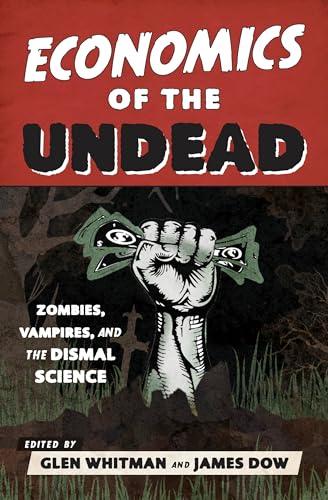
Zombies, Vampires, and the Dismal Science
It was discussed as a book containing essays from various scholars on topics like blood markets, zombie apocalypses, and the impact of the undead on the economy, presented with a serious tone and approach.
Both Jim and I had an interest in zombies and vampires and other forms of the undead going back many many years That's Glenn Whitman. He's an economist at California State University Northridge and I...
— Episode: 184. What Can Vampires Teach Us About Ec...
It was discussed as a book containing essays from various scholars on topics like blood markets, zombie apocalypses, and the impact of the undead on the economy, presented with a serious tone and approach.
Both Jim and I had an interest in zombies and vampires and other forms of the undead going back many many years That's Glenn Whitman. He's an economist at California State University Northridge and I also have a second career as a TV writer I wrote for the TV show fringe for many years and now I'm writing for the TV show matador The Jim he mentioned is Jim Dow who teaches finance at Northridge In fact, the two of us bonded over Buffy the vampire slayer when we discovered that we were both fans of it And so Glenn Whitman and Jim Dow decided to put together a book called Economics of the Undead zombies vampires and the dismal science
It contains 23 essays by a variety of scholars with titles like tragedy of the blood commons the case for privatizing the humans and Investing secrets of the undead I am not kidding
The Most Important Things to Know About the Jewish Religion, Its People, and Its History
It was mentioned that Joseph Telushkin is the author of several books, including this one, which was brought up during the discussion of the King Solomon story.
That's Joseph Tlushkin, author of many books, including Jewish Literacy.
— Episode: 174. What Do King Solomon and David Lee...
It was mentioned that Joseph Telushkin is the author of several books, including this one, which was brought up during the discussion of the King Solomon story.
That's Joseph Tlushkin, author of many books, including Jewish Literacy.
Brian Wansink, the author of 'Mindless Eating', discussed the concept of mindless eating and how it related to the consumption of free appetizers like bread or chips in restaurants.
And actually have a book coming out called Slim by Design, Mindless Eating Solutions for Everyday Places.
— Episode: 171. There’s No Such Thing as a Free App...
Brian Wansink, the author of 'Mindless Eating', discussed the concept of mindless eating and how it related to the consumption of free appetizers like bread or chips in restaurants.
And actually have a book coming out called Slim by Design, Mindless Eating Solutions for Everyday Places.
I'd written a bestseller called Mindless Eating. Why you eat more than you think.
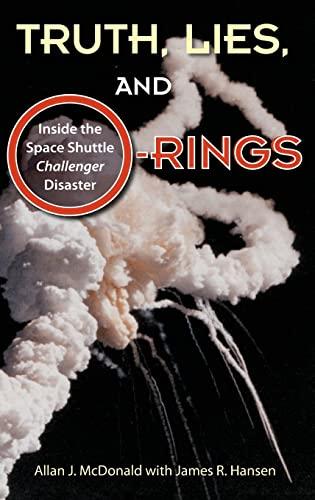
Inside the Space Shuttle Challenger Disaster
It was described as a book written by Alan McDonald, where he discussed the Challenger disaster and the events leading up to the tragedy, highlighting concerns about O-ring seals in cold temperatures.
But as McDonald later described in his book Truth, Lies, and O-Rings, the boosters had never been tested below 53 degrees. And the forecast for launch morning was calling for temperat...
— Episode: 169. Failure Is Your Friend
It was described as a book written by Alan McDonald, where he discussed the Challenger disaster and the events leading up to the tragedy, highlighting concerns about O-ring seals in cold temperatures.
But as McDonald later described in his book Truth, Lies, and O-Rings, the boosters had never been tested below 53 degrees. And the forecast for launch morning was calling for temperatures much lower than that.
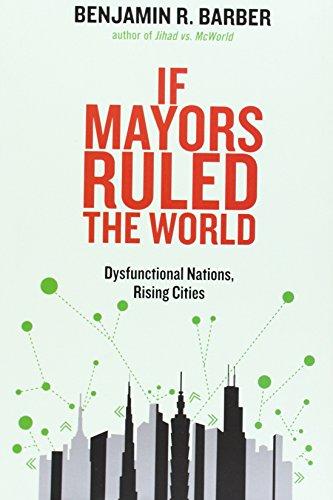
Dysfunctional Nations, Rising Cities
It was mentioned as a book arguing that cities are well-governed compared to nation-states and that mayors are inherently bipartisan and problem-solvers. It was well-received by several mayors.
We talked to Benjamin Barber, who's an academic, a political theorist, who wrote a book called If Mayors Ruled the World.
— Episode: 162. “If Mayors Ruled the World”
It was mentioned as a book arguing that cities are well-governed compared to nation-states and that mayors are inherently bipartisan and problem-solvers. It was well-received by several mayors.
We talked to Benjamin Barber, who's an academic, a political theorist, who wrote a book called If Mayors Ruled the World.
I'm a senior research scholar at the City University of New York, professor emeritus at Rutgers University, a political theorist, and an author of 18 books, the most recent of which is If Mayors Ruled the World, Dysfunctional Nations, Rising Cities.
In the book, Barber argues that cities are paragons of good governance, potentially at least, and at least compared to nation states.
And that is largely due to their mayors. Mayors, Barber says, are inherently bipartisan.
They can't afford not to be. And above all else, they're focused on solving actual problems.
So I think the attraction of this idea that we're talking that mayors should quote rule the world whether we mean that metaphorically or in some tiny way literally is the idea that mayors have to be responsible to voters if for no other reason than that their potential losses are so much more tangible than a federal or state official.
Benjamin Barber, in his book If Mayors Ruled the World, argues that we should create a global parliament of mayors to help solve problems that national governments aren't so good at solving.
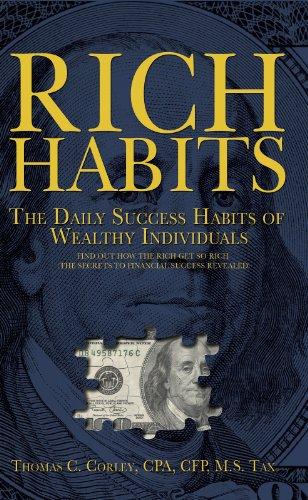
The Daily Success Habits of Wealthy Individuals
It was discussed that wealthy individuals tend to gossip significantly less than those with lower incomes, which was a surprising finding from Corley's research.
Corley is an accountant and a financial planner in New Jersey. He wrote a book called Rich Habits, The Daily Success Habits of Wealthy Individuals.
— Episode: 152. Everybody Gossips (and That’s a Goo...
It was discussed that wealthy individuals tend to gossip significantly less than those with lower incomes, which was a surprising finding from Corley's research.
Corley is an accountant and a financial planner in New Jersey. He wrote a book called Rich Habits, The Daily Success Habits of Wealthy Individuals.
6% of the wealthy gossip. Compare that to 79% of the poor who gossip.

The book discussed the reasons why gay men choose to live in San Francisco, including the affordability and neighborhood amenities that appeal to them.
So if you want to live in San Francisco, it's nice if you don't have to buy a five-bedroom house.
— Episode: 148. Are Gay Men Really Rich?
The book discussed the reasons why gay men choose to live in San Francisco, including the affordability and neighborhood amenities that appeal to them.
So if you want to live in San Francisco, it's nice if you don't have to buy a five-bedroom house.
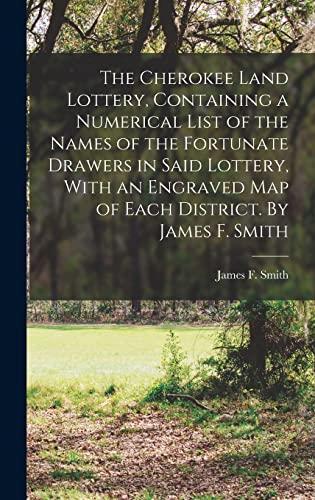
It was a large, thick book that provided the basis for the research discussed in the podcast, containing information on participants and lottery winners.
I was walking past the Georgia section at the University of Chicago library at some point and see this title that says the Cherokee Land Lottery. Big thick book, walking past it.
— Episode: 139. Would a Big Bucket of Cash Really C...
It was a large, thick book that provided the basis for the research discussed in the podcast, containing information on participants and lottery winners.
I was walking past the Georgia section at the University of Chicago library at some point and see this title that says the Cherokee Land Lottery. Big thick book, walking past it.
I pulled the book out and there are series of these books about the lotteries that describe the participants, names, actual winners, what they won, that sort of thing.
Exploring Real Struggles through Fictional Characters
It was mentioned as a book that advocated a harsh and detached parenting style, recommending against affection like hugging or kissing children.
whose book The Psychological Care of Infinite Child was a big sensation in the late 20s.
— Episode: The Economist’s Guide to Parenting (Rebr...
It was mentioned as a book that advocated a harsh and detached parenting style, recommending against affection like hugging or kissing children.
whose book The Psychological Care of Infinite Child was a big sensation in the late 20s.
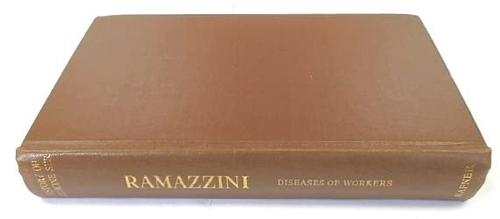
It was written in the 18th century by an Italian physician and discussed the link between work and injury, including what would later be known as carpal tunnel syndrome.
Various and manifold is the harvest of diseases reaped by certain workers from the crafts and trades that they pursue. All the profit that they get is a fatal injury to their health.
— Episode: 138. Whatever Happened to the Carpal Tun...
It was written in the 18th century by an Italian physician and discussed the link between work and injury, including what would later be known as carpal tunnel syndrome.
Various and manifold is the harvest of diseases reaped by certain workers from the crafts and trades that they pursue. All the profit that they get is a fatal injury to their health.
Note: The book recommendations on this page are discovered automatically from podcast transcripts, and may be incorrect or incomplete.
Podcast Name