
Podcast Mentions
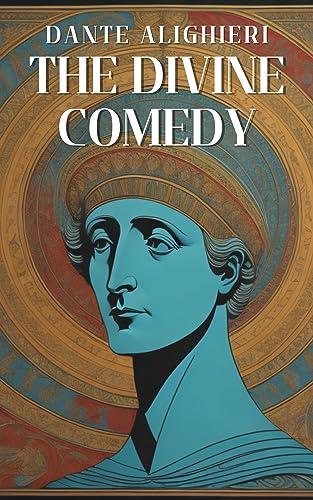
The Divine Comedy (The Inferno, The Purgatorio, and The Paradiso)
Dante Alighieri
The Divine Comedy is an Italian narrative poem by Dante Alighieri, begun c. 1308 and completed around 1321, shortly before the author's death. It is widely considered the pre-eminent work in Italian literature and one of the greatest works of world literature. The poem's imaginative vision of the af...
Podcasts
21
Quotes
50
Podcast
Morbid
The hosts noted that Lillian read a book before bed and Harold later read Dante's Divine Comedy, even underlining passages, before the murdersuicide unfolded.
"
She went to her room to do some homework and then she was going to head to bed. So Lillian went into her bedroom and she just read a book in bed. After reading for some time she went to sleep. ... He...
— Episode: Episode 221: The Los Feliz Murder House
Episode: Episode 221: The Los Feliz Murder House
The hosts noted that Lillian read a book before bed and Harold later read Dante's Divine Comedy, even underlining passages, before the murdersuicide unfolded.
"
She went to her room to do some homework and then she was going to head to bed. So Lillian went into her bedroom and she just read a book in bed. After reading for some time she went to sleep. ... He sat up in bed for a little while himself reading Dante's Divine Comedy.
The book, Dante's Divine Comedy, was still on his nightstand where he had left it but now it was opened to a certain page. The certain page is Canto 1 and it says, Midway upon the journey of our life I found myself within a forest dark...

Podcast
Stuff You Should Know
The hosts referenced the title when explaining the origins of modern ideas about Satan and hell, noting that Dante’s depiction of Satan as a proud fallen angel and the nine concentric circles of hell shaped contemporary imagery. Josh Clark cited it alongside Paradise Lost, while Pete and the others highlighted its historical context and vivid portrayals of poetic justice. The discussion emphasized the work’s lasting cultural impact rather than issuing a direct reading recommendation.
Episode: Hell! Hell! Hell!
It was discussed as the origin of many modern conceptions of hell, including the nine concentric circles, and that it was written after the author was exiled from Florence.
"
If you really want to drill down though to where we get many, many of our ideas of what we think of as hell is Dante, of course, who we mentioned earlier. I did not even know Dante's last name until we researched this, but it's - and there's going to be some great Italian coming up everyone.
And his divine comedy and specifically Inferno, Dante's Inferno is really where we get a lot of what we think of as hell today comes from Inferno as far as - and people even say without even knowing like, oh, the eighth circle of hell and stuff like that.
Like I've been guilty of saying that my whole life and not really understanding what the heck that even meant.
But what's interesting too is so Dante wrote the Inferno or he wrote the divine comedy in the early 1300s. I guess it took him 15 years.
And so, this is the 1300s and he writes about these nine circles of hell, the nine concentric circles of hell. Like that is a really ancient concept even though he divided it and like really enunciated all of the different distinctions in a really popular way.
Episode: Selects: How Satanism Works
It was mentioned alongside Paradise Lost as a key text in shaping how Satan is perceived, particularly the idea that he was an angel cast out of heaven due to pride.
"
One was John Milton's epic poem Paradise Lost and then of course Dante's Divine Comedy. This is where we got the idea that Satan was an angel expelled from heaven because of his pride who then said and I will defeat the Lord.
Episode: Hell! Hell! Hell!
It was discussed as a major source of our modern understanding of hell, particularly the concept of nine circles of hell and the poetic justice of punishments.
"
If you really want to drill down though to where we get many, many of our ideas of what we think of as hell is Dante, of course, who we mentioned earlier.
And his divine comedy and specifically Inferno, Dante's Inferno is really where we get a lot of what we think of as hell today comes from Inferno as far as - and people even say without even knowing like, oh, the eighth circle of hell and stuff like that.
And so, this is the 1300s and he writes about these nine circles of hell, the nine concentric circles of hell.
Like that is a really ancient concept even though he divided it and like really enunciated all of the different distinctions in a really popular way.
And there's also a very famous inscription over the gates of hell, abandon all hope ye who enter here.
Episode: Selects: How Satanism Works
It was mentioned alongside Paradise Lost as a book that helped shape the modern idea of Satan as an angel who was expelled from heaven for pride and vowed to defeat God.
"
One was John Milton's epic poem Paradise Lost and then of course Dante's Divine Comedy. This is where we got the idea that Satan was an angel expelled from heaven because of his pride who then said and I will defeat the Lord.
Episode: Hell! Hell! Hell!
It was discussed as a major source for modern conceptions of hell, particularly its depiction of nine concentric circles and poetic justice in punishment.
"
If you really want to drill down though to where we get many, many of our ideas of what we think of as hell is Dante, of course, who we mentioned earlier.
And his divine comedy and specifically Inferno, Dante's Inferno is really where we get a lot of what we think of as hell today comes from Inferno as far as - and people even say without even knowing like, oh, the eighth circle of hell and stuff like that.
And so, this is the 1300s and he writes about these nine circles of hell, the nine concentric circles of hell.
Like that is a really ancient concept even though he divided it and like really enunciated all of the different distinctions in a really popular way.
And there's also a very famous inscription over the gates of hell, abandon all hope ye who enter here.

It was mentioned that Harold Perelson, the patriarch of the Perelson family, was reading it the night before the murder-suicide that took place at the Los Feliz Murder Mansion.
"
Harold, before he fell asleep, was reading Dante's Divine Comedy, a little light reading.
— Episode: 120 - Live at the Orpheum in Los Angeles
Episode: 120 - Live at the Orpheum in Los Angeles
It was mentioned that Harold Perelson, the patriarch of the Perelson family, was reading it the night before the murder-suicide that took place at the Los Feliz Murder Mansion.
"
Harold, before he fell asleep, was reading Dante's Divine Comedy, a little light reading.
midway upon the journey of our life within a dark for nope within a forest dark for the straightforward path had been lost.
Episode: 120 - Live at the Orpheum in Los Angeles
It was mentioned as the book Harold Perelson was reading before the Los Feliz murders, with a specific passage being highlighted in the aftermath of the incident.
"
Harold, before he fell asleep, was reading Dante's Divine Comedy, a little light reading.
midway upon the journey of our life within a dark for nope within a forest dark for the straightforward path had been lost.

Podcast
Conan O’Brien Needs A Friend
Conan noted that even the darkest historical episodes could be seen as a comedy, referencing Dante's Divine Comedy as an example.
"
I think there's a case for seeing the whole sweep of human history as a very dark comedy... even the very darkest episodes, it's a comedy in the sense that Dante wrote the Divine Comedy.
— Episode: Tom Holland and Dominic Sandbrook of The...
Episode: Tom Holland and Dominic Sandbrook of The Rest Is H...
Conan noted that even the darkest historical episodes could be seen as a comedy, referencing Dante's Divine Comedy as an example.
"
I think there's a case for seeing the whole sweep of human history as a very dark comedy... even the very darkest episodes, it's a comedy in the sense that Dante wrote the Divine Comedy.

Podcast
20/20
The host referenced reading page 52 of the Inferno and used its vivid depiction of hell to describe his own situation, mentioning the striking colors and atmosphere. The book was brought up as a colorful illustration rather than being actively recommended.
Episode: He's Right Behind You
The host referenced reading page 52 of Dante's Inferno during a conversation, mentioning being in hell as described by Dante.
"
Inferno, page 52. And what color isn't, like, amazing on you? I am in hell, Dante said.
Episode: Vanished: The Search
The hosts briefly referenced the book "Inferno" by mentioning page 52 during their conversation, and also quoted a line about being in hell attributed to Dante.
"
Inferno, page 52. And what color isn't, like, amazing on you?
I am in hell, Dante said. The critically acclaimed comedy returns.
Podcast
The Rest Is History
The Divine Comedy was referenced as the epic poem in which Dante placed the Roman emperor Trajan in paradise, illustrating the work's influence on later historical imagination.
"
It was claimed that... Dante, in his great poem The Divine Comedy, felt able to place Trajan in paradise.
— Episode: PAX: War and Peace in Rome’s Golden Age...
Episode: PAX: War and Peace in Rome’s Golden Age (Extract)
The Divine Comedy was referenced as the epic poem in which Dante placed the Roman emperor Trajan in paradise, illustrating the work's influence on later historical imagination.
"
It was claimed that... Dante, in his great poem The Divine Comedy, felt able to place Trajan in paradise.
Episode: 105. Classics
The hosts highlighted it as a foundational text of European literature that continues to shape modern imagination.
"
one of the absolute foundational texts of European and world literature.

Podcast
Hidden Brain
Frank Wilczek referenced Dante's Inferno to describe his experience in a Phoenix emergency room and likened the suffering people to the artwork in the book.
"
It really made me think about Dante's Inferno, these paintings of suffering people.
— Episode: The Mystery of Beauty
Episode: The Mystery of Beauty
Frank Wilczek referenced Dante's Inferno to describe his experience in a Phoenix emergency room and likened the suffering people to the artwork in the book.
"
It really made me think about Dante's Inferno, these paintings of suffering people.
Episode: We're All Gonna Live Forever!
It was mentioned as an example of how, historically, people imagined souls residing in a specific place, which in this case, was a detailed description within Dante's work.
"
Whereas Dante in The Divine Comedy describes in great detail where he thought all the souls were.

Podcast
The Dan Le Batard Show
Jerry Saltz revealed that he had planned a massive 25year project to illustrate Dante's Divine Comedy, creating 100 works for each of the 100 cantos.
"
I was going to illustrate Dante's Divine Comedy, all 100 cantos or chapters. I was going to do 100 works on each of the 100 cantos, and it would be a 25year project. It began two days before Easter 19...
— Episode: PTFO - From Ronaldo to D-Wade: Athlete S...
Episode: PTFO - From Ronaldo to D-Wade: Athlete Statues, Re...
Jerry Saltz revealed that he had planned a massive 25year project to illustrate Dante's Divine Comedy, creating 100 works for each of the 100 cantos.
"
I was going to illustrate Dante's Divine Comedy, all 100 cantos or chapters. I was going to do 100 works on each of the 100 cantos, and it would be a 25year project. It began two days before Easter 1975, before everybody here was born. It was supposed to end on Easter the year 2000. And I made it as far as the third canto.

Podcast
This American Life
The opening lines of this classic poem were mentioned during a discussion of a letter from a father.
"
the opening lines of the divine comedy.
— Episode: 838: Letters! Actual Letters!
Episode: 838: Letters! Actual Letters!
The opening lines of this classic poem were mentioned during a discussion of a letter from a father.
"
the opening lines of the divine comedy.
Podcast
The Jordan B. Peterson Podcast
Destiny agreed with Jordan Peterson's assessment of Dante's "The Inferno" as an investigation into the structure of malevolence, with betrayal at the bottom of hell.
"
Well that's why Dante outlined levels of hell
— Episode: 433. Streaming, Politics, & Philosophy |...
Episode: 433. Streaming, Politics, & Philosophy | Destiny (...
Destiny agreed with Jordan Peterson's assessment of Dante's "The Inferno" as an investigation into the structure of malevolence, with betrayal at the bottom of hell.
"
Well that's why Dante outlined levels of hell
Well exactly that and I mean that that book was an investigation into the structure of malevolence right he put betrayal at the bottom which I think is right I think that's right because people who develop post-traumatic stress disorder for example which almost only accompanies and encounter with malevolence rather than tragic circumstances they are often betrayed sometimes by other people but often by themselves and yes there are levels of hell you know and you outlined a couple there
Episode: 571. Advice for Love and Marriage | Answer the Cal...
Peterson suggested that examining deep emotional triggers was like taking a trip to Dante's Inferno, describing the book as a story of a voyage to the underworld.
"
Now to investigate those, you have to take a trip to Dante's Inferno. Okay. So the book, The Inferno is a story of a voyage to the underworld, a voyage to hell.
Episode: 536. A Philosopher’s Warning About the Future | Ja...
Howland used Dante's Inferno as a metaphor for contemporary political and social stagnation.
"
I started thinking about the Inferno as a kind of political text... the fact is that, you know, you get to the ninth circle and Dante's beautiful creation, invention is that it's ice. Everyone's frozen in the ice.

Podcast
The Ben Shapiro Show
Dante's entire work, specifically mentioning Inferno, Purgatory, and Paradise, was suggested as a necessary piece of literature to preserve if civilization were to be rebuilt.
"
After the Bible it would be Dante it would really be Inferno, Purgatory and Paradise the three parts of Dante's Divine Comedy or if you get rid of that I would do Dante and then I would do Shakespeare...
— Episode: Daily Wire Backstage: Go Buy Ben's Book...
Episode: Daily Wire Backstage: Go Buy Ben's Book Edition
Dante's entire work, specifically mentioning Inferno, Purgatory, and Paradise, was suggested as a necessary piece of literature to preserve if civilization were to be rebuilt.
"
After the Bible it would be Dante it would really be Inferno, Purgatory and Paradise the three parts of Dante's Divine Comedy or if you get rid of that I would do Dante and then I would do Shakespeare.

Podcast
We Can Do Hard Things
It was mentioned in reference to the journey through hell and the need for ego collapse to reach paradise.
"
And it's in Dante's Inferno too. Like what's at the bottom of the center of the frozen lake of hell inside of Satan's belly, you come through that into paradise.
— Episode: 268. Elizabeth Gilbert On Her Most Impor...
Episode: 268. Elizabeth Gilbert On Her Most Important Daily...
It was mentioned in reference to the journey through hell and the need for ego collapse to reach paradise.
"
And it's in Dante's Inferno too. Like what's at the bottom of the center of the frozen lake of hell inside of Satan's belly, you come through that into paradise.

Podcast
The Matt Walsh Show
The hosts used Dante's Inferno as an analogy for exploring deep psychological issues, describing the journey through hell guided by Virgil.
"
the representation of hell in Dante's Inferno. You start with the land of venal sins, and then Virgil guides you down the rabbit hole, right to the depths of hell itself.
— Episode: My Discussion With Jordan Peterson
Episode: My Discussion With Jordan Peterson
The hosts used Dante's Inferno as an analogy for exploring deep psychological issues, describing the journey through hell guided by Virgil.
"
the representation of hell in Dante's Inferno. You start with the land of venal sins, and then Virgil guides you down the rabbit hole, right to the depths of hell itself.

Podcast
The Rewatchables
The hosts noted that a character was reading Dante, implying the classic work influenced the film's themes.
"
you get the impression he's reading Dante, he's reading Chaucer, he's getting interested in those stories and that's driving a lot of this.
— Episode: ‘Se7en’ With Bill Simmons, Sean Fennesse...
Episode: ‘Se7en’ With Bill Simmons, Sean Fennessey, and Chr...
The hosts noted that a character was reading Dante, implying the classic work influenced the film's themes.
"
you get the impression he's reading Dante, he's reading Chaucer, he's getting interested in those stories and that's driving a lot of this.
Podcast
Snapped: Women Who Murder
The narrator compared the disturbing scene to Dante's Inferno.
"
The scene was extremely disturbing, like something out of Dante's Inferno.
— Episode: Jamie Grachek
Episode: Jamie Grachek
The narrator compared the disturbing scene to Dante's Inferno.
"
The scene was extremely disturbing, like something out of Dante's Inferno.

Podcast
StarTalk Radio
It was mentioned as a book by Dante that describes the descent into hell, and if believed in, could prevent people from committing sins.
"
Yeah, Dante, you're referring to Inferno, which he describes the descent into hell.
— Episode: Things You Thought You Knew - Earth’s Sp...
Episode: Things You Thought You Knew - Earth’s Spinning Cor...
It was mentioned as a book by Dante that describes the descent into hell, and if believed in, could prevent people from committing sins.
"
Yeah, Dante, you're referring to Inferno, which he describes the descent into hell.

Podcast
On Being with Krista Tippett
This book was cited as the author's favorite, and its depiction of Dante's journey and culminating encounter with love was described as a belief in a love that moves the stars and sun. It was noted that the concept of divinity has become trivialized and that this book's vision offers a different perspective.
"
my favorite book is the divine comedy and at the end of the divine comedy Dante Pierce is the skin of the universe and comes face to face with the love that moves the sun and the other stars
— Episode: Margaret Wertheim — The Grandeur and Lim...
Episode: Margaret Wertheim — The Grandeur and Limits of Sci...
This book was cited as the author's favorite, and its depiction of Dante's journey and culminating encounter with love was described as a belief in a love that moves the stars and sun. It was noted that the concept of divinity has become trivialized and that this book's vision offers a different perspective.
"
my favorite book is the divine comedy and at the end of the divine comedy Dante Pierce is the skin of the universe and comes face to face with the love that moves the sun and the other stars
I believe that there is a love that moves the sun and the other stars I believe in Dante's vision
Episode: [Unedited] Margaret Wertheim with Krista Tippett
It was described as Margaret Wertheim's favorite book. The author believes in the vision presented in the book, specifically the idea of a love that moves the sun and the other stars.
"
my favorite book is the divine comedy. Then at the end of the divine comedy, Dante pears as the skin of the universe and comes face to face with the love that moves the sun and the other stars. I believe that there is a love that moves the sun and the other stars.
Episode: Margaret Wertheim — The Grandeur and Limits of Sci...
This book was described as the author's favorite, highlighting its depiction of a journey through the universe and culminating in an encounter with divine love.
"
my favorite book is the divine comedy and at the end of the divine comedy Dante Pierce is the skin of the universe and comes face to face with the love that moves the sun and the other stars I believe that there is a love that moves the sun and the other stars I believe in Dante's vision

Tim Keller referenced the book while describing Dante's depiction of Hell, noting that the deepest level is a frozen lake where Judas is portrayed as the worst sinner, being torn apart by Satan. He used this illustration to emphasize the severity of betrayal. The discussion was brief and served mainly as a vivid example rather than a recommendation.
Episode: The Hour of Darkness
The speaker mentioned Dante's Inferno, specifically in reference to the portrayal of Judas as the worst sinner, situated at the bottom of Hell, in a lake of ice.
"
If you read Dante's in Ferno you'll know that at the very bottom of the deepest deepest part of hell it's actually underneath well you get to the deepest part of hell in Dante's in Ferno it's actually not hot it's cold there's a lake of ice and at the very very deepest part of the inferno of hell is Judas the wickedest person ever lived the worst person ever lived and there he is being divided by Satan

Podcast
followHIM
It was referenced for a passage describing the purging of sins and remembering good deeds before entering God's presence, a concept that resonated with the speaker.
"
there's a point in the divine comedy that Dante's divine comedy his this great master piece of Italian literature when he's leaving purgatory you know it takes his journey through a hell purgatory and...
— Episode: Doctrine & Covenants 64-66 : Part I : Dr...
Episode: Doctrine & Covenants 64-66 : Part I : Dr. S. Micha...
It was referenced for a passage describing the purging of sins and remembering good deeds before entering God's presence, a concept that resonated with the speaker.
"
there's a point in the divine comedy that Dante's divine comedy his this great master piece of Italian literature when he's leaving purgatory you know it takes his journey through a hell purgatory and he's going into paradise and the last thing he does as he leaves purgatory now he's gonna he's preparing to go into the presence of God and there are two rivers he waits through and drinks from the first river comes from great mythology it's Lathy which is the river of forgetfulness and when he drinks from the river Lathy he forgets all his sins all the negatives of his life he forgets them then he goes to a river that Dante invents is called the river of you know not you know but EU and OE and it means good memory or good mind and he drinks from that one and every good thing he ever did in his life all the good all the positives he remembers so now all sins all negatives all mistakes forgotten and all good remembered he is prepared now to enter into the presence of God
Note: The book recommendations on this page are discovered automatically from podcast transcripts, and may be incorrect or incomplete.