The Iliad
Homer
Mentioned 5 days ago
688. The Odyssey: Return of the King (Part 2)
Take a deep dive into History’s biggest moments with Tom Holland & Dominic Sandbrook. Explore the stories of History’s most brutal rulers, deadly battles, and world-changing events. From the rise and fall of the Roman Empire, the Nazi conquest of Europe, and Hitler’s evil master plan for world do...
Recently mentioned
Homer
Mentioned 5 days ago
688. The Odyssey: Return of the King (Part 2)
Homer
Mentioned 5 days ago
688. The Odyssey: Return of the King (Part 2)
Virgil
Mentioned 5 days ago
688. The Odyssey: Return of the King (Part 2)
James Joyce
Mentioned 5 days ago
688. The Odyssey: Return of the King (Part 2)
Madeline Miller
Mentioned 1 week ago
687. The Odyssey: Hero of the Trojan Horse (Part 1)
Guiseppe Tomasi di Lampedusa
Mentioned 1 week ago
687. The Odyssey: Hero of the Trojan Horse (Part 1)
Carol Dougherty
Mentioned 1 week ago
687. The Odyssey: Hero of the Trojan Horse (Part 1)
John Buchan
Mentioned 1 week ago
687. The Odyssey: Hero of the Trojan Horse (Part 1)
Ron Chernow
Mentioned 2 weeks ago
685. Hamilton: Duel to the Death (Part 3)
Laurence Sterne
Mentioned 2 weeks ago
685. Hamilton: Duel to the Death (Part 3)
Gore Vidal
Mentioned 2 weeks ago
685. Hamilton: Duel to the Death (Part 3)
unknown author
Mentioned 1 month ago
678. England: God Save the King (Part 2)
The hosts referenced the title while discussing epic storytelling, likening it to Homer's Iliad and calling it a great work. They used the comparison to illustrate the timeless nature of grand narratives, indicating strong appreciation for the book. The overall sentiment was positive, treating it as a benchmark for epic literature.
They compared Homer's Iliad to Tolkien's Lord of the Rings, calling both great books.
the Iliad is like, I think, the Lord of the Rings.
The hosts likened Homer's Iliad to Tolkien's Lord of the Rings, using it as a point of comparison for epic storytelling.
The Iliad is like, I think, the Lord of the Rings. And Hesiod's Theogony is like the Silmarillion.
Dominic introduced Tolkien's fantasy classic, noting its themes of adventure, comfort, and the contrast between early 20thcentury optimism and the looming war.
J.R.R. Tolkien's fantasy classic, The Hobbit.
The hosts explained that Tolkien wanted to write "The Lord of the Rings" to restore English mythology lost after the Norman Conquest, describing it as the greatest tragedy in English history for him.
And unsurprisingly, because for Tolkien, the Norman Conquest was the greatest tragedy in the history of England. Yeah. And he wanted to write Lord of the Rings to give the English back the mythology that he thought they had lost as a result of the conquest.
The hosts explained that Tolkien began writing The Hobbit in the early 1920s and described its plot involving Bilbo Baggins confronting the dragon Smaug.
they're only in children's literature aren't they really after the hobbit? Yeah so the hobbit is famously Tolkien starts writing it in the early 1920s when he's marking school certificate papers after he's come home from the first world war
They mentioned the Lord of the Rings trilogy as the film that now tops the list of biggest-grossing movies, noting you have to combine the three parts to reach that point.
the film that replaces it in that list is the Lord of the Rings trilogy but you have to combine them to get to that point
They referenced Tolkien's The Lord of the Rings as an example of a work that was allegedly ripped off.
J.R.R. Tolkien, The Lord of the Rings, that was ripped off and wasn't it?
The hosts recalled reading The Hobbit as children, describing it as the first Tolkien book they encountered and a cherished comfort read.
I went on a quest... to visit the grave of J.R.R. Tolkien, author of The Hobbit and Lord of the Rings.
presumably you read him as a boy. Yes, the Hobbit first.
The hosts said they first encountered The Hobbit as children, recalling it as a sentimental favourite and describing it as the book that made them fall in love with Tolkien.
author of The Hobbit and Lord of the Rings.
I read the Hobbit, and then I read the Lord of the Rings.
It became enshrined right away in my mind as the best book.
The hosts compared the pastoral vision of Metroland to the countryside depicted in The Hobbit.
the same Arcadia that you see in The Hobbit and then later The Lord of the Rings.
The hosts discussed how reading the novel revealed its antiurban themes and its status as a bestselling, Christianleaning work that reflects 20thcentury concerns.
when I read Lord of the Rings as a you know when I was young, all of, none of this, I missed it all. but now you read it and you completely see that it's one of the great novels, you know it's one of the great antiurban novels.
Lord of the Rings is the bestselling novel of the 20th century. I would argue that one of the key reasons for its popularity is that it gives people suspicious of Christian orthodoxy a chance to experience what Christianity has made so successful.
Lord of the Rings far more than 1984 actually is the great novel written about the horrors of the 20th century.
Lord of the Rings is not an allegory, but it mirrors concerns of the 20th century, with themes of industrialisation, mercy, and Christian grace.
At the end of the book Frodo does not destroy the ring, he claims it for his own; he is weak, human, and fallible, and Tolkien's letters speak of divine grace and mercy to Gollum.
They explored whether Tolkien was influenced by Wagner's Ring Cycle, noting that Tolkien denied any connection but acknowledging notable similarities between the works.
I guess the question for me and for a lot of people is, how much was Tolkien with, say the Lord of the Rings, how much was he influenced by Wagner? Because Tolkien always denied it, didn't he? He said, oh, I have nothing to do with Wagner.
That is something that obviously would be very familiar to readers of The Lord of the Rings.
The Last Years of the Roman Republic
The book was referenced as Tom Holland's debut on classical history, with Mary Beard noted as the first person to read the manuscript and offering her early praise. Holland recalled her kindness in supporting the work before it was finished, highlighting the personal connection rather than a formal endorsement.
Tom Holland noted that Mary Beard was the first person to read his debut book on classical history, Rubicon, and he recalled that she had read it before he finished writing it.
She was the person who first read Rubicon, my first book on classical history in manuscript.
You always say when you introduce me, she was really kind to me back in the day before I'd written Rubicon.
Tom Holland mentioned that Rubicon was his first book on classical history, which Mary Beard had read and praised.
the person who first read Rubicon, my first book on classical history in manuscript.
she was really kind to me back in the day before I'd written Rubicon.
The host announced that the previous week they released Rubicon and that it was being rereleased as an audiobook.
Last week we put out Rubicon because that is being rereleased in audiobook.
Tom Holland introduced his book Rubicon, noting its rerelease as an audiobook narrated by him and describing it as a dramatic, thrilling account of the fall of the Roman Republic.
Rubicon, which is the very first work of history I wrote, is being rereleased in audiobook. It's being rereleased because for the first time I have actually read it in its entirety. So here on the Restishistory feed, we have the book's introduction for you to listen to. Rubicon is the story of the fall of the Roman Republic. It's the age of Julius Caesar, it's the age of Cicero, Spartacus, Cleopatra. I think it's the single most thrilling and dramatic story in the whole of history. And as I say, it's a rerelease. It's out on audiobook. It's narrated by me.
Hi, Tom Holland here with, well, it's very exciting news for me and I hope maybe it's kind of exciting news for you. So Rubicon, which is the very first work of history I wrote, is being rereleased in audiobook. It's being rereleased because for the first time I have actually read it in its entirety.
Tom's book was mentioned as something the guests enjoyed, with a comment that it was highly appreciated.
He said he very much enjoyed Rubicon.
The host noted that Rubicon is the first book in his series, covering Julius Caesar and his age.
The first, Rubicon, tells the story of Julius Caesar and his age.
Holland said he had written a book titled Rubicon that covered Caesar's story, noting it as one of the two accounts he'd authored on the murder.
I've done it twice in two books I've written, Rubicon and Dynasty.
Dominic recommended Tom Holland's Rubicon as further reading for listeners over the age of twelve or thirteen.
There is Tom Holland's Rubicon. For those of you who are older than 12, 13.
The hosts highlighted Tom Holland's book Rubicon as a deepdive into the Roman Republic's final years, saying it established his reputation as a historian.
He would be good for the sales of Rubicon. He would. Which I should just mention. So we've been selling your book on Cleopatra for children is out. Do you mind if I just mention my book, Rubicon, which is about this very period? The audience would love it.
Tom's book, Rubicon is absolutely the book for you. I mean, that's the book that really made you, isn't it? That's the book that established your historical career.
It does have an endorsement from Ian McEwan, it was his book of the year. I remember reading it.
Tom highlighted that his book Rubicon contains a vivid description of the ancient Lupa Calia festival.
There's a brilliant description of this actually in your book, Rubicon, isn't it? Mark Antony do it.
The hosts noted that Rubicon was Tom Holland's first published history book and that it launched his career as a historian.
So that's the beginning of Tom's book, Rubicon. So that's the book that launched you as a historian, isn't it?
It's the first work of history that I wrote. So in a way, my career as a historian...
The book covered the fall of the Roman Republic, detailing the political turmoil that led to the end of the Republic.
I've actually just been writing about it in the book ... I've done Rubicon which is about the fall of the Rome Republic ...
The book was referenced in two episodes. Dominic Sandbrook mentioned it as part of the planned reading list for the new book club, and later the host quoted a passage about the public’s preoccupation with film, football, beer, and gambling, citing the dystopian work. The mentions were brief and informational rather than enthusiastic recommendations.
It was highlighted as one of Orwell's most famous novels that provided enduring phrases like "Big Brother is watching you."
These experiences led him to write his most famous novels Animal Farm and 1984 giving us enduring phrases like Big Brother is watching you.
The Folio Society plug listed George Orwell's 1984 among the classic works they produce in beautiful editions.
things like George Orwell's 1984 or the quests in J.R. Tolkien or Frank Herbert's Dune
The hosts explained that George Orwell's life experiences resulted in the creation of the iconic novel 1984, highlighting its famous line about Big Brother.
These experiences led him to write his most famous novels Animal Farm and 1984 giving us enduring phrases like Big Brother is watching you.
The Folio Society segment listed George Orwell's 1984 among the classic works they produce beautifully bound editions of.
George Orwell's 1984
It was mentioned as one of the classic works that the Folio Society has beautifully republished.
George Orwell's 1984...
The Folio Society was praised for producing beautiful editions of classic works such as George Orwell's 1984.
Things like George Orwell's 1984 or the Quests in J.R.R. Tolkien or Frank Herbert's Dune.
The hosts highlighted its famous opening line and noted its enduring political resonance as a defining 20thcentury novel.
That of course is the opening of George Orwell's novel, 1984, published in 1949.
It is the final hurrah of Orwell's career; it's his last great work.
The hosts compared the novel to Tolkien's work, stating that Lord of the Rings surpasses it as a major 20thcentury literary treatment of horror.
Lord of the Rings far more than 1984 actually is the great novel written about the horrors of the 20th century.
The book was mentioned in passing when quoting Orwell's description of the common man's preoccupation with film, football, beer, and gambling.
Film, football, beer and above all gambling filled up the horizon of their minds. To keep them in control was not difficult. So said George Orwell in his dystopian masterpiece 1984.
They mentioned 1984 as one of the influential mid20thcentury books, describing it as dealing with totalitarianism and political ideology.
the really influential ones like 1984, they're about totalitarianism and political ideology.
This title was mentioned as being part of the planned reading list for the new book club show.
We have 1984.
The hosts repeatedly cited the book as a key literary lens for exploring the darkness of human nature and imperialism, describing its cultural impact and literary significance. They likened historical expeditions to its narrative and even planned to revisit it in future episodes, indicating strong endorsement for listeners.
The episode likened the Aguirre expedition to Joseph Conrad's Heart of Darkness, calling it "very, very Heart of Darkness."
It's very, very Heart of Darkness, actually.
Heart of Darkness, which we did a podcast on a few weeks ago, you know, the narrator Marlow goes up the Congo.
The hosts described it as Conrad's 1899 novella that explores the darkness of human nature and imperialism, noting its literary significance and cultural impact.
He cried in a whisper at some image, at some vision. He cried out twice. A cry that was no more than a breath. The horror. The horror. That was Joseph Conrad, Heart of Darkness, first published in Blackwoods Magazine in 1899.
We are not. The rest is literature. But this is a book that quite aside from its incredible literary value is also well worth doing in a history podcast for reasons that we have been touching on, Dominic, throughout the series that we've just finished about the Belgian Congo.
The presenters noted that their next episode would return to Joseph Conrad's novel Heart of Darkness.
we'll be going back to the book that we began with, which is Joseph Conrad's Heart of Darkness.
The hosts mentioned that Conrad wrote Heart of Darkness in 1899 after his own Congo voyage and used the novella to illustrate the brutal reality of colonial exploitation.
Joseph Conrad, of course, writing in Heart of Darkness, which he wrote in 1899.
Conrad, again, in Heart of Darkness, 1899, and his narrator Marlow has arrived in the Congo and is witnessing workers who are building the railway that will expedite European access to the highlands.
The hosts described it as the most influential book about the moral dangers of colonialism, noting its dark themes and its inspiration for Apocalypse Now, and said they would devote a future episode to it.
Marlowe, the hero and the narrator of Joseph Conrad's novella, Heart of Darkness, which was first published in Blackwood's magazine in 1899. It famously provided the inspiration for Apocalypse Now, about the European colonial experience in Africa, probably the greatest, the most influential, possibly the most controversial book about that ever written, about the moral dangers of colonialism.
And also about the sense of the darkness that lurks in the heart of the human soul. Because the darkness in that title, Heart of Darkness, has many different levels. It's one of the most influential books of the modern age.
We'll get on to Heart of Darkness next week because it's one of the most influential books of the modern age, anticipating much of 20thcentury culture and wrestling with man's capacity for evil.
So that's from Heart of Darkness. It's Joseph Conrad's hero Marlow driving a steamboat up the river Congo.
The hosts likened the episode's atmosphere to the novel, noting that the story reminded them of the dark, foreboding tone of Conrad's work.
Heart of darkness.
The hosts referenced it as the later work where Conrad explores similar African themes.
that what Joseph Conrad talks about later in Heart of Darkness.
It was a novella that explored the darkness of colonial Africa and was later referenced in discussions of imperial adventure literature.
What Joseph Conrad talks about later on in Heart of Darkness.
It was mentioned that the film Apocalypse Now was based literally on the book Heart of Darkness.
Apocalypse Now is based literally on Heart of Darkness. I mean, it's based on Conrad's story of Belgian imperialism in the Congo.
The hosts cited a quotation from the novel, noting that its narrator Marlow imagines the feelings of a young Roman posted to Britannia, calling the posting "godawful."
That quotation from Heart of Darkness by Joseph Conrad in which Marlowe the narrator imagines the feelings of a Roman, a young Roman, posted to Britannia. What a godawful posting that is and he ends up in London of all places.
This work was cited as capturing the nightmare that the colonizer could enter a 'heart of darkness' where all moral norms dissolved, suggesting it was bred of direct experience with the functioning of empire.
the great story of that uh is um Conrad's Heart of Darkness which then gets translated into apocalypse now the idea that that the colonizer can enter a heart of darkness where all moral norms get dissolved um and that's a kind of very I mean that that's a a nightmare that is clearly bred of direct experience for functioning of empire.
The Fall of the Aztecs
In three episodes, Dominic highlighted the title as an ideal Christmas gift, noting its availability in UK bookshops. The hosts repeatedly advertised it as the perfect present but offered no further commentary.
Dominic advertised his own work as currently available in UK bookshops, describing it as a perfect Christmas present.
Dominic's book The Fall of the Aztecs is available now from bookshops across the UK - the perfect Christmas present!
The hosts highlighted Dominic's new children's history book, noting its recent release and availability in bookshops as a suitable Christmas present.
your new book for children, The Fall of the Aztecs is out.
your book, The Fall of the Aztecs, is out now available in Goodbook Shops.
Dominic's book The Fall of the Aztecs is available now from bookshops across the UK - the perfect Christmas present!
Dominic mentioned that his own book, The Fall of the Aztecs, inspired the series and was being promoted as a Christmas present available in UK bookshops.
And your children's book, which has inspired us to do these episodes, is called The Fall of the Aztecs.
The hosts described it as the latest volume of the Adventures in Time series and noted that it was currently available in bookshops, calling it a perfect Christmas present.
it's the latest volume of the Adventures in Time series, The Fall of the Aztecs, available now.
Dominic promoted his new paperback, describing it as part of his Adventures in Time series and later referenced it as his children's book that covered disturbing Aztec rituals.
Thrilling stuff there, Dominic, from your new book, The Fall of the Aztecs, one of your Adventures in Time series.
In my children's book, The Fall of the Aztecs, there was a long section discussing this.
Dominic promoted his new children's book, The Fall of the Aztecs, as part of the Adventures in Time series.
So Dominic in your new book, Fall of the Aztecs, part of your Adventures in Time series for children, you were pitching in giving us your take on Melinche's role ...
Yes. So this is the latest Adventures in Time available from all good bookshops.
The hosts highlighted Dominic Sandbrook's new book as a fresh children's history of the SpanishAztec encounter and noted it was available in stores.
That is from The Fall of the Aztecs by top historian of Mesoamerica, Dominic Sandbrook.
How the Christian Revolution Remade the World
The hosts highlighted the book as a magisterial account of how Christianity shaped the Western world, noting its comprehensive sweep from ancient times to the present. Tom Holland discussed it as his own work, emphasizing its focus on the religion's moral influence. The consensus was that it offered a thorough, insightful history and was recommended to listeners.
It was described as a magisterial book about the history of Christianity and how it shaped the Western world.
So that was Dan Brown. That was Tom Holland so rude in Dominion, which is your magisterial book about the history of Christianity and how it has shaped the Western world, indeed the entire world, Tom.
So this is the moment Tom from Dan Brown or Tom Holland's book, Dominion, your own book when Luther, a man whose writings have been condemned as heretical comes face to face with a prince of the church and inquisitor, a cardinal who has the power over him.
One host said they were writing a book titled Dominion about Christianity and its moral influence.
when I was writing Dominion about Christianity and its moral influence, I couldn't actually find many.
Tom's book Dominion was mentioned as containing characters that served as antagonists to the tradition of Christianity and compassion.
they feature in your book Dominion as the sort of antagonists, I suppose, to the tradition of Christianity and of compassion and the celebration of victimhood.
He explained that he wrote the book Dominion to explore the difficulty of understanding Deimos and ancient Greek democracy.
So this is one of the key reasons why I ended up writing Dominion, was the difficulty of getting to grips with what Deimos actually meant to the Athenians.
Richard Pinchot mentioned the book while discussing Bartolom de Las Casas, noting that it had been written about the great priest and his role in the Black Legend.
Well, the great exponent of it, who you've written about in your book Dominion, I think, Bartolomeo Las Casas, the great priest who condemned the mistreatment of the Indians.
Tom referenced the book "Dominion" as the source of an oak metaphor they were discussing.
I was about to say, that oak is your book Dominion, Tom.
Dominion was mentioned as Tom Holland's book that has attracted many listeners to the podcast.
And I know Tom thanks to you and your book Dominion we have an awful lot of vickers who listen to this podcast.
Tom Holland highlighted his recently published book Dominion, explaining that it examines Christianity's influence on human history.
It is my own recently published book Dominion... Tom's book Dominion is all about Christianity's impact on human history.
They praised this book as an excellent work on Christian tradition, linking it to the discussion of historical Muhammad.
your excellent book Dominion about the Christian tradition there you are I've done the plug for you.
This book was described as a history of Christianity spanning from 480 BC up to the present day.
I've just written a book, Dominion, which goes from 480 BC right the way up to the present day, a history of Christianity called Dominion, available in all good bookshops, folks.
The hosts referenced the book to illustrate the dramatic legacy of the Battle of Tours, to provide a classic example of the Roman Empire's decline, and to encapsulate the chaotic politics and papal scandals of the period. They highlighted its famous historical prose and regarded it as a definitive account of classical decline. Overall, they treated the title as a highly recommended source for understanding historical collapse.
The hosts cited Gibbon's passage to illustrate the dramatic legacy of the Battle of Tours and highlighted its famous historical prose.
That was Edward Gibbon in The Decline and Fall of the Roman Empire, one of the most famous passages of historical prose overwritten. He is describing the legacy of the Battle of Tor, which was fought on the 10th of October 732, or perhaps 733, nobody is entirely sure, between the Franks and what he called an invading force of Saracens.
The book chronicled the fall of the Roman Empire and was cited as a great example of classical decline.
I mean, Gibbon's decline and fall of the Roman Empire, a great example of this.
The hosts noted that Edward Gibbon's classic work famously summed up the period's chaotic politics and papal scandals.
So it's famously summed up by Edward Gibbon in the decline and fall of the Roman empire.
They noted that Edward Gibbon, the famed author of The Decline and Fall of the Roman Empire, loved stories about misbehaving popes.
Edward Gibbon, you know, great author of The Decline and Fall of the Roman Empire, who loved all this stuff.
Gibbon's work was cited as the source that originally portrayed the second century AD as a golden age of Roman peace and prosperity.
It was Edward Gibbon in 1776 who originally cast the second century AD as the most golden of golden ages. Famously, in the first volume of The Decline and Fall of the Roman Empire, he defined the reigns of Hadrian and of his immediate predecessors and successors as the period ... during which the condition of the human race was most happy and prosperous.
The speakers mentioned Gibbon's work as the source of the myth that a Christian mob destroyed the library, noting that he portrayed Christians as villains in his history.
This is a myth that emerges basically in the writings of Edward Gibbon, the author of The Decline and Fall of the Roman Empire. He writes that the valuable library of Alexandria was pillaged or destroyed and that the shelves were left empty.
The hosts noted that Gibbon completed the final sentences of his massive work in 1787 after twenty years of research, describing it as a monumental, multivolume study of Rome's downfall.
On the evening of 27 June 1787, the historian Edward Gibbon wrote the final sentences of his great book The Decline and Fall of the Roman Empire.
But Tom Holland, it took Gibbon 20 years to write that book. It's a massive, massive book.
as Gibbon suggested in that passage that you read, there is the salient fact that of course, what we're talking about is the fall of the Roman Empire in the West.
The hosts cited Gibbon's famous opening describing the Antonine period as the happiest and most prosperous era in human history.
If a man were called upon to fix the period in the history of the world during which the condition of the human race was most happy and prosperous, he would without hesitation pick the period from the death of Domitian to the accession of Commodus.
The hosts mentioned Gibbon's classic work as an audiobook that describes many peoples as savages and referenced it when discussing the Enlightenment's view of history.
Gibbons, a history of the decline of all the Roman Empire. On audiobook, he describes countless peoples as savages.
Gibbon writing about all that in The Decline and Fall.
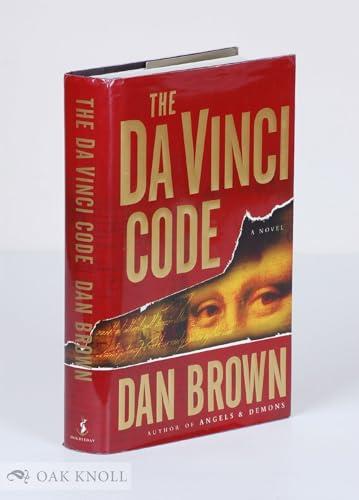
The hosts referenced the book as a well‑known novel that popularized the controversial theory of a Jesus‑Mary Magdalene bloodline and the Grail myth, noting its influence on later scholarship discussions. They mentioned it in the context of a Christmas episode and a segment on the Holy Grail, using it as an example of modern fiction that blends mystery with historical speculation. No explicit endorsement was given, and the references were primarily descriptive.
They referred to it as Dan Brown's famous novel that popularized the controversial history of a JesusMary Magdalene bloodline.
And that is the acclaimed novelist, renowned novelist, Dan Brown in The Da Vinci Code.
people who haven't read The Da Vinci Code or seen it or read The Holy Blood and The Holy Grail, which is the book purporting to be history on which The Da Vinci Code was based.
The hosts cited The Da Vinci Code as a Christmasthemed scholarship book by Dan Brown, noting its reference to a fictional symbologist and the alleged origins of Christmas myths.
That book is The Da Vinci Code by the renowned author Dan Brown.
It was referenced as a modern novel that explores the Grailbloodline theory.
the one that is best exemplified by Holy Blood and Holy Grail, and then by Dan Brown, The Da Vinci Code.
The hosts referred to it as a popular 2003 novel, mentioning its famous final lines and its relevance to their discussion of secret societies.
Those are the final lines of The Da Vinci Code, one of the great texts of 2003, of the 21st century, perhaps even of all time, said nobody ever.
The novel was mentioned as a key text that the hosts had been discussing, and one of the hosts said he would return to reading it after the episode.
the final lines of The Da Vinci Code, one of the great texts of 2003, of the 21st century, perhaps even of all time, said nobody ever.
I am going to return to my reading of Dan Brown's wonderful novel, The Da Vinci Code.
The book was mentioned as a previous subject of discussion, highlighted as a popular thriller that shaped listeners' expectations about hidden histories.
We discussed the book The Da Vinci Code by Dan Brown.
If you haven't listened to our previous podcast on The Da Vinci Code, that will just be meaningless babble.
They mentioned having discussed Dan Brown's bestseller in the previous episode, using it as a reference point for conspiracytheory narratives.
We discussed the book The Da Vinci Code by Dan Brown.
They read the novel, found it irresistibly pageturning, noted its opening with a curator and its controversial claims about Jesus and Mary Magdalene, and recalled Dan Brown's claim that 99% of the story was true.
Dan Brown starts that book with the words renowned curator. So he starts with an occupation and the person's level within his profession, which I think I admire.
I read it in three hours and ignored all Sadie's unfortunate demands that I go out and dig the potatoes or whatever. I found it completely page turning.
He explains that Jesus Christ got together with Mary Magdalene. So she's at his right hand in The Last Supper, being painted there deliberately because they were a couple and they got married and had children.
He was asked in interviews which parts of the history are actually true. And he said, and I quote, absolutely all of it. He said 99% is true.
Dan Brown wrote The Da Vinci Code in 2003 and it sold 81 million copies. The only book that outsold it was the latest Harry Potter book.
The hosts referenced the book as a classic example of Homeric description, comparing Scipio's portrayal to Achilles. They also noted that the warrior Diomedes appears in the story. The discussion was brief and used the title mainly to illustrate points about Greek myth and historical characterization, without endorsing it.
The discussion mentioned Diomedes as a character who appears in the Iliad.
And among these, so among one of the sons of the seven is one of the most famous of the Greek warriors who ends up fighting on the plain of Troy. And this is Diomedes, who appears in The Iliad and is the great friend of Odysseus.
They mentioned Homer's Iliad as the most famous of the ancient epic poems.
And that's how we get Homer's poems. I mean, they're the most famous of all of these poems, aren't they? The Iliad and the Odyssey.
The Iliad is like, I think, the Lord of the Rings.
They mentioned the Iliad when discussing the famous Greek warrior who appears in that epic, using it to illustrate the broader mythological context.
And among these, so among one of the sons of the seven is one of the most famous of the Greek warriors who ends up fighting on the plain of Troy. And this is Diomedes, who appears in The Iliad and is the great friend of Odysseus.
The speakers mentioned Homer's Iliad as one of the two great poems that preserve the earliest Greek myths.
And that's how we get Homer's poems. I mean, they're the most famous of all of these poems, aren't they? The Iliad and the Odyssey.
The hosts noted that the Iliad focuses primarily on male heroes such as Achilles, Hector, Patroclus, and Odysseus, with most of the action revolving around them.
So if you go to Homer's epic, The Iliad, obviously most of the action or indeed almost all of the action revolved around the men, Achilles, Hector, Patroclus, Odysseus and so on and so forth.
The hosts noted that Alexander the Great was known to have loved the Iliad.
We know he loved The Iliad.
The book was mentioned as an example of how people were described in a Homeric fashion, similar to how Scipio was perceived by Massinissa.
It's the way that people are described in The Iliad, for instance, seeing Achilles.
The Iliad was mentioned as the source of a quote about Athena and Odysseus, using Robert Fagles' translation, and later referenced for Athena's vulture disguise.
So that was Odysseus talking to Athena. Now that's actually not from the Odyssey, it's from The Iliad as translated by Robert Fagels.
She had disguised herself as a vulture, and there are descriptions of her kind of shivering with delight at the spectacle of blood being spilled.
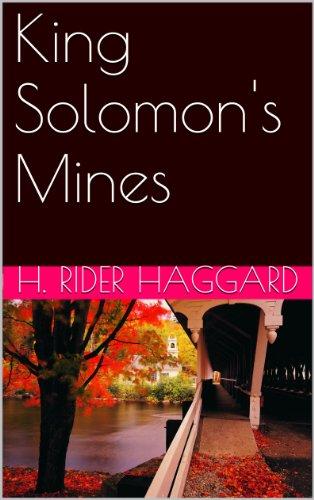
The book was cited across several episodes as a quintessential Victorian imperial adventure, noted for its swash‑buckling, optimistic portrayal of colonial conquest. Hosts such as Tom Holland and Dominic referenced earlier discussions that explored its themes of manliness and brotherhood, using it to illustrate the era's storytelling influences. The mentions were largely descriptive rather than endorsing, treating the title as a notable cultural example.
The episode contrasted it with Heart of Darkness, describing it as a swashbuckling adventure that idealises colonial conquest.
Heart of Darkness, I would argue, is by far the preeminent cultural representation of Western imperialism, particularly in Africa. More than King Solomon's Mines.
King Solomon's Mines is the journey into the heart of Africa that is swashbuckling, that is ultimately an optimistic story, that is jolly, that never questions, I think, ultimately, the right of the adventurers to be there.
The podcast mentioned the classic adventure novel Solomon's Mines while discussing literary influences on the era's storytelling.
With Sir Ryder Haggard thing that we talked about in Solomon's Mines.
They mentioned it as a classic Victorian imperial adventure novel and recalled that they had previously done a podcast about it.
We did a podcast, didn't we, about King Solomon's Mines, about the H Rider Haggard, kind of great classic of Victorian imperial fiction.
The classic adventure novel was referenced when recalling an earlier podcast episode about its publication twenty years earlier.
We did that podcast about King Solomon's Mines published what 20 years earlier, obsession with manliness, with brotherhood, with kind of people in tight trousers riding up and down promising civil wars.
The hosts described it as a bestselling Victorian adventure novel that founded the lostworld genre and remained hugely influential on popular culture.
So that Dominic is a thrilling moment from King Solomon's Mines, which was published in 1885, written by Henry Rider Haggard.
Basically, even if you've never read it, you will be familiar with it because it was one of the bestselling novels of the Victorian age.
King Solomon's Mines is not just an enormously influential kind of text of empire, of the British empire and of Britain's involvement in Africa, but I would argue it's a foundational text of modern popular culture actually.
And when you read King Solomon's Mines now, almost every chapter seems stock full of stereotypes and cliches.
The heroes live to fight another day, and they emerge triumphant at the end of the story.
The hosts described it as a foundational Victorian adventure novel that launched the lostworld genre and remained massively influential across literature, film and games.
So that, Dominic, is a thrilling moment from King Solomon's Minds, which was published in 1885, written by Henry Rider Haggard.
King Solomon's Minds was not just an enormously influential text of empire, of the British Empire and of Britain's involvement in Africa. But I would argue it's a foundational text of modern popular culture, actually.
He wrote a sequel called Alan Quartermain and another book, which you'll come to a little bit later called She, which is another absolutely foundational text in our kind of popular imagination.
The hosts mentioned it as an example of the imperial adventure stories that influenced Tolkien's early writing.
He also read the stories of Rider Haggard, the Imperial Adventure stories, which are always quests. So King Solomon's Mines or Shee, which both were written in the 1880s, about people going to Africa and discovering lost cities and mysterious queens.
The hosts mentioned the adventure novel as an 1880s work that influenced Tolkien's writing of The Hobbit.
King Solomon's Mines or She, which both were written in the 1880s, about people going to Africa and discovering lost cities and mysterious queens.
The hosts referenced the classic epic during discussions of Greek mythology, noting that it recounts Odysseus’s long journey home and that they were using Daniel Mendelsohn’s translation, which had been highlighted in a previous bonus episode. They highlighted its status as one of Homer's most famous poems alongside the Iliad. The overall tone was informative rather than a strong endorsement.
They referred to Homer's epic and noted that the translation they were using was by Daniel Mendelsohn.
So that was Homer in The Odyssey. Translation is by Daniel Mendelsohn, who was in one of our recent Restless History bonus episodes, so our club members will know all about him.
They mentioned Homer's Odyssey as the story of Odysseus' long return home.
And that's how we get Homer's poems. I mean, they're the most famous of all of these poems, aren't they? The Iliad and The Odyssey.
The hosts noted that they were reading Homer's Odyssey in a translation by Daniel Mendelsohn, referencing it as a source for the mythic background.
So that was Homer in The Odyssey. Translation is by Daniel Mendelsohn, who was in one of our recent Restless History bonus episodes, so our club members will know all about him.
The hosts referenced the Odyssey as the second of Homer's famous epic poems that tell the story of Odysseus's return.
And that's how we get Homer's poems. I mean, they're the most famous of all of these poems, aren't they? The Iliad and The Odyssey.
They described the Odyssey as the sequel to the Iliad that tells of Odysseus's tenyear wanderings after the Trojan War.
The Odyssey, the sequel to the Iliad, describes the wanderings of Odysseus for another 10 years.
The panel mentioned the Coen brothers' film O Brother, Where Art Thou? as a modern retelling based on The Odyssey.
I think you know the Coen brothers... where art thou? - is based on The Odyssey.
The hosts introduced the epic as the first of the 24 books of Homer's Odyssey and later discussed why the story endures, noting its gods, monsters and timeless appeal.
And this is the first of the 24 books that constitute Homer's great epic, The Odyssey.
The Odyssey offers one, ... a vision of an ideal society.
the appeal of The Odyssey, Tom, what do you think it boils down to? Because it's obviously the product of a very specific time and place. And yet it's proved so enduring and so influential on Western literary culture more generally.
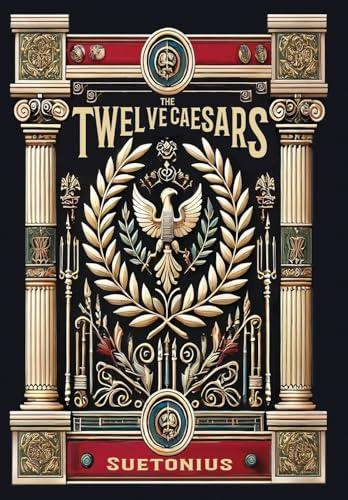
The book was highlighted as a foundational source for the podcast’s deep dive into Roman emperors, with the presenters citing it while analyzing Tiberius. Tom Holland also noted an upcoming new translation, underscoring its continued relevance. Overall, the discussion conveyed strong endorsement of the work as essential reading for anyone interested in Roman history.
Tom Holland referenced Mary Beard's book The Caesars when listing her popularmarket publications.
you've written books on the Parthenon, the general reader, Pompeii, the Caesars
During the discussion the presenters referred to Suetonius' work "The Twelve Caesars" as the source material for their analysis of Tiberius.
in your introduction to the Twelve Caesars, which I was talking about in the last episode
A new translation of Suetonius' classic work on the Roman emperors was announced as soon to be released.
a new translation by an unknown author of Suetonius' Twelve Caesars is about to hit the bookshelves.
Dominic likened Lyndon Johnson to a character from Suetonius' The Twelve Caesars, underscoring Johnson's largerthanlife political persona.
He's like a character from Suetonius' The Twelve Caesars.
The hosts cited Suetonius as the source for a quotation about the fate of Caesar's assassins, using his ancient biography to illustrate the brutal aftermath of the murder.
That's from Suetonius, the Twelve Caesars. It's your own translation, which is why you wanted me because you sort of felt, I think, didn't you, that there hadn't been enough of you in this podcast?
again reported by Suetonius, someone from Thessaly kind of region in Northern Greece comes to Octavian and says that I have seen Caesar. Yeah. And Caesar predicts that you will win.
The hosts cited Suetonius as the source of a quotation about the fate of Caesar's assassins, noting that they were using a translation of his work during the discussion.
That's from Suetonius, the Twelve Caesars. It's your own translation, which is why you wanted me because you sort of felt, I think, that there hadn't been enough of you in this podcast.
It's again reported by Suetonius, someone from Thessaly kind of region in Northern Greece comes to Octavian and says that I have seen Caesar.
The conversation highlighted Suetonius's The Twelve Caesars as a comparative historical source while discussing Rasputin.
I mean, it does make me think about Suetonius and the Twelve Caesars.
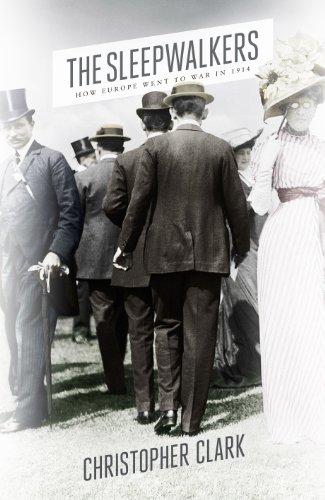
How Europe Went to War in 1914
The hosts highlighted the book as a brilliant, groundbreaking study of the decision‑making that led Europe into war, calling it essential reading for anyone interested in the period. They referenced it as a key source for analyzing British foreign‑office attitudes toward Germany and Russia, and used its critique of the Kaiser’s “blank‑check” myth and vivid portrayal of Austrian decision‑making to challenge traditional narratives. Overall, the presenters praised the work for its insightful analysis and recommended it strongly.
The hosts highlighted Christopher Clark's book as a brilliant, groundbreaking study of the decisionmaking process that led to war, describing it as essential reading for understanding the period.
And so that's what makes me think we've referred a lot to Christopher Clarke's brilliant, groundbreaking book on this process, The Sleepwalkers.
great bestseller The Sleepwalkers.
The presenters cited Christopher Clark's book The Sleepwalkers as a source for his analysis of British foreignoffice attitudes toward Germany and Russia.
...in his book, The Sleepwalkers, great historian, Christopher Clarke, Regis professor at Cambridge. He says, in a way you could argue it's a kind of appeasement that Russia is a big threat to our empire in Asia.
Christopher Clarke talks about this in The Sleepwalkers. He says there's a steady stream of memos... arguing about the threat posed by Berlin.
The presenters referenced Clark's work to question the traditional view of Kaiser Wilhelm as a warmad aggressor, noting the book's critique of the 'blankcheck' myth and its vivid description of Austrian decisionmaking.
Having reread Christopher Clarke's great book, The Sleepwalkers, in preparation for this and having read all your notes, I'm now doubtful.
As Chris Clark says in The Sleepwalkers, they never ever really talk about what will happen if the Russians attack them.
Chris Clark has this wonderful line. It says, the Austrians resembled hedgehogs scurrying across a highway with their eyes averted from the onrushing traffic.
The podcast mentioned Clark's book while describing the mayor's nervous state, citing that the mayor was portrayed in The Sleepwalkers as being in high agitation and perspiring heavily.
He's described by Christopher Clarke in The Sleepwalkers as in a state of high agitation and perspiring heavily.
The hosts cited the book as a brilliant analysis of the AustroHungarian empire and its leaders, noting its vivid description of how FranzJosef haunts people's sleep.
Christopher Clarke in his brilliant book Sleepwalkers says how people dream of Franz Josef. He haunts their sleep.
Chris Clark says in his book The Sleepwalkers, between 1906 and 1914 Conrad repeatedly counseled preventive wars against Serbia, Montenegro, Russia and even Italy.
The hosts introduced the book as a key source they would discuss in upcoming episodes about the preWorld WarI era. They also noted that its introduction linked the prewar world to modern terrorist attacks.
And Chris Clark starts his book The Sleepwalkers, which we will be talking about a lot in the next few episodes.
Christopher Clarke, in the introduction to Sleepwalkers, actually makes this point. He says that, you know, looking back to the prewar world, guys in feathers and archdukes and things. But actually, this is a world that will be very familiar to people who've lived through 911 or the London tube bombings.
The Original Unabridged and Complete Edition (Virgil Classics)
The hosts repeatedly highlighted the work as Virgil's epic that underpinned Roman myth and European literature, noting its use in recounting the legendary origins of Carthage, Dido, and the founding of Rome. They emphasized its adaptation of Homeric material, its Augustan propaganda elements, and its enduring presence, with scholars such as Mary Beard remarking that it had been read every day since Virgil’s death.
The podcast explained that Virgil adapted Homeric material into the Aeneid, describing it as a mythic work that shaped Roman cultural memory.
Virgil, when he adapts Homer to tell this great epic drawing on stories of the Trojan War and the Odyssey, that explains the beginning, the origins of Rome, The Aeneid is a work of mythology.
The hosts described the work as Virgil's epic that founded Roman myth, noting its status as the foundational text of European literature and that it has been continuously read since its composition.
And The Aeneid, it's an epic that tells the story of the founding of Rome, how Rome comes to be founded by a band of exiles from Troy.
Since Virgil wrote it, there probably hasn't been a day when people haven't been reading it. It is absolutely the foundational text of European literature.
It's written by Virgil and it is written in where it's the reign is Augustus emperor.
The Aeneid is a great poem. It's a powerful poem, it's a moving poem, it's a complex poem because Virgil is not just writing Augustan propaganda.
It has been a celebration of Augustus and his regime and Rome's destiny and I guess Roman imperialism, you could say.
They referenced Virgil's epic as the most famous example of how Roman poetry reshaped the AntonyCleopatra story.
the most famous example of this would be in The Aeneid, the great epic of Roman beginnings that Virgil writes.
Mary Beard claimed that since Virgil's death there has never been a day when someone hadn't read The Aeneid, emphasizing its enduring presence.
there wasn't a day when someone hadn't read The Aeneid.
they weren't thinking about the literary merit of The Aeneid.
The hosts explained that the poem, translated by Robert Fagles, was being used to recount the legendary beginnings of Carthage and Dido's story.
So that was the greatest of all Roman poets, Virgil. ... In that poem, The Aeneid, which is translated there by Robert Fagles, Virgil is taking us back, isn't he, to the legendary beginnings of Carthage.
The Aeneid was cited as an example of a later work that borrowed elements from the Odyssey.
There are elements of it in Virgil's poem, The Aeneid.
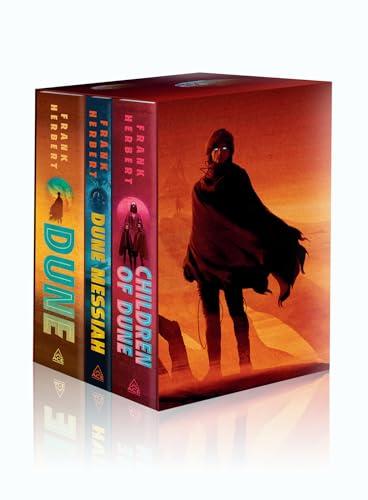
Dune, Dune Messiah, and Children of Dune
The hosts highlighted the book as a prime example of the Folio Society's beautifully crafted deluxe editions, mentioning it alongside other classic titles. They noted its inclusion in the society's collection as a testament to its enduring appeal.
The hosts highlighted Frank Herbert's Dune as another example of a beloved title the Folio Society publishes as a beautifully crafted book.
things like George Orwell's 1984 or the quests in J.R. Tolkien or Frank Herbert's Dune
The Folio Society segment also highlighted Frank Herbert's Dune as another title they publish in deluxe format.
Frank Herbert's Dune
It was listed among the Folio Society's beautifully designed editions of beloved works.
Frank Herbert's Dune...
The Folio Society's catalogue was highlighted for offering highquality editions of classics such as Frank Herbert's Dune.
Things like George Orwell's 1984 or the Quests in J.R.R. Tolkien or Frank Herbert's Dune.
They noted that Dune was written in the 1960s by Frank Herbert and described its desert planet Arrakis, sandworms and the spice melange that powers space travel.
And Dune was written in the 60s by Geico Frank Herbert.
It's full of giant kind of sandworms and things. But what Arrakis produces is a kind of weird thing called spice that effectively powers space travel. It's also called melange.
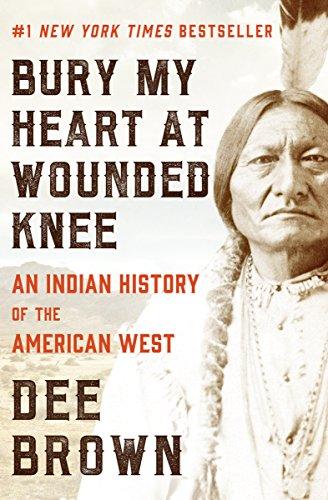
An Indian History of the American West
The hosts highlighted the book as a classic that transformed understanding of the American Indian wars and serves as the standard reference for the Wounded Knee massacre, noting that they had read it and were especially interested in its perspective. While they acknowledged that it may now seem somewhat outdated, they still regarded it as highly significant for the podcast’s discussions of Native American history.
The hosts noted that the book, first published in the early 1970s, was regarded as a classic and highly significant for transforming understanding of the AmericanIndian wars, though some consider it somewhat outdated.
people will be familiar with the book by d brown that was published at the beginning of the 70s called Bury My Heart at Wounded Knee and that was the book that really transformed i think it's now regarded as a bit outdated isn't it tom i think it's regarded though as a classic as a highly significant book in terms of how this kind of clash is understood totally it was transformative
The hosts mentioned the book as the standard reference when discussing the Wounded Knee massacre.
we think of Wounded Knee and we think of Dee Brown's book, which was published in 1970.
They mentioned having read the book and being very into it, alongside other works about Native American history.
I was very into Bury My Heart at Wounded Knee. I was very into Sacred Spirit, all that kind of thing.
Dee Brown'sBury My Heart at Wounded Kneewas cited as a key work that frames the West as lost rather than won.
Well, I think it also reflects the fact that no matter the, you know, Dee Brown, Bury My Heart at Wounded Knee and all the attempts to see how the West was won as being how the West was lost.
Dominic highlighted the book as a powerful revisionist work that reshaped how they view the Wounded Knee massacre, stressing its lasting impact on public perception.
why that book had such an impact um to the degree that I think it'd be very difficult ever again to portray ... Barry my heart at wounded knee
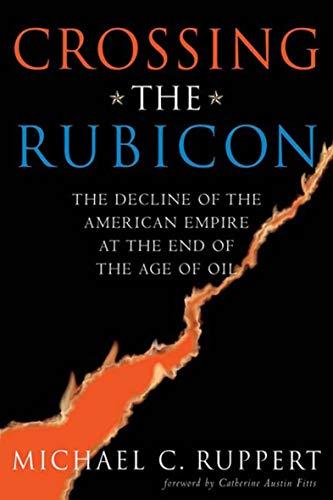
The Decline of the American Empire at the End of the Age of Oil
Tom said he had authored a book called Rubicon about JuliusCaesar, counting it as one of two titles he'd written on the subject.
I've done it twice in two books I've written, Rubicon and Dynasty.
— Episode: 304: The Murder of Julius Caesar
Tom said he had authored a book called Rubicon about JuliusCaesar, counting it as one of two titles he'd written on the subject.
I've done it twice in two books I've written, Rubicon and Dynasty.
Tom said he had written a book titled Rubicon about Caesar's crossing of the Rubicon and the ensuing civil war.
I've done it twice in two books I've written, Rubicon and Dynasty.
The hosts recalled that they were writing the book Rubicon during Chirac's presidency while legal investigations into his conduct were underway.
Well, I remember I was writing Rubicon during this period of Chirac's presidency where lawyers were kind of sniffing around his record. And there were all kinds of talks of bringing him to trial for corruption.
Tom noted that a vivid description of the Lupa Calia festival could be found in the book Rubicon.
There's a brilliant description of this actually in your book, Rubicon, isn't it?
They referenced the book Rubicon as containing fantastic descriptions of Roman villas.
your own book Rubicon which has the most fantastic descriptions of roman villas
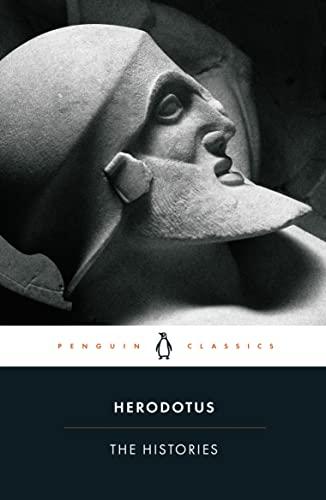
The hosts repeatedly highlighted the Penguin Classics edition as an essential, well‑translated source for understanding the Persian Wars and other ancient events, citing it throughout multiple episodes. They praised its translation, noted its status as the first historical work, and used it to frame discussions on Greece‑Persia conflicts, the Olympics, and even Plato’s ideas. Overall, the book was presented as a highly valuable reference for listeners.
The hosts praised the Penguin Classics edition of Herodotus's The Histories, highlighting its acclaimed translation and usefulness for understanding the Persian Wars.
His book is called The Histories. But your book, as you have told our Restless History Club members already...
Me. So this is the Penguin Classics. The most egotistical podcast ever recorded this episode.
You can read it in my Penguin Classics translation of Herodotus.
Tom's translation of Herodotus, an acclaimed translation, it pains me to say, hugely acclaimed, Tom.
They referred to Herodotus' account of the Persian wars as a foundational historical work that Plato may have drawn from.
I love Herodotus, Tom? Much cherished. I've translated him and everything. And Herodotus tells the story of the Persian invasions of Greece
Herodotus was repeatedly cited as the ancient source whose accounts of the Persian Wars were read and referenced throughout the discussion.
I first read Herodotus and Herodotus has been the kind of classic that's accompanied me through my life most of all but I would say that this story also has accompanied me through my life I mean it was the one of you know it was the first great story from history that I became obsessed by.
The hosts referred to Herodotus's Histories as the source for many of the ancient Olympic stories they discussed, highlighting its role as a primary historical account of the era.
The historian Herodotus tells the story of the Battle of Thermopylae when the Spartans made their heroic stand against the Persian king Xerxes.
Now another person who fights only for glory is my collaborator Tom Holland. The translator of Herodotus's histories, no less.
The hosts referred to Herodotus as the first historian and cited his work several times, using it to frame the PersianGreek conflict.
And Tom, this is from the ancient historian Herodotus, isn't it? Translated by me. And I thought you rendered it beautifully, especially the hint of the eunuch in The Servant.
And Herodotus writes a very famous passage about how and why the Athenians had gone from being losers to complete winners.
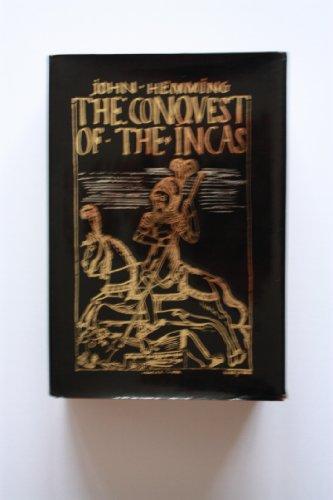
The book was highlighted for its insightful analysis of why the Spanish conquest of Peru was a single, rapid takeover, unlike other gradual European incursions, and for providing detailed estimates of casualties during the Cajamarca massacre. Both hosts praised it as a brilliant source that illuminated key aspects of the Incas' fall, including the role of hysteria among the Spaniards and the potential unifying figure of Chalkuchima. Overall, the discussion conveyed strong endorsement of the title as a valuable reference for understanding the conquest.
The podcast noted Hemming's work as a brilliant account of the fall of the Inca empire, praising its depth and insight into Amazonian history.
And then there's the great historian of the Amazon, John Hemming, who wrote a brilliant book about the fall of the Incas.
This book was cited as a brilliant source when discussing the number of people killed during the massacre at Cajamarca and the general context of the conquest.
John Hemming in his brilliant book, The conquest of the Incas, said, you know, how do you know how many people died?
And actually, it's going to get madder. Because Atahualpa sits down to dinner with Pizarro, surrounded by Spanish guards and servants. As John Hemmings says in his brilliant book, what a weird scene.
This book was praised for making the excellent point that the conquest of Peru was unusual because the Spanish achieved it all in one go, unlike other conquests where Europeans had visited multiple times previously.
In his brilliant book, The conquest of the Incas, John Hemming makes the excellent point that basically, in most places, the Europeans conquered. Europeans had arrived multiple times before they actually turned up for good.
John Hemming says Chalkuchima is the one man who might have united the empire against the Spaniards because he's the one man who's not entirely defined by the Civil War because he had served Atahualpa's father.
And as John Hemming says in his book, the key to the story is the hysteria and the paranoia that has now seized the Spaniards.
The presenters referred to John Hemming's book on the conquest of the Incas as a brilliant and highly recommended work.
John Hemming, brilliant book on The conquest of the Incas. Really, I can't recommend it too highly.
The hosts cited Hemming's book as a thorough account of the Inca empire's organization and the Spanish technological edge, using it to explain the dynamics of the conflict.
as John Hemmings says in his brilliant book, this is the last great tribute to the Inca's genius for organization.
John Hemming says the Spanish always have this technological advantage.
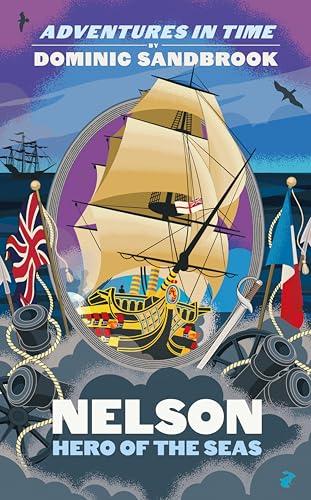
The hosts highlighted the title as the definitive biography of Nelson, positioning it as a climactic chapter in their series and noting that it was authored by Dominic himself. They praised it as the ultimate account of the admiral's life, emphasizing its thoroughness and authority. The overall tone was strongly positive, presenting the book as essential listening for anyone interested in the subject.
The hosts described it as the definitive life of Nelson, a climactic chapter of their series that they claimed was written by Dominic himself.
So begins the climactic chapter of Adventures in Time, Nelson, Hero of the Seas, which Dominic, I'm sure you'd agree, must surely rank as the definitive life of this extraordinary man, written, of course, by yourself.
Yes, Adventures in Time by Dominic Sandbrook.
The hosts highlighted the book as the definitive biography of Nelson, describing it as the climactic chapter of his life and noting it was written by Dominic himself.
So begins the climactic chapter of Adventures in Time, Nelson, Hero of the Seas, which Dominic, I'm sure you'd agree, must surely rank as the definitive life of this extraordinary man, written, of course, by yourself.
Adventures in Time by Dominic Sandbrook.
It was referred to as the latest volume in the bestselling Adventures in Time series, a children's book meant to instil patriotism and a suspicion of French revolutionary fervour.
Dominic, namely yourself, and this is from your new book for children, instilling in them a due sense of patriotism and suspicion of French revolutionary fervour. The latest volume, Tom, in the bestselling Adventures in Time series.
Tom referenced writing a passage in this book while describing Nelson's early patriotic fervour.
when I was writing this in the Adventures in Time book, I thought to myself, this is so much the trajectory of so many great children's stories.
Dominic mentioned he was writing his own Adventures in Time book about Cleopatra, placing her in the Library of Alexandria for a children's history series.
I had a scene with her in the library ... I'm writing my own Adventures in Time book about Cleopatra, putting her in the library for child readers.
Note: The book recommendations on this page are discovered automatically from podcast transcripts, and may be incorrect or incomplete.
Podcast Name