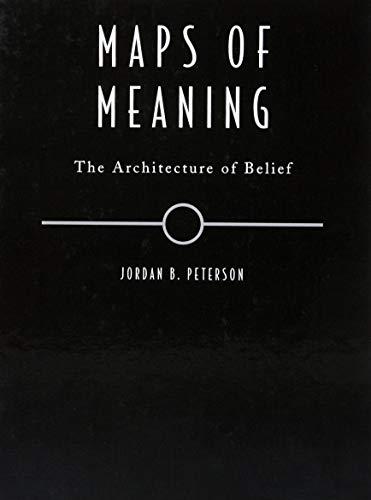
Maps of Meaning
The Architecture of Belief
The title was repeatedly highlighted as Jordan Peterson's foundational work that explored the architecture of belief through a multidisciplinary lens, linking myth, psychology, and neurobiology. Peterson and various guests described it as a demanding but essential read that shaped his later writings and informed discussions on meaning, chaos versus order, and personal responsibility. Listeners and interviewees often cited it as a key source of insight, recommending it for anyone seeking a deeper understanding of human motivation and cultural narratives.
Episode: Meaning, Depression, & the Weight of the World | J...
It was mentioned that the book *Maps of Meaning* was the result of a difficult book that he was writing at the time and that he could not edit or be hungover while writing it, as it would make his writing worse. It turned into the books that the listeners were probably familiar with.
I was writing a very difficult book at that time which turned into my book *Maps of Meaning* which turned into the books that you guys are probably familiar with.
Episode: 451. Navigating Belief, Skepticism, and the Afterl...
Peterson mentioned using Jungian works, neuropsychology and neuropsychopharmacology to try to find the same thing across multiple sources, to validate the idea that it is probably there.
When I wrote Maps of Meaning, so I did that. I used the Jungian works in that regard, but I also used what I knew about neuropsychology and neuropsychopharmacology with the presumption being that if all of these pointers pointed to the same thing, it was probably there.
It's multi-method, multi-trait construct validation fundamentally.
Episode: 430. The Attack on Faith, Family, & Science | Dr....
Jordan Peterson mentioned his book "Maps of Meaning" and a chapter within it, "The Divinity of Interest." He emphasized the importance of aligning what might be considered "whim" with a higher order calling.
When I wrote my first book, when I wrote *Maps of Meaning*, I wrote a chapter in that book called "The Divinity of Interest."
Episode: 414. The Rebirth of the Sacred with John Vervaeke
In "Maps of Meaning", Jordan Peterson conceptualized the call of the sacred as something like "spontaneous interest", which he realized later was equivalent to the more traditional notion of calling.
When I wrote Maps of Meaning, I had started to conceptualize the call of the sacred as something like spontaneous interest, right? Is that, well, so things will grip your attention and compel you in a certain direction. I realized later, after I wrote that book many years later, that that was equivalent to the more traditional notion of calling.
Episode: 385. Faith, Fame, and Adventure: The Reality Stran...
Korie Robertson mentioned reading "Maps of Meaning" by Jordan Peterson. She enjoyed the book and began listening to his podcast.
and then we went back and read about some meaning and all that and just started listened to your podcast and and have loved you and followed you and and prayed for your family
Episode: 343. Parkour and Rough Play: Combatting Infantiliz...
Rafe Kelley mentioned his love for Jordan Peterson's book "Maps of Meaning" and how it helped him bring together his ideas about the physical practices and the importance of the heroic archetype.
And that's how we actually bring meaning into the world.
Episode: 339. The Future: Vision and Invitation
The podcast host discussed the structure of redemptive stories, which he analyzed in his book, using it as a framework for the podcast's vision statement and the ARC's mission.
when I wrote my book Maps of Meaning I analyzed the structure of redemptive stories and and your life is a redemptive story if you're fortunate because you have a lot of trouble in your life and yet you plow through and take care of that trouble and that's a story of redemption
Episode: 333. Konstantin Kisin and the Counter-Woke Revolut...
It was mentioned in relation to the religious narrative underlying climate change discussions, and its content was discussed in relation to the idea of a 'hideous, gorgon-like demon' representing nature.
...he laid out something I'd also investigated in my Maps of Meaning book that is underlying religious narrative...
Episode: 321. A Conversation So Intense It Might Transcend...
Dr. Peterson mentioned this book when he spoke about criticality and consciousness, specifically the border between chaos and order.
I talked about this in maps it's on the border between chaos and order
Episode: 319. Detransition: The Wounds that Won't Heal | Ch...
Dr. Peterson mentions it as one of his books, which he mentions at the beginning of the podcast.
Maps of Meaning: The Architecture of Belief: https://jordanbpeterson.com/maps-of-meaning
Episode: 317. Radical Leftist turned Conservative Activist...
Dr. Peterson discussed his own book, 'Maps of Meaning', explaining how he'd spent a considerable amount of time trying to disprove his own theories through rigorous critical analysis, a process he likened to Nietzsche's 'hammer' philosophy.
when I wrote my first book which was called Maps of Meaning I spent a lot of time writing it but then I spent a lot of time with hammer and tongs trying to break every sentence
Nietzsche described himself as someone who philosophized with a hammer
I tried to do that with Maps of Meaning I figure I rewrote every sentence about 50 times trying to see is there any way is there any argument I can come up with that will get underneath this proposition and make it feel weak and unsteady to me
I only kept the propositions I couldn't break
Episode: 315. The World is Not Ending | Bjørn Lomborg
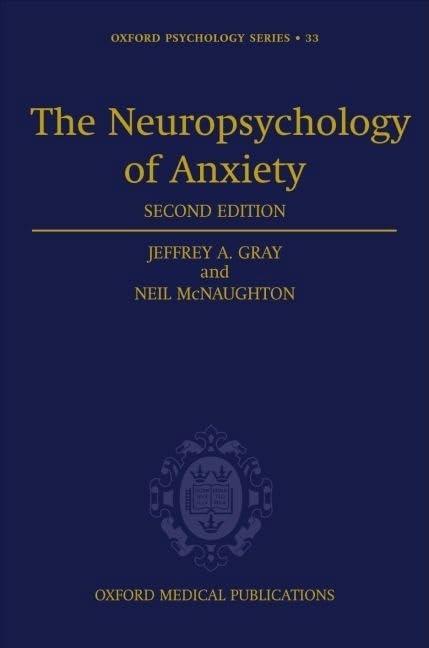
'Maps of Meaning' by Jordan B. Peterson was mentioned, specifically referencing the book's exploration of cognitive categories and symbolic representations, including the concepts of chaos, order, and the process that mediates between them.
When I wrote my book in 1999 called Maps of Meaning, it struck me that the basic cognitive and perceptual categories were something like chaos, order and the process that mediates between them.
Episode: 304. Infamous: When Comedy Exists Outside of Agend...
The book explores the idea that sanity is not just a personal trait, but also a reflection of how well you interact with the social structures around you. It also talks about how these structures influence our perception of the world.
You know, because one of the things I've understood more deeply recently, more explicitly, you know, I've been putting this together, is that the definition of sanity that's generally implicitly held among the psychological community is probably too individualistic.
And what I mean by that is that I don't think that sanity is something that you have in your head, it's not part of your psyche, it's not part of you exactly. It's more like harmonious interaction with the hierarchy of social, uh, of social arrangements that you have with other people.
So you imagine, well, you're a pretty sane person and you're married and your marriage is terrible. It's like, well, then you're not that sane, are you?
Episode: 292. The Language of Creation | Matthieu Pageau
Peterson's book Maps of Meaning focuses on the meaning of mythos and how it relates to human psychology and behavior.
I found an analogy between you your use of diagrams in this book and my use of diagrams in my first book Maps of Meaning it while I was working out the ideas in that book which are analogous in many ways to the ideas that you're presenting were we're definitely what what sniffing down the same trail let's say I found that in order to understand what I was doing I had to make the diagrams and then I decided to include them there's some 70 diagrams yours are there's you have many more diagrams they're more differentiated than my diagrams by quite a a margin
Episode: 282. Mean Tweets: an apologia | Pageau & Hurwitz
During the podcast, Jordan Peterson mentioned his book, 'Maps of Meaning,' in reference to a dream that one of the podcast guests had, in which the guest found themselves in a forest with dead branches casting long shadows. Peterson connected the image of the dead branches to the 'shadow issue' described in his book 'Maps of Meaning.'
well that and that's the that incest insistence motif you know so one of the things you talked about he has a whole symbolic chapter on this about the place where only like mates with light both Jonathan you should jump out
Episode: 277. Deeper Yet Into The Weeds | Pageau & Vervaeke
It was mentioned while discussing the story of Moses and how his decades of judging disputes helped him form the hierarchy of values that led to the 10 Commandments, and the book's theory on meaning.
In my work in Maps of Meaning I called just a narrative a story, but the story that unites all narratives is a meta story.
Episode: 275. Beyond Order: Rule 3 - Do Not Hide Unwanted T...
It was briefly mentioned in the context of the importance of confronting difficult truths and the role of the social and natural world in shaping identity and personality.
and the part of the point I make in that chapter and I would say in both books and in Maps of Meaning as well is that the primary obligation of a parent is to serve as a proxy for the social and the natural world but let's say the social world why well because you want to train your child to be not only acceptable socially but highly desirable socially.
Episode: 264. Beyond Order: Rule 2 - Imagine Who You Could...
It was mentioned alongside 'Beyond Order' as another of Peterson's works that emphasizes the importance of parental responsibility in shaping a child's social desirability and overall development.
is that the primary obligation of a parent is to serve as a proxy for the social and the natural world.
Episode: 262. Beyond Order: Montreal Lecture | Jonathan Pag...
It was mentioned that Jordan Peterson wrote this book while living in Montreal and publishing articles, while he was busy with his work at McGill.
And i wrote my book Maps of Meaning and i published a bunch of articles and i really concentrated on what i was doing at McGill and that went by the wayside and i really regret it because you know i had that opportunity
Episode: 254. The Adventures of Pinocchio and Free Speech P...
It was mentioned as a book where he talks about free speech and a short history from the ancient Greeks to today, emphasising that its existence is astonishing and unlikely, hence requiring vigilance in defence.
I know in the book I talk about giving kind of a very, very short history of free speech from the ancient Greeks to today and it and the point of that is to accentuate this point that actually the fact that we have it is astonishing and unlikely.
Episode: 252. This Lesson From The Bible Will Make You Unst...
It was mentioned as the book the interviewer was referring to when talking about gratitude and suffering in the context of the Christian faith. The interviewer stated that Dr. Peterson spoke about suffering with a sense of gratitude within the book.
So I appreciated Dr. Peterson's discussion on the corpus of the scripture of the Bible in the book, and one of the things that he and I had talked about was to discuss a book, not the book, fair enough?
And one of the things that I've been praying about over the last many weeks and months is how the pandemic has placed in forefront of our culture suffering and death and pain.
So when I was reading through your book and I saw in the last chapter, you speak about suffering and being able to do that with a sense of gratitude.
The very beginning of the chapter you say, 'a much of your life you have been searching for certainty.'
Episode: 237. Your Dark Side and Control Over Your Life | R...
The book discusses the idea of conflict and integrating internal conflict with external conflict.
You should experience for me yeah I enjoyed it a lot yeah sorry you're gonna say your Maps of Meaning was a very important book for me I read it actually to help me with my war book believe it or not for your notion of conflict and integrating internal conflict and external conflict so I just want to thank you and let you know nobody knows about that because I haven't really spoken about it but that book was very important for me
Episode: 236. How to Use Reading and Writing to Find Your P...
It was mentioned that the author wrote every sentence in this book 50 times, showing his dedication to articulation and clarity in his writing.
like when I wrote my first book Maps of Meaning I believe I wrote every sentence in that book 50 times
Episode: 225. The Spiritual Void and the West | Rav Arora
Jordan Peterson discussed the world as characterized by ignorance and malevolence and how individuals often externalize these problems by seeing the world as full of pathology and danger, particularly in social institutions. He also referenced his book, "Maps of Meaning", where he discusses this concept.
Well, this is why an I outline this to some degree in beyond order and also in my first book, Maps of Meaning.
Episode: 220. Theory of Enchantment | Chloé Valdary
It was read by Chlo Valdary during the COVID-19 lockdown and discussed as a source of insight regarding psychological and cultural issues, particularly concerning human nature and in-group/out-group dynamics.
You read Maps of Meaning during COVID so how long did that take you?
I think it took me about a month and then I actually reread my underlined notes before this conversation just to try to prepare myself.
Yeah well it's a long read Maps of Meaning I put an audio version of it out and I think that's probably easier for people because the sentences are so long that reading it out loud enabled me to sort of emphasize some parts and de-emphasize others and I think that was a good hint as to the underlying meaning but okay so well so let's talk about what you're doing first.
Episode: 217. Talking with Russians | Mikhail Avdeev
It was mentioned that people often ask when the next Maps of Meaning lecture will be posted, indicating its popularity and enduring relevance.
People who read 12 rules who watch your lectures and especially those who have read Maps of Meaning and the books you recommend experience rapid personal growth, their emotional states, their health and their relationships change.
People ask when will you post the next Bible lecture? When will we hear the Maps of Meaning?
Episode: 208. The Progress of the Human Race, Part 1
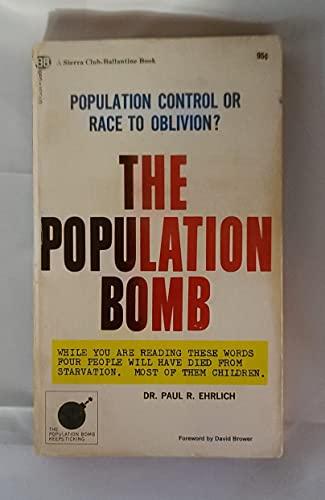
It was mentioned that the book's ideas were partly responsible for the podcast episode's arguments, which discussed the green revolution and how human ingenuity has helped improve the world.
maybe we could pause it as a general biological rule is if the rate of sexual reproduction of ideas exceeds the rate of sexual reproduction of human beings then there's no Malthusian catastrophe
that's a very nice way to put it I think that is exactly the point I like to make
so maybe the answer to Malthus is sort of hidden in some sense inside the presumptions you made in your book
Episode: 186. Bitcoin: The Future of Money? | Bitcoiner Boo...
It was mentioned that the podcast guests were involved in a book club that focused on this book, and that it provides a framework for understanding individual transformations.
I ran across John's podcast partly because their book club also focused on my first book, Maps of Meaning and so I looked up Gigi Durr who's speaking with me today.
And it's a very peculiar phenomenon of course and so that's why I found it so interesting and of course I think there's the book Maps of Meaning and part of the reason why we explored it in the book club is because I think that provides a framework for understanding that phenomenon better.
...and you know Maps of Meaning I think is essentially a book about morality as well in that it's a book about how to act so I found some very interesting parallels there.
...we take those truths that are seemingly entirely unrelated to markets and money you know it's all about is all about mediating the forces of nature the structure of reality and conjunction with the social relationships that constitute life and trying to figure out what behavior is most the most optimal balance between the two and I think we could carry that over to money in markets and it's funny because you know Maps of Meaning could have been called maps of value and obviously money is a map of value but I hadn't drawn the analogy between a map of value and money although in retrospect that seems like an obvious thing to do which is why I got interested in your idea about uninciraptable money.
Episode: 180. A Conversation so Intense It Might as Well Be...
The speaker referred to this book when explaining the distinction between knowing what and knowing how circuitry, which is separate in the brain.
I know some of this because I know that the knowing what and knowing how circuitry is separate now I've known that since I wrote Maps of Meaning and I know the inside circuitry is separate and you know that's what I've been getting out also with regards to this idea of revelation and then critical thinking which we started all this with it never got back to even though it's just a trivialization the logos were found the god god I hope so yeah I hope so John because it's certainly the only justification for my existence red skull and all.
Episode: 168. A Brain Divided | Iain McGilchrist
It was mentioned as a previous book that explored related concepts to the more recent 'Beyond Order' and '12 Rules for Life'.
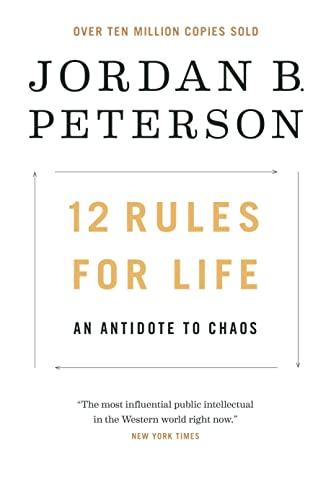
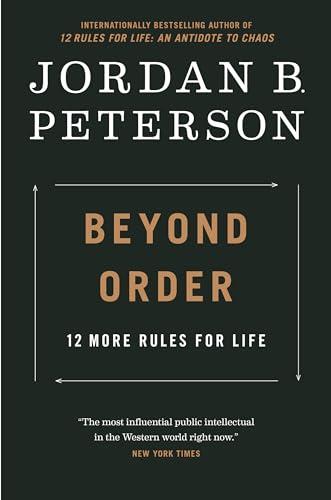
Beyond Order can be read and understood on its own but also builds on the concepts that I developed in my previous books 12 rules for life and before that Maps of Meaning.
Episode: 167. The Psychology of the Psychedelics | Roland G...
'Maps of Meaning' was mentioned as a prior book by Jordan B. Peterson, which is a foundation for the ideas presented in his later works.
Beyond Order can be read and understood on its own, but also builds on the concepts that I developed in my previous books, 12 rules for life and before that Maps of Meaning.
Episode: 166. Writer of Braveheart | Randall Wallace
The book was mentioned as one of Jordan Peterson's previous books, before 12 Rules for Life.
Beyond Order can be read and understood on its own, but also builds on the concepts that I developed in my previous books, 12 rules for life and before that Maps of Meaning.
Episode: 163. Is Everything Better Than We Think? | Bjorn L...
This book is referenced as Jordan Peterson's earlier book. The author is not mentioned, but it is implied to be Jordan Peterson.
Beyond Order can be read and understood on its own but also builds on the concepts that I developed in my previous books 12 rules for life and before that Maps of Meaning.
Episode: 162. Christianity and the Modern World | Bishop Ba...
This book was mentioned along with 'Beyond Order' and '12 Rules for Life' as books that contain related concepts.
Beyond Order can be read and understood on its own, but also builds on the concepts that I developed in my previous books, 12 rules for life, and before that, Maps of Meaning.