A Short History of Ancient Rome
Pascal Hughes
Mentioned 6 months ago
Jean-Bédel Bokassa Part 3: A Coronation for the Ages
Real Dictators is the award-winning podcast that explores the hidden lives of history's tyrants. Hosted by Paul McGann, with contributions from eyewitnesses and expert historians. New episodes available a week early for Noiser+ subscribers. You'll also get ad-free listening, early access and excl...
Recently mentioned
Pascal Hughes
Mentioned 6 months ago
Jean-Bédel Bokassa Part 3: A Coronation for the Ages
Robert E. Vardeman
Mentioned 6 months ago
Jean-Bédel Bokassa Part 2: The Power Grab, the Châteaux and the Missing Daughter

Charles Dickens
Mentioned 7 months ago
Introducing: Charles Dickens Ghost Stories - A Christmas Carol
George Orwell
Mentioned 1 year ago
Fidel Castro Part 9: Down With Fidel!
Anthony DePalma
Mentioned 1 year ago
Fidel Castro Part 9: Down With Fidel!
Nicholas Griffin
Mentioned 1 year ago
Fidel Castro Part 8: Miami Vice
Mervyn J. Bain
Mentioned 1 year ago
Fidel Castro Part 6: The Cuban Missile Crisis
Anthony DePalma
Mentioned 1 year ago
Fidel Castro Part 3: The Mountain Guerrillas
Karl Marx
Mentioned 1 year ago
Fidel Castro Part 2: Shipwrecked in the Swamps
Alex Von Tunzelmann
Mentioned 1 year ago
Fidel Castro Part 1: Rise of ‘The Crazy One’
Lillian Guerra
Mentioned 1 year ago
Fidel Castro Part 1: Rise of ‘The Crazy One’
Jonathan M. Hansen
Mentioned 1 year ago
Fidel Castro Part 1: Rise of ‘The Crazy One’
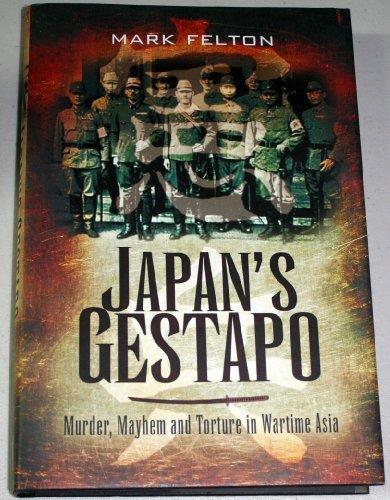
Murder, Mayhem and Torture in Wartime Asia
The hosts referenced the book as a work by military historian Mark Felton that covers Japan’s wartime actions, noting it as relevant to discussions of Tojo’s rise to power and his early career. It was mentioned in passing during both parts of the Tojo series as a source for background on Japan and World War II. The overall tone was neutral, simply pointing listeners to the title for further context.
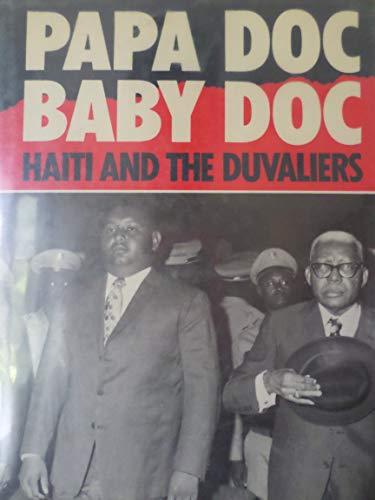
Haiti and the Duvaliers
The book was cited in two episodes to shed light on the Duvalier regime, illustrating how Papa Doc’s propaganda portrayed him as a supernatural figure and linking that myth to events like the Kennedy assassination. It also provided historical context about the U.S. occupation of Haiti and the rise of the dictatorship. The hosts treated it as a valuable source for understanding the era.
The book was mentioned in relation to the discussion of Papa Doc's propaganda, emphasizing the belief that he had supernatural abilities and control over events, even implying that he was responsible for President Kennedy's assassination.
Even if it wasn't true, that really wasn't the point. Because if people believed it, then this was all grist to the Duvalier propaganda mill. That this was a man who was not an ornery man. In fact, he was a sort of supernatural leader.
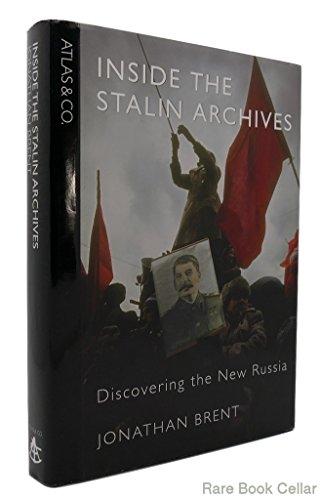
Discovering the New Russia
The book was referenced by Professor Jonathan Brent, who discussed how it revealed the inner mechanisms of the Soviet government under Stalin, including his use of propaganda and purges to control public opinion. The hosts highlighted the author’s detailed research on Stalin’s advertising-like tactics and the way the book illuminated the manipulation of information. It was presented as a valuable source for understanding Stalin’s authoritarian strategies.
Jonathan Brent was referenced as the author of Inside the Stalin Archives.
Professor Jonathan Brent is author of Inside the Stalin Archives, a study of sources from the heart of Soviet government.
Professor Jonathan Brent's book, "Inside the Stalin Archives," provides insights into the inner workings of the Soviet government during Stalin's era. The podcast highlights the author's research on Stalin's propaganda techniques and his ability to manipulate public opinion.
There were still people around who were creating problems for him that were both personal problems but also problems of getting things done They were blocking getting things done And so he needed to get rid of them And the best way to do it is a purge And the best way to do that is to demonstrate that his arch enemies the ones who are the chief obstacles to getting anything done were responsible for the beloved Kirov's death And so that's exactly what he does
Stalin's propaganda was extremely effective and we have accounts of how he would work late into the night developing slogans for this day, for the next day, for the day after and I'll tell you after reading these accounts of the way he would work on the slogans that they were going to export to all of the parties worldwide I came to realize that if Stalin had been born in the United States he would have been a first-class advertising executive because he really understood how to get people to buy what he's selling he was a master at that
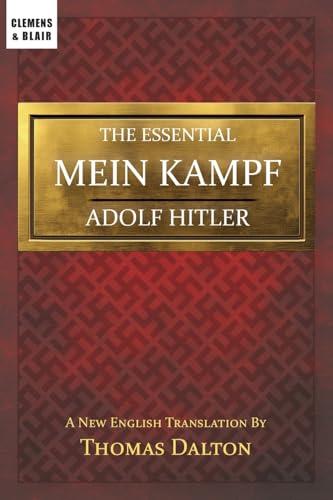
New English Translation
The host referenced the book as the source of Hitler's statements on effective speaking and his view of the Bolsheviks as eternal enemies. Both episodes cited passages to illustrate Hitler's ideology. The discussion was neutral, simply noting its historical content.
The host noted that Hitler claimed the ideas about speaking and listening to audiences were outlined in his own book, Mein Kampf.
He once said in Mein Kampf, the great speaker not only finds the right words, he listens to his audiences.
The host said Stalin seemed to have forgotten what Hitler wrote in Mein Kampf.
He seemed to have forgotten what Hitler wrote in Mein Kampf, My Struggle, that the Bolsheviks were the eternal enemy and had to be destroyed.
The hosts mentioned the work while covering Mussolini's personal life, noting that he had written a romance for his lover. They described it as a quickly‑written potboiler with cliffhangers and strong emotions, but treated it more as a curiosity than a serious recommendation. The overall tone was casual and informational rather than endorsing the title.
Mussolini's novel The Cardinal's Mistress was described as a potboiler with cliffhangers and strong emotions.
His novel, The Cardinal's Mistress, it's like a potboiler. He just tossed it off, but it works. It's got cliffhangers and each chapter leads to the next chapter and it's got strong emotions.
Mussolini was described as having written a romance titled The Cardinal's Mistress for his lover Raqueli, featuring her as the central character.
He dashes off a novel for her, a romance called The Cardinal's Mistress, in which she is the central character.
The narrator recalled being exposed to Orwell's novel 1984 while studying in the USSR, drawing a parallel between its themes and the reality in Cuba.
He's quickly exposed to all kinds of new ideas, including George Orwell's 1984. We all love perestroika. You understand that? At the end of the tunnel, the light that you see is the r...
— Episode: Fidel Castro Part 9: Down With Fidel!
The narrator recalled being exposed to Orwell's novel 1984 while studying in the USSR, drawing a parallel between its themes and the reality in Cuba.
He's quickly exposed to all kinds of new ideas, including George Orwell's 1984. We all love perestroika. You understand that? At the end of the tunnel, the light that you see is the real life or future.
Monica, Macias' daughter, later moved to London and authored a book about her childhood under the watchful eye of not one, but two dictators.
Later she moved to London and will author a book about her childhood under the watchful eye of not one but two dictators.
— Episode: Macías Nguema Part 2: Hiding in the Jung...
Monica, Macias' daughter, later moved to London and authored a book about her childhood under the watchful eye of not one, but two dictators.
Later she moved to London and will author a book about her childhood under the watchful eye of not one but two dictators.

![[Operation Fortitude] [By: Levine, Joshua] [March, 2012] Cover](https://media.podcastbookpicks.com/books/284.jpg)
A Tale of Cannibals, Colonialism, and Michael Rockefeller's Tragic Quest for Primitive Art
Goebbels had written a novel titled Michael about a messianic figure who comes to deliver Germany, which Hitler found impressive.
Hitler, who fancies himself as a writer, is mightily impressed with Goebbels. He's also the author of a rather pertinent novel, titled Michael. It's the story of a messianic figure come to deliver Ger...
— Episode: Hitler's Women & Joseph Goebbels (Part 1...
Goebbels had written a novel titled Michael about a messianic figure who comes to deliver Germany, which Hitler found impressive.
Hitler, who fancies himself as a writer, is mightily impressed with Goebbels. He's also the author of a rather pertinent novel, titled Michael. It's the story of a messianic figure come to deliver Germany.
Enver Hoxha's personal library contained many classic works of literature, including "The Divine Comedy" by Dante Alighieri.
These books included the whole library of classics, the library of world literature including Dante and Shakespeare and Zola and Montesquieu and Russo and Diderot.
— Episode: Enver Hoxha Part 2: Stalin’s Shadow, Eur...
Enver Hoxha's personal library contained many classic works of literature, including "The Divine Comedy" by Dante Alighieri.
These books included the whole library of classics, the library of world literature including Dante and Shakespeare and Zola and Montesquieu and Russo and Diderot.
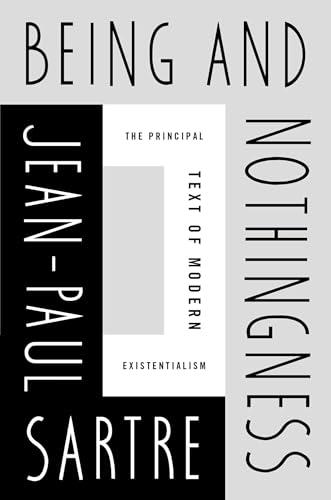
Enver Hoxha's personal library contained a variety of books, including "Being and Nothingness" by Jean-Paul Sartre.
It included books by Sartre and Kamu and the one thing it didn't include was anything written by either Marx or Lenin which one might find surprising.
— Episode: Enver Hoxha Part 2: Stalin’s Shadow, Eur...
Enver Hoxha's personal library contained a variety of books, including "Being and Nothingness" by Jean-Paul Sartre.
It included books by Sartre and Kamu and the one thing it didn't include was anything written by either Marx or Lenin which one might find surprising.
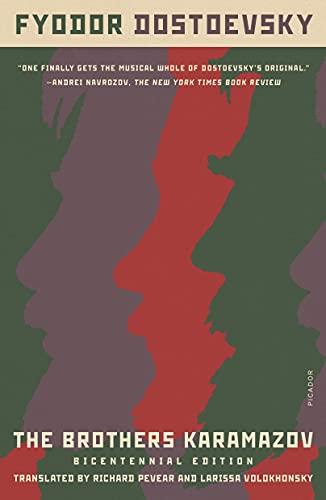
A Novel in Four Parts With Epilogue
Enver Hoxha's personal library contained many classic works of literature, including "The Brothers Karamazov" by Fyodor Dostoevsky.
These books included the whole library of classics, the library of world literature including Dante and Shakespeare and Zola and Montesquieu and Russo and Diderot.
— Episode: Enver Hoxha Part 2: Stalin’s Shadow, Eur...
Enver Hoxha's personal library contained many classic works of literature, including "The Brothers Karamazov" by Fyodor Dostoevsky.
These books included the whole library of classics, the library of world literature including Dante and Shakespeare and Zola and Montesquieu and Russo and Diderot.
The Original 1843 Edition (Charles Dickens Classics)
The narrator described it as a newly released ghost story that had sold out its first print run within days and would become a lasting festive tradition.
Will these new things last, he wondered? As is the new book that Dickens himself has just published. His gaze is drawn to a copy lying on the mantelpiece. It's a ghost story.
— Episode: Introducing: Charles Dickens Ghost Stori...
The narrator described it as a newly released ghost story that had sold out its first print run within days and would become a lasting festive tradition.
Will these new things last, he wondered? As is the new book that Dickens himself has just published. His gaze is drawn to a copy lying on the mantelpiece. It's a ghost story.
It's called... A Christmas Carol. It'll go on to become a festive tradition all of its own, as successive generations gather close to listen in the flickering candlelight.
The version of A Christmas Carol that I'll be reading today isn't quite the same as the one Dickens wrote in the winter of 1843. It's a version that he personally abridged and performed on stage to rave reviews.
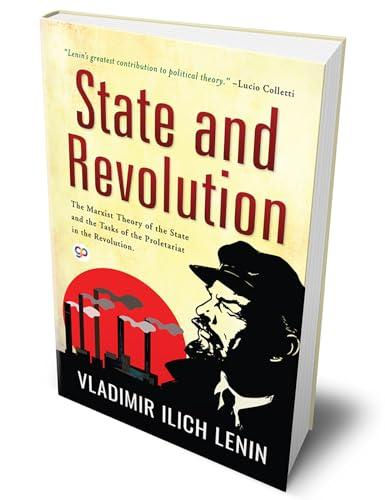
This book was mentioned in the context of Lenin writing prodigiously while hiding out in a forest hut in Finland. The book explores his vision for the future of the government when workers take control, suggesting that the traditional concept of the state will cease to exist.
He envisages that when the workers take control, it will signal the death of the government as traditionally conceived. Where there's the state, there's no freedom, he writes. And where there's freedo...
— Episode: Lenin Part 3: First Russia, Then the Wor...
This book was mentioned in the context of Lenin writing prodigiously while hiding out in a forest hut in Finland. The book explores his vision for the future of the government when workers take control, suggesting that the traditional concept of the state will cease to exist.
He envisages that when the workers take control, it will signal the death of the government as traditionally conceived. Where there's the state, there's no freedom, he writes. And where there's freedom, there will be no state.
And by the summer of 1917, Lenin is increasingly saying, just give all power to the Soviets.
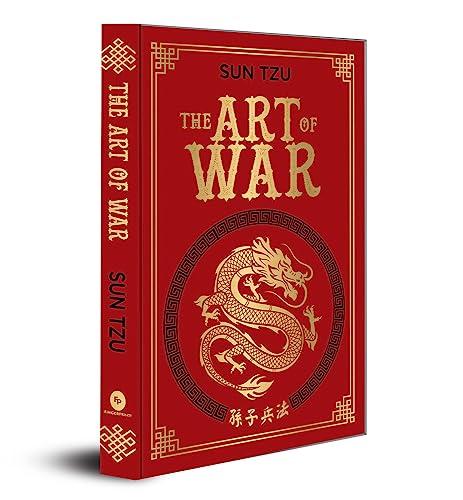
The host referenced Sun Tzu's classic treatise, noting its famous dictum about knowing your enemy.
In Sun Tzu's famous treatise, The Art of War, the author decrees, to know your enemy, you must become your enemy.
— Episode: Colonel Gaddafi Part 4: The Munich Olymp...
The host referenced Sun Tzu's classic treatise, noting its famous dictum about knowing your enemy.
In Sun Tzu's famous treatise, The Art of War, the author decrees, to know your enemy, you must become your enemy.
Note: The book recommendations on this page are discovered automatically from podcast transcripts, and may be incorrect or incomplete.
Podcast Name