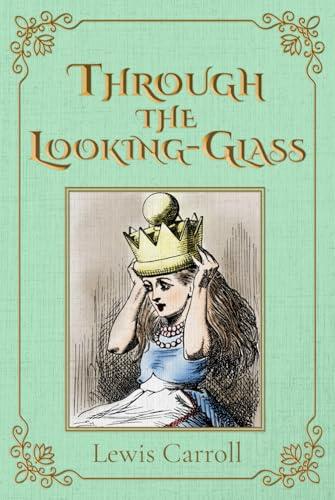
Through the Looking-Glass (Illustrated): The 1871 Classic Edition with Original Illustrations Cover
Podcast Mentions

Through the Looking-Glass (Illustrated) The 1871 Classic Edition with Original Illustrations

Lewis Carroll

Through the Looking-Glass Discover Lewis Carroll’s beautiful original edition, featuring over 50 high-quality illustrations and a fun quiz about Alice and her unforgettable adventures.

Podcasts 4
Quotes 21
Stuff You Should Know

It was published in 1871 and featured a chapter dedicated to Humpty Dumpty, solidifying his image as an egg in popular culture, with illustrations by John Tenniel depicting him as an egg with clothes and limbs.

"

And Lewis Carroll comes in through Alice, I'm sorry, through the looking glass in 1871, one of the more spectacularly seemingly drug-fueled tomes to ever be written.

— Episode: Short Stuff: Humpty Dumpty

Episode: Short Stuff: Humpty Dumpty

It was published in 1871 and featured a chapter dedicated to Humpty Dumpty, solidifying his image as an egg in popular culture, with illustrations by John Tenniel depicting him as an egg with clothes and limbs.

"

And Lewis Carroll comes in through Alice, I'm sorry, through the looking glass in 1871, one of the more spectacularly seemingly drug-fueled tomes to ever be written.

And the Eggman has a chapter in this dedicated to him wherein Alice says she clearly saw that it was Humpty Dumpty himself. It can't be anybody else. I'm as certain of it as if his name were written all over his face.

And so like that was the whole thing where like you and me and everybody else breathing today thinks of Humpty Dumpty as an egg thanks to that book, thanks to that chapter on him, thanks to the fact that he was just out and out at egg.

That's where like the idea of Humpty Dumpty that we have today finds its roots almost, you know, visually and through our imagination from that book.

Episode: Short Stuff: Humpty Dumpty

Published in 1871, it features a chapter dedicated to Humpty Dumpty, cementing his image as an egg-like creature with a human-like appearance in popular culture, thanks to the book's illustrations and narrative.

"

And Lewis Carroll comes in through Alice, I'm sorry, through the looking glass in 1871, one of the more spectacularly seemingly drug-fueled tomes to ever be written.

And the Eggman has a chapter in this dedicated to him wherein Alice says she clearly saw that it was Humpty Dumpty himself. It can't be anybody else. I'm as certain of it as if his name were written all over his face.

And so like that was the whole thing where like you and me and everybody else breathing today thinks of Humpty Dumpty as an egg thanks to that book, thanks to that chapter on him, thanks to the fact that he was just out and out at egg.

That's the first time it was like, look, it's definitely an egg. Let's just cut to the chase. Face it.
Episode: Short Stuff: Humpty Dumpty

It was mentioned as the 1871 book that solidified Humpty Dumpty's image as an egg, with a chapter featuring Alice and a depiction of him as an egg-like being.

"

And then Lewis Carroll comes in through Alice, I'm sorry, through the looking glass in 1871, one of the more spectacularly seemingly drug-fueled tomes to ever be written.

And the Eggman has a chapter in this dedicated to him wherein Alice says she clearly saw that it was Humpty Dumpty himself.

It can't be anybody else. I'm as certain of it as if his name were written all over his face.

And so like that was the whole thing where like you and me and everybody else breathing today thinks of Humpty Dumpty as an egg thanks to that book, thanks to that chapter on him, thanks to the fact that he was just out and out at egg.

That's the first time it was like, look, it's definitely an egg. Let's just cut to the chase. Face it.
Behind the Bastards

This book was mentioned in connection with the QAnon narrative, which attempts to link the story and its author to child trafficking.

"

Through the looking glass And Lewis in Carol's second book And what Alice found there Alice really enters Wonderland

— Episode: The QAnon Book: A Half-a*sed, Bagel-Toss...

Episode: The QAnon Book: A Half-a*sed, Bagel-Tossing Review

This book was mentioned in connection with the QAnon narrative, which attempts to link the story and its author to child trafficking.

"

Through the looking glass And Lewis in Carol's second book And what Alice found there Alice really enters Wonderland

On Being with Krista Tippett

Krista Tippett mentioned Lewis Carroll's book, *Through the Looking-Glass*, and referenced a quote from the White Queen about memory working backward to frame the conversation's focus on remembering forward.

"

it's a poor memory that only works backwards

— Episode: [Unedited] Hendrik Hertzberg, Serene Jon...

Episode: [Unedited] Hendrik Hertzberg, Serene Jones, and Pa...

Krista Tippett mentioned Lewis Carroll's book, *Through the Looking-Glass*, and referenced a quote from the White Queen about memory working backward to frame the conversation's focus on remembering forward.

"

it's a poor memory that only works backwards

Episode: [Unedited] Hendrik Hertzberg, Serene Jones, and Pa...

Krista Tippett mentioned Lewis Carroll's book, *Through the Looking-Glass*, and quoted the White Queen's line about memory working backward, which she used to frame the conversation's focus on remembering forward.

"

it's a poor memory that only works backwards

Episode: [Unedited] Krista Tippett — Remembering Forward

A line from Lewis Carroll's "Through the Looking-Glass" inspired Krista Tippett's concept of "Remembering Forward," capturing the profound learning in her life of conversation. The quote, "It's a poor memory that only works backward," is mentioned as inspirational.

"

It's a poor memory that only works backward.

Episode: [Unedited] Krista Tippett — Remembering Forward

The author mentions a quote from this book, "It's a poor memory that only works backward." This quote inspired the author's concept of "Remembering Forward."

"

it's a poor memory that only works backward

Episode: [Unedited] Krista Tippett — Remembering Forward

A line from Lewis Carroll's "Through the Looking-Glass" inspired Krista Tippett's concept of "Remembering Forward," highlighting the profound learning in her life of conversation.

"

it's a poor memory that only works backward.

Episode: [Unedited] Krista Tippett — Remembering Forward

The book was mentioned in reference to a quote from the White Queen, which inspired Krista Tippett's concept of "Remembering Forward." The quote about memory working backward was used to illustrate a profound learning experience.

"

it's a poor memory that only works backward.

Big Take

Podcast

Big Take

In the episode the hosts used the book as a metaphor, describing the economy as a through‑the‑looking‑glass situation that felt reversed and confusing. They likened current conditions to the odd, upside‑down world portrayed in the title, but did not recommend the work itself. The reference was brief and illustrative rather than evaluative.

Episode: Wait, Weren’t We Supposed to Have a Recession in 2...

The economy was described as a 'throughthelookingglass' situation, implying it felt reversed and confusing like the world in the book.

"

We are in a through-the-looking-glass economy to me.

Note: The book recommendations on this page are discovered automatically from podcast transcripts, and may be incorrect or incomplete.