Breakneck
Dan Wang
Mentioned 1 month ago
Elon Musk and America's Tech Oligarchy with Quinn Slobodian

On Mondays, Jon Stewart hosts The Daily Show, but on Thursdays, he's back in your ears with The Weekly Show -- a podcast featuring in-depth conversations with a range of special guests. From experts and advocates, to stakeholders and thought leaders, we discuss the challenges, changes, and ideas tha...
Recently mentioned
Dan Wang
Mentioned 1 month ago
Elon Musk and America's Tech Oligarchy with Quinn Slobodian
Quinn Slobodian
Mentioned 1 month ago
Elon Musk and America's Tech Oligarchy with Quinn Slobodian
Quinn Slobodian
Mentioned 1 month ago
Elon Musk and America's Tech Oligarchy with Quinn Slobodian
Ezra Klein
Mentioned 1 month ago
Elon Musk and America's Tech Oligarchy with Quinn Slobodian
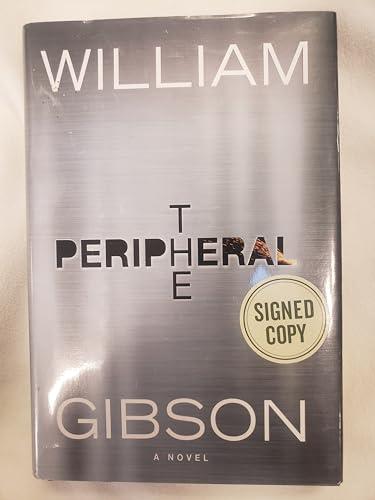
William Gibson
Mentioned 1 month ago
Elon Musk and America's Tech Oligarchy with Quinn Slobodian
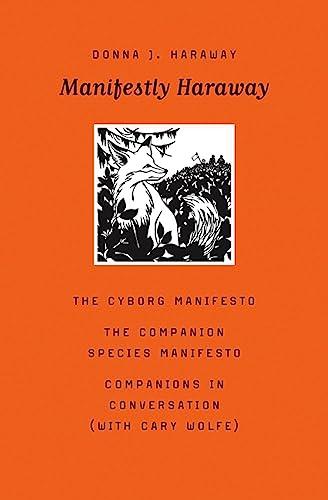
Donna J. Haraway
Mentioned 1 month ago
Elon Musk and America's Tech Oligarchy with Quinn Slobodian
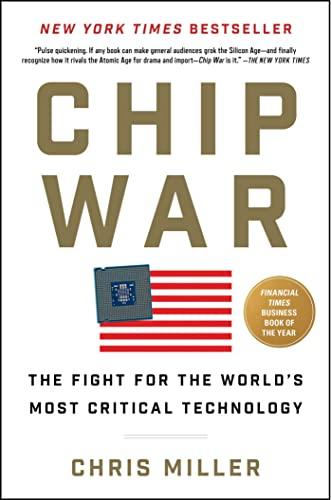
Chris Miller
Mentioned 2 months ago
America, China, and the Tech Cold War with Chris Miller
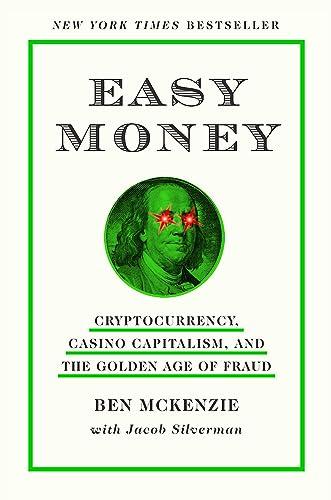
Ben McKenzie
Mentioned 3 months ago
The Other Side of the (Bit)Coin with Ben McKenzie

Inc. Peter Pauper Press
Mentioned 3 months ago
America vs. The Rest with Alastair Campbell
Renee DiResta
Mentioned 4 months ago
The Real Election Threat with Casey Newton and Renée DiResta
Richard H. Thaler
Mentioned 5 months ago
The Irrational Economy with Richard Thaler
Radley Balko
Mentioned 5 months ago
The ICE Age of Surveillance and Enforcement
Jon Stewart mentioned Elie Wiesel's Night while discussing literature that addresses genocide and suffering.
KNight by Elie Wiesel. Elie Wiesel.
— Episode: On Gaza and Humanity with Mosab Abu Toha
Jon Stewart mentioned Elie Wiesel's Night while discussing literature that addresses genocide and suffering.
KNight by Elie Wiesel. Elie Wiesel.
The Many Pasts and Disordered Present of American Party Politics (Princeton Studies in American Politics)
The co-authors explained the reasons for the two-party system's dominance in American politics, citing factors like Duverger's Law and the strategic behavior of voters. They also discussed the impact of institutional design and the role of the Supreme Court.
The core thing I mean, this goes back. There was a political scientist, a Frenchman named Maurice Duverger. Oh, Duverger. I'm so sick of that guy.
— Episode: Two-Party System: Third Parties Need Not...
The co-authors explained the reasons for the two-party system's dominance in American politics, citing factors like Duverger's Law and the strategic behavior of voters. They also discussed the impact of institutional design and the role of the Supreme Court.
The core thing I mean, this goes back. There was a political scientist, a Frenchman named Maurice Duverger. Oh, Duverger. I'm so sick of that guy.
Mid 20th century. And he put forth what political scientists call a law, Duverger's law, that says if you have a system of electoral rules in which you have single member districts.
That combination, plurality voting and single member districts tends to lead to, this is why it's not really a law. It's just a kind of a rule of thumb, tends to lead to stable two party systems and makes it very hard for a kind of equilibrium.
So the intuition in our politics is that in order to win, you have to keep your side intact and fracture the opposition. Both sides see that they have to keep their sides intact, fracture the opposition. That leads to two teams, which we call parties.
The story is a lot of people - Well, tell RFK Jr. that. They're keeping him out of the debates. A lot of people are - more so now than ever because we're in a very ideologically polarized time. People are sincerely motivated in what they're doing.
The host identified Ezra Klein as the author of Why We're Polarized, noting his role as a columnist and podcast host. The book was referenced twice as part of Klein's credentials.
And he's the author of Why We're Polarized.
— Episode: How Algorithms, Money, & Bureaucracy Dis...
The host identified Ezra Klein as the author of Why We're Polarized, noting his role as a columnist and podcast host. The book was referenced twice as part of Klein's credentials.
And he's the author of Why We're Polarized.
Ezra Klein, columnist at New York Times, host of the Ezra Klein Show podcast, the author of Why We're Polarized.
Thoughts on the Race Reckoning That Wasn't and How We All Can Move Forward Now
Bakari Sellers, the CNN political commentator, discussed the book during a conversation about the current political climate and the upcoming election, framing it as a perspective on moving forward after a missed race reckoning. He highlighted how the title offers thoughts on addressing racial issues in today's political landscape. The discussion presented the book as a relevant contribution to ongoing political discourse.
During the episode, Jon Stewart invoked the title as a reference point, likening the current climate to the novel's depiction of societal decay. He suggested that the situation felt like the book's themes of enforced conformity and violence. The mention served to illustrate his point rather than recommend the work.
Jon Stewart compared the situation to the novel, saying it felt like Clockwork Orange.
This feels like clockwork orange.
Our Bodies, Their Lies, and the Truths We Use to Win
The book was noted as an upcoming release by Jessica Valenti, founder of AbortionEveryDay.com, during a discussion on the challenges to abortion rights in the United States and the strategies used to limit access. The hosts highlighted its relevance to the ongoing debate but did not provide a detailed endorsement.
Modern Monetary Theory and the Birth of the People's Economy
The book was brought up at the end of the episode, where Professor Kelton explained how conventional thinking about government spending and deficits is flawed, linking it to earlier conversations about inflation and the economy. She and guest Larry Summers debated the implications of large fiscal packages and tax cuts, emphasizing that deficits do not necessarily limit future resources. The discussion presented the title as a provocative perspective rather than a direct endorsement.
Professor Kelton's book challenges traditional economic views on government spending and deficits; her perspective was discussed at the end of the podcast episode in relation to a previous episode about inflation and the economy.
So there has been for a very long time this idea that when the government increases spending or cuts taxes and the deficit increases, that it leaves you with fewer resources, like you're less able to respond to a crisis in the future.
If the Republicans are successful in pushing these tax cuts through, we are going to be living, he said, on a shoestring for decades to come because of the increases in the deficit.
Congress authorized bill after bill, fiscal package after fiscal package, $2.2 trillion, $900 billion, $1.9 trillion, $5 trillion in the span of 12 months, John.
You cannot just take out the money bazooka and go wild and expect no consequences.
All of the dollars that banks have at the Federal Reserve are kept in accounts called reserve accounts at the Fed. The Fed pays interest on those.
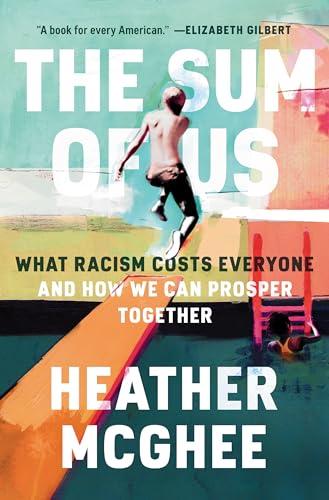
What Racism Costs Everyone and How We Can Prosper Together
The book illustrated how white towns drained public pools rather than integrate them, using that as a metaphor for contemporary societal division.
Ladies and gentlemen, Heather McGee, author of The Sum of Us.
— Episode: DEI? You’re Fired! with Heather McGhee
The book illustrated how white towns drained public pools rather than integrate them, using that as a metaphor for contemporary societal division.
Ladies and gentlemen, Heather McGee, author of The Sum of Us.
I wrote this book, The Sum of Us. And the central story was when many white townspeople officials decided to drain their public pools rather than integrate them.
Heather McGee, author of The Sum of Us.
The People Who Turn Lies into Reality
Renee DiResta was identified as the author of the book, which was mentioned while introducing her as a guest and again in the closing remarks.
Also the author of Invisible Rulers, The People Who Turn Lies Into Reality.
— Episode: The Real Election Threat with Casey Newt...
Renee DiResta was identified as the author of the book, which was mentioned while introducing her as a guest and again in the closing remarks.
Also the author of Invisible Rulers, The People Who Turn Lies Into Reality.
Renee Dressa, Associate Research Professor ... and also the author of Invisible Rulers, The People Who Turn Lies Into Reality.
Landmark in Learning
The book was referenced as an example of a singular, historic work during a segment about the Pentagon’s press purge. Jon Stewart mentioned it briefly to illustrate the significance of unique books in history.
The same segment referenced the Gutenberg Bible as another example of a singular, historic book.
Gutenberg Bible and done.
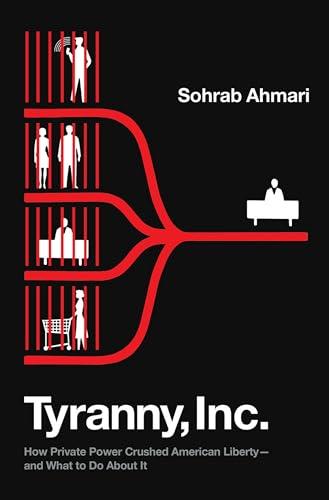
How Private Power Crushed American Liberty--and What to Do About It
The book was briefly mentioned when the guest was introduced as its author and U.S. editor of UnHerd. No further discussion or endorsement was provided during the episode.
This book was mentioned in connection with Sohrab Ahmari, who was introduced as its author and a US Editor of UnHerd.
and Sora Abamari, U.S. editor of Unheard and author of Tyranny, Inc.
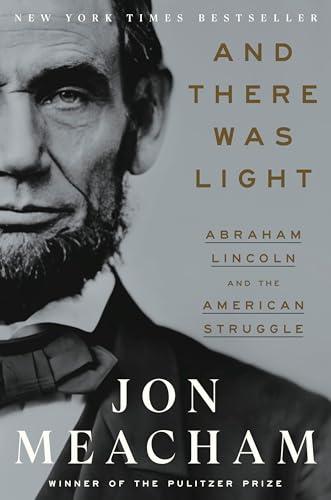
Abraham Lincoln and the American Struggle
In the episode, the guest historian was introduced as the author of a biography of Lincoln, noting the book's focus on the president’s life and the American struggle. The hosts highlighted the author's credentials as a presidential historian and praised the work as a notable contribution to Lincoln scholarship. The overall tone was appreciative, positioning the title as a valuable resource for listeners interested in history.
This book was identified as a biography of Lincoln, written by the guest historian Jon Meacham.
the fabulous historian, Bon Vivant, gentleman and scholar. Bon Vivant. John Meacham, presidential historian, author of And There Was Light, a biography of Lincoln.
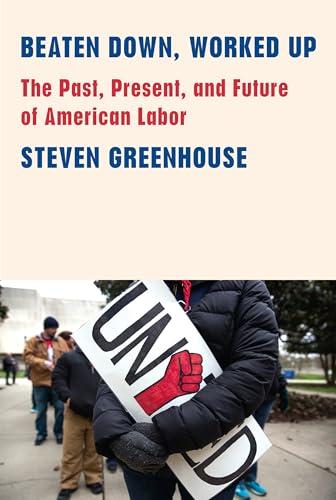
The Past, Present, and Future of American Labor
The book was highlighted as a key lens for understanding the gap between Republican populist rhetoric and anti‑worker policies, with the author pointing out contradictions in statements versus actions on wages, safety standards, and union rights. The episode used its analysis to illustrate how the party’s rhetoric failed to translate into support for the nation’s forgotten workers.
The book examines the past, present, and future of American labor. It was discussed in relation to the disconnect between Republican populist rhetoric and anti-worker policies.
Donald Trump and J.D. Vance talk a good ballgame. They talk the talk, but they don't walk the walk.
The Republican Party doesn't walk the walk. The judges they've appointed to the Supreme Court and other courts are quite anti-worker, anti-union.
Donald Trump says, I'm for the nation's forgotten men and women, but he didn't raise a finger to increase the minimum wage.
He says he's all for coal miners, but his administration actually weakened standards for safety for coal miners.
He said, I'm fighting hard for coal miners, yet the number of coal mining jobs dropped by 25% when he was president.
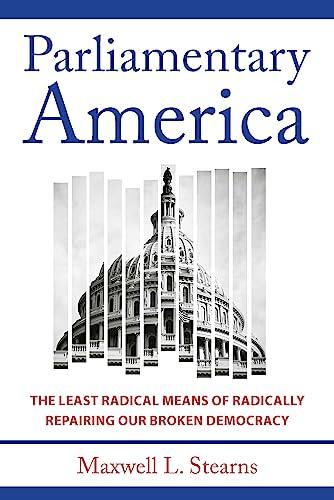
The Least Radical Means of Radically Repairing Our Broken Democracy
The author explained that the book argued institutional design penalizes third‑party voters and called for reforms to reward them, while also challenging the myth of American exceptionalism and exposing flaws in the founders’ design. He highlighted two central threats to democracy—too few parties in the U.S. and too many elsewhere—and presented the book’s proposals as a compelling roadmap for repairing democracy. The discussion conveyed strong endorsement of the book’s ideas.
The author discussed the third party dilemma and how current institutions do not allow third parties to thrive, suggesting restructuring to reward voters who choose them. He also touched on the need to move beyond American exceptionalism and acknowledge the flaws in the founding fathers' design.
I think the really important thing for voters to understand is it's not a problem of our individual will. It's not like we have a problem because we're not voting for third parties. Our institutions do not create space for third parties to play a significant beneficial role.
Instead, it punishes voters when they vote for third parties rather than rewards them. And the question becomes, how do we restructure our institutions to change that?
One of the things that we have to get over is American exceptionalism. The idea that there was a group of geniuses who happened to meet at a particular time and place who solved all the problems of democracy. That's not true.
They actually messed up in pretty significant ways. The system that they constructed isn't the system that we have, or at least the ones that they thought they constructed. And so it's really important to recognize that.
The central lesson of that tour - there's two central lessons of the tour. There are two threats to democracy, too few parties like the U.S., too many parties.
Cryptocurrency, Casino Capitalism, and the Golden Age of Fraud
Jon Stewart highlighted the book as a New York Times bestseller on economics and called it a fascinating read.
Ben is the author of the New York Times bestselling book, Easy Money, on economics and directed and produced the feature film, Everyone Is Lying to You for Money.
— Episode: The Other Side of the (Bit)Coin with Ben...
Jon Stewart highlighted the book as a New York Times bestseller on economics and called it a fascinating read.
Ben is the author of the New York Times bestselling book, Easy Money, on economics and directed and produced the feature film, Everyone Is Lying to You for Money.
He's the author of the New York Times bestselling book, Easy Money. You got to get it. It's a fascinating read and Everyone Is Lying to You for Money, which is the documentary about this industry.
A Memoir
In the episode, guest Rory Stewart disclosed that he authored a memoir recounting a decade of his political career and the chaotic realities of being a politician. He noted that the title reflects his candid perspective on politics, presenting the book as a personal account rather than a formal endorsement. The conversation was brief and served mainly to inform listeners of the book's existence.
Rory Stewart disclosed that he authored a book titled How Not to Be a Politician, recounting a decade of his political career and the chaotic realities of being a politician.
I have written a book, which in the US, it's a title you might like. It's called How Not to Be a Politician.
The Fight for Our Future
The book was described by its author as originally aimed at Filipino citizens but intended as a warning for everyone, highlighting how the public information ecosystem rewards corruption. Maria Ressa emphasized its relevance beyond the Philippines, presenting it as a call to vigilance against authoritarianism. The episode presented the title as an essential read for anyone concerned about misinformation and democratic decay.
The book was originally written for Filipino citizens but served as a warning call for everyone, triggered by the public information ecosystem that rewards corruption.
The book that I wrote was originally written for Filipino citizens, but it was literally a warning call. For everyone, because it, because this was triggered by the public information ecosystem that we live in, which rewards corruption.
The book was cited as the source where Schumpeter introduced the concept of "creative destruction" and argued that capitalism's greatest achievement was making items like silk stockings affordable for factory girls rather than just the elite. Jon Stewart referenced this point during the episode, using it to illustrate the broader impact of capitalist innovation.
The book was mentioned as the source where Joseph Schumpeter coined the term 'creative destruction' and argued that capitalism's great achievement was bringing goods like silk stockings within reach of factory girls.
And in a book during World War II called Capitalism, Socialism and Democracy, he said, you know, the great achievement of capitalism was not making more silk stockings for queens, the queens of England, the queens of Europe, but bringing them in reach of factory girls.
The General's First Lady (Modern First Ladies)
During the episode, Jon Stewart read from the book, noting that it was published in 1954 and written by Alden Hatch, who had personal access to Mamie Eisenhower. He highlighted Hatch's connection as a friend of the former first lady, but did not elaborate further on its content or quality. The mention served mainly as a historical reference rather than a recommendation.
The speaker was reading from this book, which was published in 1954, and mentioned that Alden Hatch had access as a personal friend of Mamie Eisenhower.
Mamie Eisenhower, ladies and gentlemen. This is a man - Look at this. At home in his study. He could be doing anything. It could be Candy Crush. And in that moment, it is a book on Mamie Eisenhower. Blurred by Claire Booth Luce. What?
This, by the way, is also - this is the complete and unabridged.
This book is written by Alden Hatch. It was published in - Let's see. It was published in 1954. It was big in 54. Had to be. Had to be.
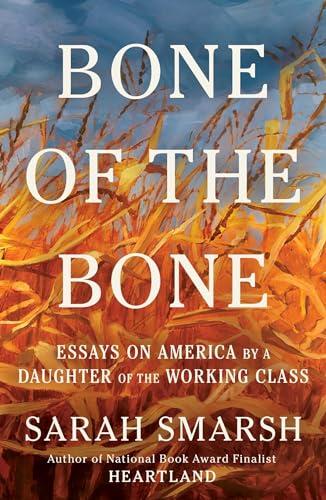
Essays on America by a Daughter of the Working Class
The book was highlighted by the hosts after guest Sarah Smarsh appeared on the show, with Jon Stewart introducing her as the author. They discussed it as a crucial lens for understanding working‑class voters by exploring the intersection of class and identity. Smarsh emphasized the importance of centering class as its own identity in current political discourse.
This book, written by guest Sarah Smarsh, explored the intersection of class and identity in America, which the hosts discussed as a crucial lens for understanding working-class voters.
Her name is Sarah Smarsh. She's a journalist. She's the author of Bone of the Bone, Essays on America by a Daughter of the Working Class.
This really feels like a moment when maybe my message about class and the way that we need to center it and discuss it as an identity unto itself is really critical right now.
Note: The book recommendations on this page are discovered automatically from podcast transcripts, and may be incorrect or incomplete.
Podcast Name