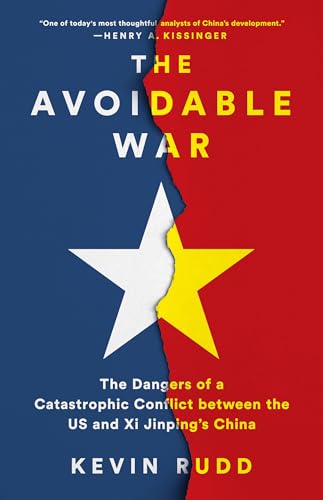
The Avoidable War
Kevin Rudd
Mentioned 1 week ago
What Xi Jinping Wants
Ezra Klein invites you into a conversation on something that matters. How do we address climate change if the political system fails to act? Has the logic of markets infiltrated too many aspects of our lives? What is the future of the Republican Party? What do psychedelics teach us about consciousne...
Recently mentioned
Kevin Rudd
Mentioned 1 week ago
What Xi Jinping Wants
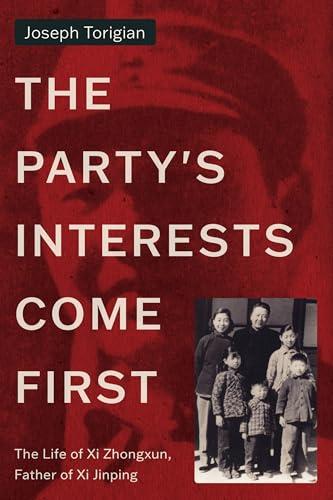
Joseph Torigian
Mentioned 1 week ago
What Xi Jinping Wants
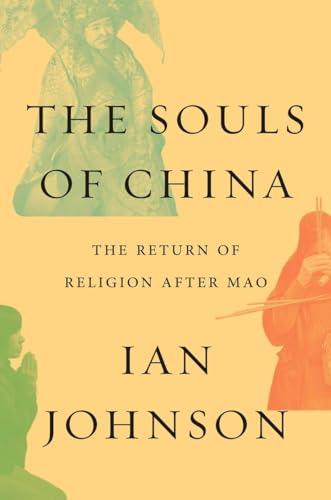
Ian Johnson
Mentioned 1 week ago
What Xi Jinping Wants
Rebecca Solnit
Mentioned 1 week ago
The Very Good and Very Bad News on Climate
Bill McKibben
Mentioned 1 week ago
The Very Good and Very Bad News on Climate
Terry Tempest Williams
Mentioned 1 week ago
The Very Good and Very Bad News on Climate
Leah C. Stokes
Mentioned 1 week ago
The Very Good and Very Bad News on Climate
Amy Westervelt
Mentioned 1 week ago
The Very Good and Very Bad News on Climate
Bashir Bashir
Mentioned 2 weeks ago
A Radical Vision for Israelis and Palestinians
Stanley Cohen
Mentioned 2 weeks ago
A Radical Vision for Israelis and Palestinians
Hussein Agha
Mentioned 2 weeks ago
A Radical Vision for Israelis and Palestinians
Becky Chambers
Mentioned 2 weeks ago
A Radical Vision for Israelis and Palestinians
A History of the United States
Ezra Klein highlighted the book as a single‑volume history that illustrates how many current challenges repeat over time, recommending it for its perspective on present issues. He also praised it as a moving, brilliantly written survey of American history and named it a top pick for listeners.
He described it as a nonnew, singlevolume history of the United States that shows many current challenges are cyclical. He recommended it for its historical perspective on present issues.
Two, I've been reading over time, it's not new, These Truths by Jill Lepore, one volume History of the United States, which helps to reinforce that so many of the challenges and dynamics that we face in this moment are actually not unique, even if the specifics are, how cyclical our challenges are and our history is.
Ezra Klein described Lepore's survey of American history as moving and brilliantly written, recommending it as a top pick.
Just as a pure American history I think Jill Lepore's survey is just so moving, brilliantly written and I'm not picking it because she's my colleague at The New Yorker.
During a discussion on how relationships can degrade into objectification, the hosts referenced the book as a foundational text that introduced the I‑Thou concept, describing it as a sacred, divine way of relating. Ezra Klein recalled his mentor assigning it as the first reading, and Priya Parker highlighted its emphasis on the sacredness of interpersonal connections. The episode presented the work positively, suggesting it offers valuable insight for anyone concerned with meaningful social bonds.
Judith referenced Buber's classic work while explaining how the Sabbath enables people to move beyond selfinterest toward a relational mode of being.
you are able to ... Martin Buber talks about in his book, I Thou, and you are able to become a better member of your community and incidentally a better person.
The speaker referenced Martin Buber's work regarding the relationship between I and thou when discussing how relationships break down when people become objects of charity or tasks for redemption.
When I listen to that quote, I think of Martin Buber, right? Oh, no, just in general. And this idea, you know, I'm a conflict resolution facilitator. My mentor, Hal Saunders, the first book he ever made me read was Martin Buber's writings and the relationship between I and thou.
So I, thou is an idea that the relationship between you and me is sacred. It's divine.
When Nature Breaks the Law
Ezra Klein recommended the book for its quirky investigations of how nature sometimes "breaks the law," mentioning topics like elephants killing people and killer trees.
But I'm also reading Fuzz When Nature Breaks the Law by the great science writer Mary Roach, which deals with things like what do you do when elephants kill people? And how do you dea...
— Episode: Opinion Crossover: California Republican...
Ezra Klein recommended the book for its quirky investigations of how nature sometimes "breaks the law," mentioning topics like elephants killing people and killer trees.
But I'm also reading Fuzz When Nature Breaks the Law by the great science writer Mary Roach, which deals with things like what do you do when elephants kill people? And how do you deal with killer trees or bears or cougars, which I assume are issues that you have in California?
Ezra Klein recommended the book for its quirky exploration of how nature "breaks the law," from elephants to killer trees.
I'm also reading Fuzz: When Nature Breaks the Law by Mary Roach, which deals with things like what do you do when elephants kill people and how you deal with killer trees or bears.
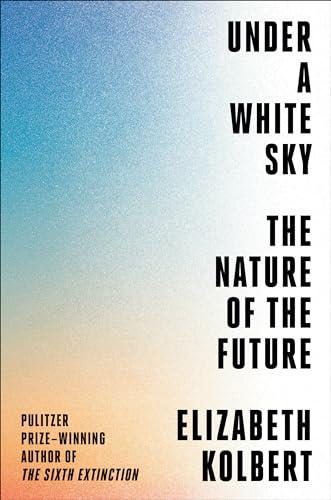
The Nature of the Future
Kolbert's book examines humanity's attempts to control nature and the unintended consequences of those interventions, arguing that we are now forced to manage a world we have fundamentally altered.
I'm Ezra Klein, and this is The Ezra Klein Show. So it's only February, but I'm pretty sure Elizabeth Kolbert's Under a White Sky is going to be on my best books of 2021 list. It's a...
— Episode: Should We Dim the Sun? Will We Even Have...
Kolbert's book examines humanity's attempts to control nature and the unintended consequences of those interventions, arguing that we are now forced to manage a world we have fundamentally altered.
I'm Ezra Klein, and this is The Ezra Klein Show. So it's only February, but I'm pretty sure Elizabeth Kolbert's Under a White Sky is going to be on my best books of 2021 list. It's a wonderful work.
your book of course is Under a White Sky it is phenomenal I loved reading it
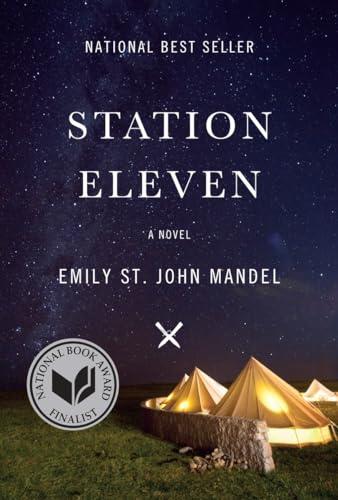
Ezra Klein described it as a 2014 novel that imagines a world after a pandemic wiped out almost everyone, and the guest said she could not write it now because it would be too terrible with a child.
And that is Station Eleven by Emily St. John Mandel. Station Eleven is published in 2014. It imagines the world after a pandemic has wiped out almost everyone, about...
— Episode: Emily St. John Mandel on Time Travel, Pa...
Ezra Klein described it as a 2014 novel that imagines a world after a pandemic wiped out almost everyone, and the guest said she could not write it now because it would be too terrible with a child.
And that is Station Eleven by Emily St. John Mandel. Station Eleven is published in 2014. It imagines the world after a pandemic has wiped out almost everyone, about 99% of the human race.
I wrote Station Eleven, which is a novel where 99% of the population dies before I had a child. I don't think I could write it now because imagining the world ending with your child would be orders of magnitude more terrible.
There are a lot of ghosts. There are nonlinear structures where, you know, in Station 11, a character dies on page two or three. But then we get to come back to them.
Ezra described the novel's emotional power and how it helped him grieve during the pandemic, noting its resurgence as a bestseller and a TV series. He also reflected that writing it now would feel different after having children.
And that is Station Eleven by Emily St. John Mandel. Station Eleven is published in 2014. It imagines the world after a pandemic has wiped out almost everyone.
It has this particular emotional power as a book. It helps you grieve a life you still have.
And so her book, which was already this beloved international bestseller, it found a second life.
You know, I wrote Station Eleven, which is a novel where 99% of the population dies before I had a child. I don't think I could write it now because imagining the world ending with your child ... would be orders of magnitude more terrible.
There are a lot of ghosts. There are nonlinear structures where, you know, in Station 11, a character dies on page two or three. But then we get to come back to them.
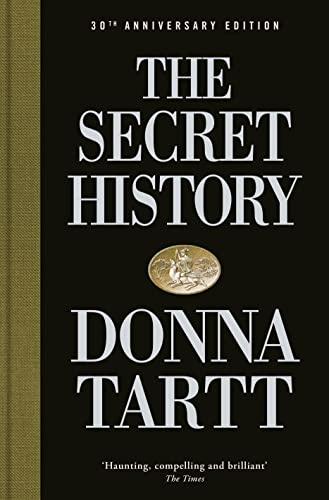
30th anniversary edition
Ashley Parker described it as a fantastic classic and recommended it to listeners.
I'm going to say The Secret History by Donna Tartt, which is just fantastic classic.
— Episode: Inside Trump’s ‘Royal Court’
Ashley Parker described it as a fantastic classic and recommended it to listeners.
I'm going to say The Secret History by Donna Tartt, which is just fantastic classic.
The host expressed enthusiastic admiration, calling the novel "absolutely extraordinary" and describing the emotional impact of finishing it.
The Secret History by Donna Tartt, and it is so fucking good. It's like, I finished the book two weeks ago and, like, entered, like, a brief, like, one-hour period of mourning. Like, that wonderful experience you have with a novel where, like, the turning of the last page is a true tragic event for the soul.
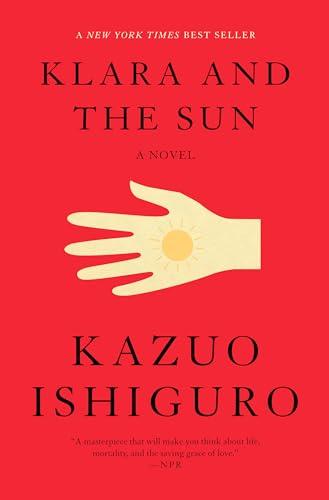
A novel
Ezra Klein highlighted it as a scififlavoured fiction that explores what it means to serve and be served and what it means to be human.
So the first book is Clara and the Son, which is a fiction book. It's sort of a scifi fiction book. But I think it's really about what it means to serve and be served and what it means to be human.
— Episode: Welcome to the ‘Take This Job and Shove...
Ezra Klein highlighted it as a scififlavoured fiction that explores what it means to serve and be served and what it means to be human.
So the first book is Clara and the Son, which is a fiction book. It's sort of a scifi fiction book. But I think it's really about what it means to serve and be served and what it means to be human.
The host recommended Kazuo Ishiguro's novel Klara and the Sun, describing it as unpretentious prose that is beautiful and hard to put down.
The first one I'm not quite finished, but it's unbelievable. Kazuo Ishiguro's Klara and the Sun. I finished it recently and I won't ruin anything, but it won't shock you to know it has an emotional ending. He's so generous as a writer and it's not fancy pants.
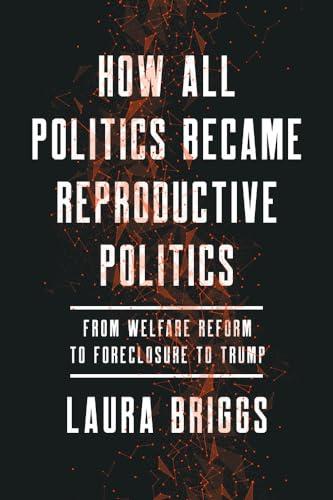
From Welfare Reform to Foreclosure to Trump (Volume 2) (Reproductive Justice
Ezra recommended this work during the bookrecommendation segment, noting its full subtitle.
Laura Briggs, How All Politics Became Reproductive Politics, From Welfare Reform to Foreclosure to Trump.
— Episode: We’re on the Precipice of a Post-Roe Wor...
Ezra recommended this work during the bookrecommendation segment, noting its full subtitle.
Laura Briggs, How All Politics Became Reproductive Politics, From Welfare Reform to Foreclosure to Trump.
Ezra Klein recommended this book for its analysis of the link between welfare reform, foreclosure, and Trumpera reproductive politics.
Laura Briggs, How All Politics Became Reproductive Politics, From Welfare Reform to Foreclosure to Trump.
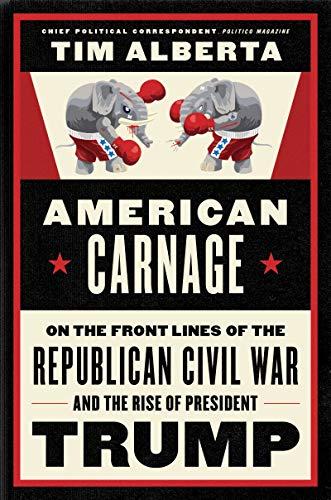
On the Front Lines of the Republican Civil War and the Rise of President Trump
Ezra Klein highlighted the book as essential context for understanding current politics, noting that little had changed since its release. He described it as a frontline account of the Republican civil war and Trump’s rise and urged listeners to read or reread it. The overall tone was a strong endorsement.
Ezra Klein urged listeners to read or reread the book, saying that not much has changed since its publication. He framed it as essential context for current politics.
Tim Alberto's American Carnage because not much has changed.
Ezra Klein noted that Tim Alberta was the author of American Carnage, a book about the frontline of the Republican civil war and Trump's rise.
He's also the author of American Carnage, on the front lines of Republican Civil War and the rise of President Trump.
Ezra praised it as probably the best singlebook distillation of longtermism and noted the guest devoted much of his discussion to its ideas.
the author of the forthcoming book, What We Owe the Future, which is probably the best single book distillation of longtermism you'll find
— Episode: Three Sentences That Could Change the Wo...
Ezra praised it as probably the best singlebook distillation of longtermism and noted the guest devoted much of his discussion to its ideas.
the author of the forthcoming book, What We Owe the Future, which is probably the best single book distillation of longtermism you'll find
that's what I dedicate most of What We Are The Future to discussing
The guest mentioned the upcoming book on longtermism, noting its release was expected in September2022 and that it discusses what we should do today for future generations.
One of them is What We Owe the Future by the Scottish philosopher Will MacAskill. It comes out, I think, in September 2022. And it's about the idea of longtermism. It's about what are the things we could do today that could matter to all the future generations? And shouldn't we care about that when those future generations don't have a voice in the things we're doing today that affect them?
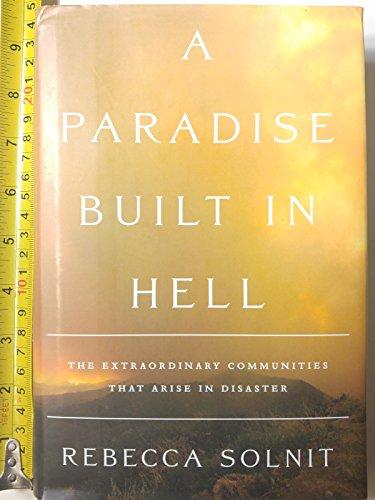
The Extraordinary Communities That Arise in Disaster
He referenced it as a book about people helping each other after calamities.
It reminds me of this book by Rebecca Solnit, A Paradise Built in Hell, which is all about the ways people come together after calamity.
— Episode: Emily St. John Mandel on Time Travel, Pa...
He referenced it as a book about people helping each other after calamities.
It reminds me of this book by Rebecca Solnit, A Paradise Built in Hell, which is all about the ways people come together after calamity.
Ezra referenced Solnit's book when discussing how people tend to help each other after catastrophes rather than devolve into chaos.
It reminds me of this book by Rebecca Solnit, A Paradise Built in Hell, which is all about the ways people come together after calamity.
Ben Domenech recommended the title as essential reading for grasping the perspective of conservatives in both America and Britain on their cultural battles, noting it was a recent release. He emphasized that the book helped explain the broader conservative cultural conflict across the two countries.
Ben recommended The War on the West as essential reading for understanding conservative cultural battles in the U.S. and Britain.
For three books for you, two from colleagues that I have at The Spectator, The War on the West by Douglas Murray, I think is essential reading to understanding the perspective of conservatives both in America and Britain on the cultural battles that they see going on all around them.
Ben Domenech described it as essential reading for understanding conservative cultural battles in America and Britain, noting it was a recent release.
The War on the West by Douglas Murray, I think is essential reading to understanding the perspective of conservatives both in America and Britain on the cultural battles that they see going on all around them.
What the Internet Is Doing to Our Brains
The host recalled that Carr's book changed his thinking about digital media's impact on attention.
It's actually Nicholas Carr's book that began to The Shallows, it began to make me think differently about this.
— Episode: Best Of: This Is Your Brain on Deep Read...
The host recalled that Carr's book changed his thinking about digital media's impact on attention.
It's actually Nicholas Carr's book that began to The Shallows, it began to make me think differently about this.
Carr's title was invoked to illustrate the concept of shallow reading that digital environments encourage, linking it to the discussion of attention and comprehension.
That's why Nicholas Carr used the term shallows
The Science of Parallel Universes and Its Implications
Ezra Klein and guest Demis Hassabis both recommended the book, noting that it raised the fundamental questions in physics they hoped to address using AI tools. They highlighted its relevance for exploring complex scientific problems and suggested it as a key resource for their discussions.
Ezra Klein said he would recommend the book because it poses the big questions in physics that he would like to tackle with AI tools.
I would say first of all, Fabric of Reality by David Deutsch. I think that poses all the big questions in physics that I would love one day to tackle with our AI tools.
The guest said it posed all the big questions in physics that he would love to tackle with AI tools.
I would say first of all, Fabric of Reality by David Deutsch. I think that poses all the big questions in physics that I would love one day to tackle with our AI tools.
How Culture Is Driving Human Evolution, Domesticating Our Species, and Making Us Smarter
Henrich argued that the capacity for cultural learning distinguished humans from other species.
His 2015 book, The Secret of Our Success, argued that what sets human beings apart from other species is our capacity for cultural learning.
— Episode: If You’re Reading This, You’re Probably...
Henrich argued that the capacity for cultural learning distinguished humans from other species.
His 2015 book, The Secret of Our Success, argued that what sets human beings apart from other species is our capacity for cultural learning.
Ezra recommended The Secret of Our Success for its fascinating anthropological perspective on what makes humans uniquely successful as a species.
And the third book I want to recommend is The Secret of Our Success by Joe Henrich. Joe Henrich is an anthropologist who has some really interesting ideas about what it means to be human and what is special about the human species that made us so successful relative to other species.
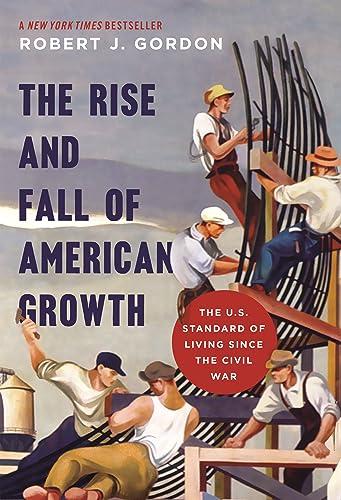
The U.S. Standard of Living since the Civil War (The Princeton Economic History of the Western World)
The book was highlighted as a key argument that the rapid growth of the early industrial era is unlikely to return, tracing the transformation between the late 19th and mid‑20th centuries. Ethan Mollick introduced it in a discussion about AI, and the host Roger cited it as a seminal, though pessimistic, analysis of the historic wave of innovation and its recent decline. Both episodes presented it as essential reading for understanding future productivity challenges.
Mollick described the book as an argument that the rapid growth of the early industrial era will not recur and explained how the world changed between the late1800s and mid1900s.
One of them is The Rise and Fall of American Growth, which is an argument about why we will never have the kind of growth that we did in the first part of the Industrial Revolution again. It describes how the world changed between 1870 or 1890 and 1940 versus 1940 and 1990 or 2000, showing the transformation of the world during that period.
The guest called it a seminal, somewhat pessimistic work that examines the historic wave of innovation and its recent decline.
The last is to me a seminal book which is sort of in a way an anti-Acemoglu and Robinson was by Robert Gordon, it's called The Rise and Fall of American Growth and it really explores why there was this huge wave of innovation between 1880 and 1940 roughly, 1950, 1960 actually into the 60s and then the decline and it's much more pessimistic and that is very disturbing for the future because if productivity growth slows, I think it becomes much more difficult to sustain our sort of society.
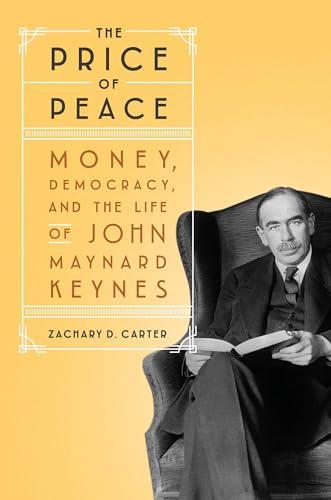
Money, Democracy, and the Life of John Maynard Keynes
Krugman said he had just finished reading the book, which examined John Maynard Keynes and his influence on world affairs.
I just read, it's been out for a while, but I just read ahead of discussion, Zach Carter's The Price of Peace, which is about John Maynard Keynes and his role in the world.
— Episode: Paul Krugman on the ‘Biggest Trade Shock...
Krugman said he had just finished reading the book, which examined John Maynard Keynes and his influence on world affairs.
I just read, it's been out for a while, but I just read ahead of discussion, Zach Carter's The Price of Peace, which is about John Maynard Keynes and his role in the world.
Summers referred to Carter's recent biography of Keynes as a work showing how ideas and economic models have lasting impacts.
Zachary Carter's recent biography of Keynes, which I think demonstrates that ideas and even economic models ultimately and over time have larger impacts than maneuvers and machinations in small rooms, despite the fact that the latter seem more important at any particular moment in time.
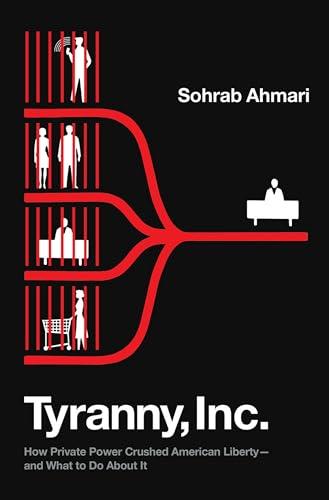
How Private Power Crushed American Liberty--and What to Do About It
The book was highlighted in two episodes as a recent work that examined how private power has eroded American liberty and offered insight into current political and labor dynamics. Hosts and guests described it as a useful and unusual perspective, noting its relevance for understanding modern political and workplace challenges.
Tyranny, Inc. was cited among the recommended books, described as a recent work that examines how private power has undermined American liberty. The hosts pointed to it as a useful read for understanding current political dynamics.
One of them is Sorabh Ahmari. In his book, also from last year, Tyranny, Inc., how private power crushed American liberty and what to do about it
He described the new book as an unusual look at modern American labor through the lens of a former Trump supporter.
Second one will be kind of maybe unusual. There's a new book called Tyranny, Inc. by someone who endorsed Trump before, but actually looked at the modern American labor situation and sees clearly what someone in the labor movement or someone who's actually paying attention to what work life is like, how it's basically a dictatorship.
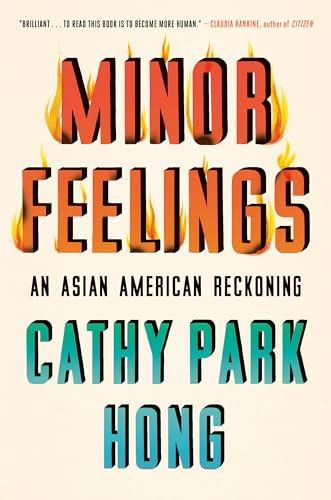
An Asian American Reckoning
Dr. Gladys Hill recommended Minor Feelings, saying every contemporary essayist and popculture critic should be chasing the book.
Minor Feelings by Cathy Park Hong. I think everybody who says that they are an essayist and a popular culture critic right now needs to be chasing this book.
— Episode: Your Success Probably Didn’t Come From M...
Dr. Gladys Hill recommended Minor Feelings, saying every contemporary essayist and popculture critic should be chasing the book.
Minor Feelings by Cathy Park Hong. I think everybody who says that they are an essayist and a popular culture critic right now needs to be chasing this book.
It was recommended as a mustread culturalcriticism essay collection for anyone identifying as an essayist or popculture critic.
Minor Feelings by Kathy Park Hong. I think everybody who says that they are an essayist and a popular culture critic right now needs to be chasing this book.
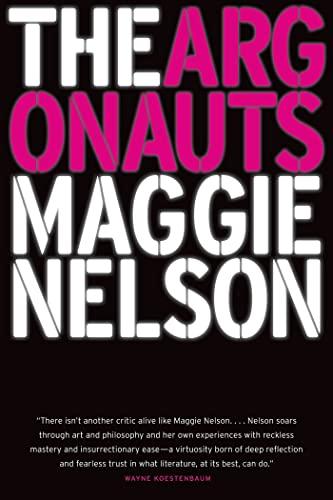
A Memoir
The host highlighted a passage where Nelson compares gender transition to aging, using it to illustrate how gender evolves over time.
there's a lovely passage in Maggie Nelson's The Argonauts where she kind of accidentally or coincidentally compares gender transition to aging.
— Episode: We Need Better Narratives About Gender
The host highlighted a passage where Nelson compares gender transition to aging, using it to illustrate how gender evolves over time.
there's a lovely passage in Maggie Nelson's The Argonauts where she kind of accidentally or coincidentally compares gender transition to aging.
Nelson was introduced as the author of the beautiful books The Argonauts and Bluets, highlighting her reputation as a poet and essayist.
She's the author of the beautiful books The Argonauts and Bluets.
Note: The book recommendations on this page are discovered automatically from podcast transcripts, and may be incorrect or incomplete.
Podcast Name