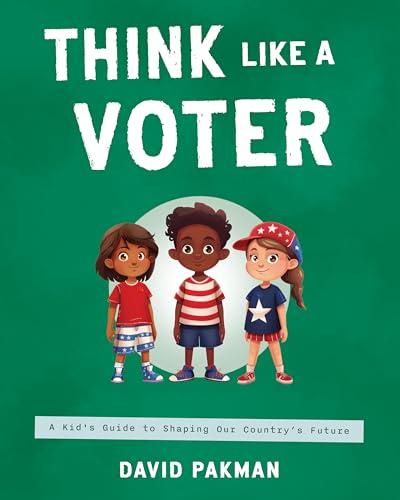
Think Like a Voter
David Pakman
Mentioned 5 months ago
Inside the MAGA Blueprint for Breaking the Midterms
It's on. Twice a week, award-winning journalist Kara Swisher gets to the heart of the story through no-holds-barred interviews with power players across business, tech, media, politics and beyond. So why do her guests show up? “Smart people,” says Kara, “like difficult questions.” Mondays and Thursd...
Recently mentioned
David Pakman
Mentioned 5 months ago
Inside the MAGA Blueprint for Breaking the Midterms
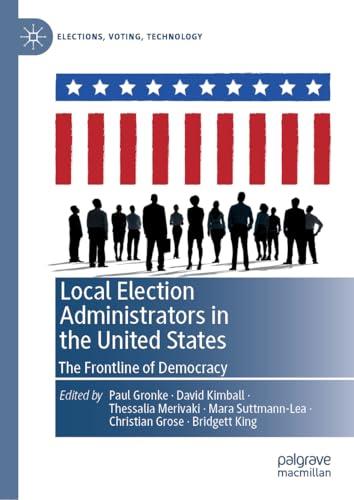
Paul Gronke
Mentioned 5 months ago
Inside the MAGA Blueprint for Breaking the Midterms
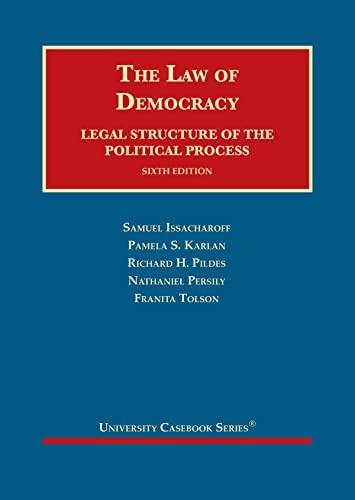
Samuel Issacharoff
Mentioned 5 months ago
Inside the MAGA Blueprint for Breaking the Midterms
Kara Swisher
Mentioned 7 months ago
Comedian Tig Notaro on Laughing Through Grief
Geraldine Brooks
Mentioned 7 months ago
Comedian Tig Notaro on Laughing Through Grief
Bill Gates
Mentioned 1 year ago
Bill Gates on How to Tax the Rich, AI, Misinformation, & the Election
Lyn Alden
Mentioned 1 year ago
Pete Buttigieg Thinks Trumpism is in Its Last Season
David Rohde
Mentioned 1 year ago
From “Witch Hunt” to “Weaponization”: The Impact of Trump’s War on the DOJ with David Rohde
Matt George
Mentioned 1 year ago
From “Witch Hunt” to “Weaponization”: The Impact of Trump’s War on the DOJ with David Rohde
Jeff Benedict
Mentioned 1 year ago
Robert Reich on Trump, Harris, Musk and More
Sarah Lewis
Mentioned 1 year ago
Hillary Rodham Clinton Drops Truth Bombs
Hillary Rodham Clinton
Mentioned 1 year ago
Hillary Rodham Clinton Drops Truth Bombs
American Evangelicals in an Age of Extremism
Alberta's book, written after his father's death, explores the evangelical church's influence on American politics, incorporating his personal experiences and reporting on the movement's evolution.
I think he's a wonderful writer. And so I've read a lot of books of evangelicals and they sort of read the same, but Tim is so good at storytelling and narrative and involves himself in it.
— Episode: God, Money and Trump with Tim Alberta
Alberta's book, written after his father's death, explores the evangelical church's influence on American politics, incorporating his personal experiences and reporting on the movement's evolution.
I think he's a wonderful writer. And so I've read a lot of books of evangelicals and they sort of read the same, but Tim is so good at storytelling and narrative and involves himself in it.
It becomes a really interesting journey for him to get some revelations about why are the evangelicals doing what they're doing?
His confrontation as a reporter who covers politics and covers the rise of this political movement that has its roots all the way back to Reagan and beyond.
He had composed this note on the occasion of my father's death to express just how disappointed he was in me. I was part of an evil plot the man wrote to undermine God's ordained leader of the United States.
If I could use my journalism skills to investigate the deep state he wrote uncovering the shadowy cabal that was sabotaging Trump's presidency then I would be restored. He said he was praying for me.
A Trip into the Mirror World
It explores the phenomenon of misinformation through the lens of Naomi Klein's confusion with conspiracy theorist Naomi Wolf, examining how Wolf's views evolved and the broader implications of mirror worlds and conspiratorial thinking in politics and society. Klein investigated Naomi Wolf's journey into the world of conspiracy theories, using her as a case study to understand the spread of misinformation.
It's about misinformation is what it's about really and I think that she she takes it on because she was she's been mistaken for someone
— Episode: What Naomi Klein Found Down the Steve Ba...
It explores the phenomenon of misinformation through the lens of Naomi Klein's confusion with conspiracy theorist Naomi Wolf, examining how Wolf's views evolved and the broader implications of mirror worlds and conspiratorial thinking in politics and society. Klein investigated Naomi Wolf's journey into the world of conspiracy theories, using her as a case study to understand the spread of misinformation.
It's about misinformation is what it's about really and I think that she she takes it on because she was she's been mistaken for someone
It's a narrative that you've had has been ongoing
I see her as a case study for a hope for a phenomenon that is much much bigger than her.
They get the facts wrong, but the feelings right
The conspiracy is capitalism. I don't think it is a conspiracy. I think this is just what the system is designed to do
How Large-Scale Change Really Happens
The author discusses his experiences in large-scale change initiatives, highlighting the importance of setting ambitious goals, embracing innovation, and building partnerships to achieve significant impacts. He uses various examples from his career, including successes and failures, to illustrate his points.
I wrote the book, Big Bets to make the case that Big Bets start with knowing the data and understanding issues deeply.
— Episode: Will Big Bets to Solve Climate Change Pa...
The author discusses his experiences in large-scale change initiatives, highlighting the importance of setting ambitious goals, embracing innovation, and building partnerships to achieve significant impacts. He uses various examples from his career, including successes and failures, to illustrate his points.
I wrote the book, Big Bets to make the case that Big Bets start with knowing the data and understanding issues deeply.
To me, a Big Bets starts with setting a bold goal, immunizing every child, for example, or for basic childhood vaccination.
I take away from all of those examples, including some failures, both lessons learned and an absolute conviction that if we don't actually try to solve these problems, if we don't set the goal impossibly high, we have no chance of success.
The aspiration trap is what I think we just saw at the COP, which is, hey, we know we can't get language on phasing out fossil fuels, so what can we do and let's embrace all these loopholes to make it possible?
I wrote the book, Big Bets to Be Optimistic, and I have a whole chapter in the book that I titled Make It Personal
The Lying, Hustling, Grifting, Stealing, and Very American Legend of George Santos
Author Mark Chiusano joined the podcast to discuss his deep dive into the political fabrication of George Santos in The Fabulist. Chiusano explained that the book details how Santos built his entire career on comprehensive lies, arguing that this behavior represents a distinctly American tradition brought into the social media era. The conversation highlighted the unsettling conclusion that Santos’s success shows how a regular, shameless person can attain office, which Chiusano suggested was a particularly disturbing development in modern politics.
Mark Chiusano's book, "The Fabulist," delves into the life of George Santos, detailing his numerous lies and how they contributed to his political career. It explores the lengths to which Santos went to fabricate his persona and what this reveals about American politics.
In a new book called The Fabulous, the lying, hustling, grifting, stealing and very American legend of George Santos, Arthur Mark Cisano does a deep dive on Santos and the life he built on lies.
I think he's a very American figure. I think he is bringing a very old string of a very old American tradition into the social media era of American politics.
It's not just that he makes up every single thing about himself. Yeah, it's not a white lie. It's also not a single lie.
the way his mother described his lying, I think sort of says a lot about what he was doing. She said, when confronted with the lie, she said something like, oh, Anthony and his stories.
what's interesting to me is the Santos story shows that even a regular person can be lying and shameless and get to office. And that is in some senses almost scarier than someone like Trump being able to do it
How the Republican Party Became Donald Trump
In the episode, the hosts referenced the book while discussing Schmidt's claim that racism has long been a hidden force within the Republican Party. They noted the book's argument that this dynamic was an animating factor and debated whether they agreed with that assessment. The discussion treated the title as a conversational reference rather than a strong endorsement.
This book, published in 2020, was mentioned in the context of Schmidt's assertion that racism has always been a lurking force in the Republican party. The podcast hosts discussed whether they agreed with this assessment.
Former Republican strategist and also whenever Trump first steward Stevens wrote in his 2020 book, It Was All a Lie that racism was an animating force. But the GOP has always lurked in the Republican underbelly. Do you agree with him to an extent, to an extent?
One Town's Fight Over Race and Identity, and the New War for America's Classrooms
The episode referenced the title as a chronicle of how upper‑middle‑class suburban parents became convinced schools were indoctrinating their children, linking their activism to broader far‑right, anti‑Black and anti‑trans movements. Kara Swisher introduced the author and highlighted the book’s relevance to the discussion about anti‑DEI and school‑board battles.
It chronicled the radicalization of upper-middle-class parents in a Texas suburb who became convinced that schools were indoctrinating their children, leading them to fight for school board control.
Black is a senior reporter for NBC, the host of the Peabody Award-winning podcast South Lake and the author of They Came for the Schools.
The respectable upper middle class middle aged suburban moms in They Came for the Schools might not seem like they have anything in common with the angry young in-cell Nazis who marched on Charlottesville but in fact both groups are at their core far-right political movements that are motivated by anti-blackness and have recently shifted focus of their hate towards trans people.
And so the parents I document in South Lake Texas who were kind of service stand-ins for the conservative suburban moms who've gone to war with their school boards in the last few years under the banner of Moms for Liberty, anti-critical race theory, anti-DEI.
So parents heard that message from Chris Rufo on Fox News on Tucker Carlson and on their Facebook pages and started showing up at school board meetings.
And so when you start teaching kids that, you know, for hundreds of years, America did these horrible things in the name of racism that they enslaved. People were enslaved because they were black. You know, when you teach kids really what happened during Jim Crow or in some of or the reason why some of these suburbs were created in the first place, that conflicts with the image that these parents are really invested in their kids learning, which is America is the greatest country in the world and has always been good and just.
How Images of Female Beauty Are Used Against Women
Guest Naomi Klein recalled Naomi Wolf's 'The Beauty Myth' as a blockbuster book that significantly impacted feminist discourse upon its release. She described it as a work that challenged societal beauty ideals and explored the 'backlash thesis' regarding how these standards are used to hold women back. The conversation emphasized the book's cultural weight and its role in shaping modern feminist thought.
It was discussed as a book that caused a stir upon its release, addressing female beauty ideals and the pressures women face to conform to them; it was described as having a backlash thesis, arguing that societal pressures hold women back.
She wrote a blockbuster book that kind of took the world by storm I was a baby feminist on campus called beauty beauty myth.
The Power of Knowing What You Don't Know
Kara Swisher referenced this book during her conversation with author Adam Grant, noting that they had explored its themes in depth during a previous interview. The discussion highlighted the book's focus on the importance of cognitive flexibility and the power of rethinking one's own assumptions.
Violence in Congress and the Road to Civil War
Author Joanne Freeman discussed her book's exploration of the 80 violent incidents that occurred in the U.S. Congress during the mid-19th century and how they shaped political dynamics. She explained that the mere threat of violence historically led to self-censorship among lawmakers, drawing parallels to modern political rhetoric and recent events. The conversation highlighted the book as a crucial historical lens for understanding the current climate of political intimidation.
It was mentioned that Freeman's book, published 5-6 years prior, discussed violence and threats in Congress and was referenced in relation to the assassination attempt on Donald Trump. The book's insights into how threats, even without actual violence, can be effective in shaping political dynamics were discussed.
For violence or threats to be effective, they just have to seem possible.
In my book I write about... 80 violent incidents in the House and Senate in say a 30-year period.
What matters is that people believed...they could get hurt, they could get shot, they could get challenged to a duel, and that was enough for a long time for them to self-censor.
There's been a lot of violent rhetoric, praising violence...former President Trump...smiling at it, offering to get lawyers for people if they engage in it...
He certainly contributed to a climate in which violence has been in the forefront of our political rhetoric.
A Career Prosecutor's Plan to Make Us Safer by Kamala Harris (October 01,2009)
The People Who Turn Lies into Reality
It discussed how influencers, algorithms, and online crowds contribute to the creation of 'bespoke realities' and how propaganda has evolved in the digital age, highlighting the role of incentives and participatory nature of online spaces.
It's called "Invisible Rulers, The People Who Turn Lies Into Reality" and it's about the interplay between influencers, algorithms and the online crowds who are just as culpable.
— Episode: How the Right Launders Online Propaganda...
It discussed how influencers, algorithms, and online crowds contribute to the creation of 'bespoke realities' and how propaganda has evolved in the digital age, highlighting the role of incentives and participatory nature of online spaces.
It's called "Invisible Rulers, The People Who Turn Lies Into Reality" and it's about the interplay between influencers, algorithms and the online crowds who are just as culpable.
It centers on the creation of quote-unquote 'bespoke realities'.
I describe it a lot as in those environments. It was very, very top-down.
And now we have a really fascinating information environment where we have this figure, the influencer, who has the reach of mass media.
If you make a trend, you make it true.
It was mentioned in passing, as a book about German Shepherds, which was relevant to the discussion of a related essay.
It is. The Monks of Skeet is a great book on that topic.
— Episode: Roxane Gay on Guns, Kamala & Media
It was mentioned in passing, as a book about German Shepherds, which was relevant to the discussion of a related essay.
It is. The Monks of Skeet is a great book on that topic.
How I Witnessed the Darkest Corners of the Internet Come to Life, Poison Society, and Capture American Politics
It explored how alienated young men who frequented online forums became radicalized into violent white supremacists, detailing the process of their extremist transformation.
Black is a senior reporter for NBC, the host of the Peabody Award-winning podcast South Lake and the author of They Came for the Schools.
— Episode: Anti-DEI Moms & the Alt-Right: Two Sides...
It explored how alienated young men who frequented online forums became radicalized into violent white supremacists, detailing the process of their extremist transformation.
Black is a senior reporter for NBC, the host of the Peabody Award-winning podcast South Lake and the author of They Came for the Schools.
Ellie in Black Pill which is a great title. We write about how a subset of alienated young men who posted memes on image boards like 4chan and 8chan morphed into real life violent white supremacists explain what Black Pill means and how did the radicalization take place?
It's this nihilism that society is absolutely corrupt and hopeless and it is going to collapse and if anything you should enjoy and hasten the collapse of society because what comes after will be a new golden age.
The young men in Ellie's books are generally self-described losers whereas the main subjects in your book, they came for the schools or upper middle class parents in South Lake Texas as suburb outside of Dallas, Fort Worth, I guess anti-woke parents.
So I think all of these storylines are connected. It just it comes back to this belief that we're going to lose what we've earned. They're coming for what we've earned and they're going to give it away to people who don't deserve it.
On the Front Lines of the Republican Civil War and the Rise of President Trump
The book was brought up during a conversation with Tim Alberta, where an elder criticized Alberta’s views on Trump as treasonous. The discussion highlighted the book’s focus on the rise of President Trump, but the host did not endorse it. Overall, it was mentioned more as a point of contention than a recommendation.
The Justice Department, the FBI, and the War on Democracy
In the episode, the author explained that the book examines how Donald Trump's assaults on the DOJ and FBI have created a climate of fear, discouraging officials from pursuing politically sensitive investigations. He highlighted the notion that once law ends, tyranny begins, and noted the bipartisan pressures that turn career prospects into a lose‑lose scenario for civil servants. The discussion framed the title as a crucial warning about the erosion of institutional independence.
The book investigates the impact of Donald Trump's attacks on law enforcement agencies and civil servants. It highlights the growing fear among DOJ and FBI officials to speak out and pursue politically charged cases.
The tyranny is sort of, it comes from John Locke. He said famously, where law ends, tyranny begins.
It's increasingly seen as a lose-lose, a career ender by any FBI or DOJ official that no matter how they handle a politically sensitive investigation, they're going to be hit harder by Trump but they also face attacks from Democrats.
Our norms are a promise that we will fiercely protect the independence of this department from political interference in our criminal investigations. Our norms are a promise that we will not allow this department to be used as a political weapon. And our norms are a promise that we will not allow this nation to become a country where law enforcement is treated as an apparatus of politics.
if the attorney general lacks the power to appoint inferior officers, that conclusion would invalidate the appointment of every member of the department who exercises significant authority and occupies a continuing office other than the few that are specifically identified by statute.
The podcast hosts mentioned this upcoming biography on Elon Musk, anticipating its release in a few weeks and speculating on the details it might reveal about his life and experiences. They noted they were particularly interested in seeing how much he shared with the biographer.
we're all sort of waiting to see, Walter Isaacson's book on Elon, which is coming in a few weeks.
— Episode: Why We Can’t Quit Elon with Ronan Farrow...
The podcast hosts mentioned this upcoming biography on Elon Musk, anticipating its release in a few weeks and speculating on the details it might reveal about his life and experiences. They noted they were particularly interested in seeing how much he shared with the biographer.
we're all sort of waiting to see, Walter Isaacson's book on Elon, which is coming in a few weeks.
The Cautionary Tale of the Most Violent Election in American History
It is a deep dive into the Louisiana gubernatorial race of 1872, which surprisingly had ripple effects until today. The book explores the parallels between that election and the current political climate.
It's called America's Deadliest Election, the cautionary tale of the most violent election in American history.
— Episode: CNN's Dana Bash On Debate Drama, the Har...
It is a deep dive into the Louisiana gubernatorial race of 1872, which surprisingly had ripple effects until today. The book explores the parallels between that election and the current political climate.
It's called America's Deadliest Election, the cautionary tale of the most violent election in American history.
In office, he was loud and divisive, although he claimed to support the best men in the state, the most representative and capable to official positions. In fact, as the New York Times reported, it is difficult to exaggerate the evils he brought on the state. Other newspapers called him a despot, a demagogue, a tyrant. The more they attacked him, the stronger his support grew, especially among carpetbaggers and black voters. He built and retained an almost cult-like following.
They put it in federal court to test the new constitutional amendments to give people-This is the 13th, 14th, 15th amendment. 13th, 14th, 15th amendment to give them civil rights and freedoms that everybody should have.
And they decided it was ceremonial. They decided that he didn't have the power, just like Mike Pence did 150 years later.
This is a story of what happened and what can happen again when the experiment fails.
American Defense in an Age of Great Power Conflict
It was discussed as a book that introduced the concept of deterrence by denial, an alternative to deterrence by punishment. The guest mentioned that Colby is a very influential thinker.
Bridge Colby I think is unquestionably right and I think has been the most influential thinker in the last few years his book strategy of denial basically there's two forms of deterrence one is deterr...
— Episode: Washington’s Top China Hawk Talks TikTok...
It was discussed as a book that introduced the concept of deterrence by denial, an alternative to deterrence by punishment. The guest mentioned that Colby is a very influential thinker.
Bridge Colby I think is unquestionably right and I think has been the most influential thinker in the last few years his book strategy of denial basically there's two forms of deterrence one is deterrence by punishment where you say if you do X I will retaliate by doing Y the problem with that is it relies upon the credibility of the punisher right like it relies upon us thinking that if Biden or whoever is the next president says don't do it because we will we will punish you and it could get really ugly that those claims are credible a lot of problems with that particularly our willingness to escalate to a nuclear level it gets really complicated which is why it deterrence by denial strategy where you just actually put in place the weapons and forces that make the achievement of the objective difficult if not impossible is a more logical one
Donald Trump, Fox News, and the Dangerous Distortion of Truth
Note: The book recommendations on this page are discovered automatically from podcast transcripts, and may be incorrect or incomplete.
Podcast Name