The Clash of Civilizations and the Remaking of World Order
Samuel P. Huntington
Mentioned 5 months ago
It Could Happen Here Weekly 220
There’s a reason the History Channel has produced hundreds of documentaries about Hitler but only a few about Dwight D. Eisenhower. Bad guys (and gals) are eternally fascinating. Behind the Bastards dives in past the Cliffs Notes of the worst humans in history and exposes the bizarre realities of th...
Recently mentioned
Samuel P. Huntington
Mentioned 5 months ago
It Could Happen Here Weekly 220
Robert D. Kaplan
Mentioned 5 months ago
It Could Happen Here Weekly 220
Elizabeth J. Perry
Mentioned 5 months ago
It Could Happen Here Weekly 220

J.R.R. Tolkien
Mentioned 5 months ago
Part One: How Jeffrey Epstein Helped Build the Modern World

Joshua Green
Mentioned 5 months ago
Part One: How Jeffrey Epstein Helped Build the Modern World
Professor Gilles Deleuze
Mentioned 5 months ago
It Could Happen Here Weekly 219
Madoka Kishi
Mentioned 5 months ago
It Could Happen Here Weekly 219
Samuel Miller McDonald
Mentioned 5 months ago
It Could Happen Here Weekly 219
Klaus Mann
Mentioned 5 months ago
It Could Happen Here Weekly 219
Mentioned 5 months ago
The Greg Bovino Episode Extravaganza!
Robert A. Heinlein
Mentioned 5 months ago
The Greg Bovino Episode Extravaganza!
John Lindsay-Poland
Mentioned 5 months ago
It Could Happen Here Weekly 218
The Brutal Truth About Violence, Death, & Mayhem You Must Know to Survive
It was written by the author when he was around 18 and is mentioned as a reference to Islamophobia that was used during the Bosnian genocide.
Like, and you know, talking about World War II, this was another thing. Like everybody knows that there was a period in World War II where, you know, a lot of Serbs were killed by the Ustasa and by th...
— Episode: It Could Happen Here Weekly 9
It was written by the author when he was around 18 and is mentioned as a reference to Islamophobia that was used during the Bosnian genocide.
Like, and you know, talking about World War II, this was another thing. Like everybody knows that there was a period in World War II where, you know, a lot of Serbs were killed by the Ustasa and by the Nazi collaborationists. And I think obviously that's a real fear for a certain group of people who went through that. So there was a lot of that as well. You know, that's gonna happen again. That's gonna happen again. Meanwhile, there was no grand plan.
Stories of War and its Aftermath
It was said to be based on real life experiences of the author's family and friends and focused on the emotional side of the Bosnian genocide.
If you want to read it it is about the Bosnian genocide and it is based on real life experiences of my family and friends it's called Letters from Diaspora it's more so on the emotion...
— Episode: It Could Happen Here Weekly 9
It was said to be based on real life experiences of the author's family and friends and focused on the emotional side of the Bosnian genocide.
If you want to read it it is about the Bosnian genocide and it is based on real life experiences of my family and friends it's called Letters from Diaspora it's more so on the emotional side of things
Bosnia, Kosovo and Macedonia 1992–2001 (Elite Book 146)
It was described as a Marxist perspective on the breakup of Yugoslavia and was recommended to learn about the conflict from a leftist perspective.
I always recommend um and I don't know where it's going now but I always recommend um Bosnia Kosovo and Yugoslavia by uh Mike Karadzicis um it's the Marxist perspective on the breakup of Yugoslavia
— Episode: It Could Happen Here Weekly 9
It was described as a Marxist perspective on the breakup of Yugoslavia and was recommended to learn about the conflict from a leftist perspective.
I always recommend um and I don't know where it's going now but I always recommend um Bosnia Kosovo and Yugoslavia by uh Mike Karadzicis um it's the Marxist perspective on the breakup of Yugoslavia
Bosnia, Kosovo and Macedonia 1992–2001 (Elite Book 146)
A book written from a Marxist perspective about the breakup of Yugoslavia. Arnesa Kustra recommended it to learn about the conflict from a leftist perspective.
If you want to learn about the conflict from a leftist perspective, I always recommend, and I don't know where it's going now, but I always recommend Bosnia, Kosovo and Yugoslavia by Mike Karadzic. It...
— Episode: It Could Happen Here Weekly 9
A book written from a Marxist perspective about the breakup of Yugoslavia. Arnesa Kustra recommended it to learn about the conflict from a leftist perspective.
If you want to learn about the conflict from a leftist perspective, I always recommend, and I don't know where it's going now, but I always recommend Bosnia, Kosovo and Yugoslavia by Mike Karadzic. It's the Marxist perspective on the breakup of Yugoslavia.
Anarchism and the Struggle for the Emancipation of Women
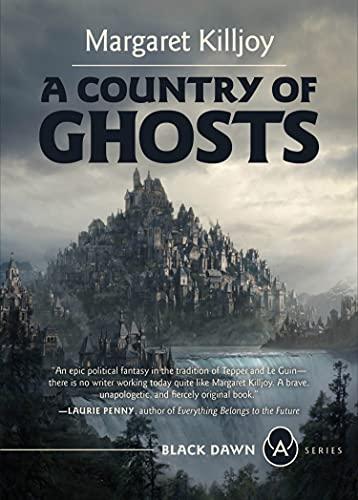
Margaret Kiljoy discussed a short story that she wrote about the Second American Civil War, which included a fictional group of Vikings who aided the Union army.
I have a book coming out from AK Press.
— Episode: It Could Happen Here Weekly 7
Margaret Kiljoy discussed a short story that she wrote about the Second American Civil War, which included a fictional group of Vikings who aided the Union army.
I have a book coming out from AK Press.
It's a reissue of my anarchist utopian book, A Country of Ghosts.
If you like my very, I like writing war stories, but I specifically like writing war stories that are actually sad and how about how war is horrible.
And so A Country of Ghosts is such a book.
And this story will eventually, I'm excited to say, I just signed the contract for AK Press is going to put out a short story anthology of mine, which will include this story.
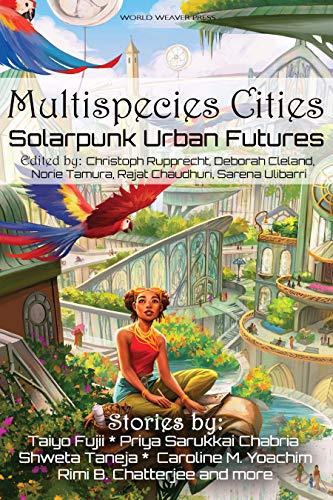
Solarpunk Urban Futures
This is a book that the speaker recommends, as they're still getting into the genre and don't have too many recommendations.
There's also Multi-species Cities, solar punk, urban futures.
— Episode: It Could Happen Here Weekly 6
This is a book that the speaker recommends, as they're still getting into the genre and don't have too many recommendations.
There's also Multi-species Cities, solar punk, urban futures.
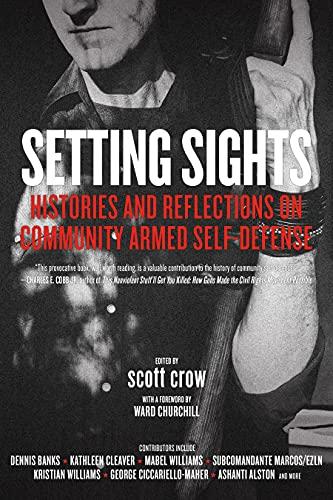
Histories and Reflections on Community Armed Self-Defense
The book was mentioned as an example of a good book on community self-defense that set out that a key aspect of community self-defense is that you're like a member of the community.
one of the things that scott crow in his uh in Setting Sights which is a really good book on community self-defense does is set out that um a key aspect of community self-defense as y...
— Episode: It Could Happen Here Weekly 6
The book was mentioned as an example of a good book on community self-defense that set out that a key aspect of community self-defense is that you're like a member of the community.
one of the things that scott crow in his uh in Setting Sights which is a really good book on community self-defense does is set out that um a key aspect of community self-defense as you said is that you're like a member of the community and i think i guess the question i have is because guns are what they are and have the kind of cultural weight that they have it's you you people are always people who accept being armed as an aspect of their personality are always going to be kind of fighting having that dominate their personality and it wouldn't it it's clearly something that a lot of people have an issue with the thing that is important is to be a member of the community who happens to be armed as opposed to an armed activist whose whose role is being armed right like i i i mean do you agree with what i'm saying or kind of like i'm wondering how you think about it because this is something that i'm kind of going around in my head about as well because it's it's it's clearly where a lot of the problems happen right that the gun becomes central to the identity of the people who bring it which is something that happens to the cops yes and also the mentality of separating yourself from the community and not being part of the purpose of being there and so i'll defer to my my uh comrades here to go a little bit further with it but i would just say that there's a significant difference between armed community defense and having a intentional presence of armed community defense at an event or a protest and being a person who shows up with a gun those are two really different things and so i think that's the that's one of the benefits of being part of an organization that does this collectively with accountability with training with a known role in the community so that there is consistency among what we do and why we do it and a history of folks understanding that if we're present somewhere it's because we've been asked to be there and that what we're doing there is aligned with and approved of by the people who are organizing the event and then i'll i'll let somebody else who's more eloquent than i am uh answer that further if they feel like they can
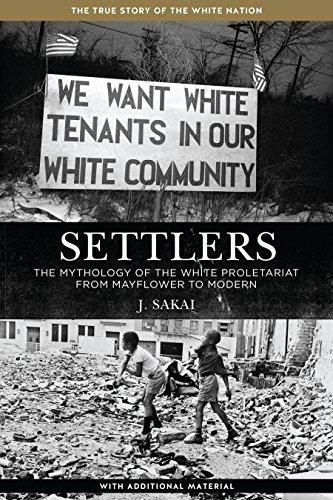
The Mythology of the White Proletariat from Mayflower to Modern
It was recommended for its helpfulness in understanding the framework of settler colonialism.
I have read Lorenzo Vericini's Settler book on settler colonialism
— Episode: It Could Happen Here Weekly 5
It was recommended for its helpfulness in understanding the framework of settler colonialism.
I have read Lorenzo Vericini's Settler book on settler colonialism
It was mentioned as one of the works by the science fiction author, Harlan Ellison, who was once a guest on Joe Pyne's show.
the author of I Have No Mouth, and I Must Scream and some other real
— Episode: Part One Joe Pyne: The Man Who Invented...
It was mentioned as one of the works by the science fiction author, Harlan Ellison, who was once a guest on Joe Pyne's show.
the author of I Have No Mouth, and I Must Scream and some other real
The Mythology of the White Proletariat from Mayflower to Modern
J.D. Aikai's book, "Settlers", was mentioned. The speaker said the thesis of the book was not great but that there was some incredible material contained in the book.
I think that's why people like Settlers by Jace Akai so much like I think the thesis wasn't great But there's so much incredible stuff in that book that like it works Anyway, the havi...
— Episode: It Could Happen Here Weekly 3
J.D. Aikai's book, "Settlers", was mentioned. The speaker said the thesis of the book was not great but that there was some incredible material contained in the book.
I think that's why people like Settlers by Jace Akai so much like I think the thesis wasn't great But there's so much incredible stuff in that book that like it works Anyway, the having a really wild thesis allows you to like really like get into some yeah so anyway, one of the things that Kennedy talks about in that book is that a crowd an open crowd as he describes it an open crowd is Must constantly be growing and the moment it stops growing it starts shrinking, right? Yeah like this I think that dynamic in terms of both movement and like a Momentary protest or riot right is like really real I can I can totally see that Yeah and I think one of the things that Particularly organizers are trained to do and like that that we learn to do especially in the low periods and we're like Organizing these little you know, you know These little crystallized groups of like hard cadre or whatever is that like you that like what we learn as organized is something that is defendable But once you start defending something you start losing it because we cannot Take on the state or the police in a head-on confrontation and This is this can be confusing because sometimes you can successfully defend for a few weeks Maybe even a few months you can defend a space sometimes But once people get really interested in the defending then they begin forming bureaucracies governments internal policing security forces Whatever it is They start becoming the like the the they start undermining the very thing that made it powerful Which was this sudden rapid growth this sudden like, you know, like like big explosion of power and self-recognition that comes in the beginning of movement and I think I Don't think there's a way to will That problem away like I don't think we can just like think our way out of it Like it's just a problem but I do think that like one thing that we could take from the experience of occupy and the experience of last decade is That like if you do, you know consider yourself someone who wants to participate in these kind of movements Which is probably why you're listening to this podcast right now Don't try and defend Like don't try and defend like some things will need to be defended sometimes obviously But like if your main thing is like the thing we should never defend something we've achieved so far We should never not be willing to destroy it in order to like build something bigger Right, like we should never no movement thing that we have be it an Occupy Park Be it an be it like a taken space defending that should never outweigh The possibility of expanding and if that's our strategic mindset obviously moment to moment You can't just be thinking that constantly. Yeah, but the strategic mindset is like what we have now is Is only good to the extent that it can turn into something more Rather than we have to defend what we have now if you can think that way I think it opens up a lot of strategic possibilities And I think it's what has worked over the last decade that I've seen is When people attack when people expand when people try to do try to do new stuff It doesn't always work and it doesn't always hold but that's but when that stuff stops happening The movement is doomed. I think I think I think that's a really good way to Wrap things up. I think that's a nice beautiful sentiment I kind of view this type of thing in more than just protests and you know in a very different facets of life I think you can always learn from past experiences from past struggles But if you try to perfectly replicate them, you're absolutely gonna fail Yeah, you can should always learn and move on but you should not be focused on any kind of replication Is there any of your books or writings? You'd want to plug before we wrap up here?
A Step-By-Step Bus Conversion Textbook (DIY Skoolie Guides)
It was mentioned as a book from 2011, that includes everything from worm composting to making makeup and financing a house.
And then I have from 2011 the bus DIY guide to life that includes everything from like how to do worm composting to how to make your own makeup and like finance a house and that's like the magazine ri...
— Episode: It Could Happen Here Weekly 2
It was mentioned as a book from 2011, that includes everything from worm composting to making makeup and financing a house.
And then I have from 2011 the bus DIY guide to life that includes everything from like how to do worm composting to how to make your own makeup and like finance a house and that's like the magazine right

The Flavor, Nutrition, and Craft of Live-Culture Foods, 2nd Edition
This book was mentioned as a good resource on how to ferment food naturally, using bacteria as a preservation method.
And there are some really great resources out there specifically um Wild Fermentation and the art of fermentation which are both by a guy named Sandra katz on how to ferment food with...
— Episode: It Could Happen Here Weekly 2
This book was mentioned as a good resource on how to ferment food naturally, using bacteria as a preservation method.
And there are some really great resources out there specifically um Wild Fermentation and the art of fermentation which are both by a guy named Sandra katz on how to ferment food without you you know you're using naturally occurring bacteria and fermentation as a means of preservation is possibly the oldest means of deliberate food storage that human beings have
The Pacific Coast Canned-Salmon Industry, 1870-1942 (Asian American History & Cultu)
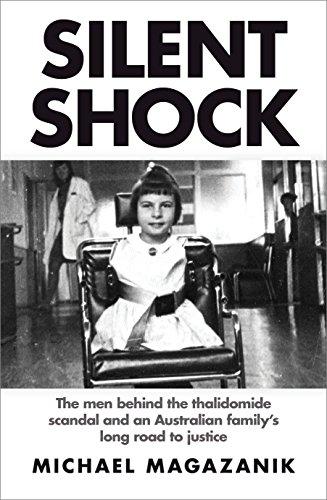
The Men Behind the Thalidomide Scandal and an Australian Family's Long Road to Justice
The book 'Silent Shock' was referenced as a source of information regarding the Nazi doctors hired by Grunenthal and the development of thalidomide, highlighting the dark history of the company and its connection to the Holocaust.
Dr. Heinz Baumkotter was a notorious SS doctor at the Sachsenhausen concentration camp outside Berlin in addition to overseeing executions and selecting prisoners for the gas chamber. He conducted exp...
— Episode: Let's Talk About Thalidomide
The book 'Silent Shock' was referenced as a source of information regarding the Nazi doctors hired by Grunenthal and the development of thalidomide, highlighting the dark history of the company and its connection to the Holocaust.
Dr. Heinz Baumkotter was a notorious SS doctor at the Sachsenhausen concentration camp outside Berlin in addition to overseeing executions and selecting prisoners for the gas chamber. He conducted experiments with injections explosives and chemicals.
One such experiment saw prisoners strapped down and burned with phosphorus so that Baumkotter could test an experimental salve.
Another doctor's wife had a baby with shortened arms after her husband was told by Grunenthal that the medication would be perfectly safe if Taken during pregnancy later the woman pressed for a divorce accusing her doctor husband of having been too gullible in Munich
Mrs. H fell pregnant in October 1960 and her husband a general physician Asked a Grunenthal sales rep if he could safely give his wife contragand their response was boilerplate boilerplate contragand is totally non-dangerous and frequently prescribed especially during pregnancies in July 1961
Mrs. H gave birth to a severely malformed baby Her general practitioner husband believed contragand was to blame when he spoke with a prosecutor in 1963 He said he had thought he made his suspicions clear to a Grunenthal sales rep after the July 1961 birth But could not recall the reps name
Discover how God can make your marriage glorious
The book was written by Debbie Pearl, a minister whose works were sold by the IBLP. It included advice to wives on how to react if their husbands sexually assaulted their children.
Author Debbie Pearl, a minister whose books were sold by IBLP, wrote in Created to Be His Help Meat. Although wives should testify and pray that their husbands get 20 years in prison, they should also...
— Episode: Part One: The Cult Behind Josh Duggar
The book was written by Debbie Pearl, a minister whose works were sold by the IBLP. It included advice to wives on how to react if their husbands sexually assaulted their children.
Author Debbie Pearl, a minister whose books were sold by IBLP, wrote in Created to Be His Help Meat. Although wives should testify and pray that their husbands get 20 years in prison, they should also visit him there, be an encouragement to him, let him see the children three to four times a year.
My Story of the Elan School (Memoir Series Book One)
The graphic novel was mentioned as a source for the podcast, depicting the experiences of a student at the Elan School during the 1990s, offering a different perspective on the school's operations during this time.
Research for this episode was actually sparked by a graphic novel I found online called Joe vs. Alon School. It was written by a former student who goes by Joe Nobody.
— Episode: Part Two: Elan School: The Worst 'Troubl...
The graphic novel was mentioned as a source for the podcast, depicting the experiences of a student at the Elan School during the 1990s, offering a different perspective on the school's operations during this time.
Research for this episode was actually sparked by a graphic novel I found online called Joe vs. Alon School. It was written by a former student who goes by Joe Nobody.
I really recommend his story to everyone. It's a fascinating graphic novel, and it gives a lot of context on how the school had evolved by that point.
The electric sauce was gone by then, and safety gear in the ring was at least more common. But the whole experience was just as brutal.
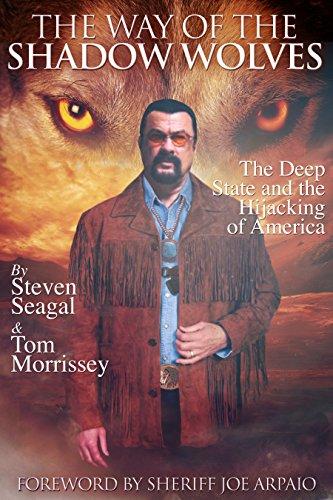
It was described as a self-published, poorly written book with a ridiculous cover, focusing on a Steven Seagal self-insert character and a conspiracy involving the deep state and a jihadi caliphate.
It says it was self-published on Wikipedia, but I wonder what like if they went through like a distributor or something
— Episode: Steven Seagal Wrote a Book (We Read It)
It was described as a self-published, poorly written book with a ridiculous cover, focusing on a Steven Seagal self-insert character and a conspiracy involving the deep state and a jihadi caliphate.
It says it was self-published on Wikipedia, but I wonder what like if they went through like a distributor or something
Vulture called it completely batshit insane, the Phoenix New Times called it garbage and breathtakingly bad, hard to follow, who's speaking, fight scenes that were even more boring than the dialogue.
It's like what sorry, I have to take this one by one Sophie otherwise, we're not gonna get through any of it.
How does that pig blood feel asshole? Is it starting to course through your veins? Maybe even my god profit? Maybe oh my god off the profit.
I have a special delivery from you from the prophet. He laughs and then he does a deep stab into the Persian's throat killing him instantly. He drops to the ground on his way to meet Allah.
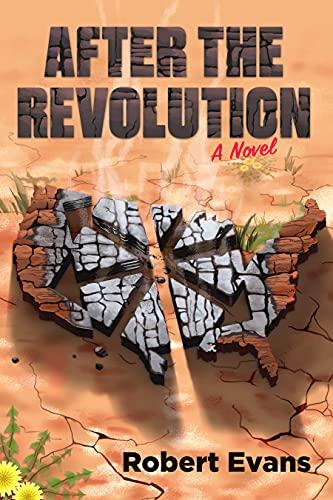
A Novel
The author, Robert Sex Reis, mentioned that he'd written the book 'After the Revolution' which is also available as a podcast, and is currently crowdfunding a sequel to the book.
Hey, I've written a novel. It's called After the Revolution. You can find it as a podcast under After the Revolution and you can find it at atrbook.com as a free ePub...
— Episode: After the Revolution: Chapters Fifteen,...
The author, Robert Sex Reis, mentioned that he'd written the book 'After the Revolution' which is also available as a podcast, and is currently crowdfunding a sequel to the book.
Hey, I've written a novel. It's called After the Revolution. You can find it as a podcast under After the Revolution and you can find it at atrbook.com as a free ePub.
If you like it, I am crowdfunding the sequel so that I can keep making my books free. That will be at After the Revolution, the sequel on GoFundMe.
That's After the Revolution, the sequel on GoFundMe.
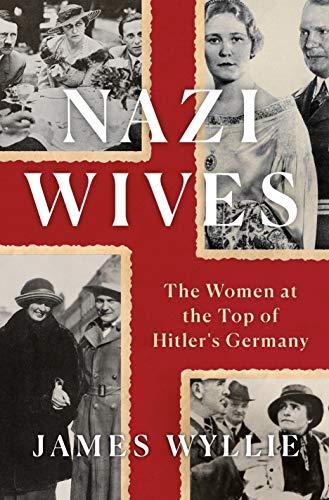
The Women at the Top of Hitler's Germany
The book was mentioned and quoted multiple times during the episode, and contained information on Lena's personality, and her relationship with Heydrich, as well as her political beliefs.
Linna found him intriguing. I felt sympathy for this purposeful yet reserved young man and agreed to a rendezvous the next day in her memoirs.
— Episode: Part One: The Young, Evil God of Death:...
The book was mentioned and quoted multiple times during the episode, and contained information on Lena's personality, and her relationship with Heydrich, as well as her political beliefs.
Linna found him intriguing. I felt sympathy for this purposeful yet reserved young man and agreed to a rendezvous the next day in her memoirs.
She breathlessly described how Heidrick opened his heart to her over a series of long walks, a visit to the theater and a meal in a restaurant, and then asked her to marry him during their third evening together.
beyond the powerful physical attraction between them. Lena and Heidrich shared some key characteristics. Both were fixed on escaping their backgrounds and forging a different destiny for themselves. They were stubborn and extremely ambitious. Each had a cold calculating streak.
On 30th April 1931. He was dismissed from the Navy. Lena said that he was so shattered by the verdict that he had a total breakdown, locking himself in his room for days on end, smashing furniture and weeping uncontrollably.
Note: The book recommendations on this page are discovered automatically from podcast transcripts, and may be incorrect or incomplete.
Podcast Name