Acquired
Book Recommendations

Acquired

Every company has a story. Learn the playbooks that built the world’s greatest companies — and how you can apply them.

Episodes 227
Books 131

Most Recommended

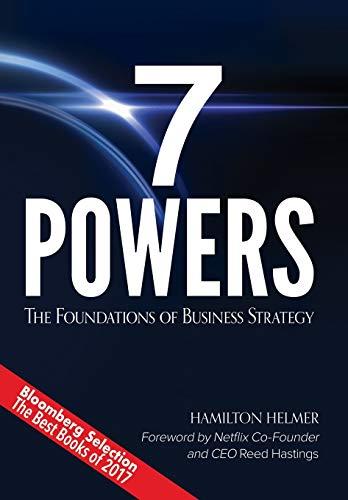
7 Powers: The Foundations of Business Strategy Cover

Hamilton Helmer

7 Powers

The Foundations of Business Strategy

The podcast repeatedly highlighted the book as a foundational framework for understanding and building durable business advantage, emphasizing its seven distinct sources of power such as network effects, scale economies, and branding. Hosts including Hamilton Helmer, Ben Gilbert, David Rosenthal, and Patrick O'Shaughnessy cited it as essential reading for founders and investors, noting its mathematical definition of power and its role in turning strategy into a concrete, actionable tool. They praised it for clarifying the shift from product‑market fit to long‑term differential profit margins and for making strategic analysis accessible across various industries.

Highly Recommended
Listen on Audible 7-day free trial

Episode: Interview: Hamilton Helmer & Chenyi Shi on How to...

It was discussed as a framework for business strategy, focusing on building durable businesses and defending market positions, rather than just having a good idea. The authors emphasized the importance of simultaneously considering product-market fit and power.

"

Seven Powers is about defending the castle and less about is this a good idea or not.

Seven Powers is just those structures that if you can get there, make you more iPod-ish and less bow-marish.

I used to think that it was sequential. You get product market fit and then you deal with power. But my biggest education is talking to founders...

But my partner Bill says that it turns strategy from an essay question into a multiple choice question, although I don't know with chat GPT the difference anymore.

So product market fit and power are more or less worth I go.

Episode: Platforms and Power (with Hamilton Helmer and Chen...

It was discussed as a framework for strategy, particularly in the context of platform businesses, and was mentioned as a way to help executives and founders develop successful strategies.

"

Seven powers was an attempt to take an understanding of strategy and make it Generally available as sort of pattern recognition

And the reason it needed to be decentralized is that there are really two major step changes in the value of a company the first is product market fit and the second is Getting power and they're they're quite distinct and Involved different things

So what we've found is that platforms They often involve different types of power They're very complicated and idiosyncratic. They're complex You can look at one and you it's hard to tell whether they have power or not and figuring that out is hard

So I think there are two parts to this so number one is If they're readers of seven powers and you're patient enough to flip to the appendix after each chapter There is this concept that we call surplus leader margin Which is the maximum price you can charge more than your competitor while still maintaining your competitive position

And Hamilton always says no It's an active tradeoff between both entrepreneurs do it because when you see such a large green field You can penetrate you should grab that and sacrifice short term margin for a larger market share And that's still power because you can realize those profits in the future

Episode: Bitcoin

This book was mentioned as a source for the "Seven Powers" section, which explores how businesses can achieve persistent differential returns. The book was mentioned as a study of how businesses can achieve persistent differential returns, or put another way, to be more profitable than their closest competitor on a sustainable basis.

"

This is going to be so fun because I think they're a bunch that Bitcoin has uh like a whole bunch um the obvious one that we've been begging the drum on through the whole episode and it's probably the most powerful is is network economies uh I think in particular versus other cryptocurrencies like nothing Ethereum is the only one that stands a chance and it just kind of has a different use case that that's really more around um the the smart contracts and compute that's sort of built into it but for for sure like you can't start anything that looks like Bitcoin now and have any chance of beating it like it's in the same way that Facebook just outran any other consumer social network consumer social entertainment type app and then obviously very smart and acquiring those who did get scale like uh Bitcoin just leapt ahead at the beginning of this paradigm and I think what's cool is it even applies at the technical level too with this idea of like the amount of computing power going into that has gone into maintaining and making robust the Bitcoin network over time is itself a compounding asset right like because the more power that goes in over time the harder it is to crack undo yeah you can't there is no supercomputer that could conceivably ever be created that is going to as long as the Bitcoin economy like a miners keep working that is going to be able to go back and like redo everything and that lead just keeps getting wider and wider and wider certainly not really old things in the blockchain but you know there's always the risk on the newer ones things that are only two or three blocks behind and and unless there's a paradigm change like unless quantum computing arrives and suddenly you have you know 10 million x more compute um than than we did in the past on a single core or something like that.

And so it matters less what they are doing and more just that people come on board and that your value grows according to Meccaf's law and then as it grows more sets of users in use cases will come on board and it will evolve and so like in Bitcoin's case this is why I said I want to be not careful but specific I am not in any way condoning what happened with Silk Road or that that's okay or that that should happen or anything but just from the perspective of value building of the network the fact that it happened like transactions needed to start happening nodes needed to come on the network for users and for minors and Silk Road provided that as the bootstrap the first use case and then there were you know more after that and one thing led to another and now here we are here we are is so radically different than what Silk Road was you know but for the underlying like network and the protocol it doesn't really matter what matters is increasing your velocity and growth of users and transactions and so I then I look at Facebook when I look at Airbnb it's actually the same story like what was Facebook in the early days as we've alluded to it was like undergraduates at colleges looking for attractive photos of you know other incoming undergraduates at their college is right like that is so different from Instagram and WhatsApp today right but that's okay like that's similarly with Airbnb like what was Airbnb in the early days it was like people sleeping on air mattresses in each other's apartments yeah what is it today it's something wholly different but the point is going the network

I think this whole story really illustrates for me when you are pursuing a network effect a network economy based power business you know like this is like Facebook is like most social networks and the like like Airbnb two-sided network effect in the beginning what matters is getting nodes and usage on the network to start and so it matters less what they are doing and more just that people come on board and that your value grows according to Meccaf's law and then as it grows more sets of users in use cases will come on board and it will evolve and so like in Bitcoin's case this is why I said I want to be not careful but specific I am not in any way condoning what happened with Silk Road or that that's okay or that that should happen or anything but just from the perspective of value building of the network the fact that it happened like transactions needed to start happening nodes needed to come on the network for users and for minors and Silk Road provided that as the bootstrap the first use case and then there were you know more after that and one thing led to another and now here we are here we are is so radically different than what Silk Road was you know but for the underlying like network and the protocol it doesn't really matter what matters is increasing your velocity and growth of users and transactions and so I then I look at Facebook when I look at Airbnb it's actually the same story like what was Facebook in the early days as we've alluded to it was like undergraduates at colleges looking for attractive photos of you know other incoming undergraduates at their college is right like that is so different from Instagram and WhatsApp today right but that's okay like that's similarly with Airbnb like what was Airbnb in the early days it was like people sleeping on air mattresses in each other's apartments yeah what is it today it's something wholly different but the point is going the network

Episode: Slack + Salesforce Emergency Pod with Packy McCorm...

Seven Powers was mentioned as a source for understanding the nature of public market investors, who, while not short-sighted, often over-index on recent signals.

"

I think Hamilton points this out in Seven Powers and Pacquie and O'Yara, avid reader of Hamilton's work with Seven Powers too.

Episode: Special: Invest Like the Best on Acquired

"7 Powers" is described as a book with a mathematical definition of power, focusing on long-term differential profit margins. This book prompted Patrick to consider the "7 Powers" framework in relation to his own businesses.

"

So I listened to that I picked up the book I said to Ben I was like Ben you gotta read this book and we reached out to Hamilton and rest his history I was like really David I've never heard of it like I don't know and he's like look read Hastings says it's the best business strategy book and he's like the best business strategy practitioner in the world and I was like okay fine it is amazing to be just flashing back what was that six months ago and having skepticism there I mean just to pile on there I was introduced to Hamilton through Daniel Lack and I think that Daniel's the best strategist that I've personally spent time with and he says the same thing about Hamilton or something similar anyway so that's two pretty good ringing endorsements there albeit from a very similar business model in Spotify and Netflix one trying to be the other pretty quickly yeah yeah so anyway yeah "7 Powers" is something I think about a lot it's now a whole section on the acquired show which we're gonna make you go through for Osam in a minute.

And in fact that is his he has a strict mathematical formal definition of power and it is long-term differential profit margin so Patrick the very easy question to you is in your web of businesses and let's start with Osam to keep it simple to where do you derive power we're definitely going to have to extend our end time here because that you guys can get me going on this for a long time you know I'll just throw out examples and this was maybe one case where several years ago probably three years ago I did literally sit down as I think probably everyone that reads "7 Powers" does and say okay which one of these can I do which one do I already have or which one can I engineer so you know I'll just take through ones that I think are relevant for one of the things that's going on in my world so I do think brand is like the most straightforward one that I don't need to spend a lot of time on which is just like high quality low variance outcomes like that's how I think about brand like can can you just consistently deliver something really high quality so that you build trust with people you know trust takes time therefore it takes consistency there needs to be a high minimum quality bar I love that phrase from Toby I think about that a lot if you can do that consistently with whatever it is that you do you will build a good brand over time like the logo doesn't matter all this other stuff really matters less than just consistent high performance at a certain thing and in many cases you can airdrop a brand maybe it's possible maybe Dollar Shave Club did it I think arguably that wasn't a good business it had really low retention maybe it was an amazing story and everyone wants a hack to create a brand instantly and it did there are exceptions there are hacks which can be very useful not discounting them but I think a hack should be on top of some steadily compounding trust equation with the end audience so I do think we've established a brand what exactly it is we could argue over but I won't say a whole lot more about that and the barrier there is just I think time if you want to establish the same brand that you see today okay well we're 5 years ahead or 10 years ahead or 20 years ahead depending on which of the brands you're talking about so I think time is a ultimate barrier to entry for some of the highest quality brands I love that I hadn't thought about that brand as in specifically those terms of high quality low variance and time and you think about of course like we talked about a bunch on our show in years 2 there's persistence and venture capital what is that persistence due to it's due to brand power of the top firms what does that brand power do to it's due to high performance low variance over time right so that's the first maybe my favorite I know it's Hamilton's favorite too because he's always said that to me when we've talked about it is counter positioning and here I just think it is that radical transparency of the research process I joke with a lot of my friends who run investment firms that have that classic mysterious website that's just a logo and you know an info at email address and nothing else basically the digital velvet rope which I love I'm close with a lot of these investors and indeed oftentimes they are literally the best investors and so I respect the hell out of almost all of the people that have that website I joke that one of my goals is to convince as many of those people as possible to come on this podcast on my podcast which I've done many a time and have many more in my sites on long sales cycles but I do think there's an incredible counter positioning there I won't pick out a name but how am I going to as an investor now say with positive some how am I going to beat one of these illustrious incredible firms with track records and crazy brands and everything it's to do literally the opposite of that right to be the most open the most non proprietary investor on planet Earth where I'm externalizing all the things that you're normally buying from them like if you get one of these great investors to be on your cap table you're accessing this thing in their brain that they've built up over time and I'm just saying no actually forget that like you're not getting my brain you're getting the positive side effects of me externalizing that process in a radically transparent way I think it would be very hard for most of those firms to completely change their their attitude on this topic to say nothing of their behavior like they're just they've been doing a certain thing a certain way for a long time so so that would be counter positioning do you think that that osam today has counter positioning or do you think it's actually that it's a folderable to counter positioning and that it's more of the sort of incumbent that derives its power from what we would you think branding and maybe scale economies so I think it's very counter positioned because to be able to build canvas you basically need a heavy quant background like firms that don't have that skill set this is a seriously complex problem that we're solving I mean it is it is non trivial to build I mean each of these things requires a complex modeling exercise they all have to integrate there's crazy optimizations that happen there's there's quite a lot of like compute understanding that that is required to make things happen fast like this is a really complicated problem most of the firms that I would get scared to hear that they're launching a canvas competitor are the most well known quantitative hedge funds not long only firms and then a different business model and their whole thing is that their proprietary you know research and insight and data that isn't shared so it's like the Bezos thing when he was asked about you know other big tech competitors and laughing saying you know those guys are used to software margins like I'm a retailer you know like it's it's an advantage sometimes to not be as fat and happy and have lived on a different business model and so I think we're very counter positioned with canvas specifically against the firms that would most scare me to be competitors and it's a lower margin business so I'm not worried about them we're not as up to speed on probably who those current people are in the but like talk about like 10 years ago if SAC is like we're building canvas that would terrify you but like they're not going to do that because they make their money from performance their hedge fund I'll use a salacious example and SAC actually wouldn't be one of them like the most obvious example would be renaissance technologies right like it's the most extreme example because it's absurd they charge five and fifty or whatever and still produce you know 40-50% returns annually on their own capital they're not launching a canvas competitor but they could and it would be awesome that's the sort of thing I mean like the most sophisticated and advanced research shops quantitative research shops just doesn't make sense for them to do this right now and we'll have at least a few years head start the other one I think about is you're going to get me going down all these now there's kind of a fun one in cornered resource which Hamilton also acknowledges is the least common of the seven powers but nonetheless is an interesting one which is through a program that we call research partners at Osam which is a very simple trade we effectively give away our entire data library infrastructure and access to our team to independent researchers in order for them to do their own thing at their own pace in whatever way they want where the trade is we own we own the intellectual property that gets created for the most part these are retired engineers people in completely different fields the most famous of them is an anonymous guy on twitter who's I think probably the smartest person I've ever met in my life not modest Jesse Livermore's name although modest a very close friend and actually next week's podcast guest so Jesse as he goes by is has an engineering background of sorts very technical background again literally the smartest human being like if I could stick a human being on understanding a complex problem it would be him and he does these like months long deep dives with our data and teaches us as he goes and because we offer so much flexibility and we offer this data set for free again the thing that most firms like us keep as the most proprietary asset they become contractors with us and as a result we've captured some of the most interesting people like this in the world and I think have the best value proposition to them so that's a super tiny example of a cornered resource but we have benefited tremendously from those research partnerships and this is the one where I will admit to thinking about that program because of reading "7 Powers" so actually the power came before the implementation and that one's been a smaller scale success but but a huge success nonetheless I thought you were going to say the podcast was a cornered resource which in your case may be fair because obviously the CEO and you know major owner of the firm but one of the things I love from the book and Hamilton's work is that people are not cornered resources it has to be like what you're describing people are not cornered resources because somebody else can hire them like they're arbitrageable has to be non arbitrageable and I love this it's like a cornered resource plus counter positioning that you've built this practice up I would argue I don't know which maybe you guys could tell me what's where you would put this power but I think of this more as just a flywheel than a power but there's got to be something in there and traditionally like this flywheel would normally manifest as scale economies but maybe it's network effect here on the podcast side it's something like every week you get more listeners who are incredible who can have a positive impact on the guest which then helps you get ever more interesting guests who then help you grow the audience and you spin that flywheel and therefore the best guests are just going to every week have a better reason to do yours instead of someone else's with their precious time and you just have to be patient with that like I always talk about it like someday you know I'll have Bezos and Elon on like back-to-back weeks like I'm just I'm convinced I will like I know how compounding works and maybe it's two years from now maybe it's five years from now like it's gonna happen that's I think something that is a very hard to compete with what power it should be assigned under I have no idea but it's something to do with that kind of growth flywheel that that again no amount of money I don't think could buy yeah I've always thought about it not as a flywheel but and I think this is a Ben Thompsonism laddering up where once you sort of have someone on some wrong then they become a part of the way that you're able to describe the show to the next great guest.

Episode: The NBA

The book, written by Hamilton Helmer, outlines seven key powers that businesses can leverage to gain success.

"

And to review, he's got these seven, as you can guess from the book: Counter positioning, scale economies, switching cost, network economies, branding, process power, or cornered resource.

Episode: Epic Games

7 Powers is a book which describes how leaders of a category can earn outside profits by using strategies such as counter positioning, scale economies, switching costs, network economies, process power, branding and cornered resources.

"

And uh, just really think is brilliant, uh of the seven powers.

So What are the seven powers? They're basically the ways that and i'm gonna hamilton if you're listening I'm going to butcher the definition here, but they're the ways that A leader in a category can earn outside profits versus all of their competitors

It's basically what what's the thing that makes your business powerful versus your competitors?

I think this really gets at the core david of like what and why We want to dissect what the core essence of a business is

You know, there's so much going on here with the technology platforms The evolution of the games industry in real time And then this fortnight phenomenon What is the power that epic has so there's seven categories of power?

Episode: Adapting Episode 3: Intel

The book highlights the concept of business power, suggesting that Intel was in a commodity business with no inherent power, as competitors could easily enter the market and challenge their leadership position.

"

there's no power in the business.
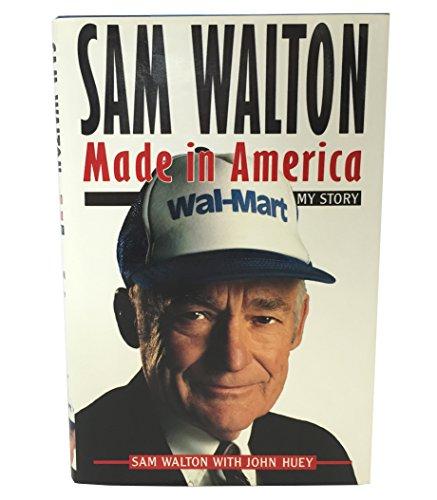
Sam Walton: Made in America Cover

Sam Walton

Sam Walton

Made in America

The book was highlighted across multiple episodes as a standout recommendation, praised for offering deep insight into the mindset of a legendary entrepreneur and illustrating how Sam Walton sourced ideas from others. Hosts noted its value as a top pick for the year and cited it as an example of the 'hedgehog' qualities that define exceptional founders. The discussion emphasized its relevance for listeners interested in entrepreneurial strategy.

Highly Recommended
Listen on Audible 7-day free trial

Episode: Costco

Sam Walton wrote in his book that he stole more business ideas from Saul Price than any other person in his career.

"

Sam Walton actually wrote in "Made in America" that he stole more ideas from Saul than anyone else in his business career.

Sam Walton talks about this in "Made in America" by the time Walmart was starting people knew what Fed Mart were they were expanding

Sam tells and "Made in America" where a few years later Sam is going around again to price

Episode: Holiday Special 2022

This book was mentioned as a top pick for the year alongside its companion piece, 'Made in Japan'. The podcast hosts were amused by the coincidence of both books having such similar titles.

"

My top two Acquired books and they genuinely are also my top two Acquired books for the year Made in Japan and Made in America.

Isn't that crazy that they're both named that and they're both so good

Episode: Special: Ho Nam from Altos Ventures — A Different...

It was discussed as an example of a book that revealed the mindset of a truly exceptional entrepreneur, particularly highlighting Sam Walton's 'hedgehog' qualities.

"

His book Made in America is like, oh my god, that told me what the mind of an amazing entrepreneur looks like.

He is one of the all time great hedgehogs.

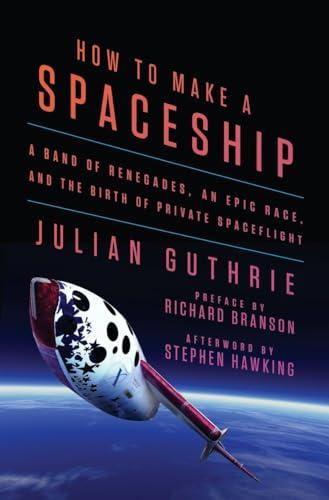
How to Make a Spaceship: A Band of Renegades, an Epic Race, and the Birth of Private Spaceflight Cover

Julian Guthrie

How to Make a Spaceship

A Band of Renegades, an Epic Race, and the Birth of Private Spaceflight

The book was highlighted for its comprehensive coverage of the XPRIZE history, with Ben Gilbert calling it an awesome account. David Rosenthal praised its humor, witty banter, and thriller‑like storytelling, likening it to a well‑written biography and strongly recommending it to listeners who enjoyed SpaceX episodes. Overall, the hosts presented it as an exciting, well‑told narrative that kept readers engaged.

Highly Recommended
Listen on Audible 7-day free trial

Episode: Virgin Galactic

This book covers the entire history of the XPRIZE.

"

Julian Guthrie wrote an awesome book, How to Make a Spaceship that covers the entire history of the XPRIZE.

Episode: Virgin Galactic

It covered the entire history of the XPRIZE.

"

Julian Guthrie wrote an awesome book, How to Make a Spaceship that covers the entire history of the XPRIZE.

Episode: Pinduoduo

It was strongly recommended for the humour and witty banter. It's the story of the x prize, the amazing idealist behind it, and the incredible organizations he created. It was like a thriller bio book, exciting, and you never knew what would happen next.

"

I'm only halfway through this book right now but it's excellent. And if you liked our SpaceX episode, I think you will love this book. It is called 'How to Make a Spaceship'.

It's just a really good, if you kind of like 'Shoe Dog', it's almost these like thriller bio book. It's just like it's exciting, and you never quite know what's going to happen next. And it's well-written, and well-story told, so I highly recommend it.

Competitive Strategy: Techniques for Analyzing Industries and Competitors Cover

Michael E. Porter

Competitive Strategy

Techniques for Analyzing Industries and Competitors

The book was cited as the source of the moat concept and Porter’s five forces, with the hosts noting that Porter later expanded his thinking to include shared value. It was also referenced as a challenging text that Michael Mauboussin had read for his Security Analysis course, illustrating its foundational but dense nature. The discussion highlighted its influence on strategic thinking without presenting it as a primary recommendation.

Listen on Audible 7-day free trial

Episode: Complexity Investing & Semiconductors (with NZS Ca...

It was discussed as a source for the concept of moats, and it was noted that Porter later revised his thinking to include the idea of shared value, where businesses should aim to create more value than they capture for themselves.

"

This is of course Michael Porter Competitive Strategy, Porter's 5 forces

he's literally making an economic argument for shareholders that that's the long term value maximizing thing to do right

Thinking, Fast and Slow Cover

Daniel Kahneman

Thinking, Fast and Slow

The title was briefly referenced in the holiday special and later compared by Ben Gilbert to Graham's classic, describing it as a distilled, public‑consumption version with case studies. The discussion highlighted its accessible style rather than deep endorsement.

Listen on Audible 7-day free trial

Episode: Berkshire Hathaway Part I

This was compared to Graham's Intelligent Investor, in that it was a more public consumption style book.

"

The intelligent investor is like the Danny Kahneman thinking fast and slow You know a version of like, uh, you know, it's case studies. It's like distilled down for public consumption

No Country for Old Men Cover

Cormac McCarthy

No Country for Old Men

The book was referenced in two episodes, first when Howard and Andrew Marks noted that the author was a friend of Brian Arthur and had helped shape the prose of Arthur's paper on increasing returns, and later when David Rosenthal listed it among Cormac McCarthy's works during a discussion with Tom Alberg. Both mentions were brief and informational rather than promotional.

Listen on Audible 7-day free trial

Episode: Episode 28: The Amazon IPO with original Amazon Bo...

This book was mentioned as one of the works by author Cormac McCarthy.

"

David: Cormac McCarthy (author of All the Pretty Horses, No Country for Old Men, etc)'s contribution to W. Brian Arthur's landmark paper about the economics of the internet, "Increasing Returns and the New World of Business"

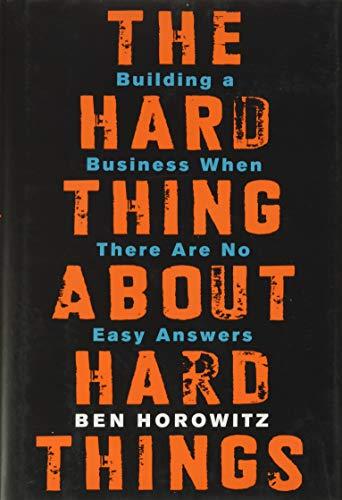
The Hard Thing About Hard Things: Building a Business When There Are No Easy Answers: Straight Talk on the Challenges of Entrepreneurship Cover

Ben Horowitz

The Hard Thing About Hard Things

Building a Business When There Are No Easy Answers

It was discussed in the context of Ben's experiences with Opsware, highlighting the challenges and lessons learned during the company's tumultuous journey.

"

You just gotta imagine he was eight and his family went through this wow you know a busted IPO doesn't seem so hard after stuff like this

— Episode: Andreessen Horowitz Part I

Listen on Audible 7-day free trial

Episode: Andreessen Horowitz Part I

It was discussed in the context of Ben's experiences with Opsware, highlighting the challenges and lessons learned during the company's tumultuous journey.

"

You just gotta imagine he was eight and his family went through this wow you know a busted IPO doesn't seem so hard after stuff like this

later Ben of course would write The Hard Thing About Hard Things and you know live through all this crazy technology stuff

if I had to describe Andy with one word it would be gentlemen.

if I'd learned anything it was that conventional wisdom had nothing to do with the truth and that the efficient market hypothesis was deceptive how else could one explain Opsware which is what they changed the name of the company to trading and half the cash we had in the bank when we had a 20 million dollar a year contract and 50 of the smartest engineers in the world.

a lot of crying by me

Episode: Eventbrite (with Julia & Kevin Hartz)

The Hard Things About Hard Things was mentioned when Julia Hartz, CEO of Eventbrite, explained how she and her team navigated the company through COVID. She shared that she found the book's advice on embracing struggle and finding silver linings very helpful.

"

I actually went back and read some of the parts that I had highlighted from that book, The Hard Things About Hard Things. And I think two things resonate with me now more than ever. And one is embrace the struggle and not try to avoid the really difficult things and get right to the hardest thing. And two is see the silver lining in the worst case scenario.

And I remember thinking in the second week of March, tabletop my ass. Like this is there is no tabletop exercise that could actually prepare us for this.

The Intelligent Investor...Hardcover Cover

Benjamin Graham

The Intelligent Investor...Hardcover

It was a book that Warren Buffett had read and loved, and he felt like he'd learned a lot from it.

"

I assume this is a joke He said either he would write a letter to them to plead his case to get into Columbia saying I thought you guys were dead I didn't realize you were alive in teaching classes Be...

— Episode: Berkshire Hathaway Part I

Listen on Audible 7-day free trial

Episode: Berkshire Hathaway Part I

It was a book that Warren Buffett had read and loved, and he felt like he'd learned a lot from it.

"

I assume this is a joke He said either he would write a letter to them to plead his case to get into Columbia saying I thought you guys were dead I didn't realize you were alive in teaching classes Because he had like just picked up their book and was like this is that you know, he what the intelligent investor

So Graham's book the intelligent investor had just come out

The intelligent investor is like the Danny Kahneman thinking fast and slow You know a version of like, uh, you know, it's case studies. It's like distilled down for public consumption

And for listeners out there who have read the uh intelligent investor, you're probably thinking wait that was supposed to be the not dense one Different era different era.

So Warren's read, you know the intelligent investor and he's he loves it. He's like this is amazing and and what The intelligent investor and security analysis in a even more dry way before it what they did was they espoused they were like, hey You should think about stocks investing in stocks systematically and based on the fundamentals of the companies that they represent And as pieces of a business not like tickets on, you know, horse race betting here And they basically introduced the idea of the discounted cash flow Like this is the first notion that like stocks are You know the market cap of a company is representative of the sum of all future positive cash flows or I guess all cash flows discounted at a certain rate back to today and you know, this sort of Forcing you to look and say does the price of the stock today reconcile with what you actually believe the business will yield or produce in its full lifetime You know that that was frankly novel it was and

Shoe Dog: A Memoir by the Creator of Nike Cover

Phil Knight

Shoe Dog

A Memoir by the Creator of Nike

The podcast mentions the book ends in 1980. The book was described as enjoyable, but not entirely accurate, as it ends before some of the most dramatic moments of the company's history.

"

If you read Shoe Dog or watched Air, you may think you know its history.

— Episode: Nike

Listen on Audible 7-day free trial

Episode: Nike

The podcast mentions the book ends in 1980. The book was described as enjoyable, but not entirely accurate, as it ends before some of the most dramatic moments of the company's history.

"

If you read Shoe Dog or watched Air, you may think you know its history.

But Shoe Dog ends in 1980, and Air... well let's just say it's an enjoyable piece of fiction.

And it turns out (as always) that the real story is filled with far more drama, twists and business lessons than either of those works.

Episode: SONY

The podcast host compares Morita's book to Phil Knight's book, noting that it is a similar story about the early days of a company.

"

It's the Shoe Dog of the 80s truly.

It is. It is in many ways.

Project Hail Mary: A Novel Cover

Andy Weir

Project Hail Mary

A Novel

The hosts highlighted the title as a standout hard‑science novel, noting its real‑time premise and strict adherence to known physics, which set it apart from typical sci‑fi leaps. One host called it the best fiction he’d ever read, while another praised its fun, Martian‑style storytelling that sparked thoughts about scientific principles. Overall, the book was strongly endorsed.

Highly Recommended
Listen on Audible 7-day free trial

Episode: Holiday Special 2022

The book was highly recommended for its premise, which unfolds in real time as the reader progresses through the story. It was praised for its unique approach to science fiction, staying within the known laws of physics and avoiding the need for any unexplained leaps in technology, such as warp drive.

"

I think it's the best fiction I've ever read definitely the best sci-fi I've ever read

I think it's the best fiction I've ever read

The coolest thing about Project Hail Mary is how it is basically all in our universe

There's no big leap like in Star Trek, You have to like take this leap of like, well There's warp drive and you don't really understand how it works and that's fine And now that we accept this black box now we can go to other stuff There's not like an accepted black box in Project Hail Mary, There's just like all the known rules of physics that we know about

Yeah, it's uh, it's hard sci-fi. I think is the term right? Is that what they call it?

Episode: The Browser (with Brendan Eich, Chief Architect of...

It was described as a good and fun read, similar in style to his previous book, The Martian, and was said to make the listener think about scientific principles.

"

Project Hail Mary Andy Weir it's so good really enjoying it so far

It's Andy Weir who wrote The Martian this is his newest novel

The Martian was good

Console Wars: Sega, Nintendo, and the Battle that Defined a Generation Cover

Blake J. Harris

Console Wars

Sega, Nintendo, and the Battle that Defined a Generation

The book was highlighted for its deep dive into Sega's history and the strategic decisions of its American leadership, especially the four‑point plan devised by Tom Kalinsky to challenge Nintendo. Ben Gilbert and David Rosenthal praised it as an engaging, detailed account of the console wars that offered a compelling hero’s‑journey narrative for the Genesis era. The hosts consistently recommended it as a prime example of how a challenger can take on an entrenched incumbent.

Highly Recommended
Listen on Audible 7-day free trial

Episode: Short: The Death of Sega

It was discussed in the context of Sega's history, particularly the perspective of Sega of America's leadership regarding the decisions made by the Japanese parent company, Sega of Japan.

"

And if you read the book, Console Wars by Blake Harris He spends a lot of time with Tom Kalinsky, the CEO of Sega of America

Episode: Nintendo: The Console Wars

It was an engaging read that provided a detailed account of the console wars, particularly highlighting Tom Kalinsky's recruitment and his four-point plan to dethrone Nintendo. The book also mentioned that the Genesis era might have a more impressive narrative than Nintendo's.

"

And for as compelling as the nintendo story is it's compelling because they won long term for this brief moment of time The genesis era I think sega probably has an even more Impressive narrative and sort of hero's journey with tom kolinsky.

I think this is the best example We've ever seen on the show of how to compete against an entrenched incumbent

We're gonna get into what they do this four-point plan, but it is freaking brilliant

We are a tiger who will skit in you piece by piece Obviously, he doesn't say that publicly, but this isn't really good for nintendo's image

The fact that you can play something at home and take it outside This is the gamer's dream

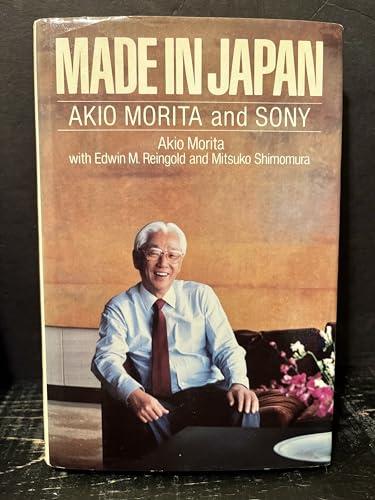
Made in Japan: Akio Morita and Sony Cover

Akio Morita

Made in Japan

Akio Morita and Sony

The hosts highlighted the book as one of their top picks for the year, noting its compelling parallel title to another favorite. David Rosenthal praised it as a standout read, while the episode on Sony discussed how the memoir recounts Morita's early engineering career, the impact of the Hiroshima bombing on his outlook, and the unexpected cultural revolution sparked by the Walkman. The overall tone was enthusiastic and the book was presented as a highly recommended insight into Sony's origins.

Highly Recommended
Listen on Audible 7-day free trial

Episode: Holiday Special 2022

This book was mentioned as a top pick for the year alongside its companion piece, 'Made in America'. The podcast hosts were amused by the coincidence of both books having such similar titles.

"

My top two Acquired books and they genuinely are also my top two Acquired books for the year Made in Japan and Made in America.

Isn't that crazy that they're both named that and they're both so good

Episode: SONY

Morita writes about his experiences as a young engineer in the Navy, his feelings after the atomic bombs, and his decision to start a company with Masaru Ibuka.

"

I was having lunch with my Navy colleagues when the incredible news of the atomic bombing of Hiroshima arrived. The information was sketchy. We were not even told what kind of bomb had been dropped, but as a technical officer just out of college with a degree in physics, I understood what the bomb was and what it meant to Japan and to me. The future had never been more uncertain. Japan had never lost a war and only a young man could be optimistic yet I had confidence in myself and my future even then.

I do not believe any amount of market research could have told us that the Sony Walkman would be successful, not to say a sensational hit that would spawn many imitators. And yet the Sony Walkman has literally changed the habits of millions of people around the world.

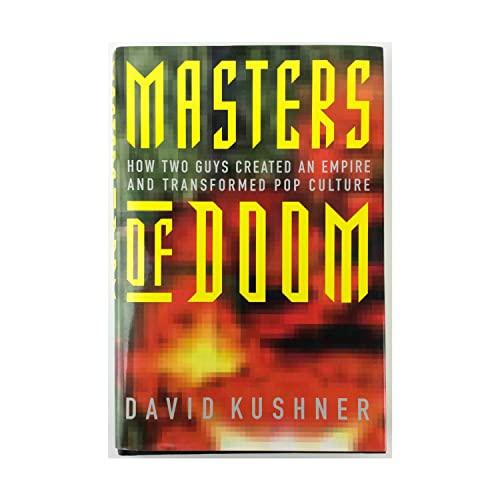
Masters of Doom: How Two Guys Created an Empire and Transformed Pop Culture Cover

David Kushner

Masters of Doom

How Two Guys Created an Empire and Transformed Pop Culture

The hosts highlighted the book for its insightful look at the rise of id Software and the creation of Doom, noting that it was exceptionally well‑written. David Rosenthal recommended it and mentioned he was listening to the audiobook with enthusiasm. The discussion reflected a strong endorsement of the title.

Highly Recommended
Listen on Audible 7-day free trial

Episode: Holiday Special 2022

This book was recommended for its insightful exploration of the development of the video game company, id Software. The podcast hosts discussed the fact that they had considered doing an episode about id Software before a similar interview was done with one of the company's founders by a different podcast.

"

Really well written book and then the author of Masters of Doom, David Kushner, just did a Follow-up piece, I think in Vanity Fair, of a pop interview

Really well written book

Episode: Amazon Web Services

The book 'Masters of Doom' is about the creation of the video game company id Software, founded by John Carmack and John Romero, and their creation of the game Doom. The book was referenced as an audiobook being listened to.

"

Especially having not knowing that that was coming having just recently listened to the audiobook of Masters of Doom I was made for you It's perfect Uh I'm just in heaven in heaven reading Masters of Doom and now

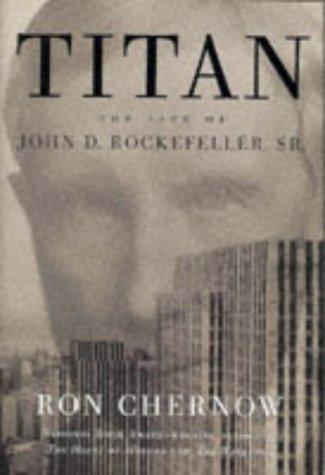
Titan: The Life of John D. Rockefeller, Sr. Cover

Ron Chernow

Titan

The Life of John D. Rockefeller, Sr.

The book was presented as the definitive biography of John D. Rockefeller and served as the main source for the episode on Standard Oil, with the hosts praising its depth and detail. In a later episode, Ben Gilbert noted that the title surprised him by portraying Rockefeller as both a ruthless capitalist and a major philanthropist. The discussion highlighted the book's comprehensive coverage of Rockefeller's business tactics and charitable legacy, reflecting a strong endorsement from the podcast.

Highly Recommended
Listen on Audible 7-day free trial

Episode: Standard Oil Part I

It was described as the definitive biography of John Davison Rockefeller, and served as the primary source material for this episode.

"

the story of John D. Rockefeller transports us back to a time when industrial capitalism was raw and new in America and the rules of the game were unwritten as yet.

the old man had a passion for money that amounted almost to a craze. I never met a man who had such a love of money, except of course for his son in the future.

I believe the power to make money is a gift from God just as are the instincts for art, music and literature to be developed and used to the best of our ability for the good of mankind. Having been endowed with the gift I possess, the gift to make money, I believe it is my duty to make money and still more money and to use the money I make for the good of my fellow man.

John betrayed a special affinity for accounting and an almost mystic faith in numbers. For Rockefeller, ledgers were sacred books that guided decisions and saved one from fallible emotion.

Clark was an old grandmother and was scared to death because we owed money to the banks.

the war had stimulated growth in the use of kerosene by cutting off the supply of southern turpentine, which had yielded a rival illuminant called a campine. The war had also disrupted the whaling industry and led to a doubling of whale oil prices. Moving into the vacuum, kerosene emerged as an economic staple and was primed for a furious post-war boom. This burning fluid extended the day in cities and removed much of the lonely darkness from rural life. Soon, John D. Rockefeller would reign as the undisputed king of that world.

you see this scheme is bound to work. It means an absolute control by us of the oil business. There is no chance for anyone outside but we are gonna give everybody a chance to come in. You are to turn over your refinery to my appraisers and I will give you standard oil company stock or cash as you prefer for the value that we put on your business. I advise you to take the stock. It will be for your own good.

as the owner of almost all the Erie and New York central tank cars, Standard oil's position grew unassailable. At a moment's notice, it could crush either railroad by threatening to withdraw its tank cars. No tank cars, no business.

Rockefeller's creation could only be discussed in superlatives. It was the biggest and richest, the most feared and most admired business organization in the world.

Rockefeller must be accepted as the greatest business administrator America has ever produced.

the general public was of two minds and viewed the new entrepreneurs of which Rockefeller was the foremost as alternatively sinister and heroic. By 1888, Rockefeller began to pop up in fawning magazine features about rich Americans but he was also singled out as a notorious trust king in Joseph Polis Tzer's world and other papers. The press kept up an editorial drum beat against Standard Oil demanding vigorous state and federal antitrust action.

It was the theory of the originators, the larger the volume, the larger the opportunities for the economies and consequently, the better the opportunities for giving the public a cheaper product without the dreadful competition of the late 60s ruining the business. During his career, Rockefeller cut the unit costs of refined oil almost in half and he never deviated from the gospel of industrial efficiency.

own shares of standard oil and your family will never go hungry.

Episode: The New York Times Company

The book chronicled the history of John D. Rockefeller and the rise of Standard Oil, and described him as both a penny-pinching capitalist and a major philanthropist.

"

The book was nothing like I expected it to be.

Rockefeller is such a fascinating human because he is both the most egregious penny pinching capitalist of all time and also probably the biggest philanthropist in global history.

He was able to square the not in two chapters of his life simultaneously during his entire life being just ruthless in the business practices and being Puritanical in his religious beliefs and an absolute devotion to god and to

He somehow thought it was his god given right and something that he needed to do to make the most money possible and then give it away in the way that he saw fit and he did like the modern medicine no chance that it would be where he is today absent the absolute monopoly and absolute anti anti-competitive practices of standard oil in the railroads.

He started a Rockefeller university, which is a yep research institution in manhattan that has developed many I think it's all PhDs and post-docs, right?

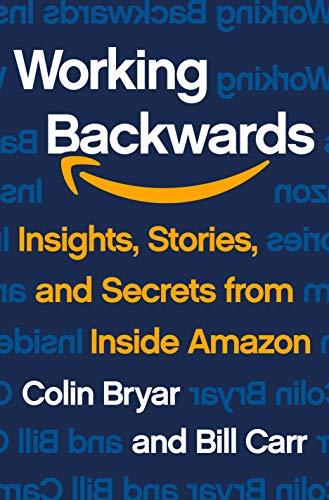
Working Backwards: Insights, Stories, and Secrets from Inside Amazon Cover

Colin Bryar

Working Backwards

Insights, Stories, and Secrets from Inside Amazon

The book was highlighted by Ben Gilbert, who called it a great source that informed both the AWS episode and the previous Amazon.com episode, noting its insights into the complexities of building at Amazon. It was also referenced as the focus of a book club discussion that included former Amazon employee Jeff Wilkie. The hosts emphasized its value for understanding Amazon's internal processes.

Highly Recommended
Listen on Audible 7-day free trial

Episode: Amazon Web Services

The book 'Working Backwards' was co-authored by Colin Briar, who was the first head of AWS. It was a great book, and it was used as a source for this episode and the previous episode on Amazon.com.

"

Colin goes on to do many things including recently co-authoring the book Working Backwards, which is a great book. We used for a source in both this episode and the previous episode on Amazon.com.

There's a lot of good stuff in the Working Backwards book about this about how hard it became to get anything done and built at Amazon because of this rat's nest of complexities involved on the technical and infrastructure side and

All the Pretty Horses Cover

Cormac McCarthy

All the Pretty Horses

The title was brought up in two episodes, first noting that the author was a friend of W. Brian Arthur and had helped shape the prose of Arthur's influential paper on increasing returns in business, and later simply being listed among the author's notable works. Neither episode offered a recommendation, treating the book as a contextual reference.

Listen on Audible 7-day free trial

Episode: Episode 28: The Amazon IPO with original Amazon Bo...

This book was mentioned as one of the works by author Cormac McCarthy.

"

David: Cormac McCarthy (author of All the Pretty Horses, No Country for Old Men, etc)'s contribution to W. Brian Arthur's landmark paper about the economics of the internet, "Increasing Returns and the New World of Business"

Who Is Michael Ovitz?: A Memoir Cover

Michael Ovitz

Who Is Michael Ovitz?

A Memoir

The book was used as the catalyst for a deep dive into Ovitz's career and the founding of CAA, with the hosts highlighting its humor, witty banter, and compelling narrative about an unprecedented business strategy that reshaped Hollywood. Ben Gilbert introduced it as the starting point for the conversation, while David strongly recommended it as a must‑read for fans of iconic CEO stories. The discussion praised the memoir as wonderfully written and highly engaging.

Highly Recommended
Listen on Audible 7-day free trial

Episode: CAA (with Michael Ovitz)

Michael Ovitz's book was discussed throughout the episode, and it was the jumping-off point for the conversation about his career and the founding of CAA.

"

Michael's (truly excellent) book, Who Is Michael Ovitz?:

and we're going to start in medias rest and then rewind just to set the stage for what's to come.

Episode: TSMC

It was strongly recommended for the humor and witty banter of the story. It was a compelling read about an unbelievable business story, the strategy behind it, and how Ovitz upended the entire Hollywood industry.

"

It's called Who Is Michael Ovitz? And if you've read Shoe Dog and you've read The Ride of the Lifetime and you've read What's the Ford one? An American icon. These like iconoclastic CEO founder business. Business built in America. I think, yeah. Yes. This one needs to be on your list, especially if you've enjoyed any movies or TV shows that were put together in the last, well, let's be specific. Or like two part injuries in the Horowitz series. Totally. From like 1975 to 2000, Michael Ovitz put everything together and it is just wonderfully written book about an unbelievable business story, the strategy behind it, the way that with Creative Artists Agency they just completely upended the entire industry in Hollywood and did it really without ever talking to the press and were very tight lipped about it.

For some Hollywood outsider, I found the book really, really wonderful, really compelling.

Security Analysis, Seventh Edition: Principles and Techniques Cover

Benjamin Graham

Security Analysis, Seventh Edition

Principles and Techniques

The book was referenced as the foundational text that shaped Michael Mauboussin's Columbia Business School course, but it was also described by another host as a dense, academic textbook not meant for casual reading. The podcast treated it as an important yet heavyweight resource.

Listen on Audible 7-day free trial

Episode: Berkshire Hathaway Part I

Ben Gilbert described this as an academic textbook, not meant to be readable.

"

Graham and Dodd together had written published security analysis Back in 1934, but that was a textbook. That was like an academic You know, I haven't read it, but like it's super thick dense. It's it's not meant to be readable

The Snowball: Warren Buffett and the Business of Life Cover

Alice Schroeder

The Snowball

Warren Buffett and the Business of Life

The hosts referenced the book several times to illustrate Warren Buffett's investment philosophy, such as his reluctance to buy technology stocks and his strategic use of insurance float. In the earlier episode it served as the primary source for the discussion and was praised as an insightful, popular biography of Buffett. Both hosts encouraged listeners to check it out, describing it as a highly recommended read.

Highly Recommended
Listen on Audible 7-day free trial

Episode: Berkshire Hathaway Part III

The book was referenced multiple times throughout the episode, particularly in discussions about Warren Buffett's investment strategies, his relationship with Bill Gates, and the evolution of Berkshire Hathaway.

"

This is a quote from The Snowball: No, it's not that simple.

That's really impressionant.

This is 1992.

Alice has a great quote in The Snowball: She says Buffett avoided technology stocks partly because these fast-moving businesses could never be run by a ham sandwich.

He thought it no shame to have a business that could be run by a ham sandwich, he wanted to get Berkshire Hathaway to the point where it could be run by a ham sandwich too.

Alice actually just says that line in The Snowball.

And he also, this is according to Alice in The Snowball, most of, not like all of Genri's investments, because as we've talked about insurance companies with their float, they invest the float in securities and Warren and Berkshire prefer to do that in equities.

Most of Genri's investments were in debt and relatively conservative bonds and the like and so Warren's worried about a equities crash coming along here because of the tech bubble.

He wants to essentially dilute Berkshire security holding, he doesn't want to sell security hold because that would be a signal to the market like Warren Buffett is selling stocks that might tip everything over into the crash.

He's like, how can I change the mix of securities that we have at Berkshire without me doing something like that.

I can do this all stock equity deal by Genri and essentially get a portfolio of 20 ish billion dollars of bonds that are going to be insulated from equity prices.

Boy that is some financial jiu-jitsu engineering right there.

He definitely overthought this one because Genri sucked to be blunt.

Alice writes in The Snowball: Warren was already being ridiculed for his refusal to buy technology stocks. Now he had bought the light company. How dull.

Episode: Berkshire Hathaway Part I

It was the main source for this episode and was strongly recommended as an insightful book about Warren Buffett.

"

We owe a big big big. Thank you to Alice Schroeder and her wonderful book The Snowball

I thought this book was awesome people talk about snowball all the time as the one as the sort of more Popular Buffett biography.

So definitely go check out both The Snowball and Buffett great books highly highly recommend

Alice writes about that that every time He looked at spending money He would not see the sticker price for things He would see it Times eight or 10 or 20 of what that money would be worth in the future

So I bought my cigar butt and I tried to smoke it This is amazing You walk down the street and you see a cigar butt and it's kind of soggy and disgusting and repels you But it's free and there may be one puff left in it Berkshire didn't have any more puffs so So all you had was a soggy cigar butt in your mouth That was berkshire hathaway in 1965. I had a lot of money tied up in that cigar butt I would have been better off if I'd never heard of it in the first place

Amazon Unbound: Jeff Bezos and the Invention of a Global Empire Cover

Brad Stone

Amazon Unbound

Jeff Bezos and the Invention of a Global Empire

The book was highlighted as the much‑anticipated sequel to the author’s earlier work, covering Amazon’s evolution from 2013 onward, including Alexa, Amazon Go, third‑party sellers, and its response to COVID. Host David Rosenthal introduced the author Brad Stone as a repeat guest, and both he and Ben Gilbert praised the book’s balanced and comprehensive look at the company’s recent history. The discussion conveyed strong enthusiasm and endorsement for the title.

Highly Recommended
Listen on Audible 7-day free trial

Episode: Special: Amazon Unbound (with Brad Stone)

It was discussed extensively throughout the episode as Brad Stone, the author, joined the Acquired team to discuss the details of the book. It was described as a sequel to 'The Everything Store' that covers the events at Amazon from 2013 onwards.

"

Amazon Unbound (on Amazon, natch): https://www.amazon.com/Amazon-Unbound-Invention-Global-Empire/dp/1982132612/

We were fortunate enough to have repeat acquired guest Brad Stone join us to talk about his most recent book, Amazon Unbound.

This book is the successor to Brad's first book, The Everything Store. It is about everything that has happened at Amazon since 2013, including Alexa, Amazon Go, third party sellers.

I finished it. I came in right under the finish line yesterday. I definitely felt like toward the end, your description of how the company did through covid and basically what they did for the world was really well balanced.

I don't know if listeners would agree or if you would agree. I felt to a certain extent like Everything Store was. It was kind of like the Liars poker or the social network of Amazon.

Episode: Special: 2021 China Tech Trends (with Tech Buzz Ch...

It was described as Brad Stone's new book about Amazon, which was highly anticipated after the success of his previous book, 'The Everything Store'.

"

we are having brad stone back on acquired to hang out with all of our lps and talk about his new book dropping this month Amazon Unbound

i can't wait to read this book i've been and i both have a pre-ordered uh the uh brad's first book on amazon was just like a classic that's uh the everything store

Note: The book recommendations on this page are discovered automatically from podcast transcripts, and may be incorrect or incomplete.