Podcast
Acquired
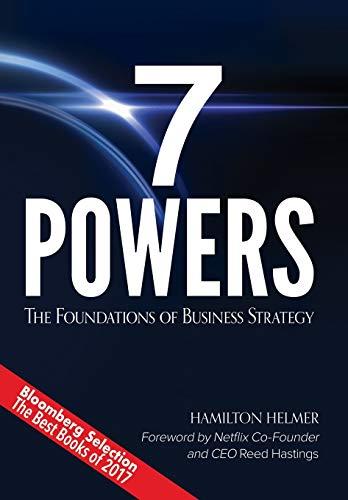
The podcast repeatedly highlighted the book as a foundational framework for understanding and building durable business advantage, emphasizing its seven distinct sources of power such as network effects, scale economies, and branding. Hosts including Hamilton Helmer, Ben Gilbert, David Rosenthal, and Patrick O'Shaughnessy cited it as essential reading for founders and investors, noting its mathematical definition of power and its role in turning strategy into a concrete, actionable tool. They praised it for clarifying the shift from product‑market fit to long‑term differential profit margins and for making strategic analysis accessible across various industries.
Episode: Interview: Hamilton Helmer & Chenyi Shi on How to...
It was discussed as a framework for business strategy, focusing on building durable businesses and defending market positions, rather than just having a good idea. The authors emphasized the importance of simultaneously considering product-market fit and power.
Seven Powers is about defending the castle and less about is this a good idea or not.
Seven Powers is just those structures that if you can get there, make you more iPod-ish and less bow-marish.
I used to think that it was sequential. You get product market fit and then you deal with power. But my biggest education is talking to founders...
But my partner Bill says that it turns strategy from an essay question into a multiple choice question, although I don't know with chat GPT the difference anymore.
So product market fit and power are more or less worth I go.
Episode: Platforms and Power (with Hamilton Helmer and Chen...
It was discussed as a framework for strategy, particularly in the context of platform businesses, and was mentioned as a way to help executives and founders develop successful strategies.
Seven powers was an attempt to take an understanding of strategy and make it Generally available as sort of pattern recognition
And the reason it needed to be decentralized is that there are really two major step changes in the value of a company the first is product market fit and the second is Getting power and they're they're quite distinct and Involved different things
So what we've found is that platforms They often involve different types of power They're very complicated and idiosyncratic. They're complex You can look at one and you it's hard to tell whether they have power or not and figuring that out is hard
So I think there are two parts to this so number one is If they're readers of seven powers and you're patient enough to flip to the appendix after each chapter There is this concept that we call surplus leader margin Which is the maximum price you can charge more than your competitor while still maintaining your competitive position
And Hamilton always says no It's an active tradeoff between both entrepreneurs do it because when you see such a large green field You can penetrate you should grab that and sacrifice short term margin for a larger market share And that's still power because you can realize those profits in the future
Episode: Bitcoin
This book was mentioned as a source for the "Seven Powers" section, which explores how businesses can achieve persistent differential returns. The book was mentioned as a study of how businesses can achieve persistent differential returns, or put another way, to be more profitable than their closest competitor on a sustainable basis.
This is going to be so fun because I think they're a bunch that Bitcoin has uh like a whole bunch um the obvious one that we've been begging the drum on through the whole episode and it's probably the most powerful is is network economies uh I think in particular versus other cryptocurrencies like nothing Ethereum is the only one that stands a chance and it just kind of has a different use case that that's really more around um the the smart contracts and compute that's sort of built into it but for for sure like you can't start anything that looks like Bitcoin now and have any chance of beating it like it's in the same way that Facebook just outran any other consumer social network consumer social entertainment type app and then obviously very smart and acquiring those who did get scale like uh Bitcoin just leapt ahead at the beginning of this paradigm and I think what's cool is it even applies at the technical level too with this idea of like the amount of computing power going into that has gone into maintaining and making robust the Bitcoin network over time is itself a compounding asset right like because the more power that goes in over time the harder it is to crack undo yeah you can't there is no supercomputer that could conceivably ever be created that is going to as long as the Bitcoin economy like a miners keep working that is going to be able to go back and like redo everything and that lead just keeps getting wider and wider and wider certainly not really old things in the blockchain but you know there's always the risk on the newer ones things that are only two or three blocks behind and and unless there's a paradigm change like unless quantum computing arrives and suddenly you have you know 10 million x more compute um than than we did in the past on a single core or something like that.
And so it matters less what they are doing and more just that people come on board and that your value grows according to Meccaf's law and then as it grows more sets of users in use cases will come on board and it will evolve and so like in Bitcoin's case this is why I said I want to be not careful but specific I am not in any way condoning what happened with Silk Road or that that's okay or that that should happen or anything but just from the perspective of value building of the network the fact that it happened like transactions needed to start happening nodes needed to come on the network for users and for minors and Silk Road provided that as the bootstrap the first use case and then there were you know more after that and one thing led to another and now here we are here we are is so radically different than what Silk Road was you know but for the underlying like network and the protocol it doesn't really matter what matters is increasing your velocity and growth of users and transactions and so I then I look at Facebook when I look at Airbnb it's actually the same story like what was Facebook in the early days as we've alluded to it was like undergraduates at colleges looking for attractive photos of you know other incoming undergraduates at their college is right like that is so different from Instagram and WhatsApp today right but that's okay like that's similarly with Airbnb like what was Airbnb in the early days it was like people sleeping on air mattresses in each other's apartments yeah what is it today it's something wholly different but the point is going the network
I think this whole story really illustrates for me when you are pursuing a network effect a network economy based power business you know like this is like Facebook is like most social networks and the like like Airbnb two-sided network effect in the beginning what matters is getting nodes and usage on the network to start and so it matters less what they are doing and more just that people come on board and that your value grows according to Meccaf's law and then as it grows more sets of users in use cases will come on board and it will evolve and so like in Bitcoin's case this is why I said I want to be not careful but specific I am not in any way condoning what happened with Silk Road or that that's okay or that that should happen or anything but just from the perspective of value building of the network the fact that it happened like transactions needed to start happening nodes needed to come on the network for users and for minors and Silk Road provided that as the bootstrap the first use case and then there were you know more after that and one thing led to another and now here we are here we are is so radically different than what Silk Road was you know but for the underlying like network and the protocol it doesn't really matter what matters is increasing your velocity and growth of users and transactions and so I then I look at Facebook when I look at Airbnb it's actually the same story like what was Facebook in the early days as we've alluded to it was like undergraduates at colleges looking for attractive photos of you know other incoming undergraduates at their college is right like that is so different from Instagram and WhatsApp today right but that's okay like that's similarly with Airbnb like what was Airbnb in the early days it was like people sleeping on air mattresses in each other's apartments yeah what is it today it's something wholly different but the point is going the network
Episode: Slack + Salesforce Emergency Pod with Packy McCorm...
Seven Powers was mentioned as a source for understanding the nature of public market investors, who, while not short-sighted, often over-index on recent signals.
I think Hamilton points this out in Seven Powers and Pacquie and O'Yara, avid reader of Hamilton's work with Seven Powers too.
Episode: Special: Invest Like the Best on Acquired
"7 Powers" is described as a book with a mathematical definition of power, focusing on long-term differential profit margins. This book prompted Patrick to consider the "7 Powers" framework in relation to his own businesses.
So I listened to that I picked up the book I said to Ben I was like Ben you gotta read this book and we reached out to Hamilton and rest his history I was like really David I've never heard of it like I don't know and he's like look read Hastings says it's the best business strategy book and he's like the best business strategy practitioner in the world and I was like okay fine it is amazing to be just flashing back what was that six months ago and having skepticism there I mean just to pile on there I was introduced to Hamilton through Daniel Lack and I think that Daniel's the best strategist that I've personally spent time with and he says the same thing about Hamilton or something similar anyway so that's two pretty good ringing endorsements there albeit from a very similar business model in Spotify and Netflix one trying to be the other pretty quickly yeah yeah so anyway yeah "7 Powers" is something I think about a lot it's now a whole section on the acquired show which we're gonna make you go through for Osam in a minute.
And in fact that is his he has a strict mathematical formal definition of power and it is long-term differential profit margin so Patrick the very easy question to you is in your web of businesses and let's start with Osam to keep it simple to where do you derive power we're definitely going to have to extend our end time here because that you guys can get me going on this for a long time you know I'll just throw out examples and this was maybe one case where several years ago probably three years ago I did literally sit down as I think probably everyone that reads "7 Powers" does and say okay which one of these can I do which one do I already have or which one can I engineer so you know I'll just take through ones that I think are relevant for one of the things that's going on in my world so I do think brand is like the most straightforward one that I don't need to spend a lot of time on which is just like high quality low variance outcomes like that's how I think about brand like can can you just consistently deliver something really high quality so that you build trust with people you know trust takes time therefore it takes consistency there needs to be a high minimum quality bar I love that phrase from Toby I think about that a lot if you can do that consistently with whatever it is that you do you will build a good brand over time like the logo doesn't matter all this other stuff really matters less than just consistent high performance at a certain thing and in many cases you can airdrop a brand maybe it's possible maybe Dollar Shave Club did it I think arguably that wasn't a good business it had really low retention maybe it was an amazing story and everyone wants a hack to create a brand instantly and it did there are exceptions there are hacks which can be very useful not discounting them but I think a hack should be on top of some steadily compounding trust equation with the end audience so I do think we've established a brand what exactly it is we could argue over but I won't say a whole lot more about that and the barrier there is just I think time if you want to establish the same brand that you see today okay well we're 5 years ahead or 10 years ahead or 20 years ahead depending on which of the brands you're talking about so I think time is a ultimate barrier to entry for some of the highest quality brands I love that I hadn't thought about that brand as in specifically those terms of high quality low variance and time and you think about of course like we talked about a bunch on our show in years 2 there's persistence and venture capital what is that persistence due to it's due to brand power of the top firms what does that brand power do to it's due to high performance low variance over time right so that's the first maybe my favorite I know it's Hamilton's favorite too because he's always said that to me when we've talked about it is counter positioning and here I just think it is that radical transparency of the research process I joke with a lot of my friends who run investment firms that have that classic mysterious website that's just a logo and you know an info at email address and nothing else basically the digital velvet rope which I love I'm close with a lot of these investors and indeed oftentimes they are literally the best investors and so I respect the hell out of almost all of the people that have that website I joke that one of my goals is to convince as many of those people as possible to come on this podcast on my podcast which I've done many a time and have many more in my sites on long sales cycles but I do think there's an incredible counter positioning there I won't pick out a name but how am I going to as an investor now say with positive some how am I going to beat one of these illustrious incredible firms with track records and crazy brands and everything it's to do literally the opposite of that right to be the most open the most non proprietary investor on planet Earth where I'm externalizing all the things that you're normally buying from them like if you get one of these great investors to be on your cap table you're accessing this thing in their brain that they've built up over time and I'm just saying no actually forget that like you're not getting my brain you're getting the positive side effects of me externalizing that process in a radically transparent way I think it would be very hard for most of those firms to completely change their their attitude on this topic to say nothing of their behavior like they're just they've been doing a certain thing a certain way for a long time so so that would be counter positioning do you think that that osam today has counter positioning or do you think it's actually that it's a folderable to counter positioning and that it's more of the sort of incumbent that derives its power from what we would you think branding and maybe scale economies so I think it's very counter positioned because to be able to build canvas you basically need a heavy quant background like firms that don't have that skill set this is a seriously complex problem that we're solving I mean it is it is non trivial to build I mean each of these things requires a complex modeling exercise they all have to integrate there's crazy optimizations that happen there's there's quite a lot of like compute understanding that that is required to make things happen fast like this is a really complicated problem most of the firms that I would get scared to hear that they're launching a canvas competitor are the most well known quantitative hedge funds not long only firms and then a different business model and their whole thing is that their proprietary you know research and insight and data that isn't shared so it's like the Bezos thing when he was asked about you know other big tech competitors and laughing saying you know those guys are used to software margins like I'm a retailer you know like it's it's an advantage sometimes to not be as fat and happy and have lived on a different business model and so I think we're very counter positioned with canvas specifically against the firms that would most scare me to be competitors and it's a lower margin business so I'm not worried about them we're not as up to speed on probably who those current people are in the but like talk about like 10 years ago if SAC is like we're building canvas that would terrify you but like they're not going to do that because they make their money from performance their hedge fund I'll use a salacious example and SAC actually wouldn't be one of them like the most obvious example would be renaissance technologies right like it's the most extreme example because it's absurd they charge five and fifty or whatever and still produce you know 40-50% returns annually on their own capital they're not launching a canvas competitor but they could and it would be awesome that's the sort of thing I mean like the most sophisticated and advanced research shops quantitative research shops just doesn't make sense for them to do this right now and we'll have at least a few years head start the other one I think about is you're going to get me going down all these now there's kind of a fun one in cornered resource which Hamilton also acknowledges is the least common of the seven powers but nonetheless is an interesting one which is through a program that we call research partners at Osam which is a very simple trade we effectively give away our entire data library infrastructure and access to our team to independent researchers in order for them to do their own thing at their own pace in whatever way they want where the trade is we own we own the intellectual property that gets created for the most part these are retired engineers people in completely different fields the most famous of them is an anonymous guy on twitter who's I think probably the smartest person I've ever met in my life not modest Jesse Livermore's name although modest a very close friend and actually next week's podcast guest so Jesse as he goes by is has an engineering background of sorts very technical background again literally the smartest human being like if I could stick a human being on understanding a complex problem it would be him and he does these like months long deep dives with our data and teaches us as he goes and because we offer so much flexibility and we offer this data set for free again the thing that most firms like us keep as the most proprietary asset they become contractors with us and as a result we've captured some of the most interesting people like this in the world and I think have the best value proposition to them so that's a super tiny example of a cornered resource but we have benefited tremendously from those research partnerships and this is the one where I will admit to thinking about that program because of reading "7 Powers" so actually the power came before the implementation and that one's been a smaller scale success but but a huge success nonetheless I thought you were going to say the podcast was a cornered resource which in your case may be fair because obviously the CEO and you know major owner of the firm but one of the things I love from the book and Hamilton's work is that people are not cornered resources it has to be like what you're describing people are not cornered resources because somebody else can hire them like they're arbitrageable has to be non arbitrageable and I love this it's like a cornered resource plus counter positioning that you've built this practice up I would argue I don't know which maybe you guys could tell me what's where you would put this power but I think of this more as just a flywheel than a power but there's got to be something in there and traditionally like this flywheel would normally manifest as scale economies but maybe it's network effect here on the podcast side it's something like every week you get more listeners who are incredible who can have a positive impact on the guest which then helps you get ever more interesting guests who then help you grow the audience and you spin that flywheel and therefore the best guests are just going to every week have a better reason to do yours instead of someone else's with their precious time and you just have to be patient with that like I always talk about it like someday you know I'll have Bezos and Elon on like back-to-back weeks like I'm just I'm convinced I will like I know how compounding works and maybe it's two years from now maybe it's five years from now like it's gonna happen that's I think something that is a very hard to compete with what power it should be assigned under I have no idea but it's something to do with that kind of growth flywheel that that again no amount of money I don't think could buy yeah I've always thought about it not as a flywheel but and I think this is a Ben Thompsonism laddering up where once you sort of have someone on some wrong then they become a part of the way that you're able to describe the show to the next great guest.
Episode: The NBA
The book, written by Hamilton Helmer, outlines seven key powers that businesses can leverage to gain success.
And to review, he's got these seven, as you can guess from the book: Counter positioning, scale economies, switching cost, network economies, branding, process power, or cornered resource.
Episode: Epic Games
7 Powers is a book which describes how leaders of a category can earn outside profits by using strategies such as counter positioning, scale economies, switching costs, network economies, process power, branding and cornered resources.
And uh, just really think is brilliant, uh of the seven powers.
So What are the seven powers? They're basically the ways that and i'm gonna hamilton if you're listening I'm going to butcher the definition here, but they're the ways that A leader in a category can earn outside profits versus all of their competitors
It's basically what what's the thing that makes your business powerful versus your competitors?
I think this really gets at the core david of like what and why We want to dissect what the core essence of a business is
You know, there's so much going on here with the technology platforms The evolution of the games industry in real time And then this fortnight phenomenon What is the power that epic has so there's seven categories of power?
Episode: Adapting Episode 3: Intel
The book highlights the concept of business power, suggesting that Intel was in a commodity business with no inherent power, as competitors could easily enter the market and challenge their leadership position.
there's no power in the business.