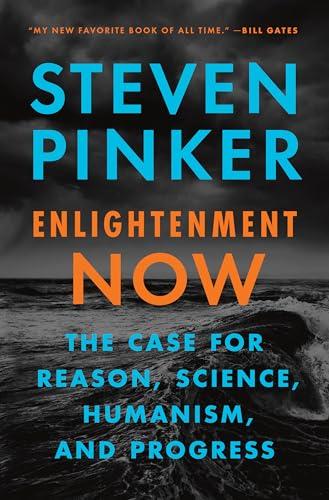
It was mentioned as a book that presented data and graphs demonstrating progress in areas like global poverty, literacy, and working hours, pushing back against the idea that a belief in human nature is depressing.
"
I do have a graph in my previous book Enlightenment now showing Working Hours in the United States in Europe which have gone way down for more than 60 hours a week to fewer than 40 hours and that's probably an area in which there could be there should be more progress.
It's kind of a theme of my last book enlightenment now I also go into the psychology and more detail in my new book rationality which is among other things about how our sense of risk and probability and prevalence are driven by images and anecdotes and narratives and not by data.
writing books like enlightenment now or better angels rationality are inherently encouraging it's almost contrarian because of our propensity to focus on the negative why do we need an accurate view of the world that why is this important well it's for the same reason that it's better to see things than to wear a blindfold or hallucinate namely the more you know about the world the better equipped you are to act on it to solve problems when they arise to figure out what works and what doesn't to protect the institutions and the laws and the practices that have made life better get rid of the ones that have made life worse the more you know about the world the better equipped you are to act on it don't get me wrong I agree with the idea that we should keep our eye on a positive view of the future because I think it also encourages us to solve the problems that we do have.
I'm on record as the second biggest contributor to Hillary Clinton among Harvard faculty but yes there is that danger that just analyzing things objectively in the case of the alt right I can tell you that it's true that not all of them are teaky torch wielding skinheads because at least one of my former students at Harvard University gravitated to the alt right to my horror but you know he was one of the smartest students I ever had and the point of that discussion that ended up on YouTube and selectively edited is that if you have an atmosphere in which has what we increase in we do in academia in which there's some things you just can't say well they're going to be people who are part of the tribe we're going to say well geez what are they what are they afraid of if you get punished for saying something that must mean it we should take a look at it because if it was so preposterous no one would bother suppressing it in the first place maybe there's something to it I think that academia has become something of an incubator of the alt right by having such an atmosphere of repression that people think that there are truths that are being suppressed that terrifies me a little bit right because I did a bit of a debunk of this fake documentary called planned to make which was something like an anti-vaxxer yes magnum opus and I went through the first half of it and I just deconstructed a lot of the so-called experts and things like that and people one of the primary comments on there was if it's not true why isn't it allowed on YouTube and that's hard to argue with in a lot of ways I mean it's hard to argue effectively obviously there are reasons for not disseminating misinformation and disinformation but it's very hard to convince somebody that they're not allowed to watch something because it's not true when usually they're going to assume the opposite is the case.
it's something I deal with in my enlightenment now because if I'm just saying well we are look at the way the the New York Times sensationalizes this story this morning Some could say well you're doing the same thing you're just right cherry picking anecdote so actually have a graph showing the results of an algorithm that did sentiment mapping in stories in the New York Times in an example of world media going back to the 40s and it's really true the media have gotten more negative.