True Grit
Charles Portis
Mentioned 5 months ago
Ep. 833: Game On, Suckers! MeatEater Trivia CCIII
Building on the belief that a deeper understanding of the natural world enriches all of our lives, host Steven Rinella brings an in-depth and relevant look at all outdoor topics including hunting, fishing, nature, conservation, and wild foods. Filled with humor, irreverence, and things that will sur...
Recently mentioned
Charles Portis
Mentioned 5 months ago
Ep. 833: Game On, Suckers! MeatEater Trivia CCIII
Jamie Holmes
Mentioned 5 months ago
Ep. 832: Osceola, Native American Slavery, and The Seminole Wars
Jamie Holmes
Mentioned 5 months ago
Ep. 832: Osceola, Native American Slavery, and The Seminole Wars
John U. Bacon
Mentioned 5 months ago
Ep. 826: Like Nuts on a Cat
Stanley P. Young
Mentioned 5 months ago
Ep. 826: Like Nuts on a Cat
Clifford Geertz
Mentioned 1 year ago
Ep. 607: MeatEater Radio Live! Whitetail Buck Beds, Deer Sex, and Mauled By a Black Bear
Danielle Prewett
Mentioned 1 year ago
Ep. 604: MeatEater Radio Live! An Alaska Moose Hunt, Utah Wants Your Land, and Buffalo Scapulas
Stephen E. Ambrose
Mentioned 1 year ago
Ep. 597: Game On, Suckers! MeatEater Trivia CXXIX
Steven Rinella
Mentioned 1 year ago
Ep. 594: Game On, Suckers! MeatEater Trivia CXXVIII
Steven Rinella
Mentioned 1 year ago
Ep. 598: MeatEater Radio Live! A Salmon Smokehouse, Killer Jerky, and the 6th Biggest Yukon Moose
Anne Bishop
Mentioned 1 year ago
Ep. 588: Game On, Suckers! MeatEater Trivia CXXVI
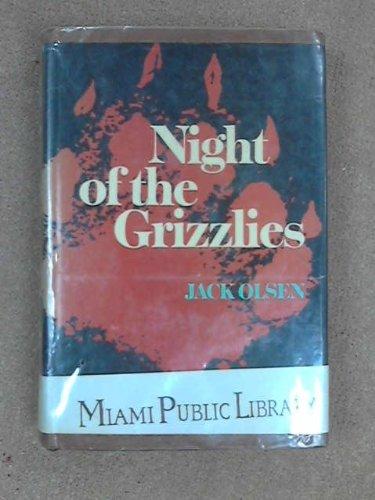
Jack Olsen
Mentioned 1 year ago
Ep. 585: Game On, Suckers! MeatEater Trivia CXXV
It was mentioned as reading material for a sheep hunt, where three hunters divided the book into thirds to share amongst themselves. They described it as having some good stories, but not being a great book overall.
We cut that book in thirds because it was his book.
— Episode: Ep. 130: Packing Gear
It was mentioned as reading material for a sheep hunt, where three hunters divided the book into thirds to share amongst themselves. They described it as having some good stories, but not being a great book overall.
We cut that book in thirds because it was his book.
Everyone read that book.
It was like a biography of the first superintendent of Denali national park.
Not a great book.
Some good stories in there.
It was described as an American history book about the American shad fish and how it was relied upon by people on the American coast. A story from Daniel Boone's biography was mentioned in relation to the abundance of shad.
McPhee's book, John McPhee's book, The Founding Fish is just sort of like an American history, but about that fish and sort of the degree to which people on the American coast relied...
— Episode: Ep. 127: Grays Harbor
It was described as an American history book about the American shad fish and how it was relied upon by people on the American coast. A story from Daniel Boone's biography was mentioned in relation to the abundance of shad.
McPhee's book, John McPhee's book, The Founding Fish is just sort of like an American history, but about that fish and sort of the degree to which people on the American coast relied on the shad fishery.
And there's things in Daniel Boone's biography even where... Daniel Boone, someone came and notified... No, it was Daniel Boone's family. This came from Boone's son later told him... Daniel Boone's son was later interviewed and he was telling a story about his father and mother.
The History, Myth, and Future of the Mustang
The book explored the wild horse overpopulation issue and proposed increasing mountain lion populations as a solution, but was criticized for overlooking ecological complexities and the distribution of lions and horses.
it isn't that there are too many horses is that there aren't enough mountain lions.
— Episode: Ep. 126: Wild Horses
The book explored the wild horse overpopulation issue and proposed increasing mountain lion populations as a solution, but was criticized for overlooking ecological complexities and the distribution of lions and horses.
it isn't that there are too many horses is that there aren't enough mountain lions.
because the Bureau of Land Management has always seen the horses as livestock, not wildlife. It has never tried to understand the Mustang's place in the Western ecosystem, or tried to take advantage of the ancient relationship between the horse and its main predator, the mountain lion.
wild horse advocacy groups have blasted the plans and are preparing for a legal fight. In all likelihood though, none of these ideas will make it out of Washington. Particularly unlikely is the slaughter option. No one in Congress wants to vote to turn an American symbol into sausage.
Tracking the Secrets of a Terrifying New Plague
The book discussed the Crutchfield-Jacobs disease and its relation to cannibalistic practices in New Guinea, which influenced the speaker's decision to avoid eating brain matter. The speaker found it in a bookstore and purchased it for five dollars.
I was in a bookstore one day and there was a book called Deadly Feast and it was by Richard Rhodes and he's the man that wrote the making of the atomic bomb and of course the book was only five dollar...
— Episode: Ep. 124: Live from Columbus
The book discussed the Crutchfield-Jacobs disease and its relation to cannibalistic practices in New Guinea, which influenced the speaker's decision to avoid eating brain matter. The speaker found it in a bookstore and purchased it for five dollars.
I was in a bookstore one day and there was a book called Deadly Feast and it was by Richard Rhodes and he's the man that wrote the making of the atomic bomb and of course the book was only five dollars I skimmed through it real quick since I'm gonna buy this baby so I took it home and started reading it and it was about a scientist that found the the the Crutchfield-Jacobs disease or something like that in the humans but he went down to New Guinea to study a tribe of people down there and the children and the women were coming down with tremor disease and they would shake and die the men did not have this disease and he sat down he was studying that tribe trying to figure out what was going on and he read a lot of technical journals about human beings and people like sniffing gold dust it would go and deposit in certain locations in your brain he read one article where a scientist trained these tapeworms roundworms to run a maze you know we all think of something the maze being complicated and I just kind of kind of said well it's probably just like a real simple maze you know from point A to point B to eat this food but for some reason I don't know what the scientist was doing he took those those worms that he trained to run the maze he killed them ground them up fed them to worms that never ran the maze the worms could run the maze.
The book, set during the Civil War, was mentioned as an example of 'delusion of reprieve', where a man facing execution experiences a vivid fantasy of escape before his death. The podcast host was familiar with the story but had not read it.
Have you ever read Incident at Owl Creek or an Occurrence at Owl Creek?
— Episode: Ep. 120: Adaptive Hunting and Fishing
The book, set during the Civil War, was mentioned as an example of 'delusion of reprieve', where a man facing execution experiences a vivid fantasy of escape before his death. The podcast host was familiar with the story but had not read it.
Have you ever read Incident at Owl Creek or an Occurrence at Owl Creek?
It's a, so it's set during the Civil War and a man gets captured and they go to hang him by throwing him off a bridge with a noose around his neck. And like the rope snaps, okay, and he lands in the river and lives out this whole existence of making it back home, reuniting with his wife. But then in the end, like the rope didn't break. Yeah. And he had this long, in the time it took him to be thrown from the bridge and to meet the end of the rope, he had this long delusion of reprieve.
I think it's called An Occurrence at Owl Creek Bridge or something like that. It's a good story.
Metaphor and the Imperial Ethos
This book, published around 2000-2001, explores the development of sport hunting in America, particularly the influence of British hunting culture and the shift from pot hunting to sport hunting.
But he describes that these British hunters come over. They develop a sporting culture by way of, particularly, periodicals. And Americans, as we continue to push the frontier further and further west...
— Episode: Ep. 119: Walking the Edge
This book, published around 2000-2001, explores the development of sport hunting in America, particularly the influence of British hunting culture and the shift from pot hunting to sport hunting.
But he describes that these British hunters come over. They develop a sporting culture by way of, particularly, periodicals. And Americans, as we continue to push the frontier further and further west, take up this sport hunting.
It's by a guy named Daniel Justin Herman. He's a professor in Washington. I quote him often.
The Lives and Opinions of the Greater Philosophers (Mint Editions (Philosophical and Theological Work))
A quote from this book emphasizes that a Christian scientist (or historian, or hunter) should conduct their work while integrating their Christian beliefs, acknowledging God's active involvement in the natural world.
The Christian, he writes, believes that the natural world is created, ordered and maintained by God who acts in its history in special ways.
— Episode: Ep. 119: Walking the Edge
A quote from this book emphasizes that a Christian scientist (or historian, or hunter) should conduct their work while integrating their Christian beliefs, acknowledging God's active involvement in the natural world.
The Christian, he writes, believes that the natural world is created, ordered and maintained by God who acts in its history in special ways.
The Burgess Shale and the Nature of History
The podcast mentioned Gould's book in relation to the discussion on the evolution of salmon and the reasons behind the physical characteristics of male salmon during spawning. Gould's work was referenced as an example of how we may not always understand the reasons behind evolutionary adaptations.
He had a point he made one time in one of his books I was reading where he's kind of getting at something I'm sure you deal with and talk about all the time would be that like, we don't know why thing...
— Episode: Ep. 112: Salmon
The podcast mentioned Gould's book in relation to the discussion on the evolution of salmon and the reasons behind the physical characteristics of male salmon during spawning. Gould's work was referenced as an example of how we may not always understand the reasons behind evolutionary adaptations.
He had a point he made one time in one of his books I was reading where he's kind of getting at something I'm sure you deal with and talk about all the time would be that like, we don't know why things become the way they become.
he was using an example like, uh, someone might look and be like, wow, bark, right? Bark is Brown. What's the genetic, what's the selective advantage of Brown bark?
Like, why is it Brown? Like, what is the tree gaining from having Brown bark? And he would say, maybe what the tree is doing is that there's an advantage to having very thick bark, something structural in that because it can resist forest fire.
So the advantage is thickness of bark. Um, as over the years it's selected for thicker and thicker bark. It just so happens for, for maybe perhaps no advantageous region reason at all that it's attained a certain color.
But we look and ponder over the color thinking like, why is it that way when it's just, there's no reason it's that way. It's like green leaves. There's nothing special about that color.

An Environmental History, 1783-1933
The book is described as an environmental history of the Great Lakes, detailing the collapse of native fisheries and subsequent attempts to introduce new species. It highlights the transformation of the Great Lakes into an experimental aquarium.
There's a book that I have called Fishing the Great Lakes and it's an environmental history of the Great Lakes. And it gets into the collapse of the native fisheries.
— Episode: Ep. 112: Salmon
The book is described as an environmental history of the Great Lakes, detailing the collapse of native fisheries and subsequent attempts to introduce new species. It highlights the transformation of the Great Lakes into an experimental aquarium.
There's a book that I have called Fishing the Great Lakes and it's an environmental history of the Great Lakes. And it gets into the collapse of the native fisheries.
Poems
It was a piece written about the Mississippi River; the author, Ben Metcalf, expressed his dislike for the river for various reasons, including its inability to manage water levels and its inflated reputation in American culture.
There's a writer named Ben Metcalf. I don't know if he writes anymore or not. He used to write pieces for Harper's and was also... Was an editor somewhere.
— Episode: Ep. 110: Up North
It was a piece written about the Mississippi River; the author, Ben Metcalf, expressed his dislike for the river for various reasons, including its inability to manage water levels and its inflated reputation in American culture.
There's a writer named Ben Metcalf. I don't know if he writes anymore or not. He used to write pieces for Harper's and was also... Was an editor somewhere.
And this guy Ben Metcalf wrote a piece called American Heartworm and it was about the Mississippi.
So as much as Twain, as much as Mark Twain would celebrate the Mississippi, Ben Metcalf loathed the Mississippi River.
Steven Rinella mentioned this book and its content about the author's experiences with Inuit hunters and their unique perspectives on hunting and technology. It was referenced in a discussion about the cultural differences in hunting practices and perceptions of wildlife.
Steffensen would go and try to impress the Inuit with technology but because they had this very elaborate mystical belief system things weren't impressive to him
— Episode: Ep. 100: The Powerful Joe Rogan
Steven Rinella mentioned this book and its content about the author's experiences with Inuit hunters and their unique perspectives on hunting and technology. It was referenced in a discussion about the cultural differences in hunting practices and perceptions of wildlife.
Steffensen would go and try to impress the Inuit with technology but because they had this very elaborate mystical belief system things weren't impressive to him
he would bring up where I come from we can open a person up and do a surgery and they'd be like oh yeah we know a guy can pull your whole spine and skull out while you're sleeping and put a new one back in and he'd say check this gun out
I can shoot something 200 yards away oh yeah we know a guy who can take his bow and shoot it and the arrow will fly over the mountains and kill something on the other side of the mountains and he'd always be getting bent out of shape
and he'd always have this telescope that he could observe the craters on the moon and we know a guy that hunts up there
there was a dead whale on the beach that he writes about and it was like this dried out like a desiccated whale carcass on a beach and they were really hard up for food so they went and cut the tongue out of this whale and boil it, change the water boil it, change the water just to get the salt out so impregnated with salt and eventually eat it and later he hears they encounter some Inuit hunters and they explain that thing had been laying there seven years so he had a strong stomach seven years
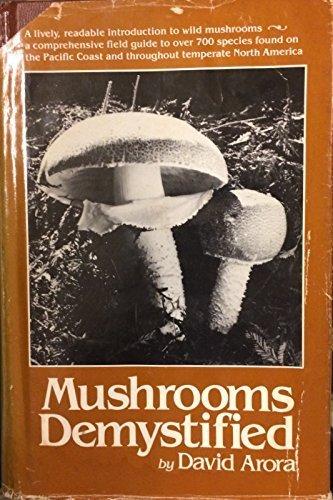
The podcast speakers discussed the book cover, which features a picture of a person holding a large morel mushroom.
You ever see the back of Mushrooms Demystified, the morels a dude's holding on the back of that boat?
— Episode: Ep. 099: Wild Game Basics
The podcast speakers discussed the book cover, which features a picture of a person holding a large morel mushroom.
You ever see the back of Mushrooms Demystified, the morels a dude's holding on the back of that boat?
This book was mentioned in relation to the author's big game hunting experiences. It was discussed in the context of shifting perspectives on wildlife conservation and how attitudes towards animals have changed over time.
You sent me that book. Yeah, Campfires in the Rockies, right?
— Episode: Ep. 098: Jon Mooallem
This book was mentioned in relation to the author's big game hunting experiences. It was discussed in the context of shifting perspectives on wildlife conservation and how attitudes towards animals have changed over time.
You sent me that book. Yeah, Campfires in the Rockies, right?

It was mentioned in relation to an essay about wilderness, specifically addressing the idea that in a time when humans have impacted nearly every part of the earth, doing nothing is often insufficient for preserving wilderness. The author's views on managing and maintaining wilderness character were discussed.
doing nothing is frequently a poor recipe for wilderness
— Episode: Ep. 097: Loose Ends
It was mentioned in relation to an essay about wilderness, specifically addressing the idea that in a time when humans have impacted nearly every part of the earth, doing nothing is often insufficient for preserving wilderness. The author's views on managing and maintaining wilderness character were discussed.
doing nothing is frequently a poor recipe for wilderness
the inescapable fact is that if we want wilderness here, if we want wilderness here, we will have to choose which wilderness we want. An idea that is inimical to the wilderness ethic.
Heroes and Villains of the Westard Expansion
The podcast speakers discussed this book, mentioning that it touched upon the mythology surrounding Davy Crockett and how some of it may not be entirely accurate.
I think it was The Lions of the West was a book I read by the Robert Morgan, I think.
— Episode: Ep. 096: Permissions!
The podcast speakers discussed this book, mentioning that it touched upon the mythology surrounding Davy Crockett and how some of it may not be entirely accurate.
I think it was The Lions of the West was a book I read by the Robert Morgan, I think.
It was impactful for the podcast host and his friends during a time of uncertainty after college, making them feel that their lifestyle choices were valid. The book resonated deeply with the host, providing comfort and validation about their life choices.
But Troutbone fell into, when I say our lap, I mean the laps of me, my brothers, and like our main hunting and fishing friends that we grew up with.
— Episode: Ep. 092: John Gierach
It was impactful for the podcast host and his friends during a time of uncertainty after college, making them feel that their lifestyle choices were valid. The book resonated deeply with the host, providing comfort and validation about their life choices.
But Troutbone fell into, when I say our lap, I mean the laps of me, my brothers, and like our main hunting and fishing friends that we grew up with.
And there was just this, uh... tremendous amount of anxiety that was unspoken at the time. But there was sort of like a lot of... there's just like this palpable anxiety in the air about what we were all gonna... what was gonna happen to us all.
But it was like... it made me feel like, oh my god. This is okay. Like this is a thing that people do and that happens to people. And there's like a way you can live your life like this.
So and they were not, you know, I came out in, I swear it was 86.
Note: The book recommendations on this page are discovered automatically from podcast transcripts, and may be incorrect or incomplete.
Podcast Name