
Podcast
Modern Wisdom
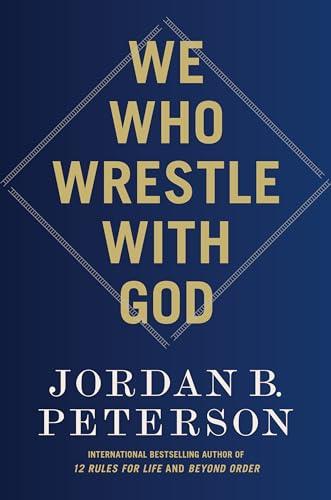
It was mentioned as a new book written by Jordan Peterson, which the podcast host is looking forward to discussing with him in the future.
He's got this new book, We Who Wrestle With God.
— Episode: #717 - Jeremy Boreing - Going To War Wit...
Episode: #717 - Jeremy Boreing - Going To War With Mainstre...
It was mentioned as a new book written by Jordan Peterson, which the podcast host is looking forward to discussing with him in the future.
He's got this new book, We Who Wrestle With God.
Episode: #712 - Dr Jordan Peterson - How To Destroy Your Ne...
Peterson shared that he's currently writing a book called *We Who Wrestle With God*. It is based on his reading of the Gospel of Matthew and he believes that the book will be more difficult than his last two books, but not as difficult as *Maps of Meaning*. He hopes that the book will demolish the atheistic argument and reframe the idea of belief.
I've been reading the gospel of st. Matthew I'm I'm writing a book at the moment called we who wrestle with God and one of the things Christ says to people continually is to not damage their vision is to not put that's the best way of putting it don't occlude your eye you can see what's in front of you if you're willing to see it and if you're willing to see it the terrible many of the terrible obstacles in life you can just walk around but if you blind yourself purposefully to follow your own narrow self-serving delusion you're going to run into terrible things and terrible people and the terrible part of your own soul all the time that's what you should be afraid of but the best thing that you can hope for if you do do that is to fluke success living somebody else's life right right great wonderful yeah exactly you get to be you get to be a successful fraud
I'm very excited about this new book I'm hoping it'll be the best book that I've ever written it's it's going to be more difficult book than the last two were but not as difficult as maps of meaning which means to consume yeah it's it's it's more it's heavy it's it's deeper have you been fighting with trying to make it accessible no not really right i've been i've been i've been just trying to lay the argument out as clearly as i can like and i think that'll do the trick and i i i have to go over it again and edit it and make sure that it's no more obscure than is absolutely necessary no i want to lay it out so that it's comprehensible and i've had a lot of success with the biblical ventures that i've already embarked on i did a series on genesis in 2017 which turned out to be quite influential and then i just did a seminar on exodus with a group of thinkers and i know there's a hunger for analysis of deep stories and i also have good people around me that can help me grind my way through the stories and understand them and so i'm very much looking i've been having quite a good time writing this book actually it's very difficult to write but it's been extremely exciting and interesting and i'm hoping you asked me earlier what would i consider success with this book i don't think that you'll be able to read this book and understand it and be atheistic i think i can demolish the atheistic argument permanently and it's partly it's a weird thing because it's not like all of a sudden people are going to throw themselves at the feet of god in worship it's like it requires a reconsideration of what we mean by belief and i walked through some of it it's like do you believe in the good well there the difference between believing in good and believing in god is it's a very narrow difference now there are important differences but it's still a narrow difference and the thing is if you don't believe in the in good you're aimless and if you're aimless you're hopeless and if you're aimless and hopeless you're anxious and fractionated and people can't unite in their beliefs like the alternative is not good reversing the enlightenment is no small task well hopefully we can save the best of the enlightenment as well it's like uh the uh chested and fence of chested and fence like how many how many different fences are in the field so to speak and if we've thrown this one out and we're trying to plug it back in but which bit of it's going back in the ground things that's very interesting and i think i think people like dawkins have started to realize this and i know that people like douglas murray and i on her c alie and neil fergusson have recognized this is that with the death of god many other things die things you don't expect and one of the things that dies when god dies is science and no one expected that how so because science as a practice is a religious practice it's predicated on religious axioms is it well you have to believe that there's such a thing as truth you have to believe that the truth is understandable you have to believe that understanding the truth is good you have to believe that there is such a thing as good right so imagine to be a scientist you have to imagine that first of all that the world is comprehensible to the human intellect but more that if you investigate the mysteries of the material world that that will be beneficial right those aren't scientific claims those are metaphysical claims and that metaphysical claim is nested in a story you know and the the enlightenment types they've portrayed the scientific revolution as something contrary to the religious substrate and that's not accurate that's a french revolution that's a luciferian intellect history it's not true the universities grew out of the monasteries that's where the universities came from and science as a widespread enterprise got its start in the universities and they grow to the monasteries that's not questionable like if you go to harvard or if you go to oxford and cambridge it's just starkly evident the layout of the of the colleges is a monastic layout so the idea that there is some fundamental contradiction between religious belief and the scientific enterprise it's it's there's nothing about that that's true and part of the reason that we're loo part of the really reason that we're losing the scientific enterprise right now is because we've unmoored it from its metaphysical substrate and it can't survive if you're going to be a scientist you have to put the truth above all else scientists are very rare you have to believe in the truth to be a scientist i think docens believes in the truth by the way so he's an atheist but a very he's much less of an atheist than he thinks that's my impression lying scientists are atheistic or just malevolent docens is a truthful scientist and insofar as he's pursuing the truth and insofar as he believes that pursuing the truth will set you free then he's walking down a path that's christian to its core now i know he doesn't like that idea but he also doesn't like the fact that the scientific enterprise seems to be collapsing in terms of it's what would you call reliability and validity everywhere so