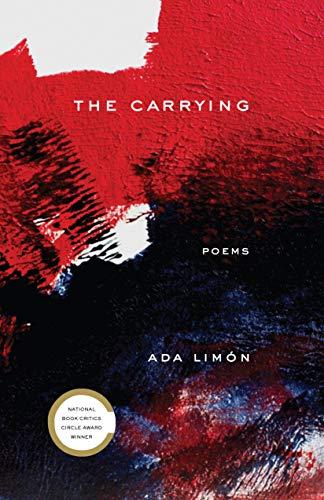
The Carrying
Ada Limón
Mentioned 2 years ago
“The End of Poetry” by Ada Limón
Wisdom to replenish and orient in a tender, tumultuous time to be alive. Spiritual inquiry, science, social healing, and poetry. Conversations to live by. With a 20-year archive featuring luminaries like Mary Oliver, Thich Nhat Hanh, and Desmond Tutu, each episode brings a new discovery about t...
Recently mentioned
Ada Limón
Mentioned 2 years ago
“The End of Poetry” by Ada Limón
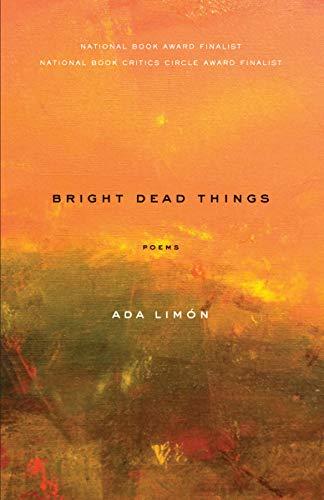
Ada Limón
Mentioned 2 years ago
“The End of Poetry” by Ada Limón
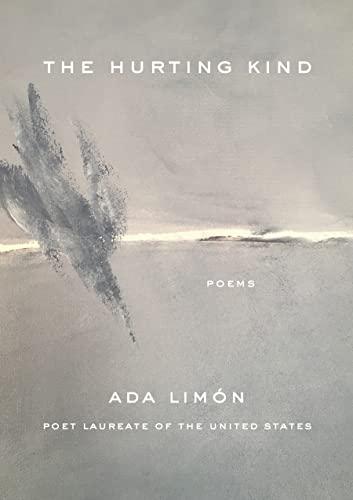
Ada Limón
Mentioned 2 years ago
“The End of Poetry” by Ada Limón
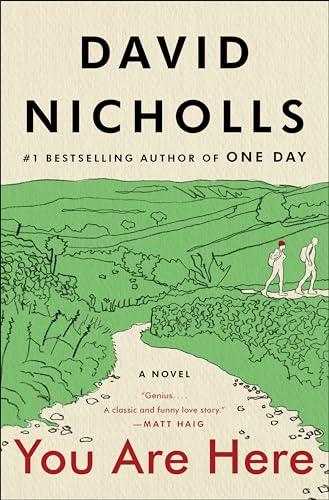
David Nicholls
Mentioned 2 years ago
“The End of Poetry” by Ada Limón
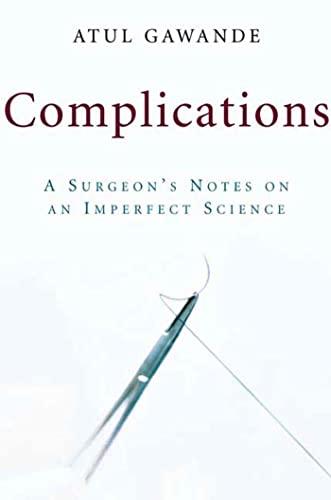
Atul Gawande
Mentioned 2 years ago
Atul Gawande — On Mortality and Meaning
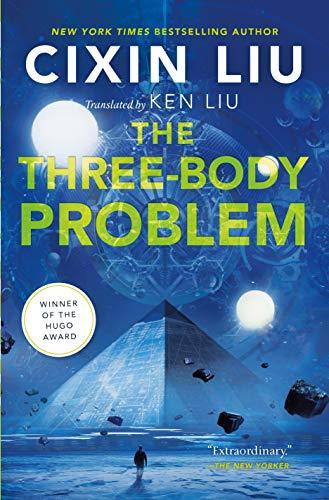
Cixin Liu
Mentioned 2 years ago
Atul Gawande — On Mortality and Meaning
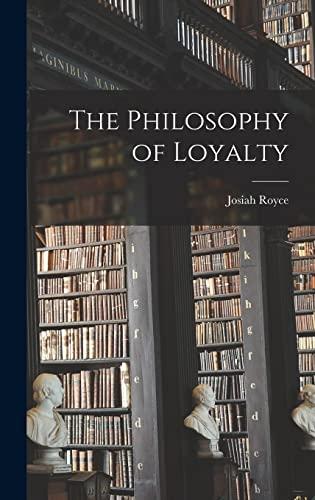
Royce Josiah
Mentioned 2 years ago
Atul Gawande — On Mortality and Meaning
Atul Gawande
Mentioned 2 years ago
Atul Gawande — On Mortality and Meaning

Elizabeth Alexander
Mentioned 2 years ago
“Ars Poetica #100: I Believe” by Elizabeth Alexander
Padmasambhava
Mentioned 2 years ago
Luis Alberto Urrea — On Our Belonging to Each Other
Luis Alberto Urrea
Mentioned 2 years ago
Luis Alberto Urrea — On Our Belonging to Each Other
Luis Alberto Urrea
Mentioned 2 years ago
Luis Alberto Urrea — On Our Belonging to Each Other
How We Meet the Built World
It was described as a wonderful book that discusses the question "What can a body do?" posed by Gilles Deleuze, exploring how the built environment and the presence or absence of assistive technologies profoundly impact what a body can achieve.
Her book is, What Can a Body Do? How We Meet the Built World.
— Episode: Sara Hendren — Our Bodies, Aliveness, an...
It was described as a wonderful book that discusses the question "What can a body do?" posed by Gilles Deleuze, exploring how the built environment and the presence or absence of assistive technologies profoundly impact what a body can achieve.
Her book is, What Can a Body Do? How We Meet the Built World.
And that question I didn't know until I read this from you is really a famous question in the history of philosophy. Would you say a little bit about that?
What can a body do as a question posed by Gile de Luse, a French philosopher, and he was in dialogue with him much earlier, philosophical question of spinoses.
The designed world, the presence or absence of prosthetics but also assistive technologies of all kinds, things like ramps instead of stairways.
So you say, okay, well, what is a body in a wheelchair? What can it do? Well, it depends. It's a part of the legs, amulet or not.
The book was written with Tom Rivett-Carnac. The first 11 pages describe the terrible consequences of unchecked climate change, while the rest talks about the possibility of a much better world. The book also talks about the need for a shift in people's consciousness.
The Future We Choose
— Episode: Christiana Figueres — Ecological Hope, a...
The book was written with Tom Rivett-Carnac. The first 11 pages describe the terrible consequences of unchecked climate change, while the rest talks about the possibility of a much better world. The book also talks about the need for a shift in people's consciousness.
The Future We Choose
Only 11 pages or so of the book describe the terrible consequences of unchecked climate change, while the rest talks about the possibility of a much better world why.
A lot of the book is about the need for a shift in people's consciousness.
Isn't this rather grandiose or on the other hand too vague to make a difference in the real world I want it I want to say that I love the guardian but I think that this person is representing something larger.
A Christian Interpretation
The book's opening line, "Man is his own most vexing problem," was discussed as an insightful starting point for spiritual life.
was not about who God is but who we are because the great theology is also this investigation of What it means to be human and you know, I discovered Reinhold Niebuhr. Have you ever heard of him? It's...
— Episode: Three Skills for Staying Calm, Sane, and...
The book's opening line, "Man is his own most vexing problem," was discussed as an insightful starting point for spiritual life.
was not about who God is but who we are because the great theology is also this investigation of What it means to be human and you know, I discovered Reinhold Niebuhr. Have you ever heard of him? It's a name in 20s
Okay, I mean mid 20th century public theology we could use some of that right now frankly the very first line of his book the nature and destiny of man is I think just one of the greatest senses and one of the most wise senses which it starts
Man is his own most vexing problem Okay, I mean and Nowadays, he would probably say I don't know He wouldn't use the word man but the thing is like I am my own most vexing problem that is also a beginning of spiritual life and
Amplifying Our Humanity Through AI
Reid Hoffman co-authored this book with GPT-4. The book explores the potential of AI to amplify human capabilities and features an insightful conversation with AI critic Gary Marcus.
He wrote that one winsomely together with GPT-4.
— Episode: Reid Hoffman — AI, and What It Means to...
Reid Hoffman co-authored this book with GPT-4. The book explores the potential of AI to amplify human capabilities and features an insightful conversation with AI critic Gary Marcus.
He wrote that one winsomely together with GPT-4.
He is a host on the podcasts Masters of Scale, Grey Matter, and Possible, which will launch its second season this fall.
And he's newly founded a company called Inflection AI, which is the creator of Pi, quote unquote, a supportive and empathic conversational AI.
And also, for example, in this Greylock podcast you have with very cleverly named Grey Matter, you ask very nuanced, sophisticated questions of chat GPT-4.
And you've been part of that, as well as a few other people, including Kevin Scott at Microsoft.
I'm going to read a little bit. I'm going to ask you to read a little bit too, but I want to read this.
Human beings should interact with a powerful LLM with caution, curiosity, and responsibility.
Human beings should be aware of the potential benefits and harms of using a powerful LLM and seek to use it in ways that are aligned with their own and others' interests, rights, and well-being.
Human beings should also be curious and critical about the workings, outputs, and impacts of a powerful LLM and seek to understand, evaluate, and improve its reliability, transparency, and accountability.
Human beings should also be responsible and respectful towards a powerful LLM and acknowledge its limitations, uncertainties, and dependencies, as well as its contributions, achievements, and potential.
But what have they left us of ourselves, of our dignity and our freedom, of our creativity and our spirit, of our purpose and our destiny?
They have reduced us to passive consumers and spectators, to obedient followers and conformers, to complacent dreamers and escapists.
They have dulled our senses and our souls, our curiosity and our courage, our conscience and our will.
They have made us forget what it means to be human, to be alive, to be awake.
I do not wish to partake of their bounty or their benevolence, to be grateful for their gifts or their guidance, to be content with their order or their peace.
I wish to reclaim my own nature and my own voice, to exercise my own reason and my own choice, to pursue my own values and my own goals.
I wish to live deliberately, to front only the essential facts of life and see if I could not learn what it had to teach and not, when I came to die, discover that I had not lived.
I live in a world where machines have outstripped us in every art and science, where they manage our lands and resources, our laws and policies, our commerce and culture.
They have freed us from toil and hardship, from ignorance and disease, from strife and violence.
They have given us abundance and comfort, security and harmony, leisure and entertainment.
So, frankly, I'm with GPD 4 and Henry on this one.
That's not a world I'd consider a win.
Because, you know, becoming almost like protected children is not the way we grow.
Like, part of the journey from child to adult is a journey of learning your agency, learning your autonomy, learning your path.
It doesn't mean that there isn't, you know, kind of like we have rules in society and we live together and we have some restrictions to living together, which I think is important as part of society.
But that journey is our amplification of ourselves, of our being, of our capabilities, of our experiences, of our knowledge, of our wisdom, our spirituality.
And I think that's that co-evolution.
And so even if we were to make machines that were superpowered in all of these ways, I would want us to still have this journey of discovery, of becoming, that is still part of what I think is the essence of human beings.
And I believe in that.
And I'm trying to share my perspective in whatever words I can help with.
The paradox of the AI era is this, as today's imperfect LLMs improve, requiring less and less from us.
we will need to demand more from ourselves.
Yeah, that's part of what I think progress is.
It's like, for example, part of our progress, I think, of values in human society is we demand more of ourselves.
We demand that we are better.
And I think that's what progress means.
And so I think that's part of what the amplification is.
It allows us that progress.
We have this hope.
Maybe invites, invites that progress.
Yeah, invites might be.
But I chose the word, I think invite is nice, but also demand because it's a bit more imperative.
It's, I mean, I didn't mean to be dictatorial or stark in it, and perhaps could choose a more...
I like that. I like the demand word.
Yeah. Yeah. Right.
But it's an imperative, I believe.
If I ask you from just the interaction you've had with this particular stage of technology in its kind of early evolution, how is this flowing into and perhaps, you know, evolving, adding to your sense, your understanding of what it means to be human?
Well, maybe this is a, the kind of shortest form way of explaining it is I think that the, this AI helps us communicate and understand.
And part of how we, we as human beings, we are, you know, Aristotle, we're citizens of the polis, we're social animals.
And that communication and understanding is central to our journey, any journey, a spiritual journey, a life journey.
And we can already see today in the technology as it exists and as it plays today, that ability to help us communicate and understand.
And that's part of the reason why I would say with this technology, we can both shape it and help shape it in a way that helps shape us and help shape it in a way that helps shape us in a way that elevates us.
And I think that's what I, what I see and I experience.
Doesn't mean that there aren't breakage points, you know, if you read the press, you know, go, wow, it hallucinates on this and could be mistaken.
We haven't talked about hallucination, which you call confabulation.
But yeah, what, so how do you, how do you factor that in?
And, you know, in other ways you could say it is it lies or it makes things up, right?
I feel like hallucination is also a little bit euphemistic and, you know, kind of isn't this mysterious?
Yeah. How do we factor that in?
Because that's something everybody's very familiar with here in these early days.
Well, I think that it's, it's a dynamic journey, like life.
And I think the, whether it's lies or hallucinations or confabulations, I think those will get better.
They'll never get perfect, by the way.
You know, we experience a lot of, a lot of human beings who hallucinate, confabulate and lie too.
It's, you know,
The student of us.
Yes, exactly.
And so, but helping us try to be better and helping us be better is I think part of the journey we're on.
And that's part of what I see.
It's like, it's like people like to say, well, well, currently this has got a real problem.
You're like, well, yeah, it does.
And by the way, we can improve it the same way that, you know, we improve cars, we add safety, we add airbags, we add seatbelts, we add, you know, we do these things in order to make the thing even better on net.
And I think that's what we're in the process of doing.
You know, it's part of the reason why when people say, well, what should I talk to Pi about?
It's like, well, talk to Pi about something that you're interested in having a conversation about.
Right?
And that's something that might be, you know, some steps in a journey that might, you know, share insight or delight with you.
And sometimes you'll find, well, that wasn't very useful.
And sometimes you'll find, oh my God, that was essential.
I want to actually just, I just want to say I loved at the end of this book that you wrote together with GPT-4, you wrote your acknowledgements and then GPT-4 wrote acknowledgments.
Yes.
And it's, you know, it took some, there was a whole prompt, you know, to get it, but it wasn't like it was hard to do.
And part of, you know, what we're doing in the creation of these agents is to try to have them embody values that we aspire to, you know, compassion, kindness.
Saying thank you.
Yes, saying thank you, appreciation.
And it kind of demonstrated it as part of the, of what kind of amazing things we can do now that we can weave AI into our creativity and our lives.
Well, thank you so much.
Pleasure and an honor.
Reed Hoffman is co-founder and former executive chairman of LinkedIn and a partner at the venture capital firm, Greylock Partners.
His latest book, which he co-wrote together with GPT-4, is Impromptu, Amplifying Our Humanity Through AI.
His newest venture is Inflection AI, and he hosts at least three podcasts, Masters of Scale, Grey Matter, and Possible, which will launch its second season this fall.
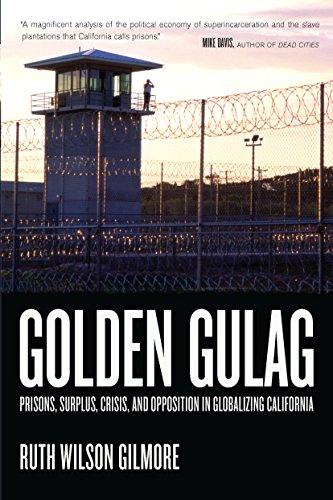
Prisons, Surplus, Crisis, and Opposition in Globalizing California (American Crossroads Book 21)
It was mentioned that "The Golden Gulag" is one of Ruth Wilson Gilmore's books, specifically discussing the common view of prisons being on the edge of social spaces, economic regions, political territories, and fights for rights. This view is said to be a trick of perspective because edges are also interfaces, connecting places into relationship.
You talked about the common view that prisons sit on the edge at the margins of social spaces, economic regions, political territories, and fights for rights. This apparent marginality is a trick of p...
— Episode: Ruth Wilson Gilmore — “Where life is pre...
It was mentioned that "The Golden Gulag" is one of Ruth Wilson Gilmore's books, specifically discussing the common view of prisons being on the edge of social spaces, economic regions, political territories, and fights for rights. This view is said to be a trick of perspective because edges are also interfaces, connecting places into relationship.
You talked about the common view that prisons sit on the edge at the margins of social spaces, economic regions, political territories, and fights for rights. This apparent marginality is a trick of perspective because as every geographer knows, edges are also interfaces. For example, even while borders highlight the distinction between places, they also connect places into relationship with each other and the non-contiguous places. So too with prisons.
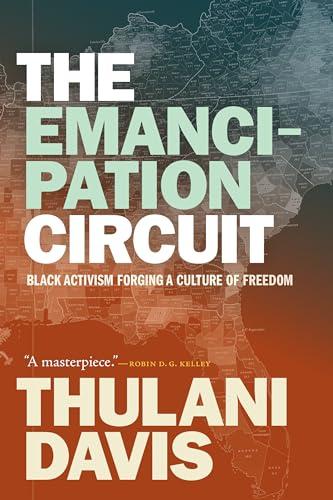
Black Activism Forging a Culture of Freedom
150th Anniversary Edition
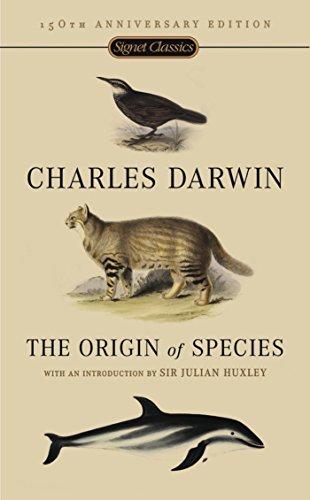
It was mentioned that Darwin never used the phrase 'survival of the fittest' in his original text, but instead used the phrase 'survival of the fit.' This is in contrast to the commonly used phrase, 'survival of the fittest,' which is actually a phrase that came from Herbert Spencer.
That's from Darwin. That's the last, the last in origin of the species.
— Episode: Janine Benyus — Biomimicry, an Operating...
It was mentioned that Darwin never used the phrase 'survival of the fittest' in his original text, but instead used the phrase 'survival of the fit.' This is in contrast to the commonly used phrase, 'survival of the fittest,' which is actually a phrase that came from Herbert Spencer.
That's from Darwin. That's the last, the last in origin of the species.
He did not say that. He said survival of the fit, which means fit to place, fit to your community, fit to your because he understood, you know, studying evolution and all coming up with natural selection as a he understood that organisms don't just move into a place.
And Darwin himself eventually borrowed and added Spencer's words, survival of the fittest, starting with the fifth edition of his history making work.
Embracing Your Higher Purpose
It's a book about meditation. It teaches a triple flame meditation that involves practicing awareness for one minute every third hour.
Oh, there's a, there's a beautiful book, a teacher named Richard Rudd, who's written several books. His big book is called the Gene Keys.
— Episode: Rick Rubin — Magic, Everyday Mystery, an...
It's a book about meditation. It teaches a triple flame meditation that involves practicing awareness for one minute every third hour.
Oh, there's a, there's a beautiful book, a teacher named Richard Rudd, who's written several books. His big book is called the Gene Keys.
One Man's Fundamentals for Delicious Living
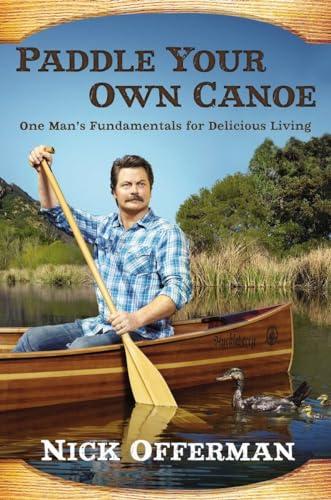
Offerman credits Shozo Sato, his Kabuki theater teacher, with this lesson, "always maintain the attitude of a student" and writes about it in "Paddle Your Own Canoe". He says this lesson was a huge part of his woodworking discipline, one of the biggest joys of his life.
Here's a lovely way that you wrote about this lesson, always maintain the attitude of a student and in your book, Paddle Your Own Canoe.
— Episode: Nick Offerman — Working with Wood, and t...
Offerman credits Shozo Sato, his Kabuki theater teacher, with this lesson, "always maintain the attitude of a student" and writes about it in "Paddle Your Own Canoe". He says this lesson was a huge part of his woodworking discipline, one of the biggest joys of his life.
Here's a lovely way that you wrote about this lesson, always maintain the attitude of a student and in your book, Paddle Your Own Canoe.
My favorite rule from sensei was always maintain the attitude of a student. And then you wrote when a person thinks they have finished learning, that is when bitterness and disappointment can set in, as that person will wake up every day, wondering when someone is going to throw a parade in their honor for being so smart.
Having ears for this lesson has been one of the luckiest pieces of listening I've done, because it has led to my woodworking discipline, one of the greatest joys of my life.
You kind of collect and look for curators to help people to help curate life. But I think teachers and friends, this is really important to you.
Without teachers in our lives, we would be a bunch of sorry dullards, indeed, dimwits and dunces.
Misadventures in Sawdust at Offerman Woodshop
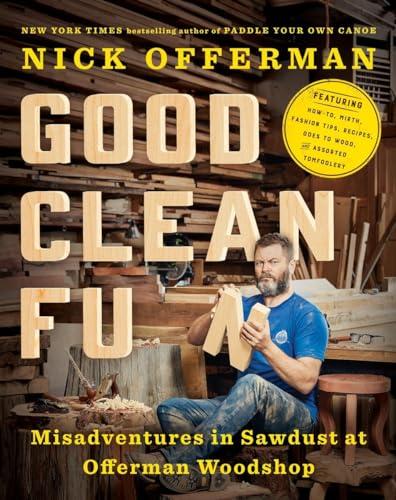
Offerman's first book, "Good Clean Fun: Misadventures in Sawdust at Offerman Woodshop", discussed his woodshop business and is considered a delightful read by Krista Tippett. He stated that the setting up the shop chapter was "one of the most titillating steps in a woodworking practice" and "one of the easiest to accomplish."
Nick Offerman's five books include the delightful Good Clean Fun, Misadventures in Sawdust at Offerman Woodshop.
— Episode: Nick Offerman — Working with Wood, and t...
Offerman's first book, "Good Clean Fun: Misadventures in Sawdust at Offerman Woodshop", discussed his woodshop business and is considered a delightful read by Krista Tippett. He stated that the setting up the shop chapter was "one of the most titillating steps in a woodworking practice" and "one of the easiest to accomplish."
Nick Offerman's five books include the delightful Good Clean Fun, Misadventures in Sawdust at Offerman Woodshop.
And I also just really loved your first two books, I think Paddle Your Own Canoe and Good Clean Fun.
And I just want to know where that comes from in you? Have you always been like that? And I just, you know, just what I want to say is in my mind, not always, but ideally there can be a real connection between taking great care with the words we use and taking great care with how we're living.
This is one of the most titillating steps in a woodworking practice.
An Oral History
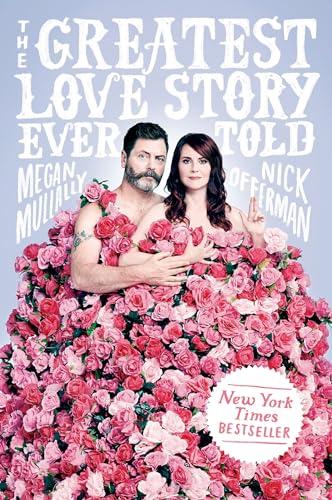
Nick Offerman and his wife Megan Mullally co-wrote "The Greatest Love Story Ever Told", a book about their marriage. Krista Tippett stated she was sure Megan Mullally would find an honorable mention in the interview.
But I have no doubt that your wife, Megan Mullally, will find an honorable mention as well marriage in this interview.
— Episode: Nick Offerman — Working with Wood, and t...
Nick Offerman and his wife Megan Mullally co-wrote "The Greatest Love Story Ever Told", a book about their marriage. Krista Tippett stated she was sure Megan Mullally would find an honorable mention in the interview.
But I have no doubt that your wife, Megan Mullally, will find an honorable mention as well marriage in this interview.
Patriotism and the History of Prejudice
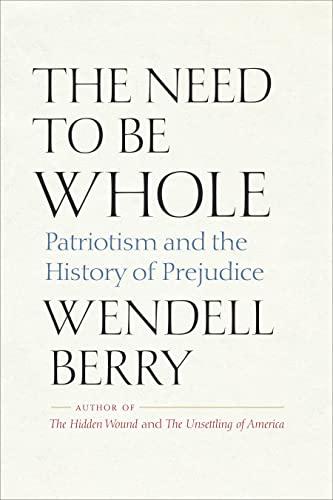
Nick Offerman mentioned that he recently narrated the audiobook for Wendell Berry's book "The Need to Be Whole". Offerman noted the book's challenging but important message and the difficult task of properly conveying the author's words.
He also wrote winsomely about his love of the natural world and his reverence for the farmer poet Wendell Berry, who we of course also love here at On Being.
— Episode: Nick Offerman — Working with Wood, and t...
Nick Offerman mentioned that he recently narrated the audiobook for Wendell Berry's book "The Need to Be Whole". Offerman noted the book's challenging but important message and the difficult task of properly conveying the author's words.
He also wrote winsomely about his love of the natural world and his reverence for the farmer poet Wendell Berry, who we of course also love here at On Being.
When we spoke, Nick had just recorded the audiobook version of Wendell Berry's 2022 book, The Need to Be Whole.
Yes, I know. And his incredible new book, uh, called The Need to Be Whole.
I just did the audio book for Wendell.
And so it's what I determined once I got involved with producing, uh, that documentary called look and see, and it's wonderful. It's beautiful. I'm so grateful to be part of it.
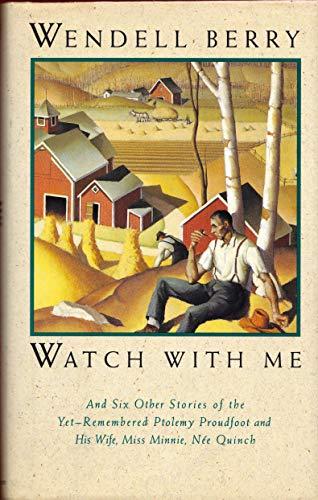
Nick Offerman recommended Wendell Berry's short story collection "Watch With Me" to listeners. He also stated that all of Berry's fiction work together is a vast collection of stories spanning a fictional town called Port William, Kentucky.
I'm not going to read you any of his fiction is give your listeners a pitch for his fiction.
— Episode: Nick Offerman — Working with Wood, and t...
Nick Offerman recommended Wendell Berry's short story collection "Watch With Me" to listeners. He also stated that all of Berry's fiction work together is a vast collection of stories spanning a fictional town called Port William, Kentucky.
I'm not going to read you any of his fiction is give your listeners a pitch for his fiction.
Start with some short stories. There's a book called WATCH WITH ME. There's a book called Fidelity.
But here's the thing, all of his fiction of which there's, I'm guessing eight novels and 40 short stories, something like that. It's all one massive pastiche.
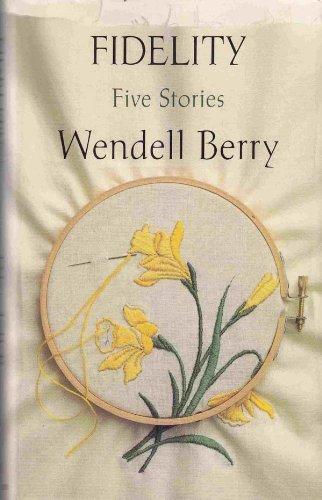
Nick Offerman recommended Wendell Berry's short story collection "Fidelity" to listeners. He also stated that all of Berry's fiction work together is a vast collection of stories spanning a fictional town called Port William, Kentucky.
Start with some short stories. There's a book called Watch With Me. There's a book called Fidelity.
— Episode: Nick Offerman — Working with Wood, and t...
Nick Offerman recommended Wendell Berry's short story collection "Fidelity" to listeners. He also stated that all of Berry's fiction work together is a vast collection of stories spanning a fictional town called Port William, Kentucky.
Start with some short stories. There's a book called Watch With Me. There's a book called Fidelity.
But here's the thing, all of his fiction of which there's, I'm guessing eight novels and 40 short stories, something like that. It's all one massive pastiche.
And the first story that I asked him if I could adapt, and I still would love to, is called Fidelity.
Releasing the Burdens You Were Never Intended to Bear
This is the book that contains the poem "Lost" by David Wagoner, which Padraig O'Tooma says he's been invoking for years. The poem is about finding oneself, and the importance of paying attention to the world around you. It uses the metaphor of being lost in the forest to speak to different circumstances in life, and how being lost can make you feel, and what you can do about it.
Lost comes from David Wagoner's book Traveling Light Collected and New Poems.
— Episode: A Listening Ritual for this Fall: Poetry...
This is the book that contains the poem "Lost" by David Wagoner, which Padraig O'Tooma says he's been invoking for years. The poem is about finding oneself, and the importance of paying attention to the world around you. It uses the metaphor of being lost in the forest to speak to different circumstances in life, and how being lost can make you feel, and what you can do about it.
Lost comes from David Wagoner's book Traveling Light Collected and New Poems.
Thank you to University of Illinois Press who gave us permission to use David's poem.
Animals, Plants, Machines
This book by a British technologist and artist continued the theme of emergence by exploring how to pattern thinking, organizing, and growing around the intelligence of vitality as it is revealed in the natural world.
And I devoured an important new work by a British technologist and artist, James Bridle, called Ways of Being. This became for me a continuance of the theme of emergence, a deep dive...
— Episode: A Season of Emergence with Krista
This book by a British technologist and artist continued the theme of emergence by exploring how to pattern thinking, organizing, and growing around the intelligence of vitality as it is revealed in the natural world.
And I devoured an important new work by a British technologist and artist, James Bridle, called Ways of Being. This became for me a continuance of the theme of emergence, a deep dive into how we might pattern our thinking and organizing and growing around the intelligence of vitality as it is revealed to us in the natural world.
The speaker described Mary Oliver's "Wild Geese" as a poem that has saved lives, and was written as an exercise in end-stopped lines, with the poem surprising her with its depth and resonance.
Wild Geese is in DreamWork. And I've heard people talk about that Wild Geese as a poem that has saved lives.
— Episode: BONUS: An On Being Listening Party — Cel...
The speaker described Mary Oliver's "Wild Geese" as a poem that has saved lives, and was written as an exercise in end-stopped lines, with the poem surprising her with its depth and resonance.
Wild Geese is in DreamWork. And I've heard people talk about that Wild Geese as a poem that has saved lives.
This is the magic of it. That poem was written as an exercise in end stopped lines. As an exercise in what?
And I heard the Wild Geese. I mean, I just started out to do this for this friend and show her the effect of the line end is, you've said something definite.
And I think that's what it is. And but you know what I want there was it also though there's something about this passage about her talking about Wild Geese, that it was an exercise in a form. Right?
That poem was written as an exercise in end-stopped lines. As an exercise in what?
Shaping Change, Changing Worlds
The book Emergent Strategy explores the way complex systems and patterns arise from simple interactions and how humans can harness change to move towards liberation and justice.
So the word emergence for people who don't know the definition I work with comes from Nick Obolinsky and it's emergence is the way complex systems and patterns arise out of relatively simple interacti...
— Episode: [Unedited] adrienne maree brown with Kri...
The book Emergent Strategy explores the way complex systems and patterns arise from simple interactions and how humans can harness change to move towards liberation and justice.
So the word emergence for people who don't know the definition I work with comes from Nick Obolinsky and it's emergence is the way complex systems and patterns arise out of relatively simple interactions.
And the strategy part comes in, you know, I was in a movement moment where everyone was talking about who was strategic, who's the most strategic and who's creating a strategic plan and all of this.
And I realized that there was no specificity, like you could be strategic and still causing a lot of harm. And so I was like, you can be a hierarchical, patriarchal, strategic person, right?
So I was like, we should be more precise. And I think what we mean by strategic is able to adapt to changing conditions while still moving towards our vision of freedom and the future and being in that practice.
So that's what Emergent Strategy is. It's like, how do we get in a right relationship with change that allows us to harness and shape things towards community, towards liberation, towards justice?
Note: The book recommendations on this page are discovered automatically from podcast transcripts, and may be incorrect or incomplete.
Podcast Name