The Problem with Plastic
Judith Enck
Mentioned 7 months ago
Small businesses pull back on hiring

Every weekday, host Kai Ryssdal helps you make sense of the day's business and economic news — no econ degree or finance background required. "Marketplace" takes you beyond the numbers, bringing you context. Our team of reporters all over the world speak with CEOs, policymakers and regular people ju...
Recently mentioned
Judith Enck
Mentioned 7 months ago
Small businesses pull back on hiring
Lawrence C. Ross Jr.
Mentioned 1 year ago
Disposable income growth chugs along
Stephen J. Macekura
Mentioned 1 year ago
Who’s still hiring?
Stephanie Baker
Mentioned 1 year ago
Who can get Ozempic?
Deuki Hong
Mentioned 1 year ago
A turning point for the “vibecession”?
Deuki Hong
Mentioned 1 year ago
A turning point for the “vibecession”?

Cliff May
Mentioned 1 year ago
Hey, it’s still job growth
Andrew R Chow
Mentioned 1 year ago
Has the Fed ever met its 2 goals?
Alison Espach
Mentioned 1 year ago
Making more stuff without working more hours
General Press
Mentioned 1 year ago
Where’s the AI spending payoff?
Naomi Alderman
Mentioned 1 year ago
Where’s the AI spending payoff?
Paco De Leon
Mentioned 1 year ago
Where’s the AI spending payoff?
Getting a Grip on Your Finances
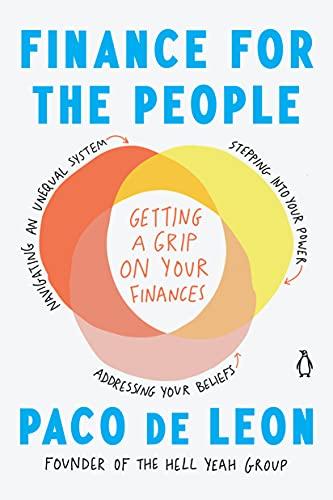
It was mentioned as a personal finance book that deals with uncomfortable topics around money, class, and our relationship to work.
and personal finance books like Paco de Leon's Finance for the People
— Episode: Breaking Ground: Change isn’t coming — i...
It was mentioned as a personal finance book that deals with uncomfortable topics around money, class, and our relationship to work.
and personal finance books like Paco de Leon's Finance for the People
Getting a Grip on Your Finances
It was mentioned as a personal finance book that gets at an uncomfortable topic around money, class, and work.
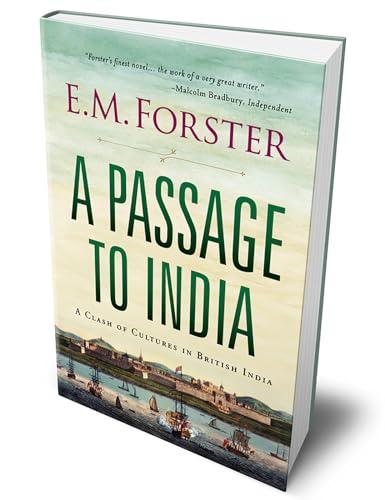
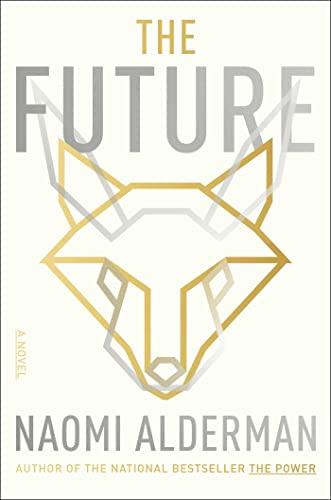
We'll feature a wide range of recs including classics like E.M. Forrester's A Passage to India, page-turning novels like Naomi Alderman's The Future, and personal finance books like Paco de Leon's
— Episode: Why’s my coffee so expensive?
It was mentioned as a personal finance book that gets at an uncomfortable topic around money, class, and work.
We'll feature a wide range of recs including classics like E.M. Forrester's A Passage to India, page-turning novels like Naomi Alderman's The Future, and personal finance books like Paco de Leon's Finance for the People.
Getting a Grip on Your Finances
It was mentioned as a personal finance book recommendation during the "This is Uncomfortable" summer book club.
We'll feature a wide range of recs, including classics like E.M. Forster's A Passage to India, page-turning novels like Naomi Alderman's The Future, and personal finance books like Paco de Leon's
— Episode: Bad housing news comes in threes
It was mentioned as a personal finance book recommendation during the "This is Uncomfortable" summer book club.
We'll feature a wide range of recs, including classics like E.M. Forster's A Passage to India, page-turning novels like Naomi Alderman's The Future, and personal finance books like Paco de Leon's Finance for the People.
The Fight for the World's Most Critical Technology
It was mentioned in the podcast that the author, Chris Miller, wrote a book called Chip War, which discusses the fight for the world's most critical technology.
Chris Miller is author of Chip War, the fight for the world's most critical technology.
— Episode: Accommodations for long COVID
It was mentioned in the podcast that the author, Chris Miller, wrote a book called Chip War, which discusses the fight for the world's most critical technology.
Chris Miller is author of Chip War, the fight for the world's most critical technology.
Prices and Inflation in American Democracy
The book was brought up to give listeners historical context on how the government has intervened in price stabilization, especially the extensive price controls of World War II and the politicization of monetary policy during crises. The host said it helped fill a gap in their understanding of inflation and highlighted the massive state effort required for price controls, noting the limited popular support for such measures.
Binder explores the history of government intervention in price stabilization, specifically focusing on the World War II era's price controls and the politicization of monetary policy during emergencies like the pandemic.
In her new book, Shock Values, Prices and Inflation in American Democracy, she looks back at the history of how the government, through the Fed and policy, has tried to stabilize prices.
The book really looks at the different ways that the government has tried to either stabilize or manage prices, and monetary policy is only one part of that.
The price controls really involved a massive state effort, right? Because you had to have surveillance to make sure that they were being complied with.
But I don't think that there was anywhere near the popular support that would have been needed for a really broad based system of price controls like that.
I felt like there was something missing in what I knew about inflation and I wanted to learn it.
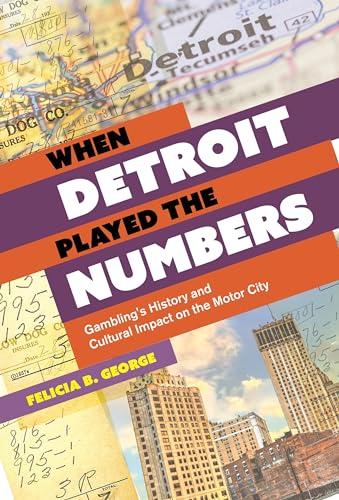
Gambling's History and Cultural Impact on the Motor City (Title Not in Series)
Author Felicia B. George discussed her book, which offers a critical re-examination of the numbers game in Detroit. George challenged the typical negative perspective, arguing that historians often overlook the significant positive economic impact the game had on the Motor City. She highlighted how the dollars generated by the numbers game flowed directly into low-income Black communities, providing a necessary correction to the historical narrative.
The author, Felicia George, stated that the typical perspective of the numbers game is negative. She added that people tend to overlook the positive aspects of the numbers game, like how money flowed into low-income Black communities.
The typical perspective of playing the numbers? It's negative. I am not trying to romanticize this, what I am saying is we overlook the positive that came from it.
Positive says George like how numbers dollars flowed into low-income black communities.
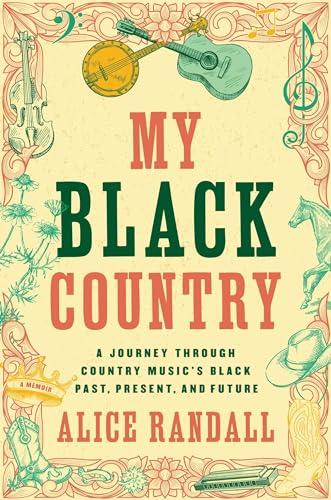
A Journey Through Country Music's Black Past, Present, and Future
The book was highlighted during an interview with Alice Randall, a country‑music lyricist and professor, who used the conversation to explore her own career and the black artists who have shaped the genre. She explained how Celtic, African, and evangelical Christian influences combine to form country music and emphasized the importance of recognizing those contributions. The discussion praised the work as a vital look at the genre’s history and its ongoing evolution.
Alice Randall, a country music lyricist and professor, discusses her career in country music and the black artists who have shaped the genre, from the early 20th century to present day. She also elaborates on the significance of black influences in country music, including Celtic, African, and evangelical Christian influences.
She's a professor and a writer-in-residence at Vanderbilt University more to the point though she has spent decades writing country music lyrics.
And in her new book My Black Country she writes about her own career in country music as well as the artists who came before and after her.
Well the equation is Celtic that's English Irish Scottish ballot forms plus African influences plus evangelical Christianity equals country music.
I love the formulaic application to something that is so visceral right it's it's so stirring and internal. It is there it's emotional and their themes the big themes of country as far as I see it life is hard God is real the road family and liquor are significant compensations and the past is better than the present.
Since you mentioned her and her new album which is blowing up rightly because it's kind of amazing. Do you feel a full circle-ness at all to what has become a not small part of your life's work?
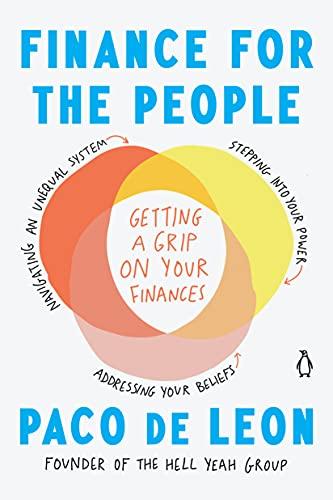
Getting a Grip on Your Finances
The book was highlighted as a personal finance title that delved into uncomfortable topics around money, class, and our relationship to work. Rima Hrace recommended it as part of a broader list of recommendations. The discussion emphasized its relevance for listeners seeking a deeper understanding of financial issues.
Finance for the People was recommended as a personal finance book that touches on uncomfortable topics around money, class, and our relationship to work.
We'll feature a wide range of recs, including classics like E.M. Forster's A Passage to India, page turning novels like Naomi Alderman's The Future, and personal finance books like Paco de Leon's Finance for the People.
The host mentioned a book titled "The One and Only Frederick Douglass", a biography of Frederick Douglass who was the last president of the Freedman's Bank.
Would you at marketplace.org? "The One and Only Frederick Douglass"
— Episode: Why so many layoffs in a hot labor marke...
The host mentioned a book titled "The One and Only Frederick Douglass", a biography of Frederick Douglass who was the last president of the Freedman's Bank.
Would you at marketplace.org? "The One and Only Frederick Douglass"
On the podcast, the book was briefly introduced as a deep exploration of some of the most significant corporate rivalries throughout history. The host noted that the author delved into the intense competition and strategic battles that defined major businesses, positioning the work as an insightful look at high-stakes competition.
It is a book about some of the biggest corporate rivalries of all time.
Business Wars, as he goes deep into some of the biggest corporate rivalries of all time.
In the episode, the hosts referenced the book as a work by Benjamin Graham and highlighted a famous Warren Buffett quote about market cycles. They used the title to illustrate the idea that investors often miss risks until conditions change. The mention was brief and informational rather than a strong endorsement.
The podcast mentioned "The Intelligent Investor" as a book written by Benjamin Graham, an investor, who was referenced as someone who said "You don't know who's swimming naked till the tide goes out."
You don't know who's swimming naked till the tide goes out.
Getting a Grip on Your Finances
The book was highlighted during an episode discussing unemployment claims, where it was included in the This Is Uncomfortable summer book club for its focus on money, class, and work. Host Rima Grace recommended it alongside other titles, presenting it as a useful personal‑finance read. The discussion conveyed a positive endorsement, positioning the book as a valuable resource for listeners interested in managing their finances.
This personal finance book was recommended as part of the This Is Uncomfortable summer book club, focusing on topics related to money, class, and work.
We'll feature a wide range of recs, including classics like E.M. Forster's A Passage to India, page turning novels like Naomi Alderman's The Future and personal finance books like Paco de Leon's Finance for the People.
Getting a Grip on Your Finances
The episode recommended the book as a personal finance guide that addressed uncomfortable topics around money, class, and our relationship to work. It was highlighted for its focus on the broader social context of finances rather than just budgeting. The recommendation was made by Rima Hrace.
It was recommended as a personal finance book that gets at some uncomfortable topic around money, class, and our relationship to work.
personal finance books like Paco de Leon's Finance for the People
Getting a Grip on Your Finances
Finance for the People is recommended as a personal finance book that touches on uncomfortable subjects surrounding money, class, and the relationship to work.
personal finance books like Paco de Leon's Finance for the People
— Episode: Where’s the AI spending payoff?
Finance for the People is recommended as a personal finance book that touches on uncomfortable subjects surrounding money, class, and the relationship to work.
personal finance books like Paco de Leon's Finance for the People
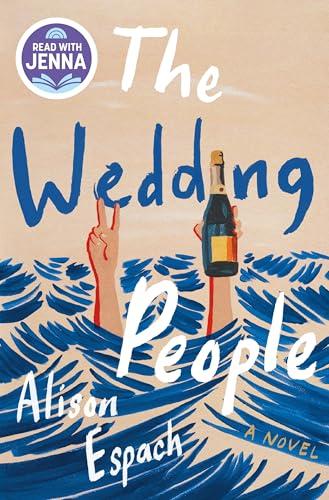
A Novel
The episode announced the title as the August selection for Jenna Bush Hager's "Read with Jenna" book club, with Jenna herself introducing it. The hosts highlighted it as a notable new pick for listeners interested in current celebrity book club selections. No detailed review was provided, but it was presented as a recommended read for the month.
It was announced as the August pick for Jenna Bush Hager's book club, "Read with Jenna", which is one of the many celebrity book clubs discussed in the podcast.
OK, are you all ready to help me count down? Ready? Three, two, one. It is The Wedding People by Alison Espach.
It was mentioned that Sunset Magazine published a book featuring Cliff May's ranch house designs, which were popular due to their affordability during the 1930s.
He somehow got in contact with Sunset Magazine and in fact, they put out a book on Western ranch houses with Cliff May's designs basically dominating the book.
— Episode: Hey, it’s still job growth
It was mentioned that Sunset Magazine published a book featuring Cliff May's ranch house designs, which were popular due to their affordability during the 1930s.
He somehow got in contact with Sunset Magazine and in fact, they put out a book on Western ranch houses with Cliff May's designs basically dominating the book.
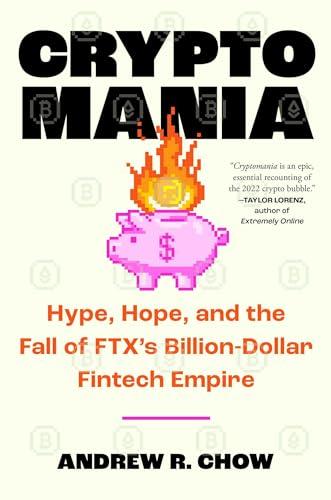
Hype, Hope, and the Fall of FTX's Billion-Dollar Fintech Empire
The book was introduced when the author appeared on the show to discuss a Bitcoin mining operation in Texas, with the host noting his role as a Time magazine tech correspondent and the book’s focus on the FTX collapse and related fintech hype. The episode highlighted the book’s recent release and its relevance to the discussion.
It was discussed in the context of a Bitcoin mining operation in Texas, and the author detailed the impact of the noise on the community in an article based on the book.
Andrew Chow is a tech correspondent at Time Magazine and author of the new book, Cryptomania, Hype, Hope, and the Fall of FTX's Billion Dollar FinTech Empire.
Andrew, thanks for being here.
Thank you so much for having me.
Andrew Chow is a technology correspondent at Time magazine. His book Cryptomania came out on August 6th.
Inside the Global Economic War to Bring Down Russia
It was discussed as a forthcoming book that details the global economic war waged against Russia through sanctions and the effectiveness of those sanctions, specifically targeting the energy sector.
Stephanie Baker is an investigative reporter at Bloomberg News and wrote about this for her forthcoming book, Punishing Poootan, Inside the Global Economic War to Bring Down Russia.
— Episode: Who can get Ozempic?
It was discussed as a forthcoming book that details the global economic war waged against Russia through sanctions and the effectiveness of those sanctions, specifically targeting the energy sector.
Stephanie Baker is an investigative reporter at Bloomberg News and wrote about this for her forthcoming book, Punishing Poootan, Inside the Global Economic War to Bring Down Russia.
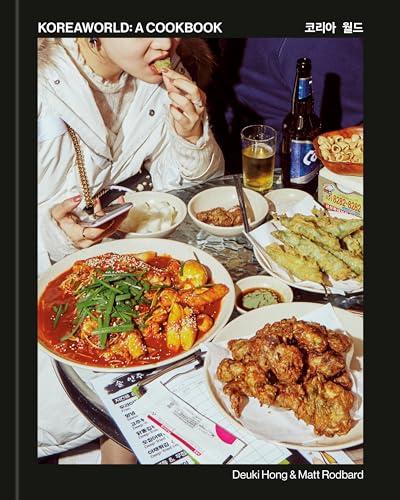
A Cookbook
The hosts highlighted the title as a statement that broadened Korean cuisine beyond barbecue, noting it offered new recipes and stories not repeated from their earlier work. Matt Rodbard explained that the authors aimed to expand the culinary conversation and hoped it would help Korean food achieve the same regional recognition as other cuisines. The discussion was enthusiastic and framed the book as a valuable addition to the Korean food narrative.
It was the second cookbook from the authors and expanded the universe of Korean food beyond barbecue, including recipes and stories that were not repeated from their first book, 'Koreatown'.
When the title of your cookbook is Korea World, you're kind of making a statement.
So with Koreatown we wanted to smash that perception and so we were covering all sorts of, we had a whole section about tongs and chigues which are soups and stews. We called it Beyond Barbecue.
I don't know if we put that phrase geology in the first book, like Korean food can't just be good barbecue which nothing wrong with good barbecue but really expanding that conversation and I think with Koreatown we got the opportunity to do that as first-time authors.
We thought that this was a story that needed to be told and we really challenged ourselves with many things. We didn't repeat recipes, we didn't repeat stories and we landed on Korea world which just expanded the universe of Korean food.
Hopefully kind of like oh there's Sicilian restaurants here, you can go to a Sheshwan restaurant like regional so many cuisines have established that. Maybe Korean food gets to that point where we're like okay we're going to go to this Jeju restaurant. That'd be a nice little moment in Korean food.
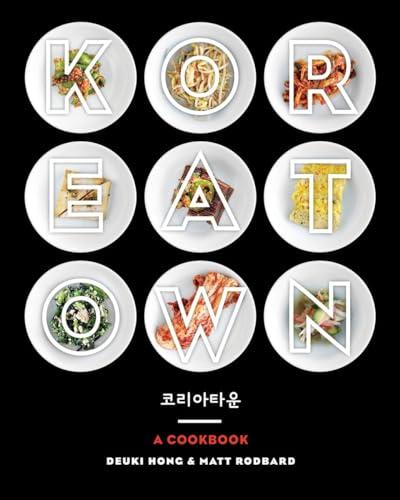
A Cookbook
The episode highlighted the title as the authors' debut cookbook, noting that it sought to broaden the U.S. perception of Korean cuisine beyond just barbecue. The host pointed out its role in shifting the conversation about Korean food.
It was the first cookbook by these two authors and it attempted to broaden the perception of Korean food beyond just barbecue.
Back then the conversation in the U.S. around Korean food was defined by one thing, barbecue.
Note: The book recommendations on this page are discovered automatically from podcast transcripts, and may be incorrect or incomplete.
Podcast Name