(Un)Qualified
Steven Furtick
Mentioned 5 months ago
The Glitch That Keeps On Giving

Welcome to the weekly podcast of Elevation Church led by Pastor Steven Furtick. To learn more visit our website at http://elevationchurch.org or download the Elevation App. To support this ministry and help us continue to reach people all around the world click here: http://ele.vc/TI55jR
Recently mentioned
Steven Furtick
Mentioned 5 months ago
The Glitch That Keeps On Giving

Willard F. Harley Jr.
Mentioned 5 months ago
He Took The Manna Off The Menu

Gary Chapman
Mentioned 5 months ago
He Took The Manna Off The Menu
Thomas Nelson
Mentioned 5 months ago
SAVE YOUR STRENGTH
Jen Wilkin
Mentioned 6 months ago
You Already Know
John Burke
Mentioned 6 months ago
You Already Know

Mel Robbins
Mentioned 6 months ago
Don't Let The Attack Distract You
Lin Johnson
Mentioned 6 months ago
Backseat DJs
Dave Ramsey
Mentioned 7 months ago
The Power Of The Prompt
![[Operation Fortitude] [By: Levine, Joshua] [March, 2012] cover](https://media.podcastbookpicks.com/books/284.jpg)
Mentioned 7 months ago
It's Mine To Manage
Jackie Hill Perry
Mentioned 8 months ago
Win Before You Begin (Pastor Rich Wilkerson Jr.)
Dennis Prager
Mentioned 8 months ago
Win Before You Begin (Pastor Rich Wilkerson Jr.)
It was the main source of scripture for the sermon, based on the book of Acts, as well as Mark, Isaiah and Luke. It was heavily referenced throughout the episode.
I told you to turn to the 12th chapter of The Book of Acts
— Episode: This Is What A Miracle Feels Like
It was the main source of scripture for the sermon, based on the book of Acts, as well as Mark, Isaiah and Luke. It was heavily referenced throughout the episode.
I told you to turn to the 12th chapter of The Book of Acts
I believe there's somebody here today and you're going to be describing how the Lord brought you out.
I like hearing about the lions that he slept with. I don't want one for a pillow.
I love singing about Shadrack Me Shack of Edningo. But I don't want to be neither of the three.
I don't really want anything to confide me.
The Bible, particularly the books of Isaiah and Hebrews, was referenced throughout the sermon, relating to the core message of God's ability to create new blessings and move beyond past experiences.
Permit me to go over to the book of Hebrews
I want to put one New Testament verse together with that Old Testament prophecy and this is Hebrews chapter 6, verse 1.
The writer says therefore let us move beyond the elementary teachings about Christ and be taken forward to maturity, not laying again the foundation of repentance from acts that lead to death and of faith in God.
So I kind of feel like that that's what we're trying to understand here in Isaiah 43 and Hebrews chapter 6, although these scriptures are separated by about seven centuries of time, I think God is trying to get us to see that the barriers that were before us to keep us from experiencing his blessing are no longer there.
They couldn't get this so in Hebrews chapter 6 verse 1, the writer says you keep looking for God to look like the law because that's what you were addicted to.
The Bible's book of Mark chapter 6 was discussed, particularly the story of Jesus calming a storm after the disciples faced difficult seas, relating it to life's challenges.
It's what Isaiah said. He said when you pass through the waters I will be with you when you pass through the rivers. They will not sweep over you when you walk Through the fire you will not be burned
The scripture says that he sends the disciples in the boat to the other side and that little passage right there mark chapter 6 verse 50 Yeah, immediately Only see it I don't have it right there mark chapter 6. It says that they were straining at the oars
Jesus says take courage it is I don't be afraid and then the Bible says he gets into the boat and immediately the storm settles
It took a storm it took a storm for the disciples to realize Jesus is divine Immediately the wind and the waves died down
For God so loved the world that he gave his only begotten son, that whoever believes in him shall not perish, but have everlasting life.
The Bible, specifically the New Testament book of Romans, was mentioned in the context of God's faithfulness to people even when they struggle with sin or temptation, even before they're born.
One Bible verse I would like you to learn is in the New Testament Book of Romans. It says, while we were yet sinners, Christ died for us.
The book of Exodus was discussed, specifically the story of Moses and his encounter with God in the burning bush. It was also used to illustrate the concept of transitioning from a mindset of 'what if' to 'what is'.
I went all the way back to the book of Exodus and introduced this character named Moses to talk about what to do with the what ifs, just so I can see if I heard from the Lord or if I was off track this week when I was praying.
Watch this. In the book of Numbers, Moses sent out 12 spies to see about the land God had called them into.
They came back to Moses and Aaron and the whole Israelite community... They reported to them, and the whole assembly showed them the fruit of the land.
We went into the land which you sent us, and it does flow with milk and honey. Here is its fruit. But the people who live there are powerful. The cities are fortified, very large, and not a word of a lie. Nothing they said wasn't true.
We should go up and take it, for we can certainly do it.' But the men who had gone up with him said, 'We can't attack those people. They're stronger than we are.'
The book of Ruth was referenced as a source for the sermon, specifically the story of Naomi and Ruth's journey and Boaz's role as a kinsman redeemer.
I want to take you to the book of Ruth chapter 4 Verse 9 Through 17
Then Boaz announced to the elders and all the people Today you are witnesses that I have bought from Naomi all the property of a limeleck Killian and Malon I Have also acquired Ruth the Moabite Malon's widow as my wife in order to maintain the name of the dead with his property so that his name will not Disappear from among his family or from his hometown today. You are witnesses verse 11
Then the elders and all the people at the gate said we are witnesses May the Lord Make the woman who is coming into your home like Rachel and Leah who together Built up the family of Israel May you have standing in Ephrathah and be famous in Bethlehem Through the offspring the Lord gives you by this young woman made your family be like that of Perez whom Tamar bore to Judah
When he made love to her the Lord enabled her to conceive and she gave birth to a son The women said to Naomi Praise be to the Lord Who this day has not left you without a guardian Redeemer?
May he become famous throughout Israel He will renew your life and sustain you in your old age For your daughter-in-law who loves you and who is better to you than seven sons has given him birth Then Naomi took the child in her arms and cared for him
Larry Brey said it was mentioned as being more than just a simple instruction book and that its purpose was to reveal Jesus into someone's life.
No, no, no, no. That's not it. I heard a preacher man say it like this once he goes, the Bible is basic instructions before leaving earth.
No, it's not basic instructions before leaving earth. It's not his little instruction book. No, no, no. The purpose of scripture is to reveal Jesus. The primary purpose of the text is to reveal Jesus into your life.
The Bible, particularly the books of Genesis, Numbers, John, Galatians, and Philippians, was referenced throughout the sermon as Steven Furtick explored the concept of asking better questions, illustrating it with various biblical stories and passages.
The first question that appears in the Bible isn't the one God asks. It's the one Satan asks, which makes me wonder sometimes is the first question that comes to our mind about something not the best question available.
In all of the Bible, the first time we see him talk, he doesn't give an answer in John chapter 1. This is the answer, sure, but he's also the question.
I can do all things through Christ who strengthens me. Philippians 4.13 hasn't even been written yet.
But God... That's my favorite but in the Bible. But God, who is rich in mercy, but God demonstrates his own love for us in this, that while we were yet sinners, Christ died for us.
He who began a good work in me is faithful to complete it.
The Bible was used as a primary text for the sermon, specifically the book of Luke, chapter 5, verses 1-11, and 2 Peter 1, where the speaker referenced passages to illustrate his points about overcoming obstacles and achieving one's potential.
I'm gonna be in Luke 5 1 through 11 to start with again.
If you come out to Elevation Knights, I might still be in Luke chapter 5
Now, why are you going to 2 Peter? I want to show you what was in Simon even as he sat by the fire and denied Jesus.
In 2 Peter, this letter he wrote after he had been sifted as Simon and after he had stood solid as Peter, he goes, 'for this very reason, make every effort to add to your faith.'
In luke 22. Give me that real quick Luke 22
The speaker referenced several passages from the Bible, specifically the books of Luke, Micah and Genesis. The podcast highlighted the Christmas story, and connected it to the concept of favor over fear.
But you, Bethlehem Ephrath, though you are small among the clans of Judah, out of you will come for me one who will be ruler over Israel, whose origins are from old, from ancient times.
And he does that, he has that sonogram machine to see Jesus inside of her.
Greetings you who are highly favored. The Lord is with you.
Do not be afraid, Mary. You have found favor with God.
You will conceive and give birth to a son and you are to call him Jesus. You are to give him the name Jesus. He will be great and will be called the son of the most high.
It was discussed as a source of guidance, likened to rain, honey, milk, and a sword, encouraging listeners to actively engage with its teachings, rather than passively consuming it.
The Bible tells us so much about the Bible.
The best way to know about the Bible is to read what the Bible says about the Bible.
The Bible is milk. The Bible is meat. The Bible is honey.
Jesus said, 'Man does not live on bread alone, but every word that proceeds from the mouth of God.'
The Bible calls itself a sword.
The Bible, particularly the book of John and other passages, was referenced throughout the sermon, forming the foundation for the discussion on asking questions and receiving God's provisions.
I'm going to preach today from John, chapter 6.
If you can stand where you are, that would be great. Right there in your living room, kitchen.
I'll let you know when I find out. I read some theories, but I never really found an answer to that.
Jesus is the answer for the world today.
Jesus asks 307 questions in the four Gospels.
The book of Matthew, chapters 14, verses 22-33, was used as the basis for the message, specifically regarding the story of Jesus and Peter walking on water. The story was dissected and analyzed with a focus on faith, trust, and God's timing.
Our syllabus is from Matthew, verses 22-33. I want you to find that in your Bible.
In the King James version of Matthew, chapter 14, it says it was the fourth watch of the night when Jesus came to them.
If you go with me to Matthew, chapter 8, we're going to see one of the times Jesus was amazed.
When Jesus, Matthew, chapter 8, verse 5, had entered Capernaum, a centurion came to him.
By grace through faith you are saved. This not of yourselves is a gift of God, not of works, so that no one can boast. Ephesians 2, 8 and 9.
The Bible was frequently referenced throughout the sermon, particularly the book of Joshua, chapter 3, which discussed the Israelites' journey to the Promised Land and how God instructed them to stop and camp before crossing the Jordan River.
I wonder do you have any of those staple scriptures? Just ones that get you through Romans 8 28 has always been one for me Because it says all things work together for the good of those who love God
I used to read it wrong for years. I thought it meant everything was good And so I preached a sermon when I was really young called It's all good from Romans 8 28 the Bible didn't say it's all good
So go ahead and and get that scripture locate it Joshua chapter 3 I'm gonna be in the New International version 2011 the new version
It says early in the morning Joshua and all the Israelites set out from Shidom. That's a long guy Stop playing pastor preach the word. Let me start over
early in the morning Joshua and all the Israelites set out from Shittim and went to the Jordan the place of identity and the instruction was camp before crossing over
It was referenced multiple times throughout the sermon, particularly the book of Philippians, which was the main source of inspiration for the message.
We're going to be in Philippians chapter 4 for our short time together. This is verse 6-13.
Paul's writing in Philippians about contentment.
And so Paul's writing from one of those right here in Philippians 4 because Paul was not some super Christian who was immune from struggles.
If you read Paul's writings, a lot of times it looks like he actually struggled with depression.
Paul's saying, as I look back over my life, if I look at when I was on the platform, when I was being persecuted, when I was being celebrated, when I'm in the prison cell, in every single season God was there.
The Bible was referenced throughout the sermon, particularly the book of Matthew and Hebrews, highlighting Jesus's teachings and God's enduring promises.
So I want to look at this scripture and it's just a conversation that Peter had with Jesus beginning in Matthew 16 verse 13 when Jesus Came to the region of Caesarea Philippi He asked his disciples who do people say the Son of Man is
See I want to show you another never and this never doesn't come from the mouth of Peter This this never comes from the mouth of God And it's from Hebrews 13 verse 5 and I need all my Easter people to get ready to shout on this
He said never will I leave you and never will I forsake you The Greek word is who may they might but I won't never no never
When God says never he means never there's nothing you can do about it devil I got a living home Never never
Romans chapter 5 verse 3 says that I hope in the glory of God That's different than hoping in the praises of men That's different in hoping in the kindness of life or the peace ability of circumstances
The book of Mark, chapter 5, was discussed in detail, particularly verses 21-43, which focuses on the stories of Jairus and the woman with the issue of blood.
Today, I want to look at Mark chapter 5 if we can mark chapter 5 verses 21 through 43.
Starting at verse number 21, and then we'll land at verse 43 when you're ready to read it say yeah
I want us to hone in on verses 40 and 41 because remember Jesus walks in and says this girl is not dead She's just asleep
So don't find this strange in Mark chapter 5 mark begins by talking about the synagogue leader by the name of Jairus But in the middle of Jairus the story were abruptly Interrupted with the story of a woman with the issue of blood and the reason mark has strategically sandwiched these two story together Is because the two of them are connected
And can I suggest in this narcissistic? Individualistic selfie saturated society in which we live we have forgotten Romans chapter 12
The speaker referenced several passages from the book of Mark, relating the importance of denying oneself and taking up one's cross. It was stated that he had read and interpreted this passage incorrectly for his entire life.
Then he called the crowd to him along with his disciples and said, Whoever wants to be my disciple must deny themselves and take up their cross and follow me.
Whoever wants to save their life will lose it, but whoever loses their life for me and for the gospel will save it.
What good is it for someone to gain the whole world yet forfeit their soul? Or what can anyone give in exchange for their soul?
Then he called the crowd to him along with his disciples and said, whoever wants to be my disciple must deny themselves and take up their cross and follow me. Whoever wants to save their life will lose it.
Whoever loses their life for me and for the gospel will save it. What good is it for someone to gain the whole world yet forfeit their soul? Or what can anyone gain in exchange for their soul?
The Bible (specifically books of Joshua, Ezekiel, 1 Peter, and John) was referenced throughout the sermon to illustrate the concept of 'reversing the ripple' and overcoming past events that continue to affect the present.
Joshua chapter four verses 15 through Joshua five and only one verse from Joshua five first one.
1 Peter 2 verse 7
John's Gospel chapter eight verse three
Ezekiel 11-19
Numbers chapter 13 verse 31
The speaker referenced several books of the Bible--Matthew, Luke, John, Revelation, and Philippians--to illustrate his sermon and encourage listeners to read and apply Scripture.
I want you to open up to Matthew chapter 8 verses 14 to 16 as we begin today's message.
Revelation 3:20 tells us about the kind of Savior that we serve, saying, "Here I am, I stand at the door and I knock."
You don't need to memorize the book of Philippians; it's about letting the Spirit convict us when we're all talk.
In John chapter six, it says, unless you eat of my flesh and drink of my blood, you'll have no part of me, and many disciples departed him and followed him no more.
I love the fact that today we are looking at Luke chapter five, the origin story of Peter, as we explore being all in.
The speaker repeatedly referenced the Bible as the source of Scripture, quoting verses and mentioning specific books within it such as Hebrews and Psalms.
The Bible says, Jesus answered, it is written, man shall not live on bread alone, but every word that comes from the mouth of God.
The book of Hebrews, chapter 4, verse 13, about verse 13 says something very interesting.
The Bible says that before Jesus was led into the wilderness, he went through the water.
The speaker read Psalm 139 and repeatedly referenced passages from the Book of Jonah and Mark, using these biblical texts to illustrate the value of Godgiven thoughts.
I'm going to be reading from Psalm 139, verses 7 through 17.
His name is Jonah, the most unfairly villainized person in the Bible. We can read in the book of Jonah... the word of the Lord came to Jonah.
He speaks through impressions, instructions, and interruptions. The word of the Lord came to Jonah.
In Mark chapter 4, one time Jesus was on the boat... the Bible says when evening had come, he told them to cross over to the other side.
The Bible says the men feared the Lord... they offered a sacrifice to the Lord and made vows, and then the great fish swallowed Jonah.
The speaker repeatedly expressed deep love for the Bible, describing it as a living, active book that speaks directly to the heart and guides daily life.
There's something about the B-I-B-L-E. Yes, that's the book for me. I stand alone on the word of God.
And when I start reading it, God starts speaking.
This is the only book in the history of the world where the author himself comes to sit down with you to teach you what he was trying to say.
Open up God's word and let it be a lamp to your feet and a light unto your path.
I have been reading the same plan since 1999 and I read it and I find... every time I read it, something jumps into my heart.
The speaker referenced the Bible repeatedly, citing verses to illustrate how God's presence is revealed through relationships and the cross, and used it as the foundational source for his sermon.
If he'll walk up to me in the middle of a storm, if he'll be with me in the middle of the fire, if he'll split the sea so I can walk through it and drown my enemies behind me, I can keep moving forward with the faith that God has my back in every situation. That's one thing the Bible says about God.
The Bible says in verse 32 that after they recognized Jesus, you know, you have these moments where you're like, oh yeah, that was God. Oh yeah, that was God that had him break up with me. He was broke. God was looking out for me.
Verse 32. They asked each other. Were not our hearts burning within us while he talked with us on the road and opened the Scriptures to us?
He says hey look out for her and you look out for him and he's doing in his death what he did in his life bringing them together as he dies. That's the message from the Bible about love and sacrifice.
He repeatedly referenced the Bible, citing verses about salvation, the Emmaus story, and the promise of being with Christ in the middle of life's process.
when they arrived and approached the place, the village that in their mind was their destination, the village called Emmaus, and the village that in their house. And when they got there, they thought they were going. Jesus continued on.
the Bible says that when they recognized Jesus in the process, when he broke the bread and gave the bread... Watch what happened next.
the Bible says the gift is in the middle. The goal is in the middle. I press toward the mark. Forgetting what is behind, I will not quit in the middle.
the disciples get where they're going to Emmaus and God says, Oh, you thought that was the final stop? No. It's just the middle.
John said, I looked and saw a throne. This is a beautiful picture because he said that the throne was sitting in the middle of praise.
The speakers repeatedly referenced the Bible to illustrate scriptural examples of setbacks, prayer, and perseverance, using verses like Acts 12:5 and Philippians 3 to support their message.
I was telling Chunks earlier, the later I get in my 40s, the smaller the print on my Bible keeps getting. I think someone is switching it out.
Acts chapter 12, verse 5 says this.
It says, so Peter was kept in prison, but the church was earnestly praying to God for him.
I was reading Philippians three, whenever he said, I'm forgetting what is behind me, and I'm pressing on.
The Bible says they're being added to their number daily, it's not just on Sundays.
The speakers referenced the Bible several times, citing Luke's Gospel, the Book of Acts, and general biblical teachings as the foundation for their sermon on change and expectation.
Luke wrote the gospel of Luke where he recorded the words and deeds that Jesus did on the earth. And then he continues his gospel of Luke with the book of Acts.
God sends the spirit, the Holy Spirit, and it falls on them like tongues of fire. And the church begins that day in Acts chapter two.
the Bible says that the prayers of the righteous are powerful and effective.
The speaker referenced several passages from the Bible, mentioning the books of James, Hebrews, and Psalm as authoritative sources for his teaching on joy and trials.
James chapter 1, verses 2 through 4. He said, "Consider it pure joy, my brothers and sisters, whenever you face trials of many kinds..."
He said, from Hebrews chapter 12. I've always loved this picture of joy because it helps me to make a distinction between joy and pleasure.
The writer of Hebrews, whoever he was, says, we need to fix our eyes on Jesus... For the joy set before him he endured the cross.
Let's go to Psalm 16 for just a moment... The Lord is my chosen portion.
He referenced James, Hebrews, and Psalm as scriptural foundations throughout the sermon, using them to illustrate how joy is cultivated.
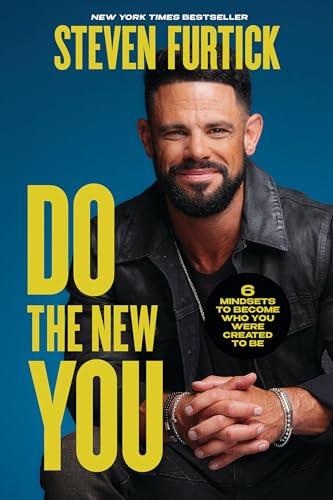
6 Mindsets to Become Who You Were Created to Be
Steven Furtick repeatedly highlighted the book across several episodes, presenting its six mindsets—such as "my joy is my job" and "I'm not stuck unless I stop"—as tools for personal and spiritual growth. He and co‑host Holly Furtick both promoted it as a valuable resource, noting its impact on listeners and its journey from rejection to release. The discussions emphasized overcoming self‑imposed limitations and aligning with one's God‑given potential, conveying strong endorsement of the title.
The speaker mentioned a book he wrote which featured six mindsets, and he highlighted one of them in the conversation: "my joy is my job".
And we're putting these conversations together as a gift to you to take you deeper into what we shared in the book, the six mindsets to become who you were created to be.
And this mindset, I really do need a life coach because I'll tell you what, putting this in the book to me almost felt like an act of hypocrisy because the mindset--this is the shortest one, I guess, and the hardest one for me.
It goes, my joy is my job. And it's like I don't really want to call joy a job. Joy is supposed to be a sensation, right?
I'm really hanging on to that quote from Brian Wilson from The Beach Boys that I put in the book.
It was about summoning yourself and how even small decisions like what to wear or what workout to do were important as you decided what "you" you wanted to be. The book was written to encourage readers to overcome feelings of being stuck and to realize that they have the power to change.
I love it because it helps me to understand that every day, I wake up and this is one of my favorite parts that I wrote in the book. I'm deciding a bunch of things, you know, Am I gonna wear this black t-shirt or that black t-shirt, you know, like it's gonna be black t-shirt But which one am I gonna? Am I gonna do three sets of this or four sets of this or no sets of this in my workout, you know Whatever, whatever, but the biggest decision is which me will I be and I think that can sound schizophrenic to people like I mean Which me will I be I'm deciding that right now. I'm just I decided that an hour ago I will decide it again when I see my kids tonight and we decide that over and over again And maybe this would be a good place for us to get into the idea of summoning the self that God sees Into the first mindset in the book, which is I'm not stuck unless I stop.
I think one things you did great in the book is that people see themselves in it constantly go I I do feel stuck sometimes my relationships. I just feel stuck in my head. I feel stuck in my career What am I gonna what am I gonna do? And a lot of people they feel like that stuck is permanent Mm-hmm, like hey, I'm working hard, but I'm stuck. So there's not lack of action for them They're like I'm going to work, but I feel stuck You know, I'm working hard, but I'm not earning more. I feel stuck and what ends up happening is the more you feel stuck the more you Spin in doubt and so when you're stuck you spin write that down. Yeah, you're stuck you spin yeah, and people always mistake the signal for doubt as a Signal to stop But doubt is not a C doubt is not saying stop doubt is a signal to learn and When you change that frame in your mind everything changes in your life I'm so doubtful doubt doesn't say well stop and don't learn anymore doubt is literally I don't know So the only way to actually figure it out is get in motion Try test like doubt is the entrance to the scientific process Doubt is the entrance to faith Wow. And so when you realize that like oh, I'm having all these doubts about this thing The next thought should be well, I'm gonna have to do something to discover the answer Hmm. I'm gonna have to do something to discover the truth I'm gonna do something to test this hypothesis. Will it break your flow if I ask you something about that?
I think a lot of themes of the Bible are do not be afraid or As you taught me be strong and courageous That presupposes yeah some doubt right most of the Bible presupposes we have doubts Yeah, if he says be strong, I must feel weak because I wouldn't tell you to sit down. You already are Yeah, he didn't start the story. We Gideon doesn't start the story as you know a mighty warrior. Yeah. Yeah. He starts in the wine press. I'll wimp in a wine. Yeah Yeah, David doesn't start the story with the sling I mean so you have to go oh each of these stories Starts in a place often of doubt. Yeah or discouragement despair division between people We have to cycle through that but the thing is I always said well, that's why there's another verse That's why there's another chapter. It's why there's something more it's like it might the story might begin in doubt, but the story doesn't stop there and We have to remember that in our own lives and so what I loved about this first chapter we're saying I'm not stuck unless I stop is you want to lock a lot of reasons that people should not stop and Realize that they can change I love how you talk about, you know, you can defy your default Yeah that maybe your default was to stop or to do these bad negative behaviors But you can work your way through them You can change you can shift and I think that's a hopeful message for a lot of people because they really do believe That they're stuck and stuck is a place of permanence When what your book is teaching stuck was a mindset. Mm-hmm, and You can change your mind so you can change your life.
I've tried everything right, right. Yeah, and you go. Oh, yeah Everything. Yeah, I've tried everything and then walk through it because you have an exercise you make people do that Yeah, I tried everything awesome, I'm so excited and I get really encouraged for them and they say well if you tried everything show me the list and They go. What do you mean? I said, well show me the list you tried everything I mean if you tried everything then you must have kept a list Really detailed of all the things you tried because of course you'd have to know what's mutually exclusive You'd have to know what you tried and didn't work and you have to adjust and do it over again So show me the list and most often people go well, you know I've tried once or twice and I tried the same well, I asked my boss for a raise on Monday asking me on Friday Asking the same way every time all the time, but I'm gonna ask him so you've been asking okay, but you haven't been adding new value So it's like you tried one strategy and you hit it 50 times and you didn't adjust it from another way You haven't tried everything you tried what you knew. You need to get perspective or approach it in a different way and I think often to people when they think of stuck they think of just negative things I'm stuck in a bad marriage. A lot of people are are stuck in a very happy marriage and What I mean by that is they don't need to leave the marriage. They have to learn to be different Try a new angle to find the happiness the fulfillment or the intimacy in the marriage So what I mean by that is sometimes people they're stuck is really they're just at a plateau They're actually successful they're actually doing well things are good and a lot of high performances are going Oh, you're just playing you're doing well. You're actually high performing but there's this next level for you and I think that I actually got that out of the book as much as I got out of oh, I'm in despair I'm troubled things are bad. What I also took from the book was things are going well But there's a new level for me when I'm in a more in a greater connection to my faith Speaking about plateaus you have this great statement in the book Don't argue for your limitations. What do you mean by that? Because I think a lot of people they are stuck But they're stuck in their own limitation. I heard a motivational speaker say at one time He said if you argue for your limitations, you get to keep them.
If you argue for your limitations you get to keep them you live small you stay in that space You actually begin to fulfill that prophecy not the prophecy of God over your life But your own prophecy the you you start to fulfill the enemy's prophecy Over your life that you'll never be this and your dad wasn't that so what I did I took that quote and in the book I take it a little further I say if you argue for your limitations you get to keep them But if you agree with God about your potential you get to grow into it. Oh, that's good grow into it that's good, you know, that's a whole sermon put it in the chat grow into it because Growing into it means no. I'm not it right now like Anymore than I was five nine when I was five But I get to grow into it and I think that first step of agreeing with God about your potential is to go God, you know what's in me? I don't and that's why I'm very wary of just the know thyself Philosophy right like know thyself is great. But how about part to grow thyself? Yes. Yeah, because that's the the the outgrow of Reflection and awareness and self-acceptance is that I'm going to grow into who God knows me to be That's the message of the book I was writing this book to myself in places going Do the New You the the you that you don't know yet But that God already does the one that he chose Yeah, and have faith in yourself as equally as maybe he has faith in you Which is a hard thing to grow into well think about this You're growing in the faith of yourself, which is very hard of yourself because people will say don't believe in yourself believe in God Here's the problem I have with that Who made you? If God made me and I don't believe in me what he called me to be Then it's him I doubt right and that really helps me to get past this sticking point where I feel like well I just don't want to hype myself up and say that you know, I can do great things Well, I can do all things through Christ who strengthens me. Yes. So I think the two go hand in hand That's why I was passionate to get this master class going To get people out of and to get you out of this mindset that says well God is great, but I'm no good Okay. Yeah, we're all sinners. We all need Jesus. We all need forgiveness, but we've been redeemed by him So what does that speak of us that he paid that price for us? and that's the limitation that I want you to grow beyond this view of you that only sees you as flesh and bones and mistakes and disappointments and To grow into the image of God that you were originally created to be so good I thought of when I was reading it The the angle you took on don't argue for your limitations Which was also you were saying be careful about justifying all your vulnerabilities And your challenges and what's wrong with you because it's easy to go. Well, you know, I'm not a good communicator because and soon you say because you enter the world of either blame or Self-comfort to say I'm not a communicator because my parents were mean to me And so I was talking about listen on limitations always listen for the word because well I'm like this because and you'll often add a negative thing. My parents were like this. They didn't believe in me She mistreated me. They cheated they stole or We're doing it for our own comfort because we don't believe we have empathy from the world So sometimes when we share our limitations our vulnerabilities with people what we're doing is we're reaching out. We're saying hey You know, I'm you know, let me just be vulnerable with you real quick What is doing guys? Could you please see me? Can you recognize me because I'm not feeling like I like myself or I'm not feeling good Seen heard or I don't feel like the world is fair. So let me tell you this thing. That's unfair for me Could you see it and acknowledge it and say to me? Oh, yeah, that is unfair or oh I understand now why you are like that and the whole conversation Suddenly does something funny it justifies and sets concrete around the limitation. Well Suddenly we have verbalized the reason because We've verbalized the reason for the limitation and now we coalesce around it and we actually just made it stronger And so empathy can be like that which we don't talk about in the modern world sometimes Overly placating to people's, you know vulnerabilities or limitations and staying on it and stewing on it all day Doesn't actually move them through it's often the difference in my career of as we'll share the deep Of as we'll share the difference sometimes between the therapist and a coach both absolutely necessary and I'm a huge mental health guy But there is a difference Sometimes we'll spend more time over here in a therapeutic context And a coach is gonna try to move you through that limitation a little bit more aggressively Not that either is right both can be really wrong but I think it's just a casual way to say to people be careful of just always talking about the limitation and arguing for it and Seeking the empathy and understanding and comfort because all of a sudden you miss The ability to move through it and I thought that the movement through the book That you took people on was so powerful because you didn't let them sit there Well, thank you for saying that because when I wrote the mindset, I'm not stuck unless I stop I thought this could come across really callous to somebody who just found out like I'm never gonna be able to Have children or I'm never going to be able to fulfill this dream Or I'm never gonna have my health back like I did before or this person has gone out of my life Like I lost my dad and in this area of my life. I do feel like there is a limitation Well, there there is a loss But I'm trying to get you opened up and anytime I talk about this. I can't help but think about Moses and the children of Israel at the Red Sea right and they're like Okay, God help us help us help us and they cried out and Moses says don't worry stand still and you will see the salvation Of the Lord right next verse God says Why are you crying out to me tell the Israelites move on? Hmm, so it sounds spiritual. They're crying out to God. The Lord will deliver you and he will Through you moving through it right and I love that about personal development. I love that about Having a coach to help us through these things and bring our faith into motion so that we can actually see faith without works is dead and That God promises to bring you through it
The book was mentioned as an encouragement to keep going even when it doesn't look like it, reminding listeners that they are not stuck unless they stop.
Pastor says in his book Do the New You, "'I'm not stuck unless I stop.'"
It was mentioned as a book written by Jabin Chavez, and was available for purchase.
Do the New You is available for purchase wherever you get books. Go to http://dothenewyou.com/ to get your copy today.
It was mentioned that "Do The New You" is available for purchase wherever books are sold, encouraging listeners to visit the website for their copy.
Do the New You is available for purchase wherever you get books. Go to http://dothenewyou.com to get your copy today.
Holly Furtick, the speaker in this podcast, discussed her husband's new book, "Do The New You," and how it had been a great series for listeners, with many of them still reading through it. She also mentioned that the book had been rejected a year before its release, but that God had answered their prayers and given them the book.
We have spent the last seven weeks walking through my husband's new book, Do the New You.
I wish that I could ask each one of you which mindset has been your favorite, which chapter of the book has spoken to you.
To be able to hold this book in my hands. I'm sure you are still going to wrap up this series. You may not understand but it is a measurably more answer to my personal prayers.
I just thought was missing and so he said that he reminded me he had already written a book a year before and it was basically rejected and he said, I'm okay with it and I've just decided that I'm not a writer.
And here we are just a little over a year later in this book is in my hands and how many of you would testify that God has spoken to you through the message of this book. It's amazing.
The book was highlighted as the speaker's husband's first release in eight years, and listeners were encouraged to obtain a copy and join an egroup study around it.
It was his first book in eight years.
And the book was called Do the New You.
I just so loved this book.
If you haven't read Do the New You, you have to get a copy.
We have an egroup study with Do the New You.
Holy Bible, King James Version
The title was repeatedly referenced as the foundational source for the hosts' sermons, with Steven Furtick and guests citing passages from Peter, Kings, Hebrews, James, and Acts to illustrate points about faith, works, and perseverance. Levi Lusko even called it a great read, encouraging listeners to explore the Bible further. The discussions highlighted its role in grounding the message and reinforcing scriptural authority, and the overall tone was strongly endorsing its value.
The speaker discussed the book of 1 Peter, chapter 2, focusing on how God builds differently than humans. He used the concept of a 'time-lapse testimony' to illustrate how people often gloss over struggles in their faith journeys, creating an unrealistic expectation.
First Peter chapter 2 and let's really take our time with this passage so we can taste it today.
Therefore rid yourselves of all malice and deceit hypocrisy envy and slander of every kind.
Like newborn babies crave pure spiritual milk so that by it you may grow up in your salvation now that you have tasted that the Lord is good.
In Scripture it says see I lay a stone in Zion a chosen and precious cornerstone and the one who trusts in him will never be put to shame.
See that you make them according to the pattern shown you on the mountain
The podcast's message focused on the book of 1 Kings chapter 17, about Elijah's experience of God's provision during a drought through ravens and a widow, as an example of God's ability to work with the 'little' and provide for his people.
First Kings, chapter 17.
Romans 8-28 is my favorite Bible verse, because it gets me through anything.
Look it up in Judges, chapter 6, in the Holy Bible.
This is 1 Kings, chapter 18.
The Scripture says that the sufferings of this present time are not worthy to be compared with the glory that will be revealed.
It was mentioned as a great read, particularly the book of Acts, which contains a story considered one of the most important movements in the book.
If you haven't read it, the Bible is awesome. You should check it out sometime.
So I just said to you that in a chapter that includes the saving of the apostle Paul, we are about to read the story that I consider one of the most important movements in the book of Acts.
It was used as the primary source text for the sermon, with specific reference to the book of Hebrews and the story of Abraham, illustrating a point about how sometimes 'better' isn't necessarily forward progress.
your word is eternal. So speak now.
If he went into the Holy of Holies and shed not the blood of bulls and goats but the blood of his very own perfect life for your sake, when a drop of his blood hit the mercy seat, it spoke over your life a future and a hope that is better.
He says, Don't get discouraged in your life. Don't get discouraged by your marriage. Don't get discouraged by another person's marriage.
It was mentioned as the book and chapter where the sermon's title was derived, 'Work It Out', in reference to faith without works being dead.
James chapter two be on the screen for you beginning to verse 25 and we'll read verse 25 and 26 in the same way was not even Rahab, the prostitute considered righteous.
as the body without the spirit is dead. So faith without deeds is dead.
Some trains listen to say so faith without works is dead. Faith without activity, faith without action, faith without works is dead.
The book of James also mentions Rahab, further emphasizing her story and God's use of her despite her past as a prostitute.
Then James jumps in, and for a third time this harlot is mentioned alongside the heroes of Scripture.
in the same way, was not even Rahab the prostitute considered righteous for what she did when she gave lodging to the spies and sent them off in a different direction.
He pointed out that the Book of James also mentions Rahab alongside other heroes of Scripture.
James jumps in. For a third time, this harlot is mentioned alongside the heroes of Scripture.
He described a man who could recite any verse from the Bible without ever opening the physical book.
He would say the Bible verse without looking at the Bible, but he wouldn't say it in our translation. He would be translating it in his mind from Greek.
He repeatedly expressed his appreciation for the Bible, noting that he liked it more now than when he first started reading it and even listened to an audio version on his phone.
I like the Bible.
I really like the Bible.
But I happen to like the Bible now more than when I first started reading it.
I've been needing to listen to my audio Bible that is on my iPhone app, and you just gave me 37 extra minutes to do it.
The speakers referenced the Bible several times, highlighting the Gospel of Luke and the Book of Acts as the scriptural foundation for their message about change and restoration.
Luke wrote the gospel of Luke where he recorded the words and deeds that Jesus did on the earth. And then he continues his gospel of Luke with the book of Acts.
Acts chapter one starts out with Jesus who is resurrected from the dead, ascending into heaven. So Luke's trying to get you to see there's a God change happening.
As Luke writes this story, the man who was healed that was lame from birth, he's not even the main character. Peter is. Luke is trying to get us to see that Peter is changing as there's a whole bunch of transition happening.
In the Bible it says that he went into the temple courts. That detail shows that the man was restored to worship and community.
The Bible says that the prayers of the righteous are powerful and effective.
The speaker described the Bible as an ancient book and referenced its authority while discussing strength and justice.
The Bible is an ancient book. In fact, Isaiah says... He gives a picture of it.
He described the Bible as an ancient book and cited Isaiah's prophecy to illustrate its relevance.
The Bible is an ancient book. In fact, Isaiah says... He gives a picture of it.
Genesis
It was mentioned that Midian was a thorn in the flesh to Joseph, in the book of Genesis chapter 37. It was mentioned that Joseph's brothers did not like him and threw him into a pit, then later he was sold into slavery by Midianite traders.
I don't know if you know this, Genesis chapter 37, it won't be on the screen for you. I'm just going to tell you up to trust me that I'm giving you the correct Bible verse. But the Bible says that Jos...
— Episode: Come Out Of The Cave (Daniel Floyd)
It was mentioned that Midian was a thorn in the flesh to Joseph, in the book of Genesis chapter 37. It was mentioned that Joseph's brothers did not like him and threw him into a pit, then later he was sold into slavery by Midianite traders.
I don't know if you know this, Genesis chapter 37, it won't be on the screen for you. I'm just going to tell you up to trust me that I'm giving you the correct Bible verse. But the Bible says that Joseph's brothers, if you remember this, the coat of many colors, they didn't like him. They threw him into the pit. Y'all tracking with me?
They threw him into the pit. And then whenever there was some Israelites came along, but they were Israelites that were Midianite traders. So same group of people, same pressure. Joseph determines that no matter the circumstance or the situation, whether I'm in the pit or I'm in Potiphar's house or I am in the prison, the Bible says the hand of the Lord was with him and that he rose to the top in the middle of every situation because pressure will either refine you or it will confine you.
The speaker discussed the book of Genesis, specifically chapter 32, where Jacob wrestles with an angel throughout the night, resulting in a limp for the rest of his life. It was used as an example to illustrate trust in God during challenging times.
The Lord led me to Genesis chapter 32 for our lesson today.
I've been reading through the book of Genesis with Elijah and Kelsey, and it's been so fun.
I knew I would preach it soon because it grabbed me in a new way.
Look at Genesis, chapter 32, verse 21.
We're going to see this Bible character Jacob in a wrestling match.
The book of Genesis was mentioned as an example of the 'law of first mention' in biblical interpretation. It was utilized to discuss the enemy's initial tactic of creating an identity crisis in the Garden of Eden.
it's called the law first mentioned which means that that very often specifically in the book of genesis if you see something mentioned for the first time that might be a picture picture or a pattern of how that thing's going to be seen throughout the thread of scripture
when we see the enemy's interaction with the human species for the very first time what did he try to create he tried to create an identity crisis
you go all the way back to genesis 1 you'll see when God's having a conversation about creation he says let us make man in our image and likeness so satan tells eve God knows if you eat that you'll be like him but in genesis 1 when he created adam and eve he created them in his image and likeness
The podcast speaker discussed the biblical book of Genesis, focusing on the story of Joseph and his brothers, highlighting Joseph's ability to overcome hardship and find purpose in his life's trajectory.
Why don't we do this? Let's go to Genesis 49.
So now I want to back up to Genesis 49 and give you a picture of the Bible character we spoke about last week who was Joseph and what his father Jacob said to him before he died.
Now listen to this. Jacob has been speaking to all of his sons, all 12 of them.
Now first point the one who went through the most, the one who had gone through the most, the one who endured the most was blessed the most.
I want to revisit Genesis 50 from last week and kind of take it a little bit deeper than what I was able to share let's go beneath the surface of this conversation just to remind you
It was mentioned as a book that Lisa Harper had heard Steven Furtick preach from multiple times, and that it contains the revelation that humanity was made in God's image (Imago Dei).
If you brought your Bible or you have your phone, turn to Genesis chapter one, you'll know this. I've actually heard Stephen preach on this multiple times.
Then God said, let us make man in our image after our likeness and let them have dominion over the fish of the sea and over the birds of the heavens and over the livestock and over all the earth and over every creeping thing that creeps on the earth. So God created man in his own image. In the image of God, he created him male and female. He created them.
The book of Genesis was referenced when it was suggested that the snakebite in the story of Paul might be symbolic of the devil, referencing the serpent in Genesis 3.
Genesis 3, the serpent, the symbolism, revelations.
The book of Genesis was referenced multiple times, particularly the story of Jacob, Joseph, and the well in Sychar, illustrating God's ability to take difficult situations and turn them into blessings.
It's in Genesis 48. It's really beautiful.
God sent Joseph to Egypt, and on one hand, his brothers betrayed him and sold him, but on the other hand, Joseph saw, after 13 years of what seemed to be like a setback...
When Jacob was getting ready to die, he called Joseph to his bedside. It's a really beautiful scene. This is great for Father's Day. Genesis, chapter 48.
Genesis 48, 11 is the one I want to focus your heart on for a moment. '"Israel said to Joseph..."' You're like, '"Wait a minute. I thought you were talking about Jacob."'' I am.
Joseph took both of them, Ephraim on his right hand toward Israel's left hand, and Manasseh on his left toward Israel's right hand, and brought them close to him. All of this I saw when I saw it happen on the plot of ground that Jacob gave his son Joseph.
It was mentioned as the first book of the Bible, detailing God's creation and how he initiated movement in everything he created, including man's heart.
Genesis chapter 1. Chapter 1 says, 'In the beginning God created the heavens and the earth, and the earth was without form and void, and darkness covered the face of the deep, and the Spirit of God was moving over the face of the waters.'
The book of Genesis was used to illustrate the concept of interpretation, particularly focusing on the life of Joseph and how his experiences were interpreted in different ways.
Let's go in our Bibles now to Genesis chapter 40 for the final week of our series Trigger...
I Mentioned him and I read this scripture that I want to revisit now in Genesis chapter 40 concerning the power of interpretation
Which is what put him in this position in Genesis chapter 40 the situation he was in
I believe this Genesis 41. Yeah verse 15 Pharaoh said to Joseph I have had a dream, and there is no one who can interpret it
I'm gonna read it to you. Just like it says it in verse 1 start from verse 1 of Genesis 45 He's been with his brothers...
The host said he searched from the book of Genesis forward to Revelation to verify a point about the devil's lies, indicating a thorough biblical study.
I went all the way back to the book of Genesis and all the way forward to the book of Revelation.

Navigating Your Path Through Hormonal Change with Purpose, Power, and Facts
The podcast speaker used the book of Acts, specifically chapter 27, as a basis for his sermon. The main idea was that sometimes, despite bad decisions and difficult situations, God has a greater purpose, even if it's difficult to understand at the time.
All right, look at this from Acts chapter 27
— Episode: It Had To Happen
The podcast speaker used the book of Acts, specifically chapter 27, as a basis for his sermon. The main idea was that sometimes, despite bad decisions and difficult situations, God has a greater purpose, even if it's difficult to understand at the time.
All right, look at this from Acts chapter 27
I preached this passage back in 2013 and this is the sequel back then I did a message called it will happen
The Bible says in verse 20 Acts chapter 27 when neither sun nor stars appeared for many days and the storm continued raging
That's where Paul started that's where the wind blew him around for like several weeks and That's Malta where they landed
That little tiny island called Malta
The book of Acts was referenced to counter the common misperception of Moses as slow and dumb, revealing that he was actually powerful in speech and action, as recorded in the book.
And as I jumped into this lonely place and I started to inspect the story of Moses, I came to the book of Acts where it's recorded.
And this busted the bubble of my perception of Moses. And maybe God wants to bust your bubble for how you see yourself today.
The stereotypes you have labeled yourself with, the things you said I'm not going to do math because I'm dumb.
Because in Acts 722 it says this, it says Moses was educated in all the wisdom of the Egyptians and was powerful in speech.
And what's like that's got to be a typo. That doesn't really happen. That's not in the Bible, because I always heard that Moses was slow and he was dumb.
The book of Acts, chapter 28, was used as a foundation for the sermon, illustrating the concept of protection, healing, and God's hand in unexpected situations through the narrative of Paul's shipwreck and subsequent healing on Malta.
Go to Acts, chapter 28, right now.
Go to Acts, chapter 28, verse 1.
The reason I chose to go off of Acts 28 today talking about protect the vessel is because, even though the boat that was carrying Paul broke into pieces, it really wasn't as important what was carrying Paul as it was what Paul was carrying.
Paul went in to Publius, his father's bedroom, and in Acts 28, he did something really important I want you to do.
The speaker used the book of Acts as a foundation for a message about embracing ordinary days and finding significance in everyday life, particularly focusing on the story of Peter and John healing a lame man in Acts 3.
the text I'm gonna be in today is gonna be acts Chapter three is where I'll be and
Now this story out of Acts chapter 3 is really one of my favorite stories in the New Testament I love it It's really been a story that's played a pivotal part in the history of our church
in Acts chapter three it says one day Peter and john at the time of prayer went to the temple gate
I got it. Oh Acts chapter 3 this beggar being healed began in acts chapter 2
And as I was reading acts chapter 3 getting ready for today said god said you don't understand the whole story because you didn't read the previous chapters And god took me back to acts chapter 2 and next chapter 2 it said
The book of Acts was mentioned, with a focus on a story where seven sons of a priest attempted to use the name of Jesus and Paul for personal gain, but were rebuked by demons. It emphasizes the importance of a genuine relationship with God and highlights that trouble can sometimes accompany God's presence.
One time in the book of Acts, these seven sons of a Jewish priest saw Paul laying hands on people, and they were like, 'Oh, that's cool. Huh. Maybe we say what he says, we could do what he does, and maybe we can make money off of it.
And when they said it, the demons spoke and said, 'I heard you say Jesus, and we know him. I heard you say Paul, and we know him. We hate him. We're on assignment against him. We send snakes to bite him. We put Paul through shipwrecks. We stir up people and create contention so that stones are thrown at Paul. We've heard of Jesus. We've heard of Paul, but who are you?'
The book of Acts was referenced several times, illustrating Paul's missionary journeys, encounters, and divine guidance. The speaker particularly focused on passages related to Paul's attempts to preach in certain regions and how God sometimes prevented him from doing so.
In fact acts 9 calls Paul God's chosen vessel.
Acts 16 for records what happened next they traveled from town to town and They told all the churches good news.
We got ready Luke says at once and we left For Macedonia concluding that God had called us to preach the gospel to them 11 And from Troas the place where we were uncertain we put out to sea and sailed straight for some Othrus and the next day we went to Neopolis and from there we traveled to Philippi
He referred to the Book of Acts when describing a scene where seven sons of a priest confront Paul.
One time in the book of Acts, these seven sons of a Jewish priest saw Paul laying hands on people and they were like, 'Oh, that's cool.'
He highlighted that the book of Acts provides a narrative of Paul's missionary exploits, complementing the letters Paul wrote.
How cool is it that we not only get a narrative of Paul's missionary exploits in the book of Acts, but we have the letters he wrote.

Two Judges, Thousands of Children, and a $2.6 Million Kickback Scheme
The book of Judges, particularly chapter 6, was referenced multiple times throughout the sermon. It was used to illustrate the concept of being in covenant with God, yet still being in captivity to wrong beliefs and practices.
In Judges chapter 6 verse 22 through 29, there is an encounter with God Between the angel of the Lord and a man named Gideon
— Episode: Breaking The Bondage Of Wrong Belief
The book of Judges, particularly chapter 6, was referenced multiple times throughout the sermon. It was used to illustrate the concept of being in covenant with God, yet still being in captivity to wrong beliefs and practices.
In Judges chapter 6 verse 22 through 29, there is an encounter with God Between the angel of the Lord and a man named Gideon
The book of judges demonstrates to us the unfortunate reality that we can be in covenant with God and Still in captivity
You may try to break up with God But God won't let you the book of judges proof it
The book of Judges was referenced repeatedly, particularly the story of Ehud, a left-handed man, who delivered Israel from oppression. It was used as a metaphor to illustrate how God can use our perceived weaknesses to accomplish his purposes.
first, well, we're going to see all through the book of Judges as I come back to these devotions while we're doing our personal family reading from the book of Judges, we're going to see over and over again, hey, sometimes God is going to do something and he's going to lead with the left.
And they found the key and unlocked the door where the king was sitting there dead with his gut spilling out.
But when they found the key, they unlocked the door. And that spoke to me about how the unlock for the nation of Israel after 18 years of chains of oppression, metaphorically speaking, not that they were physically in chains, although some of them were. But the captivity that was a part of this cycle was unlocked by a man with the left hand from the tribe of the right hand.
Benjamin, son of my right hand, Ehud, a judge that the Bible doesn't even say the spirit came on, who was left-handed, had a secret meeting and God used an 18 inch weapon, a left-handed man in a secret place to deliver a nation.
The speaker referenced the book of Judges, chapter 7, discussing the story of Gideon and how it relates to being an instrument in God's hands.
This is Judges 7, verse 17. I'm back in the NIV. Watch me. He told them, follow my lead. When I get to the edge of the camp, do exactly as I do.
I didn't get time to get all the way to the end of Judges chapter 7, but the enemy turns against itself.
Remember that only 300 men stayed. Only 300 men who lapped water like dogs.
I got that dog. I don't have to be fancy with my faith. I got that dog. I don't have to be proper with my praise.
Remember, the trumpets were what they took when they had 10,000 and they only kept 300 out of the 9700 that left. There were 300 trumpets enough for every man. You've got enough. You've got enough.
The book of Judges was referenced and read from several times during the sermon, particularly the story of Gideon and his 300 men, which was used to illustrate the concept of 'instruments of victory'.
Open your Bible to Judges chapter 7 or Pretend to open your Bible as you flip through your phone and get that last round of candy crush so you can pay attention to me
Good news, I'm gonna read so much scripture. It's gonna make up for all the ones you didn't read this week.
I'm gonna put them all in on this one Judges chapter 7 Verse 1 how about that from the English Standard Version of the Bible?
Then Jerubabbel that is Gideon and all the people who were with him rose early and Encamped beside the spring of Harod in the camp of Midian was north of them by the hill of Moriah in the valley
put up verse 7 judges 7 you'll hardly believe how clear it is. He said let All the others Go you see that? 9,700 on one time side 300 on the other and the 300 are dogs and God says you can do it You're gonna do this with those 300 dogs
The book of Judges was referenced several times during the sermon, with a focus on the story of Gideon who was called by God to be a warrior despite feeling weak and hidden. The sermon highlighted Gideon's journey of overcoming fear and embracing his strength to accomplish a great purpose.
Gideon is the greatest judge in the book of Judges, the greatest judge of all time.
Gideon is a GOAT, but God is getting him ready, because he's not looking much like a GOAT at the moment.
The Bible says they were in Midian's hands. That was their Enemy.
You don't even know that the angel of the Lord sent a word into a winepress and called him a warrior while he was down there scared that the swarms of Midianites were going to come get what he planted, so he had to hide it.
Gideon went in, and watch this. He went inside, prepared a young goat.
The book of Judges was used to illustrate the story of Gideon, who was called by God to lead Israel despite feeling unprepared. It highlighted how God calls us based on our potential, not our current state, and emphasizes his patience in waiting for us.
Before I read our Scriptures, Judges 6... You can make your way there. It's in the beginning of the Bible.
Judges 6, verse 1. The Israelites did evil in the Lord's sight, so the Lord handed them over to the Midianites for seven years.
Then the angel of the Lord came and sat beneath the great tree at Ophrah, which belonged to Joash of the clan of Ebeazar. Gideon, son of Joash, was threshing wheat at the bottom of a winepress to hide the grain from the Midianites.
The angel of the Lord appeared to him and said, 'Mighty hero, the Lord is with you.'
'Sir,' Gideon replied, 'if the Lord is with us, why has all this happened to us? Where are the miracles our ancestors told us about? Didn't they say, 'The Lord brought us up out of Egypt, but now the Lord has abandoned us and handed us over to Midian.'"
The book of Judges was used as a teaching tool to illustrate how God can use pivotal moments and even poor decisions to accomplish his will and deliver his people.
The Bible says in judges 13 verse 1 remember in a pivotal time for the nation of Israel a Pivotal time because they were in a cycle of sin Judgment and deliverance a pivotal time because they didn't have a king and They they didn't really want God to be their king
The Bible says that at least the perspective of the writer Samuel was who we preached about last week that God delivered them into the hands of their enemies That's interesting to me. I Don't have a category for that But God is bigger than my categories
the angel said just tell your wife right now. Don't drink anything or eat anything unclean That's all you need know right now the pivot From what you think you need to know To what you really need to know
the parentheses in first in Judges chapter 14 verse 4 says his parents did not know that this Was from the Lord They knew Samson was from the Lord Because the angel spoke it and her womb was barren
God wanted to set his people free from the Phoenicians from the Philistines and he was gonna do it But he wanted to do it not through a good decision, but through a bad decision
Eternal King, Everlasting Kingdom
The host referenced the book several times, noting he hadn't read it yet but would recognize its insights when needed. He made brief allusions to its themes while discussing biblical symbolism, the beginnings of gospel narratives, and even a lighthearted question about cats and heaven. The mentions were fleeting and did not include a detailed endorsement.
The host referenced the Book of Revelation as containing a specific challenge for the listeners, using chapter 2 verses 25 to illustrate his point about passion and repentance.
So over in the book of Revelation chapter 2 verse 2 through 5 there's a challenge and I'm going to try to be disciplined as I preach this one.
there's a bible there over the revelation chapter two in the book of ephesians gives us a picture of the church at ethicist from a doctrinal standpoint but now he's in a passion he lost their first love
It was mentioned as a book that Steven Furtick did not have time to read, but felt he would know it when he needed to.
I Don't have time to learn the book of Revelation the seven churches the lampstands the candle stands I'll know all that when I need to but right now I just need God
The book of Revelation was mentioned when Steven Furtick suggested that the snake in the story of Paul might be symbolic of the devil, referencing the serpent in Genesis 3, and connecting it to Revelation.
Genesis 3, the serpent, the symbolism, revelations.
The book of Revelation was mentioned in connection with the Gospel of John, highlighting how the entire narrative begins with a question, suggesting that breakthroughs often start with a question rather than an answer.
I am the bread of life. I am the Good Shepherd. I am the door. I am the resurrection. I am the way.
But before any of those statements, it starts with a question.
The book of Revelation was briefly mentioned when the speaker was asked a question about a cat's potential for heaven and he said that he didn't have the answer.
if a cat dies in the middle of the night and the owner went to church the day before it would get to heaven or does it have to pray I don't know about your cat in the book of revelations where it talks about the horse and the and the heavens and the earth I said I didn't break open the scroll the lamb did that I'm not the lamb I'm a dumb sheep like you you e w e u it's deep y'all wake up we don't have long
He mentioned reading about a white horse in the Book of Revelation and noted that people often add an "s" to the title.
And yeah, there's a white horse that I read about in the book of Revelation. The book of Revelations. People put an S on it. Book of Revelations. Walmarts. Revelations.
The title was highlighted across several episodes as a key resource for unpacking Romans' teachings on God’s purpose, justification by faith, and the call to offer one’s whole self as a living sacrifice. Steven Furtick repeatedly cited it to stress that calling is about character rather than outward achievements, while Holly and Jonathan used it to illustrate comfort, grace, and the transformation of mind. The hosts collectively presented the book as essential for understanding these core biblical themes.
The speaker explained that the book of Romans highlights that God's calling is about character and not about outward things like college or career.
All things work together for the God. The other stuff is really good too. What comes after? I want to show you this too. It said, All things work together for the good of those who love God and call according to his purpose. Now go to verse 29.
God's calling is really about character. God's calling is less about what college you go to and more about who you're going to be when you get there.
It's about the purpose of God, not just your preferences in any given moment.
It's about the purpose of God, not just your plan according to your limited knowledge. And God said that someone needed to hear this message today because you are so caught up in what you thought your life would be at this moment, like Moses, that you need to meet the God of also this morning.
And those he called he also justified. Y'all need to see it again on the screen. I can tell. Put it back up on Romans 8. I am not going to skim over this. It's too life-changing. It's too rich.
He predestined you according to his purpose for you. He created you before he called you. It stands to reason that he would have created you to be exactly what he needed you to be for what he would call you to do.
So all of the arguments that you give yourself about how you're not what you need to be are wrong because you are called by a God who created you.
He would not have created you to be less than or different than what he would call you to be in another season of your life.
What if your name belongs on that shirt too?
What if we put your name on that shirt too just believing what Romans 8, 28 says that all things, all things, good things, bad things, everything in between, all things work together.
What if the things in your life that are happening are not random?
You ever wonder? So when they say, you're sending your kid to college, isn't college a waste of money?
For we know that in all things God works for the good of those who love him and are called according to his purpose.
But Romans 8 29 also says that those he foreknew he also predestined to be conformed to the image of his son.
He also predestined to be conformed to the image of his son. So he knew that Moses would have this hesitation, but he chose Moses because he knows Moses.
He knows what Moses is not. He knows what Moses was. He knows what Moses will be. He knows what I'm not. He knows what I'm not. He knows what I was. He knows what I will be.
God is the only one who knows all three of those. Because some of us we don't even know what we're not yet.
So those he predestined he also was it say that he might be the firstborn among many brothers and sisters next verse and those he predestined. He also called those he called. He also justified that's talking about the cross.
He cannot call you to something that he did not create you for.
He also glorified look at all these also's in the Bible look at the God of also look how he doesn't just set you on your path and say well I've saved you and I've forgiven you now.
It's up to you to work it out in your life. No, no, no, no, no the God who saves will also sustain.
I'm alone you my verse he who did not spare his own son. But gave him up for us all all you get the same grace that Jacob got you get the same grace that Mary got y'all leave my scripture y'all keep taking it down and I love it leave it. Leave it.
I like the server that comes tries to grab your plate while you're still eating your chicken fingers like I will eat your fingers if you don't put my chicken back on this table leave my scripture up.
I thought it meant that he will also give me the blessings of life along with Jesus who is the greatest blessing.
That's why he created other people. That's why comparison is a thief and a liar and a drug that we take to talk ourselves down from our high calling.
What if everything you've gone through? Thank you, baby. Y'all give her a hand. What if everything that God has allowed your life to be up until this point is preparation for what you are predestined for?
What if everything you've gone through is preparation for what you are predestined for? What if everything that God has allowed your life to be up until this point is preparation for what you are predestined for?
You give him praise when you're doing well, and you cry out to him with petitions when you're not.
It was recommended as a book to understand Paul's theological construct for justification by faith in Christ, not through works of the law.
If you want to really understand Paul's theological construct for justification by faith in Christ, not through works of the law, you should go to the book of Romans.
The book of Romans was referenced to emphasize the idea of offering oneself as a living sacrifice to God. It was used to support Holly's point that God desires our whole being, including our struggles and imperfections.
Then I remembered what Paul said in Romans 12. Therefore, I urge you, brothers and sisters, in view of God's mercy, to offer your bodies as a living sacrifice, holy and pleasing to God. This is your true and proper worship.
The book of Romans was mentioned as a source of comfort and guidance, particularly the idea that all things work together for good for those who love God.
Romans 8 is really good for perspective I consider that our present sufferings are not worth comparing with the glory that will be revealed in us
Both are a focus suffering and glory at the same time What do you want to focus on The frustration or the fruit I am convinced I am persuaded I have made up my mind that what I am going through is nothing compared to what is going to come forth from it because I've seen God do it before For the creation waits in eager expectation for the children of God to be revealed
For the creation was subjected to frustration but I'm not focused on the frustration I'm not focused on the frustration I'm not focused on the fear I'm not even focused on the facts not of its own choice but by the will of the one who subjected it in hope that the creation itself will be liberated from its bondage
We know that all things work together for the good of those who love him who have been called according to His purpose
For the creation waits in eager expectation for the children of God to be revealed The creation waits for a revelation Waits Eager expectation What does that look like Eager expectation It doesn't look like certainty
The speaker referenced the book of Romans in the Bible, particularly chapters 1 through 11, focusing on God's grace and mercy in establishing the new covenant through Christ. He then contrasted this with the later chapters, highlighting the human responsibility to transform one's mind in response to God's love.
So we're going to be looking at Romans chapter 12.
Romans chapter 12, verse 1.
Romans chapter 12, verse 2.
In view of all that grace and in view of all that mercy, here's what I want you to do.
For 11 chapters of the book, he shares about all the things that God can do for us and all the things that only God can do.
Guide to Joy
It was mentioned as a book that Steven Furtick intends to read and implement alongside The Seven Habits of Highly Effective People and Proverbs to continue improving himself.
I'm gonna be me. I'm gonna be me. I'm a dance over this foundation that God gave me and I'm gonna work on it And I'm gonna read the seven habits of highly effective people and Proverbs and Philippians...
— Episode: But Now Be Strong
It was mentioned as a book that Steven Furtick intends to read and implement alongside The Seven Habits of Highly Effective People and Proverbs to continue improving himself.
I'm gonna be me. I'm gonna be me. I'm a dance over this foundation that God gave me and I'm gonna work on it And I'm gonna read the seven habits of highly effective people and Proverbs and Philippians, and I'm gonna do it
The book of Philippians was referenced as a well-loved book by members of the audience, who had watched the sermon related to the topic multiple times.
I know you've already watched the sermon five times since last weekend, because you love the Word of God and you memorized Philippians 2.
The Apostle Paul wrote this book while in prison, and it was referenced throughout the sermon as a source of encouragement in uncertain times.
If I am to go on living in the body this will mean fruitful labor for me yet what shall I choose I do not know
In Philippians chapter 1 verse 22 Paul says if I am to go on living if I thought no weapon formed against you will prosper Isaiah 54 17 Paul didn't you read Isaiah 54 17
Paul's like yeah man me and Isaiah are peers we both we're both writing the bible he just wrote it a few centuries ago but yet he is introducing now y'all listen you gotta listen with your spiritual ears cause your physical eardrums are blown out cause we were just rocking up here but listen with your spirit he said if I am to go on living I don't know how this will turn out how many feel that way about something in your life right now I don't know how this is going to turn out
I want you to know that the gospel is going forward that's the important thing and as a result it has become clear verse 13 throughout the whole palace guard wait a minute wait a minute he's talking about clarity but he's still not defining the outcome his clarity is not about the outcome his clarity is about God's presence in the process what a word
Paul saw it one way Y'all see chains I see opportunity Paul saw it one way Y'all see limitation I see an opening Paul saw it one way Y'all see captivity I see freedom I see what God said and I speak it over your life Focus on the fruit not the frustration
The book of Philippians was discussed in detail, focusing on Paul's perspective while imprisoned and how his faith remained unwavering despite his circumstances. The pastor highlighted Paul's message of internal freedom regardless of external situations, particularly his focus on God's sovereignty and purpose.
Philippians chapter 1 verse 15 Paul speaking it is true that some preach Christ out of envy and rivalry But others out of goodwill and the latter do so out of love Knowing that I am put here Remember, I'm where I'm supposed to be
I thank my God in every remembrance of you. This is Philippians chapter 1 in Every prayer with joy, and I thank him for your partnership in the gospel from the first day until now
Philippians chapter 1 Paul said I'm I'm free. I don't know whether I'll get out of this prison But whether or not I get out of this prison is Is not the hinge on which my faith swings Because I made a decision to be free free of bitterness free of blame real freedom
So I've got my own keys called faith and trust and praise and gratitude and So I don't need you to free me I am setting people free from my need for them to validate me
whom the Son sets free is free indeed.
He explained that by the time Paul was writing the book of Philippians, circumstances had changed dramatically and Paul was imprisoned.
by the time he's writing the book of Philippians, there has been a turn of events, and Paul is in prison.
Hebrews
The book of Hebrews was discussed extensively, particularly regarding leadership, imitation of faith, and the importance of considering the outcomes of choices made based on the words spoken over one's life.
Hebrews 13 Hebrews 13 Verse 7. Remember your leaders who spoke the Word of God to you. Consider the outcome of their way of life and imitate their faith.
— Episode: Copy That
The book of Hebrews was discussed extensively, particularly regarding leadership, imitation of faith, and the importance of considering the outcomes of choices made based on the words spoken over one's life.
Hebrews 13 Hebrews 13 Verse 7. Remember your leaders who spoke the Word of God to you. Consider the outcome of their way of life and imitate their faith.
Remember your leaders who spoke the word of God to you, who told you, I can do all things through Christ who strengthens me, who told you God's hand is on you, who told you that there's nothing more important than God, who told you that if Christ isn't at the center of your life, the whole thing will fall apart, who told you and taught you, who preached to you and taught to you that you are who God says you are.
When the author of Hebrews is saying here, Remember your leaders who spoke the word of God concerning you. He's not so much talking about their words that they spoke, the word of God that they spoke, but then he says something really powerful.
Remember, the Hebrews have not been a part of Christianity for two millennia like we have. So they haven't had 2,000 years to get used to the idea that we are justified by faith, not works.
In the middle of this, he gives them an instruction as he concludes his letter. He says, Consider the outcome of their way of life and imitate their faith. Or in other words, copy that.
The book of Hebrews was referenced to highlight God's unchanging nature, stating that he's the same yesterday, today, and forevermore, despite his unpredictable activity.
He is what the writer of Hebrews calls immutable. He is unchanging. He's the same yesterday, today, and forevermore.
It was discussed as a book in the Bible that Steven Furtick used to explain the concept of 'better' being subjective and how sometimes going backwards can lead to greater progress.
The challenge for the author of Hebrews is that he's writing to a group of Christians whose lives are getting worse.
He tells them that 13 times in the book of Hebrews.
It is a better hope because an anchor only works when it hits the bottom.
The Bible says Jesus had a better ministry, not only a better ministry but that his blood speaks a better word.
The Bible even uses this illustration of Abraham in Hebrews 6.
The book of Hebrews was mentioned as a place where Rahab is honored for her faith, alongside other heroes of scripture, further emphasizing God's ability to use individuals from all walks of life.
So then you get to Hebrews 11, and not just once but for the second time in the New Testament, Rahab gets an honorable mention in the hall of faith where they're inducting all of the Sunday school heroes.
By faith...29. The people passed through the Red Sea on dry land, but when the Egyptians tried to so, they were drowned.
By faith, the prostitute Rahab, because she welcomed the spies, was not killed with those who were disobedient.
Levine, Joshua] [March, 2012]
The book of Joshua was referenced throughout the sermon, specifically chapter 2 and its story of Rahab the prostitute, who hid spies and later became a part of Israel's history.
Then Joshua son of nine secretly sent two spies from Shitem
— Episode: Reputation Rehab
The book of Joshua was referenced throughout the sermon, specifically chapter 2 and its story of Rahab the prostitute, who hid spies and later became a part of Israel's history.
Then Joshua son of nine secretly sent two spies from Shitem
Go look over the land he said especially Jericho
God in Joshua chapter 1 reminds Joshua of his reputation Not the reputation of Joshua the reputation of Jehovah
When Moses got ready to check out Canaan four decades ago, he sent 12 spies, and 10 came back with a fear report.
Numbers 13.33 says that they gave the man of God Moses this report. They said, We saw the Nephilim there.
The story of Rahab, a prostitute in Jericho, was used to illustrate how God can use those who are in the depths of shame to bring about salvation. Her story is found in the book of Joshua.
We find her story in Joshua chapter two.
We pick up the scene in Joshua 2, verse 12 to 15.
It says, 'Now then, please swear to me by the Lord that you will show kindness to my family because I've shown kindness to you.'
Give me a sure sign that you will spare the lives of my father, my mother, my brothers, and my sisters, and all who belong to them, and that you will save us from death.'
Our lives for your lives, the men assured her. If you don't tell what we are doing, we will treat you kindly and faithfully when the Lord gives us the land.
He referenced the biblical book of Joshua to illustrate the story of Rahab, the spies, and to remind listeners of God's reputation and leadership.
If you want to look at Joshua chapter 2 today with me for a moment, very interesting story in Scripture.
God in Joshua chapter one reminds Joshua of his reputation, not the reputation of Joshua, the reputation of Jehovah.
The speaker used the Book of Joshua to illustrate how the Israelites set up twelve stones as a memorial after crossing the Jordan River, emphasizing the principle of managing what God gives. He later referenced Joshua when encouraging listeners to remember seasonal milestones and when reflecting on the end of Joshua's life.
I believe that with all of my heart ... let's go to the Word of God. Joshua chapter 4 verses 1 through 9. As I read this story to you ... on the surface, this story is really very simple.
The key to this, Joshua says, take 12 stones, January, February, March, April, May, June, July, August, September, October, November, December. 12 months, 12 stones, 12 tribes, 12 disciples.
When you get to the end of Joshua's life, you read in Judges chapter 2, verse 10 ... Joshua's generation set up the stones. The next generation didn't even know the story.
A Study of Faith and Practice
The speaker spent a whole year studying the book of Ephesians, which has only six chapters, and found it very impactful and applicable to the topic of his sermon.
I'm going to read from the scripture today in the book of Ephesians. Spent all year last year in Ephesians because I am a slow reader. It is only six chapters, but I dwelled in it and I've got marks a...
— Episode: I Still Love The Church (Tauren Wells)
The speaker spent a whole year studying the book of Ephesians, which has only six chapters, and found it very impactful and applicable to the topic of his sermon.
I'm going to read from the scripture today in the book of Ephesians. Spent all year last year in Ephesians because I am a slow reader. It is only six chapters, but I dwelled in it and I've got marks all throughout this text.
The speaker mentioned reading and preaching from the book of Ephesians, specifically highlighting chapters 3 and 4, focusing on concepts like growing to become more like God and overcoming sin.
I'm preaching from the book of Ephesians.
I always liked Ephesians 3.20.
Then when I got into four, I found out what more looks like, and then that helped me.
I have not achieved Ephesians 4.24 yet.
We're going right back to Ephesians 4, so you might as well sit down and settle in.
Ephesians was briefly mentioned in the context of the family's daily routine, which included quoting the book, praying, and singing the Beatitudes in the morning.
Me and my family, we wake up every morning, quote Ephesians, pray, and sing the Beatitudes.
The speaker referenced Ephesians as a passage for listeners to read, urging them to apply its teachings for spiritual victory.
Go back and read Ephesians six.
The Vision (The Passion Translation (TPT))
The hosts referenced the book to draw on Isaiah passages that illustrated how hardship can be for one’s benefit, how waiting on God renews strength, and how divine thoughts surpass human understanding. Steven and Holly highlighted specific verses to support these themes, using the text as a supportive source rather than a focal recommendation. Their overall tone was positive but informal, treating the book as a useful reference.
The speaker discusses the book of Isaiah, specifically Isaiah 38:17, where Hezekiah says that his suffering was for his benefit. This passage was mentioned as an example of how even through hardship, one can find growth and wisdom.
So, like when you read 2 Kings, right? When you read the Bible, like sometimes you can get a Bible on your phone where it'll put the reference and it'll show you, oh, this is also recorded in this other book and that will give you a different point of view. Or this is quoted by Jesus or Jesus is quoting Isaiah, right?
So, I was clicking around and I found how Isaiah's book, which is, you know, written about many events and different kings that he prophesied to has what Hezekiah wrote after he recovered.
He says, and this is Isaiah 38 verse 17, Surely it was for my benefit that I suffered such anguish.
Surely it was for my benefit that I got a new house. Surely it was for my benefit that I got a promotion. Surely it's for my benefit that God gave me the child.
And he starts pouring out his heart to God, not when he was still sick, but after he was made well. So, it's another example of going back. Oh, back. Going back. Yeah, he's going back and he's looking at what he went through, through the experiences of what he learned because he went through them.
The book of Isaiah was used to illustrate the theme of waiting on God and experiencing renewed strength. It was also used to emphasize God's everlasting nature and his patience in waiting for us.
In Isaiah 40, verse 31, they that wait on the Lord will renew their strength. They will mount upon wings like eagles. They will run and not be weary. They will walk and not be faint.
You know what verse 28 says? I have to show it to you. It says, 'Do you not know? Have you not heard? The Lord is the everlasting God, creator of the ends of the earth. He will not grow tired or weary. In his understanding no man can fathom.'
The book of Isaiah was mentioned and connected to the concept of God's thoughts being higher than human thoughts, inspiring the need for a thought transplant.
It's kind of like Isaiah 55, where God says, As high as the heavens are above the earth, so are my ways above your ways and my thoughts above your thoughts.
Then he took me all the way back to Isaiah, who said, 'My ways are higher than your ways, and my thoughts are not your thoughts.'
For Reading, for Feeding, for Leading (God's Word For You)
The speaker mentioned the fruit of the Holy Spirit, self-control, from the book of Galatians.
Well, the Holy Spirit wants you to work on yourself. One of the fruits of the Holy Spirit is self-control. That's in Galatians. I love the way we justify stuff. You know what I mean?
— Episode: The God Of Also
The speaker mentioned the fruit of the Holy Spirit, self-control, from the book of Galatians.
Well, the Holy Spirit wants you to work on yourself. One of the fruits of the Holy Spirit is self-control. That's in Galatians. I love the way we justify stuff. You know what I mean?
The book of Galatians was mentioned in passing, relating to Paul's journey and emphasis on God's grace, particularly as it pertains to the inclusion of Gentiles in the church. It was suggested that this book could be studied further by listeners interested in learning more about the topic.
One of the places Paul went to check on he went to Galatia and this This might be a little complicated for just like a Normal sermon, but maybe you could study it on your own time
The host announced that they would be reading from Galatians and called it his favorite book of the Bible.
If you got your Bibles, go ahead and grab them, pull them out. We're going to be in the book of Galatians and the book of Galatians is where we're going to be. Favorite book of the Bible. I can't even lie to you is Galatians.

Chance, Chaos, and Why Everything We Do Matters
The book of Luke was mentioned in a passage discussing Naaman's story and how Jesus highlighted God's grace to both Jews and Gentiles, emphasizing that healing is available to all.
Jesus opens up the scrolls in his own hometown, and he begins to teach. But what he taught was the opposite of what the people were expecting.
— Episode: Say Yes To Simple (Holly Furtick)
The book of Luke was mentioned in a passage discussing Naaman's story and how Jesus highlighted God's grace to both Jews and Gentiles, emphasizing that healing is available to all.
Jesus opens up the scrolls in his own hometown, and he begins to teach. But what he taught was the opposite of what the people were expecting.
The message focused on a passage from the book of Luke, chapter 5, which details the story of Peter and his miraculous catch of fish after following Jesus' instruction.
We're going to dive into the book of Luke, chapter 5.
A Proven Plan for Financial Peace
The book was referenced as the source of the financial peace principles that Steven Furtick and his wife applied to save for a house down‑payment and to build an emergency fund while avoiding debt. Furtick recounted that they followed the book’s guidance on emergency‑fund sizing and debt‑free living, and even felt prompted to give after reaching the goal. The overall tone was positive, presenting the book’s advice as practical and effective.
Dave Ramsey's Financial Peace was mentioned in relation to the pastor's experience of establishing an emergency fund and then feeling prompted to give it away, demonstrating his faith and trust in God.
We did what Dave Ramsey taught in his financial peace stuff like no debt and all that
He said it it scared me that to not do it the way he said it and he said that it should be a certain Amount of your expenses in case something happens and he said do it as quick as you can
He mentioned following Dave Ramsey's teaching from the Financial Peace material while describing how he and his wife saved for a downpayment and built an emergency fund.
We saved up and put a down payment on a house. And we did what Dave Ramsey taught in his financial peace stuff, like no debt and all that.
Steven Furtick recounted that he and his wife followed Dave Ramsey's Financial Peace principles, avoiding debt, building an emergency fund, and managing their finances according to the book's guidance.
We saved up and put a down payment on a house. And we did what Dave Ramsey taught in his financial peace stuff, like no debt and all that. We tried to do that other than our house.
He said that we should put an emergency fund. And Dave Ramsey said it. He said it should be a certain amount of your expenses in case something happens.
We just hit the amount in the savings account. We had just put that amount of money. And when I went in to tell Holly, I said, 'Hey, we got our emergency fund.'
The Rise and Fall of Solomon (MacArthur Bible Studies)
The host referenced the title as a source of biblical wisdom, highlighting its teachings on the futility of fear and the unknown nature of God's work. He used passages from Ecclesiastes to illustrate that even the wisest cannot predict outcomes, urging listeners to keep sowing and trust divine timing. The overall tone was strongly positive, presenting the book as a valuable guide for personal growth.
It was discussed as a book of wisdom and principles from God, specifically referencing how focusing on doubts and fears can prevent progress and fulfilling one's purpose.
He helps us with that with a few principles from the Word of God. This one today I want to share is very, very simple from the school of Solomon. Ecclesiastes 11, verse 4 says this.
the Collected Teachings, which are like Proverbs but written in such a way as to convince the knowledge of the universe and the futility of vanity.
He uses this image of the wind. Why? Because it is an invisible force.
The book of Ecclesiastes was discussed, focusing on the theme of human ignorance and how, even after achieving great success, Solomon emphasizes that much remains unknown, suggesting a continued need for action and faith.
It says, 'You do not know the way the Spirit comes to the bones in the womb of a woman with child, so you do not know the work of God who makes everything.'
Solomon, the wisest man in the world, speaking about human ignorance... Even after all he learned, accomplished, and every success he achieved, his common theme in this book is, 'You do not know.'
He said one might prosper that you count out, and so since you don't know, keep sowing. For you do not know which will prosper, this or that, or whether both alike will be good.
Solomon said the same thing. He said, 'There are some things in your life that are like the bones that are waiting on the breath, and you don't know the way God is going to work in your situation.
It is always too soon for you to quit on something God put on the inside of you. If he gave you a dream, it's too soon to walk away from it just because it doesn't manifest in three dimensions by the time you get done praying about it.'
The book of Ecclesiastes was discussed, specifically verses 5 and 6, which were used to illustrate the concept of potential and the human inability to know how God will work in their lives.
It says, 'You do not know the way the Spirit comes to the bones in the womb of a woman with child, so you do not know the work of God who makes everything.'
Solomon, the wisest man in the world, speaking about human ignorance... Even after all he learned, accomplished, and every success he achieved, his common theme in this book is, 'You do not know.'
He said one might prosper that you count out, and so since you don't know, keep sowing. For you do not know which will prosper, this or that, or whether both alike will be good.
Solomon said the same thing. He said, 'There are some things in your life that are like the bones that are waiting on the breath, and you don't know the way God is going to work in your situation.'

What on Earth Am I Here For?
The hosts highlighted the book as a prime example of why listeners crave meaning and purpose, noting that its success stemmed from addressing the question of why we exist. Pastor Chad Veach repeatedly pointed to its impact, while the broader conversation tied its themes to finding purpose through hardship. The overall tone was positive, presenting the title as a valuable resource for those seeking spiritual direction.
The speaker mentions a friend who lost his daughter and later wrote a book about the pain he experienced and the purpose of the pain. The book seems to relate to the idea of finding purpose through difficult experiences, similar to the message of "The Purpose Driven Life".
And when he lost his daughter the night that I called him I was telling him how God was somehow going to get him through it in all of these words.
And fumbling around to try to find some words to comfort my friend I told him he was a hero in our generation. God would use him in a great way because he is an exemplar of faith.
But with one particular conversation we were talking about how eventually he would tell his story.
But one thing we agreed upon and I said it to him and it resonated is make sure you don't tell the story too soon.
Because if you tell the story too soon you won't even know what the story is about.
And my friend he passed there is a great church in Montana. He has a church of thousands in Montana which I didn't even know thousands in Montana went in the same sentence.
But God used him, he wrote a book, he's been here to preach and his book is all about the pain that he experienced and the purpose of the pain.
But if you tell your story too soon sometimes you will only see the pain, you won't see the purpose.
Then you won't have the perseverance that is needed to accomplish the purpose of God.
It was mentioned that Pastor Rick Warren's book, "The Purpose Driven Life", did very well because people want to wake up with meaning and purpose, and to discover why they exist.
I think this is why Pastor Rick Warren's book, The Purpose Driven Life, did so well, because all of us want to wake up with meaning. We want to wake up with purpose. We want to discover, God, why do I exist on this earth?
It was mentioned as a book that did well because people want to wake up with meaning and purpose, and to discover why they exist. The speaker believes this is because the book touches upon the idea that people were created for good works.
I think this is why Pastor Rick Warren's book, The Purpose Driven Life, did so well, because all of us want to wake up with meaning. We want to wake up with purpose. We want to discover, God, why do I exist on this earth?
Near-Death Experiences, God’s Revelation, and the Love You’ve Always Wanted
He explained that Revelation is an apocalyptic book written by John the Beloved, noting it is not apocryphal and describing it as symbolic and challenging to understand.
the book of Revelation is, of course, an apocalyptic book. This is the genre to which the book of Revelation written by John the Beloved belongs. It is an apocalyptic book, not an apocryphal book.
— Episode: An Overview Of Your Future
He explained that Revelation is an apocalyptic book written by John the Beloved, noting it is not apocryphal and describing it as symbolic and challenging to understand.
the book of Revelation is, of course, an apocalyptic book. This is the genre to which the book of Revelation written by John the Beloved belongs. It is an apocalyptic book, not an apocryphal book.
I said, no. I said, nobody does, Elijah. I said, it's a symbolic book in a lot of ways.
I did take a seminary course on the book of Revelation. The professor said, after studying the book of Revelation for over 40 years, I have come to this overview.
He mentioned that John, on the island of Patmos, wrote the book of Revelation.
You can simply survive it, or you can be like John who on the island of Patmos wrote the book of Revelation.
The speaker briefly referenced the Book of Revelation, noting that some people add an "s" to its name.
I need you to shout right now if you know who he is... the book of Revelation. The book of Revelations. People put an S on it.
It was read from and discussed that in John 21, the disciple wrote many things about Jesus which could not be contained in all the books of the world.
And I want to just preach a few moments this morning, but I want to go to the book of John chapter 21.
— Episode: This Is Not Your Final Chapter (Jentezen...
It was read from and discussed that in John 21, the disciple wrote many things about Jesus which could not be contained in all the books of the world.
And I want to just preach a few moments this morning, but I want to go to the book of John chapter 21.
I'll begin reading with verse. Let's go to verse, um, John 21. Let's go to verse 24. This is the disciple who testifies of these things and wrote these things. And we know that his testimony is true.
And there are so many other things that Jesus did listen to this, which if they were written one by one, I suppose that even the world itself could not contain the books that would be written.
Note: The book recommendations on this page are discovered automatically from podcast transcripts, and may be incorrect or incomplete.
Podcast Name