The Overstory
Richard Powers
Mentioned 5 months ago
Weekend Listen: George Saunders Imagines an Oil Exec’s Deathbed
The Big Take from Bloomberg News brings you inside what’s shaping the world's economies with the smartest and most informed business reporters around the world. The context you need on the stories that can move markets. Every afternoon.
Recently mentioned
Richard Powers
Mentioned 5 months ago
Weekend Listen: George Saunders Imagines an Oil Exec’s Deathbed
George Saunders
Mentioned 5 months ago
Weekend Listen: George Saunders Imagines an Oil Exec’s Deathbed
George Saunders
Mentioned 5 months ago
Weekend Listen: George Saunders Imagines an Oil Exec’s Deathbed
Amitav Ghosh
Mentioned 5 months ago
Weekend Listen: George Saunders Imagines an Oil Exec’s Deathbed
George Saunders
Mentioned 5 months ago
Weekend Listen: George Saunders Imagines an Oil Exec’s Deathbed
Michael Lewis
Mentioned 5 months ago
Generic Versions of Weight Loss Drugs Will Upend the Market
Michael Lewis
Mentioned 5 months ago
Generic Versions of Weight Loss Drugs Will Upend the Market
Plato
Mentioned 5 months ago
Weekend Listen: Why the Tech World Is Going Crazy for Claude Code

Lewis Carroll
Mentioned 7 months ago
Wait, Weren’t We Supposed to Have a Recession in 2025?
Lewis Carroll
Mentioned 7 months ago
Wait, Weren’t We Supposed to Have a Recession in 2025?
Mustafa Suleyman
Mentioned 7 months ago
Weekend Listen: The Man Driving Microsoft’s New AI Strategy
Salman Rushdie
Mentioned 7 months ago
Weekend Listen: Salman Rushdie Isn’t Afraid of Free Speech
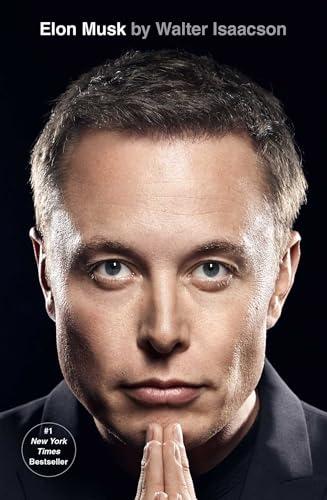
The host noted that Isaacson's biography of Elon Musk had been released the previous year and that Musk had taken part in its creation, speaking with the author about his early days at SpaceX.
Last year, the writer Walter Isaacson published a sprawling biography of Elon's life so far. Elon participated in the book's creation. He talked to Isaacson.
— Episode: Why Elon Musk Is Opening His Wallet for...
The host noted that Isaacson's biography of Elon Musk had been released the previous year and that Musk had taken part in its creation, speaking with the author about his early days at SpaceX.
Last year, the writer Walter Isaacson published a sprawling biography of Elon's life so far. Elon participated in the book's creation. He talked to Isaacson.
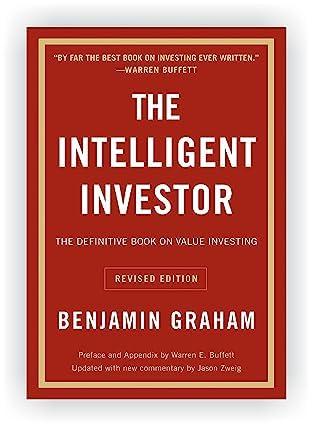
The hosts noted that Benjamin Graham authored The Intelligent Investor, a seminal 1930s work that introduced valueinvesting concepts Buffett later studied at Columbia.
He went to Columbia Business School, especially so that he could go to attend a class in value investing run by Benjamin Graham, who wrote The Intelligent Investor and Security Analysis, basically the...
— Episode: Warren Buffett Passes the Baton
The hosts noted that Benjamin Graham authored The Intelligent Investor, a seminal 1930s work that introduced valueinvesting concepts Buffett later studied at Columbia.
He went to Columbia Business School, especially so that he could go to attend a class in value investing run by Benjamin Graham, who wrote The Intelligent Investor and Security Analysis, basically the father of value investing.
And he published in the 1930s right at the bottom of the Depression and came up with these concepts for how, you know, the market might have gone down a lot.
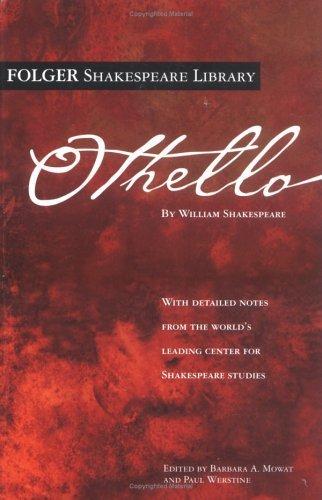
The episode highlighted the title as a star vehicle featuring Denzel Washington and Jake Gyllenhaal, noting its recent box office gross of $3.5 million, and compared it to other high‑profile projects. The hosts mentioned it in the context of Broadway economics rather than a deep literary analysis.
The show highlighted Othello as a starvehicle featuring Denzel Washington and Jake Gyllenhaal, noting its recent boxoffice gross.
The star vehicle. Like Dorian Gray starring Sarah Snook. Or Othello featuring Denzel Washington and Jake Gyllenhaal. Or Goodnight and Good Luck, directed by George Clooney, who also plays the lead.
Othello grossed $3.5 million last week.
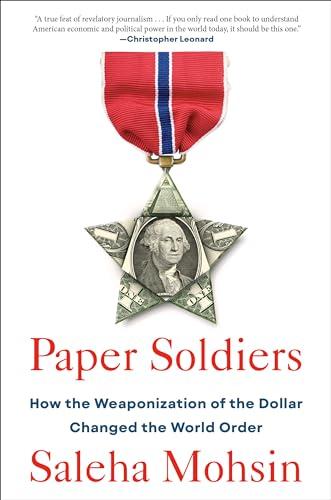
How the Weaponization of the Dollar Changed the World Order
During a discussion on whether the Chinese yuan could replace the US dollar, the host introduced the title as a new work that examined how the dollar’s weaponization reshaped global power dynamics. The author herself elaborated on the book’s focus on Treasury secretaries’ dealings with foreign governments and noted that it was now available in Korean and Chinese translations. The episode treated the book as a relevant source for the topic without a strong endorsement.
Saleha Mohsin's book, "Paper Soldiers", explored how the weaponization of the dollar changed the world order. The podcast host mentioned that it is available in Korean and Chinese translations.
Shalaya, you have this new book out all about the dollar, Paper Soldiers, How the Weaponization of the Dollar Changed the World Order.
And as I illustrate in Paper Soldiers, the Treasury secretaries in the way they've dealt with foreign governments.
Saleha's book, Paper Soldiers, How the Weaponization of the Dollar Changed the World Order, is now available in Korean and Chinese translations.
The hosts noted that the title was being adapted into a play and highlighted its $8 million production budget, but they did not delve into its literary qualities or recommend it to listeners.
The hosts described it as a play adapted from Oscar Wilde's novel and noted its $8million production cost.
It's a play based on the Oscar Wilde novel and stars Sarah Snook, who you might know from Succession on HBO. How much did The Picture of Dorian Gray cost to mount? It was around $8 million.
How to Understand the Limits of Presidential Power
In the episode, the hosts explored the extent of U.S. presidential authority and referenced the book as a study of how that power has evolved since the nation's founding and where its limits lie. Salaya Mohsin identified Dan Farber as the author and highlighted the work’s focus on understanding these constraints. The mention was informational rather than an endorsement.
The book discusses how presidential power has changed since the country's founding and examines the limits on presidential power.
Dan Farber is the author of Contested Ground, How to Understand the Limits on Presidential Power.
The Man, the Times
The book was referenced as a biography that highlighted Modi's controversial remarks about shutting refugee camps and calling them "baby‑manufacturing factories," with the author noting the provocative nature of his campaign. Nilanjan Mukhopadhyay discussed these points during the episode, providing context rather than endorsing the title.
It was a biography about Narendra Modi, and the speaker, Nilanjan Mukhopadhyay, mentioned that Modi had said in a speech that he shut down all refugee camps, which had been set up for tens of thousands of Muslims who lost their homes during the Gujarat riots.
Mr. Modi ran a campaign which was actually very provocative.
He actually called, you know, in one of his speeches said that I have shut all these refugee camps.
He referred to the refugee camps as baby manufacturing factories.
If you didn't catch that, Nilanjan said that Modi called these refugee camps baby making factories.
A Sensational Story of Murder, Madness, Glamour, and Greed
The episode noted that the author wrote the book that was adapted into the film starring Lady Gaga and Adam Driver. Janet Paskin highlighted that the title explored the power struggle between Gucci’s owners and luxury magnate Bernard Arnaud. The discussion presented the book as a contextual backdrop for the podcast’s focus on the brand’s internal conflicts.
It was mentioned that Sarah Forden, the author of *House of Gucci*, wrote the book that became the movie starring Lady Gaga and Adam Driver. The book's relevance to the podcast is that it highlights the power struggle that occurred between Gucci's owners and Bernard Arnaud, who was a luxury king and wanted to take over the brand.
She wrote House of Gucci, you know, the book that became the movie, the one with Lady Gaga and Adam Driver.
And Sarah says Arnaud was not the only interested party.
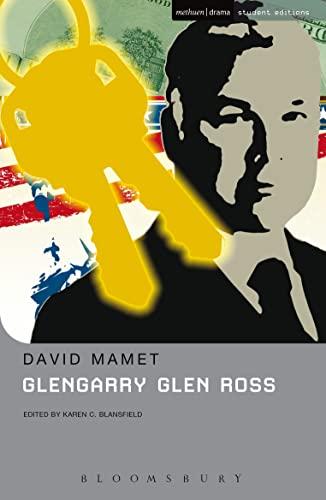
The hosts noted that the title had recently been staged with a cast including Kieran Culkin, Bob Odenkirk, and Bill Burr, and that it earned roughly $2 million at the box office, comparable to The Lion King. They mentioned it only as a news item and did not discuss its content or recommend it.
It was mentioned as a recent production starring Kieran Culkin, Bob Odenkirk, and Bill Burr, with a boxoffice take of about $2million.
Glengarry Glen Ross, featuring Kieran Culkin, Bob Odenkirk, and Bill Burr, made around $2 million, around the same amount as The Lion King.
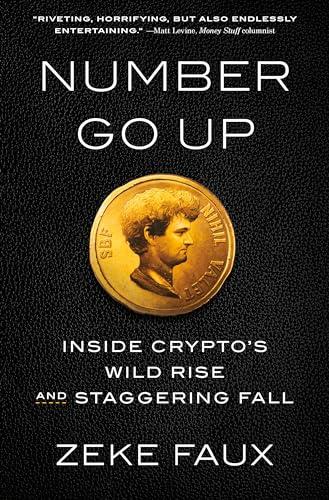
Inside Crypto's Wild Rise and Staggering Fall
The episode highlighted that the book chronicled the rapid ascent and later decline of the cryptocurrency world. It was mentioned by the host as a concise account of the sector’s wild rise and staggering fall.
Zeke Fox's book, 'Number Go Up', was mentioned as chronicling the ascent and subsequent decline within the cryptocurrency sphere.
Zeke wrote a book called Number Go Up inside crypto's wild rise and staggering fall.
The 1871 Classic Edition with Original Illustrations
In the episode the hosts used the book as a metaphor, describing the economy as a through‑the‑looking‑glass situation that felt reversed and confusing. They likened current conditions to the odd, upside‑down world portrayed in the title, but did not recommend the work itself. The reference was brief and illustrative rather than evaluative.
The economy was described as a 'throughthelookingglass' situation, implying it felt reversed and confusing like the world in the book.
We are in a through-the-looking-glass economy to me.
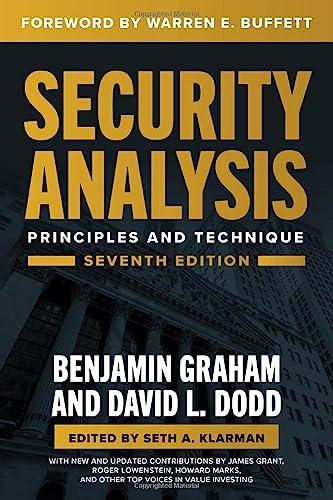
Principles and Techniques
The hosts highlighted the book as a foundational text by Graham that laid the groundwork for the value‑investing approach embraced by Buffett. They noted that it originated in the 1930s during the Great Depression and was taught in a Columbia class that Buffett attended. The discussion presented it as essential reading for understanding modern value investing.
The discussion highlighted Security Analysis as another foundational text by Graham that laid the groundwork for the valueinvesting approach Buffett embraced.
He went to Columbia Business School, especially so that he could go to attend a class in value investing run by Benjamin Graham, who wrote The Intelligent Investor and Security Analysis, basically the father of value investing.
And he published in the 1930s right at the bottom of the Depression and came up with these concepts for how, you know, the market might have gone down a lot.
A Novel
The book was brought up as a notable previous work by the author, with the host noting that it won the 2017 Booker Prize. The author himself referenced it to illustrate his belief in being well‑informed before inventing, emphasizing a blend of research and imagination. The discussion highlighted its critical acclaim and the author's creative process.
This novel, which won the Booker Prize in 2017, was mentioned as a previous work by George Saunders.
You may know him for his 2017 novel, Lincoln and the Bardo, which won the Booker Prize.
So, this was true in my previous novel, Lincoln and the Bardo, I thought, just get as well informed as a pretty well informed amateur so that when you invent, you're not inventing totally divorced from reality.
The host cited the book when noting that Amitav Ghosh had delivered a series of lectures a decade earlier, arguing that contemporary fiction had largely ignored the climate crisis. This reference highlighted the title’s focus on the intersection of literature and environmental issues. The mention was brief and served to underscore the broader discussion rather than a full endorsement.
The speaker referenced a series of lectures given by the novelist a decade ago where he argued that contemporary fiction was ignoring the climate crisis.
A decade ago, the Indian novelist Amitav Ghosh gave a series of lectures titled The Great Derangement, where he argued that contemporary fiction in all forms has been ignoring the climate crisis.
So a decade ago, the Indian novelist Amitav Ghosh gave a series of lectures he called The Great Derangement, where he argued that contemporary literature and contemporary writers had really ignored the climate crisis.
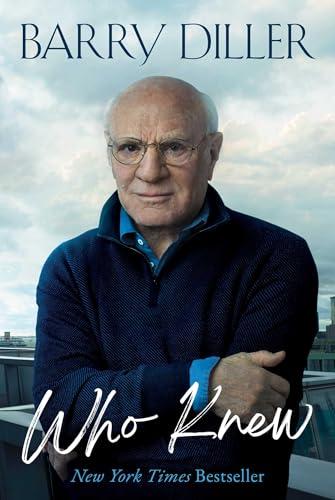
The memoir, a 15‑year‑in‑the‑making personal account, was highlighted for its insider stories about Hollywood figures and Diller's own career, as well as his revelations about his marriage and coming out as gay. Host David Gura noted that it is not a business guide but a compelling personal tale, and Diller expressed satisfaction with what he wrote. The discussion emphasized the book’s candid look at both professional deals and private life.
The memoir was described as a 15yearinthemaking personal account that focused on Diller's career in entertainment and his private life, rather than a business guide.
Now, Diller has published a memoir 15 years in the making called Who Knew? I sat down with him last week at IAC's headquarters in New York.
The book is full of stories about Hollywood A-listers, actors and directors, including Clint Eastwood, Warren Beatty, and Katherine Hepburn, and stories about deals Diller's done over the decades.
But this is not a business book. I just thought it was a good tale. Who Knew? is mostly about Diller's career, but he also opens up about his personal life, about his 24-year marriage to the fashion designer Diane von Furstenberg, and, for the first time publicly, his identity as a gay man.
In his book, he writes, to my confused adolescent brain, being exposed as a homosexual meant the end of life as I knew it.
So I had to tell my life. So I did. I've written the book and I like what I've written.
In Which Four Russians Give a Master Class on Writing, Reading, and Life
The host referenced the title as George Saunders' guide to writing and reading, noting that its exercises could be used in group story practice. Akshay Rathi mentioned it while illustrating a story exercise during the episode.
The host referenced the book as Saunders' writingandreading guide that he used to illustrate a storyexercise.
You mentioned in A Swim in a Pond in the Rain, a book that you've written about writing and reading, that you could do some of these exercises that you do in the book with others.
The book was brought up by Nigel Farage, who said it was the last one he read and highlighted its focus on the early‑20th‑century constitutional crisis between the Commons and the Lords. He used the work to argue that the underlying political principles have remained consistent over time, applying its lessons to contemporary debates about parliamentary authority.
Nigel Farage said the last book he read was *Mr Balfour's Poodle*, a work about the early20thcentury constitutional crisis between the Commons and the Lords.
the last book i read was mr balfour's poodle which was about the constitutional crisis between the commons of the lords in the early 20th century yeah the principles are exactly the same and by the way the salisbury convention has been there since 1911 and so are you interested in that because say we get elected on a manifesto to say we're going to do x y and z what if the house what if the house of lords would have blocked us what are the what are the civil service would have blocked us these are all the things that we're thinking and going through at the moment you're going back 100 years to try and find the answers to that principles don't change over centuries
my current book which i've really barely started is written by the former prime minister of armenia and it's about how small states can survive in a big wide world sarkasan is his name who wrote everything you're reading is kind of part of your homework if you like for government is that the case what what do you do to
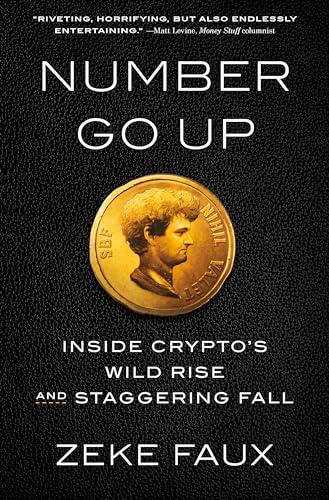
Inside Crypto's Wild Rise and Staggering Fall
The hosts described the title as the best book they had read on crypto, noting that it thoroughly covered the industry's highs and lows. They highlighted the author's insider perspective and praised its insightful narrative. Overall, they presented it as a must‑read for anyone interested in the crypto space.
The speakers said it was the best book they had read on crypto, written by Zeke Fox (with Muyao Shen) and covering the ups and downs of the industry.
The best thing about this story is that it was written by our colleague Zeke Fox, who wrote a book about crypto. It's called Number Go Up. It's really like the best book that I've read on the subject.
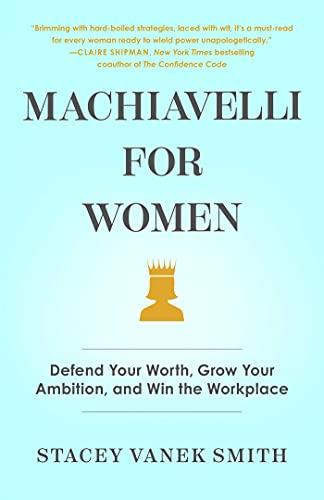
Defend Your Worth, Grow Your Ambition, and Win the Workplace
In the episode, one of the hosts revealed that they had authored a book about women in the workplace, describing it as a guide to defend worth, grow ambition, and succeed professionally. The mention served mainly as a brief self‑promotion rather than an in‑depth discussion. The overall tone was neutral, simply noting the existence of the title.
One of the hosts mentioned that they had written a book about women in the workplace titled Machiavelli for Women.
I wrote a book about women in the workplace, Machiavelli for Women.
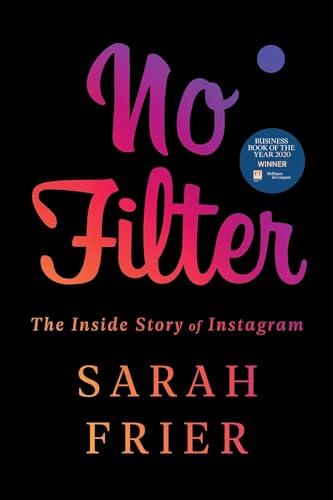
The Inside Story of Instagram
The book was mentioned when the host introduced the author as a Bloomberg technology editor and author of the title. The discussion highlighted her role and expertise rather than evaluating the content. The mention was brief and neutral, indicating a casual reference.
Sarah Fryer was introduced as the author of No Filter, the Inside Story of Instagram, highlighting her role as a Bloomberg technology editor.
She's a technology editor for Bloomberg and the author of No Filter, the Inside Story of Instagram.
Note: The book recommendations on this page are discovered automatically from podcast transcripts, and may be incorrect or incomplete.
Podcast Name