Walking with God through Pain and Suffering
Timothy Keller
Mentioned 4 months ago
The Battle For the Will

Sermons by Tim Keller, founder of Redeemer Presbyterian Church in NYC and NY Times best-selling author of ”The Reason for God: Belief in an Age of Skepticism.” For more sermons and resources, visit www.gospelinlife.com.
Recently mentioned
Timothy Keller
Mentioned 4 months ago
The Battle For the Will

Jonathan Edwards
Mentioned 4 months ago
The Battle For the Will
Elisabeth Elliot
Mentioned 5 months ago
How to Handle Trouble
Thomas Brooks
Mentioned 1 year ago
Spiritual Warfare
Andrew Delbanco
Mentioned 1 year ago
Spiritual Warfare
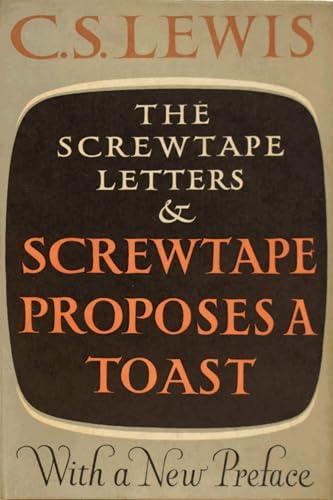
C. S. Lewis
Mentioned 1 year ago
Spiritual Warfare
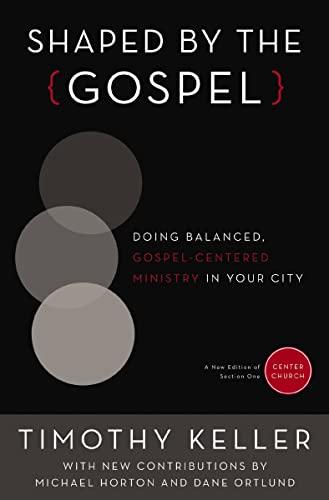
Timothy Keller
Mentioned 1 year ago
Children of the Light

Fyodor Dostoevsky
Mentioned 1 year ago
A Foretaste of the Future
Jackie Hill Perry
Mentioned 1 year ago
A Foretaste of the Future
![The Four Loves (Edition First American Editi) by Lewis, C. S. [Hardcover(1991] cover](https://media.podcastbookpicks.com/books/1737.jpg)
C.S. Lewis
Mentioned 1 year ago
United to One Another
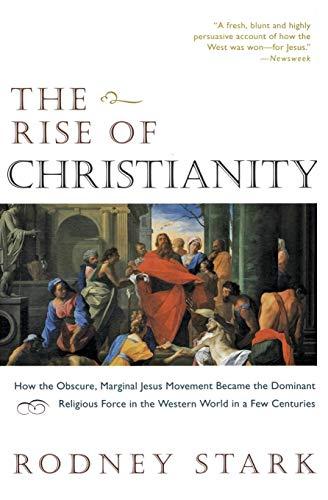
Rodney Stark
Mentioned 1 year ago
Should I Not Love That Great City?
Timothy Keller
Mentioned 1 year ago
Should I Not Love That Great City?
It was recommended, but not for everyone as it was said to be a difficult book to read and that people should read other books first.
Jonathan Edwards, A Treatise on Religious Affections.
— Episode: Love – Overcoming Fear
It was recommended, but not for everyone as it was said to be a difficult book to read and that people should read other books first.
Jonathan Edwards, A Treatise on Religious Affections.
I would generally say very few of you ought to run out and get that book. It's not an easy book to read. You need to read some other things first.

FROM DOORMAT TO DREAMGIRL--A WOMAN'S GUIDE TO HOLDING HER OWN IN A RELATIONSHIP
C.S. Lewis in this book said that what most of us think of as love is really a kind of hunger and that most of us consider the feeling of love is actually a feeling of wanting to use somebody to meet our needs.
C.S. Lewis in the book For Love says, what most of us think of as love is really a kind of hunger.
— Episode: Love – Overcoming Fear
C.S. Lewis in this book said that what most of us think of as love is really a kind of hunger and that most of us consider the feeling of love is actually a feeling of wanting to use somebody to meet our needs.
C.S. Lewis in the book For Love says, what most of us think of as love is really a kind of hunger.
A Biblical, Historical, and Systematic Theology
J.C. Ryle, Bishop of Liverpool in the 19th century, wrote a book on holiness that includes a chapter titled "The Fight", where he states that a true Christian is not only known for their inner peace, but also for their inner warfare.
J.C. Ryle, Bishop of Liverpool, one of the great Anglican bishops of the 19th century wrote a great book called Holiness and one of the chapters in that book is called The Fight.
— Episode: Walking in the Spirit
J.C. Ryle, Bishop of Liverpool in the 19th century, wrote a book on holiness that includes a chapter titled "The Fight", where he states that a true Christian is not only known for their inner peace, but also for their inner warfare.
J.C. Ryle, Bishop of Liverpool, one of the great Anglican bishops of the 19th century wrote a great book called Holiness and one of the chapters in that book is called The Fight.
Years later John White wrote a book called The Fight. It's one of the most well known and one of the best books on the Christian life.
John White wrote a book called The Fight but years ago J.C. Ryle had a chapter in there called The Fight and in it he says a true Christian is known not only for his inner peace but also for his inner warfare.
A Christian Physician Looks at Depression & Suicide
John White's book, 'The Masks of Melancholy', was discussed as a resource for understanding depression. White, a Christian psychiatrist, shared his own experience with depression, highlighting how engaging with the book of Hosea, despite its challenging nature, helped him recover.
John White, a psychiatrist who's a Christian, wrote in his book on The Masks of Melancholy, a great book, I think, on depression.
— Episode: The Problem of Injustice (Part 2)
John White's book, 'The Masks of Melancholy', was discussed as a resource for understanding depression. White, a Christian psychiatrist, shared his own experience with depression, highlighting how engaging with the book of Hosea, despite its challenging nature, helped him recover.
John White, a psychiatrist who's a Christian, wrote in his book on The Masks of Melancholy, a great book, I think, on depression.
He said he went through a terrible time of depression years ago and the only way he got out of it was he sat down, believe it or not, with the book of Hosea.
He sat down with the book of Hosea in the Old Testament and every day he spent about an hour studying the thing in the original Hebrew, dry as dust, no feeling, no sense of God's presence, but every day he said, I wrestled with the text and what the meaning of the text was.
And he says slowly over a period of about a month, he found himself pulling out of it.
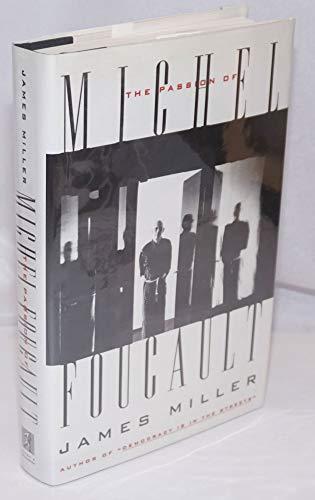
The biography of Michel Foucault, "The Passion of Michael Foucault", was recommended to readers as an example of the consequences of the deconstructionist view of identity, which can lead to cruelty.
And if you want to see what happens with this approach, you ought to read the biography. It's called The Passion of Michael Foucault, who is now dead, but he was one of the French deconstructionists,...
— Episode: The Search for Identity
The biography of Michel Foucault, "The Passion of Michael Foucault", was recommended to readers as an example of the consequences of the deconstructionist view of identity, which can lead to cruelty.
And if you want to see what happens with this approach, you ought to read the biography. It's called The Passion of Michael Foucault, who is now dead, but he was one of the French deconstructionists, and he was a very major proponent of this view.
You read it and you'll see that it leads to cruelty.
Reflections on the Technocratic Society and Its Youthful Opposition
This book, published in the 1960s, is described as looking at how Western culture was shifting. It focused on the emergence of the counterculture.
Peter Rosak was a guy who wrote in the 1960s the book, The Making of the Counterculture.
— Episode: The Search for Transcendence
This book, published in the 1960s, is described as looking at how Western culture was shifting. It focused on the emergence of the counterculture.
Peter Rosak was a guy who wrote in the 1960s the book, The Making of the Counterculture.

The speaker mentioned a series of articles in Life Magazine, later compiled into a book, about the world's religions. It posited that religions were declining due to scientific advancement. This book was said to be influential in the author's perspective.
The World's Great Religions.
— Episode: The Search for Transcendence
The speaker mentioned a series of articles in Life Magazine, later compiled into a book, about the world's religions. It posited that religions were declining due to scientific advancement. This book was said to be influential in the author's perspective.
The World's Great Religions.
It was a series of articles that was made into a book. And you can still find the book in a lot of libraries.
And I took it out recently and read it and it was amazing. Essentially, it had this opinion.
You could see it. It was very much informing the authors' writings. And the authors were saying, well, most of the world's great religions are diminishing but that's to be expected because in a scientific age people are going to feel less and less need for religion.
They're going to feel less and less need for the supernatural.
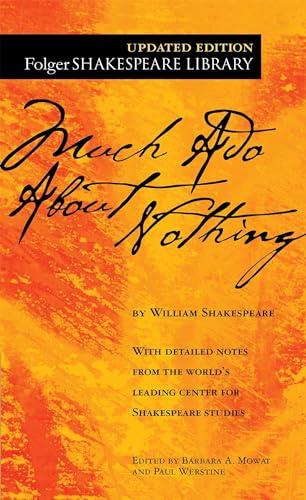
This play was mentioned as an example of a lighthearted comedy, contrasting with the more profound and tragic themes explored in plays like Hamlet. It was suggested that although enjoyable, it doesn't provide a realistic reflection of life's complexities.
Here's Shakespeare. Here's Much Ado About Nothing, a wonderful play.
— Episode: The Search for Happiness
This play was mentioned as an example of a lighthearted comedy, contrasting with the more profound and tragic themes explored in plays like Hamlet. It was suggested that although enjoyable, it doesn't provide a realistic reflection of life's complexities.
Here's Shakespeare. Here's Much Ado About Nothing, a wonderful play.
Is life more like Much Ado About Nothing or more like Hamlet?
Is life really like Much Ado About Nothing? In the end, everybody comes back. In the end, everybody's happy. In the end, everybody gets the person they want to marry. In the end, the person who thinks everybody thinks his dead is alive.
You need the literature of Much Ado About Nothing to get through life. It's wonderful, a wonderful play.
Here's Much Ado About Nothing and here's Macbeth and Hamlet.

It was mentioned to illustrate that everybody had to have some bottom line, something they looked to without which their life was unbearable, and everybody had a different one. This was said in relation to a man who had gone through a sexual phase, and then a religious phase, but both were about power.
Alfred Adler's individual psychology was in a book and Adler said he felt that everybody had to have some bottom line, something that they looked to without which their life was unbearable and everybo...
— Episode: Converted by the Spirit
It was mentioned to illustrate that everybody had to have some bottom line, something they looked to without which their life was unbearable, and everybody had a different one. This was said in relation to a man who had gone through a sexual phase, and then a religious phase, but both were about power.
Alfred Adler's individual psychology was in a book and Adler said he felt that everybody had to have some bottom line, something that they looked to without which their life was unbearable and everybody had a different one and it was one of the most motivational drives, power, approval, comfort and control.
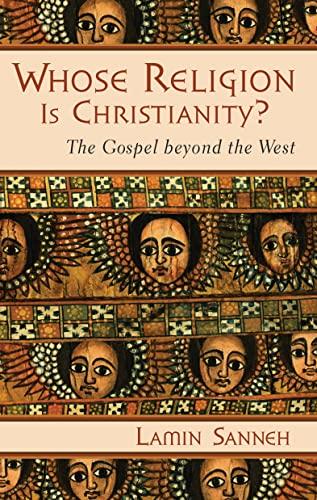
The Gospel beyond the West
It was described as a new book and a short, readable book by an African scholar. The book discussed how Christianity has grown rapidly in Africa, from nine million Christians in 1900 to 380 million in 2000. The book also discussed how Christianity didn't destroy African culture, but rather completed and resolved it.
There's a book I've been reading recently and I can recommend it to you. It's a new book and it's short and it's readable. It's by an African scholar, Laman Sanay, who teaches at Yale. He's written a...
— Episode: Converted by the Cross
It was described as a new book and a short, readable book by an African scholar. The book discussed how Christianity has grown rapidly in Africa, from nine million Christians in 1900 to 380 million in 2000. The book also discussed how Christianity didn't destroy African culture, but rather completed and resolved it.
There's a book I've been reading recently and I can recommend it to you. It's a new book and it's short and it's readable. It's by an African scholar, Laman Sanay, who teaches at Yale. He's written a book called Whose Religion Is Christianity?
He says, the African old religions provided the rules rewarding good conduct and punishing wrong but they had only a limited ethical range. Christianity answered this historical challenge by a reorientation which means conversion. People sensed in their hearts that Jesus did not mock their respect for the sacred nor their clamor for an invincible savior. So they beat their sacred drums for him until the stars skipped and danced in the skies and after that dance the stars weren't little anymore. Christianity helped Africans to become renewed Africans not remade Europeans.
He says, Africans have always believed in a world of supernatural forces. They have always believed that they were good and evil spirits, they were supernatural forces everywhere. But Africans also sensed that so many of them sensed that they were powerless against the evil forces. They saw the evil forces in their lives, they saw the evil forces in their society, they saw the evil forces in their family and they didn't know what to do about it. And they realized, well what are our alternatives? The first alternative is Western secularism. Western secularism says there is no supernatural. Everything has a natural cause. Western secularism and the Africans, this is what Laman Sane says, this is not my opinion. Laman Sane says the Africans realized that if we became modern western people that would destroy our Africanness. They would destroy our belief in the sacredness of everything.
We came to realize that being coming western modern people would replace and destroy our Africanness and other religions would destroy our Africanness but Christianity converted our Africanness. Christianity completed, resolved our Africanness and that when we became Christians we became not Europeans. It didn't destroy our culture. When you become a Christian, you become a Christian first and you're an African or you're an Asian or you're an Anglo-Second. But he said Christianity did not turn us into something else. It didn't destroy our culture. It didn't. When we became Christians it didn't destroy our culture. He says don't talk like that. Christianity is as much ours as yours. It's not a European religion. It's our religion now, he said.
Christianity is not the product of any Western culture or any particular culture, it's the product of the Holy Spirit that recreates Christianity in each and every culture of the world.
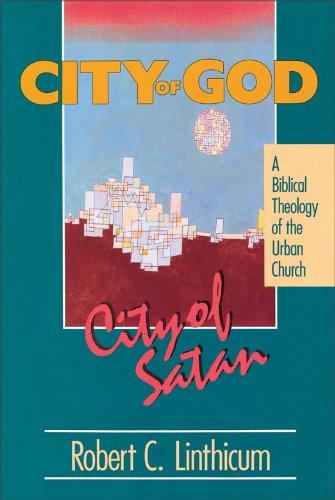
A Biblical Theology of the Urban City
The author, a Christian minister, shares a story about a young girl named Eva who was exploited and abused by a gang. After encountering the gospel, Eva found hope and a renewed sense of purpose, but the story highlights the need for addressing systemic social injustice in addition to personal transformation.
He was a Christian minister. And he tells about the fact in 1957, excuse me, in 1957 he was I guess a student and worked in a church in an inner city area of some mid-western city. And he worked for a...
— Episode: A Woman, a Slave and a Gentile
The author, a Christian minister, shares a story about a young girl named Eva who was exploited and abused by a gang. After encountering the gospel, Eva found hope and a renewed sense of purpose, but the story highlights the need for addressing systemic social injustice in addition to personal transformation.
He was a Christian minister. And he tells about the fact in 1957, excuse me, in 1957 he was I guess a student and worked in a church in an inner city area of some mid-western city. And he worked for a church, he worked for a youth ministry for the summer.
He says, I was working with poor teenagers in a government housing project when 14 year old Eva began coming. She was exceptionally beautiful but her life was a wreck. Crime and drugs all through her broken extended family. She felt she had no future. The school she attended was terrible. Teachers literally did nothing but discipline. She had almost no reading and writing skills at age 14.
He says, early in my ministry I arrived at a hospital room where a woman in my church had just given birth. I had been told that there were problems with the birth. A couple sat in the hospital room waiting for the doctor. The doctor appeared shortly after I arrived and he sat down and he said to the new parents, you have a new baby boy, but there are some problems. Your child has been born with Down syndrome. And your baby also has a rather minor and correctable respiratory condition. My recommendation is for you to consider just letting nature take its course. And then in a few days there shouldn't be a problem.
The couple seemed confused by what the doctor had told them. If the condition is easily corrected, then we want it corrected, said the husband and the wife immediately nodded in agreement.
You must understand that studies show that parents who keep these children have a high incidence of marital distress. And is it fair for you to bring this sort of suffering upon your other two children? Said the doctor. At the mention of the word suffering, it was as if the doctor had finally begun speaking the woman's language. And she said, our children have had every advantage in the world. They have really never known suffering. They've never had the opportunity to know it. I don't know if God's hand is in this or in what way is God's hand is in this, but I could certainly see why would make perfect sense for a child like this to be born into a family like ours. Our children will do just fine. As a matter of fact, the more I think about it, it's a great opportunity for us. The doctor looked absolutely perplexed. He abruptly departed. I followed him out into the hall. He turned to me and said, Reverend, I hope that you can talk some reason into them. He said. And Willamon finishes this way. The couple was using reason, but it was a reasoning that was far into the doctor. For me, it was a vivid depiction of the way in which the church at its best is in the business of teaching a different language from that of the world. The church through the story of Jesus teaches a different language whereby words like suffering, words that are unredeemably negative in our society, change their very substance. Here was a couple who had listened to the ultimate story, the life and death and resurrection of Jesus for them in which suffering could be reasonably redemptive.
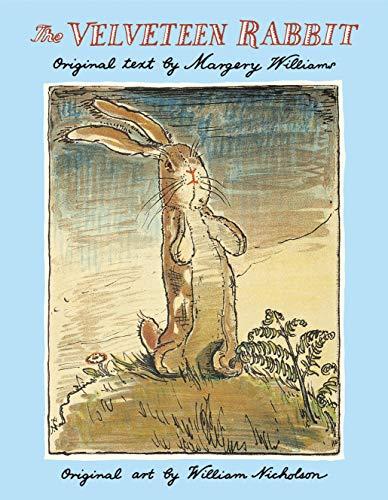
The Classic Children's Book
The Velveteen Rabbit was mentioned as a book that highlights the connection between suffering and becoming real, or finding true meaning and depth in life. It was referenced to explain the idea that suffering, while painful, can make us stronger and more compassionate.
Real isn't how you are made, said the skin horse, it's a thing that happens to you when a child loves you for a long, long time not just to play with but really loves you then you become real.
— Episode: Stay With the Ship
The Velveteen Rabbit was mentioned as a book that highlights the connection between suffering and becoming real, or finding true meaning and depth in life. It was referenced to explain the idea that suffering, while painful, can make us stronger and more compassionate.
Real isn't how you are made, said the skin horse, it's a thing that happens to you when a child loves you for a long, long time not just to play with but really loves you then you become real.
Does it hurt? asked the rabbit. Oh yeah, that's why it doesn't happen to those who break easily or have sharp edges or who have to be very carefully handled.
Generally by the time you are real most of your hair has been loved off and your eyes drop out and you get loose in the joints and you look very shabby but these things don't matter at all because once you're real you can't be ugly except to people who don't understand.
When you're real you can take being hurt. Fairy tale stuff, no nothing more practical than this, nothing more practical.

The essay "Blood on the Tracks" by Mark Sluca was used as an example of how people struggle with the problem of pointless evil and suffering. It was described as an eloquent and powerful expression of the difficulty in reconciling the existence of God with seemingly senseless tragedies.
Mark Sluca wrote a very, very discussed, much discussed essay in Harper's, an excellent essay in Harper's magazine June 2000 called Blood on the Tracks.
— Episode: Stay With the Ship
The essay "Blood on the Tracks" by Mark Sluca was used as an example of how people struggle with the problem of pointless evil and suffering. It was described as an eloquent and powerful expression of the difficulty in reconciling the existence of God with seemingly senseless tragedies.
Mark Sluca wrote a very, very discussed, much discussed essay in Harper's, an excellent essay in Harper's magazine June 2000 called Blood on the Tracks.
And in here he gives the most elegant and eloquent expression of this abject to God on the base of evil and suffering that I've ever read, Blood on the Tracks.
What Mark Sluca points out here, by the way, is it's not just suffering in general, in general, or even horrendous suffering, but pointless suffering that is the real problem for our hearts and minds.
It's pointless suffering. That's the problem.
And he said everybody just did everything they could to find a point. For example, one of the first things we said is it was the railroad's fault. There was some negligence or some incompetence or some corruption or something on the part of the railroad or the engineer or the railroad company and no they couldn't find any.

The sermon referenced Pascal's work, "Pensees" and described the author's belief that every person has a specific faith view about God and that we are all betting our eternal destiny on our belief being the correct one.
Blaise Pascal the great philosopher in his book Poncez puts it this way and I hear a little summary of it Blaise Pascal says every person on the face of the earth is making a high stake life commitmen...
— Episode: The Necessity of Belief
The sermon referenced Pascal's work, "Pensees" and described the author's belief that every person has a specific faith view about God and that we are all betting our eternal destiny on our belief being the correct one.
Blaise Pascal the great philosopher in his book Poncez puts it this way and I hear a little summary of it Blaise Pascal says every person on the face of the earth is making a high stake life commitment to a particular faith view about God.
Every person on the face of the earth is making a high stake life commitment to a particular faith view about God why? Well you see if you believe in God you can't prove that huh but if you believe there is no God you can't prove that position and if you think well there is a God but it doesn't really matter what you believe because it's not going to make any difference and you can't prove that position and whatever your position is it's a particular faith view of God and you're betting your eternal destiny you're right because if you're wrong the consequences could be dire and so Blaise Pascal says there is nobody out there in spite of their claims that doesn't isn't making radical spiritual faith commitments based on your entire life and destiny on certain views about God and about human nature and about spiritual reality
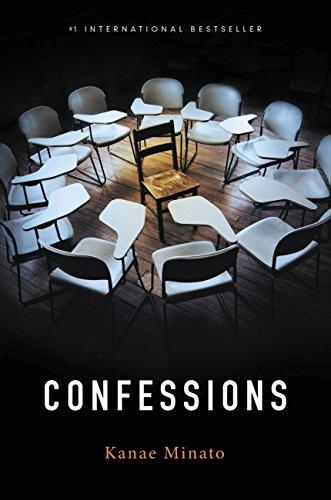
The speaker mentioned the "Confessions" and described St. Augustine's reflections on stealing pears as a child. He explained that Augustine had realized that his will was at the root of his actions and that his heart was desperately sick because it insisted that its will be done, over any other party, especially God.
Nobody was better at explaining what's this congenital impossibility or there's something congenitally wrong with our belief forming apparatus we have to believe radically in something and we will not...
— Episode: The Necessity of Belief
The speaker mentioned the "Confessions" and described St. Augustine's reflections on stealing pears as a child. He explained that Augustine had realized that his will was at the root of his actions and that his heart was desperately sick because it insisted that its will be done, over any other party, especially God.
Nobody was better at explaining what's this congenital impossibility or there's something congenitally wrong with our belief forming apparatus we have to believe radically in something and we will not believe in God there's something wrong with us and nobody put it better than our gustan in the Confessions when he was trying to figure out he was reflecting on why he stole pears as a kid there was an incident in his youth when he was a kid that he broke into somebody's I think climbed over a wall and that somebody's orchard and he stole pears and years later he was trying to figure out why did I want to steal the pears so he thought was he hungry he wasn't hungry was he too poor so he didn't have enough to eat he had plenty to eat and actually there's one place where he even said and I didn't even like pears so why did he want to steal pears and he realized it wasn't because he was hungry it wasn't because he liked pears it was because somebody said don't go in there and he says as soon as somebody said don't touch those pears he wanted to and he began to realize deep in his heart there was a voice crying my will not dying be done to every other party in the world and especially the God
St. Augustine said at the root of his heart and at the root of all of our hearts is a voice crying out my will not dying be done to every other party and especially the God and Augustine says this is going to distort everything this absolute insistence my will be done not dying to every other person especially God he says it means I'm going to I'm deceiving myself all the time it's going to distort every relationship it's going to distort every decision I make I'm sick my heart is desperately sick I cannot avoid making radical faith acts and yet I cannot make them rightly I will always put my spiritual roots down into things that cannot support me that will desert me that will twist me and I'm not going to be able to change this by trying because something something outside trees can't replant themselves something on the outside is going to have to come and dig me up from the bottom and pull me out by the roots and radically revolutionize even my very foundations I'm going to have to be born again

This book was mentioned as an example of a story with a romantic lead that people often fantasize about, and it was used to illustrate how people can sometimes seek to find that one person who will complete them, which is an unrealistic expectation.
Oh no wait I'm sorry there is one only one you read the gospels and you will see Jesus Christ is sort of like all the protagonist all the nights in white is shining on her all the beauties all the her...
— Episode: Doubt, Joy and Power (Easter)
This book was mentioned as an example of a story with a romantic lead that people often fantasize about, and it was used to illustrate how people can sometimes seek to find that one person who will complete them, which is an unrealistic expectation.
Oh no wait I'm sorry there is one only one you read the gospels and you will see Jesus Christ is sort of like all the protagonist all the nights in white is shining on her all the beauties all the heroes all kind of rolled into one and he comes and says you can have me not just fantasize about me the way you fantasize about this or that person in that movie me you can have me really not just have some vague chicken soup of the soul kind of you know you know words of Jesus inspire me you can have me really have me and let me show you how popable it can be one of the most here's proof of how popable it can be
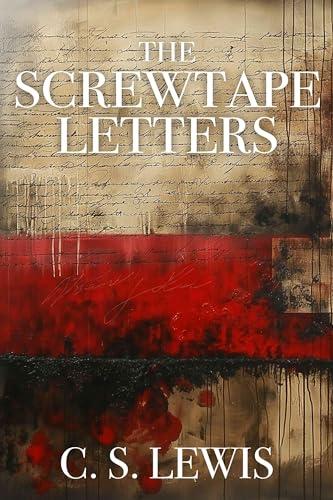
It was described as a funny, fictional book that focuses on a devil, Screwtape, writing to a junior devil on how to tempt human beings and screw them up spiritually. It was used to illustrate the ordinariness of Christians, and how their ordinariness can be used to turn people away from Christianity.
The Screwtape Letters was a book written by C.S. Lewis, the funny book, it's a fictional book, and it's a book of a devil, Screwtape, who's writing a junior devil on how to tempt huma...
— Episode: Pierced For Our Transgressions
It was described as a funny, fictional book that focuses on a devil, Screwtape, writing to a junior devil on how to tempt human beings and screw them up spiritually. It was used to illustrate the ordinariness of Christians, and how their ordinariness can be used to turn people away from Christianity.
The Screwtape Letters was a book written by C.S. Lewis, the funny book, it's a fictional book, and it's a book of a devil, Screwtape, who's writing a junior devil on how to tempt human beings and screw them up spiritually.
And the guy he's writing, Screwtape is writing a junior devil, and it turns out that his client has converted. And Screwtape says, well, that sounds really bad, but there's hope because he's starting to go to church and he's going to meet other Christians.
And the ordinariness of those other Christians will be something that you can use, and this is what he says. He says, work hard then on the disappointment and anti-climax, which is certainly coming to your client during his first week's going to church.
For when he gets into his pew, I know some of you'll explain what pews are later, but when he gets to his pew and looks around him, provided that any of those people sing out of tune or smell bad or have double chins or odd clothes, your client will quite easily believe that their religion must therefore somehow be ridiculous.
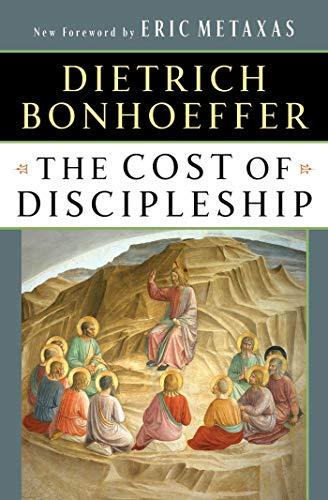
It was mentioned that Dietrich Bonhoeffer, a young Lutheran minister, wrote this book in 1937. He explained that the German church had lost its grasp on the gospel and had come to believe in what he called cheap grace.
and he wrote about it in his book The Cost of Discipleship 1937 and in that book he says that the German church had lost its grasp on the gospel he says instead of the gospel the bibl...
— Episode: The Mocking and the Spitting
It was mentioned that Dietrich Bonhoeffer, a young Lutheran minister, wrote this book in 1937. He explained that the German church had lost its grasp on the gospel and had come to believe in what he called cheap grace.
and he wrote about it in his book The Cost of Discipleship 1937 and in that book he says that the German church had lost its grasp on the gospel he says instead of the gospel the biblical gospel the German church had come to believe in what he called cheap grace
A Practical Guide to the Art of Relationship (Toltec Wisdom Book)
The author's book was quoted about the idea that even though we may have faith in God's love, there may be a lot of experience in our lives that contradict it. The faith that overcomes this evidence is the root of holiness.
It is an item of faith that we are children of God, but there is plenty of experience in us against that. So the faith that surmounts this evidence and is able to warm itself at the fire of God's love...
— Episode: Can a Mother Forget?
The author's book was quoted about the idea that even though we may have faith in God's love, there may be a lot of experience in our lives that contradict it. The faith that overcomes this evidence is the root of holiness.
It is an item of faith that we are children of God, but there is plenty of experience in us against that. So the faith that surmounts this evidence and is able to warm itself at the fire of God's love instead of stealing love and self-acceptance from other sources is actually the very root of holiness.
It's an item of faith that we're children of God. There's evidence against it. The faith that surmounts this evidence and is able to warm itself with the fire of God's love instead of stealing love and self-acceptance from other resources is the root of holiness.
He says, we may say, oh, I believe I'm a child of God. I believe God loves me. But he says, there's all, oh, I believe I'm a child of God. I believe God loves me. But he says, there's all kinds of evidence against that. There's evidence inside you that's against that. Sometimes you see stuff in there. He said, I don't know how God would love me considering what I feel or am or have done.
![The Bruised Reed and Smoking Flax: The Unquenchable Mercies of Christ, to Be Received with Joy by the Weakest of Men [Updated and Annotated] Cover](https://media.podcastbookpicks.com/books/5143.jpg)
The Unquenchable Mercies of Christ, to Be Received with Joy by the Weakest of Men [Updated and Annotated]
Richard Sibbes, a 17th century British Puritan minister, wrote a book called "A Bruised Reed and a Smoking Flax", which was referenced in relation to the idea of Jesus being a servant who comes to heal the weakest and most broken people.
Richard Sibbes, the great 17th century British Puritan minister, wrote a classic work called A Bruce Reed and a Smoking?
— Episode: A Bruised Reed He Will Not Break
Richard Sibbes, a 17th century British Puritan minister, wrote a book called "A Bruised Reed and a Smoking Flax", which was referenced in relation to the idea of Jesus being a servant who comes to heal the weakest and most broken people.
Richard Sibbes, the great 17th century British Puritan minister, wrote a classic work called A Bruce Reed and a Smoking?
Note: The book recommendations on this page are discovered automatically from podcast transcripts, and may be incorrect or incomplete.
Podcast Name