Walking with God through Pain and Suffering
Timothy Keller
Mentioned 4 months ago
The Battle For the Will

Sermons by Tim Keller, founder of Redeemer Presbyterian Church in NYC and NY Times best-selling author of ”The Reason for God: Belief in an Age of Skepticism.” For more sermons and resources, visit www.gospelinlife.com.
Recently mentioned
Timothy Keller
Mentioned 4 months ago
The Battle For the Will

Jonathan Edwards
Mentioned 4 months ago
The Battle For the Will
Elisabeth Elliot
Mentioned 5 months ago
How to Handle Trouble
Thomas Brooks
Mentioned 1 year ago
Spiritual Warfare
Andrew Delbanco
Mentioned 1 year ago
Spiritual Warfare
C. S. Lewis
Mentioned 1 year ago
Spiritual Warfare
Timothy Keller
Mentioned 1 year ago
Children of the Light

Fyodor Dostoevsky
Mentioned 1 year ago
A Foretaste of the Future
Jackie Hill Perry
Mentioned 1 year ago
A Foretaste of the Future
![The Four Loves (Edition First American Editi) by Lewis, C. S. [Hardcover(1991] cover](https://media.podcastbookpicks.com/books/1737.jpg)
C.S. Lewis
Mentioned 1 year ago
United to One Another
Rodney Stark
Mentioned 1 year ago
Should I Not Love That Great City?
Timothy Keller
Mentioned 1 year ago
Should I Not Love That Great City?
C.S. Lewis argues that the cardinal problem in ancient times was how to conform one's soul to reality and wisdom was the solution. He contrasted this with the modern problem, which is to subdue reality to the wishes of one's soul, the solution being technique.
The sages of old, for the sages of old, the cardinal problem had always been how do I conform my soul to reality?
— Episode: Training in Wisdom
C.S. Lewis argues that the cardinal problem in ancient times was how to conform one's soul to reality and wisdom was the solution. He contrasted this with the modern problem, which is to subdue reality to the wishes of one's soul, the solution being technique.
The sages of old, for the sages of old, the cardinal problem had always been how do I conform my soul to reality?
And the solution had been wisdom. You understand that?
He says for ancient people, wisdom was the answer to the cardinal problem of life, which is here's the world. I need to see how it works and then live in accordance with it.
In other words, the cardinal problem is how do I conform my soul to reality, and the answer is wisdom.
But he says, it says, however, for magic and today's science alike, the cardinal problem has been how do I subdue reality to the wishes of my soul?
And the solution is a technique.

The speaker read a passage from the book, in which Jane Eyre describes her love for Mr. Rochester and how she must renounce her idol despite being deeply loved by him. She says she will trust in God and believe in heaven.
I was experiencing an ordeal. Terrible moment, full of struggle, blackness burning. Not a human being that ever lived could wish to be loved better than I was loved by him. And him who thus loved me,...
— Episode: A Broken Wall
The speaker read a passage from the book, in which Jane Eyre describes her love for Mr. Rochester and how she must renounce her idol despite being deeply loved by him. She says she will trust in God and believe in heaven.
I was experiencing an ordeal. Terrible moment, full of struggle, blackness burning. Not a human being that ever lived could wish to be loved better than I was loved by him. And him who thus loved me, I absolutely worshiped. Yet I knew I must renounce my idol.
I do, Jane. Where shall I turn for a companion and for some hope?
Do as I do, Mr. Rochester. Trust in God and be yourself. Believe in heaven. Hope to meet me there.
Then you will not yield?
No.
A Novel in Four Parts With Epilogue
It was mentioned in relation to the idea that suffering in the present will make sense and be made up for in the future, with all resentments comforted and crimes atoned for, in the context of eternal harmony.
I believe this is in The Brothers Karamazov. I believe that like a child, that suffering will be healed and made up for, that all the humiliating absurdity of human contradictions wil...
— Episode: A Foretaste of the Future
It was mentioned in relation to the idea that suffering in the present will make sense and be made up for in the future, with all resentments comforted and crimes atoned for, in the context of eternal harmony.
I believe this is in The Brothers Karamazov. I believe that like a child, that suffering will be healed and made up for, that all the humiliating absurdity of human contradictions will vanish like a painful mirage, that in the world's finale, at the moment of eternal harmony, something so precious will come to pass that it will suffice for all hearts, for the comforting of all resentments, for the atonement of all the crimes of humanity, of all the blood that they shed, that it will make it not only possible to forgive, but to justify all that has happened.
Hamlet was highlighted as a tragic play that more accurately reflects the struggles and disappointments people face in life. It was contrasted with the more optimistic and lighthearted nature of Much Ado About Nothing.
Here's Hamlet.
— Episode: The Search for Happiness
Hamlet was highlighted as a tragic play that more accurately reflects the struggles and disappointments people face in life. It was contrasted with the more optimistic and lighthearted nature of Much Ado About Nothing.
Here's Hamlet.
Is life more like Much Ado About Nothing or more like Hamlet?
Or is life more like Hamlet? Everybody dying disappointed in the last scene.
But when you stand in the presence of Hamlet or Macbeth, you know that you're standing in the presence of a much more profound mirror of what things are like.
Is life more like Much Ado About Nothing or more like Hamlet or Macbeth, huh?

Macbeth was mentioned along with Hamlet as a tragic play that portrays the bleakness and futility of life. It was contrasted with the more optimistic and lighthearted nature of Much Ado About Nothing.
But when you stand in the presence of Hamlet or Macbeth, you know that you're standing in the presence of a much more profound mirror of what things are like.
— Episode: The Search for Happiness
Macbeth was mentioned along with Hamlet as a tragic play that portrays the bleakness and futility of life. It was contrasted with the more optimistic and lighthearted nature of Much Ado About Nothing.
But when you stand in the presence of Hamlet or Macbeth, you know that you're standing in the presence of a much more profound mirror of what things are like.
Is life more like Much Ado About Nothing or more like Hamlet or Macbeth, huh?
What is life, Macbeth? Life is a walking shadow. A poor player that frets and struts his hour upon the stage and then has heard no more. A tale told by an idiot full of sound and fury, signifying nothing.
Here's Much Ado About Nothing and here's Macbeth and Hamlet.
A Life of Martin Luther
It's a biography of Martin Luther, which highlights how he hated God because he believed that the righteousness of God was something he had to achieve himself.
This is his biography by Roland Bainton called Here I Stand, The Life of Martin Luther.
— Episode: The Sandals of Peace (Part 2)
It's a biography of Martin Luther, which highlights how he hated God because he believed that the righteousness of God was something he had to achieve himself.
This is his biography by Roland Bainton called Here I Stand, The Life of Martin Luther.
50th Anniversary Edition
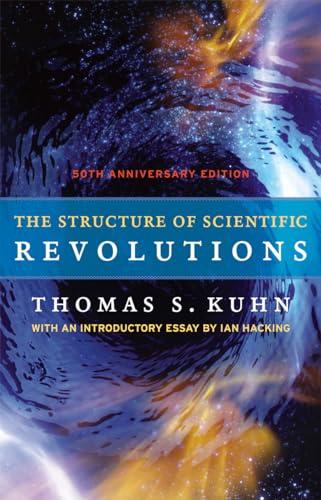
The book discusses the concept of value neutrality, stating that it's impossible to be completely objective. Thomas Kuhn argued that all observations are based on some form of faith commitment, even in the scientific realm.
Now this was something brought out about 30 years ago. A guy named Thomas Kuhn wrote this in a book called The Structure of Scientific Revolutions.
— Episode: The Search for Certainty
The book discusses the concept of value neutrality, stating that it's impossible to be completely objective. Thomas Kuhn argued that all observations are based on some form of faith commitment, even in the scientific realm.
Now this was something brought out about 30 years ago. A guy named Thomas Kuhn wrote this in a book called The Structure of Scientific Revolutions.
In it he put that the fact that there's no such thing as value neutrality.
You know, 20 years ago, before Thomas Kuhn began to sort of sink down into modern thinking, he used to read... When I came out of college, the counseling textbooks always said, if you're going to counsel somebody, you must do it value neutral. You must never impose your values on anybody. Never. If somebody sits in front of you and gives you a problem, you must be value neutral.
You must not tell that person what's right or wrong, but let them work it out for themselves. But you see, in light of just experience, the most recent counseling textbooks insist and admit that that's impossible.
There is no way, Thomas Kuhn said 30 years ago, to be value neutral. Everything that you see, everything that you question is on the basis of some kind of faith commitment.
A 5-Step Guide to Understand, Accept, and Break Free from the Codependent Cycle
The book "Codependency" was referred to as a popular book written by psychiatrists, exploring codependency and suggesting that traditional religion is a culprit, and that individuals should decide how to live and what their moral values are.
I was reading a very popular, not a great book, but a popular book written by a couple of psychiatrists on codependency.
— Episode: The Search for Identity
The book "Codependency" was referred to as a popular book written by psychiatrists, exploring codependency and suggesting that traditional religion is a culprit, and that individuals should decide how to live and what their moral values are.
I was reading a very popular, not a great book, but a popular book written by a couple of psychiatrists on codependency.
It's a good book and it was written for popular consumption, but what they do in there is exactly what modern people want to do and I'm here to show you, Psalm 8 is here to show you that you may not do this. You may not do this. You can't do it.
You kill yourself to do it. In the first part of the book, they say that codependency happens because people are ashamed of themselves.
They feel unworthy and they say they feel unworthy because they feel that there is a God and that there's a law and that they have failed.
So in the first part of the book, it says traditional religion is a great culprit in codependency and they go on and they say, therefore, you should not be... You should decide what you want to believe.
You shouldn't be oppressed by traditional religion. You decide how you want to live.
You decide what your moral values are. You make those decisions on your own.
Live as you want.
That's the first part of the book. Then in the second part of the book, they come up with the fact that people still persist in believing that they're worthless and that they're valueless and that they're pieces of junk.
So here's what they do.
Suddenly, on page 53 of the book, they say this, many of us were not taught that we are valuable simply because we are. That's all.
We may have failed people, but we are still precious because we are alive and exist.
Therefore, we are of worth in and of ourselves.
Legal Metaphors in the Epistles
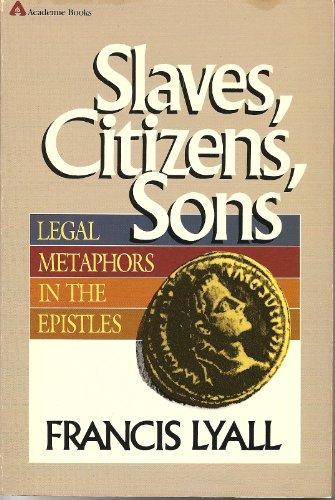
It was mentioned that this book by Francis Lyell puts the concept of Roman adoption perfectly, where an adoptee was taken from their previous state and placed into a new relationship with their new father, with all old debts instantly canceled.
And there's a guy here named Francis Lyell who wrote a book called Slave Citizens and Sons and he puts it perfectly well. He says, the profound truth of Roman adoption was that the adoptee was taken o...
— Episode: The Experience of Adoption
It was mentioned that this book by Francis Lyell puts the concept of Roman adoption perfectly, where an adoptee was taken from their previous state and placed into a new relationship with their new father, with all old debts instantly canceled.
And there's a guy here named Francis Lyell who wrote a book called Slave Citizens and Sons and he puts it perfectly well. He says, the profound truth of Roman adoption was that the adoptee was taken out of his previous state and placed in a new relationship of son to his new father. All his old debts were instantly canceled. And in effect, the adoptee started a new life as part of this new family.
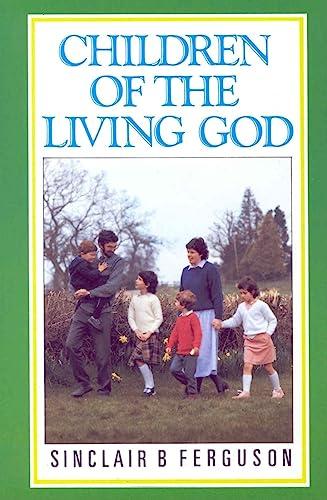
The author Sinclair Ferguson was mentioned as having written a book called 'Children of the Living God', with a chapter called 'The Spirit of Adoption', which talks about the prodigal son's repentance and the misunderstanding of the love of God, as the prodigal son comes back in repentance and says he is unworthy to be called the father's son.
But anyway, there's a book by a friend of mine called Sinclair, named Sinclair Ferguson. He's not only called but he's also named Sinclair Ferguson and he's written a book called Children of t...
— Episode: The Experience of Adoption
The author Sinclair Ferguson was mentioned as having written a book called 'Children of the Living God', with a chapter called 'The Spirit of Adoption', which talks about the prodigal son's repentance and the misunderstanding of the love of God, as the prodigal son comes back in repentance and says he is unworthy to be called the father's son.
But anyway, there's a book by a friend of mine called Sinclair, named Sinclair Ferguson. He's not only called but he's also named Sinclair Ferguson and he's written a book called Children of the Living God. And there's one chapter in the book called The Spirit of Adoption.
And one thing that's interesting that Sinclair Ferguson points out and that Henry Nowen has written a great book on the return of the prodigal, they point out is when the prodigal son comes back in Luke 15, it's very interesting as he's coming back in repentance.
Now Sinclair Ferguson does a very interesting job about this and he comes and he says this. He says, although the story of the prodigal son in Luke 15 is probably the best known and loved of all Christ's parables, the lesson it teaches us is often overlooked.
We're slow to realize the implications of this. We have the status of sons, but we have the mindset of a hired servant.
He says that is the reason why Paul, when he talks about the Holy Spirit here and he's talking about Galatians 4, 6, and also Romans 8, 15, a parallel passage, Paul is saying that if it's a fact that God has adopted us into his family, then the spirit must come and assure us that this is true. The spirit must enable us to live in the enjoyment of such a rich spiritual blessing.
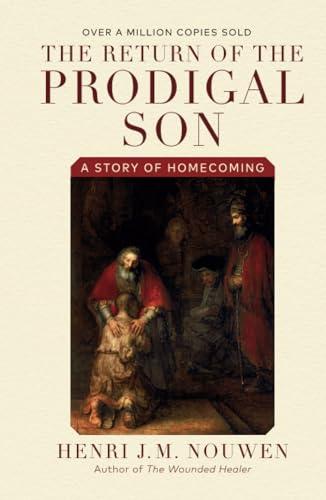
Nouwen's book 'The Return of the Prodigal' was mentioned in the context of discussing the prodigal son parable and the father's kiss, which represents the spirit coming into our hearts and embracing us. It also touches on the voice that assures us that we are loved and accepted by God, just as Jesus heard the voice in Jordan and Tabor.
And one thing that's interesting that Sinclair Ferguson points out and that Henry Nowen has written a great book on the return of the prodigal, they point out is when the prodigal son comes back in Lu...
— Episode: The Experience of Adoption
Nouwen's book 'The Return of the Prodigal' was mentioned in the context of discussing the prodigal son parable and the father's kiss, which represents the spirit coming into our hearts and embracing us. It also touches on the voice that assures us that we are loved and accepted by God, just as Jesus heard the voice in Jordan and Tabor.
And one thing that's interesting that Sinclair Ferguson points out and that Henry Nowen has written a great book on the return of the prodigal, they point out is when the prodigal son comes back in Luke 15, it's very interesting as he's coming back in repentance.
Now, there's a danger in talking about this because nowadays, you know, back when he was... Back when Spurgeon was preaching in Victorian England, people were... They were experienced avoiders. They feared experience. They feared the emotion. Today we're experienced hungry. We desperately wanted... I'm going to get to that in a second as to how this comes. It doesn't come by asking for an experience. It's dangerous to talk this way, but that's what's offered. It's dangerous to bring this... That's what's offered. Henry Nowlin in his famous... In his book, The Return of the Prodigal, he puts it this way.
He says, home... See, the father's kiss is coming home, he calls it.
He says, home is the center of my being where I can hear a voice say, you are my beloved and you am well pleased. Jesus Christ has made it clear that the same voice that he heard in the Jordan River at his baptism and on Mount Tabor at his transfiguration, this is my beloved son and whom I'm well pleased. Jesus made it clear that same voice he heard in Jordan and Tabor can be heard by us.
The Mind of the Apostle
The book was described as not a good book and that no commentator could explain Galatians, as it does not make sense on any rational level. It suggests to search for some psychological truth that might lie behind Paul's incomprehensible words.
No commentator can explain Galatians because it does not on any rational level make sense.
— Episode: The Law and the Christian
The book was described as not a good book and that no commentator could explain Galatians, as it does not make sense on any rational level. It suggests to search for some psychological truth that might lie behind Paul's incomprehensible words.
No commentator can explain Galatians because it does not on any rational level make sense.
We can search for some psychological truth that might lie behind Paul's incomprehensible words.
You can never understand it because it does not on any rational level make sense.
The things he says are absolutely nonsense.
They don't make sense. They're incomprehensible. You can't make sense of them.
The book suggests that God's love and law were both satisfied at the moment of Christ's death on the cross, and that this event marked a perfect and brilliant coincidence of God's love and standards. On the cross, Jesus was smitten to satisfy both the justice and love of God.
The Everlasting Righteousness.
— Episode: The Law and the Christian
The book suggests that God's love and law were both satisfied at the moment of Christ's death on the cross, and that this event marked a perfect and brilliant coincidence of God's love and standards. On the cross, Jesus was smitten to satisfy both the justice and love of God.
The Everlasting Righteousness.
By Christ's substitution and especially at the moment of his death upon the cross, and only at that moment God's love and law are both satisfied.
On the cross and only on the cross, the love and standards of God perfectly and brilliantly coincide and shine forth together.
Jesus was smitten to satisfy the justice of God since that stroke paid for sins.
And yet at the same time he was smitten to satisfy the love of God since that stroke secured our salvation.
John Stott's book, The Cross of Christ, was recommended as a great read, particularly regarding Galatians 3:10-14.
John Stott, he has a great little book by the way. It's not a little book, but if you have ever heard of it, I recommend it. If you haven't heard of it, I recommend it.
— Episode: Self-Substitution of God
John Stott's book, The Cross of Christ, was recommended as a great read, particularly regarding Galatians 3:10-14.
John Stott, he has a great little book by the way. It's not a little book, but if you have ever heard of it, I recommend it. If you haven't heard of it, I recommend it.
It's a book called The Cross of Christ.
He says, these verses constitute one of the clearest expositions of the necessity, meaning, and consequences of the cross.
Paul expresses himself in such stark terms that some commentators have not been able to accept what he says.
A.W.F. Blount says, his language is startling and shocking. The New Testament scholar Jeremias spoke of its offensiveness.
Stott says that this is perhaps the clearest exposition of the necessity, meaning, and consequences of the cross of anywhere in the scripture.

A Secret Service Agent's Inside Account of Security Failings and the Political Machine
The book is cited as a source for a metaphor comparing the human heart to a piano, where temptation can resonate with strings representing our weaknesses.
I think John White in his book, The Fight, says if you lift up the top of this piano and you sing a note into it, if you sing a note, if you sing B into it, all the strings will stay...
— Episode: Self-Control (Part 3)
The book is cited as a source for a metaphor comparing the human heart to a piano, where temptation can resonate with strings representing our weaknesses.
I think John White in his book, The Fight, says if you lift up the top of this piano and you sing a note into it, if you sing a note, if you sing B into it, all the strings will stay quiet, but the B string will vibrate. It'll vibrate.
Evangelism As a Way of Life
It was said that whatever controls us is our Lord and that the person who seeks power is controlled by power, the person who seeks acceptance is controlled by the people he or she wants to please, and that we are controlled by the Lord of our life.
Whatever controls us is our Lord.
— Episode: Self-Control (Part 2)
It was said that whatever controls us is our Lord and that the person who seeks power is controlled by power, the person who seeks acceptance is controlled by the people he or she wants to please, and that we are controlled by the Lord of our life.
Whatever controls us is our Lord.
Now look, the person who seeks power, she means the person who says, I don't need God because I know how to get power. And I know how to get ahead in life. And I know how to get influence. If you're a Christian, that's a crutch for you, but I know what I'm doing. So you live for power. If you seek power, you're controlled by power. The person who seeks acceptance is controlled by the people he or she wants to please. If the basic way in which, if your flesh is saying you need love, you need acceptance, you need approval of people, you need to have people love you and think you're great, and then you go after that, and your biggest goal in life is to develop relationships, she says, then the person who seeks acceptance is controlled by the people he or she wants to please. We do not control ourselves. We are controlled by the Lord of our life.
A quote was shared about Hayes Motes from Flannery O'Connor's short story "Wise Blood." The quote said that the way to avoid Jesus was to avoid sin, showing how avoiding sin can become a way to avoid Jesus and his mercy.
There was a deep black wordless conviction in him that the way to avoid Jesus was to avoid sin.
— Episode: Self-Control (Part 2)
A quote was shared about Hayes Motes from Flannery O'Connor's short story "Wise Blood." The quote said that the way to avoid Jesus was to avoid sin, showing how avoiding sin can become a way to avoid Jesus and his mercy.
There was a deep black wordless conviction in him that the way to avoid Jesus was to avoid sin.
A Critique of the Klinean Doctrine of Republication
C.S. Lewis's chapter on pride in "Merit Christianity" was mentioned, where he says that only Christians know they are proud and that if you say you are not proud, you are totally under the dominion of pride.
C.S. Lewis can say if you think you're not conceited, you're very conceited indeed.
— Episode: Self-Control (Part 2)
C.S. Lewis's chapter on pride in "Merit Christianity" was mentioned, where he says that only Christians know they are proud and that if you say you are not proud, you are totally under the dominion of pride.
C.S. Lewis can say if you think you're not conceited, you're very conceited indeed.
Lewis in his famous chapter in Merit Christianity on pride says only Christians know they're proud.
The Practice of Godliness is a book that was recommended for understanding godliness, holiness or the fruit of the spirit, all of which are the same thing.
One off, the book I would start with is Jerry Bridges' The Practice of Godliness. It's an AF Press book, very good.
— Episode: Love – Overcoming Fear
The Practice of Godliness is a book that was recommended for understanding godliness, holiness or the fruit of the spirit, all of which are the same thing.
One off, the book I would start with is Jerry Bridges' The Practice of Godliness. It's an AF Press book, very good.
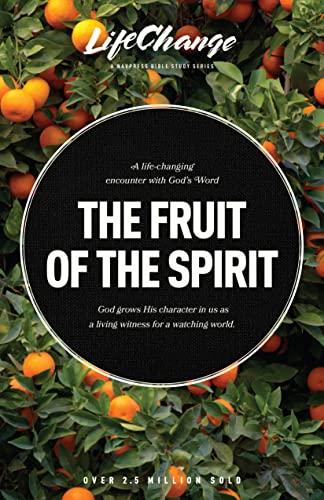
A Bible Study on Reflecting the Character of God (LifeChange)
It was a book that was recommended for understanding godliness, holiness or the fruit of the spirit, all of which are the same thing.
Secondly a book by John Sanderson called The Fruit of the Spirit.
— Episode: Love – Overcoming Fear
It was a book that was recommended for understanding godliness, holiness or the fruit of the spirit, all of which are the same thing.
Secondly a book by John Sanderson called The Fruit of the Spirit.
Note: The book recommendations on this page are discovered automatically from podcast transcripts, and may be incorrect or incomplete.
Podcast Name