Project Hail Mary
Andy Weir
Mentioned 1 week ago
Selects: The First Road Trip
If you've ever wanted to know about champagne, satanism, the Stonewall Uprising, chaos theory, LSD, El Nino, true crime and Rosa Parks, then look no further. Josh and Chuck have you covered.
Recently mentioned
Andy Weir
Mentioned 1 week ago
Selects: The First Road Trip
Stephen King
Mentioned 1 week ago
Selects: The First Road Trip
John Steinbeck
Mentioned 2 weeks ago
Kola: The World’s Deepest Hole
STEINBECK JOHN
Mentioned 2 weeks ago
Kola: The World’s Deepest Hole
Bethany McLean
Mentioned 3 weeks ago
Selects: How Enron Fooled the World
Fyodor Dostoevsky
Mentioned 3 weeks ago
Short Stuff: Why does it feel good to be scared?
Eleanor Johnson
Mentioned 3 weeks ago
Short Stuff: Why does it feel good to be scared?
John Kennedy Toole
Mentioned 4 weeks ago
Some Interesting Curses
Mordecai RICHLER
Mentioned 4 weeks ago
Some Interesting Curses
Michael Crichton
Mentioned 1 month ago
The Stuff You Should Know Doin’ Science Playlist: How Chaos Theory Changed the Universe
Naomi Oreskes
Mentioned 1 month ago
How Global Warming Works
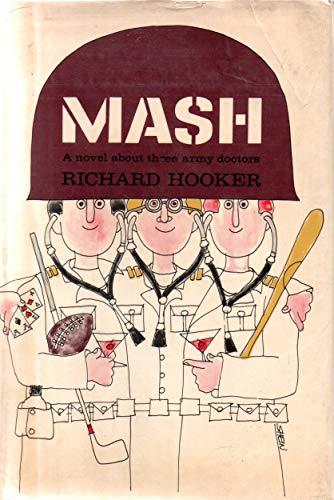
Richard Hooker
Mentioned 1 month ago
M*A*S*H: The Story of the 4077th

Illustrated and Annotated
The podcasters mentioned the book as an example of earlier journalism that exposed the conditions in insane asylums. It was compared to Rosenhan's study and other works exposing similar problems.
And then, of course, Ken Kesey. Yeah, there's Ken Kesey too. There was a Life magazine spread from 1946 called, I think, Bedlam 46. And all of these things like really shocked the conscience of societ...
— Episode: How The Rosenhan Experiment Worked
The podcasters mentioned the book as an example of earlier journalism that exposed the conditions in insane asylums. It was compared to Rosenhan's study and other works exposing similar problems.
And then, of course, Ken Kesey. Yeah, there's Ken Kesey too. There was a Life magazine spread from 1946 called, I think, Bedlam 46. And all of these things like really shocked the conscience of society over and over and over again.
It was mentioned that a Philip K Dick book called 'The Hanging Man' had been read on the show previously, and it was described as very scary and creepy.
Well we read one of his last year. Did we? Yeah, The Hanging Man I think is what it was called. It was very scary, very creepy.
— Episode: SYSK’s Scare Your Pants Off (and Back On...
It was mentioned that a Philip K Dick book called 'The Hanging Man' had been read on the show previously, and it was described as very scary and creepy.
Well we read one of his last year. Did we? Yeah, The Hanging Man I think is what it was called. It was very scary, very creepy.

In Search of America
It was mentioned along with other Steinbeck works, with no further discussion.
Travels with Charlie.
— Episode: Pearls: Second Best Thing About Oysters
It was mentioned along with other Steinbeck works, with no further discussion.
Travels with Charlie.

Illustrated Movie Companion Book 2)
It was described as a book of footnotes and explanations of 'The Catcher in the Rye', and was said to be thicker than the original book.
No, we got that as a gift, right?
— Episode: SYSK Selects: How Book Banning Works
It was described as a book of footnotes and explanations of 'The Catcher in the Rye', and was said to be thicker than the original book.
No, we got that as a gift, right?
It's pretty neat. It's just like footnotes and extrapolations and explanations. This guy went into the world of Catcher in the Rye and made footnotes of the whole thing.
It's actually thicker than The Catcher in the Rye.

The book was discussed as an example of Tom Wolfe's work in new journalism, where he was able to immerse the reader in the story despite not being physically present.
And Tom Wolfe did that with his early work on what would become The Right Stuff and The Bonfire of the Vanities.
— Episode: Rolling Stone Magazine
The book was discussed as an example of Tom Wolfe's work in new journalism, where he was able to immerse the reader in the story despite not being physically present.
And Tom Wolfe did that with his early work on what would become The Right Stuff and The Bonfire of the Vanities.
The Right Stuff is really amazing too.

Revised Edition (BDK English Tripitaka)
Another Buddhist text, printed in 971 CE, which was made of 130,000 individual woodblock carvings, highlighting the enormous effort involved in pre-printing press book creation.
Then in 971 BCE, there was another one called, did you mention that one? The Tripitaka?
— Episode: Printing press? Big deal!
Another Buddhist text, printed in 971 CE, which was made of 130,000 individual woodblock carvings, highlighting the enormous effort involved in pre-printing press book creation.
Then in 971 BCE, there was another one called, did you mention that one? The Tripitaka?
That was another Buddhist text. That was CE.
A Unique Collection of the Best Persian Poetry with Love, Spiritual, and Wisdom Themes
It was mentioned as part of the Somerton Man mystery, which was finally solved, but the book's connection to the case remained a mystery.
The Book of Persian Poetry is still a mystery.
— Episode: Mariachi: The Rodney Dangerfield of Musi...
It was mentioned as part of the Somerton Man mystery, which was finally solved, but the book's connection to the case remained a mystery.
The Book of Persian Poetry is still a mystery.
A Systems Approach
It was mentioned that E.H. Sutherland wrote a book on the topic, emphasizing the bias towards working-class crime over upper-class crime, and how this should be addressed.
And he was the first dude to really bring this to light, wasn't he?
— Episode: SYSK Selects: How White-collar Crime Wor...
It was mentioned that E.H. Sutherland wrote a book on the topic, emphasizing the bias towards working-class crime over upper-class crime, and how this should be addressed.
And he was the first dude to really bring this to light, wasn't he?
And he wrote a book called white collar crime.
And his point was that there is a huge bias in the United States where law enforcement and the courts leaned heavily on the working class crimes.
And just basically ignored the crimes of the upper class.
Like if a guy's going to steal $1,000 from a cash register with no gun or anything like that. Right. Like there are other factors. But let's just say a guy steals $1,000 from a cash register and he's poor. And a guy steals $1,000 from an investor and he's rich.
A Systems Approach
It was discussed that the book argued there was a bias in US law enforcement and courts that leaned heavily on the working class while ignoring upper-class crimes.
And he wrote a book called 'White Collar Crime'.
— Episode: SYSK Selects: How White-collar Crime Wor...
It was discussed that the book argued there was a bias in US law enforcement and courts that leaned heavily on the working class while ignoring upper-class crimes.
And he wrote a book called 'White Collar Crime'.
And his point was that there is a huge bias in the United States where law enforcement and the courts leaned heavily on the working class crimes and just basically ignored the crimes of the upper class.
It was mentioned as one of the first books about origami, focusing on folding 1000 cranes, a significant practice in the 18th century.
And in fact, one of the first books on origami was called Folding 1000 Cranes.
— Episode: Origami: Folding Goodness
It was mentioned as one of the first books about origami, focusing on folding 1000 cranes, a significant practice in the 18th century.
And in fact, one of the first books on origami was called Folding 1000 Cranes.
It was mentioned as an introduction to iron smelting, written by Harold the Smith, containing pictures of how to make bloom.
I want to give a shout out to Harold the Smith H-A-R-A-L-D he wrote an intro to iron smelting that talks all about making bloom himself with pictures it's pretty cool it's worth checking out
— Episode: Blacksmiths? You got that right!
It was mentioned as an introduction to iron smelting, written by Harold the Smith, containing pictures of how to make bloom.
I want to give a shout out to Harold the Smith H-A-R-A-L-D he wrote an intro to iron smelting that talks all about making bloom himself with pictures it's pretty cool it's worth checking out
Twilight Reimagined (The Twilight Saga)
It was described as a book about communication between different lifeforms, and although the content was deemed very boring by one astrophysicist, it also helped launch a field of study called Xenolinguistics.
There was there is a book that someone put out a German mathematician named Hans Freudenthal called Life and Death.
— Episode: How Alien Contact Might Work
It was described as a book about communication between different lifeforms, and although the content was deemed very boring by one astrophysicist, it also helped launch a field of study called Xenolinguistics.
There was there is a book that someone put out a German mathematician named Hans Freudenthal called Life and Death.
Libby included a quote from an astrophysicist that said, it's the most boring book I've ever read. Logarithm tables are cool compared to it.

The speaker was reading Tom Wolfe's 'The Right Stuff' at the time of the podcast and believes him to be potentially the greatest reporter of all time.
And then right now neither I'm reading the right stuff, Tom Wolfe classic and it's that I think Tom Wolfe might be the greatest Reporter of all time.
— Episode: SYSK Selects: How The Moonwalk Works
The speaker was reading Tom Wolfe's 'The Right Stuff' at the time of the podcast and believes him to be potentially the greatest reporter of all time.
And then right now neither I'm reading the right stuff, Tom Wolfe classic and it's that I think Tom Wolfe might be the greatest Reporter of all time.
A Selection (Classics)
It was mentioned that Pliny the Elder referenced soap in his book, 'Naturalis Historia', around 77 AD, further solidifying the Romans' engagement with soap.
But also pliny the elder mentioned it in his naturalist historia from 77 Ce
— Episode: How Soap Works
It was mentioned that Pliny the Elder referenced soap in his book, 'Naturalis Historia', around 77 AD, further solidifying the Romans' engagement with soap.
But also pliny the elder mentioned it in his naturalist historia from 77 Ce
Crooked Con Men, Eccentric Immigrants, and Fearless Females Who Shaped the Golden State
Josh Clark mentioned wanting to read "The Famous Flea Act", a 1975 pamphlet-turned-book about how to perform a humbug flea circus, particularly as a fun holiday read.
It's called the famous Flea Act and it teaches you everything. You need to know to do a Humbug flea circus.
— Episode: SYSK Selects: How a Flea Circus Works
Josh Clark mentioned wanting to read "The Famous Flea Act", a 1975 pamphlet-turned-book about how to perform a humbug flea circus, particularly as a fun holiday read.
It's called the famous Flea Act and it teaches you everything. You need to know to do a Humbug flea circus.
I just want to read it just for funsies, you know Christmas is coming up

The history of the Borden murders (Annotated)
It was mentioned as containing a recipe for melted cheese, cooked in a hot oven, which was described as more of a cheese toast.
You're talking about the recipe for a melted cheese and Sarah Tyson Roarer's book Mrs. Roarer's New Cookbook.
— Episode: Short Stuff: Salute the Grilled Cheese
It was mentioned as containing a recipe for melted cheese, cooked in a hot oven, which was described as more of a cheese toast.
You're talking about the recipe for a melted cheese and Sarah Tyson Roarer's book Mrs. Roarer's New Cookbook.
Arnold J. Toynbee's book was discussed as a potential source of inspiration for the Toynbee tile maker's ideas. The tile maker's interpretation of Toynbee's work on civilizations and the resurrection of the dead was explored.
Toynbee was kind of a popular historian. He wrote about civilizations and the history of civilizations and the history of politics and how it all kind of banded together and how the civilizations that...
— Episode: The Mystery of the Toynbee Tiles
Arnold J. Toynbee's book was discussed as a potential source of inspiration for the Toynbee tile maker's ideas. The tile maker's interpretation of Toynbee's work on civilizations and the resurrection of the dead was explored.
Toynbee was kind of a popular historian. He wrote about civilizations and the history of civilizations and the history of politics and how it all kind of banded together and how the civilizations that rose and fell over time were all part of the same kind of current, that they were all related to one another and that they rose and fell in predictable ways.
And it's a good thing his name was Toynbee. Yeah. It really made it a lot easier to narrow down the first mystery, basically.
Toynbee's book experiences, it seems to be the centerpiece of the crux of the idea that the tile maker is, let's just say fixated on, the concept of the soul and the possibility that you could resurrect after death down to the molecular level.
And that's where the astronauts are being dispatched to, is Jupiter to figure out what's going on with some weird signal coming from that planet, right?
But Toynbee was talking about scientifically resurrecting people or whether it was possible. And the tile maker took that idea and ran with it and basically came to believe that science was meant to carry out the project of creating the afterlife that God promised.
It was mentioned as a book written by Montesquieu in 1748 that proposed the idea of separation of powers, a concept that challenged the existing monarchical system and laid the groundwork for democratic ideals.
Monesquieu, for example, wrote in 1748, The Spirit of the Laws. And he basically proposed the idea of a separation of powers.
— Episode: SYSK Selects: How The Enlightenment Work...
It was mentioned as a book written by Montesquieu in 1748 that proposed the idea of separation of powers, a concept that challenged the existing monarchical system and laid the groundwork for democratic ideals.
Monesquieu, for example, wrote in 1748, The Spirit of the Laws. And he basically proposed the idea of a separation of powers.
Note: The book recommendations on this page are discovered automatically from podcast transcripts, and may be incorrect or incomplete.
Podcast Name