
Podcast
On Being with Krista Tippett
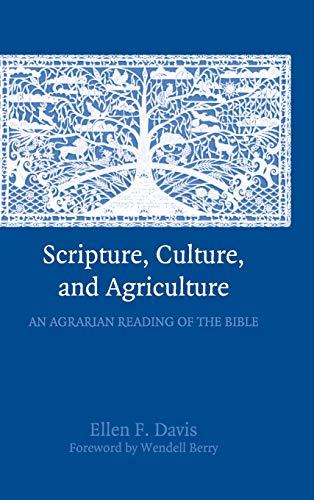
It is a book that reframes how Western culture viewed the natural world, showing how the Bible's teachings about land can be interpreted through an agrarian lens, emphasizing care for the earth and a mindful approach to stewardship.
For centuries, the Western world read the Bible as a call to dominate the earth and subdue it.
— Episode: Wendell Berry and Ellen Davis — The Art...
Episode: Wendell Berry and Ellen Davis — The Art of Being C...
It is a book that reframes how Western culture viewed the natural world, showing how the Bible's teachings about land can be interpreted through an agrarian lens, emphasizing care for the earth and a mindful approach to stewardship.
For centuries, the Western world read the Bible as a call to dominate the earth and subdue it.
The first chapter of Genesis is, as Ellen Davis puts it, a magisterially toned liturgical poem.
God blesses the man and woman created in God's image. And here's how the King James Version translated God's command to them. Be fruitful and multiply and replenish the earth and subdue it and have dominion over the fish of the sea and over the fowl of the air and over every living thing that moveth upon the earth.
The Hebrew word is a strong word and I render it exercise skilled mastery amongst the creatures because I think the notion of skilled mastery suggests something like a craft, an art of being human without taking away the fact that humans do from the perspective of almost all the biblical writers, not every single one but almost all, humans occupy a very special place of power and privilege and responsibility in the world.
I think that if one reads scripture carefully, one is continually challenged to rethink maybe everything that we take for granted.
Episode: [Unedited] Ellen Davis with Krista Tippett
It was described as beautiful and poetic as well as scholarly. The podcast included an agrarian reading of Genesis 1 and 2, drawing on the book's insights.
I just thought you and I might for a few minutes indulge in a little agrarian reading of Genesis 1, and look at Genesis 1, look at Genesis 2.