The Backgammon Chronicles
Robert Wachtel
Mentioned 1 month ago
677. Can Backgammon Save Us from Ourselves?
Freakonomics co-author Stephen J. Dubner uncovers the hidden side of everything. Why is it safer to fly in an airplane than drive a car? How do we decide whom to marry? Why is the media so full of bad news? Also: things you never knew you wanted to know about wolves, bananas, pollution, search engin...
Recently mentioned
Robert Wachtel
Mentioned 1 month ago
677. Can Backgammon Save Us from Ourselves?
Robert H Wachtel
Mentioned 1 month ago
677. Can Backgammon Save Us from Ourselves?
Richard P. Feynman
Mentioned 1 month ago
The Vanishing Mr. Feynman (Update)
Gustave Flaubert
Mentioned 1 month ago
The Vanishing Mr. Feynman (Update)
Richard P. Feynman
Mentioned 1 month ago
The Vanishing Mr. Feynman (Update)
Bernard Suits
Mentioned 2 months ago
675. Has the New York Times Become a Games Company?
Katie Salen Tekinbas
Mentioned 2 months ago
675. Has the New York Times Become a Games Company?

Josef Albers
Mentioned 2 months ago
675. Has the New York Times Become a Games Company?
Adam Smith
Mentioned 2 months ago
674. How Does a Composer Feel After the World Premiere?
Glory M. Liu
Mentioned 2 months ago
674. How Does a Composer Feel After the World Premiere?
Charlotte Bronte
Mentioned 2 months ago
673. What Is Money?
Charles Dickens
Mentioned 2 months ago
673. What Is Money?
It was mentioned as a book by Magnus Resch who studies the art market, offering insights into the industry, including the challenges faced by most artists.
Resch has been studying and writing about the art market for years His latest book is called How To Become A Successful Artist.
— Episode: 484. “A Fascinating, Sexy, Intellectuall...
It was mentioned as a book by Magnus Resch who studies the art market, offering insights into the industry, including the challenges faced by most artists.
Resch has been studying and writing about the art market for years His latest book is called How To Become A Successful Artist.
The Art of the Shortcut in Math and Life
It explores the concept of shortcuts, particularly in math and life, arguing that they can be beneficial if used correctly. It was discussed as part of the Freakonomics Radio Book Club.
Shortcut is not a fast way to finish your journey But rather a stepping stone to beginning a new one It's a pathway cleared a tunnel dug a bridge Constructed to allow others to quickly reach the front...
— Episode: 483. What’s Wrong With Shortcuts?
It explores the concept of shortcuts, particularly in math and life, arguing that they can be beneficial if used correctly. It was discussed as part of the Freakonomics Radio Book Club.
Shortcut is not a fast way to finish your journey But rather a stepping stone to beginning a new one It's a pathway cleared a tunnel dug a bridge Constructed to allow others to quickly reach the frontiers of knowledge so they can make their own journeys into the darkness
I wanted to make very clear that this wasn't about cutting corners I think when you hear shortcut that pejorative side is about Are you not doing it properly?
It's interesting to note that humans weren't the first To exploit the power of mathematics To assess the best way to tackle a challenge Nature has been using mathematical shortcuts To solve problems long before we arrived
Many of the laws of physics are based on nature always finding a shortcut Nature is lazy like humans And wants to find the lowest energy solutions It's extremely good at sniffing out shortcuts
Sometimes it's just as important to know when there are no shortcuts to the problem you're trying to crack Knowing that the long way around is the only way to your destination will prevent you from wasting time in the hope of finding the shortcut
Reconfiguring the Three-Player Game between Markets, Speculators and the State
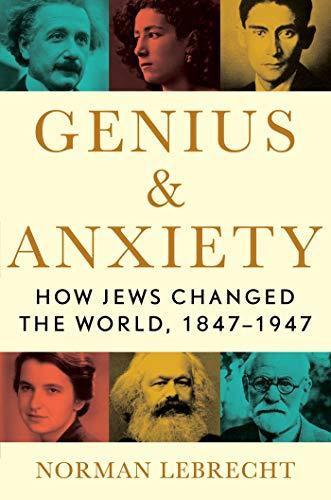
How Jews Changed the World, 1847-1947
It was mentioned as exploring the reasons behind the high level of Jewish achievement during the 19th and early 20th centuries, suggesting a potential cause in the fear of losing their rights.
In a book called Genius and Anxiety, How Jews Changed the World 1847 to 1947, the author Norman Lebrecht puts forth another possible explanation for the high level of Jewish achievement.
— Episode: 480. How Much Does Discrimination Hurt t...
It was mentioned as exploring the reasons behind the high level of Jewish achievement during the 19th and early 20th centuries, suggesting a potential cause in the fear of losing their rights.
In a book called Genius and Anxiety, How Jews Changed the World 1847 to 1947, the author Norman Lebrecht puts forth another possible explanation for the high level of Jewish achievement.
How Decent People Can Save America from the Culture of Contempt
It was discussed as a book written in 2019 arguing that the U.S. is in a contempt crisis and that kindness is a necessary solution, but the effectiveness of this approach was questioned.
And then in 2019, you publish a book called Love Your Enemies, how decent people can save America from the culture of contempt.
— Episode: 478. How Can We Break Our Addiction to C...
It was discussed as a book written in 2019 arguing that the U.S. is in a contempt crisis and that kindness is a necessary solution, but the effectiveness of this approach was questioned.
And then in 2019, you publish a book called Love Your Enemies, how decent people can save America from the culture of contempt.
And this book argues that we have reached a contempt crisis in the US and we need to fight it with kindness, essentially.
Reading your book, Love Your Enemies, it was so moving to me, especially the portions where you're describing the difference between contempt and anger.
The Surprising Truth About Compasionate Conservatism Who Gives, Who Doesn't, and Why It Matters
It was mentioned as Arthur Brooks's first book, published in 2006, which explored the motives behind charitable giving and found a correlation between religious commitment and charitable donations, particularly among conservatives.
Out of this research came his first book in 2006. It was called Who Really Cares? The Surprising Truth About Compassionate Conservatism.
— Episode: 478. How Can We Break Our Addiction to C...
It was mentioned as Arthur Brooks's first book, published in 2006, which explored the motives behind charitable giving and found a correlation between religious commitment and charitable donations, particularly among conservatives.
Out of this research came his first book in 2006. It was called Who Really Cares? The Surprising Truth About Compassionate Conservatism.
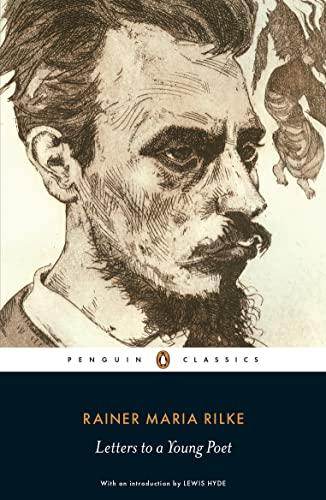
It was mentioned as an inspiration for the structure of 'Letters to a Young Athlete'. Chris Bosh referenced it when discussing the importance of embracing questions and living experiences fully.
One of the things the poet Rilke taught me was part of being wise is accepting that you don't have all the answers right now.
— Episode: “This Didn't End the Way It’s Supposed t...
It was mentioned as an inspiration for the structure of 'Letters to a Young Athlete'. Chris Bosh referenced it when discussing the importance of embracing questions and living experiences fully.
One of the things the poet Rilke taught me was part of being wise is accepting that you don't have all the answers right now.
Try to love the questions themselves as if they were locked rooms or books written in a foreign language, he wrote in Letters to a Young Poet.
It was Chris Bosh's first novel and he read it in sixth or seventh grade. He felt proud of himself for completing it, and it gave him the confidence to finish other books in the future.
My first novel that I read was A Wrinkle in Time. Love that book.
— Episode: “This Didn't End the Way It’s Supposed t...
It was Chris Bosh's first novel and he read it in sixth or seventh grade. He felt proud of himself for completing it, and it gave him the confidence to finish other books in the future.
My first novel that I read was A Wrinkle in Time. Love that book.
What the Rich Teach Their Kids About Money That the Poor and Middle Class Do Not!
It was a book Chris Bosh read while playing in the NBA. He started to read a lot more once he joined the NBA and found it fulfilling.
And then after that, once I got into the NBA, I always thought it was fascinating how I started hearing the books like Rich Dad, Poor Dad.
— Episode: “This Didn't End the Way It’s Supposed t...
It was a book Chris Bosh read while playing in the NBA. He started to read a lot more once he joined the NBA and found it fulfilling.
And then after that, once I got into the NBA, I always thought it was fascinating how I started hearing the books like Rich Dad, Poor Dad.
What Stops Us from Getting Things Done and What to Do about It
It was briefly mentioned as a newly published book by Richard Thaler's co-author on Nudge, which explores the difficulties and obstacles that prevent people from getting things done and what to do about them.
Cass Sunstein, Thaler's co-author on Nudge, has in fact just published a book called Sludge, What Stops Us From Getting Things Done and What to Do About It.
— Episode: 474. All You Need Is Nudge
It was briefly mentioned as a newly published book by Richard Thaler's co-author on Nudge, which explores the difficulties and obstacles that prevent people from getting things done and what to do about them.
Cass Sunstein, Thaler's co-author on Nudge, has in fact just published a book called Sludge, What Stops Us From Getting Things Done and What to Do About It.
It was written after the 1995 Chicago heatwave, in which many people died alone. The book highlights the social isolation and loneliness that contributed to the tragic event.
He ultimately wrote a book about the tragedy called Heatwave and this theme of people living alone and dying alone Was one of many themes in the book.
— Episode: Is There Really a “Loneliness Epidemic”?...
It was written after the 1995 Chicago heatwave, in which many people died alone. The book highlights the social isolation and loneliness that contributed to the tragic event.
He ultimately wrote a book about the tragedy called Heatwave and this theme of people living alone and dying alone Was one of many themes in the book.
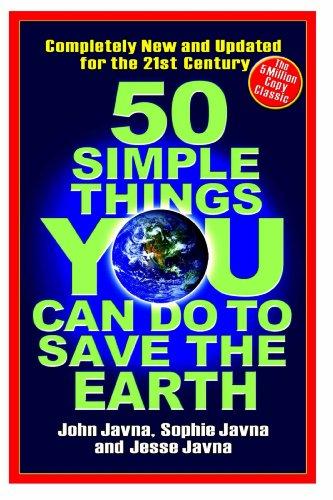
Completely New and Updated for the 21st Century
It was discussed as an example of a book that provides a superficial approach to environmentalism and doesn't address the core issues. It was mentioned in the context of how individual actions are not enough to tackle climate change effectively.
there was a little book that was popular a few years ago called 50 Simple Things You Can Do to Save the World.
— Episode: Two (Totally Opposite) Ways to Save the...
It was discussed as an example of a book that provides a superficial approach to environmentalism and doesn't address the core issues. It was mentioned in the context of how individual actions are not enough to tackle climate change effectively.
there was a little book that was popular a few years ago called 50 Simple Things You Can Do to Save the World.
Well, those are 50 simple things that you could do to feel self-righteous and none of them were going to save the world.
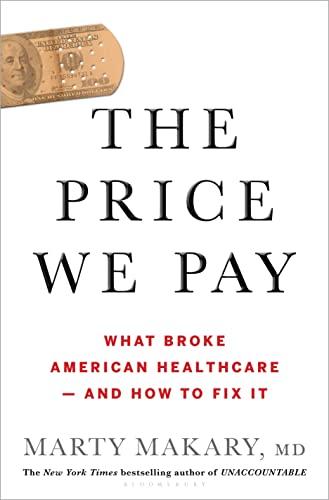
What Broke American Health Care--and How to Fix It
It was discussed as a book that explored the issues with American healthcare, specifically the rising costs and failures of the system, and provided solutions.
What percent of medical care in your opinion is Unnecessary? The average answer was 21%.
— Episode: 456. How to Fix the Hot Mess of U.S. Hea...
It was discussed as a book that explored the issues with American healthcare, specifically the rising costs and failures of the system, and provided solutions.
What percent of medical care in your opinion is Unnecessary? The average answer was 21%.
For 50 years, we've been told by hospitals, we can't give you a price.
But 60% of health care is shoppable. It's predictable and we can do a lot better.
A researcher who called a hundred and one Hospitals that do heart surgery in the United States and asked what's the price of a standard cabbage or coronary artery bypass surgery?
Only 53 could give him an answer... the price of the cabbage operation ranged from 44,000 to half a million dollars.
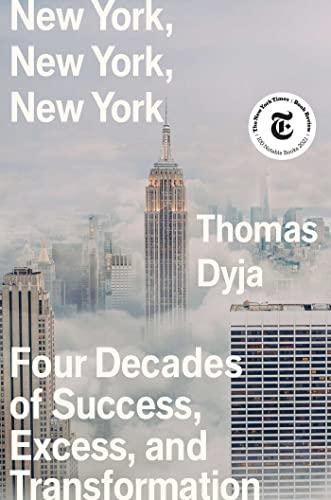
Four Decades of Success, Excess, and Transformation
It was described as a detailed and insightful look at New York City's evolution over four decades, from the 1970s through to the present day, discussing its successes, excesses, and transformations.
New York, New York, New York, Four Decades of Success, Excess, and Transformation isn't your typical biography of a city.
— Episode: How Does New York City Keep Reinventing...
It was described as a detailed and insightful look at New York City's evolution over four decades, from the 1970s through to the present day, discussing its successes, excesses, and transformations.
New York, New York, New York, Four Decades of Success, Excess, and Transformation isn't your typical biography of a city.
It was one of the first sociological looks at the impact of corporate life and suburban life on American people.
He was once asked, what are your three favorite American cities? And then he said, New York, New York, New York.
The book scrupulously avoids simplistic good bad binaries.
Today I'm talking with Thomas Dija about his new book, New York, New York, New York, Four Decades of Success, Excess and Transformation.
It was described as a black power manifesto advocating for a 'reverse migration' of Black Americans back to the South to consolidate political power and build safer communities. It was mentioned as a book that deeply impacted readers and was written as a call to action for a more powerful future for Black Americans.
Black people fled the horrors of the racist South for so-called liberal cities in the north and west Trading the devil they knew for the devil they didn't only to come to the painful realization that...
— Episode: 453. A Rescue Plan for Black America
It was described as a black power manifesto advocating for a 'reverse migration' of Black Americans back to the South to consolidate political power and build safer communities. It was mentioned as a book that deeply impacted readers and was written as a call to action for a more powerful future for Black Americans.
Black people fled the horrors of the racist South for so-called liberal cities in the north and west Trading the devil they knew for the devil they didn't only to come to the painful realization that the devil is the devil as Julian Bond once put it America after all unscrambled spells I am race
I fear that black activism is creeping towards its own form of elitism a Way of building strata and hierarchy of the supposedly woke over the supposedly asleep.
Black colonization of the south Isn't a philosophy or an intellectual posture. It's an actual plan
I am talking about a grand generational undertaking a rescue mission for black America and That mission begins with the states which are the true centers of power in this country and as such Control the lion's share of the issues that bedevil black lives criminal justice judicial processes education health care economic opportunity and assistance.
We need a block of states a Region in which we and our children are equally conditioned to success support and safety We need a space in which black imagination is equally encouraged Where we recognize that black children dream to that they gaze upon the same stars as all others that adventure and invention are universally human traits that demand to be nurtured in all.
It was mentioned as a newly published book by Charles Blow, described as a 'black power manifesto'.
I realize that I am proposing nothing short of the most audacious power play by black America in the history of the country.
— Episode: Am I Boring You? (Ep. 225 Rebroadcast)
It was mentioned as a newly published book by Charles Blow, described as a 'black power manifesto'.
I realize that I am proposing nothing short of the most audacious power play by black America in the history of the country.
Note: The book recommendations on this page are discovered automatically from podcast transcripts, and may be incorrect or incomplete.
Podcast Name