The Iliad
Homer
Mentioned 5 months ago
333. Bronze Age Apocalypse: The Fall of Troy (Ep 2)
The rise and fall of empires and the events that shaped world history. William Dalrymple and Anita Anand explore the intricate stories of revolutions, imperial wars, and the people who built and lost empires. From the British Empire to the Ottomans to Ancient India, history is shaped by power stru...
Recently mentioned
Homer
Mentioned 5 months ago
333. Bronze Age Apocalypse: The Fall of Troy (Ep 2)
Homer
Mentioned 5 months ago
333. Bronze Age Apocalypse: The Fall of Troy (Ep 2)
M.J. Trow
Mentioned 5 months ago
333. Bronze Age Apocalypse: The Fall of Troy (Ep 2)
William Dalrymple
Mentioned 5 months ago
329. India’s Greatest Rebellion: The British Raj is Born (Part 8)
Rudyard Kipling
Mentioned 7 months ago
313. Rudyard Kipling: Escaping India & Writing The Jungle Book (Part 2)
Rudyard Kipling
Mentioned 7 months ago
313. Rudyard Kipling: Escaping India & Writing The Jungle Book (Part 2)
Rudyard Kipling
Mentioned 7 months ago
313. Rudyard Kipling: Escaping India & Writing The Jungle Book (Part 2)
Rudyard Kipling
Mentioned 7 months ago
313. Rudyard Kipling: Escaping India & Writing The Jungle Book (Part 2)
Murray Pittock
Mentioned 1 year ago
192. Native American Chiefs, the Founding of Canada, and the KKK: Scots in America
Faramerz Dabhoiwala
Mentioned 1 year ago
192. Native American Chiefs, the Founding of Canada, and the KKK: Scots in America
William Dalrymple
Mentioned 1 year ago
191. Slave, Slaver, Abolitionist: Three Scots in Africa
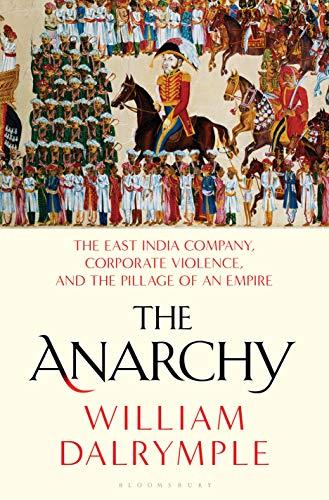
William Dalrymple
Mentioned 1 year ago
190. Rags to Riches: The Scots in India
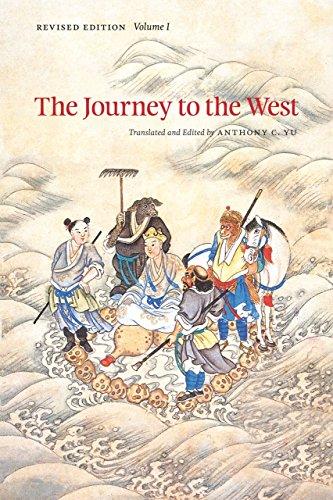
This book is a fictionalized account of Xuanzang's journey to India based on historical records and embellished with magical elements. The book was written in the 16th century during the Ming dynasty and is considered to be one of the most famous novels in Asia.
Exactly, the West is the most famous novel in Asia and was written in the 16th century during the Ming period but it's a sort of Marvel comics version if you like.
— Episode: 132. Journey to Nalanda and the Library...
This book is a fictionalized account of Xuanzang's journey to India based on historical records and embellished with magical elements. The book was written in the 16th century during the Ming dynasty and is considered to be one of the most famous novels in Asia.
Exactly, the West is the most famous novel in Asia and was written in the 16th century during the Ming period but it's a sort of Marvel comics version if you like.
Of the entirely factual travels of Shransang and even to read the you know the bit without the magic without the amazing companions cast down from the heavens even the very straightforward account and very factual account that Shransang gives of his journey.
It's extraordinary as we will here because there could have been no more difficult moment for Shransang to make this journey.
A Novel
The podcast mentioned the book "Nine Lives" by William Dalrymple, which starts with a story of a Jain nun in the same place where Chandragupta Moria died.
And in my book Nine Lives, I opened with a story of this nun I met at the same place, Savannah Bellagol, in the same place that Chandragupta Moria went to die.
— Episode: 129. Ashoka: The Great Buddhist Emperor...
The podcast mentioned the book "Nine Lives" by William Dalrymple, which starts with a story of a Jain nun in the same place where Chandragupta Moria died.
And in my book Nine Lives, I opened with a story of this nun I met at the same place, Savannah Bellagol, in the same place that Chandragupta Moria went to die.
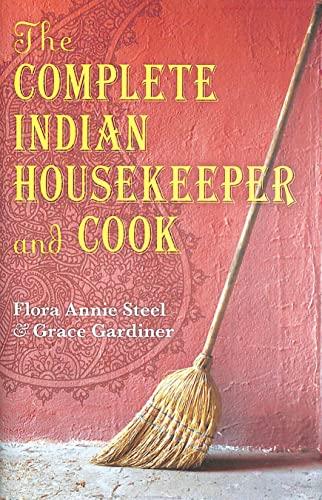
This book was mentioned as being representative of the Anglo-Indian cooking scene, where British ingredients and techniques were combined with Indian flavors, reflecting a fusion of culinary cultures.
And you also have the production of books like this, which I'm holding in my hand, The Complete Indian Housekeeper and Cook by Flora Annie Steele. And it's a, you know, they have to t...
— Episode: 127. Inventing Curry: The British Taste...
This book was mentioned as being representative of the Anglo-Indian cooking scene, where British ingredients and techniques were combined with Indian flavors, reflecting a fusion of culinary cultures.
And you also have the production of books like this, which I'm holding in my hand, The Complete Indian Housekeeper and Cook by Flora Annie Steele. And it's a, you know, they have to throw one, partha parties for all the great women of the Raj Sophia and her sister do.
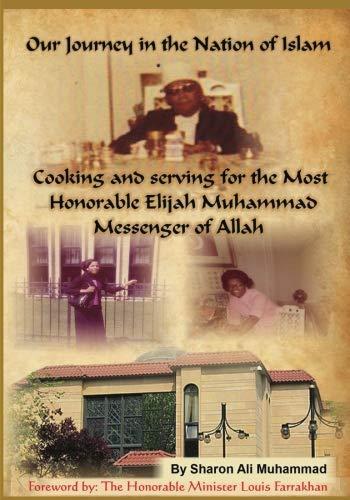
Cooking and serving for the Most Honorable Elijah Muhammad
This book tells the story of Dean Muhammad, an East India Company soldier who later eloped with a woman in Ireland after returning from India. The book details his travels and experiences, providing insights into the early interactions between British and Indian cultures.
And the first one I've got in my hands this wonderful book called The Travels of Dean Muhammad, The Eighteenth Century Journey Through India.
— Episode: 127. Inventing Curry: The British Taste...
This book tells the story of Dean Muhammad, an East India Company soldier who later eloped with a woman in Ireland after returning from India. The book details his travels and experiences, providing insights into the early interactions between British and Indian cultures.
And the first one I've got in my hands this wonderful book called The Travels of Dean Muhammad, The Eighteenth Century Journey Through India.
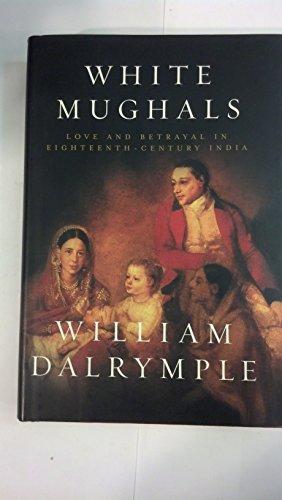
Love and Betrayal in Eighteenth-Century India
This book was referenced by its cover, which featured a charming picture located in the British Library. The book likely explores the intermingling of British and Mughal cultures, particularly in the context of Anglo-Indian society.
And on the cover of the hardback of White Mughals, there was a picture, this very charming picture, which is in the British Library, probably are de rigueur in French. But here in Bri...
— Episode: 127. Inventing Curry: The British Taste...
This book was referenced by its cover, which featured a charming picture located in the British Library. The book likely explores the intermingling of British and Mughal cultures, particularly in the context of Anglo-Indian society.
And on the cover of the hardback of White Mughals, there was a picture, this very charming picture, which is in the British Library, probably are de rigueur in French. But here in Britain, it's not just Queen Victoria who is fascinated, others too, because you've got the older guard who've come back from serving in India who did eat the lavish creams and curries and things and who still have a taste for it. So they have already brought over their chefs and their cooks, a lot of racism that you see in that famous incident of Peter Meritsberg in South Africa.
A Modern History
The book was published just the week before the episode recording and discussed the events leading up to the Iranian revolution.
And once again, we are joined by the fabulous Ali Ansari Professor of Iranian Studies at the University of St. Andrew's author of many books, including his new book, Iran
— Episode: 120. The Iranian Revolution: The Rise of...
The book was published just the week before the episode recording and discussed the events leading up to the Iranian revolution.
And once again, we are joined by the fabulous Ali Ansari Professor of Iranian Studies at the University of St. Andrew's author of many books, including his new book, Iran, published just last week, and is just providing so much fodder for our conversation. And we are discussing the run up to the Iranian revolution.
And then in 1971, of course, he holds his great bash in Persepolis, celebrating two and a half thousand years of Persian monarchy. And just to remind us that this is an empire, when he does the invitations, it's Ali Salassi, the only other emperor around, who gets a seat at the top table with the Shah, and everyone else, including presidents, her way down the scale, which is why the American president wasn't going to come.

The Chandame is mentioned as a book Reza Shah read, and he named his children after its characters.
And like every person really, he reads the Chandame, he names his children after characters of the Chandame and everything is like raster, more like cusro and so on.
— Episode: 118. Iran's First Revolution
The Chandame is mentioned as a book Reza Shah read, and he named his children after its characters.
And like every person really, he reads the Chandame, he names his children after characters of the Chandame and everything is like raster, more like cusro and so on.
In the episode discussing sexual mores in Persian culture, Anita referenced the book while exploring the fluidity of gender and relationships depicted in Persian poetry and art. She noted that the title offers a notable perspective on these themes, indicating its relevance to the conversation. The mention was brief and served primarily as a supporting reference rather than a strong endorsement.
This book was mentioned during a discussion of sexual mores in Persian culture.
I'd love to talk about is the sexual morays, this idea of birdless boys. This is still a very important part of Persian culture at this point, isn't it? Yeah, it is. And it's this fluidity about gender and fluidity about sexual relationships. And there is a great deal written and in painting you see that. I'm very interested in that. Because it seems to me part of Persian culture and Persian poetry over quite a period of time.
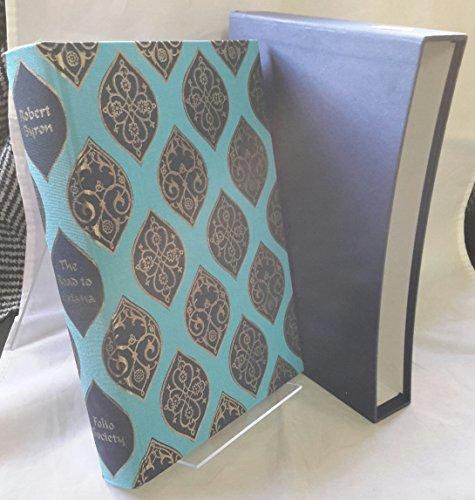
In the episode, the host described the book as one of his sacred texts and credited it with shaping his interests while growing up. He said it sparked a lasting desire to travel to Herat and Central Asia, emphasizing its personal significance. The overall tone was enthusiastic, indicating a strong recommendation.
The speaker described "Road to Oxiana" as one of their "sacred texts" and an important book for them growing up, and expressed their longing to visit Herat ever since reading it.
Look, let's take a break here because when arts. And it's one, I have to say, I've longed to go there ever since I read Robert Barron's Road to Oxiana, which is one of my sacred texts, Robert Barron, along with Stephen Ransman, was one of my gods when I was growing up. And I finally got to Herth century, in the middle of Central Asia.
And I finally got to Herth century, in the middle of Central Asia.
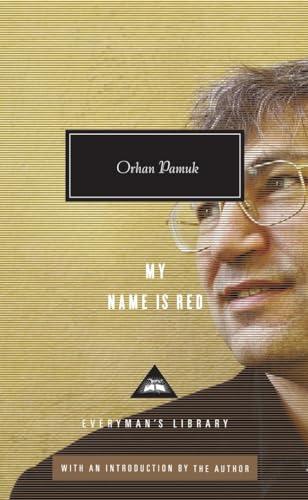
Written and Introduced by Orhan Pamuk (Everyman's Library Contemporary Classics Series)
In the episode, William highlighted that the book referenced Tabriz, noting its connection to the Safavid era's celebrated Persian paintings. He pointed out the novel's use of this historical backdrop to illustrate artistic heritage. The discussion was primarily informational rather than a strong endorsement.
The speaker mentioned that "My Name Is Red" by Orhan Pamuk makes reference to Tabriz, a city where the Safavids commissioned notable works of Persian painting.
And he reappears over and over again, I mean, as recently as modern novels, Orhan Pamuk in My Name Is Red refers back to Tabriz, where the Safavids commissioned the greatest work of many people would say of Persian painting, which is the Shandame of Chhatamasp.
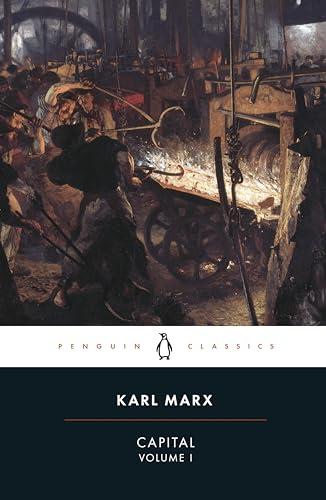
Volume I (Das Kapital series Book 1)
Fidel Castro read this book in prison but found it so humorous that he was unable to finish it and it did not influence him to become a Marxist.
He read Das Kapital and he said it made him laugh and he couldn't finish it.
— Episode: 174. The Cuban Revolution
Fidel Castro read this book in prison but found it so humorous that he was unable to finish it and it did not influence him to become a Marxist.
He read Das Kapital and he said it made him laugh and he couldn't finish it.
This epic poem tells the story of the siege of Troy and was noted for its exquisite detail, including beautiful scenes showing tender humanity amidst the slaughter of war. It was highlighted as moving between the grand epic scale and deeply human moments.
The Iliad is fantastic in its detail. And the rise in violence and the cutting between Troy and the Greek encampment and the depictions of Hector and his wife and child are just so ex...
— Episode: 333. Bronze Age Apocalypse: The Fall of...
This epic poem tells the story of the siege of Troy and was noted for its exquisite detail, including beautiful scenes showing tender humanity amidst the slaughter of war. It was highlighted as moving between the grand epic scale and deeply human moments.
The Iliad is fantastic in its detail. And the rise in violence and the cutting between Troy and the Greek encampment and the depictions of Hector and his wife and child are just so exquisite.
And Achilles weeps and gives it to him. And it's just an extraordinary scene. Tender humanity. I'm sobbing remembering it. It is so beautiful.
The episode highlighted the title for its poignant depiction of loss and the triumph of wit over brute force, noting that Odysseus returns home alone after the death of his crew and must still face further trials. Stephen Fry praised the work as a celebration of cleverness, positioning Odysseus as the true heroic figure in contrast to other failed Greek warriors.
The second epic was noted for showing a sense of melancholy and failure, as the hero Odysseus eventually returns home, but having lost all his men and still being forced to undertake further fruitless journeys. The speaker was devoted to Odysseus, seeing him as the figure to reverence because he won with his mind rather than brawn.
And in The Odyssey, he gets home, but he's lost all his men. He is naked and alone on his island, and he has to slaughter more to get to his wife, who is sort of doubtful of him.
And he's the one who ends the war. Not Ajax, not Agamemnon, not Achilles. They all fail. He wins with his brain. And it's as if the Greeks, or Homer, are saying that, are saying that this civilization, the only figure that we should really reverence in the end is Odysseus.
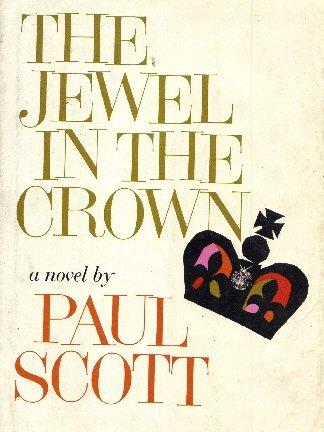
A Novel (The Raj Quartet, 1)
The book and the TV series were mentioned. The nightclub scene in Calcutta was brought to life in the series.
The Jewel of the Crown I have mixed feelings about both the book and the TV series, but the nightclub scene in Calcutta is very well brought to life by that.
— Episode: 170. The Bengal Famine: A Disaster on th...
The book and the TV series were mentioned. The nightclub scene in Calcutta was brought to life in the series.
The Jewel of the Crown I have mixed feelings about both the book and the TV series, but the nightclub scene in Calcutta is very well brought to life by that.
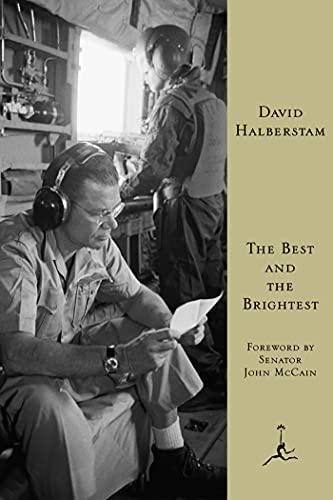
Kennedy-Johnson Administrations (Modern Library)
The book was highlighted by historian Fredrik Logevall, who described it as an extraordinary, mesmerizing and sprawling work that sparked his curiosity about the Vietnam War. He noted that reading it as an undergraduate opened his interest in the conflict. The overall tone was strongly positive, indicating a high recommendation.
It was described as an extraordinary, mesmerizing, and sprawling book that sparked the speaker's interest in learning more about the Vietnam War.
I think as an undergraduate in Canada, in Western Canada, in Vancouver, I read an extraordinary book that you'll know, The Best and the Brightest by David Halberstam.
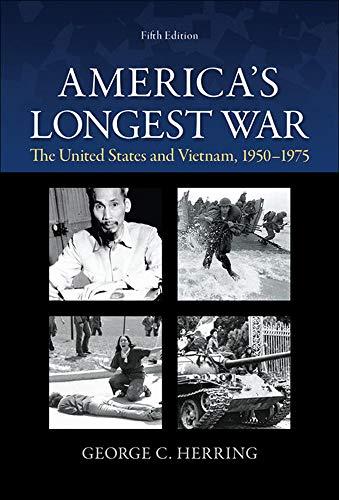
The United States and Vietnam, 1950-1975
During the episode on the Vietnam War, Fredrik Logevall referenced the title as a classic work that spans the conflict from 1950 to 1975, noting its relevance for understanding that period. The mention highlighted the book's comprehensive coverage of the United States' involvement.
It was mentioned in the context of the Vietnam War, specifically focusing on the period from 1950 to 1975.
It's not a coincidence that various textbooks, especially in the United States, begin the story in early 1950. Classic book by George Herring called America's Longest War is 1950 to 1975, I believe.
The Lost Chance for Peace and the Escalation of War in Vietnam
In the episode about the Vietnam War, host Fredrik Logevall referenced the title while discussing how the image of the self‑immolating Buddhist monk marked a turning point in American public opinion, noting that his earlier work argued that the United States was essentially choosing war. The book was cited to support the argument about the escalation of conflict.
It was mentioned in relation to the significance of the image of the self-immolating Buddhist monk, highlighting the turning point in the Vietnam War's coverage and impact on American public opinion.
I think it makes, as I argue in a previous book, Choosing War.
The 1894 Classic Edition with Original Illustrations
The hosts highlighted the book as one of Kipling's two most celebrated Indian stories, noting it was written while he was in Vermont and that its fame grew especially through Disney adaptations. They emphasized its enduring appeal through the tale of a boy raised by wolves and its importance in Kipling's body of work. The discussion conveyed strong admiration for its cultural impact and literary significance.
This book was written by Kipling in Vermont, and it is one of his two greatest volumes of British fiction about India. It is famously associated with the story of Mowgli, a boy raised by wolves, and its success continued to grow over time, largely due to Disney.
And bizarrely, it's in America that he writes his two greatest Indian books or two, certainly the two books for which he's most famous. And in 1893, the year after Josephine is born and dedicated to her, he writes The Jungle Book, a story of Mowgli, a boy raised by wolves.
But it is indicative of Kipling going through a period of incorporating his Indian experience. So those memories of India.
Illustrated First Edition
The episode highlighted the book as Kipling's masterpiece, noting its vivid portrayals of India and its sympathetic treatment of the people despite the author's reactionary politics. Andrew and the other host praised it as an enduring, full‑scale novel that stands out in Kipling's oeuvre. They emphasized its literary significance and lasting impact.
Many regard Kim as Kipling's masterpiece, and while he began it in America, he completed it later; it features evocative descriptions of India and sympathetic writing about its people, despite Kipling's reactionary political views. The story follows Kimball O'Hara and a Tibetan lama on a pilgrimage.
After the Jungle Book comes Kim, which many people regard as his masterpiece. He doesn't finish it in America, but he does begin it.
It is Kipling's masterpiece, enduring masterpiece of literature. It's not a story, it's his attempt at a full-scale novel.
He sat in defiance of municipal orders astride the gun Zamzama on her brick platform, opposite the old Ajaybgar, the Wonder House, as the natives call the Lahore Museum, who holds the Zamzama, the far-breathing dragon holds the Punjab, for the great green bronze piece is always the first of the conqueror's loot.
Note: The book recommendations on this page are discovered automatically from podcast transcripts, and may be incorrect or incomplete.
Podcast Name