The Iliad
Homer
Mentioned 5 months ago
333. Bronze Age Apocalypse: The Fall of Troy (Ep 2)
The rise and fall of empires and the events that shaped world history. William Dalrymple and Anita Anand explore the intricate stories of revolutions, imperial wars, and the people who built and lost empires. From the British Empire to the Ottomans to Ancient India, history is shaped by power stru...
Recently mentioned
Homer
Mentioned 5 months ago
333. Bronze Age Apocalypse: The Fall of Troy (Ep 2)
Homer
Mentioned 5 months ago
333. Bronze Age Apocalypse: The Fall of Troy (Ep 2)
M.J. Trow
Mentioned 5 months ago
333. Bronze Age Apocalypse: The Fall of Troy (Ep 2)
William Dalrymple
Mentioned 5 months ago
329. India’s Greatest Rebellion: The British Raj is Born (Part 8)
Rudyard Kipling
Mentioned 7 months ago
313. Rudyard Kipling: Escaping India & Writing The Jungle Book (Part 2)
Rudyard Kipling
Mentioned 7 months ago
313. Rudyard Kipling: Escaping India & Writing The Jungle Book (Part 2)
Rudyard Kipling
Mentioned 7 months ago
313. Rudyard Kipling: Escaping India & Writing The Jungle Book (Part 2)
Rudyard Kipling
Mentioned 7 months ago
313. Rudyard Kipling: Escaping India & Writing The Jungle Book (Part 2)
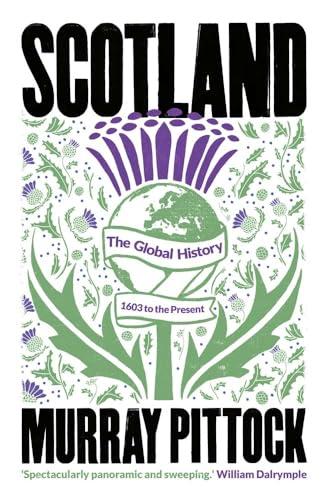
Murray Pittock
Mentioned 1 year ago
192. Native American Chiefs, the Founding of Canada, and the KKK: Scots in America
Faramerz Dabhoiwala
Mentioned 1 year ago
192. Native American Chiefs, the Founding of Canada, and the KKK: Scots in America
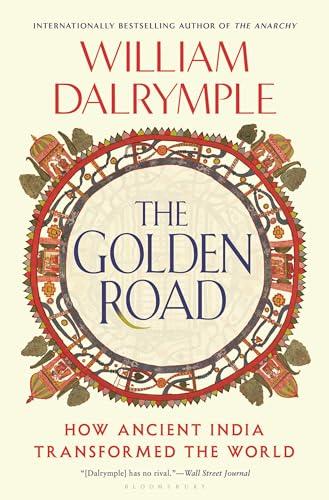
William Dalrymple
Mentioned 1 year ago
191. Slave, Slaver, Abolitionist: Three Scots in Africa
William Dalrymple
Mentioned 1 year ago
190. Rags to Riches: The Scots in India
How Ancient India Transformed the World
The hosts repeatedly highlighted the book as a compelling exploration of ancient India's pivotal role in global trade, cultural exchange, and the spread of Buddhism, emphasizing its often‑overlooked influence on the early world. They praised Dalrymple’s engaging writing and the richly detailed narrative, and frequently urged listeners to pre‑order or purchase the signed edition. Overall, the episode discussions framed the title as an essential, well‑crafted work that repositions India as a foundational superpower of antiquity.
The book is about the travels of Shuan Zhang, a Chinese monk who traveled to India in search of Buddhist scriptures. The speaker describes researching this story as particularly pleasurable, and the story of Shuan Zhang has a neater shape than others he has researched.
I have seen in the course of researching The Golden Road which is where these episodes are coming from.
There was nothing that was more pleasurable to research or to write or a story that made it had a neater shape than the story of Shuan Zhang.
And you can pre-order it now by the way.
The Golden Road.
You can pre order Williams fabulous new book The Golden Road the link will be in the show notes till the next time though it's goodbye from me Anita Arnon goodbye for me William Dripall.
The book tells the story of how the Kushan empire, a nomadic group from Central Asia, spread Buddhism through trade with the Roman empire and then into China.
Pre-order William's book below: UK:https://www.amazon.co.uk/Golden-Road-Ancient-India-Transformed/dp/140886441X India:https://www.amazon.in/dp/140886441X/ Australia: Available 17th September 2024 US: Available Spring 2025 Waterstones edition: https://www.waterstones.com/book/the-golden-road/william-dalrymple/9781526681256
Pre-order like the wind his fabulous book The Golden Road it's on a link in the show notes
The podcast discussed William Dalrymple's new book, "The Golden Road," which delves into the spread of Buddhism from India to other parts of the world, highlighting the influence of Indian culture and ideas on Southeast Asia.
William Darribble is giving us a sneak peek of his fabulous new book, which is out in September called The Golden Road.
And the last episode just to recap we, we were talking about the Buddha, the origin story, the superhero story, if you like, of the Buddha, and then the spread of Buddhism. And we're going to continue in that vein.
You sort of gave us a little tease about one of the greatest acolytes of the new religion, the new Buddhism, was a man who would take it further than anyone could possibly dream. And that man was the Emperor Ashoka.
And there is this thing in Indic religions whereby you have the different stages of life. Some people call it Sanyaras, you go off and hermit yourself.
And it's about 50 miles to the north, I think, of Bangalore, but anyway, with a car drive from Bangalore. And it's still one of the major centers of the Jains. It has that fantastic statue of the naked Jane Hiro Balubali who stood so long in one place that the vines wind round and creep around his legs and you see this in the statue.
So this obviously leaves a vacancy on the throne in Paliputra, the capital, and his son, Binder Surah, takes over, continues to have good relations with the Greeks who are in Afghanistan. And Chandra Gupta's grandson, Binder Surah's son Ashoka, is the young prince who becomes initially the viceroy in Taxina at the very place that Alexander met the gymnosophis.
Well, you can't. And one of the reasons you can't is that he is the first Indian whose voice survives for us in his own words. The earliest inscriptions we have anywhere in India are those of Ashoka. And it's he who calves the first script that we can actually read.
And we actually have fragments of a report by a Greek ambassador from the salutids who is called Megasinis. And he visits just before Ashoka is born during the reign of Bindusutra or Chandra Gupta. And he says the city already covers 10 square miles and is surmounted by a 21 mile long wall broken by 64 gates and 570 towers, which means that it's about twice the size of early Rome and three times the size of Alexandria, and 11 times larger than Athens, with a population of around 200,000.
And I mean everything about these inscriptions, the oldest written first person statements in Indian history, are utterly remarkable.
And there are several classes of these edicts. The earliest ones are on rocks, often in weird places, on hilltops or at crossroads, or at places where fairs or festivities seem to have been held and often are still held. So they're sacred places that are still sacred today.
So they raise as many questions as they answer. We can now read them. Thanks to James Principe in the 19th century, reading the karoshti and the Brahmini scripts and translating them. We can read these things, but the interpretations are still being chewed over by scholars to the state.
And this is a trajectory which results ultimately in Angkor Wat.
You get two different trajectories in the sense of Indian influence at this period. You get the merchants who are often subscribing to Buddhism and there's a very simple trade-off. They give gifts to the Buddhist monasteries, which allow the Buddhists to excavate their wonderful cave monasteries and build fantastic stupas and so on. And in return, the merchants get karmic relief. They're forgiven their sins and a promise good rebirth.
So you get these great epics like the Mahabharata, suddenly are being carved up the Mekong Delta, the Ramayana is on the walls of temples in Thailand and in Laos and in Vietnam.
And so you get these great epics like the Mahabharata, suddenly are being carved up the Mekong Delta, the Ramayana is on the walls of temples in Thailand and in Laos and in Vietnam.
So it isn't just a matter of some wholly in improving moral theories going out with it, comes the whole civilization.
So what you had with the Shokha was Buddhism going to Sri Lanka and heading off towards the Middle East. But the really successful thrust is when Buddhism heads into Afghanistan. You get to see all those wonderful Gandharan sculptures, the great Buddhas of Bamiyan and so on.
And then we will eventually go as far as the Tang dynasty in China when Buddhism briefly becomes the main state religion of China, briefly replaces Confucianism. And the final and most exciting moment is when Buddhist monks from China begin to make the journey to the holy land of India to consult the great Buddhist universities of India, most famously in the Landa, which is the Oxbridge, the Harvard, the Nazar of the seventh century in Dickworld.
And until we meet again, it's goodbye from me, Anita Arnan. And goodbye from me, William Dremble.
This is available from today, and you can find a link for that in the show notes.
The Golden Road is a book about ancient India and its global trade, which may reframe how we think about global trade and ancient India. It features Buddhism as a key element and was published in September 2024.
It's so good, it's so good, it's so good. Honestly you are in for such a treat when it... when is it out?
I am so sending you the half the Royal Disney Channel.
And I mean, it's very kind of you to lift the veil a little bit for us, because otherwise, I mean, frankly, you're going to have an ear bleed because I'm not going to stop going on about it.
It is that exciting, ladies and gentlemen, but this mini-series, this tiny little curtain veil lift that we're doing, we're going to be talking about Buddhism, which is such a, I mean it's such a beating heart of the new book, isn't it?
This book is called The Golden Road and the reason that my publishers have let me talk about it six months before this book is actually published. It's ridiculous, isn't it? Nobody really allows this. So good. It's very naughty, the reason they had it is that we've just revealing the cover today. If you were to go to Amazon not only is the cover up there but you can pre-order the book as from today.
It was described as a hefty tome but well-written and engaging, covering India's influence on world civilization and highlighting its underrated role in the early classical world.
It is one of those books that you will not be able to put down even though it is a hefty tome. I've got it in hardback. And apart from being an entirely beautiful piece of production, you've written beautifully.
I think it's some of your best writing, may I say?
You humanize things. And also these great strides across epochs of history, you not only draw together time, but also geographical space in a way that I don't think anyone else can.
So the central idea of this book is that India's importance to world civilization, but specifically also India's place in the early classical world has been greatly underrated.
It was discussed as a book that explored the surprising trade links between ancient India and the Roman Empire, specifically the scale of Indian imports to Rome, like pepper and silk.
A reading from our special guest today, his book The Golden Road, it is William Durhamport and we continue in this series talking about what has been dubbed the Indosphere which is the reach and the influence of ancient India in the rest of the world in some rather surprising ways.
But now we're going to look at when that Indosphere crosses over with the Roman Empire because I mean, William Durhamport, we talk about the Roman Empire a lot and awful lot because it's so interesting.
When I was researching this, I didn't know it at the time but I was arriving on the back of a whole range of new discoveries of which visually the most dramatic was that Baranaki Buddha, this extraordinary image of the Buddha found in classical white marble but very familiar head of the Buddha that we know from a million Buddhist statues.
And that is a perfect symbol of a whole variety of different ways that archaeologists, numismatists and economic historians have been realizing that in a sense they've got it wrong before. We associate the Roman world very much closely with the Mediterranean.
If you want to buy William's tremendous book you can pre-order a copy from a link in the show notes right here right now.
It was discussed in detail, with the author mentioning the long tail it had, and the many edits involved, especially regarding Sanskrit names.
It is William Dalrymple.
And it looks really pretty.
It's gorgeous and it looks as gorgeous as I assumed it would from the pictures.
But the first thing the toddler does is bugger off around the world without so much as a how-to-do and it's in the world and it will do its own thing.
And it's very nice when you've got the narrative flow ready then you can add.
It was discussed as William Dalrymple's new book, highlighting India's crucial role in ancient and early medieval trade and cultural transmission, particularly in the East, which is often overlooked in the West.
his new book The Golden Road is out and we are traveling this golden road with him.
the book is The Golden Road it aims to highlight india's often forgotten position as a crucial economic fulcrum and civilizational engine at the heart of the ancient and early medieval worlds and is one of the main motors of global trade and cultural transmission in early world history
indian learning indian religious insights and indian ideas are among the crucial foundations of our world but we in the west are simply not aware of this like ancient Greece ancient india came up with a set of profound answers to the really big questions about what the world is how it operates why we are here and how we should lead our lives
It was written about a period of history with significant gaps in the historical record, requiring the piecing together of evidence from various sources like archaeological findings and inscriptions. The author was excited to find a detailed biography of a magician within this fragmented historical context.
I'm nice writing this book, The Golden Road. This is a period of history where there are huge gaps in the historical record. There are no really good chronicles telling this whole story like you get in the Mughal period or during the British period. You're trying to piece together archaeological evidence, inscriptions, pieces of pottery, epigraphy.
I remember sort of cheering when I was researching this. And it's been recently retranslated, The Life of Vajrabodi, and it's a cracker of a story.
This book aims to reinstate early India's position as one of the two great superpowers of the ancient world, exploring Indian culture, art, civilization, and philosophy.
discover the forgotten heart of the ancient world in my new book The Golden Road
join me william mission to reinstate early india to its rightful place as one of the two great superpowers of the ancient world
explore the indian culture art civilization and philosophy that blazed a trail across the globe from the world's largest hindu temple at anko what to buddhism in china from the trade that funded the roman empire to the creation of the numerals we all still use today
The Golden Road is available now in all good bookshops and on audiobook read by me
A History of the Greater United States
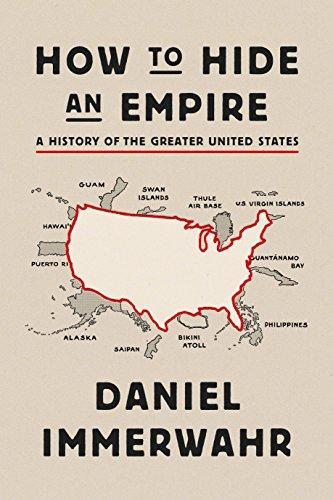
The book was brought up in several episodes when the hosts examined America’s imperial past, from Vietnam to the Spanish‑American War. William Dorempel and Anita Arnon highlighted it as a short, mind‑blowing history that revealed how the United States concealed its overseas acquisitions and empire‑building. The discussion consistently praised it as a spectacular and insightful read, recommending listeners obtain a copy.
The book explored the history of the United States' imperial ambitions, including how it has tried to hide its imperial past and its ongoing imperial presence. It was discussed how the United States' westward expansion and acquisition of overseas territories, including Hawaii, the Philippines, Guam, and Puerto Rico, constituted a form of empire, although the country has been reluctant to embrace that label.
And I'm so glad that you are here because William and I, we read a lot of books at the same time, but seldom have we had a book where we talk about it so much to each other. And yours is one such book.
Also, it has to be said, this is unusually, it came to me from my kids. They'd all read this before I got my hands on it. And when they heard we were thinking of doing the United States and Empire, they all just said, there's one book, dad, you've got to get him on.
I mean, I don't want to boast about this, but I did read your book about three months ago.
And I think that often clouds the factual matter, which is that if by empire you mean a country with colonies, which I think is the sort of minimal definition we could possibly have of an empire.
Yeah, I mean, just among among the territories that are linked to America, we should say and we'll be discussing from here on in. We're talking about Hawaii, we're talking about the Philippines, we're talking about Guam, we're talking about Puerto Rico.
It was briefly mentioned in the context of exploring whether America's involvement in Vietnam fit within a broader pattern of imperial expansion.
And this idea of how Daniel Emmerwahr has a book called America's Hidden Empire and whether this slots into that kind of description.
It was described as a mind-blowing and insightful read, particularly about the history of the United States, which was a surprise to both the hosts.
We are in the middle of an incredible run with Daniel Immerwahr and his fantastic book How to Hide an Empire, a short history of the greater United States that has taught Anita and I so much stuff we didn't know.
it is a spectacular read it's one of these two I both agree of all the books we've read lately for this podcast this is one that stands right out and it's extraordinary book that blows your mind every other page you will not read it once let me put it this way you will read it a number of times and you will keep coming back to it it's a fabulous book really really interesting
Daniel Immerwahr's book How to Hide an Empire, a short history of the greater United States, is available in paperback, go get it.
It was described as a spectacular book, a short history of the great United States, which was discussed in the context of the Spanish-American war.
author of the spectacular How to Hide an Empire, the short history of the great United States.
American Loyalists in the Revolutionary World
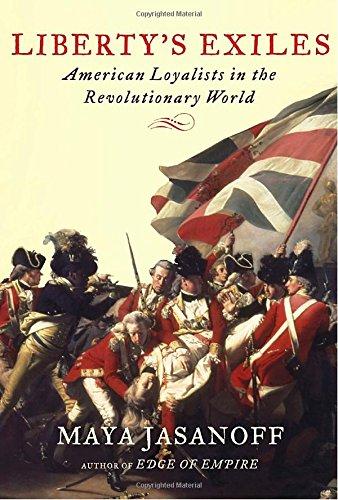
The hosts highlighted the book as the primary source for the series, noting how it traced the displacement of Loyalists and the resulting shift in British imperial focus toward India after the loss of America. They described it as an award‑winning, insightful work that illuminated the reshaping of identities on both sides of the Atlantic. Anita Arnon repeatedly urged listeners to purchase the title, emphasizing her strong endorsement.
The book describes how the loss of America had a significant impact on the British Empire, including the loyalists, who were forced to resettle in Canada, England, and even India. The British also revised their imperial strategies, with India becoming a more central focus, and the colonists in America were forced to rebuild their country and build a new identity.
Maya Jasnov's Liberty's Exiles, on which these last four episodes have been loosely based, Liberty's Exiles, the loss of America and the remaking of the British Empire, is available in paperback from HarperCollins.
All we can do is to send everybody to buy your book, which I cannot recommend highly enough.
The book was recommended by the hosts, as it is the source material for the podcast series.
And we should also say go and buy Maya's fantastic book, Liberty's Exiles, which is what we're drawing on for this series.
It was an award-winning book that discussed Maya Jasnov's work on the American Revolution.
And it's goodbye from me Anissa Arnand. And goodbye from me William Durham Paul.
The Fall of an Empire and the Making of America's Vietnam
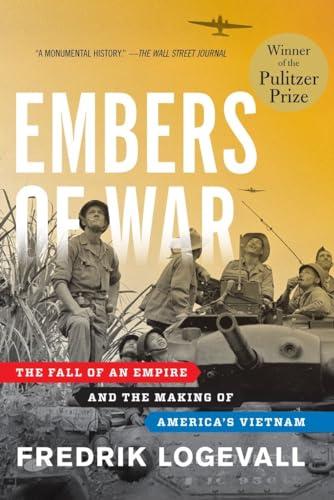
The book was highlighted as an eye‑opening, academically rigorous account that deepened listeners' understanding of Vietnam's decolonisation, the fall of an empire, and America's growing involvement. Hosts such as Anita Arnon, Heather, and Richard praised it as a "barnstormer" and recommended it alongside the Ken Burns documentary series, while author Fredrik Logevall discussed its insights on Americanization and early French support. Overall, the episode participants presented it as an essential, highly recommended resource for anyone seeking a richer narrative of the conflict.
It was mentioned as eye-opening and helpful in providing context to the Vietnam war, providing depth and a proper academic perspective on the topic.
And this has been just so eye-opening. It has been so important because we have these sort of bulwark bricks of Vietnam, courtesy of people like Oliver Stone, but to have the bits that make it relevant, that make it make sense, to flesh out two-dimensional characters is just terrifically helpful.
Just to see it treated in a sort of proper academic history is something to be studied and to be looked at in terms of policy and narrative.
And to see it also, which is so interesting from the perspective of decolonisation and empire, rather than just as a place where Americans get to fire off palm trees and smell the tang of napalm before breakfast.
Heather But look, the book is Embers of War, The Fall of an Empire, The Making of America's Vietnam.
Richard An absolute barnstormer of a book.
It was discussed at length, as it details the lead up to the Vietnam War and how the United States became increasingly involved, initially supporting the French.
So we are joined by Frederik Lgevall, who is author of Embers of War.
I should say to our listeners that I have barely been able to get hold of Frederik's book lately because my son Sam has stolen my copy and is so deep into it and so enthusiastic about it that I have to sort of go up in the morning while he's sleeping.
Well, I think there are great archives. One of the problems is that the Vietnamese have been until recently closed, have not been very open, even though you'd think after you defeat the French and you defeat or at least stand up to the Americans, you'd think we'll open our archives.
And I think it's been about 15 years since I was working hard on this. Many of them have sadly passed.
When I wrote Embers of War, and my wife will tell you this is true, there were certain sections where I said to her, I could write a whole book about this.
It was discussed in relation to the Americanization of the Vietnam War, and how JFK might have taken a different approach.
You are a mesmerizing speaker and we're really grateful that you are spending the time with us because we're learning so much.
It also just knits together. You know Vietnam still is part of our lives so much. There's so much on the television. There's so many movies, there's so many fantastic books and classic works of reportage and so on.
And I've written about this most recently in the companion volume to Ken Burns' documentary film series on the war.
What incidentally a great film series. We should immediately recommend that to anyone listening in here.
Yes, and along with your book to look at the documentary of Ken Burns with that extraordinary archival footage.
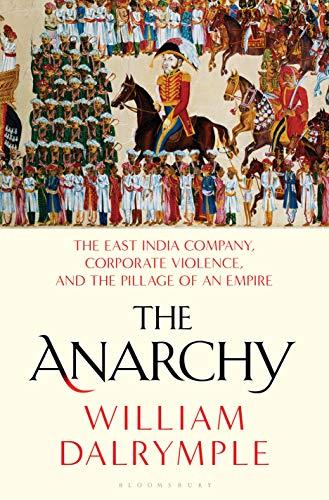
The book was referenced for its vivid portrayals of historical figures, with one host describing Robert Clive as a Lord Voldemort-like character and another noting a survivor of the Patna massacre featured in its narrative. Both mentions highlighted the title's engaging storytelling about colonial India.
It was mentioned as a book that featured a character named William Fullerton who was from Ayrshire and a survivor of the Patna massacre.
And in my book, The Anarchy, there was this character called William Fullerton who was from Ayrshire, who's one of the only survivor of the Patna massacre, the other Patna.
It was mentioned that Robert Clive is portrayed as a "Lord Voldemort figure" in this book, due to his consistent victories on and off the battlefield and his successful navigation of political corruption.
Robert Clive is an extraordinary character whatever you think of him and he's the kind of Lord Voldemort figure in my book The Anarchy.
A New History of Islamic Spain
The book was highlighted in two episodes for illustrating Spain's unique religious diversity and centuries-long coexistence among Muslims, Jews, and Christians, as well as shared cultural elements like Seville's architecture. Host Anita Arnon praised it as her book of the year, and the author Brian Katloss was featured to discuss its insights. The discussion emphasized the complex, mixed nature of medieval Spain, positioning the title as a standout recommendation for listeners.
It was mentioned multiple times during the episode, highlighting Spain's unique religious diversity during the Middle Ages, and how it differed from other parts of Europe. It was also pointed out that the architecture of Seville, often considered Moorish, is a shared trait among the cultures of Spain, showcasing a deeper connection than what is evident today.
And today once again we are delighted to be joined by Brian Katloss, author of Kingdoms of Faith, a New History of Islamic Spain, a man recently in reception of the Guggenheim Fellowship for Research, who is here again to continue the discussion about Isabella Isabel of Castile, a woman who was a pivotal point in European history.
But Brian, we're heading into territory now where something unusual is happening because as you've shown magnificently in your book, Kingdoms of Faith, Spain is unusual in Europe in that it is an entire peninsula where three different faiths have not always with happy-clappy enthusiasm and sort of mutual love, but certainly a measure of long lasting coexistence have successfully lived together.
And you also show remarkably in your book how things that we see as very Moorish, the architecture of Seville, for example, actually is something which is common to all these cultures and they share a lot more than we see with our eyes today.
The book tells a complex story of a very mixed European country where Muslims, Jews, and Christians cohabited for hundreds of years, which was praised by the podcast host.
Branagh, I loved your book, Kingdoms of Faith, as you know because I chose it everywhere as my book of the year when it came out.
And you create in that book this very complex picture of this extremely mixed European country where Muslims, Jews and Christians cohabited for hundreds of years.
The Fall of a Dynasty
The book was highlighted when William de Rumpel said it was the work he most enjoyed writing, and the conversation focused on Zafar's poetry and the fall of the Mughal dynasty. The title was also referenced in a segment about the legendary Anarkali tomb, linking its historical narrative to the episode's themes. Hosts praised its vivid portrayal of the era, indicating strong endorsement.
The podcast mentioned this book as part of a discussion about the tomb of Anarkali, a dancing girl who was rumored to be a former love interest of Jahangir.
It's a wonderful place to work.
And I've searched both Return of a King and Last Mughal in there.
This book was mentioned as one William de Rumpel enjoyed writing more than any other book he had ever written. The final conversation revolved around Zafar's poetry and fate as described in this text, which details the end of the Mughal dynasty.
And The Last Moogle, which was a book I enjoyed writing more than I think any other book I've ever written.
The book was highlighted as the foundational source for the author's own work and was praised as a perfect example of its subject. William Dalrymple recommended it enthusiastically, noting its influence on his writing. In a later episode, he also pointed out an excellent section that discusses dramatic climate disruption in the mid‑530s, underscoring its scholarly depth. Overall, the hosts conveyed strong approval of the title.
An excellent section of the book is mentioned in reference to dramatic climate disruption around the Mediterranean in the mid-530s.
Our friend Peter Franca pan makes much of this in his new history of the world an excellent section of Peter's book where probably due to volcanic eruptions in central america we have enormous climatic disruption in northern hemisphere
It was mentioned as the starting point for the author's book, and was praised for being a perfect book.
This wonderful book, The Silk Roads, was very much the starting point of this book and I've been having very agreeable disagreements with Peter for about five, six years.
Conspiracy, Murder, and the Cold War in the Caribbean
The hosts highlighted the book as an inside story of the relationship between Cuba and America, noting its humanizing portrayal of complex events. William Droomple praised it as an excellent read that also covered Haiti and the Dominican Republic, emphasizing the wielding of power in the Caribbean. In a later episode, Alex Von Tunzelmann referenced its account of the secret war's devastating impact on democracy and regional stability.
It was described as the inside story of the relationship between Cuba and America, and was well-received by the hosts for its humanizing of the complex historical events.
It is the fabulous historian Alex Fontunzelman, the author of Red Heat which is a story, the inside story of Cuba and America.
Can I just commend to all of you Red Heat by Alex Fonton someone it's not just about Cuba it's about Haiti it's about the Dominican Republic it's about us the wielding of power in the Caribbean in all of these countries it's an excellent read because you really humanize the story.
It was described as a critically acclaimed history of Cuba, with a paragraph that summarized the damaging effects of the secret war in the Caribbean on Cuba, Haiti and the Dominican Republic.
The secret war in the Caribbean destroyed any hope of freedom and democracy in Cuba, Haiti and the Dominican Republic. It toppled democracies. It supported dictators. It licensed those dictators' worst excesses. It financed terrorism. It set up death squads. It turned Cuba communist and it kept it communist for half a century. It did massive and permanent damage to the international reputation of the United States. It nearly triggered a nuclear holocaust.
The Global History
The hosts highlighted the book as an essential read for listeners, noting its coverage of Scotland’s global impact, including the link between the Declaration of Arbroath and the US Declaration of Independence. William de Rumel called it a must‑buy and praised its affordable paperback price, while William Durham‑Poole described it as brilliant and one of his recent favorites. Both speakers presented it enthusiastically, signaling a strong endorsement.
It was described as a brilliant book about Scotland's global history, and was said to be one of William Durham-Poole's favourites of the last few years.
And one of my favourite books of the last few years is his brilliant Scotland, The Global History, which is a book I would love to have written myself.
It was described as a must-buy for all Empire listeners, covering the influence of the Declaration of Arbroath on the US Declaration of Independence and other topics. The book was mentioned to be available in paperback for 11.99.
Your great book, which we haven't done enough to pump up there.
Scotland, a global history, a must-buy for all Empire listeners.
Only 11.99 in paperback.
A New History of the '45 Rebellion
The book was highlighted as a fresh, primary‑source‑driven account of the 1745 Jacobite rebellion, and the host referenced it repeatedly while discussing the uprisings. The author’s expertise and enthusiastic perspective on Jacobite history were noted, and the work was presented as a valuable resource for understanding the cause and its key figures. Overall, the episode treated the title as a recommended read for listeners interested in the period.
It was discussed as a new history of the 45 Rebellion, focusing on the Jacobite cause and their fight to restore the Stuarts to the British throne. The author's expertise and perspective on the topic were highlighted.
I'm a cheerleader for Jacobite history.
So when it comes to the late 17th century, 18th century, Jacobites are the followers of James II of England and Ireland and VII of Scotland, who was removed in the Glorious Revolution as described in 1688.
And Jacobites, because it comes from Jacobus to James, are supporters of his right to rule alongside the senior branch, which is the male branch, which is James Francis Edward Stuart and then his son, Charles Edward Stuart. So this is the line that Jacobites support.
And of course, once the Stuarts, the senior branch are exiled in 1688, they are the kings over the water.
When I wrote my book, the one word that was banned from anything was doomed. And this is how I wrote the book. I wrote the book using primary sources, intelligence, letters going hither and thither.
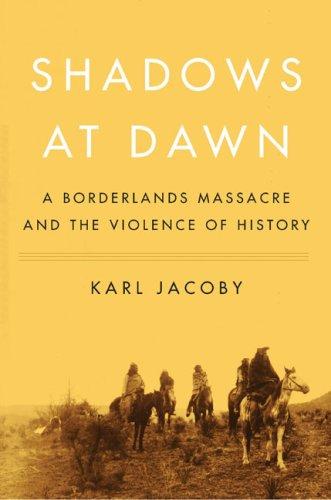
A Borderlands Massacre and the Violence of History
Shadows at Dawn was a spectacular read about the Apache Massacre and the Violence of History. It discussed deep competition and violence between indigenous groups, particularly the Otam and the Ine, and how the arrival of European colonialism exacerbated pre-existing tensions.
Shadows at Dawn, an Apache Massacre, the Violence of History is a spectacular read, recommended very strongly to all our listeners.
— Episode: 164. How the West was Won: The Truth Beh...
Shadows at Dawn was a spectacular read about the Apache Massacre and the Violence of History. It discussed deep competition and violence between indigenous groups, particularly the Otam and the Ine, and how the arrival of European colonialism exacerbated pre-existing tensions.
Shadows at Dawn, an Apache Massacre, the Violence of History is a spectacular read, recommended very strongly to all our listeners.
One of the things you say in there, which I had no idea, was that a lot of the names that we know these tribes by and indeed their leaders, so the Apaches, someone like Geronimo, are basically made up Western names.
And then as we'll probably get to, they know Geronimo. Karl, one of the things I was most interested in your book, which I absolutely love, and we should say, Shadows at Dawn, an Apache Massacre, the Violence of History is a spectacular read, recommended very strongly to all our listeners.
I see it as a very grim world.
We're going to end this one here, but join us in the next episode where Karl will be with us again and taking us forward into the next chapter. Focusing in on his extraordinary book, Shadows at Dawn, an Apache massacre and the violence of history.
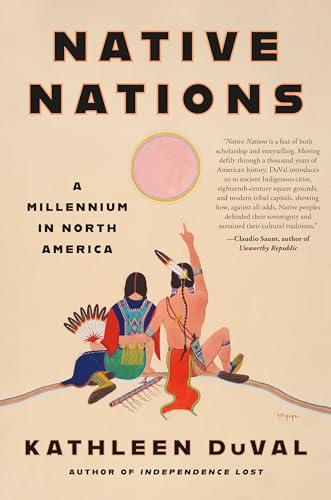
A Millennium in North America
The book gives a detailed account of the history of Native Nations in North America over a millennium and discusses the Trail of Tears, the forced relocation of Native Americans, and its historical context.
And a fabulous, fabulous book it is too. It's given us so much to talk about both in the pod, but also outside the pod. William and I have been talking about things that are full of surprises in every...
— Episode: 161. The Trail of Tears
The book gives a detailed account of the history of Native Nations in North America over a millennium and discusses the Trail of Tears, the forced relocation of Native Americans, and its historical context.
And a fabulous, fabulous book it is too. It's given us so much to talk about both in the pod, but also outside the pod. William and I have been talking about things that are full of surprises in every chapter.
Kathleen Duval's excellent, and I really mean excellent eye-opening book is called Native Nations, a millennium in North America.
Brand new also. It's brand spanking new. I've got the big hardback. It's very shiny. And beautifully written, Kathleen.
This is highly, highly accessible and totally recommended by both Anita and I.
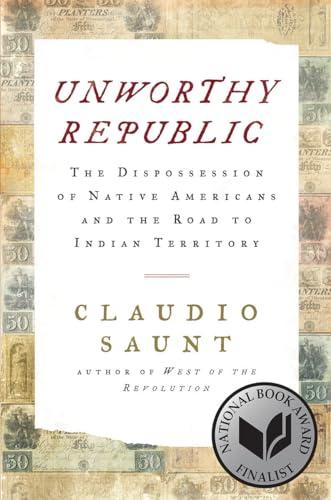
The Dispossession of Native Americans and the Road to Indian Territory
This book talks about the Trail of Tears and the impact of the Indian Removal Act on American history and the influence it had on other nations.
The legacy of this is something that Claude D'Aussant looks at in his book, Unworthy Republic.
— Episode: 161. The Trail of Tears
This book talks about the Trail of Tears and the impact of the Indian Removal Act on American history and the influence it had on other nations.
The legacy of this is something that Claude D'Aussant looks at in his book, Unworthy Republic.
Volume II, Issue 1
This book covers a detailed analysis of Britain and the British Empire, including the period of the American Revolution, and is praised as a masterpiece by Neil Ferguson, who co-taught a course with Maya Jasanoff.
A deeply moving masterpiece, says Neil Ferguson, who had the pleasure of teaching a course with Maya.
— Episode: 156. The American Revolution: No Taxatio...
This book covers a detailed analysis of Britain and the British Empire, including the period of the American Revolution, and is praised as a masterpiece by Neil Ferguson, who co-taught a course with Maya Jasanoff.
A deeply moving masterpiece, says Neil Ferguson, who had the pleasure of teaching a course with Maya.
We wanted to model for students that you can actually have a reasoned debate about history and arrive from the same body of facts at rather different conclusions.
It was a very rewarding experience.
And it went on for several years.
Places on this course were absolutely snapped up in seconds.
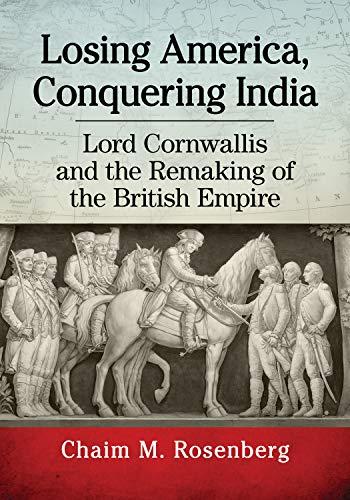
Lord Cornwallis and the Remaking of the British Empire
This book is a children's book about John Adams. A scene in the book depicts the children of Boston taunting the British soldiers with the term "lobster back", because of their red coats.
I remember vividly from a children's book that I had, which is the kind of way that you first learned these stories. I had a children's book, which was called, it must have been Meet John Adams or som...
— Episode: 156. The American Revolution: No Taxatio...
This book is a children's book about John Adams. A scene in the book depicts the children of Boston taunting the British soldiers with the term "lobster back", because of their red coats.
I remember vividly from a children's book that I had, which is the kind of way that you first learned these stories. I had a children's book, which was called, it must have been Meet John Adams or something. You know, there were so and so. And there was a scene in it which had the youth of the city of Boston running after the British soldiers calling them lobster back because of their red coats.
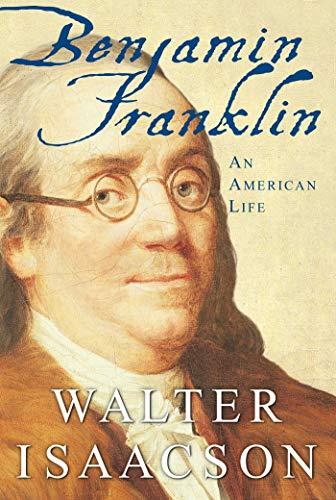
An American Life
The podcast hosts referenced Walter Isaacson's biography of Benjamin Franklin multiple times, highlighting the biography's detail and quality. They specifically mentioned the biography's interesting images, like one of Franklin kissing a woman, and another of him surrounded by women in Enlightenment Paris.
And it has to be said that it's not a great marriage.
— Episode: 155. The Founding Fathers: Benjamin Fran...
The podcast hosts referenced Walter Isaacson's biography of Benjamin Franklin multiple times, highlighting the biography's detail and quality. They specifically mentioned the biography's interesting images, like one of Franklin kissing a woman, and another of him surrounded by women in Enlightenment Paris.
And it has to be said that it's not a great marriage.
He is away from her for years.
And Franklin, who is no looker, and has this sort of bald head and straggly hair, is nonetheless such an engaging character that he is a surprising ladies' man.
There are pictures. There's one wonderful sketch in the biography by someone called Charles Wilson Peel, who makes a sketch after walking in on Franklin kissing a girl, possibly Polly Stevenson in Craven Street.
There are other pictures in the biography of him being surrounded by women in Enlightenment Paris.
And he's this single, plump, not very well-dressed, balding man that's surrounded by sort of Marie Antoinette-ish ladies in wigs and sort of ballooning dresses.
And he's looking as if he's the only man in a room full of women in this picture. And he looks as if he's both enjoying it and encouraging it.
And there's another wonderful picture of this in Walter Isaacson's biography, which I have to say is again one of the great biographies.
Do you mean this here biography here? It's amazing.
That is the very one that you've got there. That is the biography. Yes, indeed.
And Walter Isaacson, everyone knows, is the man who sold sort of a million copies of his biography of Steve Jobs and therefore made every other biographer in the world hugely jealous.
But he wrote other great biographies of Kissinger, of Einstein, and more improbably Leonardo da Vinci.
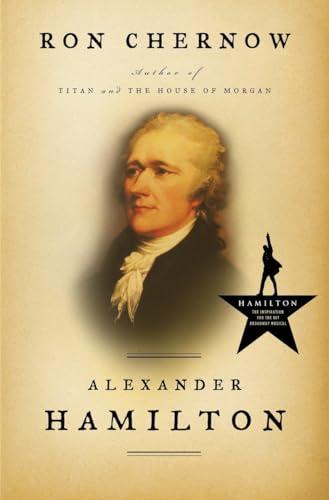
Ron Chernow's biography was written to overturn prejudices against Hamilton and change the negative view many had about his life. It is an extraordinary deep dive into his life.
And the reason that Ron Chernow wrote the biography that inspired the musical was that he was the least known and least celebrated and most obscure of the founding fathers.
— Episode: 153. The Founding Fathers: Alexander Ham...
Ron Chernow's biography was written to overturn prejudices against Hamilton and change the negative view many had about his life. It is an extraordinary deep dive into his life.
And the reason that Ron Chernow wrote the biography that inspired the musical was that he was the least known and least celebrated and most obscure of the founding fathers.
And we forget this now, but Chernow's biography was written to overturn a whole set of very substantial prejudices against Hamilton.
Chernow has completely changed the view in scholarly circles and the musical and all the songs and sellout shows have changed his view on a popular front.
And in it, Chernow says, look, this is a man, why don't you know him better?
But Chernow describes St Kitts and Nevis as a tropical hellhole of dissipated whites and fractious slaves.
Note: The book recommendations on this page are discovered automatically from podcast transcripts, and may be incorrect or incomplete.
Podcast Name