The Scarlet Letter
Nathaniel Hawthorne
Mentioned 7 months ago
Fall River

Criminal is the first of its kind. A show about people who’ve done wrong, been wronged, or gotten caught somewhere in the middle. Hosted by Phoebe Judge. Named a Best Podcast of 2023 by the New York Times. Part of the Vox Media Podcast Network.
Recently mentioned
Nathaniel Hawthorne
Mentioned 7 months ago
Fall River
Kate Winkler Dawson
Mentioned 7 months ago
Fall River

Catherine Read Williams
Mentioned 7 months ago
Fall River
Brandt Goldstein
Mentioned 1 year ago
A Land Without Law
Zay N. Smith
Mentioned 1 year ago
The Mirage
Sarah Lewis
Mentioned 1 year ago
A Murder in the Forest
Doug Holt
Mentioned 1 year ago
A Murder in the Forest
Wayne Worcester
Mentioned 1 year ago
Into the Vault
Eric Hoffer
Mentioned 1 year ago
Ana
Jim Popkin
Mentioned 1 year ago
Ana
Max Marshall
Mentioned 1 year ago
Millions of Pills
Lynn Painter
Mentioned 2 years ago
State of North Carolina v. Joan Little
A Story of Justice and Redemption
The book was referenced as the work of Bryan Stevenson, the founder of the Equal Justice Initiative, whose efforts were central to Ian Manuel's case and broader criminal‑justice reform. Hosts highlighted its focus on challenging the death penalty, exposing wrongful convictions, and advocating for those on death row. The discussion conveyed strong endorsement of the title as essential reading for understanding systemic injustice.
It was mentioned as a book written by Bryan Stevenson, whose work is related to challenging the death penalty and excessive punishment, particularly in the case of juvenile offenders.
He's the author of Just Mercy.
It was mentioned in relation to Bryan Stevenson, who founded the Equal Justice Initiative to challenge the death penalty and other injustices within the prison system.
The Equal Justice Initiative was founded by attorney Bryan Stevenson. He's the author of Just Mercy.
The podcast highlighted Bryan Stevenson's work in criminal justice reform, particularly his advocacy for those wrongly convicted and on death row. It was inspired by his experiences, which he detailed in this book.
We've now, I just won the release of a man a year ago who was the 156th person exonerated, released from death row after being proven innocent.
That means that for every nine people we've executed in this country, we've now identified one innocent person on death row.
It is a shameful rate of error.
Your grandfather was murdered. That's right.
When my grandfather, when I was 16, my grandfather was stabbed to death in Philadelphia by several young men who broke into his apartment to try to steal a TV.
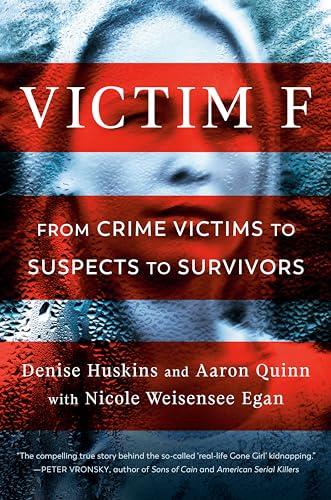
From Crime Victims to Suspects to Survivors
The hosts highlighted the book as a personal account of being falsely accused of faking a kidnapping, written by Denise Huskins and Aaron Quinn to support other victims and survivors. They noted that the authors aimed to pay forward the strength and bravery they observed in survivors, and encouraged listeners to read it to learn more about the case.
Denise Huskins and Aaron Quinn wrote the book "Victim F" to share their experience of being wrongly accused of faking a kidnapping and to support other victims and survivors.
Denise Huskins and Aaron Quinn's book isVictim F.
Victim F from crime victims to suspects to survivors.
They write, to all the many other victims and survivors out there, we have been fueled and inspired by all of your strength and bravery. This is our humble attempt to pay it forward.
The book was written by Denise Huskins and Aaron Quinn about their experience with the kidnapping, referencing the fact that the authorities initially believed Denise's kidnapping was a hoax.
Denise Huskins and Aaron Quinn's book is Victim F.
And it eventually said that they were going to drug us, we were going to take it orally, but if we refused, they would inject it.
He said you know Aaron did go to the police, it's being covered in the media, but you know, it doesn't really worry us because it'd be good PR for our group to show that they're capable of of fulfilling you know an operation like this and could still release the victim quote unquote unharmed.
It was mentioned as the book written by Denise Huskins and Aaron Quinn, detailing their experience with the kidnapping.
You can read more about Denise and Erin's story in Victim F.
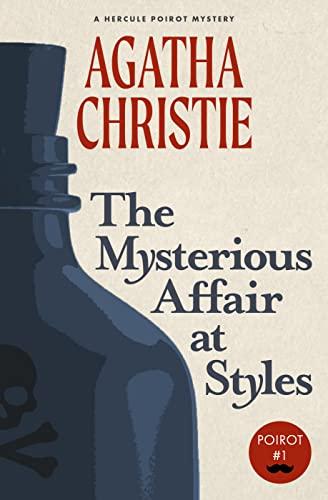
A Hercule Poirot Mystery (Warbler Classics Annotated Edition)
The host highlighted the book as Agatha Christie’s first published novel and her personal favorite, noting that it introduced the iconic detective Hercule Poirot. It was read aloud chapter by chapter on the show, and praised for its clever, almost too‑ingenious plot. Listeners were reminded that the story has been celebrated since its 1920 publication for its inventive murder mystery.
Agatha Christie was a favorite author of the Prime Minister, who also mentioned reading classic authors like Arthur Conan Doyle and Raymond Chandler.
I've also read books like Arthur Conan Doyle's The Adventures of Sherlock Holmes and The Mysterious Affair at Stiles by Agatha Christie.
It was Agatha Christie's first published novel, and it was read aloud chapter by chapter on the podcast, with the narrator sharing details about the setting and characters.
I started reading Agatha Christie's first published novel, The Mysterious Affair at Stiles, and I thought maybe I could read it to you.
So here we go. The Mysterious Affair at Stiles by Agatha Christie, chapter one, I go to Stiles.
The intense interest aroused in the public by what was known at the time as the Stiles case has now somewhat subsided.
Lots of nonsense written though. Criminal discovered in last chapter, everyone dumbfounded, real crime, you'd know at once.
Not in a case of poisoning, Mrs. Cavendish's clear voice startled me. Dr. Bowerstein was saying yesterday that, owing to the general ignorance of the more uncommon poisons among the medical profession, there were probably countless cases of poisoning quite unsuspected.
It was discussed as her favorite Agatha Christie novel, introducing the world to Hercule Poirot. It was praised for its ingenuity in solving a murder mystery.
Her favorite Christie is the first, The Mysterious Affair at Styles, published in 1920.
It's about a murdered heiress, and it introduced the world to a private detective with a very famous mustache, Hercule Poirot.
The Times Literary Supplement wrote, the only fault this story has is that it's almost too ingenious.
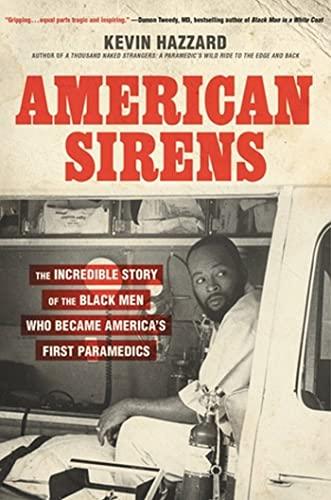
The Incredible Story of the Black Men Who Became America's First Paramedics
The episode highlighted the title as an inspiring account of a group of Black men from Pittsburgh who overcame socioeconomic barriers to become America's first paramedics, fundamentally changing emergency medical care. Host Phoebe Judge introduced the book and provided a link for listeners, emphasizing its remarkable and groundbreaking narrative. The discussion underscored the historical significance and the personal stories that illustrated the program's impact.
The book recounts the incredible story of how a group of Black men from Pittsburgh became America's first paramedics.
Author and former paramedic Kevin Hazard.
And they're excited, they're impressed, they're blown away by what's being said, but they're also under the impression that there's no way this revolution includes them, they've got people who are under or unemployed, people who did not finish high school. They don't think that there's any way that Saffer will allow his first class to be all people from the hill.
We'll also have a link to Kevin Hazard's book, American Sirens, the incredible story of the black men who became America's first paramedics.
Kevin Hazard's book tells the incredible story of the black men from Pittsburgh who became America's first paramedics. The book highlights how this group of men, many of whom were unemployed, changed emergency medical care in the United States.
Author and former paramedic Kevin Hazard.
You can see them at thisiscriminal.com, where we'll also have a link to Kevin Hazard's book, American Sirens, the incredible story of the black men who became America's first paramedics.
The book chronicles the story of the Black men from Pittsburgh who created the first paramedic program in the US, highlighting the societal barriers they overcame and their remarkable impact on emergency medical care.
Author and former paramedic Kevin Hazard.
Kevin Hazard told us a story about a teenager named Mitch Brown whose mother collapsed in their house.
And we'll also have a link to Kevin Hazard's book American Sirens, the incredible story of the Black men who became America's first paramedics.
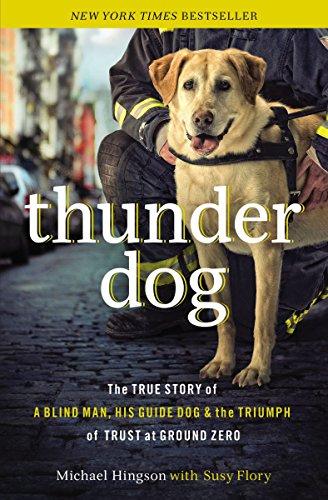
The True Story of a Blind Man, His Guide Dog, and the Triumph of Trust at Ground Zero
The host highlighted that the author had written a memoir recounting his September 11 experience with his guide dog, emphasizing the journey through the World Trade Center and the theme of trust. She noted that the narrative focused on how the partnership helped them navigate the disaster. The discussion was purely descriptive, presenting the work as a notable account of resilience.
It was mentioned that Michael Hingson wrote a book about his experience on September 11th with his guide dog, Roselle, entitled 'Thunder Dog: The True Story of a Blind Man, His Guide Dog, and the Triumph of Trust at Ground Zero'.
Michael wrote a book about his experience on September 11th. It's called Thunderdog, the true story of a blind man, his guide dog, and the triumph of trust at Ground Zero.
It was mentioned as a book written by Michael Hingson about his experience on September 11th with his guide dog, Roselle, detailing their journey through the World Trade Center and the triumph of trust during a difficult time.
Michael wrote a book about his experience on September 11th. It's called Thunderdog, the true story of a blind man, his guide dog, and the triumph of trust at Ground Zero.
It was mentioned as the book that Michael Hingson wrote about his experience on 9/11, detailing his journey with Roselle through the World Trade Center and the events that transpired.
Michael wrote a book about his experience on September 11th. It's called Thunder Dog, the true story of a blind man, his guide dog, and the triumph of trust at Ground Zero.
Agatha Christie was a favorite author of the Prime Minister, who also mentioned reading classic authors like Arthur Conan Doyle and Raymond Chandler.
I've also read books like Arthur Conan Doyle's The Adventures of Sherlock Holmes and The Mysterious Affair at Stiles by Agatha Christie.
— Episode: Iceland Noir
Agatha Christie was a favorite author of the Prime Minister, who also mentioned reading classic authors like Arthur Conan Doyle and Raymond Chandler.
I've also read books like Arthur Conan Doyle's The Adventures of Sherlock Holmes and The Mysterious Affair at Stiles by Agatha Christie.
The speaker mentioned that if the listener is a fan of Arthur Conan Doyle's books, they might enjoy the podcast "Phoebe Reads a Mystery" which reads classic novels, including "The Adventures of Sherlock Holmes."
If you're a fan of Arthur Conan Doyle's books, you might enjoy Phoebe Reads a Mystery. It's a podcast where I read classic novels to you, including The Adventures of Sherlock Holmes.
The hosts referenced the book as an early 1970s novel that featured a poodle kidnapping, noting it as a precursor to the modern dog‑napping trend discussed in the episode. They mentioned it mainly to provide historical context rather than to endorse it. The overall tone was informational and neutral.
It was about the kidnapping of a poodle, which was mentioned as being the initiating action of the dog-napping trend.
I mean even Patricia Heismith wrote a novel in the early 70s, A dog's ransom that was about the kidnapping of a poodle was like the initiating action.
But obviously ransom did not factor into this.
It was a novel written in the early 1970s that was mentioned as having a poodle kidnapping as a plot point, similar to the incident with Masterpiece.
But obviously ransom did not factor into this. I mean, there's a chance he was sold on the black market. Ali Khan. In some way, possibly. And this was a problem before the new problem emerged, which was puppy mills. But this was something that would happen for people who wanted a purebred dog. I mean, the value of the dog is knowing who the dog is and asserting who this dog is. I mean, he was kidnapped at the height of his beauty and manhood, according to Pulaski. But when he was kidnapped, he was considered the most famous offscreen dog, like the most famous dog who wasn't on a Hollywood star, who wasn't Rin Tin Tin or Lassie. And if you can't say this is him, then I don't know where the where the value is. But I mean, it seems very feasible that you just start cutting that dog differently. And who's ever going to know its masterpiece? I mean, the dog could just be could have just like lived out his days in Staten Island as a domesticated pet. I mean, there's just I mean, there's no telling.
Even Patricia Highsmith wrote a novel in the early 70s, A dog's ransom. That was about the kidnapping of a poodle was like the initiating action.
The book was highlighted as a hallmark of the Nordic Noir genre and noted for becoming the first title to sell over a million e‑book copies, and it was also referenced as a cultural phenomenon that swept the world in 2005. The hosts mentioned it in passing rather than offering a strong endorsement.
The Girl with the Dragon Tattoo is a popular example of the Nordic Noir genre. It was notable for being the first book to sell over a million ebook copies.
It includes books like Stieg Larsson's The Girl with the Dragon Tattoo, which became the first ever book to sell more than a million e-book copies.
It was briefly mentioned as a book that took over the world in 2005.
And in 2005, The Girl with the Dragon Tattoo took over the world.
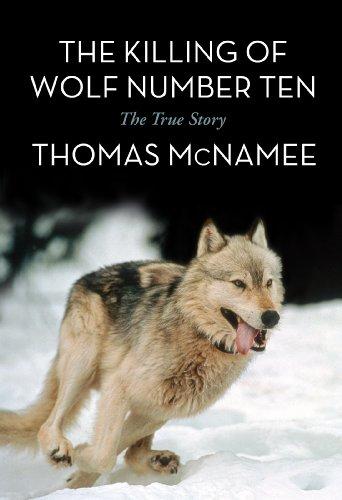
The True Story
The hosts examined the investigation into the death of an alpha male wolf, emphasizing its ecological ramifications and the ensuing legal battles, and directed listeners to the book for deeper insight. They quoted the author describing the chaos that followed and the elk population surge, presenting the title as a valuable source for anyone interested in the case. Overall, the book was highlighted as a recommended read for further understanding.
It details the events surrounding the death of Wolf Number 10, an alpha male wolf who was part of the Yellowstone Wolf Reintroduction Project. The book focuses on the investigation into his death, the impact of wolves on the ecosystem, and the legal battles that ensued.
Writer Thomas McNamee says Wolf 10 was the very definition of an alpha male.
As Thomas McNamee puts it, all hell broke loose.
Thomas McNamee says that in Yellowstone, the elk population exploded.
You can read more about Wolf 10 in Thomas McNamee's book The Killing of Wolf Number 10.
It detailed the investigation into the killing of Wolf 10, including the circumstances of his death, the subsequent investigation, and the trial of the perpetrator.
As Thomas McNamee puts it, all hell broke loose.
In Yellowstone, the elk population exploded. The vegetation they needed to survive couldn't keep up.
And in 1947, the famous naturalist Aldo Leopold recognized that the Yellowstone ecosystem was missing its Keystone predator.
And you can read more about Wolf 10 in Thomas McNamee's book, The Killing of Wolf Number Ten.
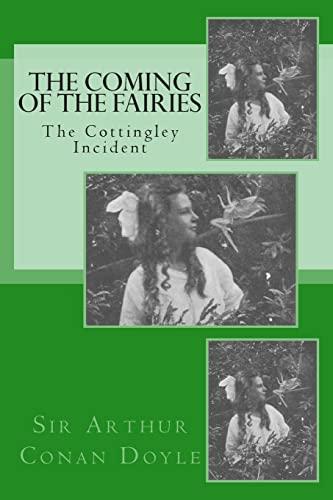
The hosts discussed the title while examining Conan Doyle's involvement with the Cottingley fairy photographs, noting that he published a 1922 book that compiled his earlier articles and detailed his investigation. They pointed out that the book presented the photographs as genuine evidence for his spiritualist beliefs, offering a factual overview of his perspective.
Conan Doyle wrote a book about the whole investigation called "The Coming of the Fairies", three years after publishing two articles about the Cottingley Fairies photographs in The Strand magazine.
A few months after he published the first article he published a second one with two of the remaining three photographs and in 1922 Conan Doyle published a book about the whole investigation that he called The Coming of the Fairies
This book was published in 1922 about Arthur Conan Doyle's investigation into the Cottingley fairy photographs. He believed the photographs were real and used them as evidence to support his spiritualist beliefs.
In 1922, Conan Doyle published a book about the whole investigation that he called The Coming of the Fairies.
In two episodes, the hosts explained that the book contained poems, stories, and illustrations by notable writers, including a set of three dancing fairy figures. They noted that Elsie used those fairy images as the visual model for her first fairy photograph, matching the poses and hairstyles. The discussion was purely descriptive, mentioning the book as a source rather than endorsing it.
The speaker mentioned that Frances had a copy of "Princess Mary's Gift Book", which had illustrations of fairies that Elsie based the fairies for the first photograph she took with Frances on.
Frances had a copy of Princess Mary's Gift Book and it contained poems stories and illustrations of leading writers and artists of the day interestingly there's a story in there by Conan Doyle that he contributed to this but there is a poem by Alfred Noyes called A Spell for a Fairy with illustrations by Claude A. Sheperson and if we open this up and go towards the end you'll see three dancing fairy figures and it was these figures that Elsie based the fairies for the first photograph she took with Frances on so if you compare these you'll see that she's added wings she's taken away some of the drapery from them and they've spaced the figures out but the poses and particularly the fashionable Parisian hairstyles are more or less the same really the same yeah yeah yeah absolutely I mean if you compare them they're I've got wings and a few changes to the dresses the girls attached the cut out fairy drawings to hat pins to make them stand up in the grass here's Elsie we with the the long hat pin put it down down the back like that and stuck the tape at the back like that and then gradually wormed that down and then wormed that down into the earth.
It was an old children's book that contained a drawing of three dancing fairies that looked almost exactly like the first photograph Elsie took of the fairies. It was published in 1914, three years before Elsie took her first photograph.
It was of three dancing fairies and it looked almost exactly like a photograph he'd seen before. The first photograph, Elsie, had taken of the fairies.
...the positions are much the same, but then positions are always much the same when people are dancing.
It contained poems, stories and illustrations of leading writers and artists of the day. Interestingly, there's a story in there by Arthur Conan Doyle and that he contributed to this.
But there is a poem by Alfred Noyes called A Spell for a Fairy with illustrations by Claude A. Sheperson.
And if we open this up and go towards the end, you'll see three dancing fairy figures.

The hosts highlighted the title as a recount of Eliot Ness’s Chicago exploits, noting it was co‑written with Oscar Fraley after Ness shared his stories. They explained that despite initial skepticism, the book achieved posthumous success and was later turned into a TV series and a film. The overall tone was enthusiastic, presenting the work as a noteworthy account of the Untouchables.
The book, written in collaboration with a writer named Oscar Fraley, recounts Elliot Ness's experiences in Chicago and his efforts to bring down Al Capone. It was initially met with skepticism due to Ness's unassuming demeanor, but Fraley was captivated by Ness's stories. The book became a success after Ness's death in 1957.
You know, you ought to talk to this guy. This is the guy who took down Al Capone, he says. It was very dangerous. He's got stories to tell.
I couldn't believe this mild-mannered guy had anything to do with it.
It was dangerous.
You should write a book.
He died hoping that the book would be a success but believing himself to be a forgotten figure.
The book was written in collaboration with a writer named Oscar Fraley after Elliot Ness told him stories of Chicago, the Untouchables, Al Capone, and other experiences. It was published a few months after Ness died and later adapted into a TV show and then a movie starring Kevin Costner.
you know, you ought to talk to this guy. This is the guy who took down Al Capone, he says. It was very dangerous. He's got stories to tell.
I couldn't believe this mild-mannered guy had anything to do with it.
it was dangerous.
you should write a book.
He died hoping that the book would be a success but believing himself to be a forgotten figure.
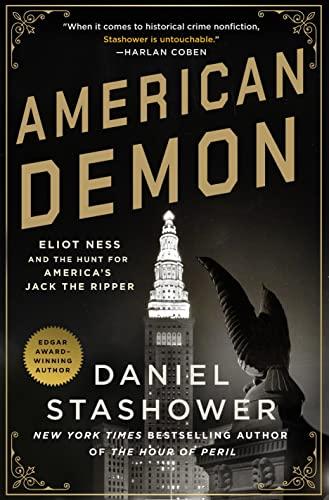
Eliot Ness and the Hunt for America's Jack the Ripper
The hosts highlighted the book as a resource for listeners to learn more about Eliot Ness and his hunt for the Cleveland Torso Murderer, drawing parallels to Jack the Ripper. It was mentioned by the narrator in both episodes, with a note that a link would be provided in the show notes. Overall, it was presented as a useful source for those interested in Ness's story.
This book delves into the life of Elliot Ness and his pursuit of the Cleveland Torso Murderer, comparing the case to that of Jack the Ripper. It is mentioned that a link to the book will be provided in the show notes.
Learn more about Elliot Ness in Daniel Stashower's book American Demon, Elliot Ness and the Hunt for America's Jack the Ripper. We'll have a link in the show notes.
The book focuses on Elliot Ness and his hunt for the Torso Murderer in Cleveland. The book is mentioned in the podcast episode as a source to learn more about Elliot Ness and his work.
Learn more about Elliot Ness in Daniel Stashower's book American Demon, Elliot Ness and the Hunt for America's Jack the Ripper.
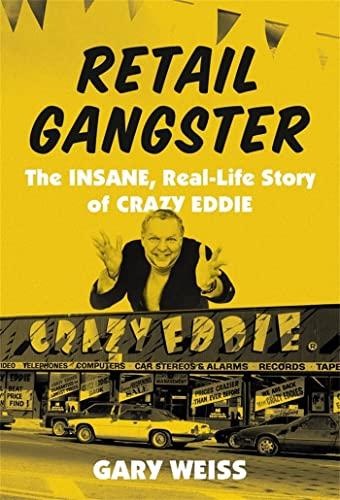
The Insane, Real-Life Story of Crazy Eddie
The book chronicles the real-life story of Crazy Eddie, detailing the company's meteoric rise and fall, its reliance on shady business practices, and the eventual downfall of its founders.
Gary Weiss' book is Retail Gangster: The Insane, Real-Life Story of Crazy Eddie.
— Episode: Crazy Eddie
The book chronicles the real-life story of Crazy Eddie, detailing the company's meteoric rise and fall, its reliance on shady business practices, and the eventual downfall of its founders.
Gary Weiss' book is Retail Gangster: The Insane, Real-Life Story of Crazy Eddie.
Author and journalist Gary Weiss.
Gary Weiss says Eddie got around the law by buying electronics from a place in the Bronx called Corner Distributors.
Gary Weiss says, you could buy overnight commercial slots for as little as $10.
Gary Weiss writes that he loved to give interviews to the press. He encouraged the media's nickname for him, Easy.
The book details the incredible and true story of the Crazy Eddie discount electronics chain, covering their rise to fame and the fraud that led to their downfall.
Gary Weiss' book is Retail Gangster: The Insane, Real-Life Story of Crazy Eddie.
The book is Retell Gangster,
the insane real-life story of Crazy Eddie.
The Godfather was referenced as an analogy for Sammy Antart's role in Crazy Eddie, with Sammy comparing himself to Tom Hagen, the lawyer in the book.
Kind of like a concierge, kind of like Tom Hagen, the lawyer on The Godfather.
— Episode: Crazy Eddie
The Godfather was referenced as an analogy for Sammy Antart's role in Crazy Eddie, with Sammy comparing himself to Tom Hagen, the lawyer in the book.
Kind of like a concierge, kind of like Tom Hagen, the lawyer on The Godfather.

The Rise of Sneaker Culture
The book details Reg's journey of shipping himself from England back to Australia and the events leading up to it, including his javelin throwing career, his friendship with John McSorley, and the challenges he faced along the way.
John's wife and son, Julie and Marcus McSorley wrote a book about Reg's trip. It's called Out of the Box, The Highs and Lows of a Champion Smuggler.
— Episode: Out of the Box
The book details Reg's journey of shipping himself from England back to Australia and the events leading up to it, including his javelin throwing career, his friendship with John McSorley, and the challenges he faced along the way.
John's wife and son, Julie and Marcus McSorley wrote a book about Reg's trip. It's called Out of the Box, The Highs and Lows of a Champion Smuggler.
John's wife and son, Julie and Marcus McSorley, wrote a book about Reg's trip. It's called "Out of the Box, The Highs and Lows of a Champion Smuggler."
John's wife and son, Julie and Marcus McSorley, wrote a book about Reg's trip. It's called "Out of the Box, The Highs and Lows of a Champion Smuggler."
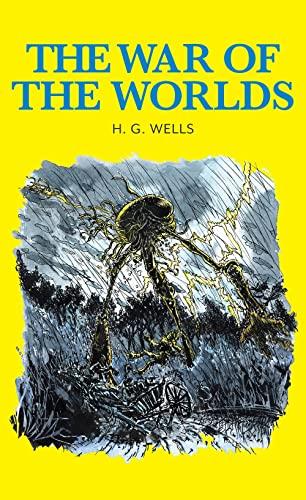
The episode discussed a radio drama adaptation of "War of the Worlds" that was broadcast in Quito, Ecuador, in 1949. This broadcast, inspired by Orson Welles' 1938 radio drama, caused widespread panic and led to the destruction of the radio station.
In the days leading up to the show, mysterious ads appeared in local newspapers saying things like, What will happen on February 12th?
— Episode: We Interrupt This Program
The episode discussed a radio drama adaptation of "War of the Worlds" that was broadcast in Quito, Ecuador, in 1949. This broadcast, inspired by Orson Welles' 1938 radio drama, caused widespread panic and led to the destruction of the radio station.
In the days leading up to the show, mysterious ads appeared in local newspapers saying things like, What will happen on February 12th?
And there were stories about sightings of flying saucers near Quito.
Incredible as it may seem, both the observations of science and the evidence of our eyes lead to the inescapable assumption that those strange beings who landed in the Jersey farmlands tonight are the vanguard of an invading army from the planet Mars.
The nation as a whole continues to face the danger of incomplete, misunderstood news over a medium which has yet to prove that it is competent to perform the news job.
What time will it be the end of the world?
The War of the Worlds, presented as a breaking news story about a Martian invasion, was a radio drama adaptation broadcast just before Halloween.
Ladies and gentlemen, this is the most terrifying thing I've ever witnessed. Wait a minute. Someone's crawling out of something I can see, coming out of that black hole through luminous disks.
This is Orson Welles, ladies and gentlemen. Out of character to assure you that The War of the Worlds has no further significance than if the holiday offering it was intended to be, a Mercury Theater's own radio version of dressing up in a sheet and jumping out of a bush and saying boo.
So goodbye everybody and remember please for the next day or so the terrible lesson you learned tonight. That grinning, glowing, globular invader of your living room is an inhabitant of the pumpkin patch and if your doorbell rings and nobody's there, that was no Martian. It's Halloween.
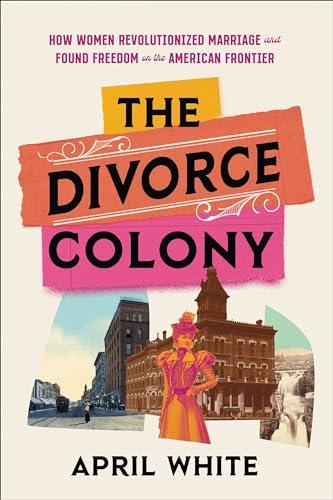
How Women Revolutionized Marriage and Found Freedom on the American Frontier
The Divorce Colony was a haven for women seeking divorce in South Dakota, where divorce laws were more permissive than other states. The book details how women, often from wealthy backgrounds, would travel to Sioux Falls and reside there for the required period to obtain a divorce.
April White's book is The Divorce Colony: How Women Revolutionized Marriage and Found Freedom on the American Frontier.
— Episode: The Divorce Colony
The Divorce Colony was a haven for women seeking divorce in South Dakota, where divorce laws were more permissive than other states. The book details how women, often from wealthy backgrounds, would travel to Sioux Falls and reside there for the required period to obtain a divorce.
April White's book is The Divorce Colony: How Women Revolutionized Marriage and Found Freedom on the American Frontier.
April White's book is The Divorce Colony, how women revolutionized marriage and found freedom on the American frontier.
April White's book, 'The Divorce Colony', was mentioned in relation to the podcast episode's subject, discussing how women revolutionized marriage and found freedom in the American frontier, possibly in a similar context to Blanche's story.
You can see them at thisiscriminal.com, where we'll also have a link to April White's book. It's called The Divorce Colony, How Women Revolutionized Marriage and Found Freedom on the American Frontier.
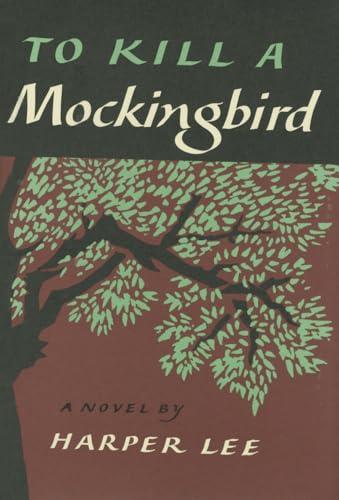
The host mentioned the title as Harper Lee's celebrated novel and noted how the community where the real case unfolded reveres it, even naming streets and staging plays, yet remained indifferent to a wrongful conviction of a Black man, highlighting a stark irony between the book's themes and local attitudes. The discussion used the book as a cultural touchstone to underscore the community's hypocrisy regarding racial justice.
The podcast contrasted the community's love for Harper Lee's book with their indifference to the case of Walter McMillan, highlighting the hypocrisy surrounding racial justice in the same community where the novel's setting is based.
And the irony for me is that this community where this crime took place, where this trial took place, is the very same community where Harper Lee grew up and wrote the beloved American novel To Kill a Mockingbird.
And people in that community love To Kill a Mockingbird. They put on plays about it. They name streets after characters. They have stores named after it. They've dedicated a museum to it.
But they were completely indifferent to the plight of an innocent black man being wrongly convicted and condemned.
Note: The book recommendations on this page are discovered automatically from podcast transcripts, and may be incorrect or incomplete.
Podcast Name