The Clash of Civilizations and the Remaking of World Order
Samuel P. Huntington
Mentioned 5 months ago
It Could Happen Here Weekly 220
There’s a reason the History Channel has produced hundreds of documentaries about Hitler but only a few about Dwight D. Eisenhower. Bad guys (and gals) are eternally fascinating. Behind the Bastards dives in past the Cliffs Notes of the worst humans in history and exposes the bizarre realities of th...
Recently mentioned
Samuel P. Huntington
Mentioned 5 months ago
It Could Happen Here Weekly 220
Robert D. Kaplan
Mentioned 5 months ago
It Could Happen Here Weekly 220
Elizabeth J. Perry
Mentioned 5 months ago
It Could Happen Here Weekly 220

J.R.R. Tolkien
Mentioned 5 months ago
Part One: How Jeffrey Epstein Helped Build the Modern World
Joshua Green
Mentioned 5 months ago
Part One: How Jeffrey Epstein Helped Build the Modern World
Professor Gilles Deleuze
Mentioned 5 months ago
It Could Happen Here Weekly 219
Madoka Kishi
Mentioned 5 months ago
It Could Happen Here Weekly 219
Samuel Miller McDonald
Mentioned 5 months ago
It Could Happen Here Weekly 219
Klaus Mann
Mentioned 5 months ago
It Could Happen Here Weekly 219
Mentioned 5 months ago
The Greg Bovino Episode Extravaganza!
Robert A. Heinlein
Mentioned 5 months ago
The Greg Bovino Episode Extravaganza!
John Lindsay-Poland
Mentioned 5 months ago
It Could Happen Here Weekly 218
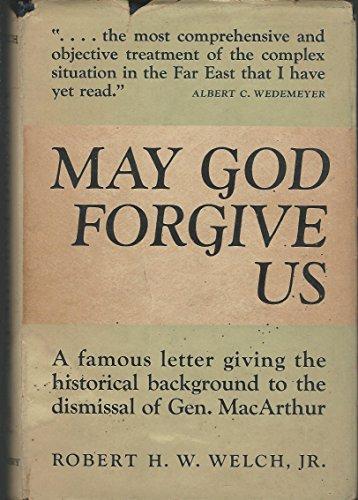
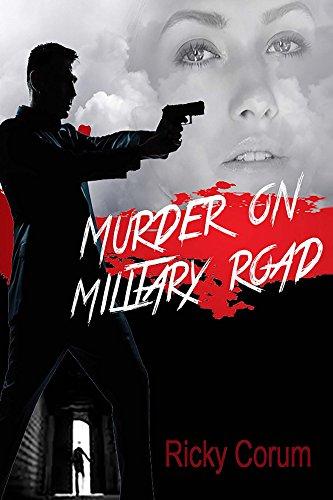
A Faye-Lynn Johnson Murder Mystery
It was described as a good read and a better source of information than the police union's history, focusing on the Portland Police Bureau, deadly force, and the struggle for civil rights in Oregon.
On the Murder of Ricky Johnson, the Portland Police Bureau, Deadly Force, and the Struggle for Civil Rights in Oregon.
— Episode: Part One: The Worst Police Union In Hist...
It was described as a good read and a better source of information than the police union's history, focusing on the Portland Police Bureau, deadly force, and the struggle for civil rights in Oregon.
On the Murder of Ricky Johnson, the Portland Police Bureau, Deadly Force, and the Struggle for Civil Rights in Oregon.
I would recommend it above the union's propaganda book.
The Bureau focused their efforts on protecting property largely owned by whites within the black community and serving the white community while providing few benefits and little protection to Portland's black community.
The Intelligence Unit spied on black activists and used the gathered information to spread rumors that were meant to spark opposition from the community.
Police perpetuated a false image of what black activists and citizens were advocating for by painting them as anti-government radicals or communists.

The book was mentioned in relation to the Portland Police Association, particularly highlighting the arbitration case surrounding the 'possum incident', which has influenced labor and police discipline laws nationwide.
The City of Portland versus Ward and Galloway case is still the leading police discipline case in the United States and in labor law circles is the arbitration decision referred to the most often.
— Episode: Episode 1: Uprising: A Guide From Portla...
The book was mentioned in relation to the Portland Police Association, particularly highlighting the arbitration case surrounding the 'possum incident', which has influenced labor and police discipline laws nationwide.
The City of Portland versus Ward and Galloway case is still the leading police discipline case in the United States and in labor law circles is the arbitration decision referred to the most often.
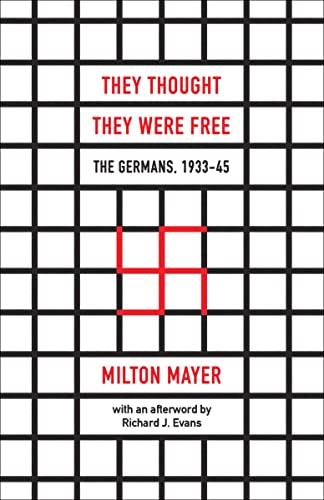
The Germans, 1933–45
The book was discussed in relation to how ordinary German citizens rationalized their involvement with the Nazi regime, even after witnessing its horrors.
One of the things that I think is most interesting about Meyer's book, They Thought They Were Free, is that he talks to like former Nazis about that.
— Episode: Part Two: How Nice, Normal People Made T...
The book was discussed in relation to how ordinary German citizens rationalized their involvement with the Nazi regime, even after witnessing its horrors.
One of the things that I think is most interesting about Meyer's book, They Thought They Were Free, is that he talks to like former Nazis about that.
Remember, none of these nine Germans had ever traveled abroad. None of them had ever known or talked with a foreigner or read the foreign press.
The German language, like every other, has some glorious epithets, untranslatable and will give word. Me Spice Burger is one of them.
The world was lost one day in 1935 here in Germany. It was I who lost it.
They only win if we consent to their victory.
The Germans, 1933–45
It was discussed as the first postwar investigation into the Nazi party, specifically focusing on the 'little Nazis' or ordinary German citizens who joined and supported Hitler.
the delineation of the the personal conditions under which the little man anywhere becomes involved in the development of totalitarian evil and the ways in which he assumes or avoids moral responsibil...
— Episode: Part One: How Nice, Normal People Made T...
It was discussed as the first postwar investigation into the Nazi party, specifically focusing on the 'little Nazis' or ordinary German citizens who joined and supported Hitler.
the delineation of the the personal conditions under which the little man anywhere becomes involved in the development of totalitarian evil and the ways in which he assumes or avoids moral responsibility for his participation in it
These ten men were little men. Only Herr Hildebrandt, the teacher, had any substantial status in the community. And when I say little men, I mean not only the men for whom the mass media and the campaign speeches are everywhere designed, but specifically in sharply stratified societies like Germany, the men who think of themselves in that way.
They calculated wrong, but they meant what they said.
Hitlerism had to answer communism with something just as radical. Communism always used force. Hitlerism answered it with force.
Inside the system, you see the benefits outside it. When you are not benefited by it, you see the faults, I suppose.
The Original Unabridged and Complete Edition (Virgil Classics)
It was described as a boring book, a ripoff of the Iliad, and written as propaganda to glorify Augustus Caesar. The podcast hosts found it tedious and unenjoyable.
It's also bad. It's a bad book. Boring.
— Episode: Part One: Mark Zuckerberg Should Be On...
It was described as a boring book, a ripoff of the Iliad, and written as propaganda to glorify Augustus Caesar. The podcast hosts found it tedious and unenjoyable.
It's also bad. It's a bad book. Boring.
It's boring as hell.
Fuck The Aeneid and Virgil.
It offered an analysis of the voting bloc that Schlafly helped create, highlighting the privileges of her largely white, suburban, church-going followers.
Ilsa Hoag who's the former president of narrow which is like our big pro-choice organization in the united states and a lifelong opponent of schlafly wrote a book called The Lie That Binds
— Episode: Part Two: Phyllis Schlafly: The Mother o...
It offered an analysis of the voting bloc that Schlafly helped create, highlighting the privileges of her largely white, suburban, church-going followers.
Ilsa Hoag who's the former president of narrow which is like our big pro-choice organization in the united states and a lifelong opponent of schlafly wrote a book called The Lie That Binds that includes really trenchant analysis of the voting bloc that phyllis helped to create was kind of like the key figure in creating
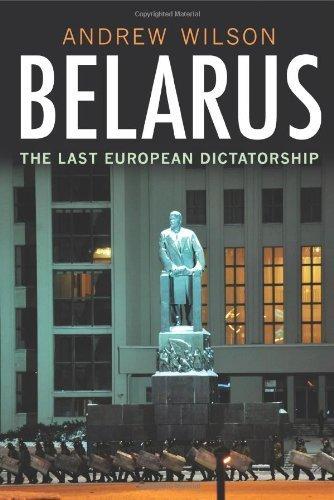
The Last European Dictatorship by Andrew Wilson (2011-10-18)
In Valery Karbalovich's biography of Alexander Lukashenko, the leader was described as a hostage of his own political system, trapped in power with no obvious successor in sight.
Lukashenko's biggest challenge, meanwhile, still lies ahead. His exit from the political stage.
— Episode: Part Two: Alexander Lukashenko: The Dict...
In Valery Karbalovich's biography of Alexander Lukashenko, the leader was described as a hostage of his own political system, trapped in power with no obvious successor in sight.
Lukashenko's biggest challenge, meanwhile, still lies ahead. His exit from the political stage.
He recently announced that the 2020 presidential elections will be held as planned, and he's expecting to run again.
Lukashenko, he writes, has no choice but to try to remain in power indefinitely with no viable successor in sight.
Karbalovich says Lukashenko's electoral defeat would lead to radical regime change.
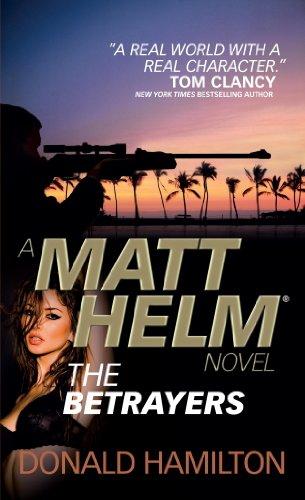
The book's central argument was that key members of the Johnson administration, like Robert McNamara, were motivated by a belief that the US would lose the Cold War and were purposely weakening the US defenses.
The thesis of this book is that key members of the Johnson administration, in particular Defense Secretary Robert McNamara, had actively sought to weaken and impair the defenses of the United States,...
— Episode: Part One: Phyllis Schlafly: The Mother o...
The book's central argument was that key members of the Johnson administration, like Robert McNamara, were motivated by a belief that the US would lose the Cold War and were purposely weakening the US defenses.
The thesis of this book is that key members of the Johnson administration, in particular Defense Secretary Robert McNamara, had actively sought to weaken and impair the defenses of the United States, motivated by a belief that the cause of freedom was doomed, that the Soviet Union would surely win the Cold War, and that preparing for the eventual inevitable surrender was the best means for survival.
regardless of the validity of that position, the information used to make the case bears examination. Schlafly and Ward walk the reader through a panorama of Johnson administration defense and foreign policy positions, compellingly outlining a defensive disaster.
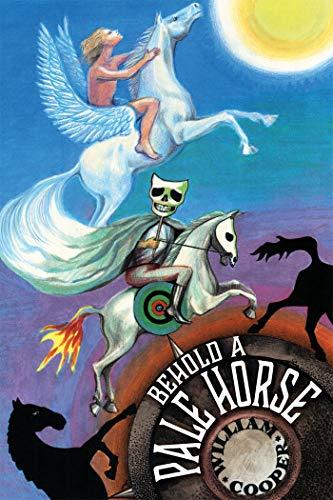
It was described as having a great title, and it was mentioned as a memoir that included a section about Bill Cooper's background. It was discussed as a book that was influential within certain communities, particularly in the rap world.
It is a great name for a book.
— Episode: Part One: Bill Cooper: The Man Who Kille...
It was described as having a great title, and it was mentioned as a memoir that included a section about Bill Cooper's background. It was discussed as a book that was influential within certain communities, particularly in the rap world.
It is a great name for a book.
I didn't always love my father. He was a strict disciplinarian.
My dad did not believe in spare the rod and his belt was put to use frequently in our family.

The Cultural Biology of Religious Healing in Brazil
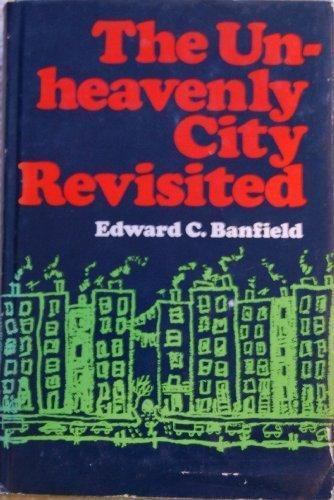
A Revision of the Unheavenly City by Edward C. Banfield (1974-01-01)
It argued that the poor could not be helped and that welfare programs were a waste of money, with the author suggesting cities should be abandoned due to inherent criminality amongst the impoverished.
Although he has more leisure than almost anyone, the indifference apathy, if one prefers, of the lower class person is such that he seldom makes even the simplest repairs to the place that he lives in...
— Episode: Behind the Police: How Police Unions Mad...
It argued that the poor could not be helped and that welfare programs were a waste of money, with the author suggesting cities should be abandoned due to inherent criminality amongst the impoverished.
Although he has more leisure than almost anyone, the indifference apathy, if one prefers, of the lower class person is such that he seldom makes even the simplest repairs to the place that he lives in.
He is not troubled by dirt or dilapidation and he does not mind the inadequacy of public facilities such as schools, parks, hospitals, and libraries.
Indeed, where such things exist, he may destroy them by carelessness or even by vandalism.
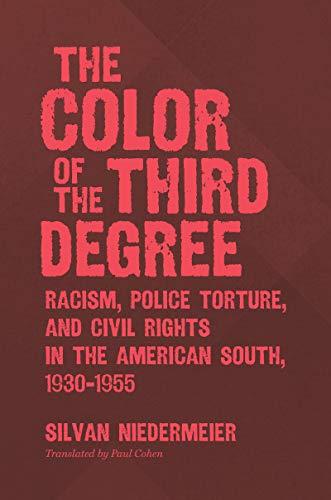
Racism, Police Torture, and Civil Rights in the American South, 1930–1955
It was a major source for this episode, focusing on police torture and the shift from lynching to the death penalty in the South, claiming it was about maintaining control over the Black population, not protection.
during the 1910s and to a greater degree from 1920 onward, the white elite of the South voiced growing criticism of the practice of lynching.
— Episode: Behind the Police: How The Police Defeat...
It was a major source for this episode, focusing on police torture and the shift from lynching to the death penalty in the South, claiming it was about maintaining control over the Black population, not protection.
during the 1910s and to a greater degree from 1920 onward, the white elite of the South voiced growing criticism of the practice of lynching.
law enforcement authorities in the South were generally taking initiatives to protect Black suspects from being seized by lynch mobs.
in his study of the state of Kentucky, historian George Wright comes to the conclusion that the number of executions of Blacks carried out during the first decades of the 20th century continually rose, while the number of lynchings steadily declined during the same period.
As investigative reports from that date from this period reveal, however, penalties were rarely imposed because district attorneys, judges and jury members were highly reluctant to limit the power and authority of law enforcement officials.
The report by the Wickersham Commission highlighted numerous cases from Southern states in which police officers and sheriffs use batons, fists, and whips to extort confessions from black suspects.

From Early American Beginnings to the 21st Century
A Spy Thriller
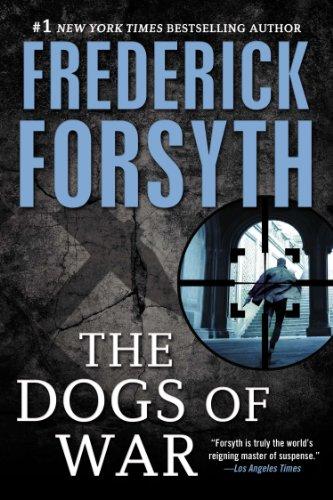
It was discussed as a fictionalized account of Forsyth's attempt to overthrow the government of Equatorial Guinea, which was also used as a guide for other mercenary coup attempts.
But the very next year, Frederick Forsyth published another book called The Dogs of War about a group of European mercenaries who carry out a coup against a brutal island dictator.
— Episode: Part One: The Dumbest Coup In World Hist...
It was discussed as a fictionalized account of Forsyth's attempt to overthrow the government of Equatorial Guinea, which was also used as a guide for other mercenary coup attempts.
But the very next year, Frederick Forsyth published another book called The Dogs of War about a group of European mercenaries who carry out a coup against a brutal island dictator.
And the book bore a striking resemblance to all of the planning for the failed 1973 coup.
And like very little of the book actually involved any action or fighting or the coup itself.
Almost all of it was just a detailed step by step guide to how to like, here's how we go about getting end user certificates.
In 2006, Frederick Forsyth all but admitted to an interviewer that he had in fact planned and failed to execute a coup to overthrow Maseus.
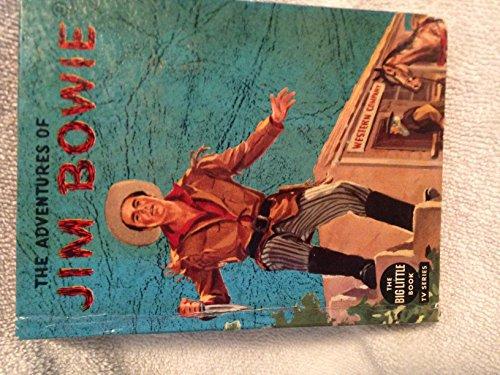
It was mentioned as a biography of Jim Bowie, written in 1957, in which the author described Bowie's prowess with knives when smuggling enslaved people.
In conveying smuggled slaves, armed himself with three or four knives so that he could transfix any captive who tried to break away.
— Episode: Part One: Jim Bowie: The Worst Texan
It was mentioned as a biography of Jim Bowie, written in 1957, in which the author described Bowie's prowess with knives when smuggling enslaved people.
In conveying smuggled slaves, armed himself with three or four knives so that he could transfix any captive who tried to break away.
Note: The book recommendations on this page are discovered automatically from podcast transcripts, and may be incorrect or incomplete.
Podcast Name