Podcast
Freakonomics Radio
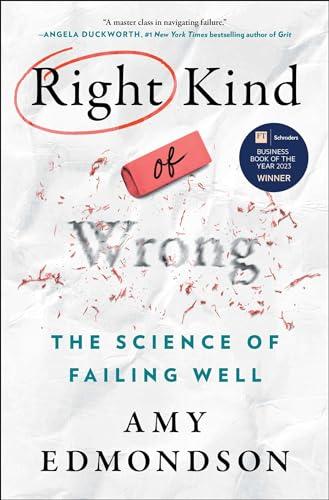
It was recommended by Stephen Dubner as a book that explores the science of failing well, written by a scholar of failure at Harvard Business School.
I would like to tell you about our new membership program. It is called Freakonomics Radio Plus.
— Episode: 564. How to Succeed at Failing, Part 4:...
Episode: 564. How to Succeed at Failing, Part 4: Extreme Re...
It was recommended by Stephen Dubner as a book that explores the science of failing well, written by a scholar of failure at Harvard Business School.
I would like to tell you about our new membership program. It is called Freakonomics Radio Plus.
To learn more about Freakonomics Radio Plus, search for Freak-o-nomics Radio on Apple Podcasts.
RESOURCES:
Episode: 561. How to Succeed at Failing, Part 1: The Chain...
Amy Edmondson, an organizational psychologist, published this book on how organizations can learn to embrace failure and utilize it as a positive learning opportunity.
I haven't met anyone who feels really good about failure, myself included. You have to force yourself to feel good about failure.
I think it's our upbringing, right? By the time you're in elementary school, there's such a strong emphasis on getting the right answer or succeeding, not failing.
I think of them as emotional, cognitive, and social. So emotionally, we're just spontaneously averse to failure, right? I don't like it. I don't want to have it. I don't want to look at it, right? It's immediate.
Cognitively, because we don't do a good job or don't have access to a simple framework to distinguish among kinds of failures, we then sort of decide to not like any of them.
And the fear part has to do with our concerns, very deep and deeply founded concerns of what other people think of us. So we don't want to be seen as having shortcomings. We don't want to be seen as associated with a failure.