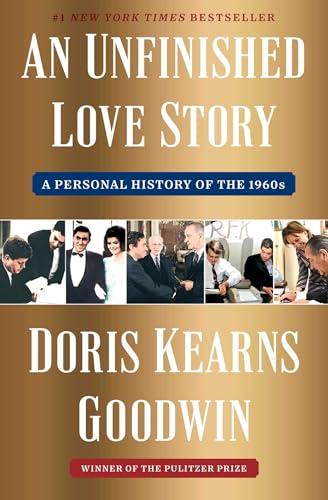
Doris Kearns Goodwin discussed her new book, which explores the 1960s through the memories of her late husband, Dick Goodwin, a political advisor and speechwriter to Presidents JFK and LBJ. She described the process of writing the book as a collaborative effort with her husband, who had kept 300 boxes of his life's work for decades. Goodwin said the experience allowed them to revisit a decade of personal and political history, revealing insights into their relationship, Dick's experiences working with various political figures, and the broader historical context of the 1960s.
"
An Unfinished Love Story, a personal history of the 1960s which comes out next week, explores that decade through the memories of her late husband, Dick Goodwin, a political advisor and speechwriter to Presidents JFK and LBJ.
it was especially because I knew how much it meant to him to have this story told and that in the middle of the process of our working on it he had cancer so it meant even more to him and it just gave him a sense of purpose and a sense of excitement about every day that we would continue this process so it took on a whole extra meaning beyond the fact that I'm normally used to interviewing people and talking about presidents who are long dead and they don't answer me when I ask them questions but now suddenly here's this guy sitting across from me he's not Teddy Roosevelt, he's not Abraham Lincoln no, he's not FDR or any of the people that I've studied but he's somebody who was with all the major characters in the 60s and when I asked him questions he would answer and sometimes correct me and argue with me so it was great, it was a great process for us to go through in those last years of his life
we kept not looking in these boxes until finally after he turned 80 he came down the steps one day and it's still clumps of shaving cream on his face singing Oklahoma and saying it's time now, it's now or never and once we started going through the boxes chronologically and that's the way you really need to do history you shouldn't know how it ends we just were able to go year by year, week by week through the 60s there was an extraordinary promise in the 60s there were great things that happened and so it surprised me to see a lot of the places that he was how he responded I was surprised at his relationship with Jackie Kennedy at the closeness that he developed toward Lyndon Johnson even though he had turned against him on the war surprised about how women were treated in the early part of the 60s, so many things that it felt like it was a new way for us to do things together we were at places that we never knew we had been together, we finally discovered so for both of us it was an exploration into a decade that's such a pivotal time in our history and a decade that I think needs to be remembered so the famous phrase about history doesn't repeat itself but it rhymes
I think that was true for Barack Obama as well in fact he had known about team of rivals he had read the book I've become friends with him in part because of that and we talked about it and then when he appointed Hillary everybody just said finally here's a team of rivals but he knew that he needed her experience on foreign policy in other areas as well and so it's that combination of humbleness and confidence that we don't see right now in fact it's an insecure person that is going to put rivals into jail or make threats against rivals on the contrary if you can bring them into your inner circle and listen to them and hear what they have to say and then understand it close up then you can reach their constituencies as well as them
it's not to say that they weren't active themselves but I think then the frustration set in they see supreme court decisions they see climate change that doesn't seem to be changing they see gun safety marches that don't seem to be reducing changes in the gun legislation and there's a sense of just not believing that it's making a difference and I think that's a really troubling if I could do anything from this book that I care about I mean if people in the civil rights movement in the 50s had lost patience because they weren't getting anywhere you know that they were marching even then against segregation against voting rights denials and yet nothing was seeming to happen except for difficult times and then they had to go through Birmingham when Bill Conner sent the dogs and the hoses after them go through Selma and what the troopers did to the people on the bridge and yet they kept going there was a sense of collective spirit even though it was really, really hard and I think that's what has to be understood I think by young people today because they're very much needed in these elections to vote and even if it's difficult and it seems like it doesn't mean that they have to want to be one of the people that's in office right now but we need them running for office on a different kind of person not for the power of broken congress where nothing can get done not for people who stay in office and you can't understand quite why because they don't feel like it's any good but we're seeing people leaving public office now huge numbers are which shows that the atmosphere in Washington is not one that a young person would say oh I can't wait to go down there right now but these things can change you know you get a number of people leaving and you get more people new coming in with spirit and energy and you can't give up I mean that's the whole point